
java并发之线程执行器(Executor)
线程执行器和不使用线程执行器的对比(优缺点)
1.线程执行器分离了任务的创建和执行,通过使用执行器,只需要实现Runnable接口的对象,然后把这些对象发送给执行器即可。
2.使用线程池来提高程序的性能。当发送一个任务给执行器时,执行器会尝试使用线程池中的线程来执行这个任务。避免了不断创建和销毁线程导致的性能开销。
3.执行器可以处理实现了Callable接口的任务。Callable接口类似于Runnable接口,却提供了两方面的增强:
a.Callable主方法名称为call(),可以返回结果
b.当发送一个Callable对象给执行器时,将获得一个实现了Future接口的对象。可以使用这个对象来控制Callable对象的状态和结果。
4.提供了一些操作线程任务的功能
- 执行继承了Runnable接口的任务类
 public class Task implements Runnable {

     private String name;

     public Task(String name){

         this.name=name;

     }

     @Override

     public void run() {

         }

 }
 public class Server {

     private ThreadPoolExecutor executor;

     public Server(){

         executor=(ThreadPoolExecutor)Executors.newCachedThreadPool();

     }

     public void executeTask(Task task){

         System.out.printf("Server: A new task has arrived\n");

         executor.execute(task);

         System.out.printf("Server: Active Count: %d\n",executor.getActiveCount());

         System.out.printf("Server: Completed Tasks: %d\n",executor.getCompletedTaskCount());

     }

     public void endServer() {

         executor.shutdown();

   }

 }
- 执行实现了Callable<T>接口的任务
 public class FactorialCalculator implements Callable<Integer> {

     private Integer number;

     public FactorialCalculator(Integer number){

         this.number=number;

     }

     @Override

     public Integer call() throws Exception {

         int num, result;

         num=number.intValue();

         result=1;

         // If the number is 0 or 1, return the 1 value

         if ((num==0)||(num==1)) {

             result=1;

         } else {

             // Else, calculate the factorial

             for (int i=2; i<=number; i++) {

                 result*=i;

                 Thread.sleep(20);

             }

         }

         System.out.printf("%s: %d\n",Thread.currentThread().getName(),result);

         // Return the value

         return result;

     }

 }
 ThreadPoolExecutor executor = (ThreadPoolExecutor) Executors.newFixedThreadPool(2);//实例化执行器

 FactorialCalculator calculator = new FactorialCalculator(number);//实例化任务

 Future<Integer> result = executor.submit(calculator);//执行任务,并返回Future<T>实例
 public interface Callable<V> {

     V call() throws Exception;

 }


   public static ExecutorService newCachedThreadPool() {

         return new ThreadPoolExecutor(0, Integer.MAX_VALUE,

                                       60L, TimeUnit.SECONDS,

                                       new SynchronousQueue<Runnable>());

     }
 public static ExecutorService newFixedThreadPool(int nThreads) {

         return new ThreadPoolExecutor(nThreads, nThreads,

                                       0L, TimeUnit.MILLISECONDS,

                                       new LinkedBlockingQueue<Runnable>());

     }
 public static ExecutorService newSingleThreadExecutor() {

         return new FinalizableDelegatedExecutorService

             (new ThreadPoolExecutor(1, 1,

                                     0L, TimeUnit.MILLISECONDS,

                                     new LinkedBlockingQueue<Runnable>()));

 }
 public static ScheduledExecutorService newScheduledThreadPool(int corePoolSize) {

         return new ScheduledThreadPoolExecutor(corePoolSize);

 }
 ScheduledExecutorService executor=(ScheduledExecutorService)Executors.newScheduledThreadPool(1);

 executor.schedule(task,i+1 , TimeUnit.SECONDS);
 public <V> ScheduledFuture<V> schedule(Callable<V> callable,//即将执行的任务

                                            long delay,//任务执行前需要等待的时间

                                            TimeUnit unit)//时间单位
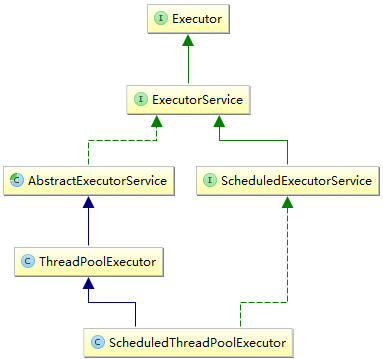
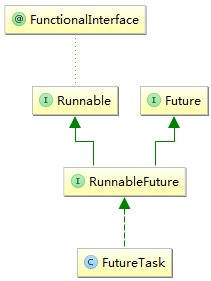

 ScheduledExecutorService executor=(ScheduledExecutorService)Executors.newScheduledThreadPool(1);

         for (int i=0; i<5; i++) {

             Task task=new Task("Task "+i);

             executor.schedule(task,i+1 , TimeUnit.SECONDS);

         }

         executor.shutdown();
 public <V> ScheduledFuture<V> schedule(Callable<V> callable,//即将执行的任务

                                            long delay,      //任务执行前需要等待的时间

                                            TimeUnit unit)   //时间单位
 ScheduledExecutorService executor=Executors.newScheduledThreadPool(1);

         Task task=new Task("Task");

         ScheduledFuture<?> result=executor.scheduleAtFixedRate(task, 1, 2, TimeUnit.SECONDS);
 public ScheduledFuture<?> scheduleAtFixedRate(Runnable command,     //将被周期性执行的任务

                                                   long initialDelay,//任务第一次执行后的延后时间

                                                   long period,      //两次执行的时间周期

                                                   TimeUnit unit) {  //第二和第三个参数的时间单位
     UserValidator ldapValidator=new UserValidator("LDAP");

         UserValidator dbValidator=new UserValidator("DataBase");

         // Create two tasks for the user validation objects

         TaskValidator ldapTask=new TaskValidator(ldapValidator, username, password);

         TaskValidator dbTask=new TaskValidator(dbValidator,username,password);

         // Add the two tasks to a list of tasks

         List<TaskValidator> taskList=new ArrayList<>();

         taskList.add(ldapTask);

         taskList.add(dbTask);

         // Create a new Executor

         ExecutorService executor=(ExecutorService)Executors.newCachedThreadPool();

         String result;

         try {

             // Send the list of tasks to the executor and waits for the result of the first task

             // that finish without throw and Exception. If all the tasks throw and Exception, the

             // method throws and ExecutionException.

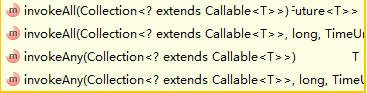
             result = executor.invokeAny(taskList);

             System.out.printf("Main: Result: %s\n",result);

         } catch (InterruptedException e) {

             e.printStackTrace();

         } catch (ExecutionException e) {

             e.printStackTrace();

         }

         // Shutdown the Executor

         executor.shutdown();
 public boolean validate(String name, String password) {

         Random random=new Random();

         try {

             Long duration=(long)(Math.random()*10);

             System.out.printf("Validator %s: Validating a user during %d seconds\n",this.name,duration);

             TimeUnit.SECONDS.sleep(duration);

         } catch (InterruptedException e) {

             return false;

         }

         return random.nextBoolean();

     }
 List<Task> taskList = new ArrayList<>();

         for (int i = 0; i < 3; i++) {

             Task task = new Task("Task-" + i);

             taskList.add(task);

         }

         // Call the invokeAll() method

         List<Future<Result>> resultList = null;

         try {

             resultList = executor.invokeAll(taskList);

         } catch (InterruptedException e) {

             e.printStackTrace();

         }

         // Finish the executor

         executor.shutdown();
 Task task=new Task();

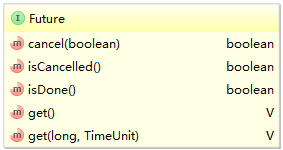
         Future<String> result=executor.submit(task);

         try {

             TimeUnit.SECONDS.sleep(2);

         } catch (InterruptedException e) {

             e.printStackTrace();

         }

         System.out.printf("Main: Cancelling the Task\n");

         result.cancel(true);
 public V get() throws InterruptedException, ExecutionException {

         int s = state;

         if (s <= COMPLETING)

             s = awaitDone(false, 0L);

         return report(s);

     }

 public class ResultTask extends FutureTask<String> {

 @Override

     protected void done() {

         if (isCancelled()) {

             System.out.printf("%s: Has been cancelled\n",name);

         } else {

             System.out.printf("%s: Has finished\n",name);

         }

     }

 }
1.从list中遍历的每个Future对象并不一定处于完成状态,这时调用get()方法就会被阻塞住,如果系统是设计成每个线程完成后就能根据其结果继续做后面的事,这样对于处于list后面的但是先完成的线程就会增加了额外的等待时间。
2.而CompletionService的实现是维护一个保存Future对象的BlockingQueue。只有当这个Future对象状态是结束的时候,才会加入到这个Queue中,take()方法其实就是Producer-Consumer中的Consumer。它会从Queue中取出Future对象,如果Queue是空的,就会阻塞在那里,直到有完成的Future对象加入到Queue中。
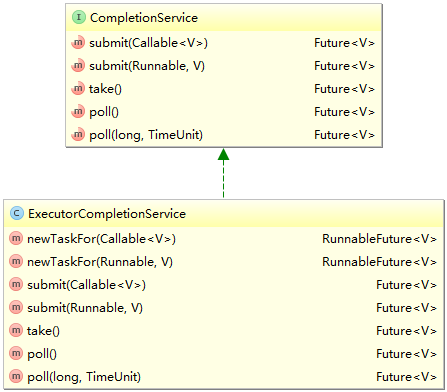
 public class RejectedTaskController implements RejectedExecutionHandler {

     @Override

     public void rejectedExecution(Runnable r, ThreadPoolExecutor executor) {

         System.out.printf("RejectedTaskController: The task %s has been rejected\n",r.toString());

         System.out.printf("RejectedTaskController: %s\n",executor.toString());

         System.out.printf("RejectedTaskController: Terminating: %s\n",executor.isTerminating());

         System.out.printf("RejectedTaksController: Terminated: %s\n",executor.isTerminated());

     }

 }
 public static void main(String[] args) {

         // Create the controller for the Rejected tasks

         RejectedTaskController controller=new RejectedTaskController();

         // Create the executor and establish the controller for the Rejected tasks

         ThreadPoolExecutor executor=(ThreadPoolExecutor)Executors.newCachedThreadPool();

         executor.setRejectedExecutionHandler(controller);

         // Lauch three tasks

         System.out.printf("Main: Starting.\n");

         for (int i=0; i<3; i++) {

             Task task=new Task("Task"+i);

             executor.submit(task);

         }

         // Shutdown the executor

         System.out.printf("Main: Shuting down the Executor.\n");

         executor.shutdown();

         // Send another task

         System.out.printf("Main: Sending another Task.\n");

         Task task=new Task("RejectedTask");

         executor.submit(task);

         // The program ends

         System.out.printf("Main: End.\n");

     }
Main: Starting.

Main: Shuting down the Executor.

Main: Sending another Task.

RejectedTaskController: The task java.util.concurrent.FutureTask@60e53b93 has been rejected

RejectedTaskController: java.util.concurrent.ThreadPoolExecutor@5e2de80c[Shutting down, pool size = 3, active threads = 3, queued tasks = 0, completed tasks = 0]

RejectedTaskController: Terminating: true

RejectedTaksController: Terminated: false

Main: End.

Task Task1: Starting

Task Task0: Starting

Task Task2: Starting

Task Task1: ReportGenerator: Generating a report during 4 seconds

Task Task0: ReportGenerator: Generating a report during 7 seconds

Task Task2: ReportGenerator: Generating a report during 6 seconds

Task Task1: Ending

Task Task2: Ending

Task Task0: Ending
java并发之线程执行器(Executor)的更多相关文章
- java并发之线程池的使用
背景 当系统并发的线程数量很多,并且每个线程都是执行一个时间很短的任务就结束了,这样频繁创建线程就会大大降低系统的效率,因为频繁创建线程和销毁线程需要消耗大量的系统资源. 所以需要一个办法使得线程可以 ...
- Java并发之——线程池
一. 线程池介绍 1.1 简介 线程池是一种多线程处理形式,处理过程中将任务添加到队列,然后在创建线程后自动启动这些任务.线程池的基本思想还是一种对象池的思想,开辟一块内存空间,里面存放了众多(未死亡 ...
- Java并发之线程中断
前面的几篇文章主要介绍了线程的一些最基本的概念,包括线程的间的冲突及其解决办法,以及线程间的协作机制.本篇主要来学习下Java中对线程中断机制的实现.在我们的程序中经常会有一些不达到目的不会退出的线程 ...
- Java并发之线程管理(线程基础知识)
因为书中涵盖的知识点比较全,所以就以书中的目录来学习和记录.当然,学习书中知识的时候自己的思考和实践是最重要的.说到线程,脑子里大概知道是个什么东西,但很多东西都还是懵懵懂懂,这是最可怕的.所以想着细 ...
- Java并发之线程转储
一.java线程转储 java的线程转储可以被定义为JVM中在某一个给定的时刻运行的所有线程的快照.一个线程转储可能包含一个单独的线程或者多个线程.在多线程环境中,比如J2EE应用服务器,将会有许多线 ...
- Java 并发之线程安全
写线程安全的代码,说白了就是管理一个类的共享的.可变的状态.只要有多于 1 个线程对类的状态进行写入,那么就必须用同步来协调这多个线程对状态的访问.对于一个没有状态的类来说(简单的理解就是只有方法没有 ...
- Java并发之线程异常捕获
由于线程的本质特性,使得你不能捕获从线程中逃逸的异常,如: import java.util.concurrent.ExecutorService; import java.util.concurre ...
- Java并发之线程
在前面我们介绍的一些内容中,我们的程序都是一条执行流,一步一步的执行.但其实这种程序对我们计算机的资源的使用上是低效的.例如:我们有一个用于计算的程序,主程序计算数据,在计算的过程中每得到一个结果就需 ...
- Java并发之线程间的协作
上篇文章我们介绍了synchronized关键字,使用它可以有效的解决我们多线程所带来的一些常见问题.例如:竞态条件,内存可见性等.并且,我们也说明了该关键字主要是一个加锁和释放锁的集成,所有为能获得 ...
随机推荐
- Codeforces A. Trip For Meal
A. Trip For Meal time limit per test 1 second memory limit per test 512 megabytes input standard inp ...
- Android 常见知识整理(1)
Android Support V4, V7, V13的作用与用法 http://blog.csdn.net/hh2000/article/details/39718623 2. 开源项目 注解 ...
- 使用Gradle构建Android项目
阅读目录 Gradle是什么? 环境需求 Gradle基本结构 任务task的执行 基本的构建定制 目录配置 签名配置 代码混淆设置 依赖配置 输出不同配置的应用 生成多个渠道包(以Umeng为例) ...
- vue.js实例对象+组件树
vue的实例对象 首先用js的new关键字实例化一个vue el: vue组件或对象装载在页面的位置,可通过id或class或标签名 template: 装载的内容.HTML代码/包含指令或者其他组件 ...
- 【网络爬虫入门04】彻底掌握BeautifulSoup的CSS选择器
[网络爬虫入门04]彻底掌握BeautifulSoup的CSS选择器 广东职业技术学院 欧浩源 2017-10-21 1.引言 目前,除了官方文档之外,市面上及网络详细介绍BeautifulSoup ...
- CSS样式之表格,表单
布局样式 .container:固定宽度并具响应式 .container-fluid自由宽度(100%宽度) 标题样式 <h1>到<h6> 样式已经写好了,可以直接用,兼容性也 ...
- node+vue进阶【课程学习系统项目实战详细讲解】打通前后端全栈开发(1):创建项目,完成登录功能
第一章 建议学习时间8小时·分两次学习 总项目预计10章 学习方式:详细阅读,并手动实现相关代码(如果没有node和vue基础,请学习前面的vue和node基础博客[共10章]) 视频教程地 ...
- JAVA基础知识总结:十
一.抽象类 1.定义 当多个类中出现相同功能,但是功能主体是不同的,这是可以进行向上抽取的,只抽取功能的定义部分,使用抽象类实现 抽象类的存在就是为了被继承 2.使用 abstract 3.抽象类的特 ...
- JAVA基础知识总结:四
一.方法 1.什么是方法? 对于功能相同的代码段,为了简化代码,会把功能相同的代码抽取出来,方便多次使用,Java中,我们使用[方法],也被称为函数 2.函数的声明 语法: 访问权限修饰符 其他修饰符 ...
- ssh更改默认端口号及实现免密码远程登陆
近来在复习防火墙管理工具 iptables 的基本使用方法,涉及到对端口添加或删除防火墙策略的内容,之前对ssh更改默认端口号及免密码登录的方法不熟悉,这次做一个基本的总结防止自己遗忘. 错误偏差及其 ...