
setting.xml配置文件 --转载
转载出处:http://www.cnblogs.com/yakov/archive/2011/11/26/maven2_settings.html
在此,简单的说下 setting.xml 和 pom.xml这两各配置文件,到此是怎样?
setting.xml
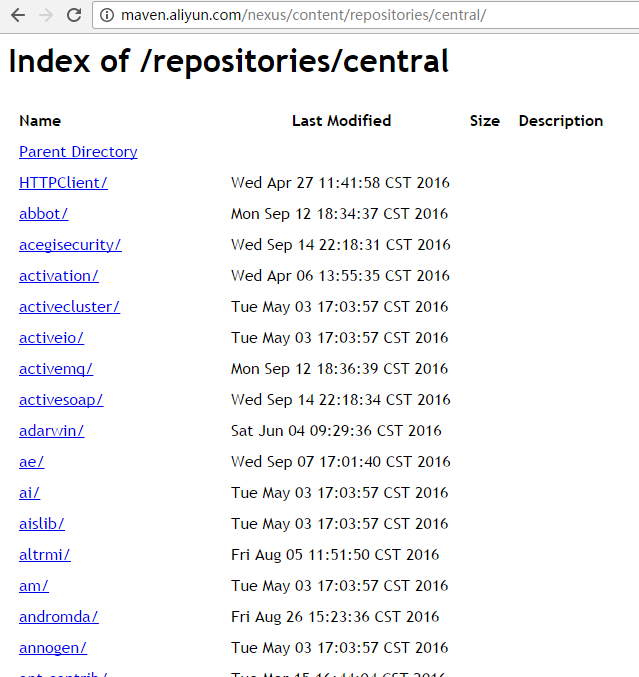
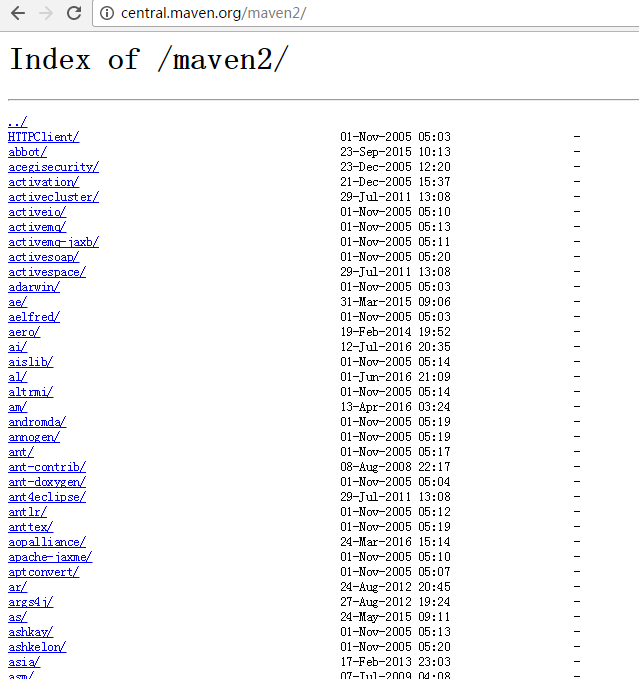
setting.xml,这个配文件,是全局的。 比如你的是构建,web项目。我的是Hadoop和spark项目。 setting这个文件,你我都可以是一样的。因为它是全局的配置,相当于里面只要写入阿狸开源私服,达内私服,开源中国私服等。就是一个中央仓库网址的作用!
pom.xml
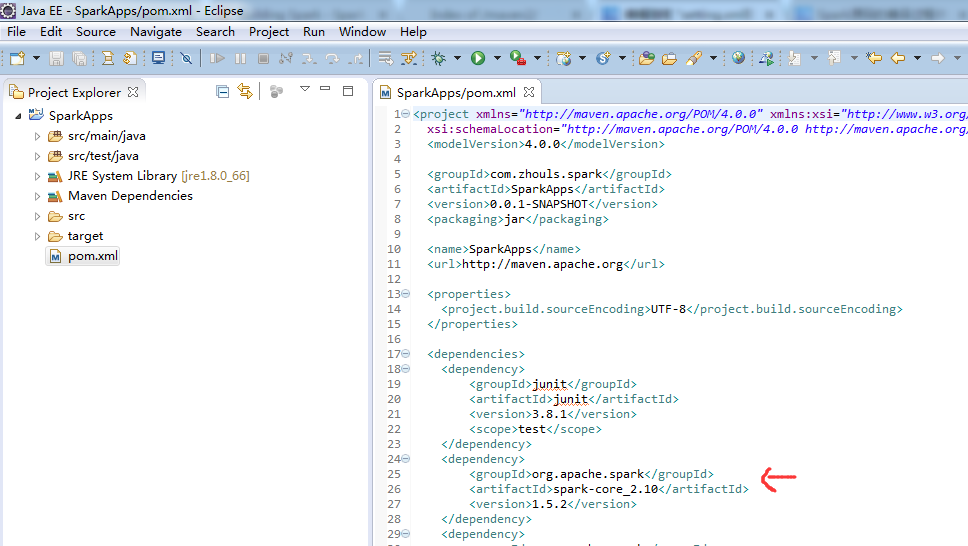
1、Eclipse里Maven创建项目、自动打依赖jar包:
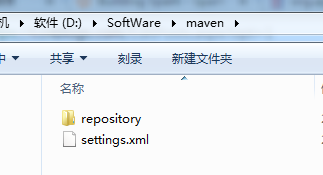
setting.xml配置文件的内容:
<project xmlns="http://maven.apache.org/POM/4.0.0" xmlns:xsi="http://www.w3.org/2001/XMLSchema-instance"

    xsi:schemaLocation="http://maven.apache.org/POM/4.0.0 http://maven.apache.org/xsd/maven-4.0.0.xsd">

    <modelVersion>4.0.0</modelVersion>

    <groupId>com.zhouls.spark</groupId>

    <artifactId>SparkApps</artifactId>

    <version>0.0.1-SNAPSHOT</version>

    <packaging>jar</packaging>

    <name>SparkApps</name>

    <url>http://maven.apache.org</url>

    <properties>

        <project.build.sourceEncoding>UTF-8</project.build.sourceEncoding>

        <junit.version>4.10</junit.version>

        <spark.version>1.5.2</spark.version>

        <hadoop.version>2.6.0</hadoop.version>

    </properties>

    <dependencies>

        <dependency>

            <groupId>junit</groupId>

            <artifactId>junit</artifactId>

            <version>${junit.version}</version>

            <scope>test</scope>

        </dependency>

        <dependency>

            <groupId>org.apache.spark</groupId>

            <artifactId>spark-core_2.10</artifactId>

            <version>${spark.version}</version>

        </dependency>

        <dependency>

            <groupId>org.apache.spark</groupId>

            <artifactId>spark-sql_2.10</artifactId>

            <version>${spark.version}</version>

        </dependency>

        <dependency>

            <groupId>org.apache.spark</groupId>

            <artifactId>spark-hive_2.10</artifactId>

            <version>${spark.version}</version>

        </dependency>

        <dependency>

            <groupId>org.apache.spark</groupId>

            <artifactId>spark-streaming_2.10</artifactId>

            <version>${spark.version}</version>

        </dependency>

        <dependency>

            <groupId>org.apache.spark</groupId>

            <artifactId>spark-streaming-kafka_2.10</artifactId>

            <version>${spark.version}</version>

        </dependency>

        <dependency>

            <groupId>org.apache.hadoop</groupId>

            <artifactId>hadoop-client</artifactId>

            <version>${hadoop.version}</version>

        </dependency>

    </dependencies>

    <build>

        <sourceDirectory>src/main/java</sourceDirectory>

        <testSourceDirectory>src/main/test</testSourceDirectory>

        <plugins>

            <plugin>

                <artifactId>maven-assembly-plugin</artifactId>

                <configuration>

                    <descriptorRefs>

                        <descriptorRef>jar-with-dependencies</descriptorRef>

                    </descriptorRefs>

                    <archive>

                        <manifest>

                            <mainClass></mainClass>

                        </manifest>

                    </archive>

                </configuration>

                <executions>

                    <execution>

                        <id>make-assembly</id>

                        <phase>package</phase>

                        <goals>

                            <goal>single</goal>

                        </goals>

                    </execution>

                </executions>

            </plugin>

            <plugin>

                <groupId>org.codehaus.mojo</groupId>

                <artifactId>exec-maven-plugin</artifactId>

                <version>1.2.1</version>

                <executions>

                    <execution>

                        <goals>

                            <goal>exec</goal>

                        </goals>

                    </execution>

                </executions>

                <configuration>

                    <executable>java</executable>

                    <includeProjectDependencies>true</includeProjectDependencies>

                    <includePluginDependencies>false</includePluginDependencies>

                    <classpathScope>compile</classpathScope>

                    <mainClass>com.zhouls.spark.SparkApps.cores.WordCount</mainClass>

                </configuration>

            </plugin>

            <plugin>

                <groupId>org.apache.maven.plugins</groupId>

                <artifactId>maven-compiler-plugin</artifactId>

                <version>2.3.2</version>

                <configuration>

                    <source>1.6</source>

                    <target>1.6</target>

                </configuration>

            </plugin>

        </plugins>

    </build>

</project>


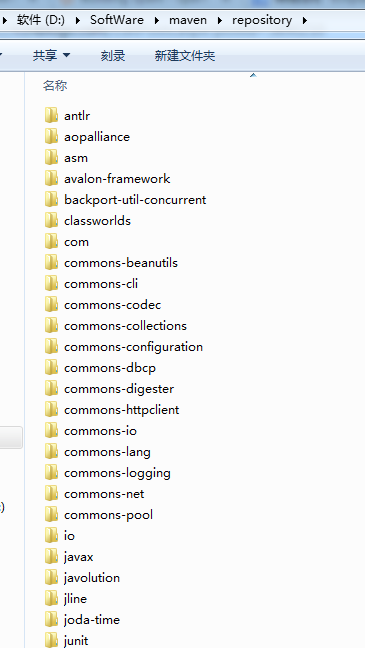

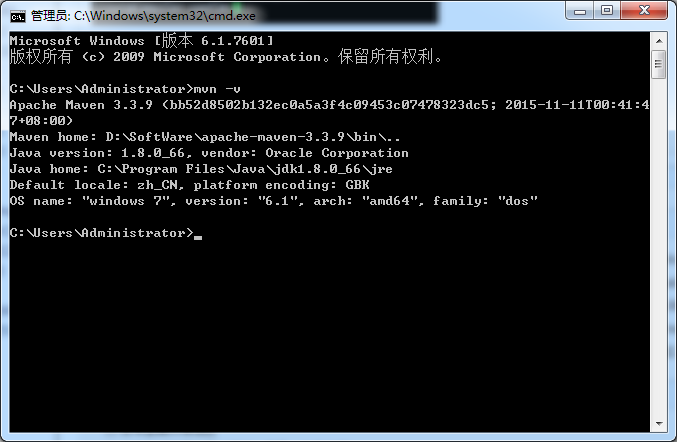
2、Hadoop/Spark源码编译时
setting.xml配置文件的内容:<?xml version="1.0" encoding="UTF-8"?>
<?xml version="1.0" encoding="UTF-8"?>

<!--Licensed to the Apache Software Foundation (ASF) under one or more contributor

    license agreements. See the NOTICE file distributed with this work for additional

    information regarding copyright ownership. The ASF licenses this file to

    you under the Apache License, Version 2.0 (the "License"); you may not use

    this file except in compliance with the License. You may obtain a copy of

    the License at http://www.apache.org/licenses/LICENSE-2.0 Unless required

    by applicable law or agreed to in writing, software distributed under the

    License is distributed on an "AS IS" BASIS, WITHOUT WARRANTIES OR CONDITIONS

    OF ANY KIND, either express or implied. See the License for the specific

    language governing permissions and limitations under the License. -->

<!--This is the configuration file for Maven. It can be specified at two levels:

    |

    | 1. User Level. This settings.xml file provides configuration for a single user, and is normally provided in ${user.home}/.m2/settings.xml.

    |     NOTE: This location can be overridden with the CLI option:

    | -s /path/to/user/settings.xml

    |

    | 2. Global Level. This settings.xml file provides configuration for all Maven

    |     users on a machine (assuming they're all using the same Maven installation). It's normally provided in

    |     ${maven.home}/conf/settings.xml.

    |     NOTE: This location can be overridden with the CLI option:

    | -gs /path/to/global/settings.xml

    |

    | The sections in this sample file are intended to give you a running start at

    | getting the most out of your Maven installation. Where appropriate, the default

    | values (values used when the setting is not specified) are provided.-->

<settings xmlns="http://maven.apache.org/SETTINGS/1.0.0" xmlns:xsi="http://www.w3.org/2001/XMLSchema-instance"

    xsi:schemaLocation="http://maven.apache.org/SETTINGS/1.0.0 http://maven.apache.org/xsd/settings-1.0.0.xsd">

    <!-- localRepository

    | The path to the local repository maven will use to store artifacts.

    |

    | Default: ${user.home}/.m2/repository

    <localRepository>/path/to/local/repo</localRepository>

    -->

    <!-- interactiveMode

    | This will determine whether maven prompts you when it needs input. If set to false,

    | maven will use a sensible default value, perhaps based on some other setting, for

    | the parameter in question.

    |

    | Default: true

    <interactiveMode>true</interactiveMode>

    -->

    <!-- offline

    | Determines whether maven should attempt to connect to the network when executing a build.

    | This will have an effect on artifact downloads, artifact deployment, and others.

    |

    | Default: false

    <offline>false</offline>

    -->

    <!-- pluginGroups

    | This is a list of additional group identifiers that will be searched when resolving plugins by their prefix, i.e.

    | when invoking a command line like "mvn prefix:goal". Maven will automatically add the group identifiers

    | "org.apache.maven.plugins" and "org.codehaus.mojo" if these are not already contained in the list.

    |-->

    <pluginGroups>

    <!-- pluginGroup

    | Specifies a further group identifier to use for plugin lookup.

    <pluginGroup>com.your.plugins</pluginGroup>

    -->

    </pluginGroups>

    <!-- proxies

    | This is a list of proxies which can be used on this machine to connect to the network.

    | Unless otherwise specified (by system property or command-line switch), the first proxy

    | specification in this list marked as active will be used.

    |-->

    <proxies>

    <!-- proxy

    | Specification for one proxy, to be used in connecting to the network.

    |

    <proxy>

    <id>optional</id>

    <active>true</active>

    <protocol>http</protocol>

    <username>proxyuser</username>

    <password>proxypass</password>

    <host>proxy.host.net</host>

    <port>80</port>

    <nonProxyHosts>local.net|some.host.com</nonProxyHosts>

    </proxy>

    -->

    </proxies>

    <!-- servers

    | This is a list of authentication profiles, keyed by the server-id used within the system.

    | Authentication profiles can be used whenever maven must make a connection to a remote server.

    |-->

    <servers>

    <!-- server

    | Specifies the authentication information to use when connecting to a particular server, identified by

    | a unique name within the system (referred to by the 'id' attribute below).

    |

    | NOTE: You should either specify username/password OR privateKey/passphrase, since these pairings are

    | used together.

    |

    <server>

    <id>deploymentRepo</id>

    <username>repouser</username>

    <password>repopwd</password>

    </server>

    -->

    <!-- Another sample, using keys to authenticate.

    <server>

    <id>siteServer</id>

    <privateKey>/path/to/private/key</privateKey>

    <passphrase>optional; leave empty if not used.</passphrase>

    </server>

    -->

    </servers>

    <!-- mirrors

    | This is a list of mirrors to be used in downloading artifacts from remote repositories.

    |

    | It works like this: a POM may declare a repository to use in resolving certain artifacts.

    | However, this repository may have problems with heavy traffic at times, so people have mirrored

    | it to several places.

    |

    | That repository definition will have a unique id, so we can create a mirror reference for that

    | repository, to be used as an alternate download site. The mirror site will be the preferred

    | server for that repository.

    |-->

    <mirrors>

    <!-- mirror

    | Specifies a repository mirror site to use instead of a given repository. The repository that

    | this mirror serves has an ID that matches the mirrorOf element of this mirror. IDs are used

    | for inheritance and direct lookup purposes, and must be unique across the set of mirrors.

    |

    <mirror>

    <id>mirrorId</id>

    <mirrorOf>repositoryId</mirrorOf>

    <name>Human Readable Name for this Mirror.</name>

    <url>http://my.repository.com/repo/path</url>

    </mirror>

    -->

    <mirror>

        <id>osc</id>

        <mirrorOf>central</mirrorOf>

        <url>http://maven.aliyun.com/nexus/content/repositories/central</url>

    </mirror>

    <mirror>

        <id>osc_thirdparty</id>

        <mirrorOf>thirdparty</mirrorOf>

        <url>http://maven.aliyun.com/nexus/content/repositories/central</url>

    </mirror>

    </mirrors>

    <!-- profiles

    | This is a list of profiles which can be activated in a variety of ways, and which can modify

    | the build process. Profiles provided in the settings.xml are intended to provide local machine-

    | specific paths and repository locations which allow the build to work in the local environment.

    |

    | For example, if you have an integration testing plugin - like cactus - that needs to know where

    | your Tomcat instance is installed, you can provide a variable here such that the variable is

    | dereferenced during the build process to configure the cactus plugin.

    |

    | As noted above, profiles can be activated in a variety of ways. One way - the activeProfiles

    | section of this document (settings.xml) - will be discussed later. Another way essentially

    | relies on the detection of a system property, either matching a particular value for the property,

    | or merely testing its existence. Profiles can also be activated by JDK version prefix, where a

    | value of '1.4' might activate a profile when the build is executed on a JDK version of '1.4.2_07'.

    | Finally, the list of active profiles can be specified directly from the command line.

    |

    | NOTE: For profiles defined in the settings.xml, you are restricted to specifying only artifact

    | repositories, plugin repositories, and free-form properties to be used as configuration

    | variables for plugins in the POM.

    |

    |-->

    <profiles>

    <!-- profile

    | Specifies a set of introductions to the build process, to be activated using one or more of the

    | mechanisms described above. For inheritance purposes, and to activate profiles via <activatedProfiles/>

    | or the command line, profiles have to have an ID that is unique.

    |

    | An encouraged best practice for profile identification is to use a consistent naming convention

    | for profiles, such as 'env-dev', 'env-test', 'env-production', 'user-jdcasey', 'user-brett', etc.

    | This will make it more intuitive to understand what the set of introduced profiles is attempting

    | to accomplish, particularly when you only have a list of profile id's for debug.

    |

    | This profile example uses the JDK version to trigger activation, and provides a JDK-specific repo.

    <profile>

    <id>jdk-1.4</id>

    <activation>

    <jdk>1.4</jdk>

    </activation>

    <repositories>

    <repository>

    <id>jdk14</id>

    <name>Repository for JDK 1.4 builds</name>

    <url>http://www.myhost.com/maven/jdk14</url>

    <layout>default</layout>

    <snapshotPolicy>always</snapshotPolicy>

    </repository>

    </repositories>

    </profile>

    -->

    <!--

    | Here is another profile, activated by the system property 'target-env' with a value of 'dev',

    | which provides a specific path to the Tomcat instance. To use this, your plugin configuration

    | might hypothetically look like:

    |

    | ...

    | <plugin>

    | <groupId>org.myco.myplugins</groupId>

    | <artifactId>myplugin</artifactId>

    |

    | <configuration>

    | <tomcatLocation>${tomcatPath}</tomcatLocation>

    | </configuration>

    | </plugin>

    | ...

    |

    | NOTE: If you just wanted to inject this configuration whenever someone set 'target-env' to

    | anything, you could just leave off the <value/> inside the activation-property.

    |

    <profile>

    <id>env-dev</id>

    <activation>

    <property>

    <name>target-env</name>

    <value>dev</value>

    </property>

    </activation>

    <properties>

    <tomcatPath>/path/to/tomcat/instance</tomcatPath>

    </properties>

    </profile>

    -->

    <profile>

    <id>jdk-1.4</id>

    <activation>

        <jdk>1.4</jdk>

    </activation>

    <repositories>

        <repository>

            <id>nexus</id>

            <name>local private nexus</name>

            <url>http://maven.aliyun.com/nexus/content/repositories/central</url>

            <releases>

                <enabled>true</enabled>

            </releases>

            <snapshots>

                <enabled>false</enabled>

            </snapshots>

        </repository>

    </repositories>

    <pluginRepositories>

        <pluginRepository>

            <id>nexus</id>

            <name>local private nexus</name>

            <url>http://maven.aliyun.com/nexus/content/repositories/central</url>

            <releases>

                <enabled>true</enabled>

            </releases>

            <snapshots>

                <enabled>false</enabled>

            </snapshots>

        </pluginRepository>

    </pluginRepositories>

</profile>

    <profile>

        <id>osc</id>

        <activation>

            <activeByDefault>true</activeByDefault>

        </activation>

        <repositories>

            <repository>

                <id>osc</id>

                <url>http://maven.aliyun.com/nexus/content/repositories/central</url>

            </repository>

            <repository>

                <id>osc_thirdparty</id>

                <url>http://maven.aliyun.com/nexus/content/repositories/central</url>

            </repository>

        </repositories>

        <pluginRepositories>

            <pluginRepository>

                <id>osc</id>

                <url>http://maven.aliyun.com/nexus/content/repositories/central</url>

            </pluginRepository>

        </pluginRepositories>

    </profile>

    </profiles>

    <!-- activeProfiles

    | List of profiles that are active for all builds.

    |

    <activeProfiles>

    <activeProfile>alwaysActiveProfile</activeProfile>

    <activeProfile>anotherAlwaysActiveProfile</activeProfile>

    </activeProfiles>

    -->

</settings>
setting.xml配置文件 --转载的更多相关文章
- Maven之(六)setting.xml配置文件详解
setting.xml配置文件 maven的配置文件settings.xml存在于两个地方: 1.安装的地方:${M2_HOME}/conf/settings.xml 2.用户的目录:${user.h ...
- Maven之setting.xml配置文件详解
setting.xml配置文件 maven的配置文件settings.xml存在于两个地方: 1.安装的地方:${M2_HOME}/conf/settings.xml 2.用户的目录:${user.h ...
- setting.xml配置文件
在此,简单的说下. setting.xml 和 pom.xml这两各配置文件,到此是怎样? setting.xml setting.xml,这个配文件,是全局的. 比如你的是构建,web项目.我的是 ...
- maven学习(一)setting.xml配置文件详解
maven环境搭建: 1.官网下载zip包,解压至任意目录(如:E:\wly\apache-maven-3.2.5) 2.环境变量MAVEN_HOME(E:\wly\apache-maven-3.2. ...
- 6.Maven之(六)setting.xml配置文件详解
转自:https://blog.csdn.net/u012152619/article/details/51485152
- maven之(六)setting.xml的配置文件详解
setting.xml配置文件 maven的配置文件settings.xml存在于两个地方: 1.安装的地方:${M2_HOME}/conf/settings.xml 2.用户的目录:${user.h ...
- Maven配置文件setting.xml详解
注:本文来源于:大话JAVA的那些事 <Maven配置文件setting.xml详解> <?xml version="1.0" encoding="UT ...
- Idea中找不到xml配置文件问题研究以及classpath设置(转载)
问题: 在用Idea建立一个Java Application工程的时候,应用了Spring框架,可是Spring的xml配置文件找不到.检查表明不是代码的问题.费了我好长时间才解决. 出现问题,我 ...
- AndroidManifest.xml配置文件详解(转载)
AndroidManifest.xml配置文件详解 2013-01-05 10:25:23 分类: Android平台 AndroidManifest.xml配置文件对于Android应用开发来说是 ...
随机推荐
- zoj2112&&bzoj1901
题解: 可修改的主席树 一开始,我就按照最暴力的方法,空间nlognlogn 然后zju上面过不了,bzoj没有权限号 然后,参考了往上的论文,发现可以把初始的主席树先建好 然后,每次只需要维护修改的 ...
- Solrj调用Solr API
在MyEclipse下的SSH项目,要调用Solr接口进行操作. 1.先运行solr 2.在已搭建好的SSH项目中用Solrj调用Solr的接口 3.导入如下solr的jar包到搭建好的SSH项目的W ...
- C# 自动发送邮件被系统当做垃圾邮件退回的处理方法
前两天做了一个发送邮件的定时任务.其功能为在每天的某一时刻,系统自动从银行查询前一天的交易明细到本地服务器,解析后生成为各自不同Excel文件,并打包成zip压缩文件,然后抄送附件给财务对账.其中,邮 ...
- Java——IO类,字节流缓冲区
body, table{font-family: 微软雅黑} table{border-collapse: collapse; border: solid gray; border-width: 2p ...
- 基于GUI的简单聊天室02
服务器端 与上一篇相比,加进了线程内部类,解决多个客户端连接时,服务器无法全部响应的问题. 利用List集合来装载客户端的对象. 还需要注意全局变量的应用. /** * 相比01,加进了线程内部类,解 ...
- 设置MyEclipse字体大小
设置MyEclipse字体大小
- DevExpress v17.2新版亮点—ASP.NET篇(三)
用户界面套包DevExpress v17.2终于正式发布,本站将以连载的形式为大家介绍各版本新增内容.本文将介绍了DevExpress ASP.NET v17.2 的GridView Control. ...
- if...then
我到现在明白一些道理 有些事情是徒劳无功的 有些却不是 世间事不过如此,只要你肯付出相应的代价,你就可以得到.
- AngularJS中的DOM value与view value
在看AngularJS的文档的时候经常会见到三个名词:DOM value.view value和model value. model value是模型值,view value是视图值,可这个DOM v ...
- magento常见的问题及解决方法
刚接触magento时,会遇到很多问题,大多数都是些magento配置及操作上的问题,因为刚接触magento不久所有对这些问题比较陌生也不知道如何处理.今日根据模版堂技术指导下和网上的相关例子,这里 ...