
Spark的CombineByKey
combineBykey关键是要明白里面的三个函数:
1. 当某个key第一次出现的时候,走的是第一个函数(createCombin);A function that creates a combiner. In the aggregateByKey function the first argument was simply an initial zero value. In combineByKey we provide a function that will accept our current value as a parameter and return our new value that will be merged with addtional values.
2. 当某个keyN次出现(N > 1)的时候,将会走第二个函数;The second function is a merging function that takes a value and merges/combines it into the previously collecte value(s).
3. 第三个函数是发生shuffle的时候,数据汇总的处理;处理逻辑一般和第二个函数一致;两个参数是来自于两个区的待累计处理参数。The third function combines the merged values together. Basically this function takes the new values produced at the partition level and combines them until we end up with one singular value.
突然来看这个combineByKey有些唐突,不过你要明白combine含义就是合并,可能会好理解.combinebyKey很多时候会和map做接续,combine数据后,在map对于数据进行二次处理,比如下面的例子里面的求平均值;combineByKey做得是累加,当需要对累加值做后续处理的时候,map就出场了;另外,combinByKey其实可以写成mapValues+reduceByKey;mapValues + reduceByKey是两轮便利,combineByKey其实是一轮便利(不算第三个函数)。但是两者只是类似,却不相同;
1.mapValues: 当一个遍历每个元素的时候,处理,参数是当前待处理元素;
2.reduceByKey,是遍历一遍之后,第二遍遍历处理,一般是做累计逻辑处理,第一个参数就是历史累计值,第二个参数是当前待处理元素;
代码如下:
 object Main {

   def main(args: Array[String]) {

     val scores = List(

       ScoreDetail("xiaoming", "Math", 98),

       ScoreDetail("xiaoming", "English", 88),

       ScoreDetail("wangwu", "Math", 75),

       ScoreDetail("wangwu", "English", 78),

       ScoreDetail("lihua", "Math", 90),

       ScoreDetail("lihua", "English", 80),

       ScoreDetail("zhangsan", "Math", 91),

       ScoreDetail("zhangsan", "English", 80))

     var sparkConf = new SparkConf

     //sparkConf.setMaster("yarn-client")

     sparkConf.setAppName("app")

     var sc = new SparkContext(sparkConf)

     //val scoresWithKey = for( i<-scores) yield (i.studentName, i)

     val scoresWithKey = scores.map(score => (score.studentName, score))

     var scoresWithKeyRDD = sc.parallelize(scoresWithKey).partitionBy(new HashPartitioner(3)).cache

     scoresWithKeyRDD.foreachPartition(partition => {

       //println("***** partion.length: " + partition.size + "************")

       while (partition.hasNext) {

         val score = partition.next();

         println("name: " + score._1 + "; id: " + score._2.score)

       }

     })

         val avg = scoresWithKeyRDD.combineByKey(

           (x: ScoreDetail) => {

             println("score:" + x.score + "name: " + x.studentName)

             (x.score, 1)},

           (acc: (Float, Int), x: ScoreDetail) =>{

             println("second ground:" + x.score + "name: " + x.studentName)

             (acc._1 + x.score, acc._2 + 1)

           },

           (acc1: (Float, Int), acc2: (Float, Int)) => (acc1._1 + acc2._1, acc1._2 + acc2._2)

         ).map({ case (key, value) => (key, value._1 / value._2) })

     /*

         val avg = scoresWithKeyRDD.mapValues(value => (value.score, 1))

           .reduceByKey((acc, item) => (acc._1 + item._1, acc._2 + item._2))

           //.map(item => (item, item._2._1 / item._2._2)

           .map({ case (key, value) => (key, value._1 / value._2) })

      */

     avg.collect.foreach(println)

     scoresWithKeyRDD.unpersist(true)

   }

 }
combineByKey的处理逻辑通过日志可以看到:
   score:.0name: xiaoming

   second ground:.0name: xiaoming

   score:.0name: lihua

   second ground:.0name: lihua

   score:.0name: zhangsan

   second ground:.0name: zhangsan
每个key只是走一次第一个函数;当同一个key第n次出现(n > 1)的时候,将会走第二个函数;这个和mapValues将会过遍历一遍,keyByValues再过一遍的逻辑还是不同的。
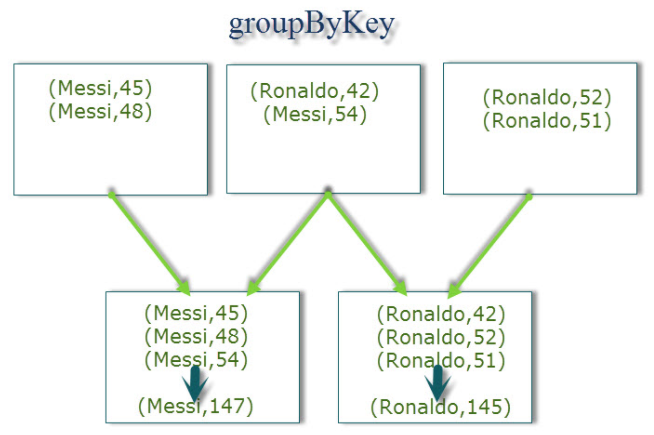
combineByKey的一个老对手是groupbyKey,这个说法其实不准确,reduceByKey才是groupByKey的老对手;因为无论是reduceByKey还是groupByKey,其实底层都是调用combinByKey;但是groupByKey将会导致大量的shuffle,因为groupByKey的实现逻辑是将各个分区的数据原封不动的shuffle到reduce机器,由reduce机器进行合并处理,见下图:
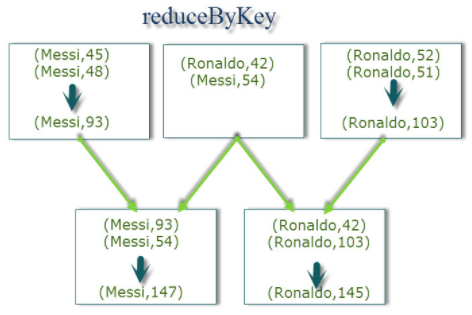
reduceByKey则是先将各个分区的数据进行合并(计算)处理后在shuffle到reducer机器;这样严重的减轻了数据传输的量。
Spark的CombineByKey的更多相关文章
- Spark入门(六)--Spark的combineByKey、sortBykey
spark的combineByKey combineByKey的特点 combineByKey的强大之处,在于提供了三个函数操作来操作一个函数.第一个函数,是对元数据处理,从而获得一个键值对.第二个函 ...
- Spark 的combineByKey函数
在Spark中有许多聚类操作是基于combineByKey的,例如group那个家族的操作等.所以combineByKey这个函数也是比较重要,所以下午花了点时间看来下这个函数.也参考了http:// ...
- Spark RDD——combineByKey
为什么单独讲解combineByKey? 因为combineByKey是Spark中一个比较核心的高级函数,其他一些高阶键值对函数底层都是用它实现的.诸如 groupByKey,reduceByKey ...
- spark之combineByKey
combineByKey def combineByKey[C](createCombiner: (V) => C, mergeValue: (C, V) => C, mergeCombi ...
- Spark实战系列目录
1 Spark rdd -- action函数详解与实战 2 Spark rdd -- transformations函数详解与实战(上) 3 Spark rdd -- transformations ...
- Spark入门(七)--Spark的intersection、subtract、union和distinc
Spark的intersection intersection顾名思义,他是指交叉的.当两个RDD进行intersection后,将保留两者共有的.因此对于RDD1.intersection(RDD2 ...
- Job 逻辑执行图
General logical plan 典型的 Job 逻辑执行图如上所示,经过下面四个步骤可以得到最终执行结果: 从数据源(可以是本地 file,内存数据结构, HDFS,HBase 等)读取数据 ...
- Spark API 之 combineByKey(一)
1 前言 combineByKey是使用Spark无法避免的一个方法,总会在有意或无意,直接或间接的调用到它.从它的字面上就可以知道,它有聚合的作用,对于这点不想做过多的解释,原因很简单, ...
- spark算子:combineByKey
假设我们有一组个人信息,我们针对人的性别进行分组统计,并进行统计每个分组中的记录数. scala> val people = List(("male", "Mobi ...
随机推荐
- ubuntu中python2与python3的默认启动切换
方法摘自SegmentFault: 方法一: echo alias python=python3 >> ~/.bashrc && source ~/.bashrc相当于先打 ...
- IceScrum敏捷开发工具的安装文档-官方最新版
Welcome to the iceScrum iceScrum install guide. If you don’t want to manage your own iceScrum instal ...
- 022——VUE中remove()方法的使用:
<!DOCTYPE html> <html lang="en"> <head> <meta charset="UTF-8&quo ...
- Redis--初入
安装 .下载源码,解压缩后编译源码 $ wget http://download.redis.io/releases/redis-4.0.1.tar.gz $ tar xzf redis-4.0.1 ...
- 【Seajs源码分析】2. 工具方法1
Sea.js: var seajs = global.seajs = { // The current version of Sea.js being used version: "@VER ...
- python中time()时间的相关问题
Python中time模块详解(转) 在平常的代码中,我们常常需要与时间打交道.在Python中,与时间处理有关的模块就包括:time,datetime以及calendar.这篇文章,主要讲解time ...
- DRF中序列化器定义及使用
首先需要明白序列化和反序列化的定义及作用: 序列化是将程序语言转换为JSON/XML; 反序列化是将JSON/XML转换为程序语言; 对应到Django中,序列化即把模型对象转换为字典形式, 在返回给 ...
- 前端中CSS属性大全
css属性 布局常用样式属性: width 设置元素(标签)的宽度,如:width:100px; height 设置元素(标签)的高度,如:height:200px; background 设置元素背 ...
- Conky配置文件
Conky是一个可以在linux系统中实时显示系统性能的工具,美观且十分好用,我们选择安装conky-all程序包 # set to yes if you want Conky to be forke ...
- iOS 11 实现App在禁止转屏的状态下网页播放器全屏
禁止转屏是这个意思,在General中设置Device Orientation只有竖屏. 要点就是重写UIViewController的以下3个属性方法 系统的全屏视频播放器是AVFullScreen ...