
【手把手教你全文检索】Apache Lucene初探
PS:
苦学一周全文检索,由原来的搜索小白,到初次涉猎,感觉每门技术都博大精深,其中精髓亦是不可一日而语。那小博猪就简单介绍一下这一周的学习历程,仅供各位程序猿们参考,这其中不涉及任何私密话题,因此也不用打马赛克了,都是网络分享的开源资料,当然也不涉及任何利益关系。
如若转载,还请注明出处——xingoo
讲解之前,先来分享一些资料
首先呢,学习任何一门新的亦或是旧的开源技术,百度其中一二是最简单的办法,先了解其中的大概,思想等等。这里就贡献一个讲解很到位的ppt。已经被我转成了PDF,便于搜藏。
其次,关于第一次编程初探,建议还是查看官方资料。百度到的资料,目前Lucene已经更新到4.9版本,这个版本需要1.7以上的JDK,所以如果还用1.6甚至是1.5的小盆友,请参考低版本,由于我用的1.6,因此在使用Lucene4.0。
这是Lucene4.0的官网文档:http://lucene.apache.org/core/4_0_0/core/overview-summary.html
这里非常佩服Lucene的开元贡献者,可以阅读Lucene in Action,作者最初想要写软件赚钱,最后贡献给了Apache,跑题了。
最后,提醒学习Lucene的小盆友们,这个开源软件的版本更新不慢,版本之间的编程风格亦是不同,所以如果百度到的帖子,可能这段代码,用了4.0或者3.6就会不好使。
比如,以前版本的申请IndexWriter时,是这样的:
IndexWriter indexWriter = new IndexWriter(indexDir,luceneAnalyzer, true );
但是4.0,我们需要配置一个conf,把配置内容放到这个对象中:
    IndexWriterConfig config = new IndexWriterConfig(Version.LUCENE_CURRENT, analyzer);

    IndexWriter iwriter = new IndexWriter(directory, config);
所以,请一定要参考官方文档的编程风格,进行代码的书写。
最后的最后,从官网上面下载下来的文件,已经上传至百度网盘,欢迎下载。

这是其中最常用的五个文件:
第一个,也是最重要的,Lucene-core-4.0.0.jar,其中包括了常用的文档,索引,搜索,存储等相关核心代码。
第二个,Lucene-analyzers-common-4.0.0.jar,这里面包含了各种语言的词法分析器,用于对文件内容进行关键字切分,提取。
第三个,Lucene-highlighter-4.0.0.jar,这个jar包主要用于搜索出的内容高亮显示。
第四个和第五个,Lucene-queryparser-4.0.0.jar,提供了搜索相关的代码,用于各种搜索,比如模糊搜索,范围搜索,等等。
废话说到这里,下面我们简单的讲解一下什么是全文检索。
比如,我们一个文件夹中,或者一个磁盘中有很多的文件,记事本、world、Excel、pdf,我们想根据其中的关键词搜索包含的文件。例如,我们输入Lucene,所有内容含有Lucene的文件就会被检查出来。这就是所谓的全文检索。
因此,很容易的我们想到,应该建立一个关键字与文件的相关映射,盗用ppt中的一张图,很明白的解释了这种映射如何实现。
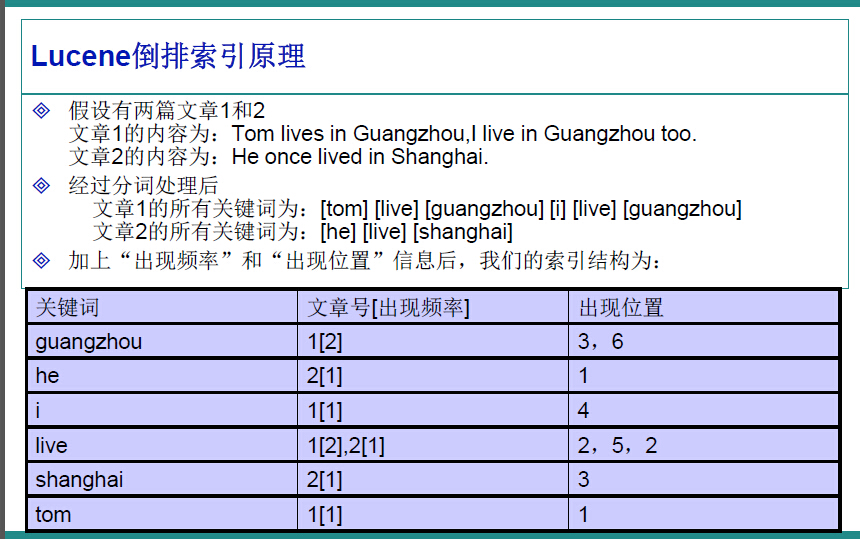
在Lucene中,就是使用这种“倒排索引”的技术,来实现相关映射。
有了这种映射关系,我们就来看看Lucene的架构设计。
下面是Lucene的资料必出现的一张图,但也是其精髓的概括。
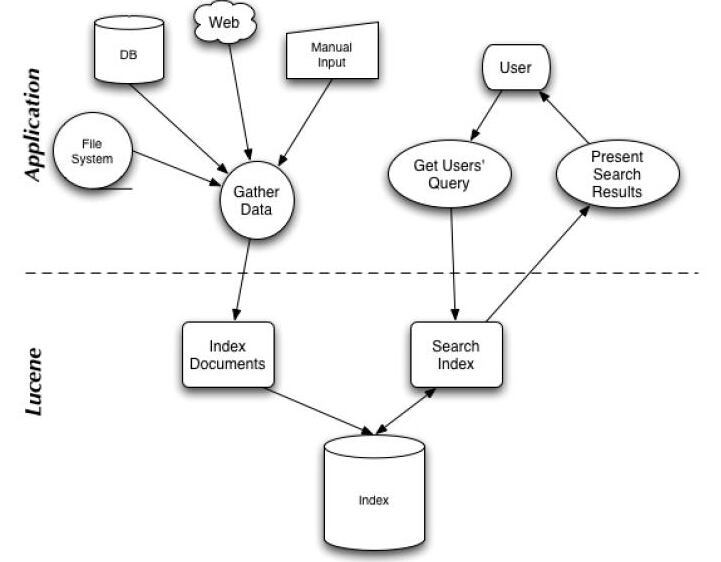
我们可以看到,Lucene的使用主要体现在两个步骤:
1 创建索引,通过IndexWriter对不同的文件进行索引的创建,并将其保存在索引相关文件存储的位置中。
2 通过索引查寻关键字相关文档。
下面针对官网上面给出的一个例子,进行分析:

 1   Analyzer analyzer = new StandardAnalyzer(Version.LUCENE_CURRENT);

 2

 3     // Store the index in memory:

 4     Directory directory = new RAMDirectory();

 5     // To store an index on disk, use this instead:

 6     //Directory directory = FSDirectory.open("/tmp/testindex");

 7     IndexWriterConfig config = new IndexWriterConfig(Version.LUCENE_CURRENT, analyzer);

 8     IndexWriter iwriter = new IndexWriter(directory, config);

 9     Document doc = new Document();

10     String text = "This is the text to be indexed.";

11     doc.add(new Field("fieldname", text, TextField.TYPE_STORED));

12     iwriter.addDocument(doc);

13     iwriter.close();

14

15     // Now search the index:

16     DirectoryReader ireader = DirectoryReader.open(directory);

17     IndexSearcher isearcher = new IndexSearcher(ireader);

18     // Parse a simple query that searches for "text":

19     QueryParser parser = new QueryParser(Version.LUCENE_CURRENT, "fieldname", analyzer);

20     Query query = parser.parse("text");

21     ScoreDoc[] hits = isearcher.search(query, null, 1000).scoreDocs;

22     assertEquals(1, hits.length);

23     // Iterate through the results:

24     for (int i = 0; i < hits.length; i++) {

25       Document hitDoc = isearcher.doc(hits[i].doc);

26       assertEquals("This is the text to be indexed.", hitDoc.get("fieldname"));

27     }

28     ireader.close();

29     directory.close();
索引的创建
首先,我们需要定义一个词法分析器。
比如一句话,“我爱我们的中国!”,如何对他拆分,扣掉停顿词“的”,提取关键字“我”“我们”“中国”等等。这就要借助的词法分析器Analyzer来实现。这里面使用的是标准的词法分析器,如果专门针对汉语,还可以搭配paoding,进行使用。
1 Analyzer analyzer = new StandardAnalyzer(Version.LUCENE_CURRENT);
参数中的Version.LUCENE_CURRENT,代表使用当前的Lucene版本,本文环境中也可以写成Version.LUCENE_40。
第二步,确定索引文件存储的位置,Lucene提供给我们两种方式:
1 本地文件存储
Directory directory = FSDirectory.open("/tmp/testindex");
2 内存存储
Directory directory = new RAMDirectory();
可以根据自己的需要进行设定。
第三步,创建IndexWriter,进行索引文件的写入。
IndexWriterConfig config = new IndexWriterConfig(Version.LUCENE_CURRENT, analyzer);

IndexWriter iwriter = new IndexWriter(directory, config);
这里的IndexWriterConfig,据官方文档介绍,是对indexWriter的配置,其中包含了两个参数,第一个是目前的版本,第二个是词法分析器Analyzer。
第四步,内容提取,进行索引的存储。
Document doc = new Document();

String text = "This is the text to be indexed.";

doc.add(new Field("fieldname", text, TextField.TYPE_STORED));

iwriter.addDocument(doc);

iwriter.close();
第一行,申请了一个document对象,这个类似于数据库中的表中的一行。
第二行,是我们即将索引的字符串。
第三行,把字符串存储起来(因为设置了TextField.TYPE_STORED,如果不想存储,可以使用其他参数,详情参考官方文档),并存储“表明”为"fieldname".
第四行,把doc对象加入到索引创建中。
第五行,关闭IndexWriter,提交创建内容。
这就是索引创建的过程。
关键字查询:
第一步,打开存储位置
DirectoryReader ireader = DirectoryReader.open(directory);
第二步,创建搜索器
IndexSearcher isearcher = new IndexSearcher(ireader);
第三步,类似SQL,进行关键字查询
QueryParser parser = new QueryParser(Version.LUCENE_CURRENT, "fieldname", analyzer);

Query query = parser.parse("text");

ScoreDoc[] hits = isearcher.search(query, null, 1000).scoreDocs;

assertEquals(1, hits.length);

for (int i = 0; i < hits.length; i++) {

    Document hitDoc = isearcher.doc(hits[i].doc);

    assertEquals("This is the text to be indexed.",hitDoc.get("fieldname"));

}
这里,我们创建了一个查询器,并设置其词法分析器,以及查询的“表名“为”fieldname“。查询结果会返回一个集合,类似SQL的ResultSet,我们可以提取其中存储的内容。
关于各种不同的查询方式,可以参考官方手册,或者推荐的PPT
第四步,关闭查询器等。
ireader.close();

directory.close();
最后,博猪自己写了个简单的例子,可以对一个文件夹内的内容进行索引的创建,并根据关键字筛选文件,并读取其中的内容。
创建索引:
/**

     * 创建当前文件目录的索引

     * @param path 当前文件目录

     * @return 是否成功

     */

    public static boolean createIndex(String path){

        Date date1 = new Date();

        List<File> fileList = getFileList(path);

        for (File file : fileList) {

            content = "";

            //获取文件后缀

            String type = file.getName().substring(file.getName().lastIndexOf(".")+1);

            if("txt".equalsIgnoreCase(type)){

                content += txt2String(file);

            }else if("doc".equalsIgnoreCase(type)){

                content += doc2String(file);

            }else if("xls".equalsIgnoreCase(type)){

                content += xls2String(file);

            }

            System.out.println("name :"+file.getName());

            System.out.println("path :"+file.getPath());

//            System.out.println("content :"+content);

            System.out.println();

            try{

                analyzer = new StandardAnalyzer(Version.LUCENE_CURRENT);

                directory = FSDirectory.open(new File(INDEX_DIR));

                File indexFile = new File(INDEX_DIR);

                if (!indexFile.exists()) {

                    indexFile.mkdirs();

                }

                IndexWriterConfig config = new IndexWriterConfig(Version.LUCENE_CURRENT, analyzer);

                indexWriter = new IndexWriter(directory, config);

                Document document = new Document();

                document.add(new TextField("filename", file.getName(), Store.YES));

                document.add(new TextField("content", content, Store.YES));

                document.add(new TextField("path", file.getPath(), Store.YES));

                indexWriter.addDocument(document);

                indexWriter.commit();

                closeWriter();

            }catch(Exception e){

                e.printStackTrace();

            }

            content = "";

        }

        Date date2 = new Date();

        System.out.println("创建索引-----耗时:" + (date2.getTime() - date1.getTime()) + "ms\n");

        return true;

    }
进行查询:
/**

     * 查找索引,返回符合条件的文件

     * @param text 查找的字符串

     * @return 符合条件的文件List

     */

    public static void searchIndex(String text){

        Date date1 = new Date();

        try{

            directory = FSDirectory.open(new File(INDEX_DIR));

            analyzer = new StandardAnalyzer(Version.LUCENE_CURRENT);

            DirectoryReader ireader = DirectoryReader.open(directory);

            IndexSearcher isearcher = new IndexSearcher(ireader);

            QueryParser parser = new QueryParser(Version.LUCENE_CURRENT, "content", analyzer);

            Query query = parser.parse(text);

            ScoreDoc[] hits = isearcher.search(query, null, 1000).scoreDocs;

            for (int i = 0; i < hits.length; i++) {

                Document hitDoc = isearcher.doc(hits[i].doc);

                System.out.println("____________________________");

                System.out.println(hitDoc.get("filename"));

                System.out.println(hitDoc.get("content"));

                System.out.println(hitDoc.get("path"));

                System.out.println("____________________________");

            }

            ireader.close();

            directory.close();

        }catch(Exception e){

            e.printStackTrace();

        }

        Date date2 = new Date();

        System.out.println("查看索引-----耗时:" + (date2.getTime() - date1.getTime()) + "ms\n");

    }
全部代码:
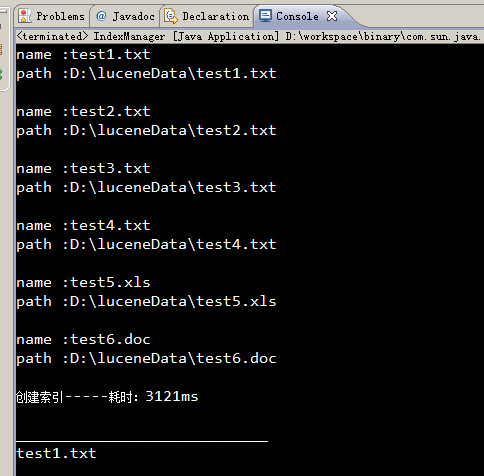
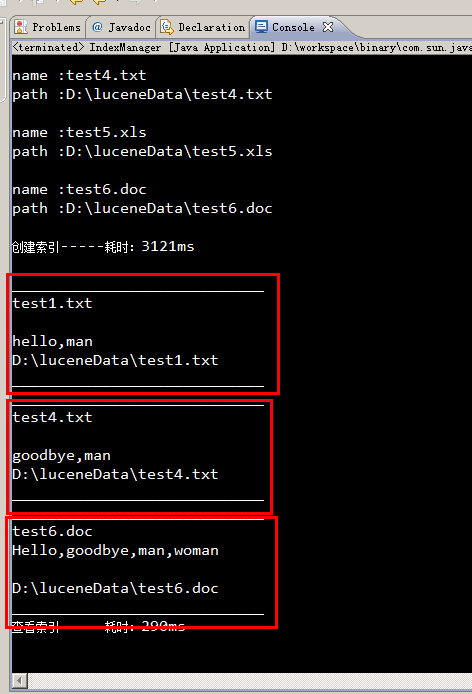
运行结果:
所有包含man关键字的文件,都被筛选出来了。
【手把手教你全文检索】Apache Lucene初探的更多相关文章
- 【手把手教你全文检索】Lucene索引的【增、删、改、查】
前言 搞检索的,应该多少都会了解Lucene一些,它开源而且简单上手,官方API足够编写些小DEMO.并且根据倒排索引,实现快速检索.本文就简单的实现增量添加索引,删除索引,通过关键字查询,以及更新索 ...
- 【手把手教你全文检索】Apache Lucene初探 (zhuan)
http://www.cnblogs.com/xing901022/p/3933675.html *************************************************** ...
- 美女 Committer 手把手教你部署 Apache DolphinScheduler 单机版
还在为如何部署Apache DolphinScheduler 发愁么?自上篇<美女 Committer 手把手教你使用海豚调度>的视频发布后,受到社区伙伴们的热烈欢迎.但个别小伙伴在部署这 ...
- [转载] Apache Lucene初探
转载自http://www.cnblogs.com/xing901022/p/3933675.html 讲解之前,先来分享一些资料 首先呢,学习任何一门新的亦或是旧的开源技术,百度其中一二是最简单的办 ...
- Apache Lucene初探
讲解之前,先来分享一些资料 首先,学习任何一门新的亦或是旧的开源技术,百度其中一二是最简单的办法,先了解其中的大概,思想等等.这里就贡献一个讲解很到位的ppt 这是Lucene4.0的官网文档:htt ...
- Apache Lucene(全文检索引擎)—分词器
目录 返回目录:http://www.cnblogs.com/hanyinglong/p/5464604.html 本项目Demo已上传GitHub,欢迎大家fork下载学习:https://gith ...
- Apache Lucene(全文检索引擎)—创建索引
目录 返回目录:http://www.cnblogs.com/hanyinglong/p/5464604.html 本项目Demo已上传GitHub,欢迎大家fork下载学习:https://gith ...
- 【Lucene】Apache Lucene全文检索引擎架构之构建索引2
上一篇博文中已经对全文检索有了一定的了解,这篇文章主要来总结一下全文检索的第一步:构建索引.其实上一篇博文中的示例程序已经对构建索引写了一段程序了,而且那个程序还是挺完善的.不过从知识点的完整性来考虑 ...
- 【Lucene】Apache Lucene全文检索引擎架构之入门实战1
Lucene是一套用于全文检索和搜寻的开源程式库,由Apache软件基金会支持和提供.Lucene提供了一个简单却强大的应用程式接口,能够做全文索引和搜寻.在Java开发环境里Lucene是一个成熟的 ...
随机推荐
- volatile关键字 学习记录2
public class VolatileTest2 implements Runnable{ volatile int resource = 0; public static void main(S ...
- velocity中$springMacroRequestContext.getMessage($code)
在Java国际化(i18n)中, vm页面显示内容需要使用 #springMessage("title") 实际运行时发现页面输出$springMacroRequestContex ...
- [译]flexbox全揭秘
原文:http://css-tricks.com/snippets/css/a-guide-to-flexbox/ 弹性布局(弹性盒子,现今仍是w3c的候选推荐),目标在于,对于一个容器中的各个项目块 ...
- U盘容量变小解决办法
之前买了个三星闪盘,容量32G,USB3.0 后来装了U盘系统Kali Linux,最近想用的时候发现容量变为6GB了,真的很奇怪. 于是万能的百度(别说为什么不用谷歌,防火墙呀...) 找到解决办法 ...
- file xxx from install of xxx conflicts with file from xxx
执行安装 rpm -ivh lib64stdc++6-4.6.1-2-mdv2011.0.x86_64.rpm 时提示以下错误: warning: lib64stdc++6-4.6.1-2-mdv20 ...
- 常用快捷键: From Eclipse to Android Studio
Eclipse: ctrl+shift+L查看所有快捷键 alt+shift+r 重命名 ctrl+shift+F 格式化代码 alt+shift+s 添加未实现方法 alt+/ 代码助手提示 ct ...
- 随笔分类 - Android之工具类
Android之文件搜索工具类 /** * @detail 搜索sdcard文件 * @param 需要进行文件搜索的目录 * @param 过滤搜索文件类型 */ private void sear ...
- mysql 性能优化方向
国内私募机构九鼎控股打造APP,来就送 20元现金领取地址:http://jdb.jiudingcapital.com/phone.html内部邀请码:C8E245J (不写邀请码,没有现金送)国内私 ...
- 在WinCC中通过VBS操作SQL Server2005
在项目中需要在一定条件满足时,保存一些数据到数据库中,并可根据条件查询.考虑到WinCC6.2以后采用的就是SQL Server2005数据库,所以直接利用该数据库即可,通过SQL Server Ma ...
- [转]C/C++ 程序员必须收藏的资源大全
from: https://github.com/jobbole/awesome-cpp-cn C++ 资源大全中文版 我想很多程序员应该记得 GitHub 上有一个 Awesome – XXX 系列 ...