
C++ 读取REG_SZ 、REG_DWORD 、REG_MULTI_SZ 类型注册表值
读取REG_SZ 类型的注册表键值
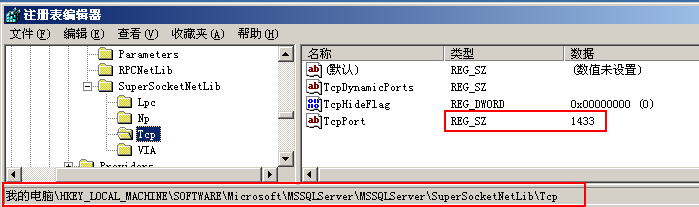
 // 读取 REG_SZ 类型键值的代码

 HKEY  hKey       = NULL;

 DWORD dwSize     = ;

 DWORD dwDataType = ;

 LPBYTE lpValue   = NULL;

 LPCTSTR const lpValueName = _T("TcpPort");

 LONG lRet = ::RegOpenKeyEx(HKEY_LOCAL_MACHINE,

    _T("SOFTWARE\\Microsoft\\MSSQLServer\\MSSQLServer\\SuperSocketNetLib\\Tcp"),

    ,

    KEY_QUERY_VALUE,

    &hKey);

 if(ERROR_SUCCESS != lRet)

 {

    // Error handling (see this FAQ)

    // return;

 }

 // Call once RegQueryValueEx to retrieve the necessary buffer size

 ::RegQueryValueEx(hKey,

    lpValueName,

    ,

    &dwDataType,

    lpValue,  // NULL

    &dwSize); // will contain the data size

 // Alloc the buffer

 lpValue = (LPBYTE)malloc(dwSize);

 // Call twice RegQueryValueEx to get the value

 lRet = ::RegQueryValueEx(hKey,

    lpValueName,

    ,

    &dwDataType,

    lpValue,

    &dwSize);

 ::RegCloseKey(hKey);

 if(ERROR_SUCCESS != lRet)

 {

    // Error handling

    // return;

 }

 // Enjoy of lpValue...

 cout << "port ----------------------- " << lpValue << endl;

 // free the buffer when no more necessary

 free(lpValue);

 // 此段代码来源:http://forums.codeguru.com/showthread.php?247020-Windows-SDK-Registry-How-can-I-read-data-from-the-registry&s=
读取REG_DWORD 类型的注册表键值

 // 读取 REG_DWORD 类型的注册表键值代码

 long lRet;

 HKEY hKey;

 DWORD port;

 DWORD dwType = REG_DWORD;

 DWORD dwValue;

 lRet = RegOpenKeyEx(

            HKEY_LOCAL_MACHINE,

            "SOFTWARE\\Microsoft\\MSSQLServer\\Client\\SuperSocketNetLib\\Tcp",

            ,

            KEY_QUERY_VALUE,

            &hKey

        );    //打开注册表

 if(lRet == ERROR_SUCCESS)//读操作成功

 {

     lRet = RegQueryValueEx(

                hKey,

                "DefaultPort",

                ,

                &dwType,

                (LPBYTE)&port,

                &dwValue

            );    //如果打开成功,则读

     if(lRet == ERROR_SUCCESS)

     {

         printf("\n打开成功,则读:");

         cout << "DefaultPort: " << port << endl;

         //mcfile << "DefaultPort: " << port << endl;

         mcfile << "<port>" << port << "</port>" << endl;

     }

     //以下是读取失败

     else

     {

         printf("\n读取失败:");

     }

 }

 //以下是打开失败

 else

 {

     printf("\n打开失败:");

 }

 RegCloseKey(hKey);//记住,一定要关闭
读取REG_MULTI_SZ 类型的注册表键值
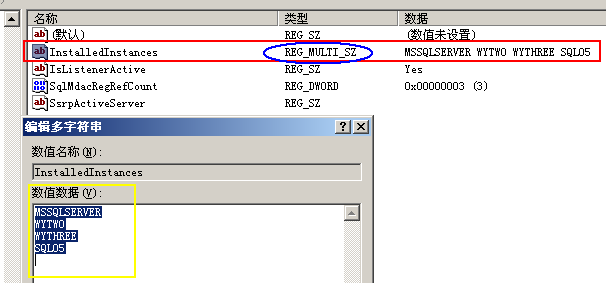
 #include "windows.h"

 #include "tchar.h"

 #include "conio.h"

 #include "stdio.h"

 #define MY_KEY _T("PathToMyRegistryKey\\MyRegistryKey") // Registry key

 #define MY_VALUES _T("NameOfTheREG_MULTI_SZListOfValues") // Registry values

 #define NEW_VALUE _T("MyNewValue") // New value

 #define FIND_VALUE _T("AnExistingValue") // We will insert the new value after this one

 int _tmain(int argc, _TCHAR* argv[])

 {

     LONG lResult = ;

     HKEY hKey = NULL;

     LPTSTR lpValues = NULL;

     LPTSTR lpValue = NULL;

     LPTSTR lpNewValues = NULL;

     LPTSTR lpNewValue = NULL;

     DWORD cbValues = ;

     DWORD cbNewValues = ;

     DWORD cbNewValue = ;

     BOOL bFound = FALSE;

     __try

     {

         // OPEN THE REGISTRY KEY

         //

         _tprintf(_T("RegOpenKeyEx..."));

         lResult = RegOpenKeyEx(

             HKEY_LOCAL_MACHINE,

             MY_KEY,

             ,

             KEY_ALL_ACCESS,

             &hKey

         );

         if (ERROR_SUCCESS != lResult) { _tprintf(_T("ERROR 0x%x\n"), lResult); return ; }

         _tprintf(_T("SUCCESS\n"));

         // READ THE REG_MULTI_SZ VALUES

         //

         // Get size of the buffer for the values

         _tprintf(_T("RegQueryValueEx..."));

         lResult = RegQueryValueEx(

             hKey,

             MY_VALUES,

             NULL,

             NULL,

             NULL,

             &cbValues

         );

         if (ERROR_SUCCESS != lResult) { _tprintf(_T("ERROR 0x%x\n"), lResult); return ; }

         _tprintf(_T("SUCCESS\n"));

         // Allocate the buffer

         _tprintf(_T("malloc..."));

         lpValues = (LPTSTR)malloc(cbValues);

         if (NULL == lpValues) { _tprintf(_T("ERROR 0x%x\n"), GetLastError()); return ; }

         _tprintf(_T("SUCCESS\n"));

         // Get the values

         _tprintf(_T("RegQueryValueEx..."));

         lResult = RegQueryValueEx(

             hKey,

             MY_VALUES,

             NULL,

             NULL,

             (LPBYTE)lpValues,

             &cbValues

         );

         if (ERROR_SUCCESS != lResult) { _tprintf(_T("ERROR 0x%x\n"), lResult); return ; }

         _tprintf(_T("SUCCESS\n"));

         // SHOW THE VALUES

         //

         _tprintf(_T("\n**************************\n"));

         _tprintf(_T("OLD VALUES\n"));

         _tprintf(_T("**************************\n\n"));

         lpValue = lpValues;

         for (; '\0' != *lpValue; lpValue += _tcslen(lpValue) + )

         {

             // Show one value

             _tprintf(_T("%s\n"), lpValue);

         }

         _tprintf(_T("\n**************************\n\n"));

         // INSERT A NEW VALUE AFTER A SPECIFIC VALUE IN THE LIST OF VALUES

         //

         // Allocate a new buffer for the old values plus the new one

         _tprintf(_T("malloc..."));

         cbNewValue = (_tcslen(NEW_VALUE) + ) * sizeof(TCHAR);

         cbNewValues = cbValues + cbNewValue;

         lpNewValues = (LPTSTR)malloc(cbNewValues);

         if (NULL == lpNewValues) { _tprintf(_T("ERROR 0x%x\n"), GetLastError()); return ; }

         _tprintf(_T("SUCCESS\n"));

         // Find the value after which we will insert the new one

         lpValue = lpValues;

         lpNewValue = lpNewValues;

         bFound = FALSE;

         for (; '\0' != *lpValue; lpValue += _tcslen(lpValue) + )

         {

             // Copy the current value to the target buffer

             memcpy(lpNewValue, lpValue, (_tcslen(lpValue) + ) * sizeof(TCHAR));

             if ( == _tcscmp(lpValue, FIND_VALUE))

             {

                 // The current value is the one we wanted to find

                 bFound = TRUE;

                 // Copy the new value to the target buffer

                 lpNewValue += _tcslen(lpValue) + ;

                 memcpy(lpNewValue, NEW_VALUE, (_tcslen(NEW_VALUE) + ) * sizeof(TCHAR));

                 lpNewValue += _tcslen(NEW_VALUE) + ;

             }

             else

             {

                 // This is not the value we want, continue to the next one

                 lpNewValue += _tcslen(lpValue) + ;

             }

         }

         if (!bFound)

         {

             // We didn't find the value we wanted. Insert the new value at the end

             memcpy(lpNewValue, NEW_VALUE, (_tcslen(NEW_VALUE) + ) * sizeof(TCHAR));

             lpNewValue += _tcslen(NEW_VALUE) + ;

         }

         *lpNewValue = *lpValue;

         // SHOW THE NEW VALUES

         //

         _tprintf(_T("\n**************************\n"));

         _tprintf(_T("NEW VALUES\n"));

         _tprintf(_T("**************************\n\n"));

         lpNewValue = lpNewValues;

         for (; '\0' != *lpNewValue; lpNewValue += _tcslen(lpNewValue) + )

         {

             // Show one value

             _tprintf(_T("%s\n"), lpNewValue);

         }

         _tprintf(_T("\n**************************\n\n"));

         // WRITE THE NEW VALUES BACK TO THE KEY

         //

         _tprintf(_T("RegSetValueEx..."));

         lResult = RegSetValueEx(

             hKey,

             MY_VALUES,

             NULL,

             REG_MULTI_SZ,

             (LPBYTE)lpNewValues,

             cbNewValues

         );

         if (ERROR_SUCCESS != lResult) { _tprintf(_T("ERROR 0x%x\n"), lResult); return ; }

         _tprintf(_T("SUCCESS\n"));

     }

     __finally

     {

         // Clean up

         //

         if (NULL != lpValues) { free(lpValues); }

         if (NULL != lpNewValues) { free(lpNewValues); }

         if (NULL != hKey) { RegCloseKey(hKey); }

         //_tprintf(_T("\n<<PRESS ANY KEY>>\n"));

         //_getch();

     }

     return ;

 }

 // 此模板来自http://blogs.msdn.com/b/alejacma/archive/2009/11/12/how-to-manipulate-reg-multi-sz-values-from-the-registry-c.aspx
C++ 读取REG_SZ 、REG_DWORD 、REG_MULTI_SZ 类型注册表值的更多相关文章
- c++读取REG_MULTI_SZ类型注册表
First: run RegQueryValueEx to get type and necessary memory size: Single byte code: DWORD type, size ...
- SQL读取注册表值
最近写一个自动检查SQL Serve安全配置的检查脚本,需要查询注册表,下面是使用SQL查询注册表值的方法. ) ) ) ) --For Named instance --SET @Instance ...
- c# 解决读取Excel混合文本类型,数据读取失败的解决方法
错误重现: ----------------------------------------------------------------------- 在导入Excel读取数据时,其中的一个字段保 ...
- Autofac全面解析系列(版本:3.5) – [使用篇(推荐篇):1.类型注册]
前言 Autofac Autofac是一套高效的依赖注入框架. Autofac官方网站:http://autofac.org/ Autofac在Github上的开源项目:https://github. ...
- 利用 Process Monitor 找出某个 Windows 选项所对应的注册表值
多 时候我们要调整一项 Windows 的功能时只需更改一下注册表即可实现.而很多大家眼中所谓的高手,对 Windows 注册表更是玩得出神入化.难道这些高手把 Windows 注册表都记下来了?答案 ...
- 【反射】——Autofac 类型注册
Autofac是.net界一款轻量化的IOC组件,使用Autofac可以帮助完成代码中很多依赖注入工作.在以前文章中,介绍过Autofac的配置过程(http://www.cnblogs.com/Jn ...
- IoC容器Autofac正篇之类型注册(四)
Autofac类型注册 类型注册简单的从字面去理解就可以了,不必复杂化,只是注册的手段比较丰富. (一)类型/泛型注册 builder.RegisterType<Class1>(); 这种 ...
- IoC容器Autofac正篇之类型注册(五)
Autofac类型注册 类型注册简单的从字面去理解就可以了,不必复杂化,只是注册的手段比较丰富. (一)类型/泛型注册 builder.RegisterType<Class1>(); 这种 ...
- java中读取特殊文件的类型
java中读取特殊文件的类型: 第一种方法(字符拼接读取): public static String getType(String s){ String s1=s.substring(s.index ...
随机推荐
- OSGi之Bundle
OSGi提出的根源是什么?在我看来就是对JVM的类加载机制进行了扩展,添加了一系列的规则,使得原有的类包(Class Package)扩展到类域(Class Domain).然后是建立在类域上的一系列 ...
- 关于asp.net和iis的进程/线程问题,假如网站有1000个人访问,会产生多少个进程/线程啊
详解 ASP.NET异步 超好的文章
- iis7应用程序池自动关闭问题解决
解决: 应用程序池启动32位应用程序 设置托管管道为集成 (仍然有问题) 图片:123.png 访问网站之前 应用程序池是开启的 访问后 网页报503 service unavailable应用程序池 ...
- 通过store为toolbar添加按钮
目的是实现导航条toolbar可以动态加载按钮. ExtJS的版本是4.0. 实现方案有两个.方案一:添加render事件监听,在监听事件处理函数中使用Ext.Ajax获取按钮信息,实现动态添加按钮. ...
- ios coreData使用
ios中的coredata的使用(转) 分类: ios2013-07-15 18:12 27288人阅读 评论(1) 收藏 举报 Core Data数据持久化是对SQLite的一个升级,它是ios集成 ...
- [转]log4net 使用指南
声明:本文内容主要译自Nauman Leghari的Using log4net,亦加入了个人的一点心得(节3.1.4). 请在这里下载示例代码 1 简介 1.1 ...
- ThinkPHP技巧
在php文件可以用 echo D_S()->getLastSql();来打印出 当前的sql语句
- ubuntu 10.04 fcitx 4.12 实现按下shit切换输入法同时提交英文输入
安装: echo "add fcitx ppa..." sudo apt-add-repository ppa:fcitx-team/nightly sudo apt-get in ...
- mysql使用二进制日志恢复数据
一.恢复到某个二进制文件 1.开启二进制日志 在mysqld的配置节点下添加如下配置 log-bin="E:/Mysql57BinLog/binlog"(windows下的路径,l ...
- “我爱淘”冲刺阶段Scrum站立会议2
完成任务: 已经将菜单栏和首页精选页面整合在一起了,现在正在做第二个界面--分类. 计划任务: 将分类页面制作完毕,并可以整合到整体里,可以进行菜单点击的切换. 遇到问题: 1.分类页面布局的制作不好 ...