
源码跟读,Spring是如何解析和加载xml中配置的beans
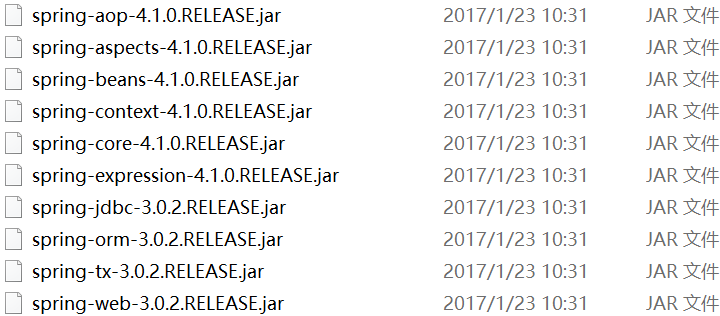
1、配置启动Spring所需的监听器
<listener>

        <listener-class>org.springframework.web.context.ContextLoaderListener</listener-class>

</listener><listener>
<listener-class>org.springframework.web.context.ContextLoaderListener</listener-class>
</listener>
ContextLoaderListener.java extends ContextLoader implements ServletContextListener

public void contextInitialized(ServletContextEvent event) {

		this.contextLoader = createContextLoader();

		if (this.contextLoader == null) {

			this.contextLoader = this;

		}

		this.contextLoader.initWebApplicationContext(event.getServletContext());

}ContextLoaderListener.java extends ContextLoader implements ServletContextListener
public void contextInitialized(ServletContextEvent event) {
this.contextLoader = createContextLoader();
if (this.contextLoader == null) {
this.contextLoader = this;
}
this.contextLoader.initWebApplicationContext(event.getServletContext());
}
- 基于 XML 文件的配置方式
- 基于 Annotation 的配置方式
- 基于 Java Code 的配置方式
- 用户自定义的配置方式
2、监听器都做了些什么?
ContextLoader.java

static {

		// Load default strategy implementations from properties file.

		// This is currently strictly internal and not meant to be customized

		// by application developers.

		try {

			ClassPathResource resource = new ClassPathResource(DEFAULT_STRATEGIES_PATH, ContextLoader.class);

            //private static final String DEFAULT_STRATEGIES_PATH = "ContextLoader.properties";

			defaultStrategies = PropertiesLoaderUtils.loadProperties(resource);

		}

		catch (IOException ex) {

			throw new IllegalStateException("Could not load 'ContextLoader.properties': " + ex.getMessage());

		}

}ContextLoader.java
static {
// Load default strategy implementations from properties file.
// This is currently strictly internal and not meant to be customized
// by application developers.
try {
ClassPathResource resource = new ClassPathResource(DEFAULT_STRATEGIES_PATH, ContextLoader.class);
//private static final String DEFAULT_STRATEGIES_PATH = "ContextLoader.properties";
defaultStrategies = PropertiesLoaderUtils.loadProperties(resource);
}
catch (IOException ex) {
throw new IllegalStateException("Could not load 'ContextLoader.properties': " + ex.getMessage());
}
}
ContextLoader.properties

org.springframework.web.context.WebApplicationContext=org.springframework.web.context.support.XmlWebApplicationContextContextLoader.properties
org.springframework.web.context.WebApplicationContext=org.springframework.web.context.support.XmlWebApplicationContext
ContextLoader.java

// Store context in local instance variable, to guarantee that

// it is available on ServletContext shutdown.

this.context = createWebApplicationContext(servletContext, parent);ContextLoader.java
// Store context in local instance variable, to guarantee that
// it is available on ServletContext shutdown.
this.context = createWebApplicationContext(servletContext, parent);
ContextLoader.java

protected WebApplicationContext createWebApplicationContext(ServletContext sc, ApplicationContext parent) {

		//step1

        Class<?> contextClass = determineContextClass(sc);

		if (!ConfigurableWebApplicationContext.class.isAssignableFrom(contextClass)) {

			throw new ApplicationContextException("Custom context class [" + contextClass.getName() +

					"] is not of type [" + ConfigurableWebApplicationContext.class.getName() + "]");

		}

        //step2

		ConfigurableWebApplicationContext wac =

				(ConfigurableWebApplicationContext) BeanUtils.instantiateClass(contextClass);

		// Assign the best possible id value.

		if (sc.getMajorVersion() == 2 && sc.getMinorVersion() < 5) {

			// Servlet <= 2.4: resort to name specified in web.xml, if any.

			String servletContextName = sc.getServletContextName();

			wac.setId(ConfigurableWebApplicationContext.APPLICATION_CONTEXT_ID_PREFIX +

					ObjectUtils.getDisplayString(servletContextName));

		}

		else {

			// Servlet 2.5's getContextPath available!

			try {

				String contextPath = (String) ServletContext.class.getMethod("getContextPath").invoke(sc);

				wac.setId(ConfigurableWebApplicationContext.APPLICATION_CONTEXT_ID_PREFIX +

						ObjectUtils.getDisplayString(contextPath));

			}

			catch (Exception ex) {

				throw new IllegalStateException("Failed to invoke Servlet 2.5 getContextPath method", ex);

			}

		}

		//step3

        wac.setParent(parent);

		wac.setServletContext(sc);

		wac.setConfigLocation(sc.getInitParameter(CONFIG_LOCATION_PARAM));

		customizeContext(sc, wac);

        //step4

        wac.refresh();

		return wac;

}ContextLoader.java
protected WebApplicationContext createWebApplicationContext(ServletContext sc, ApplicationContext parent) {
//step1
Class<?> contextClass = determineContextClass(sc);
if (!ConfigurableWebApplicationContext.class.isAssignableFrom(contextClass)) {
throw new ApplicationContextException("Custom context class [" + contextClass.getName() +
"] is not of type [" + ConfigurableWebApplicationContext.class.getName() + "]");
}
//step2
ConfigurableWebApplicationContext wac =
(ConfigurableWebApplicationContext) BeanUtils.instantiateClass(contextClass);
// Assign the best possible id value.
if (sc.getMajorVersion() == 2 && sc.getMinorVersion() < 5) {
// Servlet <= 2.4: resort to name specified in web.xml, if any.
String servletContextName = sc.getServletContextName();
wac.setId(ConfigurableWebApplicationContext.APPLICATION_CONTEXT_ID_PREFIX +
ObjectUtils.getDisplayString(servletContextName));
}
else {
// Servlet 2.5's getContextPath available!
try {
String contextPath = (String) ServletContext.class.getMethod("getContextPath").invoke(sc);
wac.setId(ConfigurableWebApplicationContext.APPLICATION_CONTEXT_ID_PREFIX +
ObjectUtils.getDisplayString(contextPath));
}
catch (Exception ex) {
throw new IllegalStateException("Failed to invoke Servlet 2.5 getContextPath method", ex);
}
}
//step3
wac.setParent(parent);
wac.setServletContext(sc);
wac.setConfigLocation(sc.getInitParameter(CONFIG_LOCATION_PARAM));
customizeContext(sc, wac);
//step4
wac.refresh();
return wac;
}
3、createWebApplicationContext
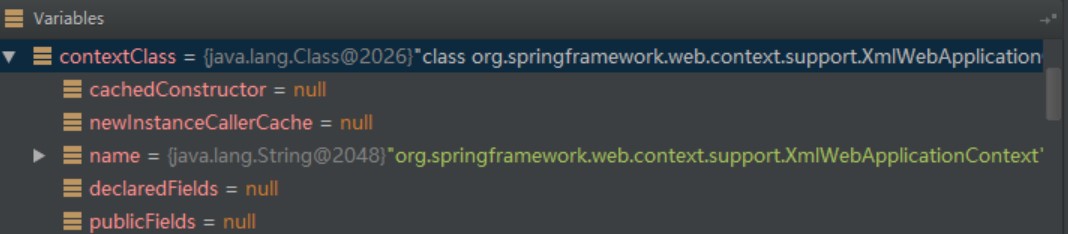
3.1 //step1
ContextLoader.java

protected Class<?> determineContextClass(ServletContext servletContext) {

		String contextClassName = servletContext.getInitParameter(CONTEXT_CLASS_PARAM); //CONTEXT_CLASS_PARAM = "contextClass"

		if (contextClassName != null) {

			try {

				return ClassUtils.forName(contextClassName, ClassUtils.getDefaultClassLoader());

			}

			catch (ClassNotFoundException ex) {

				throw new ApplicationContextException(

						"Failed to load custom context class [" + contextClassName + "]", ex);

			}

		}

		else {

			contextClassName = defaultStrategies.getProperty(WebApplicationContext.class.getName());

            //defaultStrategies = PropertiesLoaderUtils.loadProperties(resource); defaultStrategies也就是静态代码块中初始化的默认工具类XmlWebApplicationContext

			try {

				return ClassUtils.forName(contextClassName, ContextLoader.class.getClassLoader());

			}

			catch (ClassNotFoundException ex) {

				throw new ApplicationContextException(

						"Failed to load default context class [" + contextClassName + "]", ex);

			}

		}

}ContextLoader.java
protected Class<?> determineContextClass(ServletContext servletContext) {
String contextClassName = servletContext.getInitParameter(CONTEXT_CLASS_PARAM); //CONTEXT_CLASS_PARAM = "contextClass"
if (contextClassName != null) {
try {
return ClassUtils.forName(contextClassName, ClassUtils.getDefaultClassLoader());
}
catch (ClassNotFoundException ex) {
throw new ApplicationContextException(
"Failed to load custom context class [" + contextClassName + "]", ex);
}
}
else {
contextClassName = defaultStrategies.getProperty(WebApplicationContext.class.getName());
//defaultStrategies = PropertiesLoaderUtils.loadProperties(resource); defaultStrategies也就是静态代码块中初始化的默认工具类XmlWebApplicationContext
try {
return ClassUtils.forName(contextClassName, ContextLoader.class.getClassLoader());
}
catch (ClassNotFoundException ex) {
throw new ApplicationContextException(
"Failed to load default context class [" + contextClassName + "]", ex);
}
}
}
3.2 //step2

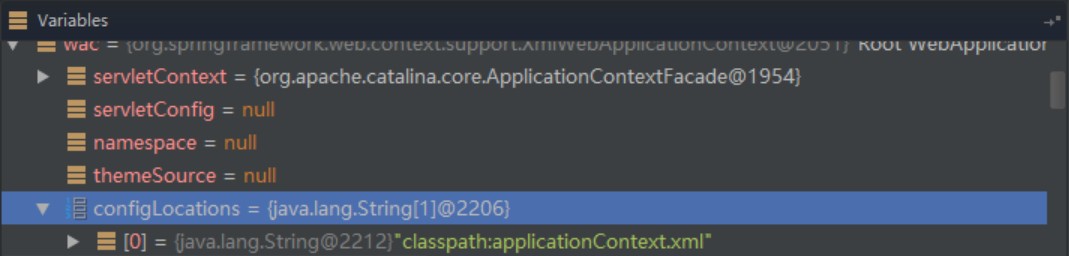
3.3 //step3
<context-param>

        <param-name>contextConfigLocation</param-name>

        <param-value>classpath:applicationContext.xml</param-value>

</context-param><context-param>
<param-name>contextConfigLocation</param-name>
<param-value>classpath:applicationContext.xml</param-value>
</context-param>
3.4 //step4
AbstractApplicationContext.java

@Override

	public void refresh() throws BeansException, IllegalStateException {

		synchronized (this.startupShutdownMonitor) {

			// Prepare this context for refreshing.

            //此方法做一些准备工作,如记录开始时间,输出日志,initPropertySources();和getEnvironment().validateRequiredProperties();一般没干什么事

			prepareRefresh();

			// Tell the subclass to refresh the internal bean factory.

            //step4.1

			ConfigurableListableBeanFactory beanFactory = obtainFreshBeanFactory();

			// Prepare the bean factory for use in this context.

			prepareBeanFactory(beanFactory);

			try {

				// Allows post-processing of the bean factory in context subclasses.

				postProcessBeanFactory(beanFactory);

				// Invoke factory processors registered as beans in the context.

				invokeBeanFactoryPostProcessors(beanFactory);

				// Register bean processors that intercept bean creation.

				registerBeanPostProcessors(beanFactory);

				// Initialize message source for this context.

				initMessageSource();

				// Initialize event multicaster for this context.

				initApplicationEventMulticaster();

				// Initialize other special beans in specific context subclasses.

				onRefresh();

				// Check for listener beans and register them.

				registerListeners();

				// Instantiate all remaining (non-lazy-init) singletons.

                //step4.2

				finishBeanFactoryInitialization(beanFactory);

				// Last step: publish corresponding event.

				finishRefresh();

			}

			catch (BeansException ex) {

				logger.warn("Exception encountered during context initialization - cancelling refresh attempt", ex);

				// Destroy already created singletons to avoid dangling resources.

				destroyBeans();

				// Reset 'active' flag.

				cancelRefresh(ex);

				// Propagate exception to caller.

				throw ex;

			}

		}

}AbstractApplicationContext.java
@Override
public void refresh() throws BeansException, IllegalStateException {
synchronized (this.startupShutdownMonitor) {
// Prepare this context for refreshing.
//此方法做一些准备工作,如记录开始时间,输出日志,initPropertySources();和getEnvironment().validateRequiredProperties();一般没干什么事
prepareRefresh();
// Tell the subclass to refresh the internal bean factory.
//step4.1
ConfigurableListableBeanFactory beanFactory = obtainFreshBeanFactory();
// Prepare the bean factory for use in this context.
prepareBeanFactory(beanFactory);
try {
// Allows post-processing of the bean factory in context subclasses.
postProcessBeanFactory(beanFactory);
// Invoke factory processors registered as beans in the context.
invokeBeanFactoryPostProcessors(beanFactory);
// Register bean processors that intercept bean creation.
registerBeanPostProcessors(beanFactory);
// Initialize message source for this context.
initMessageSource();
// Initialize event multicaster for this context.
initApplicationEventMulticaster();
// Initialize other special beans in specific context subclasses.
onRefresh();
// Check for listener beans and register them.
registerListeners();
// Instantiate all remaining (non-lazy-init) singletons.
//step4.2
finishBeanFactoryInitialization(beanFactory);
// Last step: publish corresponding event.
finishRefresh();
}
catch (BeansException ex) {
logger.warn("Exception encountered during context initialization - cancelling refresh attempt", ex);
// Destroy already created singletons to avoid dangling resources.
destroyBeans();
// Reset 'active' flag.
cancelRefresh(ex);
// Propagate exception to caller.
throw ex;
}
}
}
3.4.1 //step4.1 refresh()的核心 obtainFreshBeanFactory()
AbstractApplicationContext.java

protected ConfigurableListableBeanFactory obtainFreshBeanFactory() {

		refreshBeanFactory();

		ConfigurableListableBeanFactory beanFactory = getBeanFactory();

		if (logger.isDebugEnabled()) {

			logger.debug("Bean factory for " + getDisplayName() + ": " + beanFactory);

		}

		return beanFactory;

}AbstractApplicationContext.java
protected ConfigurableListableBeanFactory obtainFreshBeanFactory() {
refreshBeanFactory();
ConfigurableListableBeanFactory beanFactory = getBeanFactory();
if (logger.isDebugEnabled()) {
logger.debug("Bean factory for " + getDisplayName() + ": " + beanFactory);
}
return beanFactory;
}
AbstractRefreshableApplicationContext.java

protected final void refreshBeanFactory() throws BeansException {

		if (hasBeanFactory()) {

			destroyBeans();

			closeBeanFactory();

		}

		try {

			DefaultListableBeanFactory beanFactory = createBeanFactory();

			beanFactory.setSerializationId(getId());

			customizeBeanFactory(beanFactory);

			loadBeanDefinitions(beanFactory);

			synchronized (this.beanFactoryMonitor) {

				this.beanFactory = beanFactory;

			}

		}

		catch (IOException ex) {

			throw new ApplicationContextException("I/O error parsing bean definition source for " + getDisplayName(), ex);

		}

}AbstractRefreshableApplicationContext.java
protected final void refreshBeanFactory() throws BeansException {
if (hasBeanFactory()) {
destroyBeans();
closeBeanFactory();
}
try {
DefaultListableBeanFactory beanFactory = createBeanFactory();
beanFactory.setSerializationId(getId());
customizeBeanFactory(beanFactory);
loadBeanDefinitions(beanFactory);
synchronized (this.beanFactoryMonitor) {
this.beanFactory = beanFactory;
}
}
catch (IOException ex) {
throw new ApplicationContextException("I/O error parsing bean definition source for " + getDisplayName(), ex);
}
}
AbstractXmlApplicationContext.java

protected void loadBeanDefinitions(DefaultListableBeanFactory beanFactory) throws BeansException, IOException {

		// Create a new XmlBeanDefinitionReader for the given BeanFactory.

		XmlBeanDefinitionReader beanDefinitionReader = new XmlBeanDefinitionReader(beanFactory);

		// Configure the bean definition reader with this context's

		// resource loading environment.

		beanDefinitionReader.setEnvironment(this.getEnvironment());

		beanDefinitionReader.setResourceLoader(this);

		beanDefinitionReader.setEntityResolver(new ResourceEntityResolver(this));

		// Allow a subclass to provide custom initialization of the reader,

		// then proceed with actually loading the bean definitions.

		initBeanDefinitionReader(beanDefinitionReader);

		loadBeanDefinitions(beanDefinitionReader);

}AbstractXmlApplicationContext.java
protected void loadBeanDefinitions(DefaultListableBeanFactory beanFactory) throws BeansException, IOException {
// Create a new XmlBeanDefinitionReader for the given BeanFactory.
XmlBeanDefinitionReader beanDefinitionReader = new XmlBeanDefinitionReader(beanFactory);
// Configure the bean definition reader with this context's
// resource loading environment.
beanDefinitionReader.setEnvironment(this.getEnvironment());
beanDefinitionReader.setResourceLoader(this);
beanDefinitionReader.setEntityResolver(new ResourceEntityResolver(this));
// Allow a subclass to provide custom initialization of the reader,
// then proceed with actually loading the bean definitions.
initBeanDefinitionReader(beanDefinitionReader);
loadBeanDefinitions(beanDefinitionReader);
}
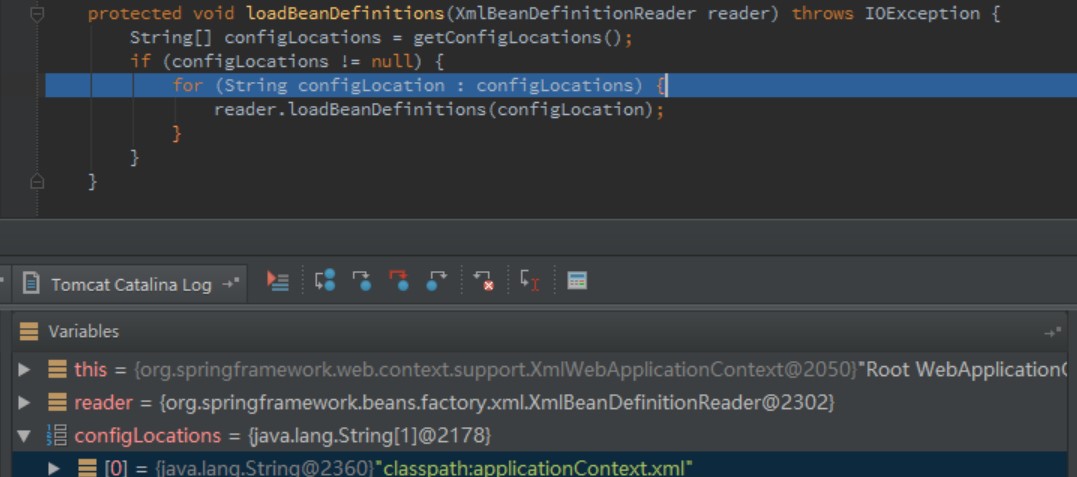
protected void loadBeanDefinitions(XmlBeanDefinitionReader reader) throws IOException {

		String[] configLocations = getConfigLocations();

		if (configLocations != null) {

			for (String configLocation : configLocations) {

				reader.loadBeanDefinitions(configLocation);

			}

		}

}protected void loadBeanDefinitions(XmlBeanDefinitionReader reader) throws IOException {
String[] configLocations = getConfigLocations();
if (configLocations != null) {
for (String configLocation : configLocations) {
reader.loadBeanDefinitions(configLocation);
}
}
}
DefaultBeanDefinitionDocumentReader.java

protected void doRegisterBeanDefinitions(Element root) {

		// Any nested <beans> elements will cause recursion in this method. In

		// order to propagate and preserve <beans> default-* attributes correctly,

		// keep track of the current (parent) delegate, which may be null. Create

		// the new (child) delegate with a reference to the parent for fallback purposes,

		// then ultimately reset this.delegate back to its original (parent) reference.

		// this behavior emulates a stack of delegates without actually necessitating one.

		BeanDefinitionParserDelegate parent = this.delegate;

		this.delegate = createDelegate(this.readerContext, root, parent);

		if (this.delegate.isDefaultNamespace(root)) {

			String profileSpec = root.getAttribute(PROFILE_ATTRIBUTE);

			if (StringUtils.hasText(profileSpec)) {

				Assert.state(this.environment != null, "Environment must be set for evaluating profiles");

				String[] specifiedProfiles = StringUtils.tokenizeToStringArray(

						profileSpec, BeanDefinitionParserDelegate.MULTI_VALUE_ATTRIBUTE_DELIMITERS);

				if (!this.environment.acceptsProfiles(specifiedProfiles)) {

					return;

				}

			}

		}

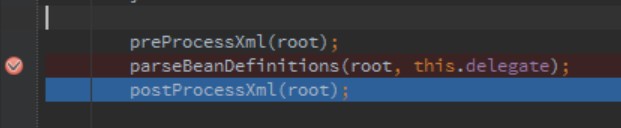
		preProcessXml(root);

		//xml解析和加载类

        parseBeanDefinitions(root, this.delegate);

		postProcessXml(root);

		this.delegate = parent;

}DefaultBeanDefinitionDocumentReader.java
protected void doRegisterBeanDefinitions(Element root) {
// Any nested <beans> elements will cause recursion in this method. In
// order to propagate and preserve <beans> default-* attributes correctly,
// keep track of the current (parent) delegate, which may be null. Create
// the new (child) delegate with a reference to the parent for fallback purposes,
// then ultimately reset this.delegate back to its original (parent) reference.
// this behavior emulates a stack of delegates without actually necessitating one.
BeanDefinitionParserDelegate parent = this.delegate;
this.delegate = createDelegate(this.readerContext, root, parent);
if (this.delegate.isDefaultNamespace(root)) {
String profileSpec = root.getAttribute(PROFILE_ATTRIBUTE);
if (StringUtils.hasText(profileSpec)) {
Assert.state(this.environment != null, "Environment must be set for evaluating profiles");
String[] specifiedProfiles = StringUtils.tokenizeToStringArray(
profileSpec, BeanDefinitionParserDelegate.MULTI_VALUE_ATTRIBUTE_DELIMITERS);
if (!this.environment.acceptsProfiles(specifiedProfiles)) {
return;
}
}
}
preProcessXml(root);
//xml解析和加载类
parseBeanDefinitions(root, this.delegate);
postProcessXml(root);
this.delegate = parent;
}
...

public static final String PROPERTY_ELEMENT = "property";

public static final String REF_ATTRIBUTE = "ref";

public static final String VALUE_ATTRIBUTE = "value";

......
public static final String PROPERTY_ELEMENT = "property";
public static final String REF_ATTRIBUTE = "ref";
public static final String VALUE_ATTRIBUTE = "value";
...


DefaultBeanDefinitionDocumentReader.java

protected void parseBeanDefinitions(Element root, BeanDefinitionParserDelegate delegate) {

		if (delegate.isDefaultNamespace(root)) {

			NodeList nl = root.getChildNodes(); //将节点获取存入collection

			for (int i = 0; i < nl.getLength(); i++) { //对collection中存储的节点进行依次遍历

				Node node = nl.item(i); //返回当前序号的节点

				if (node instanceof Element) { //判断节点是否属于元素类(我们不需要文本型)(参考文章《Java是如何解析xml文件的(DOM)》)

					Element ele = (Element) node;

                    //判断是否为默认的命名空间,其实就是根据配置文件的命名空间来判定

                    //如果是beans下的则认为是默认的命名空间,如果不是则认为是自定义的,我们使用的Aop、Tx等都是属于自定义标签的范畴

					if (delegate.isDefaultNamespace(ele)) {

						parseDefaultElement(ele, delegate); //进行解析

					}

					else {

						delegate.parseCustomElement(ele);

					}

				}

			}

		}

		else {

			delegate.parseCustomElement(root);

		}

}DefaultBeanDefinitionDocumentReader.java
protected void parseBeanDefinitions(Element root, BeanDefinitionParserDelegate delegate) {
if (delegate.isDefaultNamespace(root)) {
NodeList nl = root.getChildNodes(); //将节点获取存入collection
for (int i = 0; i < nl.getLength(); i++) { //对collection中存储的节点进行依次遍历
Node node = nl.item(i); //返回当前序号的节点
if (node instanceof Element) { //判断节点是否属于元素类(我们不需要文本型)(参考文章《Java是如何解析xml文件的(DOM)》)
Element ele = (Element) node;
//判断是否为默认的命名空间,其实就是根据配置文件的命名空间来判定
//如果是beans下的则认为是默认的命名空间,如果不是则认为是自定义的,我们使用的Aop、Tx等都是属于自定义标签的范畴
if (delegate.isDefaultNamespace(ele)) {
parseDefaultElement(ele, delegate); //进行解析
}
else {
delegate.parseCustomElement(ele);
}
}
}
}
else {
delegate.parseCustomElement(root);
}
}
DefaultBeanDefinitionDocumentReader.java

private void parseDefaultElement(Element ele, BeanDefinitionParserDelegate delegate) {

		if (delegate.nodeNameEquals(ele, IMPORT_ELEMENT)) {

			importBeanDefinitionResource(ele);

		}

		else if (delegate.nodeNameEquals(ele, ALIAS_ELEMENT)) {

			processAliasRegistration(ele);

		}

		else if (delegate.nodeNameEquals(ele, BEAN_ELEMENT)) {

			processBeanDefinition(ele, delegate);

		}

		else if (delegate.nodeNameEquals(ele, NESTED_BEANS_ELEMENT)) {

			// recurse

			doRegisterBeanDefinitions(ele);

		}

}DefaultBeanDefinitionDocumentReader.java
private void parseDefaultElement(Element ele, BeanDefinitionParserDelegate delegate) {
if (delegate.nodeNameEquals(ele, IMPORT_ELEMENT)) {
importBeanDefinitionResource(ele);
}
else if (delegate.nodeNameEquals(ele, ALIAS_ELEMENT)) {
processAliasRegistration(ele);
}
else if (delegate.nodeNameEquals(ele, BEAN_ELEMENT)) {
processBeanDefinition(ele, delegate);
}
else if (delegate.nodeNameEquals(ele, NESTED_BEANS_ELEMENT)) {
// recurse
doRegisterBeanDefinitions(ele);
}
}
DefaultBeanDefinitionDocumentReader.java

protected void processBeanDefinition(Element ele, BeanDefinitionParserDelegate delegate) {

		BeanDefinitionHolder bdHolder = delegate.parseBeanDefinitionElement(ele);

		if (bdHolder != null) {

			bdHolder = delegate.decorateBeanDefinitionIfRequired(ele, bdHolder);

			try {

				// Register the final decorated instance.

				BeanDefinitionReaderUtils.registerBeanDefinition(bdHolder, getReaderContext().getRegistry());

			}

			catch (BeanDefinitionStoreException ex) {

				getReaderContext().error("Failed to register bean definition with name '" +

						bdHolder.getBeanName() + "'", ele, ex);

			}

			// Send registration event.

			getReaderContext().fireComponentRegistered(new BeanComponentDefinition(bdHolder));

		}

}DefaultBeanDefinitionDocumentReader.java
protected void processBeanDefinition(Element ele, BeanDefinitionParserDelegate delegate) {
BeanDefinitionHolder bdHolder = delegate.parseBeanDefinitionElement(ele);
if (bdHolder != null) {
bdHolder = delegate.decorateBeanDefinitionIfRequired(ele, bdHolder);
try {
// Register the final decorated instance.
BeanDefinitionReaderUtils.registerBeanDefinition(bdHolder, getReaderContext().getRegistry());
}
catch (BeanDefinitionStoreException ex) {
getReaderContext().error("Failed to register bean definition with name '" +
bdHolder.getBeanName() + "'", ele, ex);
}
// Send registration event.
getReaderContext().fireComponentRegistered(new BeanComponentDefinition(bdHolder));
}
}
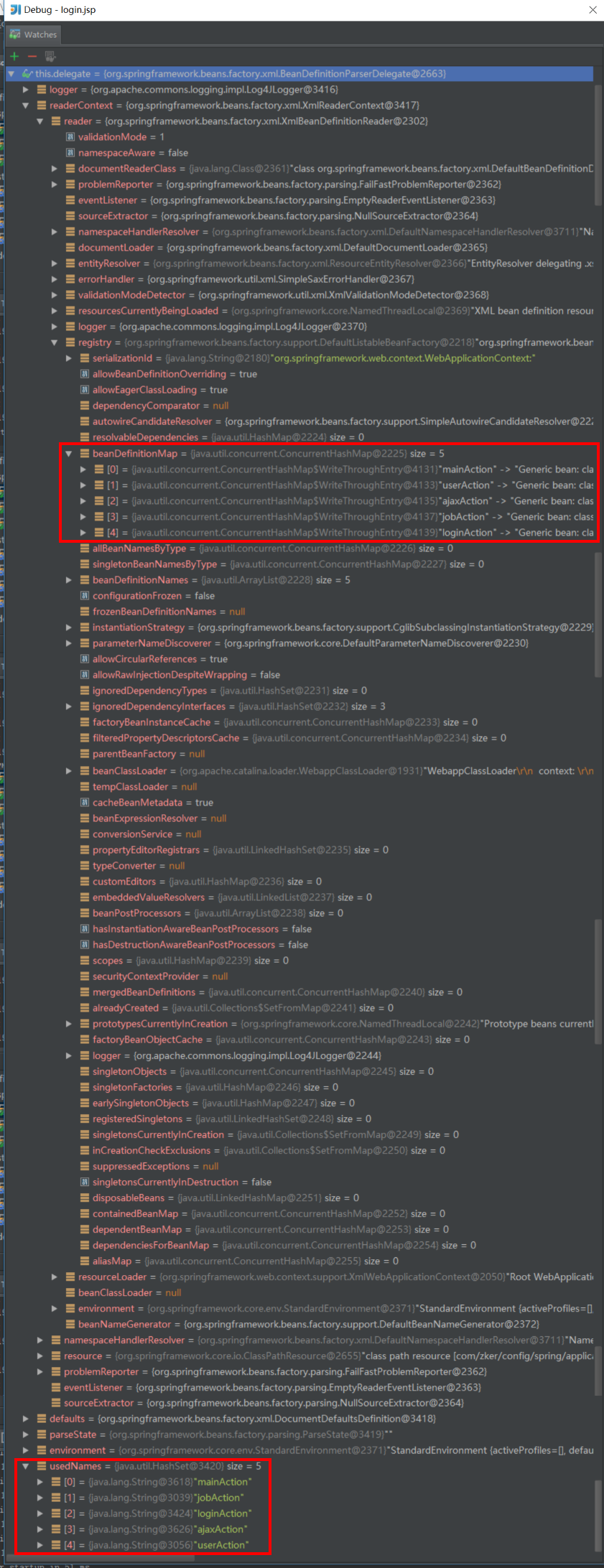
- 把beanName放到队列里
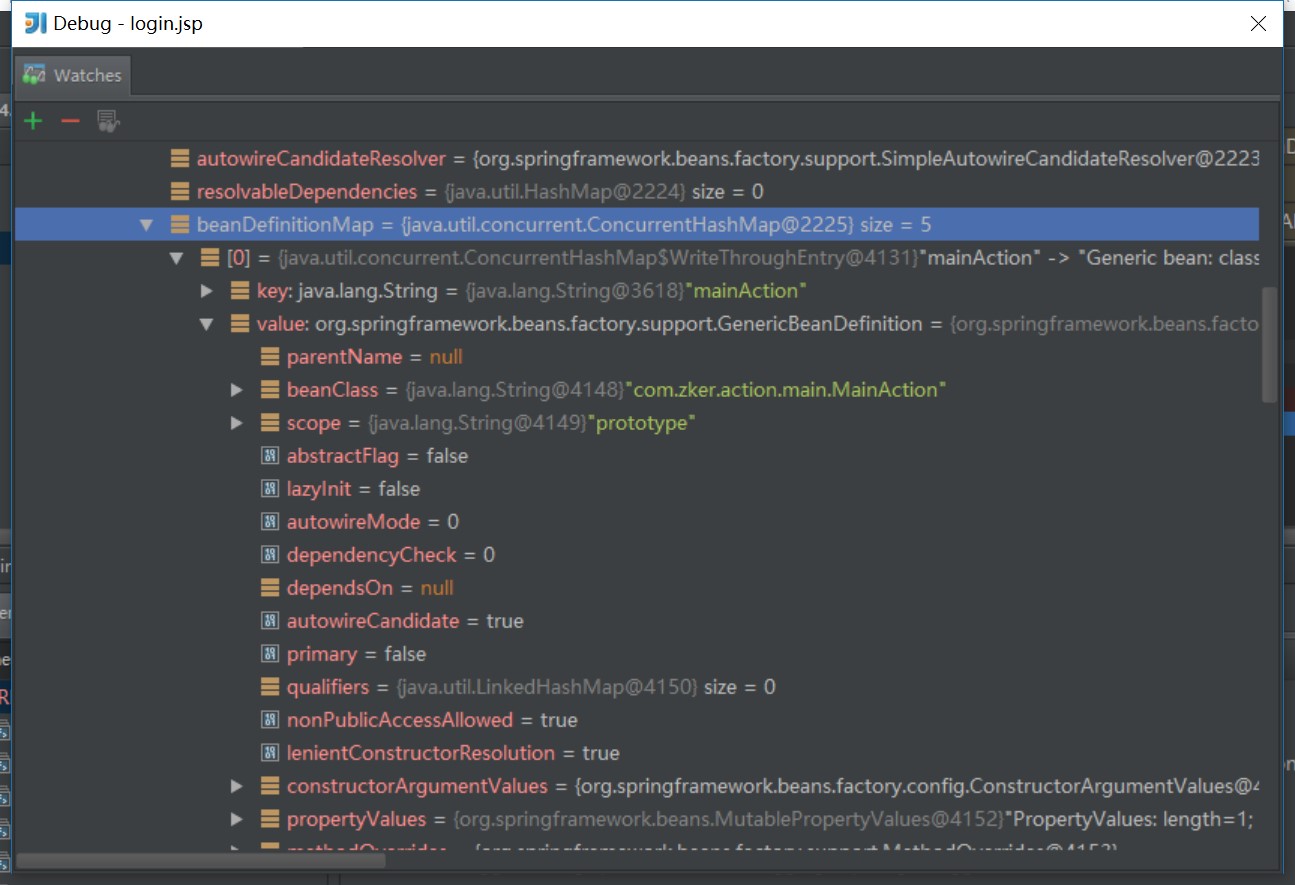
- 把BeanDefinition放到map中
3.4.2 //step4.2 refresh()的核心finishBeanFactoryInitialization(beanFactory);
AbstractApplicationContext.java

protected void finishBeanFactoryInitialization(ConfigurableListableBeanFactory beanFactory) {

		// Initialize conversion service for this context.

		if (beanFactory.containsBean(CONVERSION_SERVICE_BEAN_NAME) &&

				beanFactory.isTypeMatch(CONVERSION_SERVICE_BEAN_NAME, ConversionService.class)) {

			beanFactory.setConversionService(

					beanFactory.getBean(CONVERSION_SERVICE_BEAN_NAME, ConversionService.class));

		}

		// Initialize LoadTimeWeaverAware beans early to allow for registering their transformers early.

		String[] weaverAwareNames = beanFactory.getBeanNamesForType(LoadTimeWeaverAware.class, false, false);

		for (String weaverAwareName : weaverAwareNames) {

			getBean(weaverAwareName);

		}

		// Stop using the temporary ClassLoader for type matching.

		beanFactory.setTempClassLoader(null);

		// Allow for caching all bean definition metadata, not expecting further changes.

		beanFactory.freezeConfiguration();

		// Instantiate all remaining (non-lazy-init) singletons.

		beanFactory.preInstantiateSingletons();

}AbstractApplicationContext.java
protected void finishBeanFactoryInitialization(ConfigurableListableBeanFactory beanFactory) {
// Initialize conversion service for this context.
if (beanFactory.containsBean(CONVERSION_SERVICE_BEAN_NAME) &&
beanFactory.isTypeMatch(CONVERSION_SERVICE_BEAN_NAME, ConversionService.class)) {
beanFactory.setConversionService(
beanFactory.getBean(CONVERSION_SERVICE_BEAN_NAME, ConversionService.class));
}
// Initialize LoadTimeWeaverAware beans early to allow for registering their transformers early.
String[] weaverAwareNames = beanFactory.getBeanNamesForType(LoadTimeWeaverAware.class, false, false);
for (String weaverAwareName : weaverAwareNames) {
getBean(weaverAwareName);
}
// Stop using the temporary ClassLoader for type matching.
beanFactory.setTempClassLoader(null);
// Allow for caching all bean definition metadata, not expecting further changes.
beanFactory.freezeConfiguration();
// Instantiate all remaining (non-lazy-init) singletons.
beanFactory.preInstantiateSingletons();
}
DefaultListableBeanFactory.java

public void preInstantiateSingletons() throws BeansException {

		if (this.logger.isDebugEnabled()) {

			this.logger.debug("Pre-instantiating singletons in " + this);

		}

		List<String> beanNames;

		synchronized (this.beanDefinitionMap) {

			// Iterate over a copy to allow for init methods which in turn register new bean definitions.

			// While this may not be part of the regular factory bootstrap, it does otherwise work fine.

			beanNames = new ArrayList<String>(this.beanDefinitionNames);

		}

		// Trigger initialization of all non-lazy singleton beans...

		for (String beanName : beanNames) { //将加载进来的beanDefinitionNames循环分析

			RootBeanDefinition bd = getMergedLocalBeanDefinition(beanName);

			if (!bd.isAbstract() && bd.isSingleton() && !bd.isLazyInit()) { //如果不是抽象类, 且是单例, 且不是延迟加载

				if (isFactoryBean(beanName)) {

					final FactoryBean<?> factory = (FactoryBean<?>) getBean(FACTORY_BEAN_PREFIX + beanName);

					boolean isEagerInit;

					if (System.getSecurityManager() != null && factory instanceof SmartFactoryBean) {

						isEagerInit = AccessController.doPrivileged(new PrivilegedAction<Boolean>() {

							@Override

							public Boolean run() {

								return ((SmartFactoryBean<?>) factory).isEagerInit();

							}

						}, getAccessControlContext());

					}

					else {

						isEagerInit = (factory instanceof SmartFactoryBean &&

								((SmartFactoryBean<?>) factory).isEagerInit());

					}

					if (isEagerInit) {

						getBean(beanName);

					}

				}

				else {

					getBean(beanName);

				}

			}

		}

		// Trigger post-initialization callback for all applicable beans...

		for (String beanName : beanNames) {

			Object singletonInstance = getSingleton(beanName);

			if (singletonInstance instanceof SmartInitializingSingleton) {

				final SmartInitializingSingleton smartSingleton = (SmartInitializingSingleton) singletonInstance;

				if (System.getSecurityManager() != null) {

					AccessController.doPrivileged(new PrivilegedAction<Object>() {

						@Override

						public Object run() {

							smartSingleton.afterSingletonsInstantiated();

							return null;

						}

					}, getAccessControlContext());

				}

				else {

					smartSingleton.afterSingletonsInstantiated();

				}

			}

		}

}DefaultListableBeanFactory.java
public void preInstantiateSingletons() throws BeansException {
if (this.logger.isDebugEnabled()) {
this.logger.debug("Pre-instantiating singletons in " + this);
}
List<String> beanNames;
synchronized (this.beanDefinitionMap) {
// Iterate over a copy to allow for init methods which in turn register new bean definitions.
// While this may not be part of the regular factory bootstrap, it does otherwise work fine.
beanNames = new ArrayList<String>(this.beanDefinitionNames);
}
// Trigger initialization of all non-lazy singleton beans...
for (String beanName : beanNames) { //将加载进来的beanDefinitionNames循环分析
RootBeanDefinition bd = getMergedLocalBeanDefinition(beanName);
if (!bd.isAbstract() && bd.isSingleton() && !bd.isLazyInit()) { //如果不是抽象类, 且是单例, 且不是延迟加载
if (isFactoryBean(beanName)) {
final FactoryBean<?> factory = (FactoryBean<?>) getBean(FACTORY_BEAN_PREFIX + beanName);
boolean isEagerInit;
if (System.getSecurityManager() != null && factory instanceof SmartFactoryBean) {
isEagerInit = AccessController.doPrivileged(new PrivilegedAction<Boolean>() {
@Override
public Boolean run() {
return ((SmartFactoryBean<?>) factory).isEagerInit();
}
}, getAccessControlContext());
}
else {
isEagerInit = (factory instanceof SmartFactoryBean &&
((SmartFactoryBean<?>) factory).isEagerInit());
}
if (isEagerInit) {
getBean(beanName);
}
}
else {
getBean(beanName);
}
}
}
// Trigger post-initialization callback for all applicable beans...
for (String beanName : beanNames) {
Object singletonInstance = getSingleton(beanName);
if (singletonInstance instanceof SmartInitializingSingleton) {
final SmartInitializingSingleton smartSingleton = (SmartInitializingSingleton) singletonInstance;
if (System.getSecurityManager() != null) {
AccessController.doPrivileged(new PrivilegedAction<Object>() {
@Override
public Object run() {
smartSingleton.afterSingletonsInstantiated();
return null;
}
}, getAccessControlContext());
}
else {
smartSingleton.afterSingletonsInstantiated();
}
}
}
}
for (String beanName : beanNames) { //将加载进来的beanDefinitionNames循环分析

			RootBeanDefinition bd = getMergedLocalBeanDefinition(beanName);

			if (!bd.isAbstract() && bd.isSingleton() && !bd.isLazyInit()) { //如果不是抽象类, 且是单例, 且不是延迟加载

				if (isFactoryBean(beanName)) { //是否实现FactoryBean接口

					final FactoryBean<?> factory = (FactoryBean<?>) getBean(FACTORY_BEAN_PREFIX + beanName);

					boolean isEagerInit;

					if (System.getSecurityManager() != null && factory instanceof SmartFactoryBean) {

						isEagerInit = AccessController.doPrivileged(new PrivilegedAction<Boolean>() {

							@Override

							public Boolean run() {

								return ((SmartFactoryBean<?>) factory).isEagerInit();

							}

						}, getAccessControlContext());

					}

					else {

						isEagerInit = (factory instanceof SmartFactoryBean &&

								((SmartFactoryBean<?>) factory).isEagerInit());

					}

					if (isEagerInit) {

						getBean(beanName);

					}

				}

				else {

					getBean(beanName);

				}

			}

}for (String beanName : beanNames) { //将加载进来的beanDefinitionNames循环分析
RootBeanDefinition bd = getMergedLocalBeanDefinition(beanName);
if (!bd.isAbstract() && bd.isSingleton() && !bd.isLazyInit()) { //如果不是抽象类, 且是单例, 且不是延迟加载
if (isFactoryBean(beanName)) { //是否实现FactoryBean接口
final FactoryBean<?> factory = (FactoryBean<?>) getBean(FACTORY_BEAN_PREFIX + beanName);
boolean isEagerInit;
if (System.getSecurityManager() != null && factory instanceof SmartFactoryBean) {
isEagerInit = AccessController.doPrivileged(new PrivilegedAction<Boolean>() {
@Override
public Boolean run() {
return ((SmartFactoryBean<?>) factory).isEagerInit();
}
}, getAccessControlContext());
}
else {
isEagerInit = (factory instanceof SmartFactoryBean &&
((SmartFactoryBean<?>) factory).isEagerInit());
}
if (isEagerInit) {
getBean(beanName);
}
}
else {
getBean(beanName);
}
}
}
- 判断这个bean是否是抽象类,是否是单例,是否延迟加载
- 如果不是抽象类, 且是单例, 且不是延迟加载,那么判断是否实现 FactoryBean 接口
- 如果实现了 FactoryBean,则 getBean(FACTORY_BEAN_PREFIX + beanName),否则 getBean(beanName)
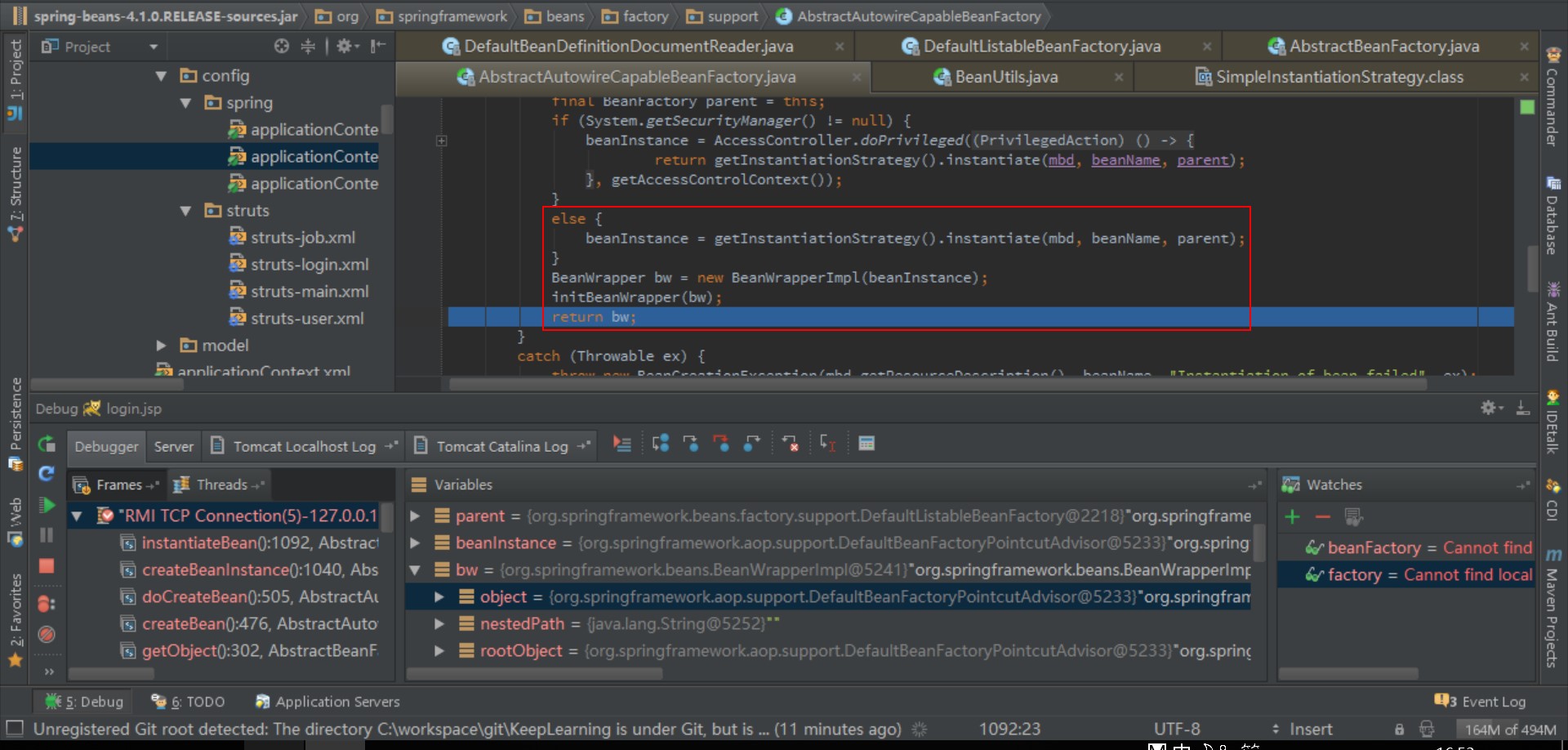
- 创建一个bean的实例
- 将这个实例封装到BeanWrapper中
4、参考链接
源码跟读,Spring是如何解析和加载xml中配置的beans的更多相关文章
- 【spring源码学习】spring的IOC容器之自定义xml配置标签扩展namspaceHandler向IOC容器中注册bean
[spring以及第三方jar的案例]在spring中的aop相关配置的标签,线程池相关配置的标签,都是基于该种方式实现的.包括dubbo的配置标签都是基于该方式实现的.[一]原理 ===>sp ...
- Spring源码情操陶冶-自定义节点的解析
本文承接前文Spring源码情操陶冶-DefaultBeanDefinitionDocumentReader#parseBeanDefinitions,特开辟出一块新地来啃啃这块有意思的骨头 自定义节 ...
- spring IoC源码分析 (3)Resource解析
引自 spring IoC源码分析 (3)Resource解析 定义好了Resource之后,看到XmlFactoryBean的构造函数 public XmlBeanFactory(Resource ...
- Spring源码情操陶冶-ComponentScanBeanDefinitionParser文件扫描解析器
承接前文Spring源码情操陶冶-自定义节点的解析,本文讲述spring通过context:component-scan节点干了什么事 ComponentScanBeanDefinitionParse ...
- 专治不会看源码的毛病--spring源码解析AOP篇
昨天有个大牛说我啰嗦,眼光比较细碎,看不到重点.太他爷爷的有道理了!要说看人品,还是女孩子强一些.原来记得看到一个男孩子的抱怨,说怎么两人刚刚开始在一起,女孩子在心里就已经和他过完了一辈子.哥哥们,不 ...
- 框架源码系列六:Spring源码学习之Spring IOC源码学习
Spring 源码学习过程: 一.搞明白IOC能做什么,是怎么做的 1. 搞明白IOC能做什么? IOC是用为用户创建.管理实例对象的.用户需要实例对象时只需要向IOC容器获取就行了,不用自己去创建 ...
- 结合源码浅谈Spring容器与其子容器Spring MVC 冲突问题
容器是整个Spring 框架的核心思想,用来管理Bean的整个生命周期. 一个项目中引入Spring和SpringMVC这两个框架,Spring是父容器,SpringMVC是其子容器,子容器可以看见父 ...
- 【源码讲解】Spring事务是如何应用到你的业务场景中的?
初衷 日常开发中经常用到@Transaction注解,那你知道它是怎么应用到你的业务代码中的吗?本篇文章将从以下两个方面阐述Spring事务实现原理: 解析并加载事务配置:本质上是解析xml文件将标签 ...
- spring-cloud-square源码速读(spring-cloud-square-okhttp篇)
欢迎访问我的GitHub https://github.com/zq2599/blog_demos 内容:所有原创文章分类汇总及配套源码,涉及Java.Docker.Kubernetes.DevOPS ...
随机推荐
- jsp基础与提高(EL、JSTL)
EL表达式 1.1 为什么需要EL表达式和JSP标签 JSP的产生在一定程度上将Servlet中负责表现的功能抽取了出来,但JSP页内嵌入的Java代码也破坏了页面中负责表现的页面结构,特别是当运算逻 ...
- koa2 controller中实现类似sleep的延迟功能
今天有同事问我如何在koa2中的controller中使用延迟执行的功能,他直接在controller中使用setTimeout,但是没效果. 错误的代码类似下面这样: // 错误的方法 export ...
- 实现多条件模糊查询SQL语句
很多网友问到如何写模糊查询语句和多条件查询,这里我整理了一下,假设以姓名.性别.电话号...作为数据库中的字段名. 通常写一个简单的模糊查询的SQL语句格式可以如下例: sql="selec ...
- 7.21.02 switch语句
switch语句判断一个变量与一系列值中某个值是否相等,每个值称为一个分支. 语法 switch语法格式如下: switch(expression) { case value : //语句 break ...
- asp .net 模板引擎 使用 Razor 生成html静态页面
刚开始不是理解 写完之后 觉得还蛮简单的 分为这几个步骤 1.获取页面模板Html 2.获取数据 3.解析模板和数据,生成静态页Html代码 4.生成静态文件 模板形式是mvc的模式,会mvc 看一下 ...
- Android艺术探索第四 view的自定义
一.初见View View的层级关系(Veiw到底分成几层,自定义view是从那一层开始绘制的) R:Veiw树的结构如下 ,自定义View是从DecorView开始的;DecorView是View树 ...
- Django1-10-5管理界面中文设置
先确定一下版本是否更高,低版本设置(settings.py文件): LANGUAGE_CODE = 'zh-CN'TIME_ZONE = 'Asia/Shanghai' 但是新版本就会提示不识别zh- ...
- 所有做java开发的都是些垃圾
所有做java开发的都是些垃圾,再垃圾的框架,只要有人用,对java程序员来说那就是高性能,高可用,解耦的,非常优秀的一款框架.属于吃屎都吃的津津有味.java里的框架都是垃圾,连一个不错的都没有.比 ...
- chrome开发工具指南(五)
Main Menu Click More to open the Main Menu. Settings To open Settings, do one of the following: Pre ...
- input长度随输入内容动态变化 input光标定位在最右侧
<input type="text" onkeydown="this.onkeyup();" onkeyup="this.size=(this. ...