
带你彻底掌握Bean的生命周期
摘要:我们将深入研究Spring Framework的核心部分——Spring Bean的生命周期。
本文分享自华为云社区《Spring高手之路5——彻底掌握Bean的生命周期》,作者: 砖业洋__ 。
1. 理解Bean的生命周期
1.1 生命周期的各个阶段
在Spring IOC容器中,Bean的生命周期大致如下:
- 实例化:当启动Spring应用时,IOC容器就会为在配置文件中声明的每个<bean>创建一个实例。
- 属性赋值:实例化后,Spring就通过反射机制给Bean的属性赋值。
- 调用初始化方法:如果Bean配置了初始化方法,Spring就会调用它。初始化方法是在Bean创建并赋值之后调用,可以在这个方法里面写一些业务处理代码或者做一些初始化的工作。
- Bean运行期:此时,Bean已经准备好被程序使用了,它已经被初始化并赋值完成。
- 应用程序关闭:当关闭IOC容器时,Spring会处理配置了销毁方法的Bean。
- 调用销毁方法:如果Bean配置了销毁方法,Spring会在所有Bean都已经使用完毕,且IOC容器关闭之前调用它,可以在销毁方法里面做一些资源释放的工作,比如关闭连接、清理缓存等。
这就是Spring IOC容器管理Bean的生命周期,帮助我们管理对象的创建和销毁,以及在适当的时机做适当的事情。
我们可以将生命周期的触发称为回调,因为生命周期的方法是我们自己定义的,但方法的调用是由框架内部帮我们完成的,所以可以称之为“回调”。
2. 理解init-method和destroy-method
让我们先了解一种最容易理解的生命周期阶段:初始化和销毁方法。这些方法可以在Bean的初始化和销毁阶段起作用,我们通过示例来演示这种方式。
为了方便演示XML和注解的方式,接下来我们会创建两个类来分别进行演示,分别为Lion和Elephant,让我们一步一步对比观察。
2.1 从XML配置创建Bean看生命周期
先创建一个类Lion
package com.example.demo.bean;

public class Lion {

 private String name;

 public void setName(String name) {

 this.name = name;

 }

 public void init() {

 System.out.println(name + " has been initialized...");

 }

 public void destroy() {

 System.out.println(name + " has been destroyed...");

 }

}
在XML中,我们使用<bean>标签来注册Lion:
applicationContext.xml
<?xml version="1.0" encoding="UTF-8"?>

<beans xmlns="http://www.springframework.org/schema/beans"

 xmlns:xsi="http://www.w3.org/2001/XMLSchema-instance"

 xsi:schemaLocation="http://www.springframework.org/schema/beans http://www.springframework.org/schema/beans/spring-beans.xsd">

 <bean class="com.example.demo.bean.Lion"

 init-method="init" destroy-method="destroy">

 <property name="name" value="simba"/>

 </bean>

</beans>
加上主程序
package com.example.demo.application;

import org.springframework.context.annotation.ComponentScan;

import org.springframework.context.support.ClassPathXmlApplicationContext;

@ComponentScan("com.example")

public class DemoApplication {

 public static void main(String[] args) {

 System.out.println("Spring容器初始化开始");

 ClassPathXmlApplicationContext context = new ClassPathXmlApplicationContext("applicationContext.xml");

 System.out.println("Spring容器初始化完成。");

 System.out.println("==================");

 System.out.println("Spring容器准备关闭");

 context.close();

 System.out.println("Spring容器已关闭。");

 }

}
运行结果
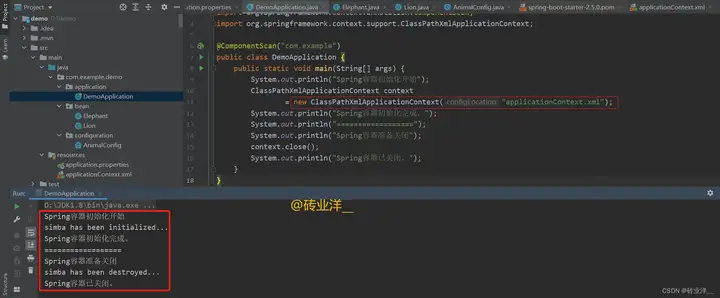
在<bean>标签中,有两个属性:init-method和destroy-method,这两个属性用于指定初始化和销毁方法。
这里"simba has been initialized...",证明init()方法被调用了。当context.close()被调用时,看到"simba has been destroyed...",证明destroy()方法被调用了。
在 IOC 容器初始化之前,默认情况下 Bean 已经创建好了,而且完成了初始化动作;容器调用销毁动作时,先销毁所有 Bean ,最后 IOC 容器全部销毁完成。
这个例子通过一个简单的Spring应用程序显示了Spring bean的生命周期。我们可以在创建bean时根据需要使用这些生命周期方法。
2.2 从配置类注解配置创建Bean看生命周期
这里再创建一个类Elephant和上面对比
package com.example.demo.bean;

public class Elephant {

 private String name;

 public void setName(String name) {

 this.name = name;

 }

 public void init() {

 System.out.println(name + " has been initialized...");

 }

 public void destroy() {

 System.out.println(name + " has been destroyed...");

 }

}
对于注解,@Bean注解中也有类似的属性:initMethod和destroyMethod,这两个属性的作用与XML配置中的相同。
package com.example.demo.configuration;

import com.example.demo.bean.Elephant;

import org.springframework.context.annotation.Bean;

import org.springframework.context.annotation.Configuration;

import org.springframework.context.annotation.ImportResource;

@Configuration

@ImportResource("classpath:applicationContext.xml")

public class AnimalConfig {

 @Bean(initMethod = "init", destroyMethod = "destroy")

 public Elephant elephant() {

 Elephant elephant = new Elephant();

 elephant.setName("Dumbo");

 return elephant;

 }

}
这里用@ImportResource("classpath:applicationContext.xml")引入xml配置创建Bean进行对比。
主程序改为如下:
package com.example.demo.application;

import com.example.demo.configuration.AnimalConfig;

import org.springframework.context.annotation.AnnotationConfigApplicationContext;

import org.springframework.context.annotation.ComponentScan;

@ComponentScan("com.example")

public class DemoApplication {

 public static void main(String[] args) {

 System.out.println("Spring容器初始化开始");

 AnnotationConfigApplicationContext context = new AnnotationConfigApplicationContext(AnimalConfig.class);

 System.out.println("Spring容器初始化完成。");

 System.out.println("==================");

 System.out.println("Spring容器准备关闭");

 context.close();

 System.out.println("Spring容器已关闭。");

 }

}
运行结果
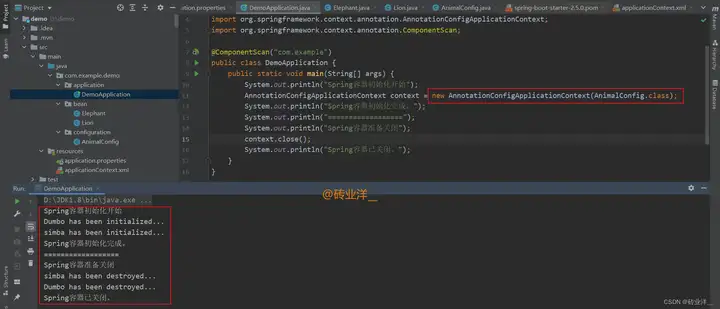
注意:在Spring中,如果在Java配置中定义了一个Bean,并在XML中定义了一个相同id或name的Bean,那么最后注册的那个Bean会覆盖之前注册的,这取决于配置文件加载顺序,无论在Java配置中还是XML配置中定义的initMethod或destroyMethod,最后生效的总是后加载的配置中定义的。
“init-method”是指定初始化回调方法的属性的统称,无论它是在XML配置还是Java配置中使用。同样地,“destroy-method”是指定销毁回调方法的属性的统称。后文我们讲解多种声明周期共存的时候,将延续这种说法。
2.3 初始化和销毁方法的特性
在Spring框架中配置Bean的初始化和销毁方法时,需要按照Spring的规范来配置这些方法,否则Spring可能无法正确地调用它们。下面给每个特性提供一个解释和示例:
1、方法的访问权限无限制:这意味着无论方法是public、protected还是private,Spring都可以调用。Spring通过反射来调用这些方法,所以它可以忽略Java的访问权限限制。示例:
public class MyBean {

 private void init() {

 // 初始化代码

 }

}
在上述代码中,即使init方法是private的,Spring也可以正常调用。
2、方法没有参数:由于Spring不知道需要传递什么参数给这些方法,所以这些方法不能有参数。示例:
public class MyBean {

 public void init() {

 // 初始化代码

 }

}
在上述代码中,init方法没有参数,如果添加了参数,如public void init(String arg),Spring将无法调用此方法。
3、方法没有返回值:由于返回的值对Spring来说没有意义,所以这些方法不应该有返回值。示例:
public class MyBean {

 public void init() {

 // 初始化代码

 }

}
在上述代码中,init方法是void的,如果让此方法返回一个值,如public String init(),那么Spring将忽略此返回值。
4、方法可以抛出异常:如果在初始化或销毁过程中发生错误,这些方法可以抛出异常来通知Spring。示例:
public class MyBean {

 public void init() throws Exception {

 // 初始化代码

 if (somethingGoesWrong) {

 throw new Exception("Initialization failed.");

 }

 }

}
在上述代码中,如果在init方法中的初始化代码出错,它会抛出一个异常。Spring框架默认会停止Bean的创建,并抛出异常。
2.4 探究Bean的初始化流程顺序
在上面的代码中,我们可以看出Bean在IOC容器初始化阶段就已经创建并初始化了,那么每个Bean的初始化动作又是如何进行的呢?我们修改一下Lion,在构造方法和setName方法中加入控制台打印,这样在调用这些方法时,会在控制台上得到反馈。
package com.example.demo.bean;

public class Lion {

 private String name;

 public Lion() {

 System.out.println("Lion's constructor is called...");

 }

 public void setName(String name) {

 System.out.println("setName method is called...");

 this.name = name;

 }

 public void init() {

 System.out.println(name + " has been initialized...");

 }

 public void destroy() {

 System.out.println(name + " has been destroyed...");

 }

}
我们重新运行主程序:
@ComponentScan("com.example")

public class DemoApplication {

 public static void main(String[] args) {

 System.out.println("Spring容器初始化开始");

 ClassPathXmlApplicationContext context = new ClassPathXmlApplicationContext("applicationContext.xml");

 System.out.println("Spring容器初始化完成。");

 System.out.println("==================");

 System.out.println("Spring容器准备关闭");

 context.close();

 System.out.println("Spring容器已关闭。");

 }

}
运行结果
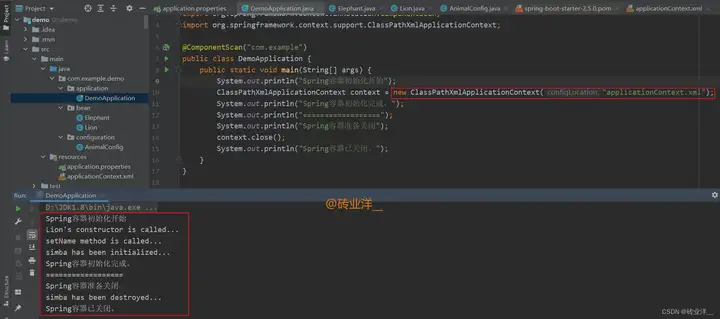
我们可以得出结论:在Bean的生命周期中,首先进行属性赋值,然后执行init-method标记的方法。
3. @PostConstruct和@PreDestroy
在JSR250规范中,有两个与Bean生命周期相关的注解,即@PostConstruct和@PreDestroy。这两个注解对应了Bean的初始化和销毁阶段。
@PostConstruct注解标记的方法会在bean属性设置完毕后(即完成依赖注入),但在bean对外暴露(即可以被其他bean引用)之前被调用,这个时机通常用于完成一些初始化工作。
@PreDestroy注解标记的方法会在Spring容器销毁bean之前调用,这通常用于释放资源。
3.1 示例:@PostConstruct和@PreDestroy的使用
我们这里还是用Lion类来创建这个例子,将Lion类修改为使用@PostConstruct和@PreDestroy注解
package com.example.demo.bean;

import org.springframework.stereotype.Component;

import javax.annotation.PostConstruct;

import javax.annotation.PreDestroy;

@Component

public class Lion {

 private String name;

 public void setName(String name) {

 this.name = name;

 }

 @PostConstruct

 public void init() {

 System.out.println("Lion is going through init.");

 }

 @PreDestroy

 public void destroy() {

 System.out.println("Lion is going through destroy.");

 }

 @Override

 public String toString() {

 return "Lion{" + "name=" + name + '}';

 }

}
给Lion类加上@Component注解,让IOC容器去管理这个类,我们这里就不把Elephant类加进来增加理解难度了。
被 @PostConstruct 和 @PreDestroy 注解标注的方法与 init-method / destroy-method 方法的初始化和销毁的要求是一样的,访问修饰符没有限制,private也可以。
我们可以注释掉之前的配置类和XML配置,因为和这里的例子没有关系,我们来看看主程序:
package com.example.demo.application;

import org.springframework.context.annotation.AnnotationConfigApplicationContext;

public class DemoApplication {

 public static void main(String[] args) {

 System.out.println("Spring容器初始化开始");

 AnnotationConfigApplicationContext context = new AnnotationConfigApplicationContext("com.example.demo.bean");

 System.out.println("Spring容器初始化完成。");

 System.out.println("==================");

 System.out.println("Spring容器准备关闭");

 context.close();

 System.out.println("Spring容器已关闭。");

 }

}
运行结果
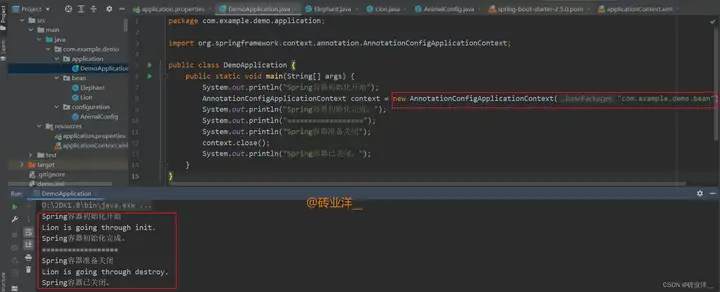
这里可以看到@PostConstruct和@PreDestroy注解正确地应用在了Lion的初始化和销毁过程中。
3.2 初始化和销毁——注解和init-method共存对比
@PostConstruct和@PreDestroy注解与init-method/destroy-method属性如何共存呢?我们来看看
我们只用Lion类来举例子,在Lion类中添加新的open()和close()方法
需要的全部代码如下:
Lion.java
package com.example.demo.bean;

import javax.annotation.PostConstruct;

import javax.annotation.PreDestroy;

public class Lion {

 private String name;

 public Lion() {

 System.out.println("Lion构造器");

 }

 public void setName(String name) {

 System.out.println("Lion设置name");

 this.name = name;

 }

 public void open() {

 System.out.println("配置类initMethod - 打开Lion。。。");

 }

 public void close() {

 System.out.println("配置类destroyMethod - 关闭Lion。。。");

 }

 @PostConstruct

 public void init() {

 System.out.println("@PostConstruct - Lion正在进行初始化。。。");

 }

 @PreDestroy

 public void destroy() {

 System.out.println("@PreDestroy - Lion正在进行销毁。。。");

 }

 @Override

 public String toString() {

 return "Lion{" + "name=" + name + '}';

 }

}
配置类AnimalConfig.java
package com.example.demo.configuration;

import com.example.demo.bean.Lion;

import org.springframework.context.annotation.Bean;

import org.springframework.context.annotation.Configuration;

@Configuration

public class AnimalConfig {

 @Bean(initMethod = "open", destroyMethod = "close")

 public Lion lion() {

 return new Lion();

 }

}
主程序
package com.example.demo.application;

import com.example.demo.configuration.AnimalConfig;

import org.springframework.context.annotation.AnnotationConfigApplicationContext;

public class DemoApplication {

 public static void main(String[] args) {

 System.out.println("Spring容器初始化开始");

 AnnotationConfigApplicationContext context = new AnnotationConfigApplicationContext(AnimalConfig.class);

 System.out.println("Spring容器初始化完成。");

 System.out.println("==================");

 System.out.println("Spring容器准备关闭");

 context.close();

 System.out.println("Spring容器已关闭。");

 }

}
运行结果
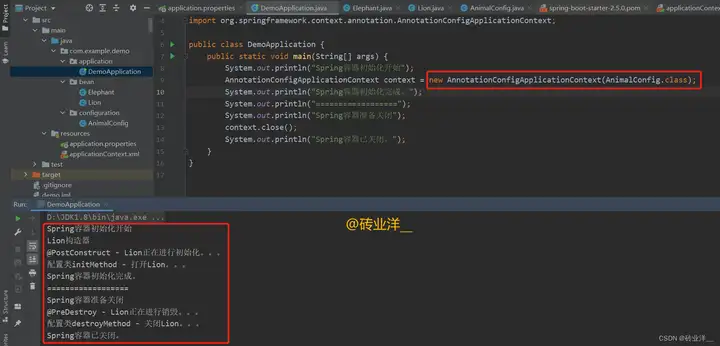
这里可以看到@PostConstruct和@PreDestroy注解的优先级始终高于配置类中@Bean注解的initMethod和destroyMethod属性。
4. 实现InitializingBean和DisposableBean接口
这两个接口是 Spring 预定义的两个关于生命周期的接口。他们被触发的时机与上文中的 init-method / destroy-method 以及 JSR250 规范的注解相同,都是在 Bean 的初始化和销毁阶段回调的。下面演示如何使用这两个接口。
4.1 示例:实现InitializingBean和DisposableBean接口
创建Bean,我们让Lion类实现这两个接口:
Lion.java
package com.example.demo.bean;

import org.springframework.beans.factory.DisposableBean;

import org.springframework.beans.factory.InitializingBean;

import org.springframework.stereotype.Component;

@Component

public class Lion implements InitializingBean, DisposableBean {

 private Integer energy;

 @Override

 public void afterPropertiesSet() throws Exception {

 System.out.println("狮子已经充满能量。。。");

 this.energy = 100;

 }

 @Override

 public void destroy() throws Exception {

 System.out.println("狮子已经消耗完所有能量。。。");

 this.energy = 0;

 }

 @Override

 public String toString() {

 return "Lion{" + "energy=" + energy + '}';

 }

}
InitializingBean接口只有一个方法:afterPropertiesSet()。在Spring框架中,当一个bean的所有属性都已经被设置完毕后,这个方法就会被调用。也就是说,这个bean一旦被初始化,Spring就会调用这个方法。我们可以在bean的所有属性被设置后,进行一些自定义的初始化工作。
DisposableBean接口也只有一个方法:destroy()。当Spring容器关闭并销毁bean时,这个方法就会被调用。我们可以在bean被销毁前,进行一些清理工作。
主程序:
package com.example.demo.application;

import org.springframework.context.annotation.AnnotationConfigApplicationContext;

public class DemoApplication {

 public static void main(String[] args) {

 System.out.println("Spring容器初始化开始");

 AnnotationConfigApplicationContext context

 = new AnnotationConfigApplicationContext("com.example.demo.bean");

 System.out.println("Spring容器初始化完成。");

 System.out.println("==================");

 System.out.println("Spring容器准备关闭");

 context.close();

 System.out.println("Spring容器已关闭。");

 }

}
运行结果:
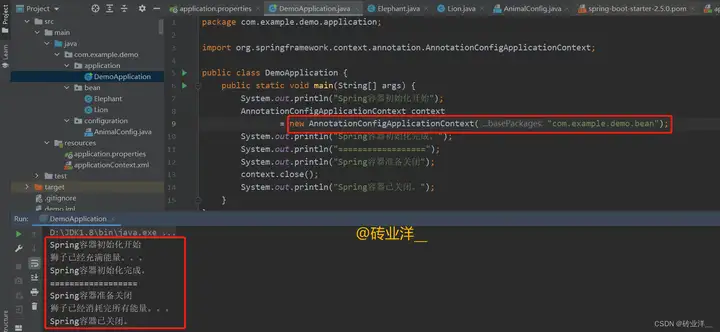
4.2 三种生命周期并存
在Spring框架中,控制Bean生命周期的三种方式是:
- 使用Spring的init-method和destroy-method(在XML配置或者Java配置中自定义的初始化和销毁方法);
- 使用JSR-250规范的@PostConstruct和@PreDestroy注解;
- 实现Spring的InitializingBean和DisposableBean接口。
接下来我们测试一下,一个Bean同时定义init-method、destroy-method方法,使用@PostConstruct、@PreDestroy注解,以及实现InitializingBean、DisposableBean接口,执行顺序是怎样的。
我们创建一个新的类Lion2,并同时进行三种方式的生命周期控制:
需要运行的全部代码如下:
package com.example.demo.bean;

import org.springframework.beans.factory.DisposableBean;

import org.springframework.beans.factory.InitializingBean;

import org.springframework.stereotype.Component;

import javax.annotation.PostConstruct;

import javax.annotation.PreDestroy;

@Component

public class Lion2 implements InitializingBean, DisposableBean {

 private Integer energy;

 public void open() {

 System.out.println("init-method - 狮子开始行动。。。");

 }

 public void close() {

 System.out.println("destroy-method - 狮子结束行动。。。");

 }

 @PostConstruct

 public void gainEnergy() {

 System.out.println("@PostConstruct - 狮子已经充满能量。。。");

 this.energy = 100;

 }

 @PreDestroy

 public void loseEnergy() {

 System.out.println("@PreDestroy - 狮子已经消耗完所有能量。。。");

 this.energy = 0;

 }

 @Override

 public void afterPropertiesSet() throws Exception {

 System.out.println("InitializingBean - 狮子准备行动。。。");

 }

 @Override

 public void destroy() throws Exception {

 System.out.println("DisposableBean - 狮子行动结束。。。");

 }

}
接着,我们注册Lion2:
package com.example.demo.configuration;

import com.example.demo.bean.Lion2;

import org.springframework.context.annotation.Bean;

import org.springframework.context.annotation.Configuration;

@Configuration

public class AnimalConfig {

 @Bean(initMethod = "open", destroyMethod = "close")

 public Lion2 lion2() {

 return new Lion2();

 }

}
然后让注解 IOC 容器驱动这个配置类,主程序如下:
package com.example.demo.application;

import org.springframework.context.annotation.AnnotationConfigApplicationContext;

public class DemoApplication {

 public static void main(String[] args) {

 System.out.println("Spring容器初始化开始");

 AnnotationConfigApplicationContext context

 = new AnnotationConfigApplicationContext("com.example.demo");

 System.out.println("Spring容器初始化完成。");

 System.out.println("==================");

 System.out.println("Spring容器准备关闭");

 context.close();

 System.out.println("Spring容器已关闭。");

 }

}
运行结果:
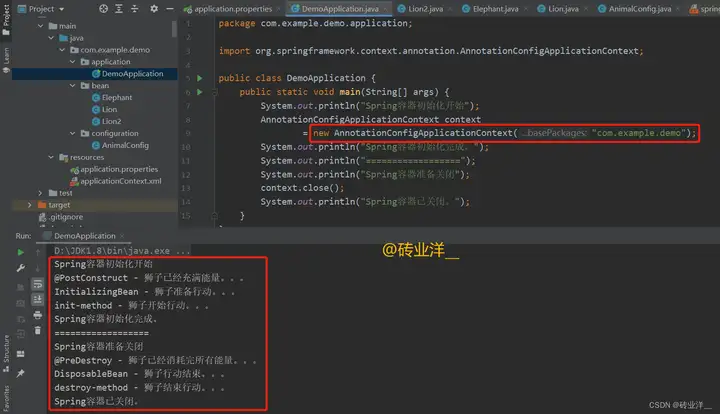
从上面的结果,我们可以得出以下结论,在Spring框架中单实例Bean的初始化和销毁过程有这样的执行顺序:
初始化顺序:@PostConstruct → InitializingBean → init-method
销毁顺序:@PreDestroy → DisposableBean → destroy-method
在初始化Bean时,@PostConstruct注解方法会首先被执行,然后是实现InitializingBean接口的afterPropertiesSet方法,最后是init-method指定的方法。
在销毁Bean时,@PreDestroy注解方法会首先被执行,然后是实现DisposableBean接口的destroy方法,最后是destroy-method指定的方法
结合前面说过的属性赋值(构造器方法和setter方法),简单总结一下Spring Bean生命周期的流程:
- 实例化(通过构造器方法);
- 设置Bean的属性(通过setter方法);
- 调用Bean的初始化方法(@PostConstruct、afterPropertiesSet方法或者init-method指定的方法);
- Bean可以被应用程序使用;
- 当容器关闭时,调用Bean的销毁方法(@PreDestroy、destroy方法或者destroy-method指定的方法)。
5. 原型Bean的生命周期
原型Bean的创建和初始化过程与单例Bean类似,但由于原型Bean的性质,其生命周期与IOC容器的生命周期并不相同。
这里展示一下需要的全部代码。
Lion2.java
package com.example.demo.bean;

import org.springframework.beans.factory.DisposableBean;

import org.springframework.beans.factory.InitializingBean;

import org.springframework.stereotype.Component;

import javax.annotation.PostConstruct;

import javax.annotation.PreDestroy;

public class Lion2 implements InitializingBean, DisposableBean {

 private Integer energy;

 public void roar() {

 System.out.println("The lion is roaring...");

 }

 public void rest() {

 System.out.println("The lion is resting...");

 }

 @PostConstruct

 public void gainEnergy() {

 System.out.println("@PostConstruct - 狮子已经充满能量。。。");

 this.energy = 100;

 }

 @PreDestroy

 public void loseEnergy() {

 System.out.println("@PreDestroy - 狮子已经消耗完所有能量。。。");

 this.energy = 0;

 }

 @Override

 public void afterPropertiesSet() throws Exception {

 System.out.println("InitializingBean - 狮子准备行动。。。");

 }

 @Override

 public void destroy() throws Exception {

 System.out.println("DisposableBean - 狮子行动结束。。。");

 }

}
然后在Spring的Java配置中声明并设定其为原型Bean
package com.example.demo.configuration;

import com.example.demo.bean.Lion2;

import org.springframework.beans.factory.config.ConfigurableBeanFactory;

import org.springframework.context.annotation.Bean;

import org.springframework.context.annotation.Configuration;

import org.springframework.context.annotation.Scope;

@Configuration

public class PrototypeLifecycleConfiguration {

 @Bean(initMethod = "roar", destroyMethod = "rest")

 @Scope(ConfigurableBeanFactory.SCOPE_PROTOTYPE)

 public Lion2 lion() {

 return new Lion2();

 }

}
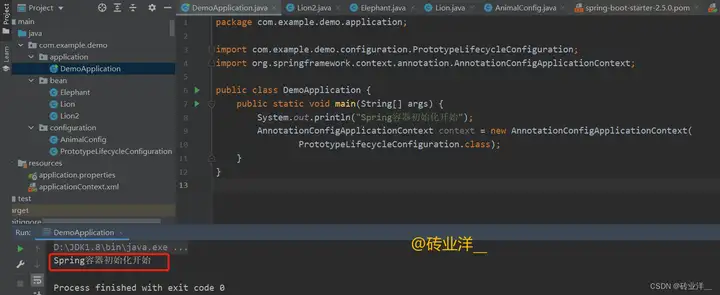
如果我们只是启动了IOC容器,但并未请求Lion2的实例,Lion Bean的初始化不会立刻发生。也就是说,原型Bean不会随着IOC容器的启动而初始化。以下是启动容器但并未请求Bean的代码:
package com.example.demo.application;

import com.example.demo.configuration.PrototypeLifecycleConfiguration;

import org.springframework.context.annotation.AnnotationConfigApplicationContext;

public class DemoApplication {

 public static void main(String[] args) {

 System.out.println("Spring容器初始化开始");

 AnnotationConfigApplicationContext context = new AnnotationConfigApplicationContext(

 PrototypeLifecycleConfiguration.class);

 }

}
运行结果:
当我们明确请求一个Lion2的实例时,我们会看到所有的初始化方法按照预定的顺序执行,这个顺序跟单例Bean完全一致:
package com.example.demo.application;

import com.example.demo.bean.Lion2;

import com.example.demo.configuration.PrototypeLifecycleConfiguration;

import org.springframework.context.annotation.AnnotationConfigApplicationContext;

public class DemoApplication {

 public static void main(String[] args) {

 System.out.println("Spring容器初始化开始");

 AnnotationConfigApplicationContext context = new AnnotationConfigApplicationContext(

 PrototypeLifecycleConfiguration.class);

 System.out.println("Ready to get a Lion instance...");

 Lion2 lion = context.getBean(Lion2.class);

 System.out.println("A Lion instance has been fetched...");

 System.out.println("Lion instance is no longer needed, preparing to destroy...");

 context.getBeanFactory().destroyBean(lion);

 System.out.println("Lion instance has been destroyed...");

 }

}
运行结果:
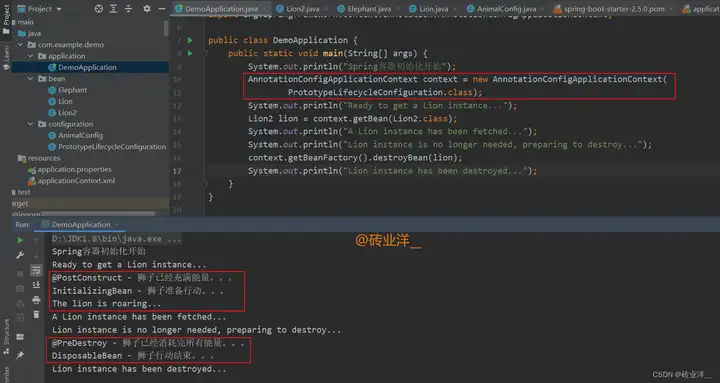
将原型Bean和单例Bean的三种生命周期进行对比后发现,调用IOC容器的destroyBean()方法销毁原型Bean时,只有@PreDestroy注解和DisposableBean接口的destroy方法会被触发,而被destroy-method标记的自定义销毁方法并不会被执行。
从这里我们可以得出结论:在销毁原型Bean时,Spring不会执行由destroy-method标记的自定义销毁方法,所以原型Bean的destroy-method的也有局限性。如果有重要的清理逻辑需要在Bean销毁时执行,那么应该将这部分逻辑放在@PreDestroy注解的方法或DisposableBean接口的destroy方法中。
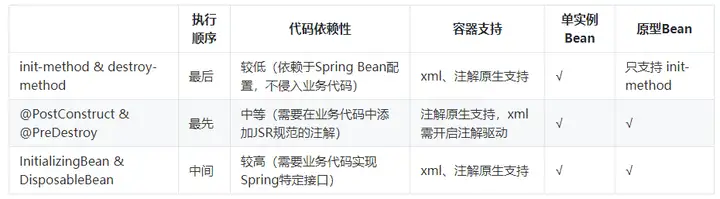
6. Spring中控制Bean生命周期的三种方式总结
带你彻底掌握Bean的生命周期的更多相关文章
- 11张图和源码带你解析Spring Bean的生命周期,建议收藏~!
在网上已经有跟多Bean的生命周期的博客,但是很多都是基于比较老的版本了,最近把整个流程画成了一个流程图.待会儿使用流程图,说明以及代码的形式来说明整个声明周期的流程.注意因为代码比较多,这里的流程图 ...
- Bean的生命周期
Bean的生命周期 原文:http://997004049-qq-com.iteye.com/blog/1729793 任何一个事物都有自己的生命周期,生命的开始.生命中.生命结束.大家最熟悉的应该是 ...
- JAVA面试题:Spring中bean的生命周期
Spring 中bean 的生命周期短暂吗? 在spring中,从BeanFactory或ApplicationContext取得的实例为Singleton,也就是预设为每一个Bean的别名只能维持一 ...
- 7 -- Spring的基本用法 -- 9...容器中Bean的生命周期
7.9 容器中Bean的生命周期 Spring可以管理singleton作用域的Bean的生命周期,Spring可以精确地知道该Bean何时被创建,何时被初始化完成.容器何时准备销毁该Bean实例. ...
- 剑指Spring源码(三)俯瞰Spring的Bean的生命周期(大众版)
距离上一次写Spring源码解析,已经过去了快要好几个月了,主要原因还是Spring的源码解析类文章太难写了,不像我先前写的什么CAS源码,AQS源码,LinkedBlockingQueue等等,这些 ...
- Spring实战(二)Spring容器和bean的生命周期
引入问题: 在XML配置文件中配置bean后,这些文件又是如何被加载的?它们被加载到哪里去了? Spring容器——框架核心 1.什么是Spring容器?它的功能是什么? 在基于Spring的应用中, ...
- Spring的Bean的生命周期(大众版)
距离上一次写Spring源码解析,已经过去了快要好几个月了,主要原因还是Spring的源码解析类文章太难写了,不像我先前写的什么CAS源码,AQS源码,LinkedBlockingQueue等等, ...
- spring-第八篇之容器中的bean的生命周期
1.容器中的bean的生命周期 spring容器可以管理singleton作用域的bean的生命周期,包括bean何时被创建.何时初始化完成.何时被销毁.客户端代码不能控制该类型bean的销毁.spr ...
- 你知道Spring是怎么将AOP应用到Bean的生命周期中的吗?
聊一聊Spring是怎么将AOP应用到Bean的生命周期中的? 本系列文章: 听说你还没学Spring就被源码编译劝退了?30+张图带你玩转Spring编译 读源码,我们可以从第一行读起 你知道Spr ...
- java Spring系列之 配置文件的操作 +Bean的生命周期+不同数据类型的注入简析+注入的原理详解+配置文件中不同标签体的使用方式
Spring系列之 配置文件的操作 写在文章前面: 本文带大家掌握Spring配置文件的基础操作以及带领大家理清依赖注入的概念,本文涉及内容广泛,如果各位读者耐心看完,应该会对自身有一个提升 Spri ...
随机推荐
- java魔功心法-范型篇
前言: https://www.cnblogs.com/LoveBB/p/17277662.html 什么是范型 JDK 1.5开始引入Java泛型(generics)这个特性,该特性提供了编译时类型 ...
- 计网学习笔记六 Network Layer Overview
这节课开始进入了网络层的学习,讲述了网络层提供的功能,还有路由器内部是什么样子的,以及virtual circuit网络和datagram网络的一点比较. 网络层有什么作用呢?用一句话来说,就是需要负 ...
- Containerd 入门基础操作
Containerd 被 Docker.Kubernetes CRI 和其他一些项目使用 Containerd 旨在轻松嵌入到更大的系统中.Docker 在后台使用 containerd来运行容器. ...
- 基于SpringBoot实现单元测试的多种情境/方法(二)
本文分享自天翼云开发者社区@<基于SpringBoot实现单元测试的多种情境/方法(二)>, 作者:才开始学技术的小白 1 Mock基础回顾 在上一篇分享中我们详细介绍了简单的.用moc ...
- Java 生成海报
最近项目有个功能是生成海报 一个背景图片,一个二维码图片 将两个图片合并成一个图片. 写了一个工具类,需要的朋友自取. 1 @Component 2 public class PictureUtil ...
- DG:重启之后主备数据重新同步
问题描述:本来配置好的DG第二天重启之后,发现主备库数据不能同步,在主库上执行日志切换以及创建表操作都传不到备库上,造成这种错误的原因是主库实例断掉后造成备库日志与主库无法实时接收 主库:orcl ...
- JAVASE和JAVAEE的区别
JAVASE和JAVAEE的区别 JavaEE: Java Enterprise Edition,Java企业版,多用于企业级开发,包括web开发等等.企业版本帮助开发和部署可移植.健壮.可伸缩切安全 ...
- Laravel 代码开发最佳实践(持续更新)
我们这里要讨论的并不是 Laravel 版的 SOLID 原则(想要了解更多 SOLID 原则细节查看这篇文章)亦或是设计模式,而是 Laravel 实际开发中容易被忽略的最佳实践. 内容概览 单一职 ...
- Go For Web:一篇文章带你用 Go 搭建一个最简单的 Web 服务、了解 Golang 运行 web 的原理
前言: 本文作为解决如何通过 Golang 来编写 Web 应用这个问题的前瞻,对 Golang 中的 Web 基础部分进行一个简单的介绍.目前 Go 拥有成熟的 Http 处理包,所以我们去编写一个 ...
- Vue修改单页面背景颜色