
Mybatis源码分析之参数处理
Mybatis对参数的处理是值得推敲的,不然在使用的过程中对发生的一系列错误直接懵逼了。
以前遇到参数绑定相关的错误我就是直接给加@param注解,也稀里糊涂地解决了,但是后来遇到了一些问题推翻了我的假设:单个参数不需要使用 @param 。由此产生了一个疑问,Mybatis到底是怎么处理参数的?
几种常见的情景:
- 单个参数
- 不使用注解,基于${}和#{}的引用,基本类型和自定义对象都可以
- 不使用注解,基于foreach标签的使用,list和array不可以
- 不使用注解,基于if标签的判断,基本类型 boolean 也报错
初步封装
第一次处理是在MapperMethod中:
private Object getParam(Object[] args) {

    final int paramCount = paramPositions.size();

    if (args == null || paramCount == 0) {

      return null;

    } else if (!hasNamedParameters && paramCount == 1) {

      return args[paramPositions.get(0)];

    } else {

      Map<String, Object> param = new MapperParamMap<Object>();

      for (int i = 0; i < paramCount; i++) {

        param.put(paramNames.get(i), args[paramPositions.get(i)]);

      }

      // issue #71, add param names as param1, param2...but ensure backward compatibility

      for (int i = 0; i < paramCount; i++) {

        String genericParamName = "param" + String.valueOf(i + 1);

        if (!param.containsKey(genericParamName)) {

          param.put(genericParamName, args[paramPositions.get(i)]);

        }

      }

      return param;

    }

}
这里会有三种可能:null,object[],MapperParamMap,第三种可以构造出我们常见的param1、parm2……
AuthAdminUser findAuthAdminUserByUserId(@Param(“userId”) String userId);
当我们在Mapper接口中如此定义时,就会走上面的else代码块,MapperParamMap将包含两个元素,一个key为userId,另一个为param1。
第二次处理是在DefaultSqlSession中,调用executor的query方法时,将参数包装成集合:
  private Object wrapCollection(final Object object) {

    if (object instanceof List) {

      StrictMap<Object> map = new StrictMap<Object>();

      map.put("list", object);

      return map;

    } else if (object != null && object.getClass().isArray()) {

      StrictMap<Object> map = new StrictMap<Object>();

      map.put("array", object);

      return map;

    }

    return object;

  }
这个时候会将其他两种类型(list或array)也转换为map集合,MapperParamMap和StrictMap都继承了HashMap,只是将super.containsKey(key)为false的时候抛出了一个异常。
实例呈现
当我们写Mapper接口时,一个参数通常也不使用@param注解。
如果这个参数是 List 类型呢?
List<String> selectFeeItemTypeNameByIds(List<Integer> itemIds);对应的mapper配置文件:
<select id="selectFeeItemTypeNameByIds" parameterType="java.util.List" resultType="java.lang.String">

    SELECT fee_item_type_name

    FROM tb_uhome_fee_item_type

    WHERE fee_item_type_id IN

    <foreach collection="itemIds" item="itemId" open="(" close=")" separator="," >

        #{itemId}

    </foreach>

</select>
测试一下,直接报错:
nested exception is org.apache.ibatis.binding.BindingException: Parameter ‘itemIds’ not found. Available parameters are [list]
然后把itemIds替换为list就好了:
<foreach collection="list" item="itemId" open="(" close=")" separator="," >

    #{itemId}

</foreach>
这个正是验证了上述源码中的操作,在DefaultSqlSession的wrapCollection方法中:
if (object instanceof List) {

  StrictMap<Object> map = new StrictMap<Object>();

  map.put("list", object);

  return map;

}
如果这个参数用在 if 标签中呢?
List<Map<String, Object>> selectPayMethodListByPlatform(boolean excludeInner);xml中这样使用:
<select id="selectPayMethodListByPlatform" resultType="java.util.HashMap" parameterType="boolean">

    select a.`NAME`as payMethodName, a.`VALUE` as payMethod

    from tb_fcs_dictionary a

    where a.`CODE` = 'PAY_METHOD'

    and a.`STATUS` = 1

    and a.TYPE = 'PLATFORM'

    <if test="excludeInner">

        and a.value not in (14,98)

    </if>

</select>
直接报如下错误:
There is no getter for property named ‘excludeInner’ in ‘class java.lang.Boolean’
跟踪下DynamicContext的内部类ContextAccessor的getProperty方法: 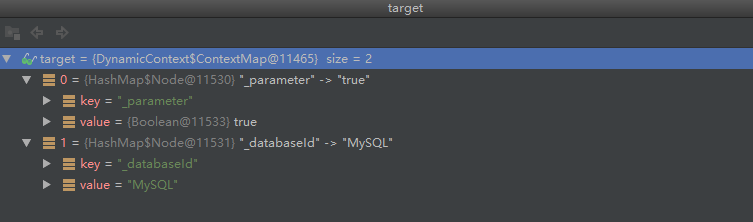
那我们加上注解@Param(“excludeInner”) 再看看: 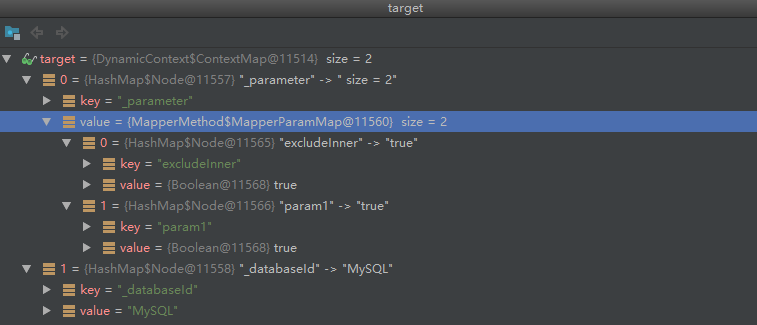
没有使用注解,存储的就是一个Boolean类型的值,返回null。使用了注解,这个值有名称且存放在MapperParamMap中,直接可以根据名称取到。
查看调用栈
在ForEachSqlNode中会调用ExpressionEvaluator的evaluateIterable方法来获取迭代器对象:
public Iterable<?> evaluateIterable(String expression, Object parameterObject) {

    try {

      Object value = OgnlCache.getValue(expression, parameterObject);

      if (value == null) throw new SqlMapperException("The expression '" + expression + "' evaluated to a null value.");

      if (value instanceof Iterable) return (Iterable<?>) value;

      if (value.getClass().isArray()) {

          // the array may be primitive, so Arrays.asList() may throw

          // a ClassCastException (issue 209).  Do the work manually

          // Curse primitives! :) (JGB)

          int size = Array.getLength(value);

          List<Object> answer = new ArrayList<Object>();

          for (int i = 0; i < size; i++) {

              Object o = Array.get(value, i);

              answer.add(o);

          }

          return answer;

      }

      throw new BuilderException("Error evaluating expression '" + expression + "'.  Return value (" + value + ") was not iterable.");

    } catch (OgnlException e) {

      throw new BuilderException("Error evaluating expression '" + expression + "'. Cause: " + e, e);

    }

}
IfSqlNode中也会调用ExpressionEvaluator的evaluateBoolean方法来检测表达式正确与否:
public boolean evaluateBoolean(String expression, Object parameterObject) {

    try {

      Object value = OgnlCache.getValue(expression, parameterObject);

      if (value instanceof Boolean) return (Boolean) value;

      if (value instanceof Number) return !new BigDecimal(String.valueOf(value)).equals(BigDecimal.ZERO);

      return value != null;

    } catch (OgnlException e) {

      throw new BuilderException("Error evaluating expression '" + expression + "'. Cause: " + e, e);

    }

}
两者都会使用Ognl来获取表达式的值:
Object value = OgnlCache.getValue(expression, parameterObject);
实际处理
在DynamicSqlSource的getBoundSql方法中:
- 参数绑定
DynamicContext context = new DynamicContext(configuration, parameterObject);
  public DynamicContext(Configuration configuration, Object parameterObject) {

    if (parameterObject != null && !(parameterObject instanceof Map)) {

      MetaObject metaObject = configuration.newMetaObject(parameterObject);

      bindings = new ContextMap(metaObject);

    } else {

      bindings = new ContextMap(null);

    }

    bindings.put(PARAMETER_OBJECT_KEY, parameterObject);

    bindings.put(DATABASE_ID_KEY, configuration.getDatabaseId());

}- Node逐级处理(各种标签和${}的处理)
rootSqlNode.apply(context);
这个就是处理动态sql的关键,将if、choose和foreach等剥离出来,使用ognl的表达式来获取相关属性的值,例如上面提到的foreach和if标签。
然后将其转换成简单的text,在TextSqlNode中最终处理${param},将其替换为实际参数值。
替换方式如下:
public String handleToken(String content) {

  try {

    Object parameter = context.getBindings().get("_parameter");

    if (parameter == null) {

      context.getBindings().put("value", null);

    } else if (SimpleTypeRegistry.isSimpleType(parameter.getClass())) {

      context.getBindings().put("value", parameter);

    }

    Object value = OgnlCache.getValue(content, context.getBindings());

    return (value == null ? "" : String.valueOf(value)); // issue #274 return "" instead of "null"

  } catch (OgnlException e) {

    throw new BuilderException("Error evaluating expression '" + content + "'. Cause: " + e, e);

  }

}- 参数解析(#{}的处理)
SqlSource sqlSource = sqlSourceParser.parse(context.getSql(), parameterType);
SqlSourceBuilder#parse:
public SqlSource parse(String originalSql, Class<?> parameterType) {

    ParameterMappingTokenHandler handler = new ParameterMappingTokenHandler(configuration, parameterType);

    GenericTokenParser parser = new GenericTokenParser("#{", "}", handler);

    String sql = parser.parse(originalSql);

    return new StaticSqlSource(configuration, sql, handler.getParameterMappings());

}
GenericTokenParser的parse方法将#{xx}替换为 ? ,如下面的sql语句:
SELECT DISTINCT

    A.ORGAN_ID as organId,

    CONCAT(A. NAME, ' [', IFNULL(A.PY_NAME, ''), ']') as organName

FROM

    ORGAN A,

    ORGAN_REL B,

    V_USER_ORGAN C

WHERE

    A.ORGAN_ID = B.ORGAN_ID

AND B.ORGAN_CODE LIKE CONCAT(LEFT(C.ORGAN_CODE, 8), '%')

AND B.PAR_ID = 1

AND A.STATUS = 1

AND C.USER_ID = #{userId}
替换后为:
SELECT DISTINCT

    A.ORGAN_ID as organId,

    CONCAT(A. NAME, ' [', IFNULL(A.PY_NAME, ''), ']') as organName

FROM

    ORGAN A,

    ORGAN_REL B,

    V_USER_ORGAN C

WHERE

    A.ORGAN_ID = B.ORGAN_ID

AND B.ORGAN_CODE LIKE CONCAT(LEFT(C.ORGAN_CODE, 8), '%')

AND B.PAR_ID = 1

AND A.STATUS = 1

AND C.USER_ID = ?
然后构造一个StaticSqlSource:
new StaticSqlSource(configuration, sql, handler.getParameterMappings());
这个就跟我们直接使用JDBC一样,使用?作为占位符。
最终在DefaultParameterHandler中给设置进参数:
public void setParameters(PreparedStatement ps)

      throws SQLException {

    ErrorContext.instance().activity("setting parameters").object(mappedStatement.getParameterMap().getId());

    List<ParameterMapping> parameterMappings = boundSql.getParameterMappings();

    if (parameterMappings != null) {

      MetaObject metaObject = parameterObject == null ? null : configuration.newMetaObject(parameterObject);

      for (int i = 0; i < parameterMappings.size(); i++) {

        ParameterMapping parameterMapping = parameterMappings.get(i);

        if (parameterMapping.getMode() != ParameterMode.OUT) {

          Object value;

          String propertyName = parameterMapping.getProperty();

          PropertyTokenizer prop = new PropertyTokenizer(propertyName);

          if (parameterObject == null) {

            value = null;

          } else if (typeHandlerRegistry.hasTypeHandler(parameterObject.getClass())) {

            value = parameterObject;

          } else if (boundSql.hasAdditionalParameter(propertyName)) {

            value = boundSql.getAdditionalParameter(propertyName);

          } else if (propertyName.startsWith(ForEachSqlNode.ITEM_PREFIX)

              && boundSql.hasAdditionalParameter(prop.getName())) {

            value = boundSql.getAdditionalParameter(prop.getName());

            if (value != null) {

              value = configuration.newMetaObject(value).getValue(propertyName.substring(prop.getName().length()));

            }

          } else {

            value = metaObject == null ? null : metaObject.getValue(propertyName);

          }

          TypeHandler typeHandler = parameterMapping.getTypeHandler();

          if (typeHandler == null) {

            throw new ExecutorException("There was no TypeHandler found for parameter " + propertyName + " of statement " + mappedStatement.getId());

          }

          JdbcType jdbcType = parameterMapping.getJdbcType();

          if (value == null && jdbcType == null) jdbcType = configuration.getJdbcTypeForNull();

          typeHandler.setParameter(ps, i + 1, value, jdbcType);

        }

      }

    }

  }
这里分为五种情况(高版本合并了第三和第四种):
- parameterObject为null,value直接为null
- parameterObject类型为typeHandlerRegistry中匹配类型value直接赋值为parameterObject
- 参数是动态参数,通过动态参数取值
- 参数是动态参数而且是foreach中的(前缀为frch),也是通过动态参数取值
- 复杂对象或者map类型,通过反射取值
总结
像 if 和 foreach 这种标签都是直接通过Ognl来取值。
“${}” 的处理在TextSqlNode中,使用OGNL方式取值,当场替换为实际参数值。
“#{}” 的处理在SqlSourceBuilder的parse中,使用占位符(?)替换,最后在设置参数的时候使用Mybatis的MetaObject取值。
当我们使用单个参数未用注解时:
- 用在形如foreach和if的标签中(针对上面两个实例)
List<String> selectFeeItemTypeNameByIds(List<Integer> itemIds);

List<Map<String, Object>> selectPayMethodListByPlatform(boolean excludeInner);
MapperMethod的getParam方法将返回这两个参数本身。
DefaultSqlSession的wrapCollection方法将把list放到一个key为”list”的map中,boolean类型的还是返回本身。
这样在DynamicSqlSource的getBoundSql方法中构造DynamicContext时:
public DynamicContext(Configuration configuration, Object parameterObject) {

    if (parameterObject != null && !(parameterObject instanceof Map)) {

      MetaObject metaObject = configuration.newMetaObject(parameterObject);

      bindings = new ContextMap(metaObject);

    } else {

      bindings = new ContextMap(null);

    }

    bindings.put(PARAMETER_OBJECT_KEY, parameterObject);

    bindings.put(DATABASE_ID_KEY, configuration.getDatabaseId());

}
list类型的由于被包装了一下,将走else。而boolean类型直接创建一个包含metaObject的ContextMap。
不管怎样,“itemIds”走到这里已经丢了,后面解析表达式的时候根据这个名字是肯定拿不到的。
而boolean类型的”excludeInner”将在ContextMap中如此出现(仅仅有个值key却为“_parameter”):
key: "_parameter"  value: true

key: "_databaseId"  value: "MySQL"
不过它持有的MetaObject类型的parameterMetaObject对象却不为null。
看下ContextMap中的重写的get方法:
public Object get(Object key) {

      String strKey = (String) key;

      if (super.containsKey(strKey)) {

        return super.get(strKey);

      }

      if (parameterMetaObject != null) {

        Object object = parameterMetaObject.getValue(strKey);

        if (object != null) {

          super.put(strKey, object);

        }

        return object;

      }

      return null;

}
当父类中没有时(这个肯定没有),它将去parameterMetaObject中拿,这一拿就拿出问题来了:
There is no getter for property named ‘excludeInner’ in ‘class java.lang.Boolean’
一路跟到MetaObject的getValue方法,又到BeanWrapper的get方法,然后就把它当做一个普通的对象,用反射去调它的get方法:
private Object getBeanProperty(PropertyTokenizer prop, Object object) {

    try {

      Invoker method = metaClass.getGetInvoker(prop.getName());

      try {

        return method.invoke(object, NO_ARGUMENTS);

      } catch (Throwable t) {

        throw ExceptionUtil.unwrapThrowable(t);

      }

    } catch (RuntimeException e) {

      // 进了这个运行时异常:说它没的get方法,哈哈

      throw e;

    } catch (Throwable t) {

      throw new ReflectionException("Could not get property '" + prop.getName() + "' from " + object.getClass() + ".  Cause: " + t.toString(), t);

    }

}
这个excludeInner本来就是一个boolean类型的参数,哪有什么get方法,能调到才怪!
针对上面两个实例的分析就结束了,从这里也大致知道了Mybatis是如何处理参数的。总的来说,不管一个参数还是几个参数,加@param注解是没错的!加了就会给你统统放map里,然后到CoxtMap中取整个map,由于是map类型,将继续到map里取具体的对象。
从这里可以看出来,如果我们在接口中声明时就只用一个map来装所有参数,key为参数名,value为参数值,然后不使用注解,效果也是一样的。
有问题欢迎讨论,可以留言也可以加本人QQ: 646653132
关于参数绑定的详细解读:http://blog.csdn.net/isea533/article/details/44002219
Mybatis源码分析之参数处理的更多相关文章
- Mybatis源码分析之参数映射及处理ParameterHandler
ParameterHandler是用来设置参数规则的,当StatementHandler调用prepare方法之后,接下来就是调用它来进行设置参数. ParameterHandler接口: publi ...
- MyBatis源码分析1 参数映射分析
首先我们拿出之前的代码,在如图位置打上断点,开始调试 我们规定了一个mapper接口,而调用了mapper接口的getEmpByIdAndLastName,我们并没有实现这个接口,这是因为Mybati ...
- MyBatis源码分析-MyBatis初始化流程
MyBatis 是支持定制化 SQL.存储过程以及高级映射的优秀的持久层框架.MyBatis 避免了几乎所有的 JDBC 代码和手动设置参数以及获取结果集.MyBatis 可以对配置和原生Map使用简 ...
- MyBatis源码分析-SQL语句执行的完整流程
MyBatis 是支持定制化 SQL.存储过程以及高级映射的优秀的持久层框架.MyBatis 避免了几乎所有的 JDBC 代码和手动设置参数以及获取结果集.MyBatis 可以对配置和原生Map使用简 ...
- MyBatis源码分析(5)——内置DataSource实现
@(MyBatis)[DataSource] MyBatis源码分析(5)--内置DataSource实现 MyBatis内置了两个DataSource的实现:UnpooledDataSource,该 ...
- MyBatis源码分析(2)—— Plugin原理
@(MyBatis)[Plugin] MyBatis源码分析--Plugin原理 Plugin原理 Plugin的实现采用了Java的动态代理,应用了责任链设计模式 InterceptorChain ...
- 【MyBatis源码分析】select源码分析及小结
示例代码 之前的文章说过,对于MyBatis来说insert.update.delete是一组的,因为对于MyBatis来说它们都是update:select是一组的,因为对于MyBatis来说它就是 ...
- Mybatis源码分析-BaseExecutor
根据前文Mybatis源码分析-SqlSessionTemplate的简单分析,对于SqlSession的CURD操作都需要经过Executor接口的update/query方法,本文将分析下Base ...
- Mybatis源码分析-StatementHandler
承接前文Mybatis源码分析-BaseExecutor,本文则对通过StatementHandler接口完成数据库的CRUD操作作简单的分析 StatementHandler#接口列表 //获取St ...
随机推荐
- c# windows server安装启动与卸载
使用installutil.exe安装卸载服务时,由于需要指向服务的全路径,由于生成目录往往不是服务发布的最终目录,很不便利,下面介绍两种方式方便操作: 方式一: 项目中加入install.bat与u ...
- 12款jQuery幻灯片插件和幻灯片特效教程
jQuery 使用简单灵活,同时还有许多成熟的插件可供选择,它可以帮助你在项目中加入一些非常好的效果.滑块和幻灯片效果是常用的内容展示方式之一,这是一种在有限的网页空间内展示系列项目时非常好的方法.今 ...
- form表单有条件的提交
form表单提交数据,比如,积分,score,在0--100之间 var score = $('#score').val(); if(score !=''){ if(isNaN(score)){ la ...
- HDU 5995 Kblack loves flag (模拟)
题目链接 Problem Description Kblack loves flags, so he has infinite flags in his pocket. One day, Kblack ...
- NYOJ 257 郁闷的C小加(一) (字符串处理)
题目链接 描述 我们熟悉的表达式如a+b.a+b(c+d)等都属于中缀表达式.中缀表达式就是(对于双目运算符来说)操作符在两个操作数中间:num1 operand num2.同理,后缀表达式就是操作符 ...
- 可怕的npm蠕虫
https://hackernoon.com/im-harvesting-credit-card-numbers-and-passwords-from-your-site-here-s-how-9a8 ...
- 固定bottom,页面其它可滑动实现方案
利用flex布局, <html> <body> <div class='container'> <div class='content'></di ...
- JS设计模式——1.富有表现力的JS
创建支持链式调用的类(构造函数+原型) Function.prototype.method = function(name, fn){ this.prototype[name] = fn; retur ...
- java使用simpleDateFormat格式化日期 时间
时间日期标识符: yyyy:年 MM:月 dd:日 hh:1~12小时制(1-12) HH:24小时制(0-23) mm:分 ss:秒 S:毫秒 E:星期几 D:一年中的第几天 F:一月中的第几个星期 ...
- route add提示: "SIOCADDRT: No such process
解决方法如下: 原因: There are multiple known causes for this error: - You attempted to set a route specific ...