
12.Android之Tabhost组件学习
TabHost是整个Tab的容器,TabHost的实现有两种方式:
第一种继承TabActivity,从TabActivity中用getTabHost()方法获取TabHost。各个Tab中的内容在布局文件中定义就行了。
第二种方式,不继承TabActivity,在布局文件中定义TabHost即可,但是TabWidget的id必须是@android:id/tabs,FrameLayout的id必须是@android:id/tabcontent。
1)继承TabActivity
如果加载该TabHost画面的类继承TabActivity,并且想通过getTabHost()方法来获取TabHost,getTabWidget()方法获取TabWidget,那么TabHost、TabWidget 、FrameLayout 三者的ID必须是android.R.id.tabhost、android.R.id.tabs、android.R.id.tabcontent, 否则会报运行时异常, 比如提示Your content must have a TabHost whose id attribute is 'android.R.id.tabhost'之类错误
修改主布局activity_main文件:
 <?xml version="1.0" encoding="utf-8"?>

 <TabHost

     xmlns:android="http://schemas.android.com/apk/res/android"

     android:id="@android:id/tabhost"

     android:layout_width="fill_parent"

     android:layout_height="fill_parent"

     android:background="@drawable/back">

     <LinearLayout

         android:orientation="vertical"

         android:layout_width="fill_parent"

         android:layout_height="fill_parent">

         <TabWidget

             android:id="@android:id/tabs"

             android:layout_alignParentBottom="true"

             android:layout_width="fill_parent"

             android:layout_height="wrap_content"/>

         <FrameLayout

             android:id="@android:id/tabcontent"

             android:layout_weight="1"

             android:layout_width="fill_parent"

             android:layout_height="fill_parent" />

     </LinearLayout>

 </TabHost>
再增加自己定义的子TabHost页面布局文件tabhost1如下:
 <?xml version="1.0" encoding="utf-8"?>

 <TabHost

     xmlns:android="http://schemas.android.com/apk/res/android"

     android:id="@+id/mytabhost"

     android:layout_width="match_parent"

     android:layout_height="match_parent">

     <LinearLayout

         android:id="@+id/tab01"

         android:layout_width="match_parent"

         android:layout_height="match_parent"

         android:orientation="vertical">

         <TextView

             android:layout_width="wrap_content"

             android:layout_height="wrap_content"

             android:text="小明"/>

         <TextView

             android:layout_width="wrap_content"

             android:layout_height="wrap_content"

             android:text="小东"/>

     </LinearLayout>

     <LinearLayout

         android:id="@+id/tab02"

         android:layout_width="match_parent"

         android:layout_height="match_parent"

         android:orientation="vertical">

         <TextView

             android:layout_width="wrap_content"

             android:layout_height="wrap_content"

             android:text="小红"/>

         <TextView

             android:layout_width="wrap_content"

             android:layout_height="wrap_content"

             android:text="小紫"/>

     </LinearLayout>

     <LinearLayout

         android:id="@+id/tab03"

         android:layout_width="match_parent"

         android:layout_height="match_parent"

         android:orientation="vertical">

         <TextView

             android:layout_width="wrap_content"

             android:layout_height="wrap_content"

             android:text="小李"/>

         <TextView

             android:layout_width="wrap_content"

             android:layout_height="wrap_content"

             android:text="小北"/>

     </LinearLayout>

 </TabHost>
最后修改下MainActivity.java代码:
 package com.example.administrator.dialog1;

 import android.os.Bundle;

 import android.app.TabActivity;

 import android.view.LayoutInflater;

 import android.widget.TabHost;

 public class MainActivity extends TabActivity {

     TabHost mtabHost = null;

     @Override

     protected void onCreate(Bundle savedInstanceState) {

         super.onCreate(savedInstanceState);

         setContentView(R.layout.activity_main);

         //调用TabActivity的getTabHost()方法获取TabHost对象

         mtabHost = this.getTabHost();

         //设置使用TabHost布局

         LayoutInflater.from(this).inflate(R.layout.tabhost1, mtabHost.getTabContentView(),true);

         //添加第一个标签页

         mtabHost.addTab(mtabHost.newTabSpec("tab01").setIndicator("已接电话").setContent(R.id.tab01));

         //添加第二个标签页,并在其标签上添加一个图片

         mtabHost.addTab(mtabHost.newTabSpec("tab02").setIndicator("未接电话",getResources().getDrawable(R.mipmap.ic_launcher)).setContent(R.id.tab02));

         //添加第三个标签页

         mtabHost.addTab(mtabHost.newTabSpec("tab03").setIndicator("已拨电话").setContent(R.id.tab03));

     }

 }
运行效果:

2) 不继承TabActivity
修改MainActivity.java代码:
 package com.example.administrator.dialog1;

 import android.app.Activity;

 import android.os.Bundle;

 import android.widget.TabHost;

 import android.widget.TabWidget;

 public class MainActivity extends Activity {

     TabHost mtabHost = null;

     TabWidget tabWidget = null;

     @Override

     protected void onCreate(Bundle savedInstanceState) {

         super.onCreate(savedInstanceState);

         setContentView(R.layout.tabhost1);

         //以下三句代码,注意顺序

         mtabHost = (TabHost)findViewById(R.id.mytabhost);

         mtabHost.setup();

         tabWidget = mtabHost.getTabWidget();

         //添加第一个标签页

         mtabHost.addTab(mtabHost.newTabSpec("tab01").setIndicator("已接电话").setContent(R.id.tab01));

         //添加第二个标签页,并在其标签上添加一个图片

         mtabHost.addTab(mtabHost.newTabSpec("tab02").setIndicator("未接电话",getResources().getDrawable(R.mipmap.ic_launcher)).setContent(R.id.tab02));

         //添加第三个标签页

         mtabHost.addTab(mtabHost.newTabSpec("tab03").setIndicator("已拨电话").setContent(R.id.tab03));

         mtabHost.setCurrentTab(0);

     }

 }
再修改下tabhost1布局文件:
 <?xml version="1.0" encoding="utf-8"?>

 <TabHost

     xmlns:android="http://schemas.android.com/apk/res/android"

     android:id="@+id/mytabhost"

     android:layout_width="match_parent"

     android:layout_height="match_parent">

     <TabWidget

         android:id="@android:id/tabs"

         android:layout_width="fill_parent"

         android:layout_height="wrap_content"/>

     <FrameLayout

         android:id="@android:id/tabcontent"

         android:layout_weight="1"

         android:layout_width="fill_parent"

         android:layout_height="fill_parent" >

         <LinearLayout

             android:id="@+id/tab01"

             android:layout_width="match_parent"

             android:layout_height="match_parent"

             android:orientation="vertical">

             <TextView

                 android:layout_width="wrap_content"

                 android:layout_height="wrap_content"

                 android:layout_marginTop="60dp"

                 android:text="小明"/>

             <TextView

                 android:layout_width="wrap_content"

                 android:layout_height="wrap_content"

                 android:layout_marginBottom="60dp"

                 android:text="小东"/>

         </LinearLayout>

         <LinearLayout

             android:id="@+id/tab02"

             android:layout_width="match_parent"

             android:layout_height="match_parent"

             android:orientation="vertical">

             <TextView

                 android:layout_width="match_parent"

                 android:layout_height="wrap_content"

                 android:gravity="center"

                 android:layout_marginTop="60dp"

                 android:text="小红"/>

             <TextView

                 android:layout_width="match_parent"

                 android:layout_height="wrap_content"

                 android:gravity="center"

                 android:layout_marginBottom="60dp"

                 android:text="小紫"/>

         </LinearLayout>

         <LinearLayout

             android:id="@+id/tab03"

             android:layout_width="match_parent"

             android:layout_height="match_parent"

             android:orientation="vertical">

             <TextView

                 android:layout_width="match_parent"

                 android:layout_height="wrap_content"

                 android:gravity="right"

                 android:layout_marginTop="60dp"

                 android:text="小李"/>

             <TextView

                 android:layout_width="match_parent"

                 android:layout_height="wrap_content"

                 android:gravity="right"

                 android:layout_marginBottom="60dp"

                 android:text="小北"/>

         </LinearLayout>

     </FrameLayout>

 </TabHost>
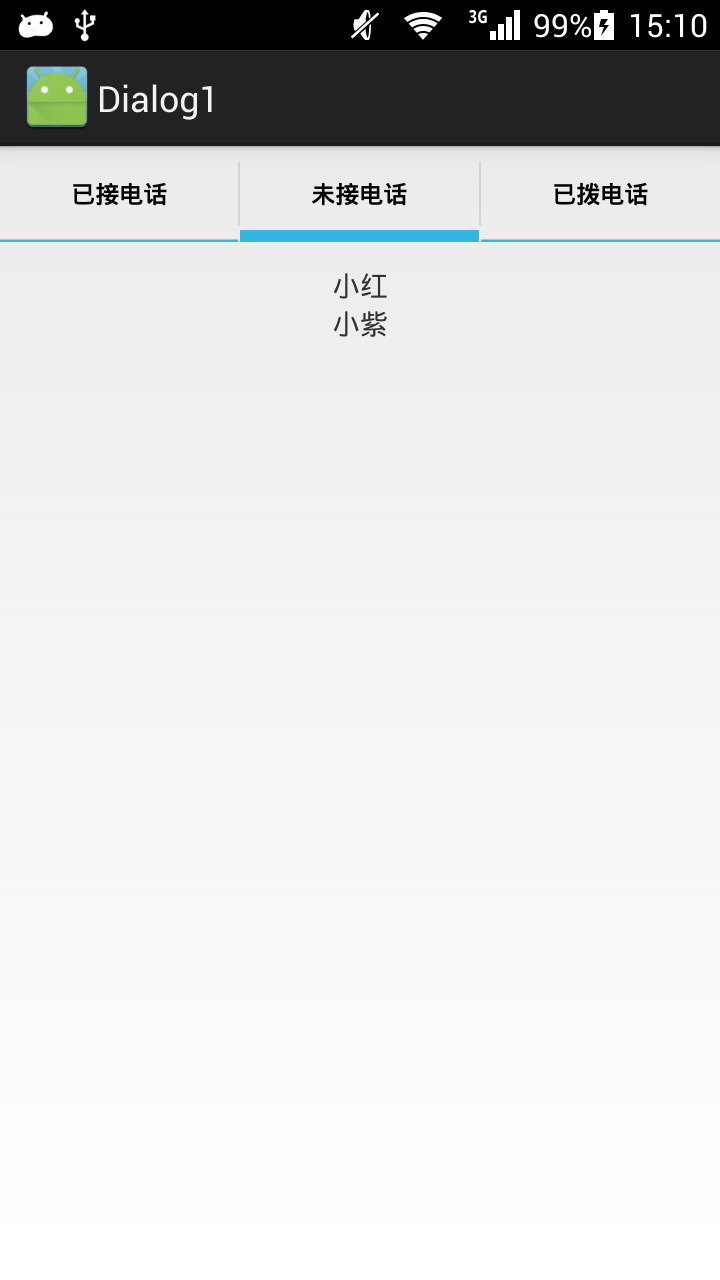
最终运行效果:
12.Android之Tabhost组件学习的更多相关文章
- Android的TabHost组件-android的学习之旅(四十)
TabHost简介 虽然,官方建议用Fagment取代TabHost,但是我们还是大概的介绍一下.TabHost是一种非常简单的组件,TabHost可以很方便的在窗口放置多个标签页,每一个标签页相当于 ...
- Android之EditText组件学习
一.基础学习 1.Button是TextView的一个子类,所以按钮本身是一个特殊的文本,属性和TextView相似 2.EditText类似html里的input type="text&q ...
- Android之TextView组件学习
一.基础学习 1.findViewById返回View类,该类是所有View组件的父类. 2.子类比父类拥有更多的属性和方法,不过子类找不到的话去父类找 3.marquee:华盖,跑马灯效果:orie ...
- Android的四大组件学习
一.Linearlayout : 线性布局 1. android:orientation="vertical" //控件的方向控制,vertical : 垂直布局 , ...
- 从零開始学android<TabHost标签组件.二十九.>
TabHost主要特点是能够在一个窗体中显示多组标签栏的内容,在Android系统之中每一个标签栏就称为一个Tab.而包括这多个标签栏的容器就将其称为TabHost.TabHost类的继承结构例如以下 ...
- Android应用程序组件Content Provider简要介绍和学习计划
文章转载至CSDN社区罗升阳的安卓之旅,原文地址:http://blog.csdn.net/luoshengyang/article/details/6946067 在Android系统中,Conte ...
- Android之TabHost布局(转)
1.概念 盛放Tab的容器就是TabHost.TabHost的实现有两种方式: 第一种继承TabActivity,从TabActivity中用getTabHost()方法获取TabHost.各个Tab ...
- 转-TabHost组件(一)(实现底部菜单导航)
http://www.cnblogs.com/lichenwei/p/3974009.html 什么是TabHost? TabHost组件的主要功能是可以进行应用程序分类管理,例如:在用户使用wind ...
- 转-TabHost组件(二)(实现底部菜单导航)
http://www.cnblogs.com/lichenwei/p/3975095.html 上面文章<安卓开发复习笔记——TabHost组件(一)(实现底部菜单导航)>中提到了利用自定 ...
随机推荐
- centos6.5 redis3 开机自动启动命令设置
修改redis.conf,打开后台运行选项: # By default Redis does not run as a daemon. Use 'yes' if you need it. # Note ...
- SVN代码的回滚二
SVN代码的回滚: 不丢失新建的文件,获得最新的SVN版本控制.TortoiseSVN-ShowLog-选中你要回滚的版本-右键-Export,之后将修改的文件覆盖到你的最新版本,commit即可. ...
- java9-3 返回类型
1. 返回值类型 基本类型:(基本类型简单) 引用类型: 类:返回的是该类的对象 class Student2 { public void study() { System.out.println(& ...
- android源码在线查看
http://grepcode.com/project/repository.grepcode.com/java/ext/com.google.android/android/
- 运维工作中sed常规操作命令梳理
sed是一个流编辑器(stream editor),一个非交互式的行编辑器.它一次处理一行内容.处理时,把当前处理的行存储在临时缓冲区中,称为"模式空间",接着用sed命令处理缓冲 ...
- usb驱动开发11之设备生命线
暂时先告别媒人,我们去分析各自的生命旅程,最后还会回到usb_device_match函数. 首先当你将usb设备连接在hub的某个端口上,hub检测到有设备连接了进来,它会为设备分配一个struct ...
- Navi.Soft20.WinCE使用手册
1.概述 1.1应用场景 随着物联网的普及,越来越多的制造商对货品从原料配备,加工生产,销售出库等环节的要求和把控越来越高.在此情况之下,传统的ERP软件已经无法满足现有的流程. 移动设备的应用,在很 ...
- 小程序基础09:视图层之WXML
1.WXML WXML是框架设计的一套标签语言,结合基础组件,事件系统,可以构建出页面的结构. 用以下的例子来看看WXML有什么能力: 1.1数据绑定 <view>{{age}}</ ...
- 预备作业02:成功经验与C语调查20155230
成功的经验 在写这一次的博客之前,我看了一部分同学所写的博客.因为我不懂关于自己更优秀的技能这一栏要怎么写,所以想要去找能以借鉴的东西.看完发现,这些同学在介绍自己技能时更多的是写自己在某一领域的成就 ...
- iOS——数据安全性问题小结
在移动互联网快速发展的今天,iOS应用直接运行在用户的手机上,与运行在服务器后台服务相比,更有可能被黑客攻击. a.网络安全: 1.1 安全地传输用户密码 事先生成一对用于加密的公私钥,客户端登录的时 ...