
netty源码解解析(4.0)-11 Channel NIO实现-概览
结构设计
Channel的NIO实现位于io.netty.channel.nio包和io.netty.channel.socket.nio包中,其中io.netty.channel.nio是抽象实现,io.netty.channel.socket.nio最终实现。下面是Channel NIO相关类的派生图:
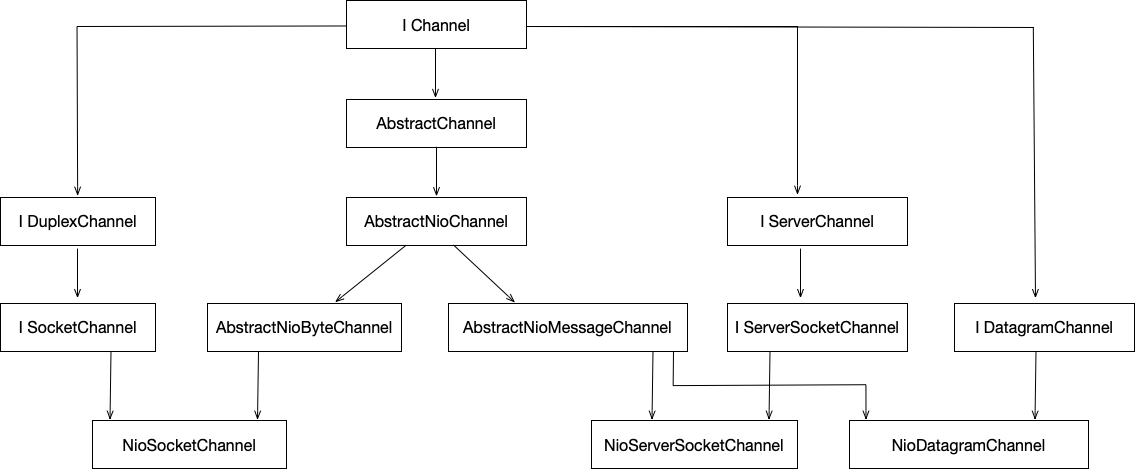
NIO实现最终派生出3个类型NioServerSocketChannel实现了tcp server, NioSocketChannel实现了tcp client, NioDatagramChannel实现了udp socket。
整个NIO实现分为三个层次:
AbstractNioChannel抽象层
对channel进行基本的初始化工作,把channel设置成非阻塞模式。
实现Channel.Unsafe的connect方法框架,提供给了doConnection, doFinishConnect两个抽象方法,把真正的连接操作交给子类实现。
覆盖了AbstractChannel的doRegister,doDeregister方法,正两个方法实现了Channel的selectionKey的注册和注销。
实现AbstractChannel的doClose, 这个方法并没有真正关闭channel动作。
形如doXXX的方法是,AbstractChannel提供的扩展点,在<<netty源码解解析(4.0)-3 Channel的抽象实现>>的末尾,给出了这些扩展点的详细列表。
AbstractNioByteChannel, AbstractNioMessageChannel抽象层
这两个类主要实现read和write的框架,它们的实现大致相同AbstractNioByteChannel读写的是byte array,而AbstractNioMessageChannel读的时候会把byte array转换成结构化的对象,写的时候把结构化对象序列化成byte array。
AbstractNioByteChannel定义了3个抽象方法用来实现真正的读写操作: doReadBytes, doWriteBytes, doWriteFileRegion。
AbstractNioMessageChannel第了两个2个抽象方法用来实现真正的结构化数据类型的读写: doReadMessages, doWriteMessage。
NioServerSocketChannel, NioSocketChannel, NioDatagramChannel最终实现
封装NIO API调用,真正的I/O操操作和socket相关的api调用都在这一层实现。
使用方式
使用过netty的人都知道,netty提供了ServerBootstrap和Bootstrap类帮助用户方便地创建服务器端和客户端应用,但这不是必须的。仅仅使用NioServerSocketChannel, NioSocketChannel, NioDatagramChannel和NioEventLoopGroup就可以用开发tcp的server和client, 及udp应用。
为了能让读者能够更清晰地理解NioEventLoopGroup和Channel直接的关系,下面给出了最原始的使用使用netty框架的代码。
tcp server实现
 import io.netty.buffer.ByteBuf;

 import io.netty.channel.*;

 import io.netty.channel.nio.NioEventLoopGroup;

 import io.netty.channel.socket.nio.NioServerSocketChannel;

 import java.net.InetSocketAddress;

 import java.nio.charset.Charset;

 public class TcpServer {

     private NioEventLoopGroup group = new NioEventLoopGroup();

     public static void main(String[] argc){

         TcpServer server = new TcpServer();

         server.start();

         while(true){

             try{

                 Thread.sleep(1000);

             }catch (Exception e){

                 break;

             }

         }

         server.stop();

     }

     public void start(){

         NioServerSocketChannel server = new NioServerSocketChannel();

         ChannelPipeline pipleline = server.pipeline();

         pipleline.addFirst(new ServerHandler());

         group.register(server).addListener(new ChannelFutureListener() {

             @Override

             public void operationComplete(ChannelFuture future) throws Exception {

                 server.bind(new InetSocketAddress(9001));

                 System.out.println("server listen add:"+9001);

             }

         });

     }

     public void stop(){

         group.shutdownGracefully();

     }

     private class ServerHandler extends ChannelInboundHandlerAdapter{

         @Override

         public void channelRead(ChannelHandlerContext ctx, Object msg) throws Exception{

             Channel child = (Channel)msg;

             child.pipeline().addLast(new ChildHandler());

             group.register(child);

         }

     }

     private class ChildHandler extends ChannelInboundHandlerAdapter{

         @Override

         public void channelActive(ChannelHandlerContext ctx) throws Exception {

             System.out.println("connected");

         }

         @Override

         public void channelInactive(ChannelHandlerContext ctx) throws Exception {

             System.out.println("closed");

         }

         @Override

         public void channelRead(ChannelHandlerContext ctx, Object msg) throws Exception{

             Channel chnl = ctx.channel();

             ByteBuf data = (ByteBuf)msg;

             System.out.println("recv: "+data.toString(Charset.forName("utf-8")));

             chnl.write(msg);

         }

         @Override

         public void channelReadComplete(ChannelHandlerContext ctx) throws Exception {

             ctx.channel().flush();

         }

     }

 }
一个channel创建之后,首先要做的事就是向pipleline中添加handler,然后才是把它注册到NioEventLoopGroup中(第31,33行)。这个顺序不能错,否则,handler的handlerAdded,channelRegistered和channelActive将不会被调用。当NioServerSocketChannel收到一个连接时,ServerHandler的的channelRead方法将会被调用,的新建好的连接当成参数传递进来,第49-53行是对新连接的初始化代码。
tcp client实现
import io.netty.buffer.ByteBuf;

import io.netty.channel.*;

import io.netty.channel.nio.NioEventLoopGroup;

import io.netty.channel.socket.nio.NioSocketChannel;

import java.net.InetSocketAddress;

import java.nio.charset.Charset;

public class TcpClient {

    public static void main(String[] args){

        NioEventLoopGroup group = new NioEventLoopGroup();

        NioSocketChannel client = new NioSocketChannel();

        client.pipeline().addLast(new ClientInboundHandler());

        group.register(client);

        client.connect(new InetSocketAddress(9001));

        try{

            Thread.sleep(3000);

        }catch (Exception e){

        }

        group.shutdownGracefully();

    }

    private static class ClientInboundHandler extends ChannelInboundHandlerAdapter{

        @Override

        public void channelActive(ChannelHandlerContext ctx) throws Exception {

            System.out.println("connected");

            Channel chnl = ctx.channel();

            ByteBuf buf = chnl.alloc().buffer();

            buf.writeBytes( "this is test".getBytes());

            chnl.writeAndFlush(buf);

        }

        @Override

        public void channelInactive(ChannelHandlerContext ctx) throws Exception {

            System.out.println("closed");

        }

        @Override

        public void channelRead(ChannelHandlerContext ctx, Object msg) throws Exception{

            ByteBuf data = (ByteBuf)msg;

            System.out.println("recv: "+data.toString(Charset.forName("utf-8")));

            ctx.channel().close();

        }

    }

}
client的实现比server实现相对简单,添加handler,register顺序和server一致。只有把一个channel注册到gruop中之后才能调用它的方法,应为channel的大多数方法都需要通过pipleline调用,而pipleline需要在eventLoop中执行。
udp没有server和client的区别,这里为了使代码更加清晰,把server和client代码区分开来。
udp server
import io.netty.buffer.ByteBuf;

import io.netty.channel.*;

import io.netty.channel.nio.NioEventLoopGroup;

import io.netty.channel.socket.DatagramPacket;

import io.netty.channel.socket.nio.NioDatagramChannel;

import java.net.InetSocketAddress;

import java.nio.charset.Charset;

public class UdpServer {

    public static void main(String[] args){

        NioEventLoopGroup group = new NioEventLoopGroup();

        NioDatagramChannel chnl = new NioDatagramChannel();

        chnl.pipeline().addLast(new UdpHandler());

        group.register(chnl).addListener(new ChannelFutureListener() {

            @Override

            public void operationComplete(ChannelFuture future) throws Exception {

                chnl.bind(new InetSocketAddress(9002));

                System.out.println("udp bind at:"+9002);

            }

        });

        while(true){

            try{

                Thread.sleep(1000);

            }catch (Exception e){

                break;

            }

        }

        group.shutdownGracefully();

    }

    private static class UdpHandler extends ChannelInboundHandlerAdapter {

        @Override

        public void channelActive(ChannelHandlerContext ctx) throws Exception {

            System.out.print("udp channel active");

        }

        @Override

        public void channelRead(ChannelHandlerContext ctx, Object msg) throws Exception{

            Channel chnl = ctx.channel();

            DatagramPacket pkg = (DatagramPacket)msg;

            ByteBuf content = pkg.content();

            InetSocketAddress from = pkg.sender();

            System.out.println("recv: "+content.toString(Charset.forName("utf-8"))+" from:"+from.toString());

            pkg = new DatagramPacket(content, from);

            chnl.write(pkg);

        }

        @Override

        public void channelReadComplete(ChannelHandlerContext ctx) throws Exception {

            ctx.channel().flush();

        }

    }

}
udp client
import io.netty.buffer.ByteBuf;

import io.netty.channel.*;

import io.netty.channel.nio.NioEventLoopGroup;

import io.netty.channel.socket.DatagramPacket;

import io.netty.channel.socket.nio.NioDatagramChannel;

import java.net.InetSocketAddress;

import java.nio.charset.Charset;

public class UdpClient {

    public static void main(String[] args){

        NioEventLoopGroup group = new NioEventLoopGroup();

        NioDatagramChannel chnl = new NioDatagramChannel();

        chnl.pipeline().addLast(new UdpHandler());

        group.register(chnl).addListener(new ChannelFutureListener() {

            @Override

            public void operationComplete(ChannelFuture future) throws Exception {

                chnl.bind(new InetSocketAddress(0));

            }

        });

        try{

            Thread.sleep(3000);

        }catch (Exception e){

        }

        group.shutdownGracefully();

    }

    private static class UdpHandler extends ChannelInboundHandlerAdapter {

        @Override

        public void channelActive(ChannelHandlerContext ctx) throws Exception {

            System.out.print("udp channel active");

            Channel chnl = ctx.channel();

            ByteBuf content = chnl.alloc().buffer();

            content.writeBytes("udp message".getBytes());

            chnl.writeAndFlush(new DatagramPacket(content, new InetSocketAddress("127.0.0.1", 9002)));

            System.out.println("send message");

        }

        @Override

        public void channelRead(ChannelHandlerContext ctx, Object msg) throws Exception{

            DatagramPacket pkg = (DatagramPacket)msg;

            ByteBuf content = pkg.content();

            InetSocketAddress from = pkg.sender();

            System.out.println("recv: "+content.toString(Charset.forName("utf-8"))+" from:"+from.toString());

        }

    }

}
NioDatagramChannel和NioSocketChannel的初始化过程大致相同。它们的不同点是,NioSocketChannel在connect之后处于active状态,NioDatagramChannel是在bind之后处于才处于active状态。
netty源码解解析(4.0)-11 Channel NIO实现-概览的更多相关文章
- netty源码解解析(4.0)-14 Channel NIO实现:读取数据
本章分析Nio Channel的数据读取功能的实现. Channel读取数据需要Channel和ChannelHandler配合使用,netty设计数据读取功能包括三个要素:Channel, Eve ...
- netty源码解解析(4.0)-12 Channel NIO实现:channel初始化
创建一个channel实例,并把它register到eventLoopGroup中之后,这个channel然后处于inactive状态,仍然是不可用的.只有在bind或connect方法调用成功之后才 ...
- netty源码解解析(4.0)-15 Channel NIO实现:写数据
写数据是NIO Channel实现的另一个比较复杂的功能.每一个channel都有一个outboundBuffer,这是一个输出缓冲区.当调用channel的write方法写数据时,这个数据被一系列C ...
- netty源码解解析(4.0)-13 Channel NIO实现: 关闭和清理
Channel提供了3个方法用来实现关闭清理功能:disconnect,close,deregister.本章重点分析这个3个方法的功能的NIO实现. disconnect实现: 断开连接 disco ...
- netty源码解解析(4.0)-3 Channel的抽象实现
AbstractChannel和AbstractUnsafe抽象类 io.netty.channel.AbstractChannel 从本章开始,会有大量的篇幅涉及到代码分析.为了能够清晰简洁的地说明 ...
- netty源码解解析(4.0)-17 ChannelHandler: IdleStateHandler实现
io.netty.handler.timeout.IdleStateHandler功能是监测Channel上read, write或者这两者的空闲状态.当Channel超过了指定的空闲时间时,这个Ha ...
- netty源码解解析(4.0)-18 ChannelHandler: codec--编解码框架
编解码框架和一些常用的实现位于io.netty.handler.codec包中. 编解码框架包含两部分:Byte流和特定类型数据之间的编解码,也叫序列化和反序列化.不类型数据之间的转换. 下图是编解码 ...
- netty源码解解析(4.0)-10 ChannelPipleline的默认实现--事件传递及处理
事件触发.传递.处理是DefaultChannelPipleline实现的另一个核心能力.在前面在章节中粗略地讲过了事件的处理流程,本章将会详细地分析其中的所有关键细节.这些关键点包括: 事件触发接口 ...
- netty源码解解析(4.0)-20 ChannelHandler: 自己实现一个自定义协议的服务器和客户端
本章不会直接分析Netty源码,而是通过使用Netty的能力实现一个自定义协议的服务器和客户端.通过这样的实践,可以更深刻地理解Netty的相关代码,同时可以了解,在设计实现自定义协议的过程中需要解决 ...
随机推荐
- [Hadoop]Hadoop章1 Hadoop原理解析
Hadoop是Apache软件基金会所开发的并行计算框架与分布式文件系统.最核心的模块包括Hadoop Common.HDFS与MapReduce. HDFS HDFS是Hadoop分布式文件系统(H ...
- iPhone屏幕分辨率和适配规则 图片文字适配
基本概念 - 逻辑分辨率 pt (point),物理分辨率 px (pixel) - 缩放因子 scale 或者 dpr, scale ≈ px / pt - 缩放采样 例如 iPhone 6 Plu ...
- java29
1.封装小练习--长方形 创建长方形类 使用getset方法 利用返回值方法计算长方形的面积,周长. 保证长方形的长宽为整数 2.继承小练习--猫狗 当父类中有构造器时,子类也要有构造器,并且要求设置 ...
- 顺序队列(C语言)
#define Queue_MAX_SIZE 20 #define OK 1 #define ERROR 0 #include <stdio.h> #include <stdlib. ...
- Bootstrap方法为页面添加一个弹出框
<!DOCTYPE html> <html> <head> <meta charset="utf-8"> <title> ...
- Paper/ Overview | CNN(未完待续)
目录 I. 基础知识 II. 早期尝试 1. Neocognitron, 1980 2. LeCun, 1989 A. 概况 B. Feature maps & Weight sharing ...
- jmeter+Jenkins持续集成(邮件通知)
jmeter构建后,自送发送邮件到指定的邮箱,配置如下 1)Jenkins Location配置 jenkins首页->系统管理->系统配置页面 其中Jenkins URL有默认值,最好修 ...
- HTML之<meta>使用和说明
关于<meta>,我们都不陌生,随意打开一个网页查看源代码就可以看到<head>里出现它的身影. 简单来说,<meta>是描述 HTML 文档的元数据.例如网页描述 ...
- [smf]论坛实现编辑器附件插入的插件
smf论坛代码的相关介绍,可以参见博客园的其他文章,这里不再详细说明了. 插件功能: 在帖子里的任何位置插入附件图片. 关于安装: 该插件已经经过“维尼熊的百宝箱”的修改,在新版本SMF 2.0.14 ...
- http响应头里没有或者有content-length的几种可能性
对于http的请求返回结果要进行内容的长度校验主要有两种方式,二者互斥使用 1.客户端在http头(head)加Connection:keep-alive时,服务器的response是Transfer ...