
【JUC源码解析】CompletableFuture
简介
先说Future, 它用来描述一个异步计算的结果。isDone方法可以用来检查计算是否完成,get方法可以用来获取结果,直到完成前一直阻塞当前线程,cancel方法可以取消任务。而对于结果的获取,只能通过阻塞(get())或者轮询的方式[while(!isDone)]. 阻塞的方式违背了异步编程的理念,轮询的方式耗费无谓的CPU资源(CPU空转)。于是,CompletableFuture应运而生。
样例
后面介绍的源码都会以下面的用例为切入点,循着调用轨迹理解源码。如果任务很耗时,记得传Executor, 或者方法末尾加上future.get(); 因为CompletableFuture默认使用ForkJoinPool, 而ForkJoinPool里面的线程都是daemon线程,主线程跑完了,虚拟机也就over了。
     public void whenComplete() {

         CompletableFuture<Integer> future = CompletableFuture.supplyAsync(() -> 100);

         future.whenComplete((l, r) -> System.out.println(l));

     }

     public void thenApply() {

         CompletableFuture<Integer> future = CompletableFuture.supplyAsync(() -> 100);

         future.thenApply(i -> -i);

     }

     public void thenAccept() {

         CompletableFuture<Integer> future = CompletableFuture.supplyAsync(() -> 100);

         future.thenAccept(System.out::println);

     }

     public void thenRun() {

         CompletableFuture<Integer> future = CompletableFuture.supplyAsync(() -> 100);

         future.thenRun(() -> System.out.println("Done"));

     }

     public void thenAcceptBoth() {

         CompletableFuture<Integer> future = CompletableFuture.supplyAsync(() -> 100);

         CompletableFuture<Integer> other = CompletableFuture.supplyAsync(() -> 200);

         future.thenAcceptBoth(other, (x, y) -> System.out.println(x + y));

     }

     public void acceptEither() {

         CompletableFuture<Integer> future = CompletableFuture.supplyAsync(() -> 100);

         CompletableFuture<Integer> other = CompletableFuture.supplyAsync(() -> 200);

         future.acceptEither(other, System.out::println);

     }

     public void allOf() {

         CompletableFuture<Integer> future = CompletableFuture.supplyAsync(() -> 100);

         CompletableFuture<Integer> second = CompletableFuture.supplyAsync(() -> 200);

         CompletableFuture<Integer> third = CompletableFuture.supplyAsync(() -> 300);

         CompletableFuture.allOf(future, second, third);

     }

     public void anyOf() throws InterruptedException, ExecutionException {

         CompletableFuture<Integer> future = CompletableFuture.supplyAsync(() -> 100);

         CompletableFuture<Integer> second = CompletableFuture.supplyAsync(() -> 200);

         CompletableFuture<Integer> third = CompletableFuture.supplyAsync(() -> 300);

         CompletableFuture.anyOf(future, second, third);

     }
源码分析
supplyAsync
supplyAsync(Supplier<U> supplier)
     public static <U> CompletableFuture<U> supplyAsync(Supplier<U> supplier) {

         return asyncSupplyStage(asyncPool, supplier); // asyncPool, ForkJoinPool.commonPool()或者ThreadPerTaskExecutor(实现了Executor接口,里面的内容是{new Thread(r).start();})

     }
asyncSupplyStage(Executor e, Supplier<U> f)
     static <U> CompletableFuture<U> asyncSupplyStage(Executor e, Supplier<U> f) {

         if (f == null)

             throw new NullPointerException();

         CompletableFuture<U> d = new CompletableFuture<U>(); // 构建一个新的CompletableFuture, 以此构建AsyncSupply作为Executor的执行参数

         e.execute(new AsyncSupply<U>(d, f)); // AsyncSupply继承了ForkJoinTask, 实现了Runnable, AsynchronousCompletionTask接口

         return d; // 返回d,立返

     }
AsyncSupply
     // CompletableFuture的静态内部类,作为一个ForkJoinTask

     static final class AsyncSupply<T> extends ForkJoinTask<Void> implements Runnable, AsynchronousCompletionTask {

         CompletableFuture<T> dep; // AsyncSupply作为一个依赖Task,dep作为这个Task的Future

         Supplier<T> fn; // fn作为这个Task的具体执行逻辑,函数式编程

         AsyncSupply(CompletableFuture<T> dep, Supplier<T> fn) {

             this.dep = dep;

             this.fn = fn;

         }

         public final Void getRawResult() {

             return null;

         }

         public final void setRawResult(Void v) {

         }

         public final boolean exec() {

             run();

             return true;

         }

         public void run() {

             CompletableFuture<T> d;

             Supplier<T> f;

             if ((d = dep) != null && (f = fn) != null) { // 非空判断

                 dep = null;

                 fn = null;

                 if (d.result == null) { // 查看任务是否结束,如果已经结束(result != null),直接调用postComplete()方法

                     try {

                         d.completeValue(f.get()); // 等待任务结束,并设置结果

                     } catch (Throwable ex) {

                         d.completeThrowable(ex); // 异常

                     }

                 }

                 d.postComplete(); // 任务结束后,会执行所有依赖此任务的其他任务,这些任务以一个无锁并发栈的形式存在

             }

         }

     }
postComplete()
     final void postComplete() {

         CompletableFuture<?> f = this; // 当前CompletableFuture

         Completion h; // 无锁并发栈,(Completion next), 保存的是依靠当前的CompletableFuture一串任务,完成即触发(回调)

         while ((h = f.stack) != null || (f != this && (h = (f = this).stack) != null)) { // 当f的stack为空时,使f重新指向当前的CompletableFuture,继续后面的结点

             CompletableFuture<?> d;

             Completion t;

             if (f.casStack(h, t = h.next)) { // 从头遍历stack,并更新头元素

                 if (t != null) {

                     if (f != this) { // 如果f不是当前CompletableFuture,则将它的头结点压入到当前CompletableFuture的stack中,使树形结构变成链表结构,避免递归层次过深

                         pushStack(h);

                         continue; // 继续下一个结点,批量压入到当前栈中

                     }

                     h.next = null; // 如果是当前CompletableFuture, 解除头节点与栈的联系

                 }

                 f = (d = h.tryFire(NESTED)) == null ? this : d; // 调用头节点的tryFire()方法,该方法可看作Completion的钩子方法,执行完逻辑后,会向后传播的

             }

         }

     }
示意图
每个CompletableFuture持有一个Completion栈stack, 每个Completion持有一个CompletableFuture -> dep, 如此递归循环下去,是层次很深的树形结构,所以想办法将其变成链表结构。
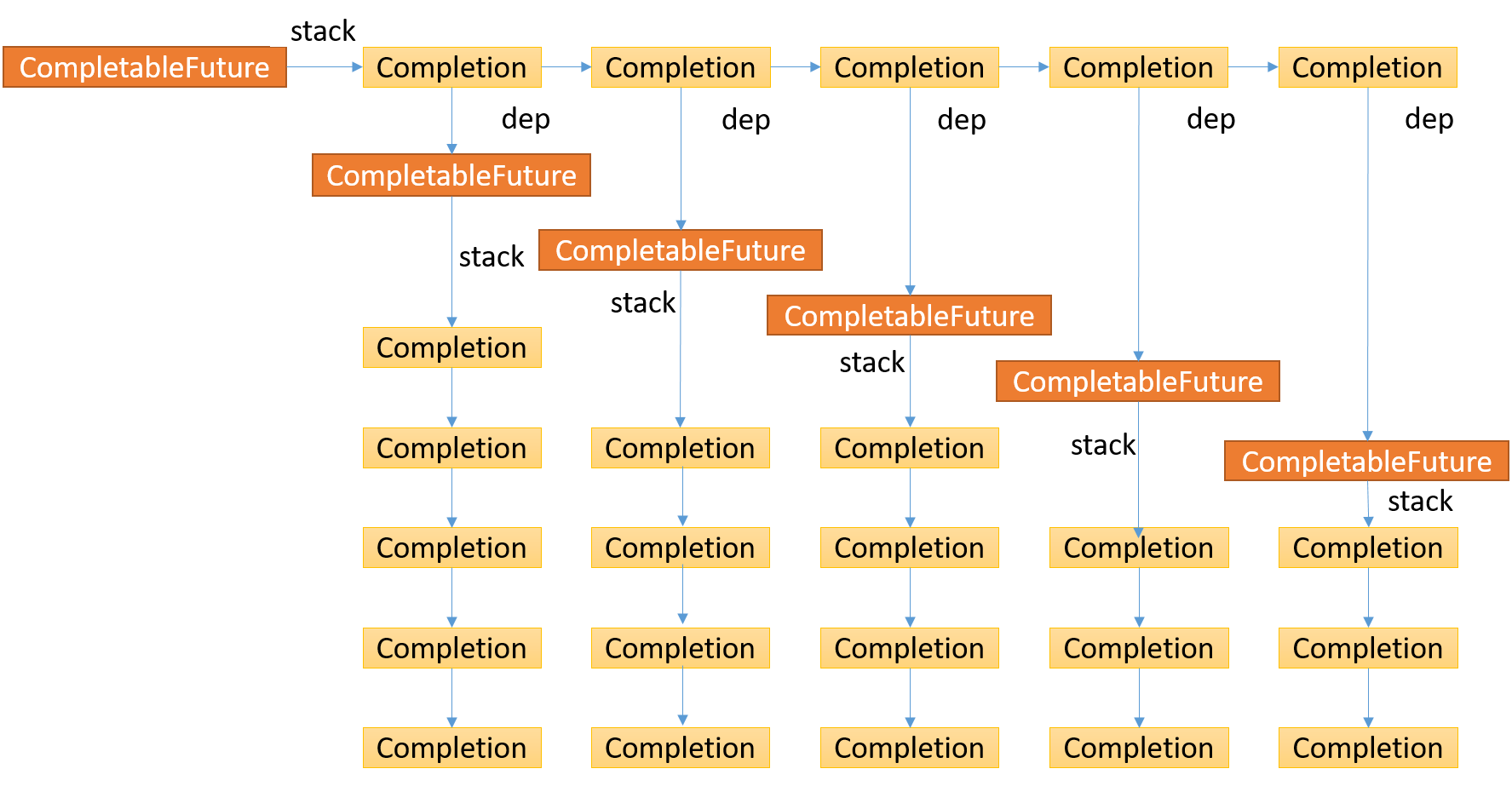
首先取出头结点,下图中灰色Completion结点,它会返回一个CompletableFuture, 同样也拥有一个stack,策略是遍历这个CompletableFuture的stack的每个结点,依次压入到当前CompletableFuture的stack中,关系如下箭头所示,灰色结点指的是处理过的结点。

第一个Completion结点返回的CompletableFuture, 将拥有的stack里面的所有结点都压入了当前CompletableFuture的stack里面
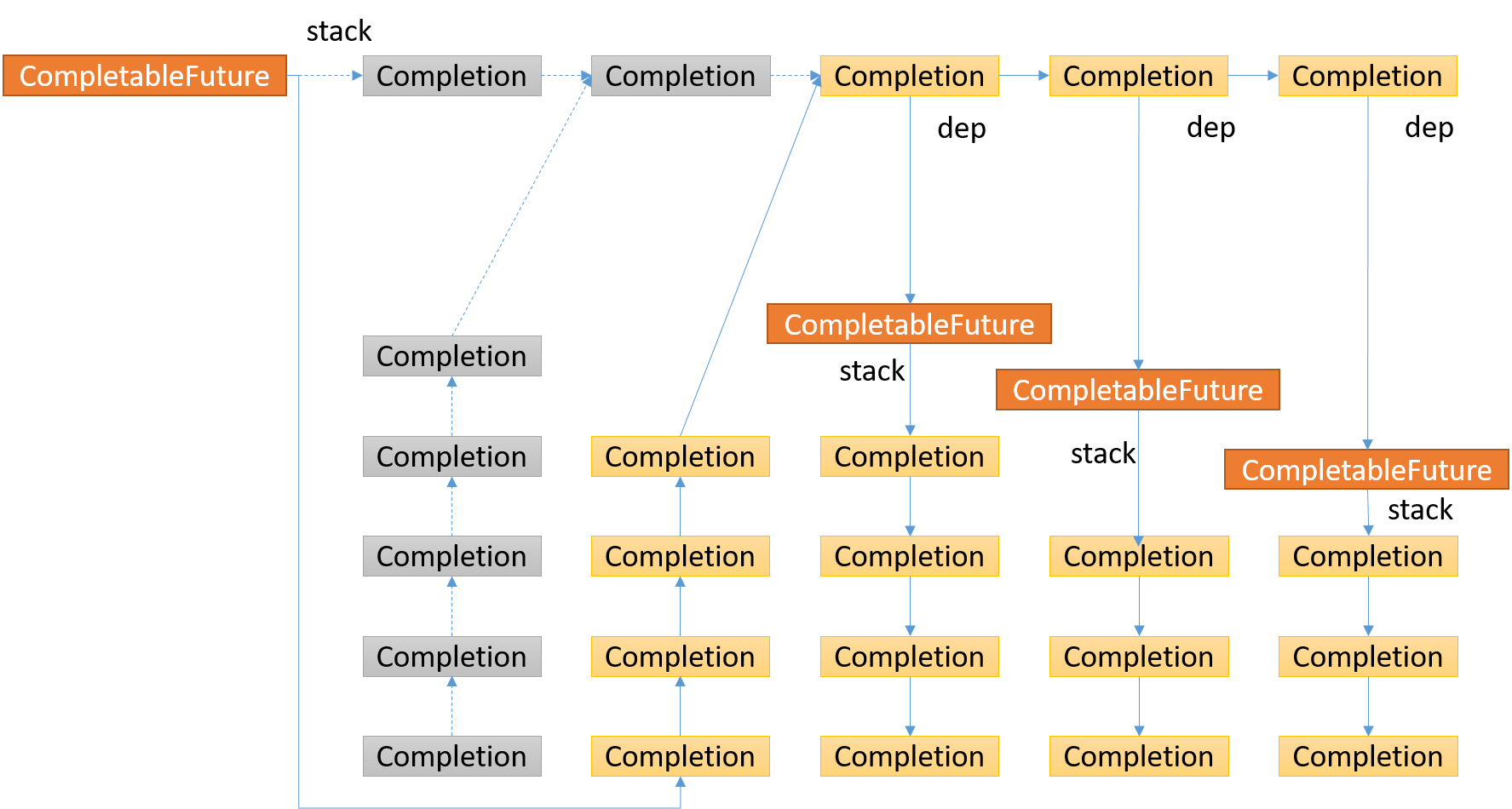
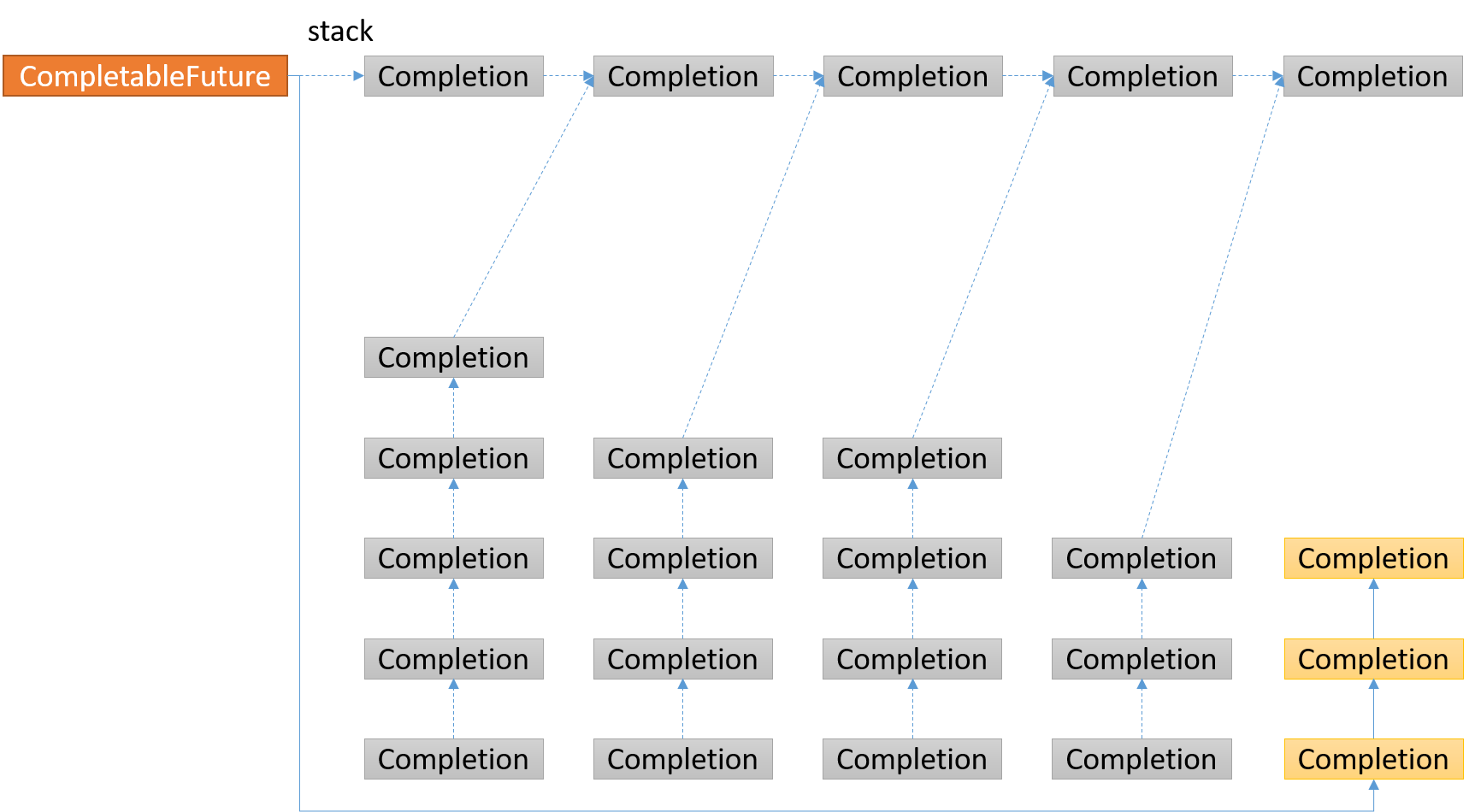
后续的Completion结点返回的CompletableFuture, 将拥有的stack里面的所有结点都压入了当前CompletableFuture的stack里面,重新构成了一个链表结构,后续也按照前面的逻辑操作,如此反复,便会遍历完所有的CompletableFuture, 这些CompletableFuture(叶子结点)的stack为空,也是结束条件。
postComplete()最后调用的是Completion#tryFire()方法,先看下Completion的数据结构
Completion
     abstract static class Completion extends ForkJoinTask<Void> implements Runnable, AsynchronousCompletionTask {

         volatile Completion next; // 无锁并发栈

         /**

          * 钩子方法,有三种模式,postComplete()方法里面使用的是NESTED模式,避免过深的递归调用 SYNC, ASYNC, or NESTED

          */

         abstract CompletableFuture<?> tryFire(int mode); // run()和exec()都调用了这个钩子方法

         /** cleanStack()方法里有用到 */

         abstract boolean isLive();

         public final void run() {

             tryFire(ASYNC);

         }

         public final boolean exec() {

             tryFire(ASYNC);

             return true;

         }

         public final Void getRawResult() {

             return null;

         }

         public final void setRawResult(Void v) {

         }

     }
static final int SYNC = 0; 同步
static final int ASYNC = 1; 异步
static final int NESTED = -1; 嵌套
继承了ForkJoinTask, 实现了Runnable, AsynchronousCompletionTask接口,它有诸多子类,如下图
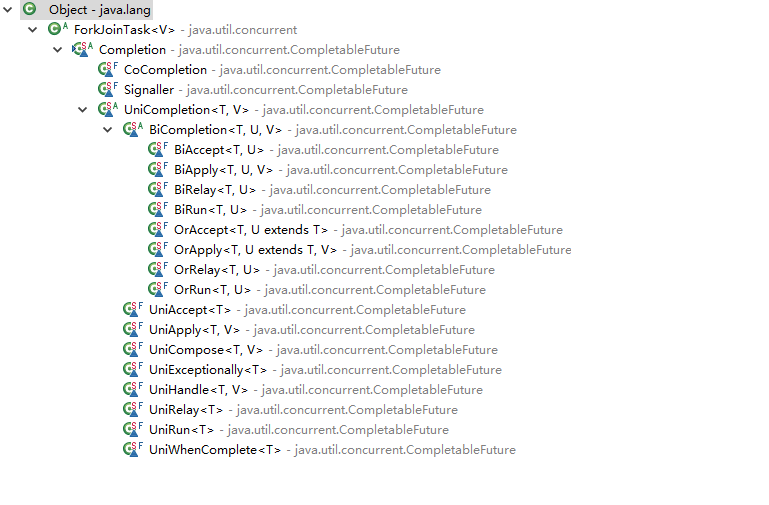
后面的方法都对应着不同的子类。
先看一个子类UniCompletion
     abstract static class UniCompletion<T,V> extends Completion {

         Executor executor;                 // 执行器

         CompletableFuture<V> dep;          // 依赖的任务

         CompletableFuture<T> src;          // 被依赖的任务

         UniCompletion(Executor executor, CompletableFuture<V> dep,

                       CompletableFuture<T> src) {

             this.executor = executor; this.dep = dep; this.src = src;

         }

         final boolean claim() { // 如果当前任务可以被执行,返回true,否则,返回false; 保证任务只被执行一次

             Executor e = executor;

             if (compareAndSetForkJoinTaskTag((short)0, (short)1)) {

                 if (e == null)

                     return true;

                 executor = null; // 设置为不可用

                 e.execute(this);

             }

             return false;

         }

         final boolean isLive() { return dep != null; }

     }
claim()方法保证任务只被执行一次。
whenComplete
whenComplete()/whenCompleteAsync()
     public CompletableFuture<T> whenComplete(BiConsumer<? super T, ? super Throwable> action) {

         return uniWhenCompleteStage(null, action);

     }

     public CompletableFuture<T> whenCompleteAsync(BiConsumer<? super T, ? super Throwable> action) {

         return uniWhenCompleteStage(asyncPool, action);

     }
xxx和xxxAsync方法的区别是,有没有asyncPool作为入参,有的话,任务直接入参,不检查任务是否完成。uniWhenCompleteStage方法有说明。
uniWhenCompleteStage(Executor e, BiConsumer<? super T, ? super Throwable> f)
     private CompletableFuture<T> uniWhenCompleteStage(Executor e, BiConsumer<? super T, ? super Throwable> f) {

         if (f == null)

             throw new NullPointerException();

         CompletableFuture<T> d = new CompletableFuture<T>(); // 构建future

         if (e != null || !d.uniWhenComplete(this, f, null)) { // 如果线程池不为空,直接构建任务入栈,并调用tryFire()方法;否则,调用uniWhenComplete()方法,检查依赖的那个任务是否完成,没有完成返回false,

                                                                 // 完成了返回true, 以及后续一些操作。

             UniWhenComplete<T> c = new UniWhenComplete<T>(e, d, this, f); // UniWhenComplete继承了UniCompletion

             push(c);

             c.tryFire(SYNC); // 先调一下钩子方法,检查一下任务是否结束

         }

         return d;

     }
uniWhenComplete(CompletableFuture<T> a, BiConsumer<? super T, ? super Throwable> f, UniWhenComplete<T> c)
     final boolean uniWhenComplete(CompletableFuture<T> a, BiConsumer<? super T, ? super Throwable> f, UniWhenComplete<T> c) {

         Object r;

         T t;

         Throwable x = null;

         if (a == null || (r = a.result) == null || f == null) // 被依赖的任务还未完成

             return false;

         if (result == null) { // 被依赖的任务完成了

             try {

                 if (c != null && !c.claim()) // 判断任务是否能被执行

                     return false;

                 if (r instanceof AltResult) { // 判断异常,AltResult类型很简单,里面只有一个属性Throwable ex;

                     x = ((AltResult) r).ex;

                     t = null;

                 } else {

                     @SuppressWarnings("unchecked")

                     T tr = (T) r; // 正常的结果

                     t = tr;

                 }

                 f.accept(t, x); // 执行任务

                 if (x == null) {

                     internalComplete(r); // 任务的结果设置为被依赖任务的结果

                     return true;

                 }

             } catch (Throwable ex) {

                 if (x == null)

                     x = ex; // 记录异常

             }

             completeThrowable(x, r); // 设置异常和结果

         }

         return true;

     }
push()
     final void push(UniCompletion<?, ?> c) {

         if (c != null) {

             while (result == null && !tryPushStack(c))

                 lazySetNext(c, null); // 失败重置c的next域

         }

     }

     final boolean tryPushStack(Completion c) {

         Completion h = stack;

         lazySetNext(c, h);

         return UNSAFE.compareAndSwapObject(this, STACK, h, c);

     }

     static void lazySetNext(Completion c, Completion next) {

         UNSAFE.putOrderedObject(c, NEXT, next);

     }
UniWhenComplete
     static final class UniWhenComplete<T> extends UniCompletion<T, T> {

         BiConsumer<? super T, ? super Throwable> fn;

         UniWhenComplete(Executor executor, CompletableFuture<T> dep, CompletableFuture<T> src,

                 BiConsumer<? super T, ? super Throwable> fn) {

             super(executor, dep, src);

             this.fn = fn;

         }

         final CompletableFuture<T> tryFire(int mode) { // 钩子方法

             CompletableFuture<T> d; // 依赖的任务

             CompletableFuture<T> a; // 被依赖的任务

             if ((d = dep) == null || !d.uniWhenComplete(a = src, fn, mode > 0 ? null : this)) // 如果是异步模式(mode = 1),就不判断任务是否结束

                 return null; // dep为空,说明已经调用过了

             dep = null;

             src = null;

             fn = null;

             return d.postFire(a, mode); // 钩子方法之后的处理

         }

     }
postFire(CompletableFuture<?> a, int mode)
     final CompletableFuture<T> postFire(CompletableFuture<?> a, int mode) {

         if (a != null && a.stack != null) { // 被依赖的任务存在,且stack不为空,先处理它

             if (mode < 0 || a.result == null) // 如果是嵌套模式(mode = -1), 或者任务的结果为空,直接清空栈

                 a.cleanStack();

             else

                 a.postComplete(); // 否则,调用postComplete()方法

         }

         if (result != null && stack != null) { // 再处理当前任务

             if (mode < 0) // 嵌套模式,直接返回自身(树 -> 链表,避免过深的递归调用)

                 return this;

             else

                 postComplete(); // 调用postComplete()方法

         }

         return null;

     }
cleanStack()
     final void cleanStack() { // 过滤掉已经死掉的结点(Not isLive)

         for (Completion p = null, q = stack; q != null;) { // q指针从头节点开始,向右移动,s一直执行q的下一个结点,p要么为空,要么指向遍历过的最后一个活着的结点,一旦发现q死掉了,就断开q, 连接p, s

             Completion s = q.next;

             if (q.isLive()) { // 还活着,p指向遍历过的最后一个结点,q向右移动

                 p = q;

                 q = s;

             } else if (p == null) { // 说明第一个结点就是死掉的,cas stack, q指向stack

                 casStack(q, s);

                 q = stack;

             } else { // 否则的话,连接p, s

                 p.next = s;

                 if (p.isLive()) // 再次判断p结点是否还或者(在这期间是否有别的线程改动了)

                     q = s; // 还活着,q继续向右移动

                 else {

                     p = null; // 过期的值,从新开始

                     q = stack;

                 }

             }

         }

     }
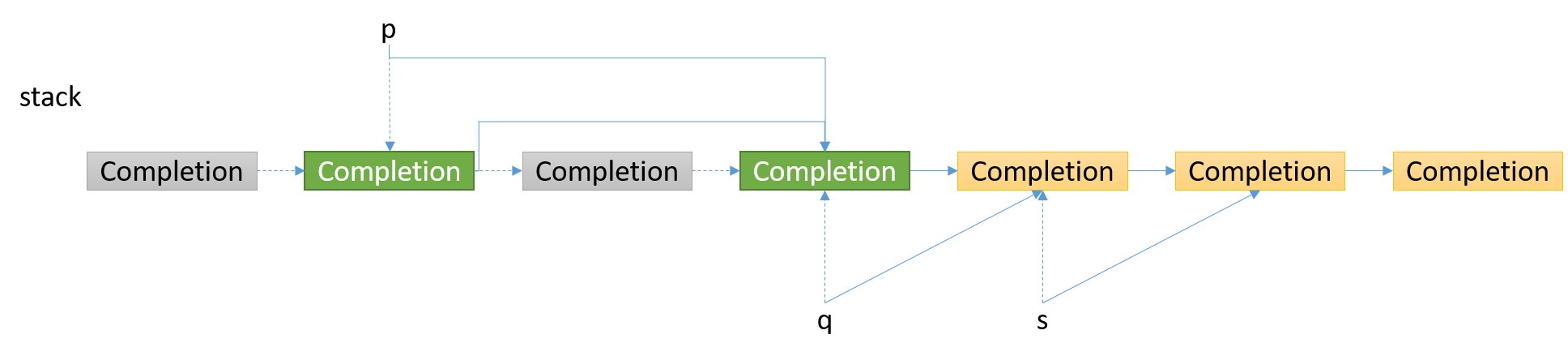
如下图
1. 第1个结点是无效结点,更新stack,更新指针
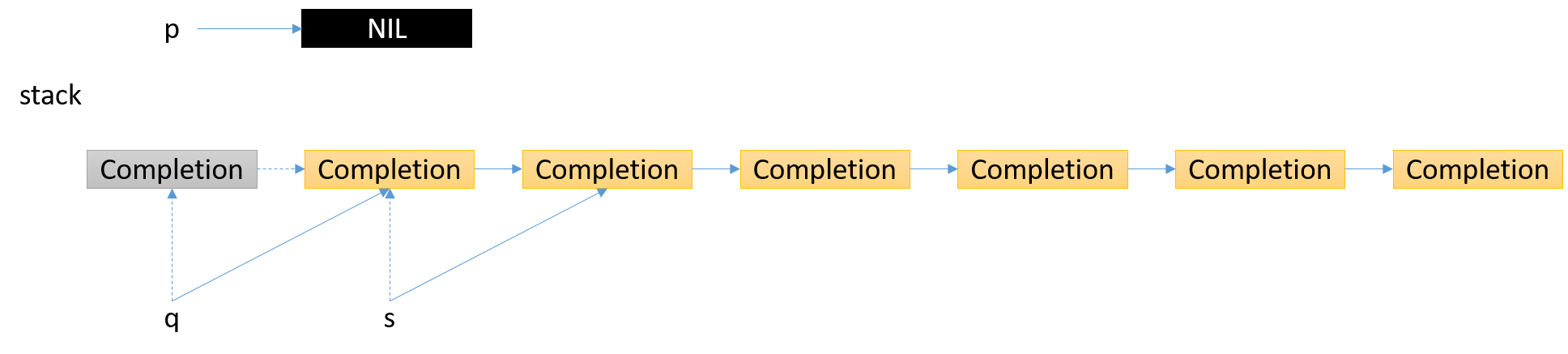
2. 第2个结点是有效结点,更新指针

3. 第3个结点是无效结点,更新指针
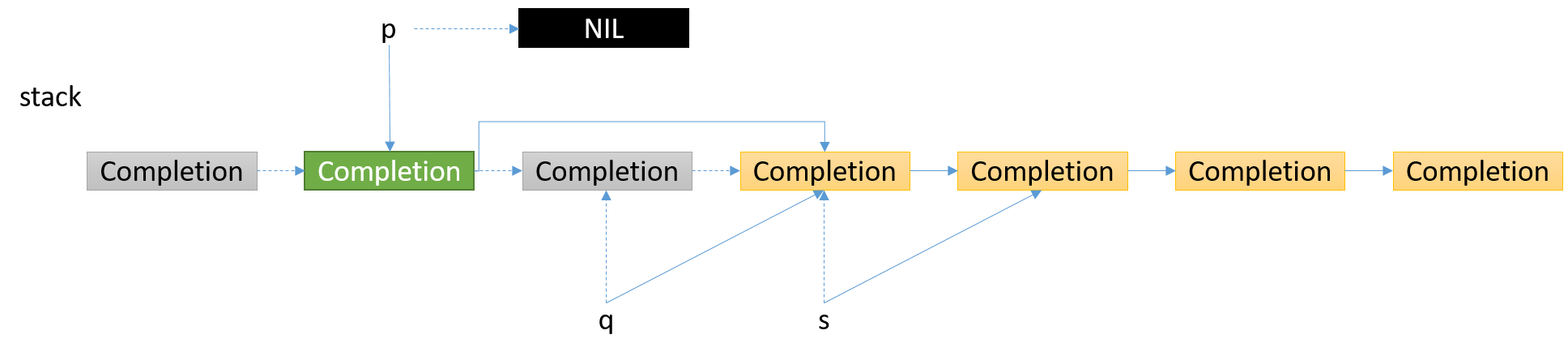
4. 第4个结点是有效结点,更新指针
thenApply
     public <U> CompletableFuture<U> thenApply(Function<? super T, ? extends U> fn) {

         return uniApplyStage(null, fn);

     }

     public <U> CompletableFuture<U> thenApplyAsync(Function<? super T, ? extends U> fn) {

         return uniApplyStage(asyncPool, fn);

     }

     private <V> CompletableFuture<V> uniApplyStage(Executor e, Function<? super T, ? extends V> f) {

         if (f == null)

             throw new NullPointerException();

         CompletableFuture<V> d = new CompletableFuture<V>();

         if (e != null || !d.uniApply(this, f, null)) {

             UniApply<T, V> c = new UniApply<T, V>(e, d, this, f);

             push(c);

             c.tryFire(SYNC);

         }

         return d;

     }

     final <S> boolean uniApply(CompletableFuture<S> a, Function<? super S, ? extends T> f, UniApply<S, T> c) {

         Object r;

         Throwable x;

         if (a == null || (r = a.result) == null || f == null)

             return false;

         tryComplete: if (result == null) {

             if (r instanceof AltResult) {

                 if ((x = ((AltResult) r).ex) != null) {

                     completeThrowable(x, r); // 有异常,直接跳出

                     break tryComplete;

                 }

                 r = null;

             }

             try {

                 if (c != null && !c.claim())

                     return false;

                 @SuppressWarnings("unchecked")

                 S s = (S) r;

                 completeValue(f.apply(s));

             } catch (Throwable ex) {

                 completeThrowable(ex);

             }

         }

         return true;

     }

     static final class UniApply<T, V> extends UniCompletion<T, V> {

         Function<? super T, ? extends V> fn;

         UniApply(Executor executor, CompletableFuture<V> dep, CompletableFuture<T> src,

                 Function<? super T, ? extends V> fn) {

             super(executor, dep, src);

             this.fn = fn;

         }

         final CompletableFuture<V> tryFire(int mode) {

             CompletableFuture<V> d;

             CompletableFuture<T> a;

             if ((d = dep) == null || !d.uniApply(a = src, fn, mode > 0 ? null : this))

                 return null;

             dep = null;

             src = null;

             fn = null;

             return d.postFire(a, mode);

         }

     }
一样的套路,thenApply/thenApplyAsync -> uniApplyStage -> uniApply -> tryFire -> postFire
thenAccept
     public CompletableFuture<Void> thenAccept(Consumer<? super T> action) {

         return uniAcceptStage(null, action);

     }

     public CompletableFuture<Void> thenAcceptAsync(Consumer<? super T> action) {

         return uniAcceptStage(asyncPool, action);

     }

     private CompletableFuture<Void> uniAcceptStage(Executor e, Consumer<? super T> f) {

         if (f == null)

             throw new NullPointerException();

         CompletableFuture<Void> d = new CompletableFuture<Void>();

         if (e != null || !d.uniAccept(this, f, null)) {

             UniAccept<T> c = new UniAccept<T>(e, d, this, f);

             push(c);

             c.tryFire(SYNC);

         }

         return d;

     }

     final <S> boolean uniAccept(CompletableFuture<S> a, Consumer<? super S> f, UniAccept<S> c) {

         Object r;

         Throwable x;

         if (a == null || (r = a.result) == null || f == null)

             return false;

         tryComplete: if (result == null) {

             if (r instanceof AltResult) {

                 if ((x = ((AltResult) r).ex) != null) {

                     completeThrowable(x, r); // 有异常直接跳出

                     break tryComplete;

                 }

                 r = null;

             }

             try {

                 if (c != null && !c.claim())

                     return false;

                 @SuppressWarnings("unchecked")

                 S s = (S) r;

                 f.accept(s);

                 completeNull();

             } catch (Throwable ex) {

                 completeThrowable(ex);

             }

         }

         return true;

     }

     static final class UniAccept<T> extends UniCompletion<T, Void> {

         Consumer<? super T> fn;

         UniAccept(Executor executor, CompletableFuture<Void> dep, CompletableFuture<T> src, Consumer<? super T> fn) {

             super(executor, dep, src);

             this.fn = fn;

         }

         final CompletableFuture<Void> tryFire(int mode) {

             CompletableFuture<Void> d;

             CompletableFuture<T> a;

             if ((d = dep) == null || !d.uniAccept(a = src, fn, mode > 0 ? null : this))

                 return null;

             dep = null;

             src = null;

             fn = null;

             return d.postFire(a, mode);

         }

     }
thenAccept/thenAcceptAsync -> uniAcceptStage -> uniAccept -> tryFire -> postFire
thenRun
     public CompletableFuture<Void> thenRun(Runnable action) {

         return uniRunStage(null, action);

     }

     public CompletableFuture<Void> thenRunAsync(Runnable action) {

         return uniRunStage(asyncPool, action);

     }

     private CompletableFuture<Void> uniRunStage(Executor e, Runnable f) {

         if (f == null)

             throw new NullPointerException();

         CompletableFuture<Void> d = new CompletableFuture<Void>();

         if (e != null || !d.uniRun(this, f, null)) {

             UniRun<T> c = new UniRun<T>(e, d, this, f);

             push(c);

             c.tryFire(SYNC);

         }

         return d;

     }

     final boolean uniRun(CompletableFuture<?> a, Runnable f, UniRun<?> c) {

         Object r;

         Throwable x;

         if (a == null || (r = a.result) == null || f == null)

             return false;

         if (result == null) {

             if (r instanceof AltResult && (x = ((AltResult) r).ex) != null)

                 completeThrowable(x, r);

             else

                 try {

                     if (c != null && !c.claim())

                         return false;

                     f.run();

                     completeNull();

                 } catch (Throwable ex) {

                     completeThrowable(ex);

                 }

         }

         return true;

     }

     static final class UniRun<T> extends UniCompletion<T, Void> {

         Runnable fn;

         UniRun(Executor executor, CompletableFuture<Void> dep, CompletableFuture<T> src, Runnable fn) {

             super(executor, dep, src);

             this.fn = fn;

         }

         final CompletableFuture<Void> tryFire(int mode) {

             CompletableFuture<Void> d;

             CompletableFuture<T> a;

             if ((d = dep) == null || !d.uniRun(a = src, fn, mode > 0 ? null : this))

                 return null;

             dep = null;

             src = null;

             fn = null;

             return d.postFire(a, mode);

         }

     }
thenRun/thenRunAsync -> uniRunStage -> uniRun -> tryFire -> postFire
thenAcceptBoth
thenAcceptBoth
    public <U> CompletableFuture<Void> thenAcceptBoth(CompletionStage<? extends U> other,

            BiConsumer<? super T, ? super U> action) {

        return biAcceptStage(null, other, action);

    }

    public <U> CompletableFuture<Void> thenAcceptBothAsync(CompletionStage<? extends U> other,

            BiConsumer<? super T, ? super U> action) {

        return biAcceptStage(asyncPool, other, action);

    }
biAcceptStage
    private <U> CompletableFuture<Void> biAcceptStage(Executor e, CompletionStage<U> o,

            BiConsumer<? super T, ? super U> f) {

        CompletableFuture<U> b;

        if (f == null || (b = o.toCompletableFuture()) == null)

            throw new NullPointerException();

        CompletableFuture<Void> d = new CompletableFuture<Void>();

        if (e != null || !d.biAccept(this, b, f, null)) {

            BiAccept<T, U> c = new BiAccept<T, U>(e, d, this, b, f);

            bipush(b, c);

            c.tryFire(SYNC);

        }

        return d;

    }
bipush
     final void bipush(CompletableFuture<?> b, BiCompletion<?, ?, ?> c) {

         if (c != null) {

             Object r;

             while ((r = result) == null && !tryPushStack(c)) // a的result还没准备好,c压入栈

                 lazySetNext(c, null); // 失败重置c的next域

             if (b != null && b != this && b.result == null) { // b的result也还没准备好

                 Completion q = (r != null) ? c : new CoCompletion(c); // 根据a的result决定是否构建CoCompletion, 如果a未结束,则构建一个CoCompletion, CoCompletion最后调用的也是BiCompletion的tryFire

                 while (b.result == null && !b.tryPushStack(q)) // 将q压入栈

                     lazySetNext(q, null); // 失败重置q的next域

             }

         }

     }
CoCompletion
     static final class CoCompletion extends Completion {

         BiCompletion<?, ?, ?> base;

         CoCompletion(BiCompletion<?, ?, ?> base) {

             this.base = base;

         }

         final CompletableFuture<?> tryFire(int mode) {

             BiCompletion<?, ?, ?> c;

             CompletableFuture<?> d;

             if ((c = base) == null || (d = c.tryFire(mode)) == null) // 调用的还是BiCompletion的tryFire方法

                 return null;

             base = null;

             return d;

         }

         final boolean isLive() {

             BiCompletion<?, ?, ?> c;

             return (c = base) != null && c.dep != null;

         }

     }
biAccept
     final <R, S> boolean biAccept(CompletableFuture<R> a, CompletableFuture<S> b, BiConsumer<? super R, ? super S> f,

             BiAccept<R, S> c) {

         Object r, s;

         Throwable x;

         if (a == null || (r = a.result) == null || b == null || (s = b.result) == null || f == null)

             return false; // a和b都完成了,才会往下走

         tryComplete: if (result == null) {

             if (r instanceof AltResult) {

                 if ((x = ((AltResult) r).ex) != null) { // a的异常检查

                     completeThrowable(x, r);

                     break tryComplete;

                 }

                 r = null;

             }

             if (s instanceof AltResult) {

                 if ((x = ((AltResult) s).ex) != null) { // b的异常检查

                     completeThrowable(x, s);

                     break tryComplete;

                 }

                 s = null;

             }

             try {

                 if (c != null && !c.claim())

                     return false;

                 @SuppressWarnings("unchecked")

                 R rr = (R) r;

                 @SuppressWarnings("unchecked")

                 S ss = (S) s;

                 f.accept(rr, ss); // 执行任务

                 completeNull();

             } catch (Throwable ex) {

                 completeThrowable(ex);

             }

         }

         return true;

     }
BiAccept
     static final class BiAccept<T, U> extends BiCompletion<T, U, Void> {

         BiConsumer<? super T, ? super U> fn;

         BiAccept(Executor executor, CompletableFuture<Void> dep, CompletableFuture<T> src, CompletableFuture<U> snd,

                 BiConsumer<? super T, ? super U> fn) {

             super(executor, dep, src, snd);

             this.fn = fn;

         }

         final CompletableFuture<Void> tryFire(int mode) {

             CompletableFuture<Void> d;

             CompletableFuture<T> a;

             CompletableFuture<U> b;

             if ((d = dep) == null || !d.biAccept(a = src, b = snd, fn, mode > 0 ? null : this))

                 return null;

             dep = null;

             src = null;

             snd = null;

             fn = null;

             return d.postFire(a, b, mode);

         }

     }

     abstract static class BiCompletion<T, U, V> extends UniCompletion<T, V> {

         CompletableFuture<U> snd; // second source for action

         BiCompletion(Executor executor, CompletableFuture<V> dep, CompletableFuture<T> src, CompletableFuture<U> snd) {

             super(executor, dep, src);

             this.snd = snd;

         }

     }
thenAcceptBoth/thenAcceptBothAsync -> biAcceptStage -> biAccept -> tryFire -> postFire
acceptEither
     public CompletableFuture<Void> acceptEither(CompletionStage<? extends T> other, Consumer<? super T> action) {

         return orAcceptStage(null, other, action);

     }

     public CompletableFuture<Void> acceptEitherAsync(CompletionStage<? extends T> other, Consumer<? super T> action) {

         return orAcceptStage(asyncPool, other, action);

     }

     private <U extends T> CompletableFuture<Void> orAcceptStage(Executor e, CompletionStage<U> o,

             Consumer<? super T> f) {

         CompletableFuture<U> b;

         if (f == null || (b = o.toCompletableFuture()) == null)

             throw new NullPointerException();

         CompletableFuture<Void> d = new CompletableFuture<Void>();

         if (e != null || !d.orAccept(this, b, f, null)) {

             OrAccept<T, U> c = new OrAccept<T, U>(e, d, this, b, f);

             orpush(b, c);

             c.tryFire(SYNC);

         }

         return d;

     }

     final <R, S extends R> boolean orAccept(CompletableFuture<R> a, CompletableFuture<S> b, Consumer<? super R> f,

             OrAccept<R, S> c) {

         Object r;

         Throwable x;

         if (a == null || b == null || ((r = a.result) == null && (r = b.result) == null) || f == null)

             return false; // a和b有一个完成了就往下走

         tryComplete: if (result == null) {

             try {

                 if (c != null && !c.claim())

                     return false;

                 if (r instanceof AltResult) { // 异常

                     if ((x = ((AltResult) r).ex) != null) {

                         completeThrowable(x, r);

                         break tryComplete;

                     }

                     r = null;

                 }

                 @SuppressWarnings("unchecked")

                 R rr = (R) r;

                 f.accept(rr); // 执行

                 completeNull();

             } catch (Throwable ex) {

                 completeThrowable(ex);

             }

         }

         return true;

     }

     static final class OrAccept<T, U extends T> extends BiCompletion<T, U, Void> {

         Consumer<? super T> fn;

         OrAccept(Executor executor, CompletableFuture<Void> dep, CompletableFuture<T> src, CompletableFuture<U> snd,

                 Consumer<? super T> fn) {

             super(executor, dep, src, snd);

             this.fn = fn;

         }

         final CompletableFuture<Void> tryFire(int mode) {

             CompletableFuture<Void> d;

             CompletableFuture<T> a;

             CompletableFuture<U> b;

             if ((d = dep) == null || !d.orAccept(a = src, b = snd, fn, mode > 0 ? null : this))

                 return null;

             dep = null;

             src = null;

             snd = null;

             fn = null;

             return d.postFire(a, b, mode);

         }

     }

     final void orpush(CompletableFuture<?> b, BiCompletion<?, ?, ?> c) {

         if (c != null) {

             while ((b == null || b.result == null) && result == null) { // a和b的result都没好,才会考虑入栈

                 if (tryPushStack(c)) { // 先入a的栈

                     if (b != null && b != this && b.result == null) { // 入a的栈成功,b的result还没好

                         Completion q = new CoCompletion(c); // a还未结束,用c构建CoCompletion

                         while (result == null && b.result == null && !b.tryPushStack(q)) // 再次判断,a和b的result都没好,才会考虑入栈

                             lazySetNext(q, null); // 失败置空q的next域

                     }

                     break;

                 }

                 lazySetNext(c, null); // 失败置空c的next域

             }

         }

     }
acceptEither/acceptEitherAsync -> orAcceptStage -> orAccept -> tryFire -> postFire
allOf
     public static CompletableFuture<Void> allOf(CompletableFuture<?>... cfs) {

         return andTree(cfs, 0, cfs.length - 1);

     }

     static CompletableFuture<Void> andTree(CompletableFuture<?>[] cfs, int lo, int hi) { // 将一个数组构建成一棵树,二叉树,动态规划

         CompletableFuture<Void> d = new CompletableFuture<Void>();

         if (lo > hi) // empty

             d.result = NIL;

         else {

             CompletableFuture<?> a, b;

             int mid = (lo + hi) >>> 1;

             if ((a = (lo == mid ? cfs[lo] : andTree(cfs, lo, mid))) == null

                     || (b = (lo == hi ? a : (hi == mid + 1) ? cfs[hi] : andTree(cfs, mid + 1, hi))) == null)

                 throw new NullPointerException();

             if (!d.biRelay(a, b)) {

                 BiRelay<?, ?> c = new BiRelay<>(d, a, b);

                 a.bipush(b, c); // both

                 c.tryFire(SYNC);

             }

         }

         return d;

     }

     static final class BiRelay<T, U> extends BiCompletion<T, U, Void> { // for And

         BiRelay(CompletableFuture<Void> dep, CompletableFuture<T> src, CompletableFuture<U> snd) {

             super(null, dep, src, snd);

         }

         final CompletableFuture<Void> tryFire(int mode) {

             CompletableFuture<Void> d;

             CompletableFuture<T> a;

             CompletableFuture<U> b;

             if ((d = dep) == null || !d.biRelay(a = src, b = snd))

                 return null;

             src = null;

             snd = null;

             dep = null;

             return d.postFire(a, b, mode);

         }

     }

     boolean biRelay(CompletableFuture<?> a, CompletableFuture<?> b) {

         Object r, s;

         Throwable x;

         if (a == null || (r = a.result) == null || b == null || (s = b.result) == null)

             return false; // a和b都结束了才往下执行

         if (result == null) {

             if (r instanceof AltResult && (x = ((AltResult) r).ex) != null)

                 completeThrowable(x, r);

             else if (s instanceof AltResult && (x = ((AltResult) s).ex) != null)

                 completeThrowable(x, s);

             else

                 completeNull(); // 辅助结点,什么都不做

         }

         return true;

     }
allOf -> andTree -> biRelay -> tryFire -> postFire
anyOf
     public static CompletableFuture<Object> anyOf(CompletableFuture<?>... cfs) {

         return orTree(cfs, 0, cfs.length - 1);

     }

     static CompletableFuture<Object> orTree(CompletableFuture<?>[] cfs, int lo, int hi) { // 将一个数组构建成一棵树,二叉树,动态规划

         CompletableFuture<Object> d = new CompletableFuture<Object>();

         if (lo <= hi) {

             CompletableFuture<?> a, b;

             int mid = (lo + hi) >>> 1;

             if ((a = (lo == mid ? cfs[lo] : orTree(cfs, lo, mid))) == null

                     || (b = (lo == hi ? a : (hi == mid + 1) ? cfs[hi] : orTree(cfs, mid + 1, hi))) == null)

                 throw new NullPointerException();

             if (!d.orRelay(a, b)) {

                 OrRelay<?, ?> c = new OrRelay<>(d, a, b);

                 a.orpush(b, c);

                 c.tryFire(SYNC);

             }

         }

         return d;

     }

     static final class OrRelay<T, U> extends BiCompletion<T, U, Object> { // for Or

         OrRelay(CompletableFuture<Object> dep, CompletableFuture<T> src, CompletableFuture<U> snd) {

             super(null, dep, src, snd);

         }

         final CompletableFuture<Object> tryFire(int mode) {

             CompletableFuture<Object> d;

             CompletableFuture<T> a;

             CompletableFuture<U> b;

             if ((d = dep) == null || !d.orRelay(a = src, b = snd))

                 return null;

             src = null;

             snd = null;

             dep = null;

             return d.postFire(a, b, mode);

         }

     }

     final boolean orRelay(CompletableFuture<?> a, CompletableFuture<?> b) {

         Object r;

         if (a == null || b == null || ((r = a.result) == null && (r = b.result) == null))

             return false; // a和b有一个结束就往下进行

         if (result == null)

             completeRelay(r);

         return true;

     }
anyOf -> orTree -> orRelay -> tryFire -> postFire
数组构建树
allOf和anyOf都用到了数组构建成树的策略。
假设有一个任务Z(虚拟的,什么都不做),依赖一组任务[A, B, C, D, E, F, G, H]
对于allOf, 当这组任务都完成时,才会执行Z;对于anyOf, 当这组任务中有任何一个完成,就执行任务Z。
如果这组任务是数组结构或者链表结构,我们该如何解决呢?遍历数组或者是链表,当任务都完成或者有一个完成时,就执行Z,需要不停地遍历,这是轮询的方法,不合适。
整个基调是回调,是指,当一个任务完成时,会接着执行所有依赖于它的任务。
作为一个数组或者链表,该如何应用回调呢?谁在先,谁在后呢?因为不知道哪个任务会先完成,所以没法确定次序。而且这组任务之间也不应该相互依赖,它们只不过都是被Z依赖。
如果这组任务只有一个的话,那就演变成了X.thenXXX(Z), 如果这组任务有两个的话,allOf -> Both,anyOf -> Either
如果Z依赖Z1,Z2两个个任务,Z1和Z2依赖Z11,Z12和Z21,Z22四个任务,依次类推,当虚拟的任务的个数达到真实任务的个数的一半时,就让虚拟任务监听真实的任务,动态规划加二叉树,时间复杂度也只是logn级别的。
     static String array2Tree(String[] cfs, int lo, int hi) {

         String d = new String(cfs[lo] + cfs[hi]);

         if (lo <= hi) {

             String a, b;

             int mid = (lo + hi) >>> 1; // 二分

             if (lo == mid) { // a作为左半部分的的结果

                 a = cfs[lo]; // 当只有不超过两个元素时,a直接取第一个值

             } else {

                 a = array2Tree(cfs, lo, mid);

             }

             if (lo == hi) { // 当只有一个元素的时候,b取a的值

                 b = a;

             } else {

                 if (hi == mid + 1) { // 右半部分只有两个元素时,b取第二个元素的值

                     b = cfs[hi];

                 } else {

                     b = array2Tree(cfs, mid + 1, hi);

                 }

             }

             if (a == null || b == null) {

                 throw new NullPointerException();

             }

             System.out.println("[" + a + "][" + b + "]->[" + d + "]");

         }

         return d;

     }
Console
[A][B]->[AB]

[C][D]->[CD]

[AB][CD]->[AD]

[E][F]->[EF]

[G][H]->[GH]

[EF][GH]->[EH]

[AD][EH]->[AH]
如下图
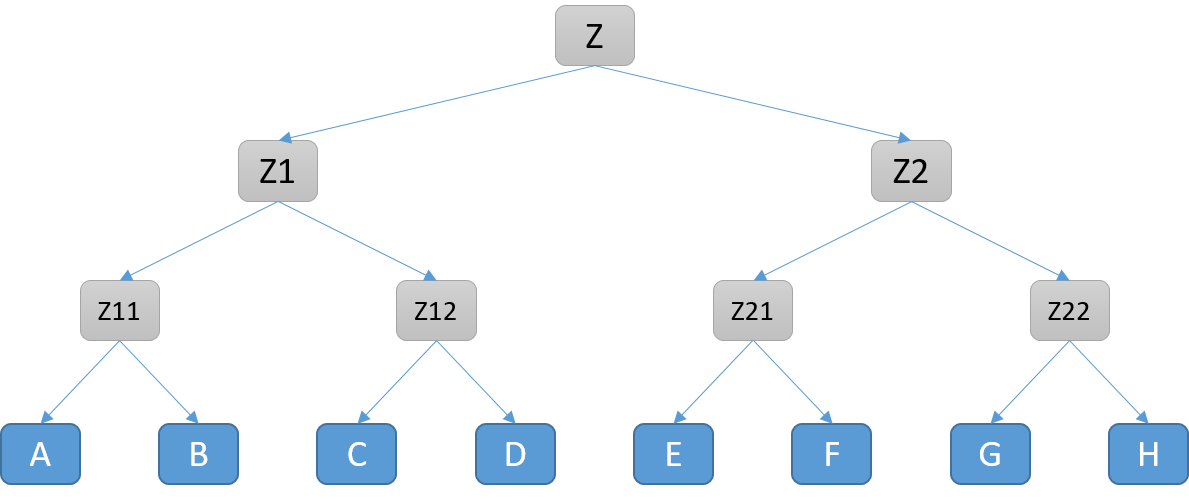
对于allOf, Z只要保证Z1和Z2都完成了就行,Z1和Z2分别保证Z11,Z12 和 Z21,Z22都完成了就像,而Z11,Z12,Z21,Z22则分别保证了A-H任务都完成。
对应anyOf, Z 只要保证Z1和Z2有一个完成了就像,Z1和Z2联合保证了Z11,Z12,Z21,Z22这4个任务只要有一个完成了就行,同理,Z11,Z12,Z21,Z22则联合保证了A-H中有一个任务完成了就行。
然后,Z就可以执行了,其实Z什么也没做,只是从这组任务里得出一个结果。
行文至此结束。
尊重他人的劳动,转载请注明出处:http://www.cnblogs.com/aniao/p/aniao_cf.html
【JUC源码解析】CompletableFuture的更多相关文章
- 【JUC源码解析】ScheduledThreadPoolExecutor
简介 它是一个线程池执行器(ThreadPoolExecutor),在给定的延迟(delay)后执行.在多线程或者对灵活性有要求的环境下,要优于java.util.Timer. 提交的任务在执行之前支 ...
- 【JUC源码解析】SynchronousQueue
简介 SynchronousQueue是一种特殊的阻塞队列,该队列没有容量. [存数据线程]到达队列后,若发现没有[取数据线程]在此等待,则[存数据线程]便入队等待,直到有[取数据线程]来取数据,并释 ...
- 【JUC源码解析】ForkJoinPool
简介 ForkJoin 框架,另一种风格的线程池(相比于ThreadPoolExecutor),采用分治算法,工作密取策略,极大地提高了并行性.对于那种大任务分割小任务的场景(分治)尤其有用. 框架图 ...
- 【JUC源码解析】DelayQueue
简介 基于优先级队列,以过期时间作为排序的基准,剩余时间最少的元素排在队首.只有过期的元素才能出队,在此之前,线程等待. 源码解析 属性 private final transient Reentra ...
- 【JUC源码解析】CyclicBarrier
简介 CyclicBarrier,一个同步器,允许多个线程相互等待,直到达到一个公共屏障点. 概述 CyclicBarrier支持一个可选的 Runnable 命令,在一组线程中的最后一个线程到达之后 ...
- 【JUC源码解析】ConcurrentLinkedQueue
简介 ConcurrentLinkedQueue是一个基于链表结点的无界线程安全队列. 概述 队列顺序,为FIFO(first-in-first-out):队首元素,是当前排队时间最长的:队尾元素,当 ...
- 【JUC源码解析】Exchanger
简介 Exchanger,并发工具类,用于线程间的数据交换. 使用 两个线程,两个缓冲区,一个线程往一个缓冲区里面填数据,另一个线程从另一个缓冲区里面取数据.当填数据的线程将缓冲区填满时,或者取数据的 ...
- Jdk1.6 JUC源码解析(12)-ArrayBlockingQueue
功能简介: ArrayBlockingQueue是一种基于数组实现的有界的阻塞队列.队列中的元素遵循先入先出(FIFO)的规则.新元素插入到队列的尾部,从队列头部取出元素. 和普通队列有所不同,该队列 ...
- Jdk1.6 JUC源码解析(13)-LinkedBlockingQueue
功能简介: LinkedBlockingQueue是一种基于单向链表实现的有界的(可选的,不指定默认int最大值)阻塞队列.队列中的元素遵循先入先出 (FIFO)的规则.新元素插入到队列的尾部,从队列 ...
随机推荐
- Storm的DRPC
RPC:Remote Procedure Call DRPC:Distributed RPC Hadoop提供了RPC的实现机制,实现方法见:<>,本文主要介绍Storm的DRPC. ...
- CentOS7的/tmp目录自动清理规则
CentOS6以下系统(含)使用watchtmp + cron来实现定时清理临时文件的效果,这点在CentOS7发生了变化. 在CentOS7下,系统使用systemd管理易变与临时文件,与之相关的系 ...
- python2 与 python3 如何实现共存
1.现在我本机系统已内置python2.6 2.下载进行源码安装 复制链接下载到 /root/mypackage,解压 接着 mkdir /usr/local/python3 然后在解压后的文件夹内执 ...
- 位运算符&与、或|、异或^
&按照二进制位进行运算 如:运算规则:0&0=0: 0&1=0:1&0=0:1&1=1:即:两位同时为“1”,结果才为“1”,否则为0[有0则0] 3& ...
- 使用EWS API读取邮件
#安装EwsManagedApi.msi,然后导入EWS模块 Import-Module -Name "C:\Program Files\Microsoft\Exchange\Web Ser ...
- Java概述和项目演示
Java概述和项目演示 1. 软件开发学习方法 多敲 多思考 解决问题 技术文档阅读(中文,英文) 项目文档 多阅读源码 2. 计算机 简称电脑,执行一系列指令的电子设备 3. 硬件组成 输入设备:键 ...
- SVN与Git比较的优缺点差异
目录: SVN与Git比较(一)集中式vs分布式 SVN与Git比较(二)版本库与工作区 SVN与Git比较(三)全局版本号和全球版本号 SVN与Git比较(四)部分检出 SVN与Git比较(五)更新 ...
- centos7搭建SVN+Apache+IF.svnadmin支持https实现web管理SVN
阅读目录 1. 介绍 2. 软件准备 3. 建立SVN Server仓库 4. 配置安装PHP&IF.SVNadmin 5. 启动服务 1.介绍 公司最近想把Windows server平台的 ...
- Leviticus
The head is empty and empty. Just practicing English will not have any effect. The best effect is to ...
- ping 127.0.0.1和ping本地ip分别测试什么?
ping 127.0.0.1 是你本地的回环地址! 实际上只要是127.0.0.1到127.255.255.255都是回环地址!都是可以PING检查的! 它能ping通,说明你的TCP/IP协议栈没问 ...