
SpringBoot学习之自动依赖
在前面使用SSM集成时,我们可以使用注解实现无配置化注入,但是这种依赖被进行“人工干预了的”,换句话就是说我们手动进行装配,那么此时还没有达到SpringBoot这种自动装配的效果,那么究竟SpringBoot如何进行自动装配的呢?下面我们就一探究竟
一。SpringBoot中创建对象的注解扩充
其实说白了,SpringBoot并不属于一种新的技术,只不过Spring-Boot-Starter-xxxx的启动器帮我们配置了若干个被Spring管理的bean,当我们的项目依赖这些jar并启动Spring应用时,Spring的Container容器已经把jar包下的对象加以创建及管理了,我们请看下面的例子:
该例子是spring-boot-autoconfigure-2.0.0.M7.jar包的内容,我们找到如下类: DispatcherServletAutoConfiguration ,我贴出源代码:
/*

 * Copyright 2012-2017 the original author or authors.

 *

 * Licensed under the Apache License, Version 2.0 (the "License");

 * you may not use this file except in compliance with the License.

 * You may obtain a copy of the License at

 *

 *      http://www.apache.org/licenses/LICENSE-2.0

 *

 * Unless required by applicable law or agreed to in writing, software

 * distributed under the License is distributed on an "AS IS" BASIS,

 * WITHOUT WARRANTIES OR CONDITIONS OF ANY KIND, either express or implied.

 * See the License for the specific language governing permissions and

 * limitations under the License.

 */

package org.springframework.boot.autoconfigure.web.servlet;

import java.util.Arrays;

import java.util.List;

import javax.servlet.MultipartConfigElement;

import javax.servlet.ServletRegistration;

import org.springframework.beans.factory.ObjectProvider;

import org.springframework.beans.factory.config.ConfigurableListableBeanFactory;

import org.springframework.boot.autoconfigure.AutoConfigureAfter;

import org.springframework.boot.autoconfigure.AutoConfigureOrder;

import org.springframework.boot.autoconfigure.EnableAutoConfiguration;

import org.springframework.boot.autoconfigure.condition.ConditionMessage;

import org.springframework.boot.autoconfigure.condition.ConditionMessage.Style;

import org.springframework.boot.autoconfigure.condition.ConditionOutcome;

import org.springframework.boot.autoconfigure.condition.ConditionalOnBean;

import org.springframework.boot.autoconfigure.condition.ConditionalOnClass;

import org.springframework.boot.autoconfigure.condition.ConditionalOnMissingBean;

import org.springframework.boot.autoconfigure.condition.ConditionalOnWebApplication;

import org.springframework.boot.autoconfigure.condition.ConditionalOnWebApplication.Type;

import org.springframework.boot.autoconfigure.condition.SpringBootCondition;

import org.springframework.boot.autoconfigure.web.ServerProperties;

import org.springframework.boot.context.properties.EnableConfigurationProperties;

import org.springframework.boot.web.servlet.ServletRegistrationBean;

import org.springframework.boot.web.servlet.support.SpringBootServletInitializer;

import org.springframework.context.annotation.Bean;

import org.springframework.context.annotation.ConditionContext;

import org.springframework.context.annotation.Conditional;

import org.springframework.context.annotation.Configuration;

import org.springframework.context.annotation.Import;

import org.springframework.core.Ordered;

import org.springframework.core.annotation.Order;

import org.springframework.core.type.AnnotatedTypeMetadata;

import org.springframework.web.multipart.MultipartResolver;

import org.springframework.web.servlet.DispatcherServlet;

/**

 * {@link EnableAutoConfiguration Auto-configuration} for the Spring

 * {@link DispatcherServlet}. Should work for a standalone application where an embedded

 * web server is already present and also for a deployable application using

 * {@link SpringBootServletInitializer}.

 *

 * @author Phillip Webb

 * @author Dave Syer

 * @author Stephane Nicoll

 * @author Brian Clozel

 */

@AutoConfigureOrder(Ordered.HIGHEST_PRECEDENCE)

@Configuration

@ConditionalOnWebApplication(type = Type.SERVLET)

@ConditionalOnClass(DispatcherServlet.class)

@AutoConfigureAfter(ServletWebServerFactoryAutoConfiguration.class)

@EnableConfigurationProperties(ServerProperties.class)

public class DispatcherServletAutoConfiguration {

    /*

     * The bean name for a DispatcherServlet that will be mapped to the root URL "/"

     */

    public static final String DEFAULT_DISPATCHER_SERVLET_BEAN_NAME = "dispatcherServlet";

    /*

     * The bean name for a ServletRegistrationBean for the DispatcherServlet "/"

     */

    public static final String DEFAULT_DISPATCHER_SERVLET_REGISTRATION_BEAN_NAME = "dispatcherServletRegistration";

    @Configuration

    @Conditional(DefaultDispatcherServletCondition.class)

    @ConditionalOnClass(ServletRegistration.class)

    @EnableConfigurationProperties(WebMvcProperties.class)

    protected static class DispatcherServletConfiguration {

        private final WebMvcProperties webMvcProperties;

        public DispatcherServletConfiguration(WebMvcProperties webMvcProperties) {

            this.webMvcProperties = webMvcProperties;

        }

        @Bean(name = DEFAULT_DISPATCHER_SERVLET_BEAN_NAME)

        public DispatcherServlet dispatcherServlet() {

            DispatcherServlet dispatcherServlet = new DispatcherServlet();

            dispatcherServlet.setDispatchOptionsRequest(

                    this.webMvcProperties.isDispatchOptionsRequest());

            dispatcherServlet.setDispatchTraceRequest(

                    this.webMvcProperties.isDispatchTraceRequest());

            dispatcherServlet.setThrowExceptionIfNoHandlerFound(

                    this.webMvcProperties.isThrowExceptionIfNoHandlerFound());

            return dispatcherServlet;

        }

        @Bean

        @ConditionalOnBean(MultipartResolver.class)

        @ConditionalOnMissingBean(name = DispatcherServlet.MULTIPART_RESOLVER_BEAN_NAME)

        public MultipartResolver multipartResolver(MultipartResolver resolver) {

            // Detect if the user has created a MultipartResolver but named it incorrectly

            return resolver;

        }

    }

    @Configuration

    @Conditional(DispatcherServletRegistrationCondition.class)

    @ConditionalOnClass(ServletRegistration.class)

    @EnableConfigurationProperties(WebMvcProperties.class)

    @Import(DispatcherServletConfiguration.class)

    protected static class DispatcherServletRegistrationConfiguration {

        private final ServerProperties serverProperties;

        private final WebMvcProperties webMvcProperties;

        private final MultipartConfigElement multipartConfig;

        public DispatcherServletRegistrationConfiguration(

                ServerProperties serverProperties, WebMvcProperties webMvcProperties,

                ObjectProvider<MultipartConfigElement> multipartConfigProvider) {

            this.serverProperties = serverProperties;

            this.webMvcProperties = webMvcProperties;

            this.multipartConfig = multipartConfigProvider.getIfAvailable();

        }

        @Bean(name = DEFAULT_DISPATCHER_SERVLET_REGISTRATION_BEAN_NAME)

        @ConditionalOnBean(value = DispatcherServlet.class, name = DEFAULT_DISPATCHER_SERVLET_BEAN_NAME)

        public ServletRegistrationBean<DispatcherServlet> dispatcherServletRegistration(

                DispatcherServlet dispatcherServlet) {

            ServletRegistrationBean<DispatcherServlet> registration = new ServletRegistrationBean<>(

                    dispatcherServlet,

                    this.serverProperties.getServlet().getServletMapping());

            registration.setName(DEFAULT_DISPATCHER_SERVLET_BEAN_NAME);

            registration.setLoadOnStartup(

                    this.webMvcProperties.getServlet().getLoadOnStartup());

            if (this.multipartConfig != null) {

                registration.setMultipartConfig(this.multipartConfig);

            }

            return registration;

        }

    }

    @Order(Ordered.LOWEST_PRECEDENCE - 10)

    private static class DefaultDispatcherServletCondition extends SpringBootCondition {

        @Override

        public ConditionOutcome getMatchOutcome(ConditionContext context,

                AnnotatedTypeMetadata metadata) {

            ConditionMessage.Builder message = ConditionMessage

                    .forCondition("Default DispatcherServlet");

            ConfigurableListableBeanFactory beanFactory = context.getBeanFactory();

            List<String> dispatchServletBeans = Arrays.asList(beanFactory

                    .getBeanNamesForType(DispatcherServlet.class, false, false));

            if (dispatchServletBeans.contains(DEFAULT_DISPATCHER_SERVLET_BEAN_NAME)) {

                return ConditionOutcome.noMatch(message.found("dispatcher servlet bean")

                        .items(DEFAULT_DISPATCHER_SERVLET_BEAN_NAME));

            }

            if (beanFactory.containsBean(DEFAULT_DISPATCHER_SERVLET_BEAN_NAME)) {

                return ConditionOutcome

                        .noMatch(message.found("non dispatcher servlet bean")

                                .items(DEFAULT_DISPATCHER_SERVLET_BEAN_NAME));

            }

            if (dispatchServletBeans.isEmpty()) {

                return ConditionOutcome

                        .match(message.didNotFind("dispatcher servlet beans").atAll());

            }

            return ConditionOutcome.match(message

                    .found("dispatcher servlet bean", "dispatcher servlet beans")

                    .items(Style.QUOTE, dispatchServletBeans)

                    .append("and none is named " + DEFAULT_DISPATCHER_SERVLET_BEAN_NAME));

        }

    }

    @Order(Ordered.LOWEST_PRECEDENCE - 10)

    private static class DispatcherServletRegistrationCondition

            extends SpringBootCondition {

        @Override

        public ConditionOutcome getMatchOutcome(ConditionContext context,

                AnnotatedTypeMetadata metadata) {

            ConfigurableListableBeanFactory beanFactory = context.getBeanFactory();

            ConditionOutcome outcome = checkDefaultDispatcherName(beanFactory);

            if (!outcome.isMatch()) {

                return outcome;

            }

            return checkServletRegistration(beanFactory);

        }

        private ConditionOutcome checkDefaultDispatcherName(

                ConfigurableListableBeanFactory beanFactory) {

            List<String> servlets = Arrays.asList(beanFactory

                    .getBeanNamesForType(DispatcherServlet.class, false, false));

            boolean containsDispatcherBean = beanFactory

                    .containsBean(DEFAULT_DISPATCHER_SERVLET_BEAN_NAME);

            if (containsDispatcherBean

                    && !servlets.contains(DEFAULT_DISPATCHER_SERVLET_BEAN_NAME)) {

                return ConditionOutcome

                        .noMatch(startMessage().found("non dispatcher servlet")

                                .items(DEFAULT_DISPATCHER_SERVLET_BEAN_NAME));

            }

            return ConditionOutcome.match();

        }

        private ConditionOutcome checkServletRegistration(

                ConfigurableListableBeanFactory beanFactory) {

            ConditionMessage.Builder message = startMessage();

            List<String> registrations = Arrays.asList(beanFactory

                    .getBeanNamesForType(ServletRegistrationBean.class, false, false));

            boolean containsDispatcherRegistrationBean = beanFactory

                    .containsBean(DEFAULT_DISPATCHER_SERVLET_REGISTRATION_BEAN_NAME);

            if (registrations.isEmpty()) {

                if (containsDispatcherRegistrationBean) {

                    return ConditionOutcome

                            .noMatch(message.found("non servlet registration bean").items(

                                    DEFAULT_DISPATCHER_SERVLET_REGISTRATION_BEAN_NAME));

                }

                return ConditionOutcome

                        .match(message.didNotFind("servlet registration bean").atAll());

            }

            if (registrations

                    .contains(DEFAULT_DISPATCHER_SERVLET_REGISTRATION_BEAN_NAME)) {

                return ConditionOutcome.noMatch(message.found("servlet registration bean")

                        .items(DEFAULT_DISPATCHER_SERVLET_REGISTRATION_BEAN_NAME));

            }

            if (containsDispatcherRegistrationBean) {

                return ConditionOutcome

                        .noMatch(message.found("non servlet registration bean").items(

                                DEFAULT_DISPATCHER_SERVLET_REGISTRATION_BEAN_NAME));

            }

            return ConditionOutcome.match(message.found("servlet registration beans")

                    .items(Style.QUOTE, registrations).append("and none is named "

                            + DEFAULT_DISPATCHER_SERVLET_REGISTRATION_BEAN_NAME));

        }

        private ConditionMessage.Builder startMessage() {

            return ConditionMessage.forCondition("DispatcherServlet Registration");

        }

    }

}
该代码是创建SpringMvc的典型示例 我想@Bean @Configuration 这个大家在熟悉不过了,下面我们来看几个比较陌生的注解,我简单解释一下:
1.spring-boot利用Conditional来确定是否创建Bean实例,这个注解我们可以理解为满足一定条件我们才创建Bean
2.这些注解我们可以在spring-boot-autoconfigure-2.0.0.M7.jar下 org.springframework.boot.autoconfigure.condition下找到
3.常见的注解解释:
3.1 @ConditionalOnBean :匹配给定的class类型或者Bean的名字是否在SpringBeanFactory中存在
3.2 @ConditionalOnClass:匹配给定的class类型是否在类路径(classpath)中存在
3.3 @ConditionalOnExpression : 匹配给定springEL表达式的值返回true时
3.4 @ConditionalOnJava :匹配JDK的版本,其中range属性是枚举类型有两个值可以选择
3.4.1 EQUAL_OR_NEWER 不小于
3.4.2 OLDER_THAN 小于
3.4.3 value属性用于设置jdk版本
3.5 ConditionalOnMissingBean:spring上下文中不存在指定bean时
3.6 ConditionalOnWebApplication:在web环境下创建
@ConditionalOnBean is evaluated after all configuration classes have been processed, i.e you can't use it to make a whole configuration class conditional on the presence of another bean. You can, however, use it where you have to make all of the configuration's beans conditional on the presence of another bean.

注意:Conditional 只有在所有配置类被加载完的时候被评估是否要创建,因此Conditional不能在配置类里根据其他创建的方法进行判断
@Bean
@ConditionalOnBean({Teacher.class})
public Student student(StudentProperties studentProperties) {
    Student student = new Student();
    student.setStuName(studentProperties.getName());
    return student;
}

@Bean
@ConditionalOnMissingBean
public static Teacher teacher() {
    return new Teacher();
}

@Bean
@ConditionalOnMissingBean
public static School school() {
    return new School();
}
比如上述代码 Student是不会被创建的,如果非要@Bean和@Conditional使用,则可以借助于@Import方式实现
@Configuration
@EnableConfigurationProperties(StudentProperties.class)
@Import(TeacherAutoConfiguration.class)
public class MyTestAutoConfiguration {

    @Bean
    @ConditionalOnBean(Teacher.class)
    public Student student(StudentProperties studentProperties) {
        Student student = new Student();
        student.setStuName(studentProperties.getName());
        return student;
    }

}
@Configuration
public class TeacherAutoConfiguration {

    @Bean
    @ConditionalOnMissingBean
    public static Teacher teacher() {
        return new Teacher();
    }
}
二。实现简单的SpringBoot示例
1.我们先创建两个类分别为 Teacher Student,项目结构图
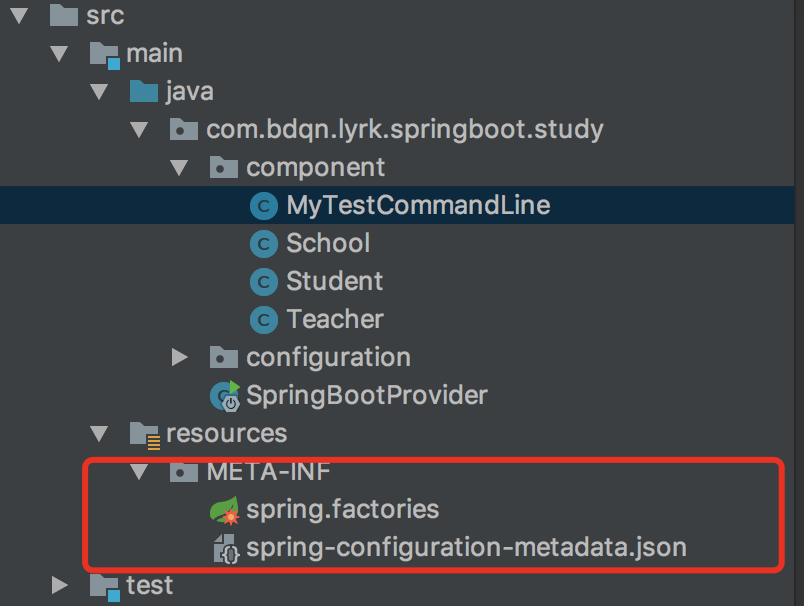
注意图中标圈的文件:spring-configuration-metadata.json文件,我们配置这个文件后,可以在idea或者spring sts中配置application.yml得到相关智能提示
json数据如下
{

  "hints":[],

  "groups":[],

  "properties": [

    {

      "sourceType": "com.bdqn.lyrk.springboot.study.configuration.MyProperties",

      "name": "my.loginName",

      "description": "登录名",

      "type": "java.lang.String"

    }

  ]

}
2.MyObjectAutoConfiguration类代码:
package com.bdqn.lyrk.springboot.study.configuration;

import com.bdqn.lyrk.springboot.study.pojo.School;

import com.bdqn.lyrk.springboot.study.pojo.Student;

import com.bdqn.lyrk.springboot.study.pojo.Teacher;

import org.springframework.beans.factory.annotation.Autowired;

import org.springframework.boot.autoconfigure.condition.ConditionalOnClass;

import org.springframework.boot.autoconfigure.condition.ConditionalOnMissingBean;

import org.springframework.boot.context.properties.EnableConfigurationProperties;

import org.springframework.context.annotation.Bean;

import org.springframework.context.annotation.Configuration;

/**

 * 自动创建对象示例,例子中我们创建Teacher与Student对象。

 * 当项目打成jar包依赖到其他Spring容器中,这些对象我们可以自动进行注入

 */

@Configuration

@EnableConfigurationProperties(MyProperties.class)

public class MyObjectAutoConfiguration {

    @Configuration

    static class TeacherAutoConfiguration {

        @Bean

        @ConditionalOnClass({Teacher.class, School.class})

        public static Teacher teacher() {

            return new Teacher();

        }

    }

    @Configuration

    static class StudentAutoConfiguration {

        @Bean

        @ConditionalOnMissingBean

        public Student student(@Autowired MyProperties myProperties) {

            return new Student(myProperties.getLoginName());

        }

    }

}
3.MyProperties代码:
package com.bdqn.lyrk.springboot.study.configuration;

import org.springframework.boot.context.properties.ConfigurationProperties;

/**

 * 用于实现读取application.yml中的配置

 */

@ConfigurationProperties(prefix = MyProperties.PREFIX)

public class MyProperties {

    public static final String PREFIX = "my";

    private String loginName;

    public String getLoginName() {

        return loginName;

    }

    public void setLoginName(String loginName) {

        this.loginName = loginName;

    }

}
4.application.yml配置:
my:

  loginName: test

spring:

  main:

    web-environment: false
5.Application代码:
package com.bdqn.lyrk.springboot.study;

import com.bdqn.lyrk.springboot.study.pojo.Student;

import org.springframework.boot.SpringApplication;

import org.springframework.boot.autoconfigure.SpringBootApplication;

import org.springframework.context.ConfigurableApplicationContext;

@SpringBootApplication

public class Application {

    public static void main(String[] args) {

        ConfigurableApplicationContext applicationContext = SpringApplication.run(Application.class, args);

        Student student = applicationContext.getBean(Student.class);

        System.out.println(student.getLoginName());

    }

}
当运行成功时:我们可以看到输出Student的loginName属性是test

6.在META-INF/spring.factories编写如下代码:
org.springframework.boot.autoconfigure.EnableAutoConfiguration=\

com.bdqn.lyrk.springboot.study.configuration.MyTestAutoConfiguration
注意:此配置文件非常重要,当我们这个jar包被SpringBoot依赖时,spring会读取org.springframework.boot.autoconfigure.EnableAutoConfiguration所定义的配置类并加载
SpringBoot学习之自动依赖的更多相关文章
- Springboot学习03-SpringMVC自动配置
Springboot学习03-SpringMVC自动配置 前言 在SpringBoot官网对于SpringMVCde 自动配置介绍 1-原文介绍如下: Spring MVC Auto-configur ...
- SpringBoot学习之自动装配
在前面使用SSM集成时,我们可以使用注解实现无配置化注入,但是这种依赖被进行“人工干预了的”,换句话就是说我们手动进行装配,那么此时还没有达到SpringBoot这种自动装配的效果,那么究竟Sprin ...
- Springboot学习:底层依赖与自动配置的原理
springboot依赖的父项目 我们在创建springboot项目的时候,设置了一个父项目: 这个项目可以点进去,可以发现它依赖于另一个父项目 再次点进去,发现没有依赖父项目了 观察这个项目的pom ...
- 尚硅谷springboot学习26-嵌入式servlet容器自动配置、启动原理
EmbeddedServletContainerAutoConfiguration:嵌入式的Servlet容器自动配置 @AutoConfigureOrder(Ordered.HIGHEST_PREC ...
- springboot入门之版本依赖和自动配置原理
前言 Spring Boot makes it easy to create stand-alone, production-grade Spring based Applications that ...
- springboot 学习笔记(一)
引子 最近在搞一个项目,走在科技前沿的师兄, 摒弃了公司老套的框架模式, 采用了springboot搭建新应用.看到如此简洁的代码 , 深受诱惑.趁周末闲余之时, 背晒阳光, 学起了springboo ...
- springboot学习(一)——helloworld
以下内容,如有问题,烦请指出,谢谢 springboot出来也很久了,以前零散地学习了不少,不过很长时间了都没有在实际中使用过了,忘了不少,因此要最近准备抽时间系统的学习积累下springboot,给 ...
- Springboot学习07-数据源Druid
Springboot学习07-数据源Druid 关键字 Druid 前言 学习笔记 正文 1-Druid是什么 Druid是阿里巴巴开源平台上的一个项目,整个项目由数据库连接池.插件框架和SQL解析器 ...
- 尚硅谷springboot学习1-简介
以前看过springboot的相关知识,当时偷懒没有做笔记,现在忘得已经差不多了,现在趁着过年有时间,再学习一遍,并做下笔记以备忘. 特性 Spring Boot来简化Spring应用开发,约定大于配 ...
随机推荐
- codves 3044 矩形面积求并
codves 3044 矩形面积求并 题目等级 : 钻石 Diamond 题目描述 Description 输入n个矩形,求他们总共占地面积(也就是求一下面积的并) 输入描述 Input Desc ...
- javascript 腾讯ABS云平台面试题及面试经历
既然说到面试前端肯定是Javascript各种问,只好各种答. 面试题肯定离不了,最近热门的Vue.js,React.js,Angular.js,Gulp,Webpack还有各种Js问题,还有令人头痛 ...
- HDFS文件读写操作(基础基础超基础)
环境 OS: Ubuntu 16.04 64-Bit JDK: 1.7.0_80 64-Bit Hadoop: 2.6.5 原理 <权威指南>有两张图,下次po上来好好聊一下 实测 读操作 ...
- js判断操作系统windows,ios,android(笔记)
使用JS判断用户使用的系统是利用浏览器的userAgent. navigator.userAgent:userAgent 获取了浏览器用于 HTTP 请求的用户代理头的值. navigator.pla ...
- big_menu菜单设置
1.页面 <script> $(function(){ $('.subnav .content-menu .on').after('<a class="add fb&quo ...
- hadoop2.6.0实践:A03 例子验证
[hadoop@LexiaofeiN1 ~]$ hdfs dfs -ls /output/grep[hadoop@LexiaofeiN1 ~]$ hdfs dfs -rm -R /output/gre ...
- 云计算(2)it 是什么
2015年,全世界在it上面的花费达到3亿8千亿美金之多. 云数据中心:核心基础架构,云计算的物理载体,提供数据处理.存储和高性能计算支撑,包括服务器.存储.冷却.机房空间和能耗管理等. 超大规模的云 ...
- POJ1236【Tarjan+缩点】
题目大意:有向关系体现在电脑可以通过网络单向的传输文件,并规定一旦有电脑存在该文件,那么所有它能传输的电脑就能在第一时间得到这个文件,题目有两个问题,第一个是最少向网络中的几台电脑投放文件,能使得整个 ...
- Python/MySQL(三、pymysql使用)
Python/MySQL(三.pymysql使用) 所谓pymysql就是通过pycharm导入pymysql模块进行远程连接mysql服务端进行数据管理操作. 一.在pycharm中导入pymysq ...
- C#调用Python,报错No module named os
C#调用Python 环境:Windows 8.1,已经安装Python2.7(C:\Python27),配置了环境变量. 已经安装VS2013,VS2017 1.安装IronPython 下载地址h ...