
[LeetCode] Trapping Rain Water II 收集雨水之二
Given an m x n matrix of positive integers representing the height of each unit cell in a 2D elevation map, compute the volume of water it is able to trap after raining.
Note:
Both m and n are less than 110. The height of each unit cell is greater than 0 and is less than 20,000.
Example:
Given the following 3x6 height map:

[

  [1,4,3,1,3,2],

  [3,2,1,3,2,4],

  [2,3,3,2,3,1]

]

Return 4.
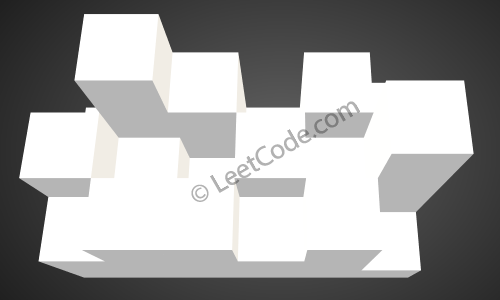
The above image represents the elevation map [[1,4,3,1,3,2],[3,2,1,3,2,4],[2,3,3,2,3,1]] before the rain.
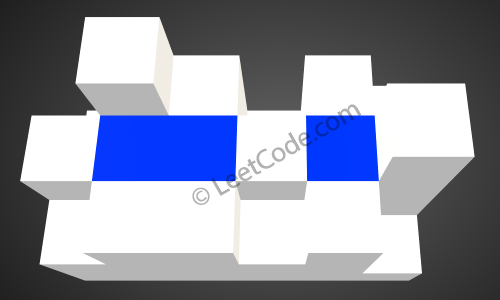
After the rain, water are trapped between the blocks. The total volume of water trapped is 4.
这道题是之前那道 Trapping Rain Water 的拓展,由 2D 变 3D 了,感觉很叼。但其实解法跟之前的完全不同了,之前那道题由于是二维的,我们可以用双指针来做,而这道三维的,我们需要用 BFS 来做,解法思路很巧妙,下面我们就以题目中的例子来进行分析讲解,多图预警,手机流量党慎入:
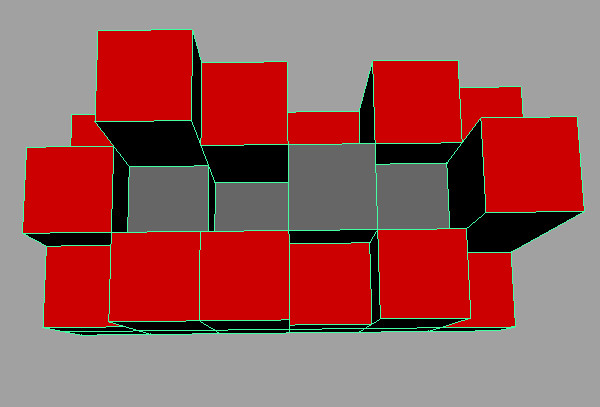
首先我们应该能分析出,能装水的底面肯定不能在边界上,因为边界上的点无法封闭,那么所有边界上的点都可以加入 queue,当作 BFS 的启动点,同时我们需要一个二维数组来标记访问过的点,访问过的点我们用红色来表示,那么如下图所示:
我们再想想,怎么样可以成功的装进去水呢,是不是周围的高度都应该比当前的高度高,形成一个凹槽才能装水,而且装水量取决于周围最小的那个高度,有点像木桶原理的感觉,那么为了模拟这种方法,我们采用模拟海平面上升的方法来做,我们维护一个海平面高度 mx,初始化为最小值,从1开始往上升,那么我们 BFS 遍历的时候就需要从高度最小的格子开始遍历,那么我们的 queue 就不能使用普通队列了,而是使用优先级队列,将高度小的放在队首,最先取出,这样我们就可以遍历高度为1的三个格子,用绿色标记出来了,如下图所示:

如上图所示,向周围 BFS 搜索的条件是不能越界,且周围格子未被访问,那么可以看出上面的第一个和最后一个绿格子无法进一步搜索,只有第一行中间那个绿格子可以搜索,其周围有一个灰格子未被访问过,将其加入优先队列 queue 中,然后标记为红色,如下图所示:
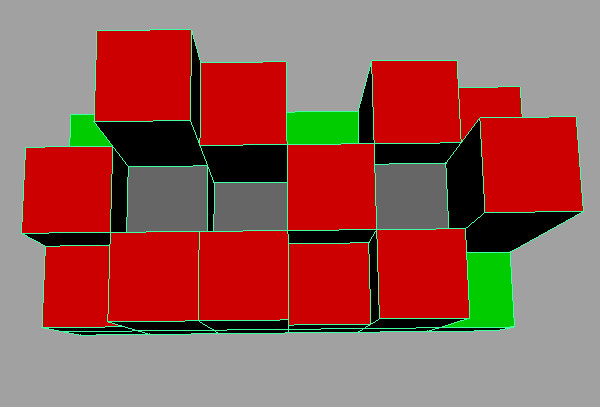
那么优先队列 queue 中高度为1的格子遍历完了,此时海平面上升1,变为2,此时我们遍历优先队列 queue 中高度为2的格子,有3个,如下图绿色标记所示:
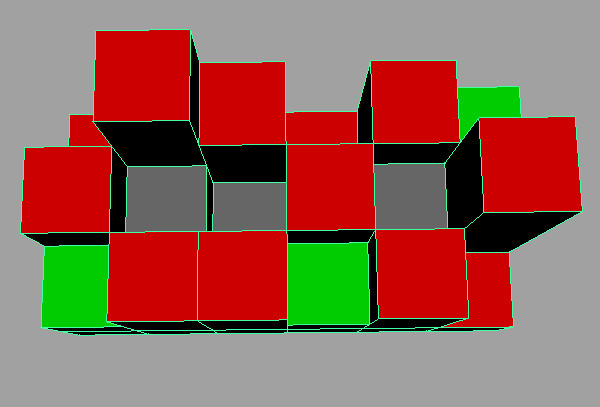
我们发现这三个绿格子周围的格子均已被访问过了,所以不做任何操作,海平面继续上升,变为3,遍历所有高度为3的格子,如下图绿色标记所示:

由于我们没有特别声明高度相同的格子在优先队列 queue 中的顺序,所以应该是随机的,其实谁先遍历到都一样,对结果没啥影响,我们就假设第一行的两个绿格子先遍历到,那么那么周围各有一个灰格子可以遍历,这两个灰格子比海平面低了,可以存水了,把存水量算出来加入结果 res 中,如下图所示:
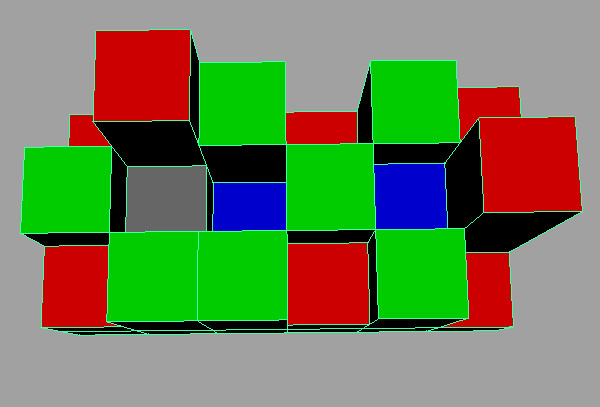
上图中这两个遍历到的蓝格子会被加入优先队列 queue 中,由于它们的高度小,所以下一次从优先队列 queue 中取格子时,它们会被优先遍历到,那么左边的那个蓝格子进行BFS搜索,就会遍历到其左边的那个灰格子,由于其高度小于海平面,也可以存水,将存水量算出来加入结果 res 中,如下图所示:

等两个绿格子遍历结束了,它们会被标记为红色,蓝格子遍历会先被标记红色,然后加入优先队列 queue 中,由于其周围格子全变成红色了,所有不会有任何操作,如下图所示:

此时所有的格子都标记为红色了,海平面继续上升,继续遍历完优先队列 queue 中的格子,不过已经不会对结果有任何影响了,因为所有的格子都已经访问过了,此时等循环结束后返回res即可,参见代码如下:
class Solution {

public:

    int trapRainWater(vector<vector<int>>& heightMap) {

        if (heightMap.empty()) return ;

        int m = heightMap.size(), n = heightMap[].size(), res = , mx = INT_MIN;

        priority_queue<pair<int, int>, vector<pair<int, int>>, greater<pair<int, int>>> q;

        vector<vector<bool>> visited(m, vector<bool>(n, false));

        vector<vector<int>> dir{{,-},{-,},{,},{,}};

        for (int i = ; i < m; ++i) {

            for (int j = ; j < n; ++j) {

                if (i ==  || i == m -  || j ==  || j == n - ) {

                    q.push({heightMap[i][j], i * n + j});

                    visited[i][j] = true;

                }

            }

        }

        while (!q.empty()) {

            auto t = q.top(); q.pop();

            int h = t.first, r = t.second / n, c = t.second % n;

            mx = max(mx, h);

            for (int i = ; i < dir.size(); ++i) {

                int x = r + dir[i][], y = c + dir[i][];

                if (x <  || x >= m || y <  || y >= n || visited[x][y]) continue;

                visited[x][y] = true;

                if (heightMap[x][y] < mx) res += mx - heightMap[x][y];

                q.push({heightMap[x][y], x * n + y});

            }

        }

        return res;

    }

};
Github 同步地址:
https://github.com/grandyang/leetcode/issues/407
类似题目:
参考资料:
https://leetcode.com/problems/trapping-rain-water-ii/
https://leetcode.com/problems/trapping-rain-water-ii/discuss/89461/Java-solution-using-PriorityQueue
LeetCode All in One 题目讲解汇总(持续更新中...)
[LeetCode] Trapping Rain Water II 收集雨水之二的更多相关文章
- [LeetCode] 407. Trapping Rain Water II 收集雨水之二
Given an m x n matrix of positive integers representing the height of each unit cell in a 2D elevati ...
- [LeetCode] 407. Trapping Rain Water II 收集雨水 II
Given an m x n matrix of positive integers representing the height of each unit cell in a 2D elevati ...
- Leetcode: Trapping Rain Water II
Given an m x n matrix of positive integers representing the height of each unit cell in a 2D elevati ...
- [LeetCode] Trapping Rain Water II 题解
题意 题目 思路 我一开始想的时候只考虑到一个结点周围的边界的情况,并没有考虑到边界的高度其实影响到所有的结点盛水的高度. 我们可以发现,中间是否能够盛水取决于边界是否足够高于里面的高度,所以这必然是 ...
- [LeetCode] Trapping Rain Water 收集雨水
Given n non-negative integers representing an elevation map where the width of each bar is 1, comput ...
- leetcode 11. Container With Most Water 、42. Trapping Rain Water 、238. Product of Array Except Self 、407. Trapping Rain Water II
11. Container With Most Water https://www.cnblogs.com/grandyang/p/4455109.html 用双指针向中间滑动,较小的高度就作为当前情 ...
- LeetCode: Trapping Rain Water 解题报告
https://oj.leetcode.com/problems/trapping-rain-water/ Trapping Rain WaterGiven n non-negative intege ...
- [Swift]LeetCode407. 接雨水 II | Trapping Rain Water II
Given an m x n matrix of positive integers representing the height of each unit cell in a 2D elevati ...
- [leetcode]Trapping Rain Water @ Python
原题地址:https://oj.leetcode.com/problems/trapping-rain-water/ 题意: Given n non-negative integers represe ...
随机推荐
- 现代3D图形编程学习-关于本书(译)
本书系列 现代3D图形编程学习 关于这本书 三维图像处理硬件很快成为了必不可少的组件.很多操作系统能够直接使用三维图像硬件,有些甚至要求需要有3D渲染能力的硬件.同时对于日益增加的手机系统,3D图像硬 ...
- .net汉字转字母
目前手上有一个需要实现:将用户输入的姓名转换成汉语拼音. 使用枚举,既麻烦又易出错,发现有一个微软拼音转换工具类ChnCharInfo.dll,在此记录下: 首先需要引入此dll, 链接: http: ...
- 利用js取到下拉框中选择的值
现在的需求是:下拉框中要是选择加盟商让其继续选择学校,要是选择平台管理员则不需要选择学校.隐藏选择下拉列表. 选择枚举值: /// <summary> /// 平台角色 /// </ ...
- react-native 简单的导航
默默潜水了两年了,一直都在看大神们写的博客,现在我也分享一下跟RN导航有关的东西. 前两年我主要是做iOS开发的,现在刚找了份工作,应公司要求,现在开始学习reactnative的东西,由于我以前没怎 ...
- IL初步了解
一.概述: 近来也是在看AOP方面的东西,了解到Emit可以实现.之前对Emit的了解也就是停留在Reflector针对方法反编译出来的部分指令.就用这次机会学习下Emit也用这篇随笔记录下学习的过程 ...
- Java全角、半角字符的关系以及转换
如果搞明白了Java中全角字符和半角字符之间的关系,那他们之间的转换就不是个麻烦事儿.你只需要对这个关系有那么一个印象就足够了. 全角字符与半角字符的关系 通过下面的代码能看到Java中所有字符以及对 ...
- ASP.NET路由[ASP.NET Routing]
ASP.NET路由[ASP.NET Routing] ASP.NET路由允许你在使用URL时不必匹配到网站中具体的文件,因为这个URL不必匹配到一个文件,你使用了描述用户行为且更容易被用户理解的URL ...
- 整理UIImagePickerController问题
[assetsLibrary addAssetsGroupAlbumWithName:@"iOSDevTip1" resultBlock:^(ALAssetsGroup *grou ...
- Java中的经典算法之冒泡排序(Bubble Sort)
Java中的经典算法之冒泡排序(Bubble Sort) 神话丿小王子的博客主页 原理:比较两个相邻的元素,将值大的元素交换至右端. 思路:依次比较相邻的两个数,将小数放在前面,大数放在后面.即在第一 ...
- android universal-image-loader的使用
全局配置 android-image-loader的使用 public class Application extends Application { @Override public void on ...