
kafka 幂等生产者及事务(kafka0.11之后版本新特性)
1. 幂等性设计
1.1 引入目的
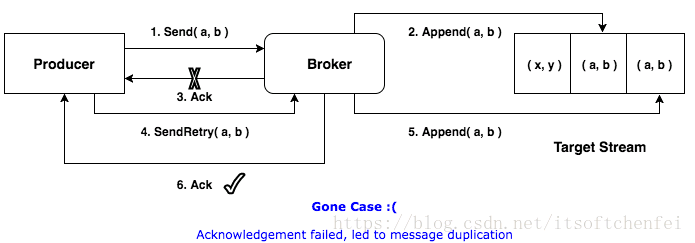
生产者重复生产消息。生产者进行retry会产生重试时,会重复产生消息。有了幂等性之后,在进行retry重试时,只会生成一个消息。
1.2 幂等性实现
1.2.1 PID 和 Sequence Number
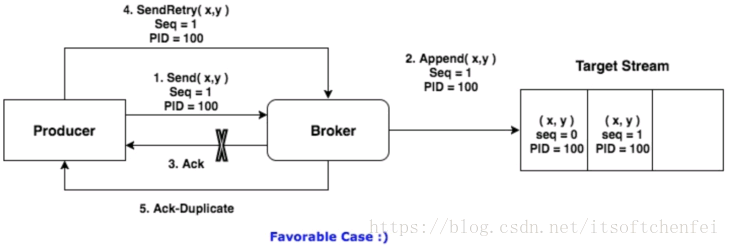
为了实现Producer的幂等性,Kafka引入了Producer ID(即PID)和Sequence Number。
PID。每个新的Producer在初始化的时候会被分配一个唯一的PID,这个PID对用户是不可见的。
Sequence Numbler。(对于每个PID,该Producer发送数据的每个<Topic, Partition>都对应一个从0开始单调递增的Sequence Number
Broker端在缓存中保存了这seq number,对于接收的每条消息,如果其序号比Broker缓存中序号大于1则接受它,否则将其丢弃。
这样就可以实现了消息重复提交了。但是,只能保证单个Producer对于同一个<Topic, Partition>的Exactly Once语义。不能保证同一个Producer一个topic不同的partion幂等。
标准实现

发生重试时
实现幂等之后

发生重试时
1.2.2 生成PID的流程
//在执行创建事务时

Producer<String, String> producer = new KafkaProducer<String, String>(props);

//会创建一个Sender,并启动线程,执行如下run方法

Sender{

    void run(long now) {

        if (transactionManager != null) {

            try {

                 ........

                if (!transactionManager.isTransactional()) {

                    // 为idempotent producer生成一个producer id

                    maybeWaitForProducerId();

                } else if (transactionManager.hasUnresolvedSequences() && !transactionManager.hasFatalError()) {
1.3.演示实例
enable.idempotence,需要设置为ture,此时就会默认把acks设置为all,所以不需要再设置acks属性了。
private Producer buildIdempotProducer(){

         // create instance for properties to access producer configs

        Properties props = new Properties();

        // bootstrap.servers是Kafka集群的IP地址。多个时,使用逗号隔开

        props.put("bootstrap.servers", "localhost:9092");

        props.put("enable.idempotence",true);

        //If the request fails, the producer can automatically retry,

        props.put("retries", 3);

        //Reduce the no of requests less than 0

        props.put("linger.ms", 1);

        //The buffer.memory controls the total amount of memory available to the producer for buffering.

        props.put("buffer.memory", 33554432);

        // Kafka消息是以键值对的形式发送,需要设置key和value类型序列化器

        props.put("key.serializer",

                "org.apache.kafka.common.serialization.StringSerializer");

        props.put("value.serializer",

                "org.apache.kafka.common.serialization.StringSerializer");

        Producer<String, String> producer = new KafkaProducer<String, String>(props);

        return producer;

}

//发送消息

public void produceIdempotMessage(String topic, String message) {

        // 创建Producer

        Producer producer = buildIdempotProducer();

        // 发送消息

        producer.send(new ProducerRecord<String, String>(topic, message));

        producer.flush();

}
此时,因为我们并没有配置transaction.id属性,所以不能使用事务相关API,如:producer.initTransactions();
否则会出现如下错误:
Exception in thread “main” java.lang.IllegalStateException: Transactional method invoked on a non-transactional producer.

    at org.apache.kafka.clients.producer.internals.TransactionManager.ensureTransactional(TransactionManager.java:777)

    at org.apache.kafka.clients.producer.internals.TransactionManager.initializeTransactions(TransactionManager.java:202)

    at org.apache.kafka.clients.producer.KafkaProducer.initTransactions(KafkaProducer.java:544)
2.事务
2.1 事务属性
事务属性是2017年Kafka 0.11.0.0引入的新特性。类似于数据库事务,只是这里的数据源是Kafka,kafka事务属性是指一系列的生产者生产消息和消费者提交偏移量的操作在一个事务,或者说是是一个原子操作),同时成功或者失败。
注意:在理解消息的事务时,一直处于一个错误理解就是如下代码中,把操作db的业务逻辑跟操作消息当成是一个事务。
其实这个是有问题的,操作DB数据库的数据源是DB,消息数据源是kfaka,这是完全不同两个数据,一种数据源(如mysql,kafka)对应一个事务。
所以它们是两个独立的事务:kafka事务指kafka一系列 生产、消费消息等操作组成一个原子操作;db事务是指操作数据库的一系列增删改操作组成一个原子操作。
void  kakfa_in_tranction(){

  // 1.kafa的操作:读取消息或者生产消息

 kafkaOperation();

   // 2.db操作

  dbOperation()

}
2.2 引入目的
在事务属性之前先引入了生产者幂等性,它的作用为:
生产者多次发送消息可以封装成一个原子操作,要么都成功,要么失败
consumer-transform-producer模式下,因为消费者提交偏移量出现问题,导致在重复消费消息时,生产者重复生产消息。
需要将这个模式下消费者提交偏移量操作和生成者一系列生成消息的操作封装成一个原子操作。
消费者提交偏移量导致重复消费消息的场景:消费者在消费消息完成提交偏移量o2之前挂掉了(假设它最近提交的偏移量是o1),此时执行再均衡时,其它消费者会重复消费消息(o1到o2之间的消息)。
2.3 操作的API
  //producer提供的事务方法

   /**

     * 初始化事务。需要注意的有:

     * 1、前提

     * 需要保证transation.id属性被配置。

     * 2、这个方法执行逻辑是:

     *   (1)Ensures any transactions initiated by previous instances of the producer with the same

     *      transactional.id are completed. If the previous instance had failed with a transaction in

     *      progress, it will be aborted. If the last transaction had begun completion,

     *      but not yet finished, this method awaits its completion.

     *    (2)Gets the internal producer id and epoch, used in all future transactional

     *      messages issued by the producer.

     *

     */

    public void initTransactions();

    /**

     * 开启事务

     */

    public void beginTransaction() throws ProducerFencedException ;

    /**

     * 为消费者提供的在事务内提交偏移量的操作

     */

    public void sendOffsetsToTransaction(Map<TopicPartition, OffsetAndMetadata> offsets,

                                         String consumerGroupId) throws ProducerFencedException ;

    /**

     * 提交事务

     */

    public void commitTransaction() throws ProducerFencedException;

    /**

     * 放弃事务,类似回滚事务的操作

     */

    public void abortTransaction() throws ProducerFencedException ;
2.4 演示实例
在一个原子操作中,根据包含的操作类型,可以分为三种情况:
a) 只有Producer生产消息;
b) 消费消息和生产消息并存,这个是事务场景中最常用的情况,就是我们常说的“consume-transform-produce ”模式
c) 只有consumer消费消息,
前两种情况是事务引入的场景,最后一种情况没有使用价值(跟使用手动提交效果一样)。
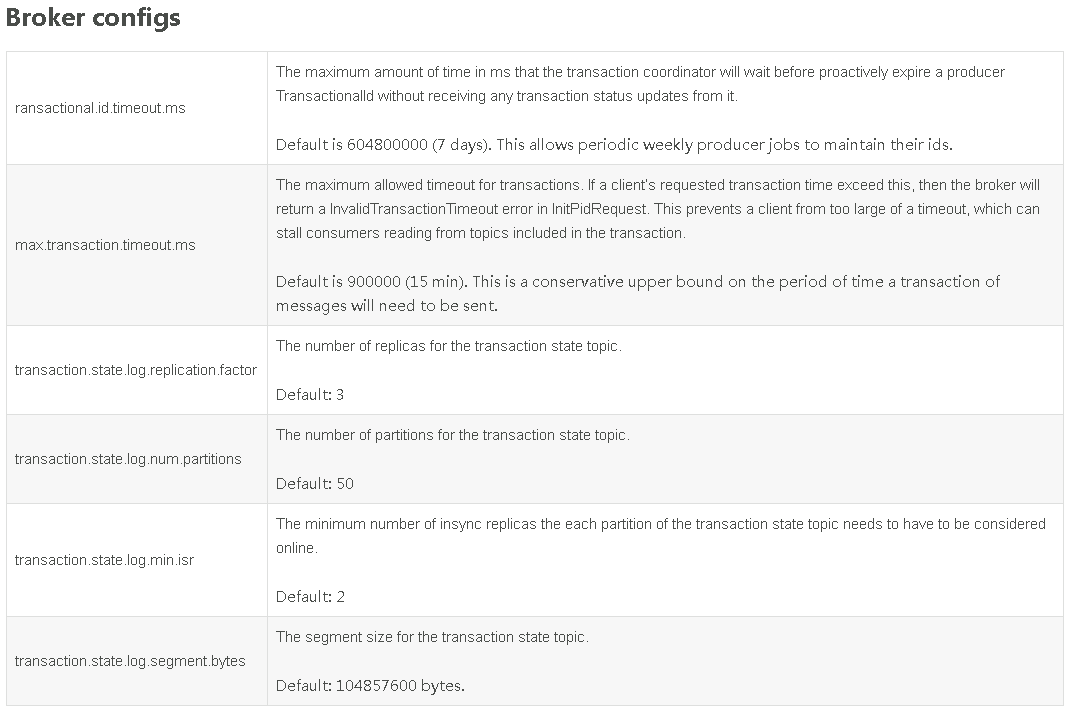
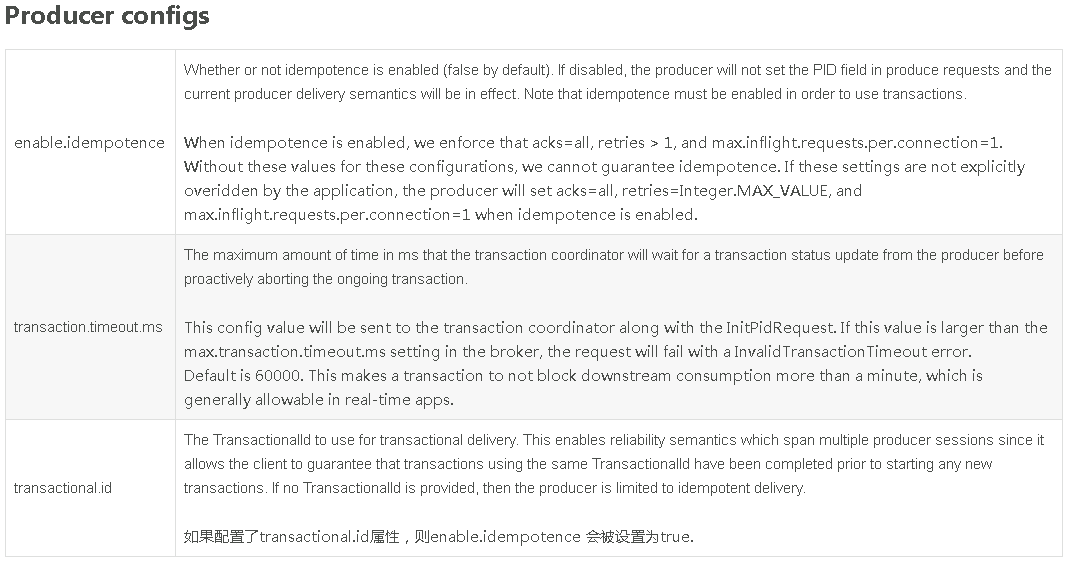
2.4.1 属性配置说明
使用kafka的事务api时的一些注意事项:
a) 需要消费者的自动模式设置为false,并且不能再手动的执行consumer#commitSync或者consumer#commitAsyc
b) 生产者配置transaction.id属性
c) 生产者不需要再配置enable.idempotence,因为如果配置了transaction.id,则此时enable.idempotence会被设置为true
d) 消费者需要配置Isolation.level。在consume-trnasform-produce模式下使用事务时,必须设置为READ_COMMITTED。

2.4.2 只有写
    /**

     * 在一个事务只有生产消息操作

     */

    public void onlyProduceInTransaction() {

        Producer producer = buildProducer();

        // 1.初始化事务

        producer.initTransactions();

        // 2.开启事务

        producer.beginTransaction();

        try {

            // 3.kafka写操作集合

            // 3.1 do业务逻辑

            // 3.2 发送消息

            producer.send(new ProducerRecord<String, String>("test", "transaction-data-1"));

            producer.send(new ProducerRecord<String, String>("test", "transaction-data-2"));

            // 3.3 do其他业务逻辑,还可以发送其他topic的消息。

            // 4.事务提交

            producer.commitTransaction();

        } catch (Exception e) {

            // 5.放弃事务

            producer.abortTransaction();

        }

    }

    /**

     * 需要:

     * 1、设置transactional.id

     * 2、设置enable.idempotence

     * @return

     */

    private Producer buildProducer() {

        // create instance for properties to access producer configs

        Properties props = new Properties();

        // bootstrap.servers是Kafka集群的IP地址。多个时,使用逗号隔开

        props.put("bootstrap.servers", "localhost:9092");

        // 设置事务id

        props.put("transactional.id", "first-transactional");

        // 设置幂等性

        props.put("enable.idempotence",true);

        //Set acknowledgements for producer requests.

        props.put("acks", "all");

        //If the request fails, the producer can automatically retry,

        props.put("retries", 1);

        //Specify buffer size in config,这里不进行设置这个属性,如果设置了,还需要执行producer.flush()来把缓存中消息发送出去

        //props.put("batch.size", 16384);

        //Reduce the no of requests less than 0

        props.put("linger.ms", 1);

        //The buffer.memory controls the total amount of memory available to the producer for buffering.

        props.put("buffer.memory", 33554432);

        // Kafka消息是以键值对的形式发送,需要设置key和value类型序列化器

        props.put("key.serializer",

                "org.apache.kafka.common.serialization.StringSerializer");

        props.put("value.serializer",

                "org.apache.kafka.common.serialization.StringSerializer");

        Producer<String, String> producer = new KafkaProducer<String, String>(props);

        return producer;

    }
2.4.3 消费-生产并存
    /**

     * 在一个事务内,即有生产消息又有消费消息,即常说的Consume-tansform-produce模式

     */

    public void consumeTransferProduce() {

        // 1.构建上产者

        Producer producer = buildProducer();

        // 2.初始化事务(生成productId),对于一个生产者,只能执行一次初始化事务操作

        producer.initTransactions();

        // 3.构建消费者和订阅主题

        Consumer consumer = buildConsumer();

        consumer.subscribe(Arrays.asList("test"));

        while (true) {

            // 4.开启事务

            producer.beginTransaction();

            // 5.1 接受消息

            ConsumerRecords<String, String> records = consumer.poll(500);

            try {

                // 5.2 do业务逻辑;

                System.out.println("customer Message---");

                Map<TopicPartition, OffsetAndMetadata> commits = Maps.newHashMap();

                for (ConsumerRecord<String, String> record : records) {

                    // 5.2.1 读取消息,并处理消息。print the offset,key and value for the consumer records.

                    System.out.printf("offset = %d, key = %s, value = %s\n",

                            record.offset(), record.key(), record.value());

                    // 5.2.2 记录提交的偏移量

                    commits.put(new TopicPartition(record.topic(), record.partition()),

                            new OffsetAndMetadata(record.offset()));

                    // 6.生产新的消息。比如外卖订单状态的消息,如果订单成功,则需要发送跟商家结转消息或者派送员的提成消息

                    producer.send(new ProducerRecord<String, String>("test", "data2"));

                }

                // 7.提交偏移量

                producer.sendOffsetsToTransaction(commits, "group0323");

                // 8.事务提交

                producer.commitTransaction();

            } catch (Exception e) {

                // 7.放弃事务

                producer.abortTransaction();

            }

        }

    }

    /**

     * 需要:

     * 1、关闭自动提交 enable.auto.commit

     * 2、isolation.level为read_committed

     * 而且在代码里面也不能使用手动提交commitSync( )或者commitAsync( )

     * @return

     */

    public Consumer buildConsumer() {

        Properties props = new Properties();

        // bootstrap.servers是Kafka集群的IP地址。多个时,使用逗号隔开

        props.put("bootstrap.servers", "localhost:9092");

        // 消费者群组

        props.put("group.id", "group0323");

        // 设置隔离级别

        props.put("isolation.level","read_committed");

        // 关闭自动提交

        props.put("enable.auto.commit", "false");

        props.put("session.timeout.ms", "30000");

        props.put("key.deserializer",

                "org.apache.kafka.common.serialization.StringDeserializer");

        props.put("value.deserializer",

                "org.apache.kafka.common.serialization.StringDeserializer");

        KafkaConsumer<String, String> consumer = new KafkaConsumer

                <String, String>(props);

        return consumer;

    }
2.4.4 只有读
    /**

     * 在一个事务只有消费消息操作

     * 这种操作其实没有什么意义,跟使用手动提交效果一样,无法保证消费消息操作和提交偏移量操作在一个事务。

     */

    public void onlyConsumeInTransaction() {

        Producer producer = buildProducer();

        // 1.初始化事务

        producer.initTransactions();

        // 2.开启事务

        producer.beginTransaction();

        // 3.kafka读消息的操作集合

        Consumer consumer = buildConsumer();

        while (true) {

            // 3.1 接受消息

            ConsumerRecords<String, String> records = consumer.poll(500);

            try {

                // 3.2 do业务逻辑;

                System.out.println("customer Message---");

                Map<TopicPartition, OffsetAndMetadata> commits = Maps.newHashMap();

                for (ConsumerRecord<String, String> record : records) {

                    // 3.2.1 处理消息 print the offset,key and value for the consumer records.

                    System.out.printf("offset = %d, key = %s, value = %s\n",

                            record.offset(), record.key(), record.value());

                    // 3.2.2 记录提交偏移量

                    commits.put(new TopicPartition(record.topic(), record.partition()),

                            new OffsetAndMetadata(record.offset()));

                }

                // 4.提交偏移量

                producer.sendOffsetsToTransaction(commits, "group0323");

                // 5.事务提交

                producer.commitTransaction();

            } catch (Exception e) {

                // 6.放弃事务

                producer.abortTransaction();

            }

        }

    }
3 幂等性和事务性的关系
3.1 两者关系
事务属性实现前提是幂等性,即在配置事务属性transaction id时,必须还得配置幂等性;但是幂等性是可以独立使用的,不需要依赖事务属性。
幂等性引入了Porducer ID
事务属性引入了Transaction Id属性。
使用场景
enable.idempotence = true,transactional.id不设置:只支持幂等性。

enable.idempotence = true,transactional.id设置:支持事务属性和幂等性

enable.idempotence = false,transactional.id不设置:没有事务属性和幂等性的kafka

enable.idempotence = false,transactional.id设置:无法获取到PID,此时会报错
3.2 tranaction id 、producerId 和 epoch
一个app有一个tid,同一个应用的不同实例PID是一样的,只是epoch的值不同。如: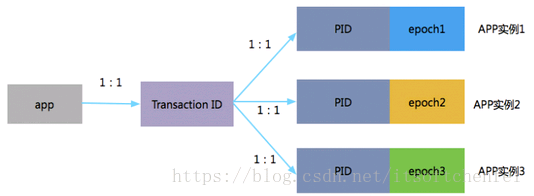
同一份代码运行两个实例,分步执行如下:在实例1没有进行提交事务前,开始执行实例2的初始化事务
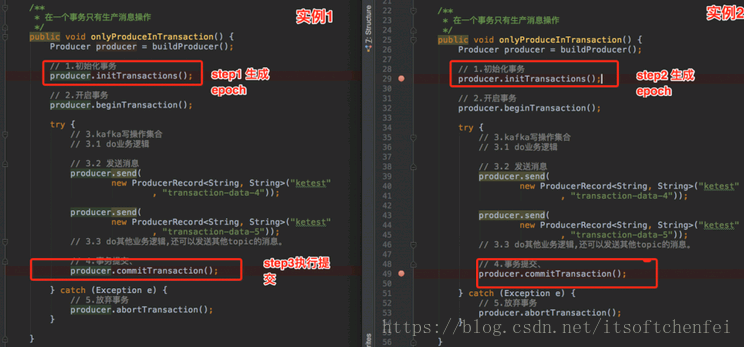
step1 实例1-初始化事务。的打印出对应productId和epoch,信息如下:
[2018-04-21 20:56:23,106] INFO [TransactionCoordinator id=0] Initialized transactionalId first-transactional with producerId 8000 and producer epoch 123 on partition __transaction_state-12 (kafka.coordinator.transaction.TransactionCoordinator)
step2 实例1-发送消息。
step3 实例2-初始化事务。初始化事务时的打印出对应productId和epoch,信息如下:
18-04-21 20:56:48,373] INFO [TransactionCoordinator id=0] Initialized transactionalId first-transactional with producerId 8000 and producer epoch 124 on partition __transaction_state-12 (kafka.coordinator.transaction.TransactionCoordinator)
step4 实例1-提交事务,此时报错
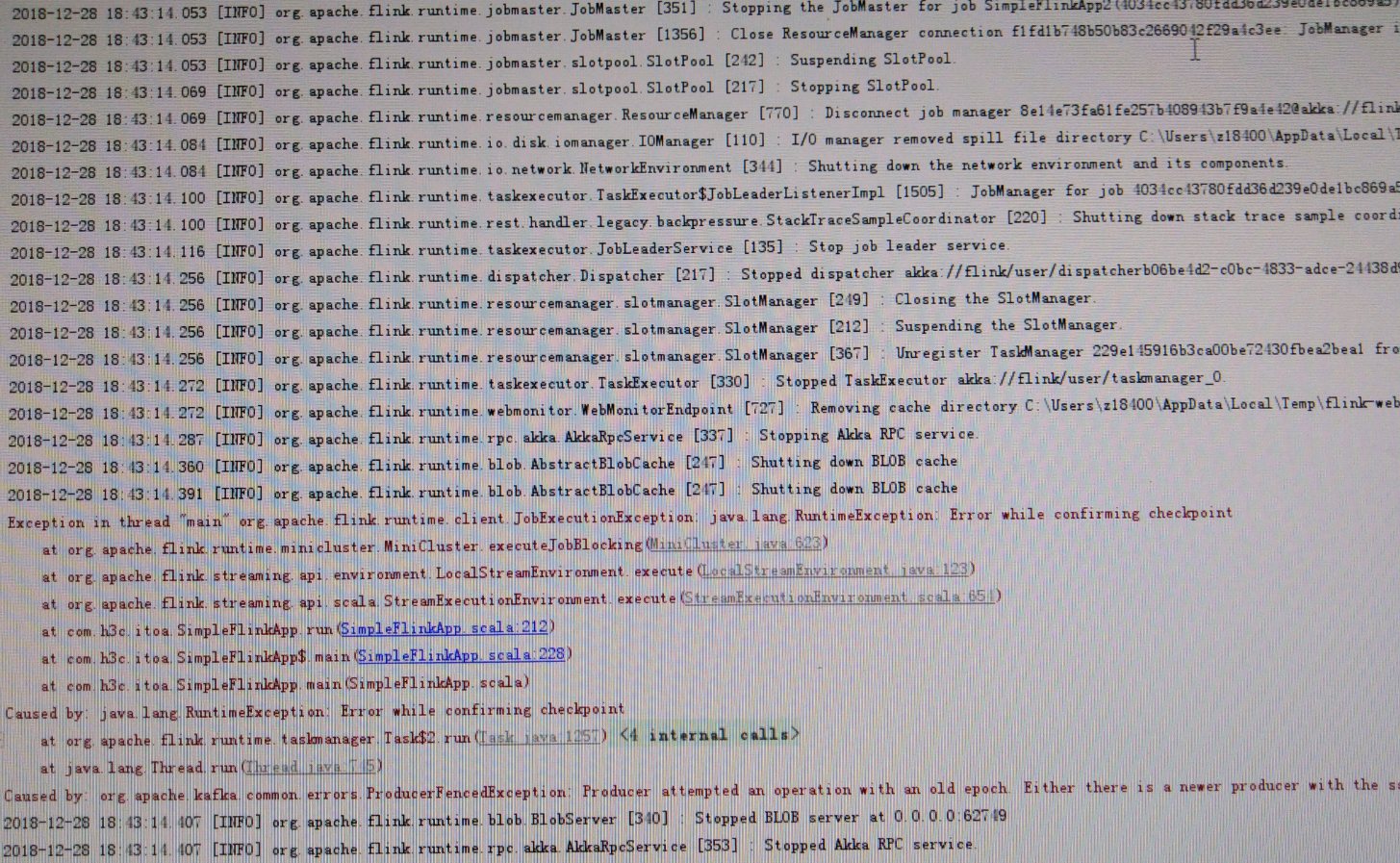
org.apache.kafka.common.errors.ProducerFencedException: Producer attempted an operation with an old epoch. Either there is a newer producer with the same transactionalId, or the producer’s transaction has been expired by the broker.
我今天使用Flink-connector-kafka-0.11时,遇到这个现象
step5 实例2-提交事务
为了避免这种错误,同一个事务ID,只有保证如下顺序epch小producer执行init-transaction和committransaction,然后epoch较大的procuder才能开始执行init-transaction和commit-transaction,如下顺序: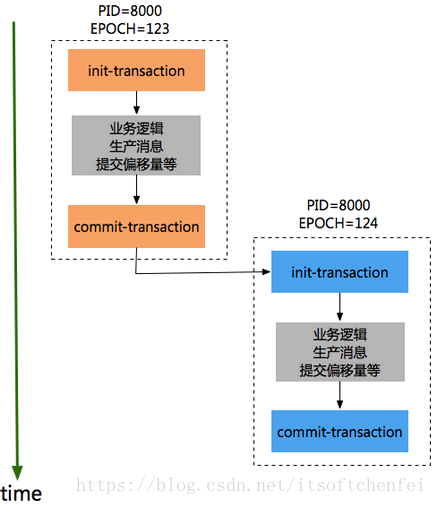
有了transactionId后,Kafka可保证:
跨Session的数据幂等发送。当具有相同Transaction ID的新的Producer实例被创建且工作时,旧的且拥有相同Transaction ID的Producer将不再工作【上面的实例可以验证】。
kafka保证了关联同一个事务的所有producer(一个应用有多个实例)必须按照顺序初始化事务、和提交事务,否则就会有问题,这保证了同一事务ID中消息是有序的(不同实例得按顺序创建事务和提交事务)。
3.3 事务最佳实践-单实例的事务性
通过上面实例中可以看到kafka是跨Session的数据幂等发送,即如果应用部署多个实例时常会遇到上面的问题“org.apache.kafka.common.errors.ProducerFencedException: Producer attempted an operation with an old epoch. Either there is a newer producer with the same transactionalId, or the producer’s transaction has been expired by the broker.”,必须保证这些实例生成者的提交事务顺序和创建顺序保持一致才可以,否则就无法成功。其实,在实践中,我们更多的是如何实现对应用单实例的事务性。可以通过spring-kafaka实现思路来学习,即每次创建生成者都设置一个不同的transactionId的值,如下代码:
在spring-kafka中,对于一个线程创建一个producer,事务提交之后,还会关闭这个producer并清除,后续同一个线程或者新的线程重新执行事务时,此时就会重新创建producer。
public class ProducerFactoryUtils{

/**

     * Obtain a Producer that is synchronized with the current transaction, if any.

     * @param producerFactory the ConnectionFactory to obtain a Channel for

     * @param <K> the key type.

     * @param <V> the value type.

     * @return the resource holder.

     */

    public static <K, V> KafkaResourceHolder<K, V> getTransactionalResourceHolder(

            final ProducerFactory<K, V> producerFactory) {

        Assert.notNull(producerFactory, "ProducerFactory must not be null");

        // 1.对于每一个线程会生成一个唯一key,然后根据key去查找resourceHolder

        @SuppressWarnings("unchecked")

        KafkaResourceHolder<K, V> resourceHolder = (KafkaResourceHolder<K, V>) TransactionSynchronizationManager

                .getResource(producerFactory);

        if (resourceHolder == null) {

            // 2.创建一个消费者

            Producer<K, V> producer = producerFactory.createProducer();

            // 3.开启事务

            producer.beginTransaction();

            resourceHolder = new KafkaResourceHolder<K, V>(producer);

            bindResourceToTransaction(resourceHolder, producerFactory);

        }

        return resourceHolder;

    }

}

//创建消费者代码

public class DefaultKafkaProducerFactory{

    protected Producer<K, V> createTransactionalProducer() {

        Producer<K, V> producer = this.cache.poll();

        if (producer == null) {

            Map<String, Object> configs = new HashMap<>(this.configs);

            // 对于每一次生成producer时,都设置一个不同的transactionId

            configs.put(ProducerConfig.TRANSACTIONAL_ID_CONFIG,

                    this.transactionIdPrefix + this.transactionIdSuffix.getAndIncrement());

            producer = new KafkaProducer<K, V>(configs, this.keySerializer, this.valueSerializer);

            // 1.初始化话事务。

            producer.initTransactions();

            return new CloseSafeProducer<K, V>(producer, this.cache);

        }

        else {

            return producer;

        }

    }

}
3.4 Consume-transform-Produce的流程

流程1 :查找Tranaction Corordinator。
Producer向任意一个brokers发送 FindCoordinatorRequest请求来获取Transaction Coordinator的地址。
流程2:初始化事务 initTransaction
Producer发送InitpidRequest给事务协调器,获取一个Pid。InitpidRequest的处理过程是同步阻塞的,一旦该调用正确返回,Producer就可以开始新的事务。
TranactionalId通过InitpidRequest发送给Tranciton Corordinator,然后在Tranaciton Log中记录这<TranacionalId,pid>的映射关系。
除了返回PID之外,还具有如下功能:
对PID对应的epoch进行递增,这样可以保证同一个app的不同实例对应的PID是一样的,但是epoch是不同的。
回滚之前的Producer未完成的事务(如果有)。
流程3: 开始事务beginTransaction
执行Producer的beginTransacion(),它的作用是Producer在本地记录下这个transaction的状态为开始状态。
注意:这个操作并没有通知Transaction Coordinator。
流程4: Consume-transform-produce loop
流程4.0: 通过Consumtor消费消息,处理业务逻辑
流程4.1: producer向TransactionCordinantro发送AddPartitionsToTxnRequest
在producer执行send操作时,如果是第一次给<topic,partion>发送数据,此时会向Trasaction Corrdinator发送一个AddPartitionsToTxnRequest请求,
Transaction Corrdinator会在transaction log中记录下tranasactionId和<topic,partion>一个映射关系,并将状态改为begin。AddPartionsToTxnRequest的数据结构如下:
AddPartitionsToTxnRequest => TransactionalId PID Epoch [Topic [Partition]]
TransactionalId => string
PID => int64
Epoch => int16
Topic => string
Partition => int32
流程4.2: producer#send发送 ProduceRequst,生产者发送数据,虽然没有还没有执行commit或者absrot,但是此时消息已经保存到kafka上,
可以参考如下图断点位置处,此时已经可以查看到消息了,而且即使后面执行abort,消息也不会删除,只是更改状态字段标识消息为abort状态。
流程4.3: AddOffsetCommitsToTxnRequest,Producer通过KafkaProducer.sendOffsetsToTransaction 向事务协调器器发送一个AddOffesetCommitsToTxnRequests:
AddOffsetsToTxnRequest => TransactionalId PID Epoch ConsumerGroupID
TransactionalId => string
PID => int64
Epoch => int16
ConsumerGroupID => string
在执行事务提交时,可以根据ConsumerGroupID来推断_customer_offsets主题中相应的TopicPartions信息。这样在
流程4.4: TxnOffsetCommitRequest,Producer通过KafkaProducer.sendOffsetsToTransaction还会向消费者协调器Cosumer Corrdinator发送一个TxnOffsetCommitRequest,在主题_consumer_offsets中保存消费者的偏移量信息。
TxnOffsetCommitRequest => ConsumerGroupID
PID
Epoch
RetentionTime
OffsetAndMetadata
ConsumerGroupID => string
PID => int64
Epoch => int32
RetentionTime => int64
OffsetAndMetadata => [TopicName [Partition Offset Metadata]]
TopicName => string
Partition => int32
Offset => int64
Metadata => string
流程5: 事务提交和事务终结(放弃事务),通过生产者的commitTransaction或abortTransaction方法来提交事务和终结事务,这两个操作都会发送一个EndTxnRequest给Transaction Coordinator。
流程5.1:EndTxnRequest。Producer发送一个EndTxnRequest给Transaction Coordinator,然后执行如下操作:
Transaction Coordinator会把PREPARE_COMMIT or PREPARE_ABORT 消息写入到transaction log中记录
执行流程5.2
执行流程5.3
流程5.2:WriteTxnMarkerRequest
WriteTxnMarkersRequest => [CoorinadorEpoch PID Epoch Marker [Topic [Partition]]]
CoordinatorEpoch => int32
PID => int64
Epoch => int16
Marker => boolean (false(0) means ABORT, true(1) means COMMIT)
Topic => string
Partition => int32
对于Producer生产的消息。Tranaction Coordinator会发送WriteTxnMarkerRequest给当前事务涉及到每个<topic,partion>的leader,leader收到请求后,会写入一个COMMIT(PID) 或者 ABORT(PID)的控制信息到data log中
对于消费者偏移量信息,如果在这个事务里面包含_consumer-offsets主题。Tranaction Coordinator会发送WriteTxnMarkerRequest给Transaction Coordinartor,Transaction Coordinartor收到请求后,
会写入一个COMMIT(PID) 或者 ABORT(PID)的控制信息到 data log中
流程5.3:Transaction Coordinator会将最终的COMPLETE_COMMIT或COMPLETE_ABORT消息写入Transaction Log中以标明该事务结束。
只会保留这个事务对应的PID和timstamp。然后把当前事务其他相关消息删除掉,包括PID和tranactionId的映射关系。
3.4.1 文件类型和查看命令
kafka文件主要包括broker的data(主题:test)、事务协调器对应的transaction_log(主题:__tranaction_state)、偏移量信息(主题:_consumer_offsets)三种类型。
如下图
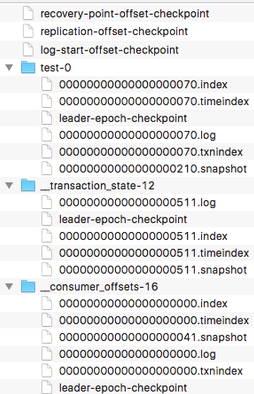
这三种文件类型其实都是topic的分区,所以对于每一个目录都包含*.log、*.index、*.timeindex、*.txnindex文件(仅这个文件是为了实现事务属性引入的)。
查看文件内容:
bin/kafka-run-class.sh kafka.tools.DumpLogSegments –files /kafka-logs/firtstopic-0/00000000000000000002.log –print-data-log
kafka 幂等生产者及事务(kafka0.11之后版本新特性)的更多相关文章
- Kafka 幂等生产者和事务生产者特性(讨论基于 kafka-python | confluent-kafka 客户端)
Kafka 提供了一个消息交付可靠性保障以及精确处理一次语义的实现.通常来说消息队列都提供多种消息语义保证 最多一次 (at most once): 消息可能会丢失,但绝不会被重复发送. 至少一次 ( ...
- 微信小程序0.11.122100版本新功能解析
微信小程序0.11.122100版本新功能解析 新版本就不再吐槽了,整的自己跟个愤青似的.人老了,喷不动了,把机会留给年轻人吧.下午随着新版本开放,微信居然破天荒的开放了开发者论坛.我很是担心官方 ...
- Mysql8.0.11简介,新特性
MySQL 8.0 正式版 8.0.11 已发布,官方表示 MySQL 8 要比 MySQL 5.7 快 2 倍,还带来了大量的改进和更快的性能! 注意:从 MySQL 5.7 升级到 MySQL 8 ...
- RAC 11.2的新特性
网格即插即用(GPnP) 网格即插即用帮助管理员来维护集群,以前增加或删除节点需要的一些手动操作的步骤现在可以由GPnP来自动实现. GPnP不是一个单独的概念,它依赖于以下特性:在一个XML配置文件 ...
- JAVA学习第二十七课(多线程(六))- 多生产者多消费者问题(JDK1.5新特性)
多生产者多消费者问题 以生产馒头 消费馒头为例. class Resource { private String name; private int count = 1; private boolea ...
- jdk 9 10 11 12 13 新特性
jdk 9 新特性 1.集合加强 jdk9 为所有集合(List/Set/Map)都增加了 of 和 copyOf 方法,用来创建不可变集合,即一旦创建就无法再执行添加.删除.替换.排序等操作,否则将 ...
- C++11的模板新特性-变长参数的模板
这个特性很赞,直接给例子吧,假如我要设计一个类,CachedFetcher内部可能使用std::map也可能使用std::unordered_map,也可能是其它的map,怎么设计呢?没有C++11变 ...
- C++11的一些新特性
3.1.9崭新的Template特性 Variadic Template 可变参数模板 void print() { } template <typename T, typename… Type ...
- C++11 带来的新特性 (4)—— 匿名函数(Lambdas)
1 语法 Lambdas并不是新概念,在其它语言中已经烂大街了.直接进入主题,先看语法: [ captures ] ( params ) specifiers exception attr -> ...
随机推荐
- Thread部分总结以及小例子
Thread总结:一直以来用thread比较多,一般会在同步以及ui中用到.以下对于经常用作为简单介绍.一 实现方法: 一种直接new thread,另外一种是实现Runnable接口,在创建thre ...
- .NET Core 获取操作系统各种信息
.NET Core 获取操作系统各种信息 一.前言 .NET Core 内置了一些API供我们获取操作系统.运行时.框架等信息.这些API不是很常用,所有有些小伙伴可能还不知道,这里做一些可能用到的获 ...
- Protostuff序列化分析
前言最近项目中需要将业务对象直接序列化,然后存数据库:考虑到序列化.反序列化的时间以及生产文件的大小觉得Protobuf是一个很好的选择,但是Protobuf有的问题就是需要有一个.proto的描述文 ...
- Vert.x 线程模型揭秘
来源:鸟窝, colobu.com/2016/03/31/vertx-thread-model/ 如有好文章投稿,请点击 → 这里了解详情 Vert.x是一个在JVM开发reactive应用的框架,可 ...
- 【建图+拓扑判环】BZOJ3953: [WF2013]Self-Assembly
Description 自动化学制造(Automatic Chemical Manufacturing,简称ACM)正在对一个叫自组装(self-assembly)的过程进行实验.在这个过程中,有着天 ...
- 【最小生成树+贪心】BZOJ1821: [JSOI2010]Group 部落划分 Group
Description 聪聪研究发现,荒岛野人总是过着群居的生活,但是,并不是整个荒岛上的所有野人都属于同一个部落,野人们总是拉帮结派形成属于自己的部落,不同的部落之间则经常发生争斗.只是,这一切都成 ...
- bzoj 3166 可持久化Tire
每一个数能做出的贡献就是其两端第二个比他大的中间的数和他的异或值 按权值大小排序,按照位置扔进set,set内的元素都是比他大的,也是全的 然后Tire上跑就行了.. #include<cstd ...
- 【Canal源码分析】Canal Instance启动和停止
一.序列图 1.1 启动 1.2 停止 二.源码分析 2.1 启动 这部分代码其实在ServerRunningMonitor的start()方法中.针对不同的destination,启动不同的Cana ...
- 说说 input 输入框的事件
从input框获取焦点到,输入值,失去焦点这个过程所有事件,以及一些特点: 1.过程 onfocus -> 键盘输入 -> onkeydown -> onkeypress -> ...
- cmd 【已解决】windows连接手机,运行adb devices提示“unauthorized”
报错截图如下: 问题原因:电脑连接手机.手机未授权 解决方式: 设置----开发者选项-----打开USB调试,出现如下弹框,点击"确定"即可解决问题.