
Python使用PDFMiner解析PDF
近期在做爬虫时有时会遇到网站只提供pdf的情况,这样就不能使用scrapy直接抓取页面内容了,只能通过解析PDF的方式处理,目前的解决方案大致只有pyPDF和PDFMiner。因为据说PDFMiner更适合文本的解析,而我需要解析的正是文本,因此最后选择使用PDFMiner(这也就意味着我对pyPDF一无所知了)。
首先说明的是解析PDF是非常蛋疼的事,即使是PDFMiner对于格式不工整的PDF解析效果也不怎么样,所以连PDFMiner的开发者都吐槽PDF is evil. 不过这些并不重要。官方文档在此:http://www.unixuser.org/~euske/python/pdfminer/index.html
一.安装:
1.首先下载源文件包 http://pypi.python.org/pypi/pdfminer/,解压,然后命令行安装即可:python setup.py install
2.安装完成后使用该命令行测试:pdf2txt.py samples/simple1.pdf,如果显示以下内容则表示安装成功:
Hello World Hello World H e l l o W o r l d H e l l o W o r l d
3.如果要使用中日韩文字则需要先编译再安装:
# make cmap
python tools/conv_cmap.py pdfminer/cmap Adobe-CNS1 cmaprsrc/cid2code_Adobe_CNS1.txtreading 'cmaprsrc/cid2code_Adobe_CNS1.txt'...writing 'CNS1_H.py'......(this may take several minutes)
# python setup.py install
二.使用
由于解析PDF是一件非常耗时和内存的工作,因此PDFMiner使用了一种称作lazy parsing的策略,只在需要的时候才去解析,以减少时间和内存的使用。要解析PDF至少需要两个类:PDFParser 和 PDFDocument,PDFParser 从文件中提取数据,PDFDocument保存数据。另外还需要PDFPageInterpreter去处理页面内容,PDFDevice将其转换为我们所需要的。PDFResourceManager用于保存共享内容例如字体或图片。
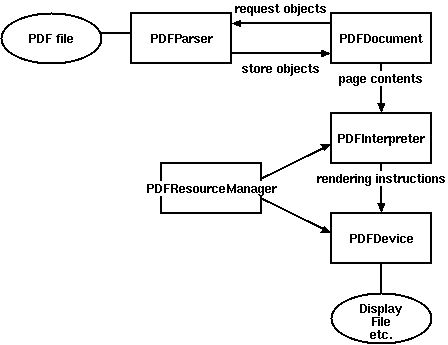
Figure 1. Relationships between PDFMiner classes
比较重要的是Layout,主要包括以下这些组件:
LTPage
Represents an entire page. May contain child objects like LTTextBox, LTFigure, LTImage, LTRect, LTCurve and LTLine.
LTTextBox
Represents a group of text chunks that can be contained in a rectangular area. Note that this box is created by geometric analysis and does not necessarily represents a logical boundary of the text. It contains a list of LTTextLine objects. get_text() method returns the text content.
LTTextLine
Contains a list of LTChar objects that represent a single text line. The characters are aligned either horizontaly or vertically, depending on the text's writing mode. get_text() method returns the text content.
LTChar
LTAnno
Represent an actual letter in the text as a Unicode string. Note that, while a LTChar object has actual boundaries, LTAnno objects does not, as these are "virtual" characters, inserted by a layout analyzer according to the relationship between two characters (e.g. a space).
LTFigure
Represents an area used by PDF Form objects. PDF Forms can be used to present figures or pictures by embedding yet another PDF document within a page. Note that LTFigure objects can appear recursively.
LTImage
Represents an image object. Embedded images can be in JPEG or other formats, but currently PDFMiner does not pay much attention to graphical objects.
LTLine
Represents a single straight line. Could be used for separating text or figures.
LTRect
Represents a rectangle. Could be used for framing another pictures or figures.
LTCurve
Represents a generic Bezier curve.
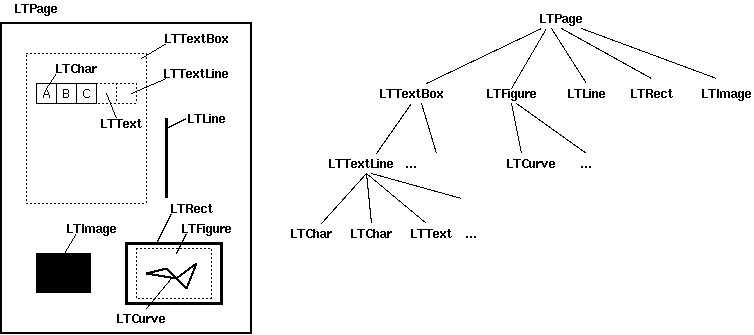
Figure 2. Layout objects and its tree structure
官方文档给了几个Demo但是都过于简略,虽然给了一个详细一些的Demo,但链接地址是旧的现在已经失效,不过最终还是找到了新的地址:http://denis.papathanasiou.org/posts/2010.08.04.post.html
这个Demo就比较详细了,源码如下:
 #!/usr/bin/python

 import sys

 import os

 from binascii import b2a_hex

 ###

 ### pdf-miner requirements

 ###

 from pdfminer.pdfparser import PDFParser

 from pdfminer.pdfdocument import PDFDocument, PDFNoOutlines

 from pdfminer.pdfpage import PDFPage

 from pdfminer.pdfinterp import PDFResourceManager, PDFPageInterpreter

 from pdfminer.converter import PDFPageAggregator

 from pdfminer.layout import LAParams, LTTextBox, LTTextLine, LTFigure, LTImage, LTChar

 def with_pdf (pdf_doc, fn, pdf_pwd, *args):

     """Open the pdf document, and apply the function, returning the results"""

     result = None

     try:

         # open the pdf file

         fp = open(pdf_doc, 'rb')

         # create a parser object associated with the file object

         parser = PDFParser(fp)

         # create a PDFDocument object that stores the document structure

         doc = PDFDocument(parser, pdf_pwd)

         # connect the parser and document objects

         parser.set_document(doc)

         # supply the password for initialization

         if doc.is_extractable:

             # apply the function and return the result

             result = fn(doc, *args)

         # close the pdf file

         fp.close()

     except IOError:

         # the file doesn't exist or similar problem

         pass

     return result

 ###

 ### Table of Contents

 ###

 def _parse_toc (doc):

     """With an open PDFDocument object, get the table of contents (toc) data

     [this is a higher-order function to be passed to with_pdf()]"""

     toc = []

     try:

         outlines = doc.get_outlines()

         for (level,title,dest,a,se) in outlines:

             toc.append( (level, title) )

     except PDFNoOutlines:

         pass

     return toc

 def get_toc (pdf_doc, pdf_pwd=''):

     """Return the table of contents (toc), if any, for this pdf file"""

     return with_pdf(pdf_doc, _parse_toc, pdf_pwd)

 ###

 ### Extracting Images

 ###

 def write_file (folder, filename, filedata, flags='w'):

     """Write the file data to the folder and filename combination

     (flags: 'w' for write text, 'wb' for write binary, use 'a' instead of 'w' for append)"""

     result = False

     if os.path.isdir(folder):

         try:

             file_obj = open(os.path.join(folder, filename), flags)

             file_obj.write(filedata)

             file_obj.close()

             result = True

         except IOError:

             pass

     return result

 def determine_image_type (stream_first_4_bytes):

     """Find out the image file type based on the magic number comparison of the first 4 (or 2) bytes"""

     file_type = None

     bytes_as_hex = b2a_hex(stream_first_4_bytes)

     if bytes_as_hex.startswith('ffd8'):

         file_type = '.jpeg'

     elif bytes_as_hex == '89504e47':

         file_type = '.png'

     elif bytes_as_hex == '':

         file_type = '.gif'

     elif bytes_as_hex.startswith('424d'):

         file_type = '.bmp'

     return file_type

 def save_image (lt_image, page_number, images_folder):

     """Try to save the image data from this LTImage object, and return the file name, if successful"""

     result = None

     if lt_image.stream:

         file_stream = lt_image.stream.get_rawdata()

         if file_stream:

             file_ext = determine_image_type(file_stream[0:4])

             if file_ext:

                 file_name = ''.join([str(page_number), '_', lt_image.name, file_ext])

                 if write_file(images_folder, file_name, file_stream, flags='wb'):

                     result = file_name

     return result

 ###

 ### Extracting Text

 ###

 def to_bytestring (s, enc='utf-8'):

     """Convert the given unicode string to a bytestring, using the standard encoding,

     unless it's already a bytestring"""

     if s:

         if isinstance(s, str):

             return s

         else:

             return s.encode(enc)

 def update_page_text_hash (h, lt_obj, pct=0.2):

     """Use the bbox x0,x1 values within pct% to produce lists of associated text within the hash"""

     x0 = lt_obj.bbox[0]

     x1 = lt_obj.bbox[2]

     key_found = False

     for k, v in h.items():

         hash_x0 = k[0]

         if x0 >= (hash_x0 * (1.0-pct)) and (hash_x0 * (1.0+pct)) >= x0:

             hash_x1 = k[1]

             if x1 >= (hash_x1 * (1.0-pct)) and (hash_x1 * (1.0+pct)) >= x1:

                 # the text inside this LT* object was positioned at the same

                 # width as a prior series of text, so it belongs together

                 key_found = True

                 v.append(to_bytestring(lt_obj.get_text()))

                 h[k] = v

     if not key_found:

         # the text, based on width, is a new series,

         # so it gets its own series (entry in the hash)

         h[(x0,x1)] = [to_bytestring(lt_obj.get_text())]

     return h

 def parse_lt_objs (lt_objs, page_number, images_folder, text=[]):

     """Iterate through the list of LT* objects and capture the text or image data contained in each"""

     text_content = []

     page_text = {} # k=(x0, x1) of the bbox, v=list of text strings within that bbox width (physical column)

     for lt_obj in lt_objs:

         if isinstance(lt_obj, LTTextBox) or isinstance(lt_obj, LTTextLine):

             # text, so arrange is logically based on its column width

             page_text = update_page_text_hash(page_text, lt_obj)

         elif isinstance(lt_obj, LTImage):

             # an image, so save it to the designated folder, and note its place in the text

             saved_file = save_image(lt_obj, page_number, images_folder)

             if saved_file:

                 # use html style <img /> tag to mark the position of the image within the text

                 text_content.append('<img src="'+os.path.join(images_folder, saved_file)+'" />')

             else:

                 print >> sys.stderr, "error saving image on page", page_number, lt_obj.__repr__

         elif isinstance(lt_obj, LTFigure):

             # LTFigure objects are containers for other LT* objects, so recurse through the children

             text_content.append(parse_lt_objs(lt_obj, page_number, images_folder, text_content))

     for k, v in sorted([(key,value) for (key,value) in page_text.items()]):

         # sort the page_text hash by the keys (x0,x1 values of the bbox),

         # which produces a top-down, left-to-right sequence of related columns

         text_content.append(''.join(v))

     return '\n'.join(text_content)

 ###

 ### Processing Pages

 ###

 def _parse_pages (doc, images_folder):

     """With an open PDFDocument object, get the pages and parse each one

     [this is a higher-order function to be passed to with_pdf()]"""

     rsrcmgr = PDFResourceManager()

     laparams = LAParams()

     device = PDFPageAggregator(rsrcmgr, laparams=laparams)

     interpreter = PDFPageInterpreter(rsrcmgr, device)

     text_content = []

     for i, page in enumerate(PDFPage.create_pages(doc)):

         interpreter.process_page(page)

         # receive the LTPage object for this page

         layout = device.get_result()

         # layout is an LTPage object which may contain child objects like LTTextBox, LTFigure, LTImage, etc.

         text_content.append(parse_lt_objs(layout, (i+1), images_folder))

     return text_content

 def get_pages (pdf_doc, pdf_pwd='', images_folder='/tmp'):

     """Process each of the pages in this pdf file and return a list of strings representing the text found in each page"""

     return with_pdf(pdf_doc, _parse_pages, pdf_pwd, *tuple([images_folder]))

 a = open('a.txt','a')

 for i in get_pages('/home/jamespei/nova.pdf'):

     a.write(i)

 a.close()
这段代码重点在于第128行,可以看到PDFMiner是一种基于坐标来解析的框架,PDF中能解析的组件全都包括上下左右边缘的坐标,如x0 = lt_obj.bbox[0]就是lt_obj元素的左边缘的坐标,同理x1则为右边缘。以上代码的意思就是把所有x0且x1的坐标相差在20%以内的元素分成一组,这样就实现了从PDF文件中定向抽取内容。
---------------------------补充-------------------------
有一个需要注意的地方,在解析有些PDF的时候会报这样的异常:pdfminer.pdfdocument.PDFEncryptionError: Unknown algorithm: param={'CF': {'StdCF': {'Length': 16, 'CFM': /AESV2, 'AuthEvent': /DocOpen}}, 'O': '\xe4\xe74\xb86/\xa8)\xa6x\xe6\xa3/U\xdf\x0fWR\x9cPh\xac\xae\x88B\x06_\xb0\x93@\x9f\x8d', 'Filter': /Standard, 'P': -1340, 'Length': 128, 'R': 4, 'U': '|UTX#f\xc9V\x18\x87z\x10\xcb\xf5{\xa7\x00\x00\x00\x00\x00\x00\x00\x00\x00\x00\x00\x00\x00\x00\x00\x00', 'V': 4, 'StmF': /StdCF, 'StrF': /StdCF}
从字面意思来看是因为这个PDF是一个加密的PDF,所以无法解析 ,但是如果直接打开PDF却是可以的并没有要求输密码什么的,原因是这个PDF虽然是加过密的,但密码是空,所以就出现了这样的问题。
解决这个的问题的办法是通过qpdf命令来解密文件(要确保已经安装了qpdf),要想在python中调用该命令只需使用call即可:
 from subprocess import call

 call('qpdf --password=%s --decrypt %s %s' %('', file_path, new_file_path), shell=True)
其中参数file_path是要解密的PDF的路径,new_file_path是解密后的PDF文件路径,然后使用解密后的文件去做解析就OK了
Python使用PDFMiner解析PDF的更多相关文章
- Python解析PDF三法
span{line-height:2em} --> 最近做调研想知道一些NZ当地的旅游信息,于是在NZ留学的友人自高奋勇地帮我去各个加油站拿了一堆旅游小册子,扫描了发给我. 但是他扫描出的高清图 ...
- pdfminer实现pdf布局分析 python (pdfminer realize layout analysis with PDF python)
使用pdfminer实现pdf文件的布局分析 python 参考资料: https://github.com/euske/pdfminer https://stackoverflow.com/ques ...
- Python3.x:PDFMiner3k在线、本地解析pdf
Python3.x:PDFMiner3k在线.本地解析pdf 安装 pip install pdfminer3k 示例一:在线解析pdf ''' Demo:pdf2htmlex解析pdf Dateti ...
- python3使用pdfminer3k解析pdf文件
安装pdfminer模块 pip3 install pdfminer3k 代码如下 #!/usr/bin/env python # coding:utf8 # author:Z time:2018/7 ...
- 【转】Python 深入浅出 - PyPDF2 处理 PDF 文件
实际应用中,可能会涉及处理 pdf 文件,PyPDF2 就是这样一个库,使用它可以轻松的处理 pdf 文件,它提供了读,割,合并,文件转换等多种操作. 文档地址:http://pythonhosted ...
- 用python写网路爬虫 PDF高清完整版免费下载 Python基础教程免费电子书 python入门书籍免费下载
<用python写网路爬虫PDF免费下载>PDF书籍下载 内容简介 作为一种便捷地收集网上信息并从中抽取出可用信息的方式,网络爬虫技术变得越来越有用.使用Python这样的简单编程语言,你 ...
- python学习(解析python官网会议安排)
在学习python的过程中,做练习,解析https://www.python.org/events/python-events/ HTML文件,输出Python官网发布的会议时间.名称和地点. 对ht ...
- WPF解析PDF为图片
偶遇需要解析PDF文件为单张图,此做, http://git.oschina.net/jiailiuyan/OfficeDecoder using System; using System.Colle ...
- Apache-Tika解析PDF文档
通常在使用爬虫时,爬取到网上的文章都是各式各样的格式处理起来比较麻烦,这里我们使用Apache-Tika来处理PDF格式的文章,如下: package com.mengyao.tika.app; im ...
随机推荐
- Example015实现html中checkbox的全选和反选(2)
<!DOCTYPE html> <html lang="en"> <head> <meta charset="UTF-8&quo ...
- Building Apps for Windows 10 on LattePanda–Jump Start
1.引言 目前来看,LattePanda应该是最小的运行Full Windows 10系统的开发板了(注意,不是Windows 10 for Mobile,也不是Windows 10 IoT系列,而是 ...
- jsp 按钮颜色
jsp 按钮颜色 第一种方法 <input style= "color:#FF0000;background-color:#00FF00;" type="butto ...
- 腾讯云centos7服务器环境搭建,tomcat+jdk+mysql+nginx
软件:jdk 1.8.0_45 tomcat 8.5.8 mysql 5.6.36 nginx 1.10.x或以上 其中tomcat在centos6.8中没问题,centos7中会出现卡在启动那里 I ...
- 使用Vue-resource完成交互
使用vue-resource 引入vue-resource vue-resource就像jQuery里的$.ajax,是用来跟后端交互数据的,vue-resource是vue的一个插件,所以我们在开始 ...
- Java Listener pattern 监听者模式
Java Listener pattern 监听者模式 2016-5-12 监听者模式(观察者模式)能降低对象之间耦合程度.为两个相互依赖调用的类进行解耦. 便于进行模块化开发工作.不同模块的开发者可 ...
- input复选框操作的部分高频率使用代码
1. 获取单个checkbox选中项(三种写法): $("input:checkbox:checked").val() 或者 $("input:[type='checkb ...
- 手机摄像头扫描识别车牌号,移动端车牌识别sdk
一.移动端车牌识别应用背景 (技术交流:18701686857 QQ:283870550) 随着经济水平的不断提高,汽车数量的不断激增为汽车管理带来了不小的难度.路边违章停车的现象越来越频繁.现在, ...
- js实现日期显示的一些操作
1.js获取当前日期(yyyy-mm-dd) 以下代码是获取到的当前日期: var myDate = new Date(); var year = myDate.getFullYear(); //获取 ...
- 前端十万个为什么(之一):我们为什么需要npm?
p.p1 { margin: 0.0px 0.0px 0.0px 0.0px; font: 12.0px ".PingFang SC"; color: #454545 } span ...