
Linq 集合操作
Linq 集合操作
演示代码
两个对象一个是Person,一个Address, AddressId是外键,
public class Person

{

public string ID { get; set; }

public string Name { get; set; }

public int Age { get; set; }

public double Salary { get; set; }

public DateTime Born { get; set; }

public int IdAddress { get; set; }

}

public class Address

{

public int IdAddress { get; set; }

public string Street { get; set; }

public int Num { get; set; }

public string City { get; set; }

}
测试数据如下
Person类

Address类

下面我会用7个方式实现7中集合操作
- INNER JOIN 内链接
- LEFT JOIN 左连接
- RIGHT JOIN 右链接
- FULL OUTER JOIN 所有
- LEFT JOIN EXCLUDING INNER JOIN 左空
- RIGHT JOIN EXCLUDING INNER JOIN 右空
- FULL OUTER JOIN EXCLUDING INNER JOIN ??
学校数学没学好不知道专业术语!哈哈
INNER JOIN
最常用的方法,两表关联查询
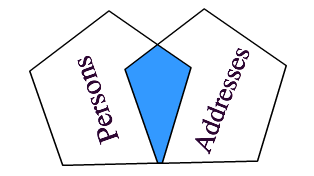
标准Linq语法
var result = from p in Person.BuiltPersons()

join a in Address.BuiltAddresses()

on p.IdAddress equals a.IdAddress

select new

     {

Name = a.MyPerson.Name,

Age = a.MyPerson.Age,

PersonIdAddress = a.MyPerson.IdAddress,

AddressIdAddress = a.MyAddress.IdAddress,

Street = a.MyAddress.Street

     };
Lambda Expression:
var resultJoint = Person.BuiltPersons().Join( /// Source Collection

Address.BuiltAddresses(), /// Inner Collection

p => p.IdAddress, /// PK

a => a.IdAddress, /// FK

(p, a) => new { MyPerson = p, MyAddress = a }) /// Result Collection

.Select(a => new

{

Name = a.MyPerson.Name,

Age = a.MyPerson.Age,

PersonIdAddress = a.MyPerson.IdAddress,

AddressIdAddress = a.MyAddress.IdAddress,

Street = a.MyAddress.Street

});
Lambda表达式主要有5部分
- Is the main Collection.
- Is the inner Collection.
- Is the PK.
- Is the FK.
- Is the type for the result collection.
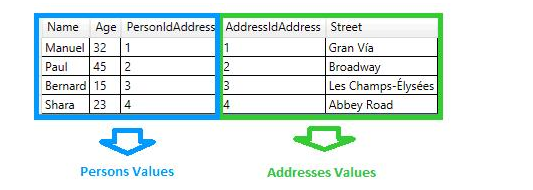
查询结果如下
LEFT JOIN

新增一个LeftJoin的扩展方法
public static IEnumerable<TResult>

    LeftJoin<TSource, TInner, TKey, TResult>(this IEnumerable<TSource> source,

IEnumerable<TInner> inner,

Func<TSource, TKey> pk,

Func<TInner, TKey> fk,

Func<TSource, TInner, TResult> result)

{

IEnumerable<TResult> _result = Enumerable.Empty<TResult>();

_result = from s in source

join i in inner

on pk(s) equals fk(i) into joinData

from left in joinData.DefaultIfEmpty()

select result(s, left);

return _result;

}
Lambda Expression:
var resultJoint = Person.BuiltPersons().LeftJoin( /// Source Collection

Address.BuiltAddresses(), /// Inner Collection

p => p.IdAddress, /// PK

a => a.IdAddress, /// FK

(p, a) => new { MyPerson = p, MyAddress = a }) /// Result Collection

.Select(a => new

{

Name = a.MyPerson.Name,

Age = a.MyPerson.Age,

PersonIdAddress = a.MyPerson.IdAddress,

AddressIdAddress = (a.MyAddress != null ? a.MyAddress.IdAddress : -1),

            Street = (a.MyAddress != null ? a.MyAddress.Street : "Null-Value")

});
注意:如果address为空Null需要做一个替换,否则会报错
查询结果如下

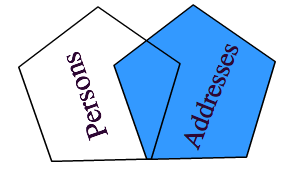
RIGHT JOIN
Extension Method:
public static IEnumerable<TResult>

    RightJoin<TSource, TInner, TKey, TResult>(this IEnumerable<TSource> source,

IEnumerable<TInner> inner,

Func<TSource, TKey> pk,

Func<TInner, TKey> fk,

Func<TSource, TInner, TResult> result)

{

IEnumerable<TResult> _result = Enumerable.Empty<TResult>();

_result = from i in inner

join s in source

on fk(i) equals pk(s) into joinData

from right in joinData.DefaultIfEmpty()

select result(right, i);

return _result;

}
Lambda Expression:
var resultJoint = Person.BuiltPersons().RightJoin( /// Source Collection

Address.BuiltAddresses(), /// Inner Collection

p => p.IdAddress, /// PK

a => a.IdAddress, /// FK

(p, a) => new { MyPerson = p, MyAddress = a }) /// Result Collection

.Select(a => new

{

Name = (a.MyPerson != null ? a.MyPerson.Name : "Null-Value"),

Age = (a.MyPerson != null ? a.MyPerson.Age : -1),

PersonIdAddress = (a.MyPerson != null ? a.MyPerson.IdAddress : -1),

AddressIdAddress = a.MyAddress.IdAddress,

Street = a.MyAddress.Street

});
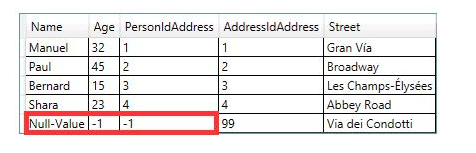
查询结果如下
FULL OUTER JOIN

Extension Method:
public static IEnumerable<TResult>

    FullOuterJoinJoin<TSource, TInner, TKey, TResult>(this IEnumerable<TSource> source,

IEnumerable<TInner> inner,

Func<TSource, TKey> pk,

Func<TInner, TKey> fk,

Func<TSource, TInner, TResult> result)

{

var left = source.LeftJoin(inner, pk, fk, result).ToList();

var right = source.RightJoin(inner, pk, fk, result).ToList();

return left.Union(right);

}
Lambda Expression:
var resultJoint = Person.BuiltPersons().FullOuterJoinJoin( /// Source Collection

Address.BuiltAddresses(), /// Inner Collection

p => p.IdAddress, /// PK

a => a.IdAddress, /// FK

(p, a) => new { MyPerson = p, MyAddress = a }) /// Result Collection

.Select(a => new

{

Name = (a.MyPerson != null ? a.MyPerson.Name : "Null-Value"),

Age = (a.MyPerson != null ? a.MyPerson.Age : -1),

PersonIdAddress = (a.MyPerson != null ? a.MyPerson.IdAddress : -1),

AddressIdAddress = (a.MyAddress != null ? a.MyAddress.IdAddress : -1),

Street = (a.MyAddress != null ? a.MyAddress.Street : "Null-Value")

});
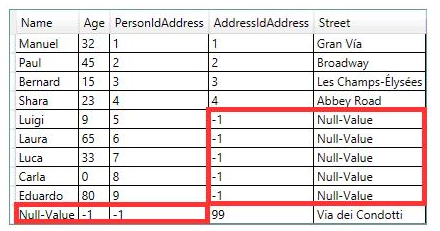
注意:每个对象都需要验证Null
查询结果如下
LEFT EXCLUDING JOIN

Extension Method:
public static IEnumerable<TResult>

    LeftExcludingJoin<TSource, TInner, TKey, TResult>(this IEnumerable<TSource> source,

IEnumerable<TInner> inner,

Func<TSource, TKey> pk,

Func<TInner, TKey> fk,

Func<TSource, TInner, TResult> result)

{

IEnumerable<TResult> _result = Enumerable.Empty<TResult>();

_result = from s in source

join i in inner

on pk(s) equals fk(i) into joinData

from left in joinData.DefaultIfEmpty()

where left == null

select result(s, left);

return _result;

}
Lambda Expression:
var resultJoint = Person.BuiltPersons().LeftExcludingJoin( /// Source Collection

Address.BuiltAddresses(), /// Inner Collection

p => p.IdAddress, /// PK

a => a.IdAddress, /// FK

(p, a) => new { MyPerson = p, MyAddress = a }) /// Result Collection

.Select(a => new

{

Name = a.MyPerson.Name,

Age = a.MyPerson.Age,

PersonIdAddress = a.MyPerson.IdAddress,

AddressIdAddress = (a.MyAddress != null ? a.MyAddress.IdAddress : -1),

Street = (a.MyAddress != null ? a.MyAddress.Street : "Null-Value")

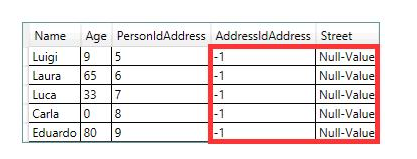
});
查询结果如下
RIGHT EXCLUDING JOIN

Extension Method:
public static IEnumerable<TResult>

RightExcludingJoin<TSource, TInner, TKey, TResult>(this IEnumerable<TSource> source,

IEnumerable<TInner> inner,

Func<TSource, TKey> pk,

Func<TInner, TKey> fk,

Func<TSource, TInner, TResult> result)

{

IEnumerable<TResult> _result = Enumerable.Empty<TResult>();

_result = from i in inner

join s in source

on fk(i) equals pk(s) into joinData

from right in joinData.DefaultIfEmpty()

where right == null

select result(right, i);

return _result;

}
Lambda Expression:
var resultJoint = Person.BuiltPersons().RightExcludingJoin( /// Source Collection

Address.BuiltAddresses(), /// Inner Collection

p => p.IdAddress, /// PK

a => a.IdAddress, /// FK

(p, a) => new { MyPerson = p, MyAddress = a }) /// Result Collection

.Select(a => new

{

Name = (a.MyPerson != null ? a.MyPerson.Name : "Null-Value"),

Age = (a.MyPerson != null ? a.MyPerson.Age : -1),

PersonIdAddress = (a.MyPerson != null ? a.MyPerson.IdAddress : -1),

AddressIdAddress = a.MyAddress.IdAddress,

Street = a.MyAddress.Street

});
查询结果

FULL OUTER EXCLUDING JOIN

Extension Method:
public static IEnumerable<TResult>

FulltExcludingJoin<TSource, TInner, TKey, TResult>(this IEnumerable<TSource> source,

IEnumerable<TInner> inner,

Func<TSource, TKey> pk,

Func<TInner, TKey> fk,

Func<TSource, TInner, TResult> result)

{

var left = source.LeftExcludingJoin(inner, pk, fk, result).ToList();

var right = source.RightExcludingJoin(inner, pk, fk, result).ToList();

return left.Union(right);

}
Lambda Expression:
var resultJoint = Person.BuiltPersons().FulltExcludingJoin( /// Source Collection

Address.BuiltAddresses(), /// Inner Collection

p => p.IdAddress, /// PK

a => a.IdAddress, /// FK

(p, a) => new { MyPerson = p, MyAddress = a }) /// Result Collection

.Select(a => new

{

Name = (a.MyPerson != null ? a.MyPerson.Name : "Null-Value"),

Age = (a.MyPerson != null ? a.MyPerson.Age : -1),

PersonIdAddress = (a.MyPerson != null ? a.MyPerson.IdAddress : -1),

AddressIdAddress = (a.MyAddress != null ? a.MyAddress.IdAddress : -1),

Street = (a.MyAddress != null ? a.MyAddress.Street : "Null-Value")

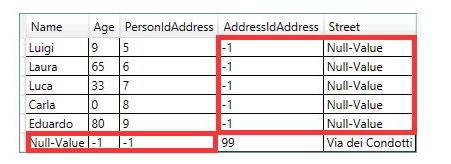
});
查询结果
Linq 集合操作的更多相关文章
- Linq集合操作之Intersect,Except,Union源码分析
Linq集合操作之Intersect,Except,Union源码分析 linq的集合运算 常见的集合运算有哪些? 这三个扩展方法在我们实际使用中用的还是非常多的,而且这里还涉及到了“复杂度” 无算法 ...
- C#LINQ集合操作
LINQ的集合运算 List<int> lstOne = new List<int>() { 1, 55, 223, 25 }; List<int> lstTwo ...
- Linq聚合操作之Aggregate,Count,Sum,Distinct源码分析
Linq聚合操作之Aggregate,Count,Sum,Distinct源码分析 一:Linq的聚合运算 1. 常见的聚合运算:Aggregate,Count, Sum, Distinct,Max, ...
- Linq生成操作之DefautIfEmpty,Empty,Range,Repeat源码分析
Linq生成操作之DefautIfEmpty,Empty,Range,Repeat源码分析 Linq的四种生成运算 DefautIfEmpty,Empty,Range,Repeat 也就是给我们初始化 ...
- Linq转换操作之OfType,Cast,AsEnumerable,ToLookup源码分析
Linq转换操作之OfType,Cast,AsEnumerable,ToLookup源码分析 一:Tolookup 1. 从方法的注解上可以看到,ToLookup也是一个k,v的形式,那么问题来了,它 ...
- Linq转换操作之ToArray,ToList,ToDictionary源码分析
Linq转换操作之ToArray,ToList,ToDictionary源码分析 一:linq中的转换运算符 1. ToArray 我们经常用在linq查询上吧. linq只能运用在IEnumerab ...
- 函数式Android编程(II):Kotlin语言的集合操作
原文标题:Functional Android (II): Collection operations in Kotlin 原文链接:http://antonioleiva.com/collectio ...
- JAVASE02-Unit05: 集合操作 —— 查找表
Unit05: 集合操作 -- 查找表 使用该类测试自定义元素的集合排序 package day05; /** * 使用该类测试自定义元素的集合排序 * @author adminitartor * ...
- JAVASE02-Unit04: 集合框架 、 集合操作 —— 线性表
Unit04: 集合框架 . 集合操作 -- 线性表 操作集合元素相关方法 package day04; import java.util.ArrayList; import java.util.Co ...
随机推荐
- JS中的事件大全
一般事件 onClick 鼠标点击事件,多用在某个对象控制的范围内的鼠标点击 onDblClick 鼠标双击事件 onMouseDown 鼠标上的按 ...
- Keil STM32调试,使用ST-Link下载程序时提示“flash timeout.reset the target and try it again”
参考: 很郁闷,买来没多久的 STM32F4-DISCOVERY 就挂了? STM32F103RB Jlink调试的时候出现flash timeout.reset the target and t ...
- 一个苹果证书怎么多次使用——导出p12文件
http://blog.csdn.net/jjiss318/article/details/41812243 原文:http://my.oschina.net/u/1245365/blog/19636 ...
- iOS 发布流程
1.登陆苹果开发者中心http://developer.apple.com(99美元账号) 2.进入itunes connect 3.选择Manage Your Apps 4.选择Add New Ap ...
- JQuery中 json 和字符串直接相互转换
json字符串转json对象:jQuery.parseJSON(jsonStr); json对象转json字符串:JSON.stringify(jsonObj); IE中可能对unicode使用“ ...
- UVa 10299 - Relatives
题目大意:Euler's Totient的应用. 几乎和UVa 10179 - Irreducable Basic Fractions一样,于是偷了个懒,直接用10179题的代码,结果WA了,感觉一样 ...
- List<KeyValuePair<TKey,TValue>> 与 Dictionary<TKey,TValue> 不同
两者都可以通过 KeyValuePair<TKey,TValue> 进行遍历,并且两者可以相互转换: List<KeyValuePair<string,string>&g ...
- Visual Studio 2012 开发环境配置+控制台工具+桌面应用程序
一.界面布局视图设置 1.窗口的布局.控制台窗口运行恢复到开发环境的设置方法 也可以保存好设好的个性化设置,导入设置: 2.视图|服务器资源管理器(sever explorer) 可以访问数据源.服务 ...
- IM 融云 之 安装cocoapods 安装 SDK
1. podfile 内容如下: platform :ios, '7.0' pod 'RongCloudIMKitWithVoip', '2.4.3' 现在最新是2.4.3 导入之后,就直接可以用了. ...
- Python关键字yield的解释
yield 是一个类似 return 的关键字,只是这个函数返回的是个生成器. >>> def createGenerator() : ... mylist = range(3) . ...