
Shiro源码分析之SecurityManager对象获取
@
上篇文章Shiro源码分析之获取SecurityManager工厂获取我们介绍了SecurityManager工厂的获取步骤,本文在此基础上来分析下SecurityManager对象产生的过程。
SecurityManager获取过程
1.SecurityManager接口介绍
SecurityManager安全管理器,是Shiro的核心,继承了三个接口,其定义的方法如下
public interface SecurityManager extends Authenticator, Authorizer, SessionManager {

    // 登录

    Subject login(Subject subject, AuthenticationToken authenticationToken) throws AuthenticationException;

    // 注销

    void logout(Subject subject);

    // 获取Subject对象

    Subject createSubject(SubjectContext context);

}
本文重点不是分析SecurityManager的结构,所以此处略过。
2.SecurityManager实例化时序图
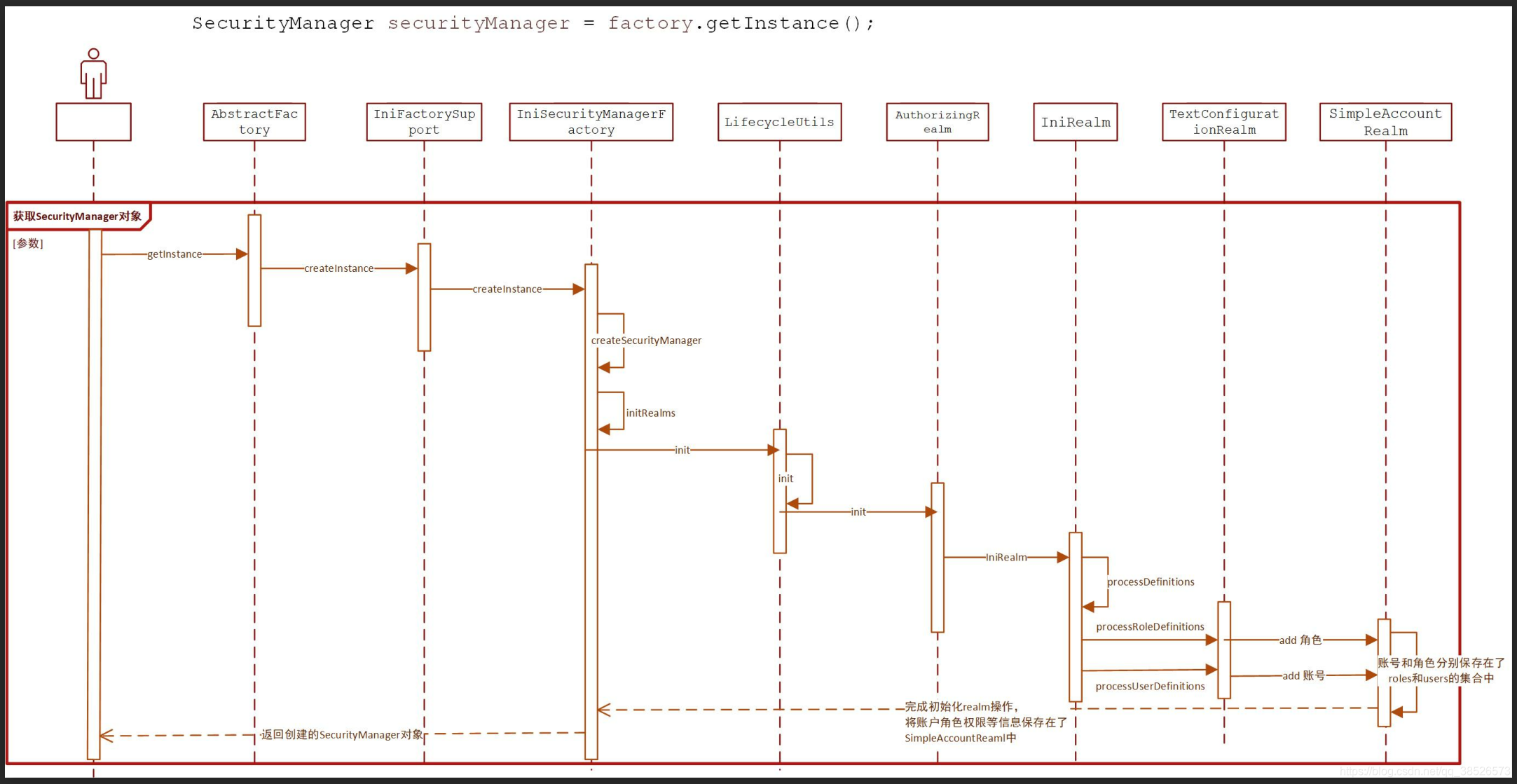
3.源码分析
3.1.AbstractFactory
public T getInstance() {

     T instance;

     // 判断是否是单例,默认就是单例

     if (isSingleton()) {

         if (this.singletonInstance == null) {

         	// 创建实例

             this.singletonInstance = createInstance();

         }

         instance = this.singletonInstance;

     } else {

         instance = createInstance();

     }

     if (instance == null) {

         String msg = "Factory 'createInstance' implementation returned a null object.";

         throw new IllegalStateException(msg);

     }

     return instance;

 }

// 模板模式  定义抽象方法,交给子类实现

protected abstract T createInstance();
3.2 IniFactorySupport
public T createInstance() {

	// 获取Ini对象 该对象在获取SecurityManager工厂的时候被实例化了

    Ini ini = resolveIni();

    T instance;

    if (CollectionUtils.isEmpty(ini)) {

        log.debug("No populated Ini available.  Creating a default instance.");

        instance = createDefaultInstance();

        if (instance == null) {

            String msg = getClass().getName() + " implementation did not return a default instance in " +

                    "the event of a null/empty Ini configuration.  This is required to support the " +

                    "Factory interface.  Please check your implementation.";

            throw new IllegalStateException(msg);

        }

    } else {

        log.debug("Creating instance from Ini [" + ini + "]");

        // 创建实例

        instance = createInstance(ini);

        if (instance == null) {

            String msg = getClass().getName() + " implementation did not return a constructed instance from " +

                    "the createInstance(Ini) method implementation.";

            throw new IllegalStateException(msg);

        }

    }

    return instance;

}

// 抽象方法 进入子类中查看

protected abstract T createInstance(Ini ini);
3.3 IniSecurityManagerFactory
protected SecurityManager createInstance(Ini ini) {

     if (CollectionUtils.isEmpty(ini)) {

         throw new NullPointerException("Ini argument cannot be null or empty.");

     }

     // 通过createSecurityManager获取实例

     SecurityManager securityManager = createSecurityManager(ini);

     if (securityManager == null) {

         String msg = SecurityManager.class + " instance cannot be null.";

         throw new ConfigurationException(msg);

     }

     return securityManager;

 }

 private SecurityManager createSecurityManager(Ini ini) {

     // 获取Ini中保存的shiro.ini文件中的section的 main信息

     Ini.Section mainSection = ini.getSection(MAIN_SECTION_NAME);

     if (CollectionUtils.isEmpty(mainSection)) {

         //try the default: 默认是 ""

         mainSection = ini.getSection(Ini.DEFAULT_SECTION_NAME);

     }

     return createSecurityManager(ini, mainSection);

 }
3.4 进入createSecurityManager方法
private SecurityManager createSecurityManager(Ini ini, Ini.Section mainSection) {

	// 创建默认的 SecurityManager和IniRealm 跳转到3.4.1

    Map<String, ?> defaults = createDefaults(ini, mainSection);

    // 绑定对象到SecurityManager对象

    Map<String, ?> objects = buildInstances(mainSection, defaults);

	// 从objects 中获取SecurityManager对象

    SecurityManager securityManager = getSecurityManagerBean();

    // 判断是否自动应用realm

    boolean autoApplyRealms = isAutoApplyRealms(securityManager);

	// 因为我们在shiro.ini中配置了users所以前面创建了IniRealm所以为true

    if (autoApplyRealms) {

        //realms and realm factory might have been created - pull them out first so we can

        //initialize the securityManager:

        Collection<Realm> realms = getRealms(objects);

        //set them on the SecurityManager

        if (!CollectionUtils.isEmpty(realms)) {

        	// 将IniRealm绑定到了SecurityManager中

            applyRealmsToSecurityManager(realms, securityManager);

        }

    }

	// 初始化Realm 跳至 3.5处

    initRealms(securityManager);

    return securityManager;

}
3.4.1 此处需要进入createDefaults查看
protected Map<String, ?> createDefaults(Ini ini, Ini.Section mainSection) {

     Map<String, Object> defaults = new LinkedHashMap<String, Object>();

	// 此处的代码 实例化了SecurityManager 对象

	// 3.4.2进入createDefaultInstance查看

     SecurityManager securityManager = createDefaultInstance();

     defaults.put(SECURITY_MANAGER_NAME, securityManager);

	// 判断ini中是否隐含的有realm 3.4.3查看

     if (shouldImplicitlyCreateRealm(ini)) {

     	// 创建realm 查看createRealm方法 3.4.4查看

         Realm realm = createRealm(ini);

         if (realm != null) {

             defaults.put(INI_REALM_NAME, realm);

         }

     }

     return defaults;

 }
3.4.2 createDefaultInstance方法
protected SecurityManager createDefaultInstance() {

	// SecurityManager模式的实现是DefaultSecurityManager实例

    return new DefaultSecurityManager();

}
3.4.3 shouldImplicitlyCreateRealm方法
protected boolean shouldImplicitlyCreateRealm(Ini ini) {

	// 返回结果的判断条件是 ini不为空同时(ini中包含roles或者users)就为true

    return !CollectionUtils.isEmpty(ini) &&

            (!CollectionUtils.isEmpty(ini.getSection(IniRealm.ROLES_SECTION_NAME)) ||

                    !CollectionUtils.isEmpty(ini.getSection(IniRealm.USERS_SECTION_NAME)));

}
3.4.4 createRealm
 protected Realm createRealm(Ini ini) {

 	// 我们可以看到实例化的是IniRealm对象

     IniRealm realm = new IniRealm(ini);

     realm.setName(INI_REALM_NAME);

     return realm;

 }
3.5 initRealms
private void initRealms(SecurityManager securityManager) {

    Collection<Realm> realms = getRealms(securityManager);

    if (!CollectionUtils.isEmpty(realms)) {

        LifecycleUtils.init(realms);

    }

}
3.6 LifecycleUtils
public static void init(Collection c) throws ShiroException {

    if (c == null || c.isEmpty()) {

        return;

    }

    for (Object o : c) {

        init(o);

    }

}

public static void init(Object o) throws ShiroException {

    if (o instanceof Initializable) {

        init((Initializable) o);

    }

}

public static void init(Initializable initializable) throws ShiroException {

    initializable.init();

}
3.7AuthorizingRealm
public final void init() {

    //trigger obtaining the authorization cache if possible

    getAvailableAuthorizationCache();

    onInit(); // 进入IniRealm中

}
3.8 IniRealm
protected void onInit() {

     // This is an in-memory realm only - no need for an additional cache when we're already

     // as memory-efficient as we can be.

     String resourcePath = getResourcePath();

     if (CollectionUtils.isEmpty(this.users) && CollectionUtils.isEmpty(this.roles)) {

         //no account data manually populated - try the resource path:

         if (StringUtils.hasText(resourcePath)) {

             log.debug("Resource path {} defined.  Creating INI instance.", resourcePath);

             Ini ini = Ini.fromResourcePath(resourcePath);

             // 核心方法进入

             processDefinitions(ini);

         } else {

             throw new IllegalStateException("No resource path was specified.  Cannot load account data.");

         }

     } else {

         if (StringUtils.hasText(resourcePath)) {

             log.warn("Users or Roles are already populated.  Resource path property will be ignored.");

         }

     }

 }
processDefinitions
private void processDefinitions(Ini ini) {

    if (CollectionUtils.isEmpty(ini)) {

        log.warn("{} defined, but the ini instance is null or empty.", getClass().getSimpleName());

        return;

    }

    Ini.Section rolesSection = ini.getSection(ROLES_SECTION_NAME);

    if (!CollectionUtils.isEmpty(rolesSection)) {

        log.debug("Discovered the [{}] section.  Processing...", ROLES_SECTION_NAME);

        // 处理角色信息

        processRoleDefinitions(rolesSection);

    }

    Ini.Section usersSection = ini.getSection(USERS_SECTION_NAME);

    if (!CollectionUtils.isEmpty(usersSection)) {

        log.debug("Discovered the [{}] section.  Processing...", USERS_SECTION_NAME);

        // 处理用户信息

        processUserDefinitions(usersSection);

    } else {

        log.info("{} defined, but there is no [{}] section defined.  This realm will not be populated with any " +

                "users and it is assumed that they will be populated programatically.  Users must be defined " +

                "for this Realm instance to be useful.", getClass().getSimpleName(), USERS_SECTION_NAME);

    }

}
3.9 TextConfigurationRealm
processRoleDefinitions
protected void processRoleDefinitions(Map<String, String> roleDefs) {

    if (roleDefs == null || roleDefs.isEmpty()) {

        return;

    }

    for (String rolename : roleDefs.keySet()) {

        String value = roleDefs.get(rolename);

        SimpleRole role = getRole(rolename);

        if (role == null) {

            role = new SimpleRole(rolename);

            // 添加角色

            add(role);

        }

        Set<Permission> permissions = PermissionUtils.resolveDelimitedPermissions(value, getPermissionResolver());

        // 添加权限

        role.setPermissions(permissions);

    }

}
processUserDefinitions
protected void processUserDefinitions(Map<String, String> userDefs) {

    if (userDefs == null || userDefs.isEmpty()) {

        return;

    }

    for (String username : userDefs.keySet()) {

        String value = userDefs.get(username);

        String[] passwordAndRolesArray = StringUtils.split(value);

        String password = passwordAndRolesArray[0];

        SimpleAccount account = getUser(username);

        if (account == null) {

            account = new SimpleAccount(username, password, getName());

            //添加账号

            add(account);

        }

        account.setCredentials(password);

        if (passwordAndRolesArray.length > 1) {

            for (int i = 1; i < passwordAndRolesArray.length; i++) {

                String rolename = passwordAndRolesArray[i];

                account.addRole(rolename);

                SimpleRole role = getRole(rolename);

                if (role != null) {

                    account.addObjectPermissions(role.getPermissions());

                }

            }

        } else {

            account.setRoles(null);

        }

    }

}
3.10 SimpleAccountRealm
protected void add(SimpleRole role) {

    roles.put(role.getName(), role);

}
 protected void add(SimpleAccount account) {

     String username = getUsername(account);

     this.users.put(username, account);

 }

最后回到createSecurityManager方法中
private SecurityManager createSecurityManager(Ini ini, Ini.Section mainSection) {

	// 创建默认的 SecurityManager和IniRealm

    Map<String, ?> defaults = createDefaults(ini, mainSection);

    // 绑定对象到SecurityManager对象

    Map<String, ?> objects = buildInstances(mainSection, defaults);

	// 从objects 中获取SecurityManager对象

    SecurityManager securityManager = getSecurityManagerBean();

    // 判断是否自动应用realm

    boolean autoApplyRealms = isAutoApplyRealms(securityManager);

	// 因为我们在shiro.ini中配置了users所以前面创建了IniRealm所以为true

    if (autoApplyRealms) {

        //realms and realm factory might have been created - pull them out first so we can

        //initialize the securityManager:

        Collection<Realm> realms = getRealms(objects);

        //set them on the SecurityManager

        if (!CollectionUtils.isEmpty(realms)) {

        	// 将IniRealm绑定到了SecurityManager中

            applyRealmsToSecurityManager(realms, securityManager);

        }

    }

	// 初始化Realm

    initRealms(securityManager);

    return securityManager;

}
初始化SecurityManager完成
4.总结
- SecurityManager默认实例的是DefaultSecurityManager
- 如果我们在shiro.ini配置文件配置了[Users]的话那么会自动创建IniRealm
- 创建的IniRealm会被绑定到SecurityManager对象中,并且会将账号密码保存到SimpleAccountRealm的User集合中,认证的时候会从此对象中获取
Shiro源码分析之SecurityManager对象获取的更多相关文章
- Shiro 源码分析
http://my.oschina.net/huangyong/blog/215153 Shiro 是一个非常优秀的开源项目,源码非常值得学习与研究. 我想尝试做一次 不一样 的源码分析:源码分析不再 ...
- Spring AOP 源码分析 - 创建代理对象
1.简介 在上一篇文章中,我分析了 Spring 是如何为目标 bean 筛选合适的通知器的.现在通知器选好了,接下来就要通过代理的方式将通知器(Advisor)所持有的通知(Advice)织入到 b ...
- Flask框架 (四)—— 请求上下文源码分析、g对象、第三方插件(flask_session、flask_script、wtforms)、信号
Flask框架 (四)—— 请求上下文源码分析.g对象.第三方插件(flask_session.flask_script.wtforms).信号 目录 请求上下文源码分析.g对象.第三方插件(flas ...
- JVM源码分析之Java对象头实现
原创申明:本文由公众号[猿灯塔]原创,转载请说明出处标注 “365篇原创计划”第十一篇. 今天呢!灯塔君跟大家讲: JVM源码分析之Java对象头实现 HotSpot虚拟机中,对象在内存中的布局分为三 ...
- Shiro源码分析
1.入口类:AbstractAuthenticator 用户输入的登录信息经过其authenticate方法: public final AuthenticationInfo authenticate ...
- [旧][Android] Retrofit 源码分析之 ServiceMethod 对象
备注 原发表于2016.05.03,资料已过时,仅作备份,谨慎参考 前言 大家好,我又来学习 Retrofit 了,可能这是最后一篇关于 Retrofit 框架的文章了.我发现源码分析这回事,当时看明 ...
- HotSpot源码分析之C++对象的内存布局
HotSpot采用了OOP-Klass模型来描述Java类和对象.OOP(Ordinary Object Pointer)指的是普通对象指针,而Klass用来描述对象的具体类型.为了更好理解这个模型, ...
- Spring源码分析(五)获取Document
摘要:本文结合<Spring源码深度解析>来分析Spring 5.0.6版本的源代码.若有描述错误之处,欢迎指正. 这一篇开始进行Document加载了,XmlBeanFactoryRea ...
- Springboot源码分析之代理对象内嵌调用
摘要: 关于这个话题可能最多的是@Async和@Transactional一起混用,我先解释一下什么是代理对象内嵌调用,指的是一个代理方法调用了同类的另一个代理方法.首先在这儿我要声明事务直接的嵌套调 ...
随机推荐
- 用generator改写ajax
function request(url) { // this is where we're hiding the asynchronicity, // away from the main code ...
- docker pull 镜像报错
[root@localhost ~]# docker pull ningx Using default tag: latest Trying to pull repository docker.io/ ...
- mybatis的配置和使用
mybatis的配置和使用 MyBatis 是支持定制化 SQL.存储过程以及高级映射的优秀的持久层框架.MyBatis 避免了几乎所有的 JDBC 代码和手动设置参数以及获取结果集.MyBatis ...
- Conda命令指标
一.Conda相关指令 # 查看当前环境下已安装的包 conda list # 查看某个指定环境的已安装包 conda list -n tensorflow # 查找package信息 conda s ...
- vue+mescroll=VScrollFull
VScrollFull 介绍 这个组件是什么? 是为了方便的使用下拉刷新,上拉加载而去封装的一个依赖于 mescroll.js 的 vue 组件(未发布,文末代码~) 封装这个组件使用了什么? mes ...
- 【原创开源应用第5期】基于RL-USB+RL-FlashFS的外挂U盘解决方案
说明:1.RL-USB外挂U盘的例子,最近太多网友咨询,再不做一个例子就说不过去了.此例子为此而生.2.RTX及其所有中间件基本都做例子了,就差这个USB Host功能了,这次算是补上,所有功能基本已 ...
- 什么是shell和终端?
目录 什么是shell? 什么是终端? 什么是shell? 当谈到命令时,我们实际上指的是shell.shell是一个接收由键盘输入的命令,并将其传递给操作系统来执行的程序.几乎所有的Linux发行版 ...
- [Swift]LeetCode121. 买卖股票的最佳时机 I | Best Time to Buy and Sell Stock
Say you have an array for which the ith element is the price of a given stock on day i. If you were ...
- [Swift]LeetCode188. 买卖股票的最佳时机 IV | Best Time to Buy and Sell Stock IV
Say you have an array for which the ith element is the price of a given stock on day i. Design an al ...
- [Swift]LeetCode281. 之字形迭代器 $ Zigzag Iterator
Given two 1d vectors, implement an iterator to return their elements alternately. For example, given ...