
201771010135 杨蓉庆/张燕《面对对象程序设计(java)》第十三周学习总结
1、实验目的与要求
(1) 掌握事件处理的基本原理,理解其用途;
(2) 掌握AWT事件模型的工作机制;
(3) 掌握事件处理的基本编程模型;
(4) 了解GUI界面组件观感设置方法;
(5) 掌握WindowAdapter类、AbstractAction类的用法;
(6) 掌握GUI程序中鼠标事件处理技术。
一、理论知识
11.1 事件处理基础
⚫事件源(event source):能够产生事件的对象都可以成为事件源,如文本框、按钮等。一个事件源是一个能够注册监听器并向监听器发送事件对象的对象。
⚫ 事件监听器(event listener):事件监听器对象接收事件源发送的通告(事件对象),并对发生的事件作出响应。一个监听器对象就是一个实现了专门监听器接的类实例,该类必须实现接口中的方法,这些方法当事件发生时,被自动执行。
⚫ 事件对象(event object):Java将事件的相关信息封装在一个事件对象中,所有的事件对象都最终派生于java.util.EventObject类。不同的事件源可以产生不同类别的事件。
⚫ 监听器对象:是一个实现了特定监听器接口(listener interface)的类实例。
⚫ 事件源:是一个能够注册监听器对象并发送事件对象的对象。
⚫ 当事件发生时,事件源将事件对象自动传递给所有注册的监听器。
⚫ 监听器对象利用事件对象中的信息决定如何对事件做出响应。
⚫GUI设计中,程序员需要对组件的某种事件进行响应和处理时,必须完成两个步骤:
1)定义实现某事件监听器接口的事件监听器类,并具体化接口中声明的事件处理抽象方法。
2) 为组件注册实现了规定接口的事件监听器对象;
⚫监听器类必须实现与事件源相对应的接口,即必须提供接口中方法的实现。
11.2 动作
(1)各按钮需要同样的处理:1) 使用字符串构造按钮对象;2) 把按钮添加到面板上;
3) 用对应的颜色构造一个动作监听器;4) 注册动作监听器。
(2)动作事件:激活一个命令可以有多种方式,如用户可以通过菜单、击键或工具栏上的按钮选择特定的功能。
动作对象是一个封装下列内容的对象:
–命令的说明:一个文本字符串和一个可选图标;
–执行命令所需要的参数。
(3)Swing包提供了非常实用的机制来封装命令,并将它们连接到多个事件源,这就是Action接口。
⚫Action是一个接口,而不是一个类,实现这个接口的类必须要实现它的7个方法。
⚫ AbstractAction 类 实 现 了 Action 接 口 中 除actionPerformed方法之外的所有方法,这个类存储了所有名/值对,并管理着属性变更监听器。
11.3 鼠标事件
⚫ Swing程序默认使用Metal观感,采用两种方式改变观感。
第一种:在Java安装的子目录jre/lib下的文件swing.properties中,将属性swing.defaultlaf设置为所希望的观感类名。
第二种:调用静态的UIManager.setLookAndFeel方法,动态地改变观感,提供所想要的观感类名,再调用静态方法SwingUtilities.updateComponentTreeUI来刷新全部的组件集。
⚫ 用户点击鼠标按钮时,会调用三个监听器方法:
– 鼠标第一次被按下时调用mousePressed方法;
– 鼠标被释放时调用mouseReleased方法;
– 两个动作完成之后,调用mouseClicked方法。
⚫ 鼠标在组件上移动时,会调用mouseMoved方法。
⚫ 如果鼠标在移动的时候还按下了鼠标,则会调用
mouseDragged方法。
⚫ 监听鼠标点击事件,实现MouseListener接口:
实现mousePressed方法:- 判断鼠标点击的地方是否在小方块内;
- 如果不在小方块内,在点击的地方画一个小方块。
⚫ 实现mouseClicked方法:
- 判断鼠标点击的地方是否在小方块内;- 如果在小方块内,判断点击了几次,如果大于两次
将该方块移除。
11.4 11.4AWT 事件继承层次
(1)适配器类:鉴于代码简化的要求,对于有不止一个方法的AWT监听器接口都有一个实现了它的所有方法,但却不做任何工作的适配器类。
⚫ 当程序用户试图关闭一个框架窗口时,Jframe对象就是WindowEvent的事件源。
⚫ 捕获窗口事件的监听器:WindowListener listener=…..; frame.addWindowListener(listener);
⚫ 窗口监听器必须是实现WindowListener接口的 类的一个对象,WindowListener接口中有七个方法,它们的名字是自解释的。
⚫ 适配器类动态地满足了Java中实现监视器类的技术要求。
⚫ 通过扩展适配器类来实现窗口事件需要的动作。
(2)扩展WindowAdapter类,继承六个空方法,并覆盖WindowClosing()方法:
class Terminator extends WindowAdapter
{
public void windowClosing(WindowEvent e)
{
System.exit(0);
}
}
(3)注册事件监听器:
⚫ 可将一个Terminator对象注册为事件监听器:
WindowListener listener=new Terminator();
frame.addWindowListener(listener);
⚫ 只要框架产生一个窗口事件,该事件就会传递给监听器对象。
(4)用匿名类简化
⚫ AWT将事件分为低级(low-level)事件和语义
(semantic)事件。
–语义事件:表达用户动作的事件。
例:点击按钮(ActionEvent)。
–低级事件:形成语义事件的事件。
2、实验内容和步骤
实验1: 导入第11章示例程序,测试程序并进行代码注释。
测试程序1:
在elipse IDE中调试运行教材443页-444页程序11-1,结合程序运行结果理解程序;
(1)在事件处理相关代码处添加注释;
(2)用lambda表达式简化程序;
(3)掌握JButton组件的基本API;
(4)掌握Java中事件处理的基本编程模型
package button;

import java.awt.*;

import java.awt.event.*;

import javax.swing.*;

/**

 * A frame with a button panel

 */

public class ButtonFrame extends JFrame

{//定义三个属性

   private JPanel buttonPanel;

   private static final int DEFAULT_WIDTH = 300;//定义像素值

   private static final int DEFAULT_HEIGHT = 200;

   public ButtonFrame()

   {

      setSize(DEFAULT_WIDTH, DEFAULT_HEIGHT);//构造器决定GUI界面的初始形状

      // create buttons

      //创建按钮

      JButton yellowButton = new JButton("Yellow");

      JButton blueButton = new JButton("Blue");

      JButton redButton = new JButton("Red");

      buttonPanel = new JPanel();

      // add buttons to panel

      //调用add方法,添加了三个按钮组件

      buttonPanel.add(yellowButton);

      buttonPanel.add(blueButton);

      buttonPanel.add(redButton);

      // add panel to frame

      add(buttonPanel);//add方法是JFrame的方法

      // create button actions

      //生成三个类对象,类名为ColorAction

      ColorAction yellowAction = new ColorAction(Color.YELLOW);

      ColorAction blueAction = new ColorAction(Color.BLUE);

      ColorAction redAction = new ColorAction(Color.RED);

      // associate actions with buttons

      //用addActionListener来对组件注册

      yellowButton.addActionListener(yellowAction);

      blueButton.addActionListener(blueAction);

      redButton.addActionListener(redAction);

   }

   /**

    * An action listener that sets the panel's background color.

    */

   private class ColorAction implements ActionListener//监听器类对象

   {

      private Color backgroundColor;

      public ColorAction(Color c)

      {

         backgroundColor = c;

      }

      public void actionPerformed(ActionEvent event)//用actionPerformed方法让面板监听这些按钮

      {

         buttonPanel.setBackground(backgroundColor);

      }

   }

}
package button;

import java.awt.*;

import javax.swing.*;

/**

 * @version 1.34 2015-06-12

 * @author Cay Horstmann

 */

public class ButtonTest

{

   public static void main(String[] args)

   {

      EventQueue.invokeLater(() -> {

         JFrame frame = new ButtonFrame();//生成ButtonFrame类的GUI界面对象

         frame.setTitle("ButtonTest");//Title设置

         frame.setDefaultCloseOperation(JFrame.EXIT_ON_CLOSE);//关闭界面的按钮操作

         frame.setVisible(true);//可见的

      });

   }

}
(2)用lambda表达式简化程序
package button;

import java.awt.*;

import java.awt.event.*;

import javax.swing.*;

/**

 * A frame with a button panel

 */

public class ButtonFrame extends JFrame {// 定义三个属性

    private JPanel buttonPanel;

    private static final int DEFAULT_WIDTH = 300;// 定义像素值

    private static final int DEFAULT_HEIGHT = 200;

    public ButtonFrame()

   {

      setSize(DEFAULT_WIDTH, DEFAULT_HEIGHT);//构造器决定GUI界面的初始形状

      // create buttons

      //创建按钮

      /*JButton yellowButton = new JButton("Yellow");

      JButton blueButton = new JButton("Blue");

      JButton redButton = new JButton("Red");*/

      buttonPanel = new JPanel();

      // add buttons to panel

      /*buttonPanel.add(yellowButton);

      buttonPanel.add(blueButton);

      buttonPanel.add(redButton);*/

      // add panel to frame

      add(buttonPanel);//add方法是JFrame的方法

      // create button actions

      //生成三个类对象,类名为ColorAction

      /*ColorAction yellowAction = new ColorAction(Color.YELLOW);

      ColorAction blueAction = new ColorAction(Color.BLUE);

      ColorAction redAction = new ColorAction(Color.RED);*/

      // associate actions with buttons

      /*//用addActionListener来对组件注册

      yellowButton.addActionListener(yellowAction);

      blueButton.addActionListener(blueAction);

      redButton.addActionListener(redAction);*/

   makeButton("Yellow",Color.yellow);

   makeButton("blue",Color.blue);

   makeButton("red",Color.red);}

    public void makeButton(String name, Color backgroundColor) {

        JButton button = new JButton(name);

        buttonPanel.add(button);

        ColorAction action = new ColorAction(backgroundColor);

        button.addActionListener(action);

    }

    /**

     * An action listener that sets the panel's background color.

     */

    private class ColorAction implements ActionListener// 监听器类对象

    {

        private Color backgroundColor;

        public ColorAction(Color c) {

            backgroundColor = c;

        }

        public void actionPerformed(ActionEvent event)// 用actionPerformed方法让面板监听这些按钮

        {

            buttonPanel.setBackground(backgroundColor);

        }

    }

}
结果如下: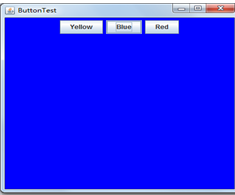
测试程序2:
l 在elipse IDE中调试运行教材449页程序11-2,结合程序运行结果理解程序;
l 在组件观感设置代码处添加注释;
l 了解GUI程序中观感的设置方法。
package plaf;

import javax.swing.JButton;

import javax.swing.JFrame;

import javax.swing.JPanel;

import javax.swing.SwingUtilities;

import javax.swing.UIManager;

/**

 * A frame with a button panel for changing look-and-feel

 */

public class PlafFrame extends JFrame//PlafFrame类继承JFrame类

{

   private JPanel buttonPanel;

   public PlafFrame()

   {

      buttonPanel = new JPanel();//

      UIManager.LookAndFeelInfo[] infos = UIManager.getInstalledLookAndFeels();

      //调用此方法来列举安装的所有观感实现

      for (UIManager.LookAndFeelInfo info : infos)//设置图形界面外观

         makeButton(info.getName(), info.getClassName());

      add(buttonPanel);

      pack();

   }

   /**

    * Makes a button to change the pluggable look-and-feel.

    * @param name the button name

    * @param className the name of the look-and-feel class

    */

   private void makeButton(String name, String className)

   {

      // add button to panel

       //在面板上添加新的按钮

      JButton button = new JButton(name);

      buttonPanel.add(button);//调用add方法

      // set button action设置按钮动作

      button.addActionListener(event -> {

         // button action: switch to the new look-and-feel

         try//抛出异常

         {

            UIManager.setLookAndFeel(className);//设置图形界面类名

            SwingUtilities.updateComponentTreeUI(this);//this指示外围的对象

            pack();

         }

         catch (Exception e)

         {

            e.printStackTrace();

         }

      });

   }

}
package plaf;

import java.awt.*;

import javax.swing.*;

/**

 * @version 1.32 2015-06-12

 * @author Cay Horstmann

 */

public class PlafTest

{

   public static void main(String[] args)

   {

      EventQueue.invokeLater(() -> {

         JFrame frame = new PlafFrame();//生成新的类

         frame.setTitle("PlafTest");

         frame.setDefaultCloseOperation(JFrame.EXIT_ON_CLOSE);//关闭界面的按钮操作

         frame.setVisible(true);//使结果为可见的

      });

   }

}
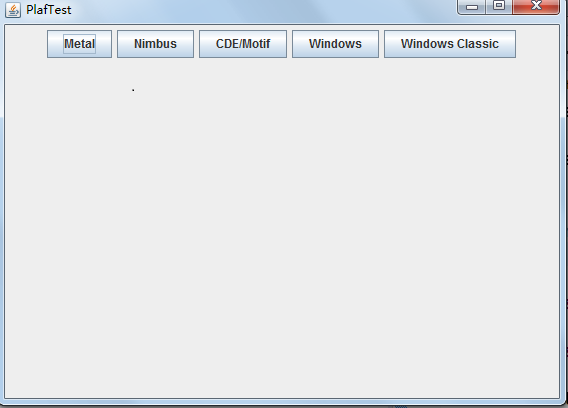
结果如下:
测试程序3:
l 在elipse IDE中调试运行教材457页-458页程序11-3,结合程序运行结果理解程序;
l 掌握AbstractAction类及其动作对象;
掌握GUI程序中按钮、键盘动作映射到动作对象的方法。
package action;

import java.awt.*;

import java.awt.event.*;

import javax.swing.*;

/**

 * A frame with a panel that demonstrates color change actions.

 */

public class ActionFrame extends JFrame

{// 定义三个属性

   private JPanel buttonPanel;

   private static final int DEFAULT_WIDTH = 300;

   private static final int DEFAULT_HEIGHT = 200;

   public ActionFrame()

   {

      setSize(DEFAULT_WIDTH, DEFAULT_HEIGHT);//构造器决定GUI界面的初始形状

      buttonPanel = new JPanel();// 将类的实例域中的JPanel面板对象实例化

      // define actions

      //创建了ColorAction类的三个对象

      Action yellowAction = new ColorAction("Yellow", new ImageIcon("yellow-ball.gif"),

            Color.YELLOW);

      Action blueAction = new ColorAction("Blue", new ImageIcon("blue-ball.gif"), Color.BLUE);

      Action redAction = new ColorAction("Red", new ImageIcon("red-ball.gif"), Color.RED);

      // add buttons for these actions

      buttonPanel.add(new JButton(yellowAction));// 创建一个按钮,其属性从所提供的 Action中获取

      buttonPanel.add(new JButton(blueAction));

      buttonPanel.add(new JButton(redAction));

      // add panel to frame

      add(buttonPanel);

      //将这个添加好按钮的面板添加到原框架中

      // associate the Y, B, and R keys with names

      InputMap imap = buttonPanel.getInputMap(JComponent.WHEN_ANCESTOR_OF_FOCUSED_COMPONENT);

      // 将这个添加好按钮的面板添加到原框架中

      imap.put(KeyStroke.getKeyStroke("ctrl Y"), "panel.yellow");

      // 在imap中通过调用击键类KeyStroke的静态方法设置击键输入ctrl+Y的组合

      imap.put(KeyStroke.getKeyStroke("ctrl B"), "panel.blue");

      imap.put(KeyStroke.getKeyStroke("ctrl R"), "panel.red");

      // associate the names with actions

      ActionMap amap = buttonPanel.getActionMap();// 用JPanel中的getACtionMap方法获得amap对象

      amap.put("panel.yellow", yellowAction);

      amap.put("panel.blue", blueAction);

      amap.put("panel.red", redAction);

   }

   public class ColorAction extends AbstractAction

   {

      /**

       * Constructs a color action.

       * @param name the name to show on the button

       * @param icon the icon to display on the button

       * @param c the background color

       */

      public ColorAction(String name, Icon icon, Color c)

      {

         putValue(Action.NAME, name);

         putValue(Action.SMALL_ICON, icon);

         putValue(Action.SHORT_DESCRIPTION, "Set panel color to " + name.toLowerCase());

         putValue("color", c); //在构造器中设置一些键值对映射,这些设置的属性将会被JPanel读取

      }

      public void actionPerformed(ActionEvent event)

      {

         Color c = (Color) getValue("color");

         buttonPanel.setBackground(c);// 调用setBackground方法,设置背景颜色

      }

   }

}
ActionFrame
package action;

import java.awt.*;

import javax.swing.*;

/**

 * @version 1.34 2015-06-12

 * @author Cay Horstmann

 */

public class ActionTest

{

   public static void main(String[] args)

   {

      EventQueue.invokeLater(() -> {

         JFrame frame = new ActionFrame();

         frame.setTitle("ActionTest");

         frame.setDefaultCloseOperation(JFrame.EXIT_ON_CLOSE);

         frame.setVisible(true);

      });

   }

}
ActionTest
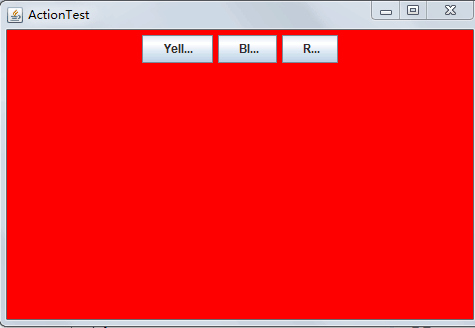
结果如下:
测试程序4:
l 在elipse IDE中调试运行教材462页程序11-4、11-5,结合程序运行结果理解程序;
掌握GUI程序中鼠标事件处理技术
package mouse;

import java.awt.*;

import java.awt.event.*;

import java.awt.geom.*;

import java.util.*;

import javax.swing.*;

/**

 * A component with mouse operations for adding and removing squares.

 */

public class MouseComponent extends JComponent

{// 定义两个属性

   private static final int DEFAULT_WIDTH = 300;

   private static final int DEFAULT_HEIGHT = 200;

   private static final int SIDELENGTH = 10;

   private ArrayList<Rectangle2D> squares;// 声明一个正方形集合

   private Rectangle2D current; // the square containing the mouse cursor

   //用来描述矩形的类

   public MouseComponent()

   {

      squares = new ArrayList<>();

      current = null;

   // 添加两个实现的类,这两个类分别继承了监测鼠标点击情况的MouseListener和MouseMotionHandler

      addMouseListener(new MouseHandler());

      addMouseMotionListener(new MouseMotionHandler());

   }

   public Dimension getPreferredSize() { return new Dimension(DEFAULT_WIDTH, DEFAULT_HEIGHT); }

   public void paintComponent(Graphics g)

   {

      Graphics2D g2 = (Graphics2D) g;

      // 转换类型

    // draw all squares

      for (Rectangle2D r : squares)

         g2.draw(r);

      // 对数组中的每个正方形,都进行绘制

   }

   /**

    * Finds the first square containing a point.

    * @param p a point

    * @return the first square that contains p

    */

   public Rectangle2D find(Point2D p)

   {

      for (Rectangle2D r : squares)

      {

         if (r.contains(p)) return r;

       //contains方法测定坐标是否在图形的边界内

      }

      return null;

   }

   /**

    * Adds a square to the collection.

    * @param p the center of the square

    */

   public void add(Point2D p)

   {

      double x = p.getX();

      double y = p.getY(); //获取x和y的坐标

      current = new Rectangle2D.Double(x - SIDELENGTH / 2, y - SIDELENGTH / 2, SIDELENGTH,

            SIDELENGTH);//用获得的坐标和既定的边长构建一个新的正方形,并将其赋值给current

      squares.add(current);

      repaint();

   }

   /**

    * Removes a square from the collection.

    * @param s the square to remove

    */

   public void remove(Rectangle2D s)

   {

      if (s == null) return;

      if (s == current) current = null;

      squares.remove(s);

      repaint();//重绘图像

   }

   private class MouseHandler extends MouseAdapter

   {

      public void mousePressed(MouseEvent event)

      {

         // add a new square if the cursor isn't inside a square

         current = find(event.getPoint());// 将鼠标单击的这个点的坐标的对象赋给current

         if (current == null) add(event.getPoint());//在这个点绘制正方形

      }

      public void mouseClicked(MouseEvent event)

      {

         // remove the current square if double clicked

         current = find(event.getPoint());// 将鼠标单击的这个点的坐标的对象赋给current

         if (current != null && event.getClickCount() >= 2) remove(current);

      }

   }

   private class MouseMotionHandler implements MouseMotionListener

   {

      public void mouseMoved(MouseEvent event)

      {

         // set the mouse cursor to cross hairs if it is inside

         // a rectangle

         if (find(event.getPoint()) == null) setCursor(Cursor.getDefaultCursor());

         else setCursor(Cursor.getPredefinedCursor(Cursor.CROSSHAIR_CURSOR));

         //将光标的图像设置为默认的图像

      }

      public void mouseDragged(MouseEvent event)

      {

         if (current != null)

         {

            int x = event.getX();

            int y = event.getY();

            // drag the current rectangle to center it at (x, y)

            current.setFrame(x - SIDELENGTH / 2, y - SIDELENGTH / 2, SIDELENGTH, SIDELENGTH);

            //进行图形绘制

            repaint();

         }

      }

   }

}
MouseComponent
package mouse;

import javax.swing.*;

/**

 * A frame containing a panel for testing mouse operations

 */

public class MouseFrame extends JFrame

{

   public MouseFrame()

   {

      add(new MouseComponent());//向框架中添加一个JComponent的实例

      pack();

   }

}
MouseFrame
package mouse;

import java.awt.*;

import javax.swing.*;

/**

 * @version 1.34 2015-06-12

 * @author Cay Horstmann

 */

public class MouseTest

{

   public static void main(String[] args)

   {

      EventQueue.invokeLater(() -> {

         JFrame frame = new MouseFrame();

         frame.setTitle("MouseTest");//Title设置

         frame.setDefaultCloseOperation(JFrame.EXIT_ON_CLOSE);//关闭界面的按钮操作

         frame.setVisible(true);//使结果为可见的

      });

   }

}
MouseTest
结果如下:
实验2:结对编程练习
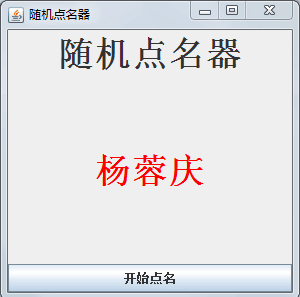
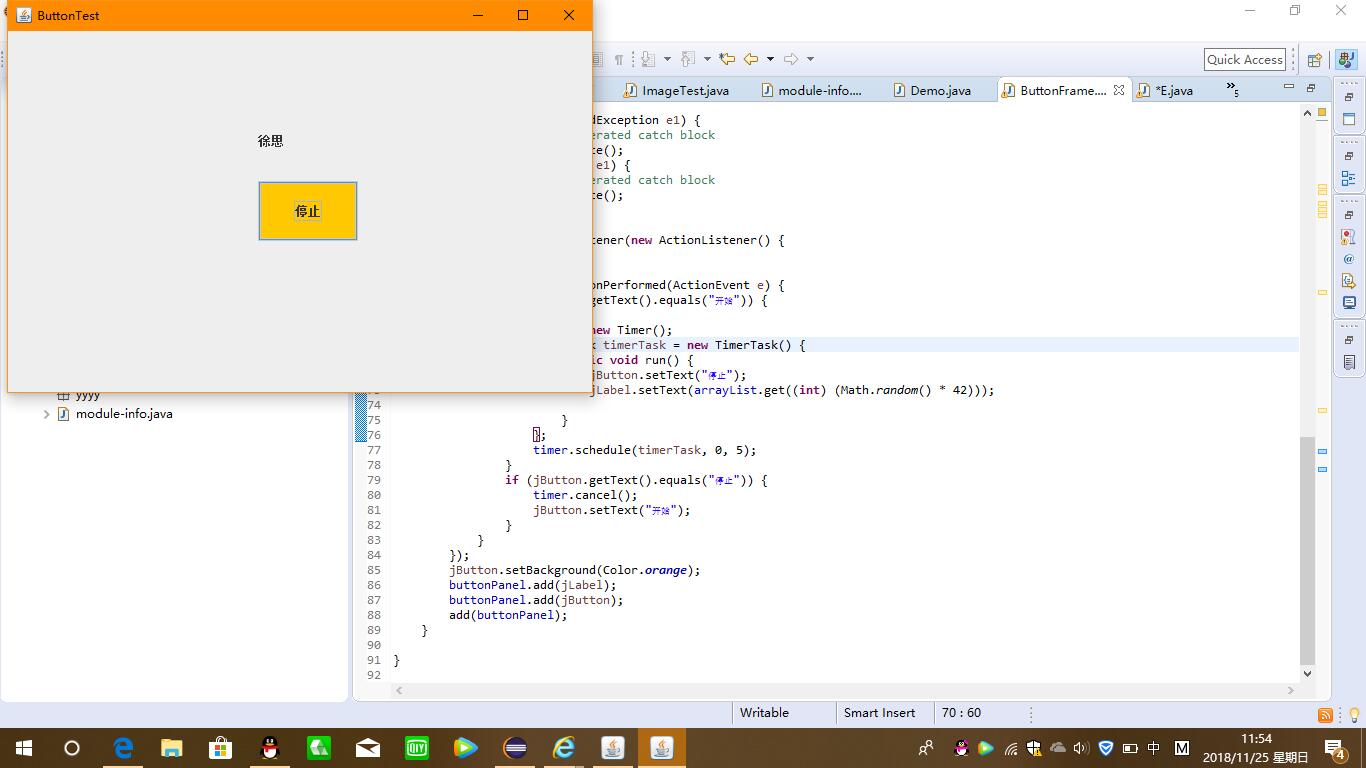
利用班级名单文件、文本框和按钮组件,设计一个有如下界面(图1)的点名器,要求用户点击开始按钮后在文本输入框随机显示2017级网络与信息安全班同学姓名,如图2所示,点击停止按钮后,文本输入框不再变换同学姓名,此同学则是被点到的同学姓名。
port java.awt.BorderLayout;

import java.awt.Color;

import java.awt.Container;

import java.awt.event.ActionEvent;

import java.awt.event.ActionListener;

import java.util.Random;

import javax.swing.JButton;

import javax.swing.JFrame;

import javax.swing.JLabel;

import javax.swing.SwingConstants;

 public class RandomName {

  //主面板

  JFrame rFrame=new JFrame("随机点名器");

  //名字

  String[] stuName={"杨蓉庆","张燕","杨玲","徐思","杨其菊","常慧琢","王燕","小明","小红","小花","小白","白玛次仁","陈亚茹","达拉草","狄慧","冯志霞","孔维莹"}

  //用于存储名字的标签

  JLabel name = new JLabel();

  //按钮

  JButton btn = new JButton("开始点名");

  Random rd = new Random();

  public void init()

  {

      //提示标签页面

      JLabel jt= new JLabel("随机点名器");

      //设置标签居中

      jt.setHorizontalAlignment(SwingConstants.CENTER);

      //设置字体大小

      jt.setFont(new java.awt.Font("随机点名器",1,35));

      //设置名字显示的标签居中

      name.setHorizontalAlignment(SwingConstants.CENTER);

      //通过匿名类实现Action按钮的监听事件

      btn.addActionListener(new ActionListener()

      {

        @Override

        public void actionPerformed(ActionEvent e) {

            // TODO Auto-generated method stub

            //获取随机的姓名

            String n=getRandomName();

            //设置name标签的文字

            name.setText(n);

            //设置字体

            name.setFont(new java.awt.Font(n,1,35));

            //设置字体颜色

            name.setForeground(Color.red);

        }

      });

      //获取JFrame的面板

      Container p = this.rFrame.getContentPane();

      //设置布局方式,我采用的BorderLayout布局

      p.setLayout(new BorderLayout(3,1));

      //添加提示标签在北方

      p.add(jt,BorderLayout.NORTH);

      //添加姓名标签在中央

      p.add(name,BorderLayout.CENTER);

      //添加按钮控件在南方

      p.add(btn,BorderLayout.SOUTH);

      //调整大小,这个是java中无法设置标签的大小

      rFrame.pack();

      //设置窗体大小

      rFrame.setSize(300, 300);

      //设置可以显示

      rFrame.setVisible(true);

  }

  //获取随机的姓名

  public String getRandomName()

  {

      int a = 0;

      //random类去实现随机数时,只能设置上限,也就是说随机数产生的都是0-stuName.length之间的数字

      a = rd.nextInt(stuName.length);

      //rd.setSeed();

      //a = (int)Math.random()*stuName.length;

      return stuName[a];

  }

  public static void main(String[] args)

  {

      RandomName rn=new RandomName();

      rn.init();

  }

}
结果如下:
点名器启动界面

点名器点名界面
2、代码如下:
package 点名器;

import java.awt.EventQueue;

import javax.swing.JFrame;

/**

 * @version 1.34 2015-05-12

 * @author Cay Horstmann

 */

public class Demo

{

   public static void main(String[] args)

   {

      EventQueue.invokeLater(() ->

         {

            JFrame frame = new ButtonFrame();

            frame.setTitle("ButtonTest");

            frame.setDefaultCloseOperation(JFrame.EXIT_ON_CLOSE);

            frame.setVisible(true);

         });

   }

}
package 点名器;

import java.awt.Color;

import java.awt.event.ActionEvent;

import java.awt.event.ActionListener;

import java.io.BufferedReader;

import java.io.File;

import java.io.FileInputStream;

import java.io.FileNotFoundException;

import java.io.IOException;

import java.io.InputStreamReader;

import java.nio.file.Path;

import java.nio.file.Paths;

import java.util.ArrayList;

import java.util.Collections;

import java.util.List;

import java.util.Scanner;

import java.util.Timer;

import java.util.TimerTask;

import javax.swing.JButton;

import javax.swing.JFrame;

import javax.swing.JLabel;

import javax.swing.JPanel;

/**

 * A frame with a button panel

 */

public class ButtonFrame extends JFrame {

    private JPanel buttonPanel;//定义窗格对象

    private static final int DEFAULT_WIDTH = 300 * 2;//窗格宽度

    private static final int DEFAULT_HEIGHT = 200 * 2;//窗格高度

    private ArrayList<String> arrayList;

    public ButtonFrame() {

        setSize(DEFAULT_WIDTH, DEFAULT_HEIGHT);

        buttonPanel = new JPanel();

        buttonPanel.setLayout(null);

        JLabel jLabel = new JLabel("点名器");

        JButton jButton = new JButton("开始");

        jLabel.setBounds(250, 80, 100, 60);//位置

        jButton.setBounds(250, 150, 100, 60);//位置

        arrayList = new ArrayList<>();

        File file = new File("E:/学生.txt");//读取文件

        FileInputStream fis;

        try {

            fis = new FileInputStream(file);

            InputStreamReader in = new InputStreamReader(fis);

            BufferedReader buf = new BufferedReader(in);

            String readLine;

            while ((readLine = buf.readLine()) != null) {

                arrayList.add(readLine);

            }

        } catch (FileNotFoundException e1) {

            // TODO Auto-generated catch block

            e1.printStackTrace();

        } catch (IOException e1) {

            // TODO Auto-generated catch block

            e1.printStackTrace();

        }

        jButton.addActionListener(new ActionListener() {

            Timer timer;

            public void actionPerformed(ActionEvent e) {

                 //如果按钮显示为开始开始运行,停止后按钮显示为停止

                if (jButton.getText().equals("开始")) {

                    timer = new Timer();

                    TimerTask timerTask = new TimerTask() {

                        public void run() {

                            jButton.setText("停止");

                            jLabel.setText(arrayList.get((int) (Math.random() * 42)));

                        }

                    };

                    timer.schedule(timerTask, 0, 15);

                }

                if (jButton.getText().equals("停止")) {

                    timer.cancel();

                    jButton.setText("开始");

                }

            }

        });

        jButton.setBackground(Color.orange);//按钮背景为橙色

        buttonPanel.add(jLabel);

        buttonPanel.add(jButton);

        add(buttonPanel);

    }

}
三,总结
本章我们学习了图形界面事件处理技术的知识,首先掌握了事件处理的基本原理,理解其用途;简单学会了事件处理的基本编程模型;上课在老师的演示代码过程中,我清楚的学习到了lambda表达式的简便性,简化代码的好处和代码的多变性,在实验中,通过助教学长的演示和在书上源代码基础上进行的改编,添加,做出了点名器的代码程序,感觉又是一次充实的实验。

201771010135 杨蓉庆/张燕《面对对象程序设计(java)》第十三周学习总结的更多相关文章
- 201771010135 杨蓉庆《面对对象程序设计(java)》第十八周学习总结
1.实验目的与要求 (1) 综合掌握java基本程序结构: (2) 综合掌握java面向对象程序设计特点: (3) 综合掌握java GUI 程序设计结构: (4) 综合掌握java多线程编程模型: ...
- 201771010135 杨蓉庆《面对对象程序设计(java)》第十二周学习总结
1.实验目的与要求 (1) 掌握Java GUI中框架创建及属性设置中常用类的API: (2) 掌握Java GUI中2D图形绘制常用类的API: (3) 了解Java GUI中2D图形中字体与颜色的 ...
- 201771010135 杨蓉庆《面对对象程序设计(java)》第十周学习总结
1.实验目的与要求 (1) 理解泛型概念: (2) 掌握泛型类的定义与使用: (3) 掌握泛型方法的声明与使用: (4) 掌握泛型接口的定义与实现: (5)了解泛型程序设计,理解其用途. 一.理论知识 ...
- 201771010135杨蓉庆 《面对对象程序设计(java)》第九周学习总结
第7章 异常.日志.断言和调试 1.实验目的与要求 (1) 掌握java异常处理技术: (2) 了解断言的用法: (3) 了解日志的用途: (4) 掌握程序基础调试技巧: 一.理论知识 1.异常:在程 ...
- 201771010135杨蓉庆 《面对对象程序设计(java)》第七周学习总结
学习目标 1.深入理解OO程序设计的特征:继承.多态: 2.熟练掌握Java语言中基于类.继承技术构造程序的语法知识: 3.利用继承定义类设计程序,能够设计开发含有1个主类.2个以上用户自定义类的应用 ...
- 201771010135 杨蓉庆《面对对象程序设计(java)》第十七周学习总结
1.实验目的与要求 (1) 掌握线程同步的概念及实现技术: (2) 线程综合编程练习 一.理论知识 ⚫ 线程同步 (1)多线程并发运行不确定性问题解决方案:引入线 程同步机制,使得另一线程要使用该方法 ...
- 201771010135 杨蓉庆《面对对象程序设计(java)》第十六周学习总结
1.实验目的与要求 (1) 掌握线程概念: (2) 掌握线程创建的两种技术: (3) 理解和掌握线程的优先级属性及调度方法: (4) 掌握线程同步的概念及实现技术: 一.理论知识 ⚫ 线程的概念 (1 ...
- 201771010135 杨蓉庆《面对对象程序设计(java)》第十五周学习总结
1.实验目的与要求 (1) 掌握Java应用程序的打包操作: (2) 了解应用程序存储配置信息的两种方法: (3) 掌握基于JNLP协议的java Web Start应用程序的发布方法: (5) 掌握 ...
- 201771010135杨蓉庆 《面对对象程序设计(java)》第八周学习总结
1.实验目的与要求 (1) 掌握接口定义方法: (2) 掌握实现接口类的定义要求: (3) 掌握实现了接口类的使用要求: (4) 掌握程序回调设计模式: (5) 掌握Comparator接口用法: ( ...
随机推荐
- ubuntu18 + caffe+cpu+anaconda3
本记录只暂时只记录一些错误. 编译错误,opencv3.2与anaconda3下的libtiff不兼容,冲突. 问题查找(查找所有的TIFF库与编译错误提示匹配/usr/lib/x86_64-linu ...
- Linux - Shell - 字符串截取
概述 简述 字符串 截取 背景 之前因为要给文件 批量重命名, 做过字符串截取 当时做好了, 也说了要写点东西 结果忘了 现在又要尝试批量 重命名 才发现之前的东西已经忘了好多 要是当时把博客写下来, ...
- mysql中循环插入数据
循环插入1w条数据 表结构: mysql> desc time_table; +-------+-----------+------+-----+-------------------+---- ...
- window使用pycharm远程连接服务器
1.进入pycharm, File->Settings->Deployment下: 1.新加一个Server,type为SFTP,name自定义一个,例如UI自动化项目: 2.在SFTP ...
- jqGrid colModel 参数(来自中文手册)
jqGrid colModel 参数 ColModel 是jqGrid里最重要的一个属性,设置表格列的属性. 属性 数据类型 备注 默认值 align string left, center, rig ...
- 安全相关的Linux知识
本文用于记录在安全中的Linux常用命令,基础命令可以移步去菜鸟教程(https://www.runoob.com/linux/linux-tutorial.html)学习 Linux重要的4个热键 ...
- 剑指offer 面试题52. 两个链表的第一个公共节点
这题之前leetcode做过,权当复习 首先这题没说是否一定有公共节点,如果代码可能因为这一点造成死循环的,需要提前验证所给两个链表是否有公共节点. 方法1:对于每一个list1的节点,遍历list2 ...
- 线性混合+ROI
相关代码: #include <opencv2/opencv.hpp> #include <iostream> using namespace cv; using namesp ...
- layui表单之单选框提交
<div class="layui-form-item"> <label class="layui-form-label">状态< ...
- Java-POJ1012-Joseph
打表啦 约瑟夫环,处理时下表统一为从0开始更方便! import java.util.Scanner; public class poj1012 { public static boolean cal ...