
Lock锁的使用
在Java多线程中,可以使用synchronized关键字实现线程之间的同步互斥,在jdk1.5后新增的ReentrantLock类同样可达到此效果,且在使用上比synchronized更加灵活。
观察ReentrantLock类可以发现其实现了Lock接口
public class ReentrantLock implements Lock,java.io.Serializable
1、使用ReentrantLock实现同步
lock()方法:上锁
unlock()方法:释放锁
-
/*
-
* 使用ReentrantLock类实现同步
-
* */
-
class MyReenrantLock implements Runnable{
-
//向上转型
-
private Lock lock = new ReentrantLock();
-
public void run() {
-
//上锁
-
lock.lock();
-
for(int i = 0; i < 5; i++) {
-
System.out.println("当前线程名: "+ Thread.currentThread().getName()+" ,i = "+i);
-
}
-
//释放锁
-
lock.unlock();
-
}
-
}
-
public class MyLock {
-
public static void main(String[] args) {
-
MyReenrantLock myReenrantLock = new MyReenrantLock();
-
Thread thread1 = new Thread(myReenrantLock);
-
Thread thread2 = new Thread(myReenrantLock);
-
Thread thread3 = new Thread(myReenrantLock);
-
thread1.start();
-
thread2.start();
-
thread3.start();
-
}
-
}
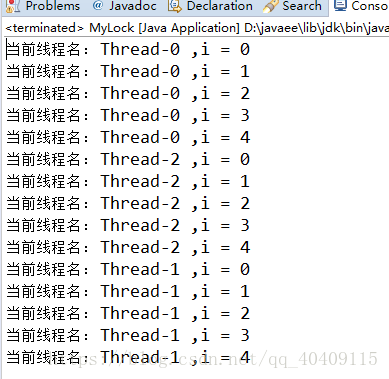
由此我们可以看出,只有当当前线程打印完毕后,其他的线程才可继续打印,线程打印的数据是分组打印,因为当前线程持有锁,但线程之间的打印顺序是随机的。
即调用lock.lock()代码的线程就持有了“对象监视器”,其他线程只有等待锁被释放再次争抢。
2、使用Condition实现等待/通知
synchronized关键字结合wait()和notify()及notifyAll()方法的使用可以实现线程的等待与通知模式。在使用notify()、notifyAll()方法进行通知时,被通知的线程是JVM随机选择的。
类ReentrantLock类同样可以实现该功能,需要借助Condition对象,可实现“选择性通知”。Condition类是jdk1.5提供的,且在一个Lock对象中可以创建多个Condition(对象监视器)实例。
Condition类的await():是当前执行任务的线程处于等待状态
-
/*
-
* 错误的使用Condition实现等待、通知
-
* */
-
class MyCondition implements Runnable{
-
private Lock lock = new ReentrantLock();
-
public Condition condition = lock.newCondition();
-
public void run() {
-
try {
-
System.out.println("当前线程名:"+Thread.currentThread().getName()+" 开始等待时间:"+System.currentTimeMillis());
-
//线程等待
-
condition.await();
-
System.out.println("我陷入了等待...");
-
} catch (InterruptedException e) {
-
e.printStackTrace();
-
}
-
}
-
}
-
public class MyLock{
-
public static void main(String[] args) {
-
MyCondition myCondition = new MyCondition();
-
Thread thread1 = new Thread(myCondition,"线程1");
-
thread1.start();
-
}
-
}
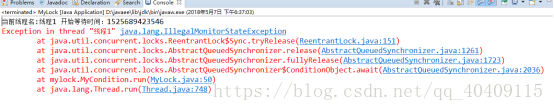
观察运行结果可以发现,报出监视器出错的异常,解决的办法是我们必须在condition.await()方法调用前用lock.lock()代码获得同步监视器。对上述代码做出如下修改:
-
/*
-
* 使用Condition实现等待
-
* */
-
class MyCondition implements Runnable{
-
private Lock lock = new ReentrantLock();
-
public Condition condition = lock.newCondition();
-
public void run() {
-
try {
-
//上锁
-
lock.lock();
-
System.out.println("当前线程名:"+Thread.currentThread().getName()+" 开始等待时间:"+System.currentTimeMillis());
-
//线程等待
-
condition.await();
-
System.out.println("我陷入了等待...");
-
} catch (InterruptedException e) {
-
e.printStackTrace();
-
}finally {
-
//释放锁
-
lock.unlock();
-
System.out.println("锁释放了!");
-
}
-
}
-
}
-
public class MyLock{
-
public static void main(String[] args) {
-
MyCondition myCondition = new MyCondition();
-
Thread thread1 = new Thread(myCondition,"线程1");
-
thread1.start();
-
}
-
}

在控制台只打印出一句,原因是调用了Condition对象的await()方法,是的当前执行任务的线程进入等待状态。
Condition类的signal():是当前执行任务的线程处于等待状态
-
/*
-
* 使用Condition实现等待、通知
-
* */
-
class MyCondition implements Runnable{
-
private Lock lock = new ReentrantLock();
-
public Condition condition = lock.newCondition();
-
public void run() {
-
try {
-
//上锁
-
lock.lock();
-
System.out.println(" 开始等待时间:"+System.currentTimeMillis());
-
System.out.println("我陷入了等待...");
-
//线程等待
-
condition.await();
-
//释放锁
-
lock.unlock();
-
System.out.println("锁释放了!");
-
} catch (InterruptedException e) {
-
e.printStackTrace();
-
}
-
}
-
//通知方法
-
public void signal(){
-
try {
-
lock.lock();
-
System.out.println("结束等待时间:"+System.currentTimeMillis());
-
//通知等待线程
-
condition.signal();
-
} finally {
-
lock.unlock();
-
}
-
}
-
}
-
public class MyLock{
-
public static void main(String[] args) throws InterruptedException {
-
MyCondition myCondition = new MyCondition();
-
Thread thread1 = new Thread(myCondition,"线程1");
-
thread1.start();
-
Thread.sleep(3000);
-
myCondition.signal();
-
}
-
}
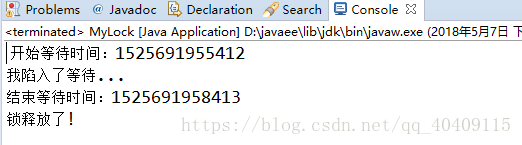
观察结果我们成功地实现了等待通知。
可以得知:Object类中的wait()方法等同于Condition类中的await()方法。
Object类中的wait(long timeout)方法等同于Condition类中的await(long time,TimeUnit unit)方法。
Object类中的notify()方法等同于Condition类中的singal()方法。
Object类中的notifyAll()方法等同于Condition类中的singalAll()方法。
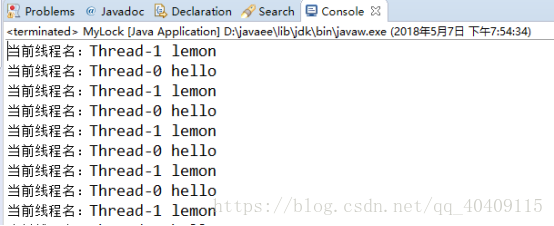
3、生产者消费者模式
-
/*
-
* 生产者、消费者模式
-
* 一对一交替打印
-
* */
-
class MyServer{
-
private ReentrantLock lock = new ReentrantLock();
-
public Condition condition = lock.newCondition();
-
public Boolean flag = false;
-
public void set() {
-
try {
-
lock.lock();
-
while(flag == true) {
-
condition.await();
-
}
-
System.out.println("当前线程名:"+Thread.currentThread().getName()+" hello");
-
flag = true;
-
condition.signal();
-
} catch (InterruptedException e) {
-
e.printStackTrace();
-
}finally {
-
lock.unlock();
-
}
-
}
-
public void get() {
-
try {
-
lock.lock();
-
while(flag == false) {
-
condition.await();
-
}
-
System.out.println("当前线程名:"+Thread.currentThread().getName()+" lemon");
-
flag = false;
-
condition.signal();
-
} catch (InterruptedException e) {
-
e.printStackTrace();
-
}finally {
-
lock.unlock();
-
}
-
}
-
}
-
class MyCondition1 extends Thread{
-
private MyServer myServer;
-
public MyCondition1(MyServer myServer) {
-
super();
-
this.myServer = myServer;
-
}
-
public void run() {
-
for(int i = 0 ;i < Integer.MAX_VALUE;i++) {
-
myServer.set();
-
}
-
}
-
}
-
class MyCondition2 extends Thread{
-
private MyServer myServer;
-
public MyCondition2(MyServer myServer) {
-
super();
-
this.myServer = myServer;
-
}
-
public void run() {
-
for(int i = 0 ;i < Integer.MAX_VALUE;i++) {
-
myServer.get();
-
}
-
}
-
}
-
public class MyLock{
-
public static void main(String[] args) throws InterruptedException {
-
MyServer myServer = new MyServer();
-
MyCondition1 myCondition1 = new MyCondition1(myServer);
-
MyCondition2 myCondition2 = new MyCondition2(myServer);
-
myCondition1.start();
-
myCondition2.start();
-
}
-
}
-
/*
-
* 生产者、消费者模式
-
* 多对多交替打印
-
* */
-
class MyServer{
-
private ReentrantLock lock = new ReentrantLock();
-
public Condition condition = lock.newCondition();
-
public Boolean flag = false;
-
public void set() {
-
try {
-
lock.lock();
-
while(flag == true) {
-
System.out.println("可能会有连续的hello进行打印");
-
condition.await();
-
}
-
System.out.println("当前线程名:"+Thread.currentThread().getName()+" hello");
-
flag = true;
-
condition.signal();
-
} catch (InterruptedException e) {
-
e.printStackTrace();
-
}finally {
-
lock.unlock();
-
}
-
}
-
public void get() {
-
try {
-
lock.lock();
-
while(flag == false) {
-
System.out.println("可能会有连续的lemon进行打印");
-
condition.await();
-
}
-
System.out.println("当前线程名:"+Thread.currentThread().getName()+" lemon");
-
flag = false;
-
condition.signal();
-
} catch (InterruptedException e) {
-
e.printStackTrace();
-
}finally {
-
lock.unlock();
-
}
-
}
-
}
-
class MyCondition1 extends Thread{
-
private MyServer myServer;
-
public MyCondition1(MyServer myServer) {
-
super();
-
this.myServer = myServer;
-
}
-
public void run() {
-
for(int i = 0 ;i < Integer.MAX_VALUE;i++) {
-
myServer.set();
-
}
-
}
-
}
-
class MyCondition2 extends Thread{
-
private MyServer myServer;
-
public MyCondition2(MyServer myServer) {
-
super();
-
this.myServer = myServer;
-
}
-
public void run() {
-
for(int i = 0 ;i < Integer.MAX_VALUE;i++) {
-
myServer.get();
-
}
-
}
-
}
-
public class MyLock{
-
public static void main(String[] args) throws InterruptedException {
-
MyServer myServer = new MyServer();
-
MyCondition1[] myCondition1 = new MyCondition1[10];
-
MyCondition2[] myCondition2 = new MyCondition2[10];
-
for(int i = 0; i < 10; i++) {
-
myCondition1[i] = new MyCondition1(myServer);
-
myCondition2[i] = new MyCondition2(myServer);
-
myCondition1[i].start();
-
myCondition2[i].start();
-
}
-
}
-
}
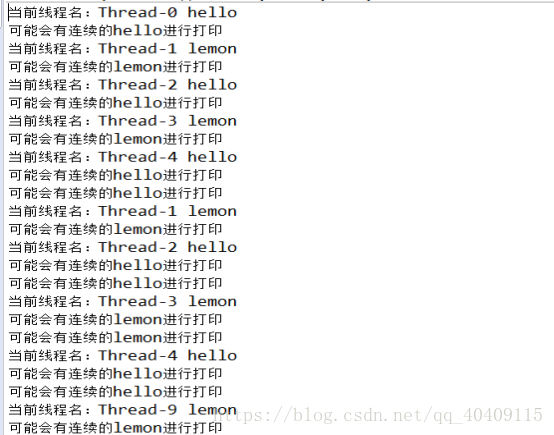
4、公平锁与非公平锁
锁Lock分为“公平锁”和“非公平锁”。
公平锁:表示线程获取锁的顺序是按照线程加锁的顺序来的进行分配的,即先来先得FIFO先进先出顺序。
非公平锁:一种获取锁的抢占机制,是随机拿到锁的,和公平锁不一样的是先来的不一定先拿到锁,这个方式可能造成某些线程一直拿不到锁,结果就是不公平的·。
-
/*
-
* 公平锁
-
* */
-
class MyService{
-
private ReentrantLock lock;
-
public MyService(boolean isFair) {
-
super();
-
lock = new ReentrantLock(isFair);
-
}
-
public void serviceMethod() {
-
try {
-
lock.lock();
-
System.out.println("线程名:"+Thread.currentThread().getName()+"获得锁定");
-
} finally {
-
lock.unlock();
-
}
-
}
-
}
-
public class MyLock{
-
public static void main(String[] args) {
-
//设置当前为true公平锁
-
final MyService myService = new MyService(true);
-
Runnable runnable = new Runnable() {
-
public void run() {
-
System.out.println("线程名:"+Thread.currentThread().getName()+"运行了");
-
myService.serviceMethod();
-
}
-
};
-
Thread[] threads = new Thread[10];
-
for(int i = 0;i < 10; i++) {
-
threads[i] = new Thread(runnable);
-
}
-
for(int i = 0;i < 10; i++) {
-
threads[i].start();
-
}
-
}
-
}
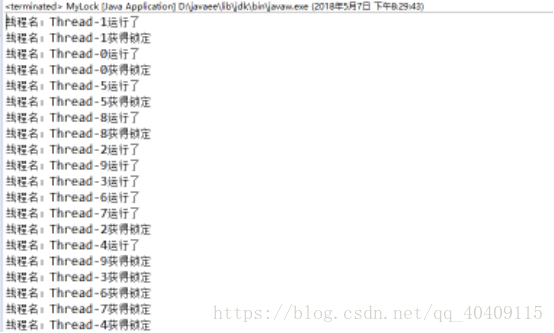
由打印结果可以看出,基本呈现有序的状态,这就是公平锁的特点。
-
/*
-
* 非公平锁
-
* */
-
class MyService{
-
private ReentrantLock lock;
-
public MyService(boolean isFair) {
-
super();
-
lock = new ReentrantLock(isFair);
-
}
-
public void serviceMethod() {
-
try {
-
lock.lock();
-
System.out.println("线程名:"+Thread.currentThread().getName()+"获得锁定");
-
} finally {
-
lock.unlock();
-
}
-
}
-
}
-
public class MyLock{
-
public static void main(String[] args) {
-
//设置当前为true公平锁
-
final MyService myService = new MyService(false);
-
Runnable runnable = new Runnable() {
-
public void run() {
-
System.out.println("线程名:"+Thread.currentThread().getName()+"运行了");
-
myService.serviceMethod();
-
}
-
};
-
Thread[] threads = new Thread[10];
-
for(int i = 0;i < 10; i++) {
-
threads[i] = new Thread(runnable);
-
}
-
for(int i = 0;i < 10; i++) {
-
threads[i].start();
-
}
-
}
-
}
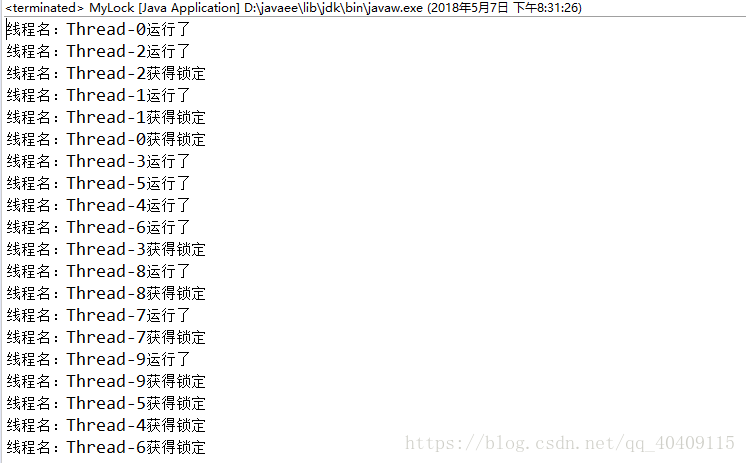
非公平锁的运行结果基本都是无须的,则可以表明先start()启动的线程并不一定先获得锁。
5、使用ReentrantReadWriteLock类
类ReentrantLock具有完全互斥排他的效果,即同一时间只有一个线程在执行ReentrantLock.lock()方法后的任务。这样虽然保证了实例变量的线程安全性,但是效率低下。所以在Java中提供有读写锁ReentrantReadWriteLock类,使其效率可以加快。在某些不需要操作实例变量的方法中,完全可以使用ReentrantReadWriteLock来提升该方法代码运行速度。
读写锁表示两个锁:
读操作相关的锁,也成为共享锁。
写操作相关的锁,也叫排他锁。
多个读锁之间不互斥,读锁与写锁互斥,多个写锁互斥。
在没有线程Thread进行写入操作时,进行读操作的多个Thread可以获取读锁,但是进行写入操作时的Thread只有获取写锁后才能进行写入操作。
(1)多个读锁共享
-
/*
-
* 多个读锁共享
-
* */
-
class MyService{
-
private ReentrantReadWriteLock lock = new ReentrantReadWriteLock();
-
public void read() {
-
try {
-
//读锁
-
lock.readLock().lock();
-
System.out.println("线程名: "+Thread.currentThread().getName()+"获取读锁" );
-
Thread.sleep(1000);
-
} catch (InterruptedException e) {
-
e.printStackTrace();
-
}finally {
-
//释放读锁
-
lock.readLock().unlock();
-
}
-
}
-
}
-
//线程1
-
class Thread1 extends Thread{
-
private MyService myService;
-
public Thread1(MyService myService) {
-
super();
-
this.myService = myService;
-
}
-
public void run() {
-
myService.read();
-
}
-
}
-
//线程2
-
class Thread2 extends Thread{
-
private MyService myService;
-
public Thread2(MyService myService) {
-
super();
-
this.myService = myService;
-
}
-
public void run() {
-
myService.read();
-
}
-
}
-
public class MyLock{
-
public static void main(String[] args) {
-
MyService myService = new MyService();
-
Thread1 thread1 = new Thread1(myService);
-
Thread2 thread2 = new Thread2(myService);
-
thread1.start();
-
thread2.start();
-
-
}
-
}
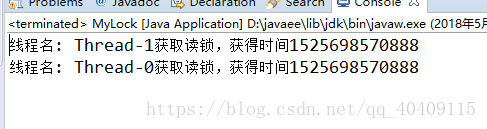
从打印结果可以看出,两个线程几乎同时进入lock()方法后面的代码。
说明在此时使用lock.readLock()读锁可以提高程序运行效率,允许多个线程同时执行lock()方法后的代码。
(2)多个写锁互斥
-
/*
-
* 多个写锁互斥
-
* */
-
class MyService{
-
private ReentrantReadWriteLock lock = new ReentrantReadWriteLock();
-
public void write() {
-
try {
-
//写锁
-
lock.writeLock().lock();
-
System.out.println("线程名: "+Thread.currentThread().getName()+"获取写锁,获得时间:"+System.currentTimeMillis() );
-
Thread.sleep(1000);
-
} catch (InterruptedException e) {
-
e.printStackTrace();
-
}finally {
-
//释放写锁
-
lock.writeLock().unlock();
-
}
-
}
-
}
-
//线程1
-
class Thread1 extends Thread{
-
private MyService myService;
-
public Thread1(MyService myService) {
-
super();
-
this.myService = myService;
-
}
-
public void run() {
-
myService.write();
-
}
-
}
-
//线程2
-
class Thread2 extends Thread{
-
private MyService myService;
-
public Thread2(MyService myService) {
-
super();
-
this.myService = myService;
-
}
-
public void run() {
-
myService.write();
-
}
-
}
-
public class MyLock{
-
public static void main(String[] args) {
-
MyService myService = new MyService();
-
Thread1 thread1 = new Thread1(myService);
-
Thread2 thread2 = new Thread2(myService);
-
thread1.start();
-
thread2.start();
-
-
}
-
}
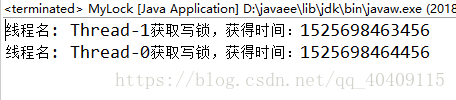
使用写锁代码writeLock.lock()的效果就是同一时间只允许一个线程执行lock()方法后的代码。
(3)读写/写读互斥
-
/*
-
* 读写/写读互斥,
-
* */
-
class MyService{
-
private ReentrantReadWriteLock lock = new ReentrantReadWriteLock();
-
public void read() {
-
try {
-
//读锁
-
lock.readLock().lock();
-
System.out.println("线程名: "+Thread.currentThread().getName()+"获取读锁,获得时间:"+System.currentTimeMillis() );
-
Thread.sleep(1000);
-
} catch (InterruptedException e) {
-
e.printStackTrace();
-
}finally {
-
//释放读锁
-
lock.readLock().unlock();
-
}
-
}
-
public void write() {
-
try {
-
//写锁
-
lock.writeLock().lock();
-
System.out.println("线程名: "+Thread.currentThread().getName()+"获取写锁,获得时间:"+System.currentTimeMillis() );
-
Thread.sleep(1000);
-
} catch (InterruptedException e) {
-
e.printStackTrace();
-
}finally {
-
//释放写锁
-
lock.writeLock().unlock();
-
}
-
}
-
}
-
//线程1
-
class Thread1 extends Thread{
-
private MyService myService;
-
public Thread1(MyService myService) {
-
super();
-
this.myService = myService;
-
}
-
public void run() {
-
myService.read();
-
}
-
}
-
//线程2
-
class Thread2 extends Thread{
-
private MyService myService;
-
public Thread2(MyService myService) {
-
super();
-
this.myService = myService;
-
}
-
public void run() {
-
myService.write();
-
}
-
}
-
public class MyLock{
-
public static void main(String[] args) {
-
MyService myService = new MyService();
-
Thread1 thread1 = new Thread1(myService);
-
Thread2 thread2 = new Thread2(myService);
-
thread1.start();
-
thread2.start();
-
}
-
}
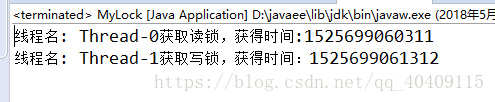
此运行结果说明“读写/写读”操作是互斥的。
由此可表明:只要出现“写”操作,就是互斥的。
Lock锁的使用的更多相关文章
- Lock锁的使用示例
Lock锁是java5用来代替synchronized的一种面向对象的锁的方案 public class LockDemo { /** * Lock是用来替换synchronized, 优点是Lock ...
- Android(java)学习笔记69:JDK5之后的Lock锁的概述和使用
1. Lock锁的概述: java.util.concurrent.locks,接口Lock 首先Lock是一个接口,Lock实现提供了比使用synchronized方法 和 同步代码块更为广泛的锁定 ...
- python多线程threading.Lock锁用法实例
本文实例讲述了python多线程threading.Lock锁的用法实例,分享给大家供大家参考.具体分析如下: python的锁可以独立提取出来 mutex = threading.Lock() #锁 ...
- Lock锁_线程_线程域
using System;using System.Collections.Generic;using System.ComponentModel;using System.Data;using Sy ...
- (删)Java线程同步实现二:Lock锁和Condition
在上篇文章(3.Java多线程总结系列:Java的线程同步实现)中,我们介绍了用synchronized关键字实现线程同步.但在Java中还有一种方式可以实现线程同步,那就是Lock锁. 一.同步锁 ...
- 转: 【Java并发编程】之二十:并发新特性—Lock锁和条件变量(含代码)
简单使用Lock锁 Java5中引入了新的锁机制--Java.util.concurrent.locks中的显式的互斥锁:Lock接口,它提供了比synchronized更加广泛的锁定操作.Lock接 ...
- 使用Lock锁生产者消费者模式
package com.java.concurrent; import java.util.concurrent.locks.Condition; import java.util.concurren ...
- JAVA基础再回首(二十五)——Lock锁的使用、死锁问题、多线程生产者和消费者、线程池、匿名内部类使用多线程、定时器、面试题
JAVA基础再回首(二十五)--Lock锁的使用.死锁问题.多线程生产者和消费者.线程池.匿名内部类使用多线程.定时器.面试题 版权声明:转载必须注明本文转自程序猿杜鹏程的博客:http://blog ...
- java并发编程的艺术——第五章总结(Lock锁与队列同步器)
Lock锁 锁是用来控制多个线程访问共享资源的方式. 一般来说一个锁可以防止多个线程同时访问共享资源(但有些锁可以允许多个线程访问共享资源,如读写锁). 在Lock接口出现前,java使用synchr ...
- Java中的Lock锁
Lock锁介绍: 在java中可以使用 synchronized 来实现多线程下对象的同步访问,为了获得更加灵活使用场景.高效的性能,java还提供了Lock接口及其实现类ReentrantLock和 ...
随机推荐
- sed 替换命令使用
输入文件不会被修改,sed 只在模式空间中执行替换命令,然后输出模式空间的内容.文本文件 employee.txt 101,John Doe,CEO 102,Jason Smith,IT Manage ...
- .NET 生态系统的蜕变之 .NET 6云原生
云原生的英文名是cloud native,native 就是土著的意思,也就是土著对当地的环境是非常适应的,在云的环境和传统的数据中心是非常不同的,云原生就是要用的云的技术来构建应用, 利用云的技术来 ...
- 【python+postman接口自动化测试】(1)网络基础知识
一.IP地址 就像每个人都有一个身份证号码 IP地址是IP协议提供的一种统一的地址格式,它为互联网上的每一个网络和每一台主机分配一个逻辑地址. 查看IP命令: Windows: ipconfig Li ...
- [python]django的mode设置表结构和serializers序列化数据
框架使用的库版本 python3.6.5 Django-2.0.6 djangorestframework-3.8.2 mysqlclient-1.3.12 1.项目结构声明,数据库在setting. ...
- celery config
/* Useful celery config. app = Celery('tasks', broker='redis://localhost:6379', backend='redis://loc ...
- Part 61 to 63 Talking about partial class and partial method in C#
部分类和部分方法 部分类是用partial声明的类,它允许我们把一个类分割成两个或多个类,当应用程序编译的完成的时候,多个部分类会结合成一个类,同时partial关键字也可以用于声明结构和接口. 那么 ...
- Django 小实例S1 简易学生选课管理系统 6 实现登录逻辑
Django 小实例S1 简易学生选课管理系统 第6节--实现登录逻辑 点击查看教程总目录 作者自我介绍:b站小UP主,时常直播编程+红警三,python1对1辅导老师. 1 业务逻辑 本教程第四节里 ...
- [gym102538H]Horrible Cycles
将右侧$n$个点逆序排列,并将左侧的第$i$个点插入到右侧的$a_{i}$之前(左侧的点顺序任意) 换言之,一个左侧的点恰与(排列中)其之后所有右侧的点有边 对于一个简单环,仅保留(排列中)前$i$个 ...
- [ARC117D]Miracle Tree
将$E_{i}$从小到大排序(显然不会相同),假设$E_{p_{i}}$为从小到大第$i$小 此时,必然有$E_{p_{1}}=1$,否则可以将$E_{p_{i}}$都减去$E_{p_{1}}-1$, ...
- 力扣 - 剑指 Offer 54. 二叉搜索树的第k大节点
题目 剑指 Offer 54. 二叉搜索树的第k大节点 思路1 二叉搜索树的特性就是中序遍历结果为递增序列,而题目要求的是第 k 大节点,所以就应该是要遍历结果为降序, 按照先遍历左子树.输出节点.遍 ...