
第29题:LeetCode54:Spiral Matrix螺旋矩阵
给定一个包含 m x n 个元素的矩阵(m 行, n 列),请按照顺时针螺旋顺序,返回矩阵中的所有元素。
示例 1:
输入:

[

 [ 1, 2, 3 ],

 [ 4, 5, 6 ],

 [ 7, 8, 9 ]

]

输出: [1,2,3,6,9,8,7,4,5]
示例 2:
输入:

[

  [1, 2, 3, 4],

  [5, 6, 7, 8],

  [9,10,11,12]

]

输出: [1,2,3,4,8,12,11,10,9,5,6,7]
考点
1.抽象问题画图
2.复杂问题分解成简单问题
思路
1.把矩阵看成若干个顺时针方向的圈组成
1.1 每个圈的起点都是(start,start) ,横纵坐标相等
1.2 对于5*5的矩阵,最后一圈只有一个数字(2,2),5>2*2.对于6*6的矩阵,最后一圈有四个数字,左上角起点(2,2),6>2*2
1.3 横纵坐标都小于行列数的1/2,才能作为起点。下标从0开始,所以是小于,不是小于等于
循环条件 while ( cols > start << 1 && rows > start<<1)
2.打印矩阵最里面的一圈,可能只需要三步、两步、甚至一步
2.1 定义起点横纵坐标的终止位置
终止列号:EndX = cols - 1 - start;
终止行号:EndY = rows - 1 - start;
数学意义:
边界坐标 = 最后一列坐标 - 已经打印过的列数=(cols-1)-(start-0)= cols - 1 - start;

2.2 从左到右打印第一行
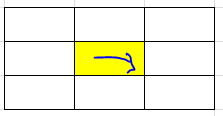
第一步总是需要的,
循环条件:i=start;i<=EndX;i++
print num[start][i]
2.3 从上到下打印最后一列:
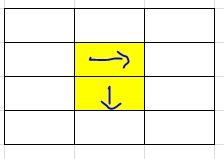
第二步条件:至少两列, start<EndY
循环条件:i=start+1;i<=endY;i++
print num[i][EndX];
2.4 从右到左打印最后一行
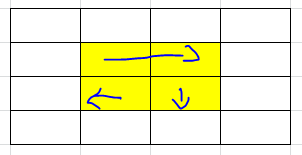
第三步条件:至少两行两列 start<EndX && start < EndY
循环条件: i=EndX-1;i>=start;i--
print num[EndY][i]
2.5 从下到上打印第一列
第四部条件:至少三行两列 start<EndX&&start<EndY-1
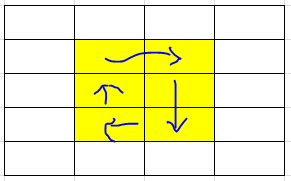
循环条件: i=EndY-1;i>start;i--
print num[i][start]
代码
leecode
class Solution {

public:

    vector<int> spiralOrder(vector<vector<int>>& matrix) {

        //0.函数入口判断

        vector<int> temp;

        if(!matrix.size())

            return temp;

        //1.计算行列数

        int start= 0;

        int rows=matrix.size();

        int cols=matrix[0].size();

        vector<int> ret(rows*cols);

        ret.clear();

        //2.打印循环

        while(start<<1<rows&&start<<1<cols)

        {

             //打印

            {

                //2.1 设置边界值

                int EndX=cols-1-start;

                int EndY=rows-1-start;

                //2.2 第一步从左到右打印

                for(int i = start;i<=EndX;i++)

                {

                    ret.push_back(matrix[start][i]);

                }

                //2.3 第二步从上到下打印 条件至少两行 start<EndY

                if(start<EndY)

                {

                    for(int i = start+1;i<=EndY;i++)

                    {

                        ret.push_back(matrix[i][EndX]);

                    }

                }

                //2.4第三步 从右往左 至少两列两行 start<EndX&&start<EndY

                if(start<EndX&&start<EndY)

                {

                    for(int i=EndX-1;i>=start;i--)

                    {

                        ret.push_back(matrix[EndY][i]);

                    }

                }

                //2.5第四步 从下往上 至少三行两列 start<EndX&&start<EndY-1

                if(start<EndX&&start<EndY-1)

                {

                    for(int i = EndY-1;i>start;i--)

                    {

                        ret.push_back(matrix[i][start]);

                    }

                }

            }

            start++;

        }

        return ret;

    }

};
nowcoder
//1.计算行列数

        int start= 0;

        int rows=matrix.size();

        int cols=matrix[0].size();

        vector<int> ret(rows*cols);

        ret.clear();

        //2.打印循环

        while(start*2<rows&&start*2<cols)

        {

             //打印

            {

                //2.1 设置边界值

                int EndX=cols-1-start;

                int EndY=rows-1-start;

                //2.2 第一步从左到右打印

                for(int i = start;i<=EndX;i++)

                {

                    ret.push_back(matrix[start][i]);

                }

                //2.3 第二步从上到下打印 条件至少两行 start<EndY

                if(start<EndY)

                {

                    for(int i = start+1;i<=EndY;i++)

                    {

                        ret.push_back(matrix[i][EndX]);

                    }

                }

                //2.4第三步 从右往左 至少两列两行 start<EndX&&start<EndY

                if(start<EndX&&start<EndY)

                {

                    for(int i=EndX-1;i>=start;i--)

                    {

                        ret.push_back(matrix[EndY][i]);

                    }

                }

                //2.5第四步 从下往上 至少三行两列 start<EndX&&start<EndY-1

                if(start<EndX&&start<EndY-1)

                {

                    for(int i = EndY-1;i>start;i--)

                    {

                        ret.push_back(matrix[i][start]);

                    }

                }

            }

            start++;

        }

        return ret;
Problem
1.How to set initial size of std::vector?
std::vector<CustomClass *> whatever(20000);or:
std::vector<CustomClass *> whatever;

whatever.reserve(20000);
The former sets the actual size of the array -- i.e., makes it a vector of 20000 pointers.
The latter leaves the vector empty, but reserves space for 20000 pointers, so you can insert (up to) that many without it having to reallocate.
At least in my experience, it's fairly unusual for either of these to make a huge difference in performance--but either can affect correctness under some circumstances. In particular, as long as no reallocation takes place, iterators into the vector are guaranteed to remain valid, and once you've set the size/reserved space, you're guaranteed there won't be any reallocations as long as you don't increase the size beyond that.
2.Constructing vectors
// constructing vectors

#include <iostream>

#include <vector>

int main ()

{

  // constructors used in the same order as described above:

  std::vector<int> first;                                // empty vector of ints

  std::vector<int> second (4,100);                       // four ints with value 100

  std::vector<int> third (second.begin(),second.end());  // iterating through second

  std::vector<int> fourth (third);                       // a copy of third

  // the iterator constructor can also be used to construct from arrays:

  int myints[] = {16,2,77,29};

  std::vector<int> fifth (myints, myints + sizeof(myints) / sizeof(int) );

  std::cout << "The contents of fifth are:";

  for (std::vector<int>::iterator it = fifth.begin(); it != fifth.end(); ++it)

    std::cout << ' ' << *it;

  std::cout << '\n';

  return 0;

}
Output:
The contents of fifth are: 16 2 77 29
3.Clearing vectors
清空容器中的内容,但如果是指针对象的话,并不能清空其内容,必须要像以下方法一样才能达到清空指针对象的内容:
vector<int*> xx;

for(int it=0;it!=xx.size();++it)

{

	delete xx[it];

}

xx.clear();
Removes all elements from the vector (which are destroyed), leaving the container with a size of 0.
A reallocation is not guaranteed to happen, and the vector capacity is not guaranteed to change due to calling this function. A typical alternative that forces a reallocation is to use swap:
vector<T>().swap(x); // clear x reallocating#include <iostream>
#include <vector> int main ()
{
std::vector<int> myvector;
myvector.push_back (100);
myvector.push_back (200);
myvector.push_back (300); std::cout << "myvector contains:";
for (unsigned i=0; i<myvector.size(); i++)
std::cout << ' ' << myvector[i];
std::cout << '\n'; myvector.clear();
myvector.push_back (1101);
myvector.push_back (2202); std::cout << "myvector contains:";
for (unsigned i=0; i<myvector.size(); i++)
std::cout << ' ' << myvector[i];
std::cout << '\n'; return 0;
}Output:
myvector contains: 100 200 300
myvector contains: 1101 220
4.《深入理解C++11》笔记--noexcept
5.reference binding to null pointer of type 'struct value_type'
在LeetCode做题的过程中,遇到"reference binding to null pointer of type ‘value_type’" 这个问题,现在对这个问题进行一下分析和总结。
产生原因:
1.对于一些stl和一些数据结构掌握不准确。
2.忽视判断条件。错误种类:
1.测试样例输入为非空数组情况:Runtime Error Message: reference binding to null pointer of type 'value_type' Last executed input: [1]
Runtime Error Message:reference binding to null pointer of type 'value_type' Last executed input:[[1,1,1],[1,0,1],[1,1,1]]
可能原因:
a.数组越界,在对vector初始化的时候没有初始化到合适大小,而在接下来的使用中使用了越界的下标。
例:class Solution {
public:
int maxProfit(vector<int>& nums) {
int len = prices.size();
vector<int> sold(len - 1, 0); // 初始化长度为len - 1
for (int i = 1; i < len; i++) {
sold[i] = 1; // 越界
}
return sold[len - 1]; // 访问越界
}
};b.对于vector构建出来的二维数组没有进行空间的申请,比如有些返回类型为vector<vector<>>类型的函数,对于这个返回值vector表示的二维数组要先申请大小,否则使用下标访问就会报这类错误。
例:vector<vector<int>> imageSmoother(vector<vector<int>>& M) {
vector<vector<int>> res(M.size()); // 这里要进行初始化
for (int i = 0; i < res.size(); i++) res[i].resize(M[0].size()); // 这里也要进行初始化
for (int i = 0; i < M.size(); i++) {
for (int j = 0; j < M[0].size(); j++) {
res[i][j] = 1;
}
}
return res;
}2.测试样例输入为空数组情况:
Runtime Error Message:reference binding to null pointer of type 'value_type'
Last executed input:[]可能原因:
对于数组长度为0的情况没有进行判断,加入判断条件就可以解决。解决方法:函数入口判断,返回一个临时变量
vector<int> spiralOrder(vector<vector<int>>& matrix)

{

    vector<int> temp;

    if(!matrix.size())

        return temp;

}
总结
这类错误多数是因为在编程的过程中由于一些判断或者初始化细节没有考虑到,解决起来很简单,但是也容易让人忽视。
5.位运算
总是把 * 2的操作 写成 <<2,实际上应该是 <<1
而且优先级见下 ,高于比较运算符,从左至右
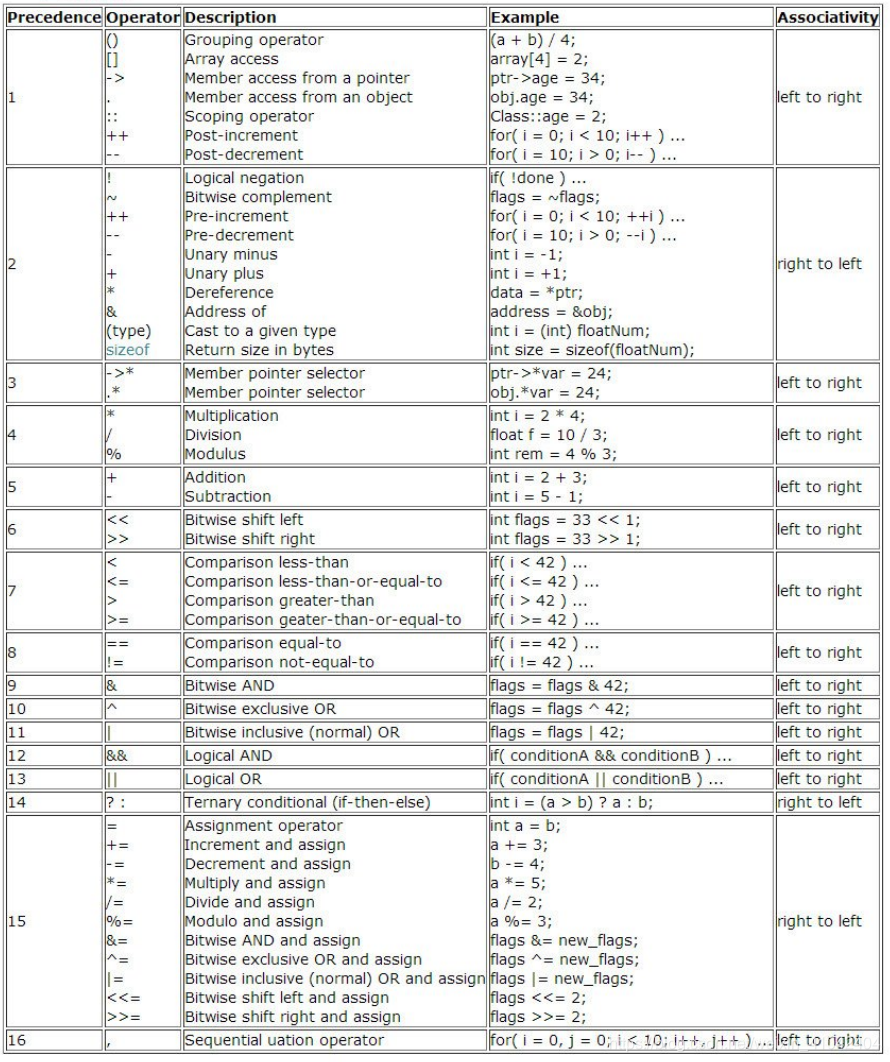
第29题:LeetCode54:Spiral Matrix螺旋矩阵的更多相关文章
- Leetcode54. Spiral Matrix螺旋矩阵
给定一个包含 m x n 个元素的矩阵(m 行, n 列),请按照顺时针螺旋顺序,返回矩阵中的所有元素. 示例 1: 输入: [ [ 1, 2, 3 ], [ 4, 5, 6 ], [ 7, 8, 9 ...
- Leetcode 54:Spiral Matrix 螺旋矩阵
54:Spiral Matrix 螺旋矩阵 Given a matrix of m x n elements (m rows, n columns), return all elements of t ...
- [LeetCode] Spiral Matrix 螺旋矩阵
Given a matrix of m x n elements (m rows, n columns), return all elements of the matrix in spiral or ...
- PAT甲级——1105 Spiral Matrix (螺旋矩阵)
此文同步发布在CSDN:https://blog.csdn.net/weixin_44385565/article/details/90484058 1105 Spiral Matrix (25 分) ...
- leetCode 54.Spiral Matrix(螺旋矩阵) 解题思路和方法
Spiral Matrix Given a matrix of m x n elements (m rows, n columns), return all elements of the matri ...
- 【LeetCode每天一题】Spiral Matrix(螺旋打印数组)
Given a matrix of m x n elements (m rows, n columns), return all elements of the matrix in spiral or ...
- [leetcode]54. Spiral Matrix螺旋矩阵
Given a matrix of m x n elements (m rows, n columns), return all elements of the matrix in spiral or ...
- 【LeetCode】Spiral Matrix(螺旋矩阵)
这是LeetCode里的第54道题. 题目要求: 给定一个包含 m x n 个元素的矩阵(m 行, n 列),请按照顺时针螺旋顺序,返回矩阵中的所有元素. 示例 1: 输入: [ [ 1, 2, 3 ...
- spiral matrix 螺旋矩阵
Given a matrix of m x n elements (m rows, n columns), return all elements of the matrix in spiral or ...
随机推荐
- 07.Spring Bean 加载 - BeanDefinitionReader
基本概念 BeanDefinitionReader ,该接口的作用就是加载 Bean. 在 Spring 中,Bean 一般来说都在配置文件中定义.而在配置的路径由在 web.xml 中定义.所以加载 ...
- SQL2008无法启动,报错"17051"解决方法
SQL2008无法启动,这是错误日志: C:/Program Files/Microsoft SQL Server/MSSQL10_50.MSSQLSERVER/MSSQL/Log 2011-06-0 ...
- WebGL之物体选择
原文地址: WebGL之物体选择 使用WebGL将图形绘制到画布后,如何与外部进行交互?这其中最关键的就是如何实现物体的选择.比如鼠标点击后判断是否选中了某个图形或图形的某个部分. 本节实现的效果: ...
- pat1078. Hashing (25)
1078. Hashing (25) 时间限制 100 ms 内存限制 65536 kB 代码长度限制 16000 B 判题程序 Standard 作者 CHEN, Yue The task of t ...
- web.config文件executionTimeout的单位
executionTimeout:表示允许执行请求的最大时间限制,单位为秒
- Webpack webpack+gulp实现自动构建部署
http://www.cnblogs.com/sloong/p/5826859.html
- ssm(Spring、Springmvc、Mybatis)实战之淘淘商城-第十二天(非原创)
文章大纲 一.课程介绍二.Ngnix基础知识学习三.Ngnix在淘淘商城中使用四.参考资料下载五.参考文章 一.课程介绍 一共14天课程(1)第一天:电商行业的背景.淘淘商城的介绍.搭建项目工程.Sv ...
- spring transaction 初识
spring 事务初识 1.spring事务的主要接口,首先盗图一张,展示出spring 事务的相关接口.Spring并不直接管理事务,而是提供了多种事务管理器,他们将事务管理的职责委托给Hibern ...
- <Android 应用 之路> 天气预报(五)
前言 写了上一篇文章,讲了下这个实现天气预报的使用内容,现在又到了看代码的时候,主要还是贴代码,然后添加足够的注释. 聚合数据SDK配置 将juhe_sdk_v_X_X.jar以及armeabi文件夹 ...
- IUserStore------Implements Diagram