
IdentityServer4源码解析_1_项目结构
目录
- IdentityServer4源码解析_1_项目结构
- IdentityServer4源码解析_2_元数据接口
- IdentityServer4源码解析_3_认证接口
- IdentityServer4源码解析_4_令牌发放接口
- IdentityServer4源码解析_5_查询用户信息接口
- [IdentityServer4源码解析_6_结束会话接口]
- [IdentityServer4源码解析_7_查询令牌信息接口]
- [IdentityServer4源码解析_8_撤销令牌接口]
简介
Security源码解析系列介绍了微软提供的各种认证架构,其中OAuth2.0,OpenIdConnect属于远程认证架构,所谓远程认证,是指token的颁发是由其他站点完成的。
IdentityServer4是基于OpenIdConnect协议的认证中心框架,可以帮助我们快速搭建微服务认证中心。
初学者可能看到生涩的概念比较头疼,可以将OAuth, OpenIdConnect协议简单理解成需求文档,idsv4基于需求提供了一系列的api实现。
对于idsv还不太了解的可以看下面的资料,本系列主要学习梳理idsv4的源码,结合协议加深理解。
晓晨姐姐系列文章
官方文档
项目结构
项目地址如下
克隆到本地,项目结构如图
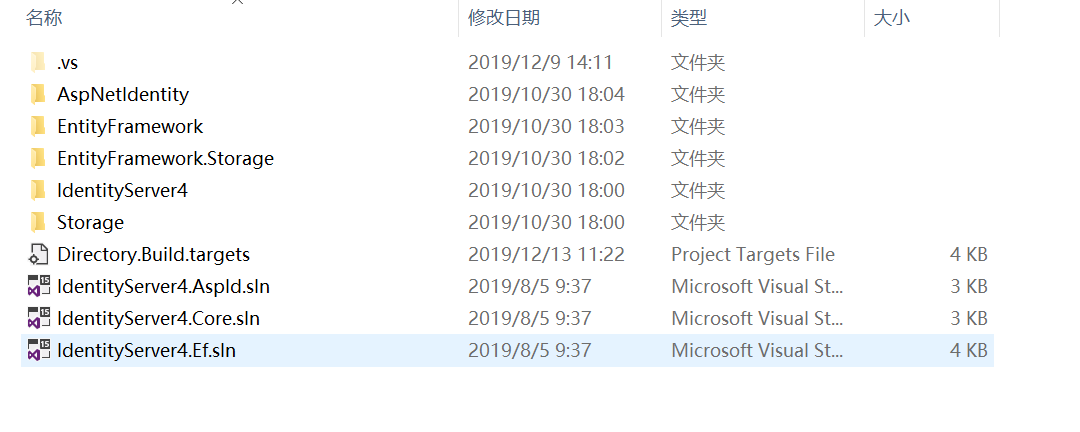
核心项目是IdentityServer4,其余的都是与微软框架集成、以及处理持久化的项目。
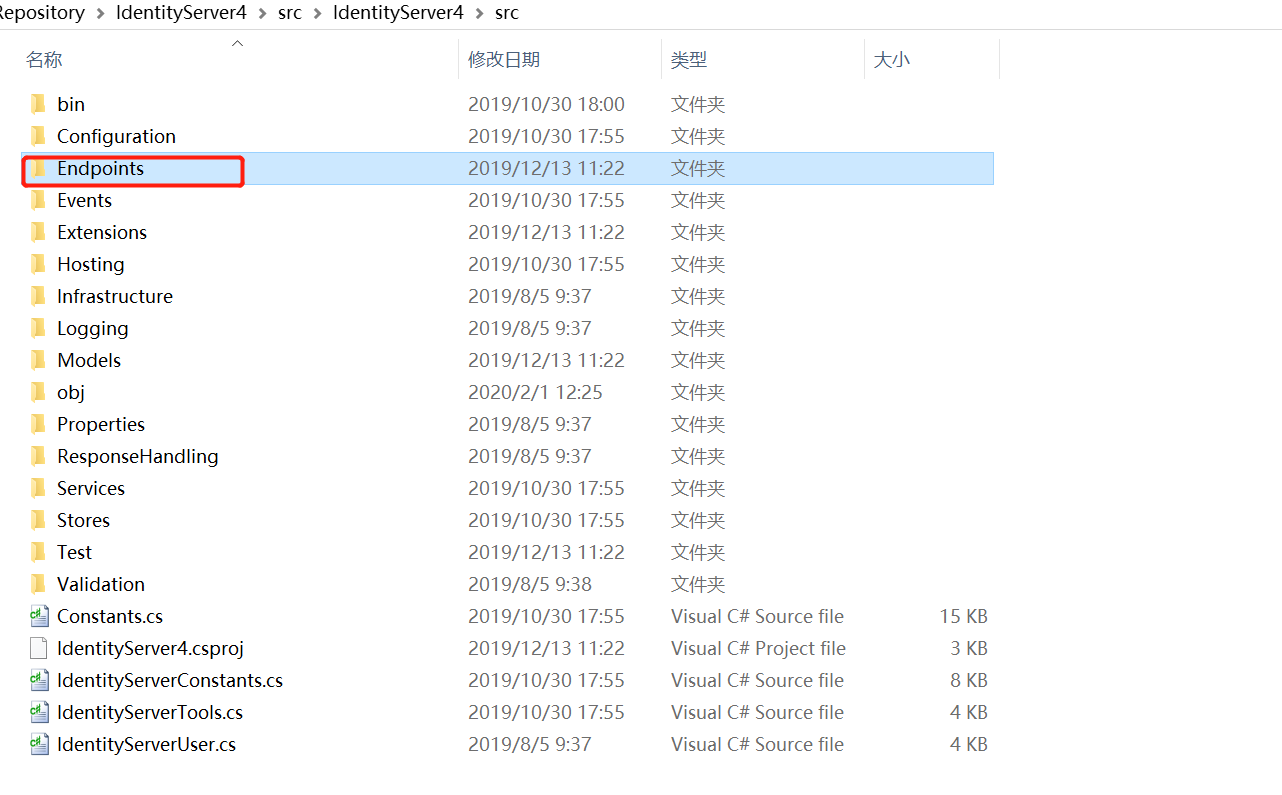
项目结构如图。Endpoints文件夹就是接口文件,我们先看下依赖注入、中间件的代码,然后看下每个接口。
依赖注入
public static IIdentityServerBuilder AddIdentityServer(this IServiceCollection services)

{

    var builder = services.AddIdentityServerBuilder();

    builder

        .AddRequiredPlatformServices()

        .AddCookieAuthentication()

        .AddCoreServices()

        .AddDefaultEndpoints()

        .AddPluggableServices()

        .AddValidators()

        .AddResponseGenerators()

        .AddDefaultSecretParsers()

        .AddDefaultSecretValidators();

    // provide default in-memory implementation, not suitable for most production scenarios

    builder.AddInMemoryPersistedGrants();

    return builder;

}
- AddRequiredPlatformServices - 注入平台服务
- IHttpContextAccessor:HttpContext访问器
- IdentityServerOptions:配置类
 public static IIdentityServerBuilder AddRequiredPlatformServices(this IIdentityServerBuilder builder)

{

    builder.Services.TryAddSingleton<IHttpContextAccessor, HttpContextAccessor>();

    builder.Services.AddOptions();

    builder.Services.AddSingleton(

        resolver => resolver.GetRequiredService<IOptions<IdentityServerOptions>>().Value);

    builder.Services.AddHttpClient();

    return builder;

}
- AddCookieAuthentication - 注入cookie服务
- 注入名称为idsrv的cookie认证架构
- 注入IAuthenticationService的实现IdentityServerAuthenticationService
- 注入IAuthenticationHandlerProvider的实现FederatedSignoutAuthenticationHandlerProvider
public static IIdentityServerBuilder AddCookieAuthentication(this IIdentityServerBuilder builder)

{

    builder.Services.AddAuthentication(IdentityServerConstants.DefaultCookieAuthenticationScheme)

        .AddCookie(IdentityServerConstants.DefaultCookieAuthenticationScheme)

        .AddCookie(IdentityServerConstants.ExternalCookieAuthenticationScheme);

    builder.Services.AddSingleton<IConfigureOptions<CookieAuthenticationOptions>, ConfigureInternalCookieOptions>();

    builder.Services.AddSingleton<IPostConfigureOptions<CookieAuthenticationOptions>, PostConfigureInternalCookieOptions>();

    builder.Services.AddTransientDecorator<IAuthenticationService, IdentityServerAuthenticationService>();

    builder.Services.AddTransientDecorator<IAuthenticationHandlerProvider, FederatedSignoutAuthenticationHandlerProvider>();

    return builder;

}
- AddCoreServices - 注入核心服务
/// <summary>

/// Adds the core services.

/// </summary>

/// <param name="builder">The builder.</param>

/// <returns></returns>

public static IIdentityServerBuilder AddCoreServices(this IIdentityServerBuilder builder)

{

    builder.Services.AddTransient<SecretParser>();

    builder.Services.AddTransient<SecretValidator>();

    builder.Services.AddTransient<ScopeValidator>();

    builder.Services.AddTransient<ExtensionGrantValidator>();

    builder.Services.AddTransient<BearerTokenUsageValidator>();

    builder.Services.AddTransient<JwtRequestValidator>();

    // todo: remove in 3.0

#pragma warning disable CS0618 // Type or member is obsolete

    builder.Services.AddTransient<BackChannelHttpClient>();

#pragma warning restore CS0618 // Type or member is obsolete

    builder.Services.AddTransient<ReturnUrlParser>();

    builder.Services.AddTransient<IdentityServerTools>();

    builder.Services.AddTransient<IReturnUrlParser, OidcReturnUrlParser>();

    builder.Services.AddScoped<IUserSession, DefaultUserSession>();

    builder.Services.AddTransient(typeof(MessageCookie<>));

    builder.Services.AddCors();

    builder.Services.AddTransientDecorator<ICorsPolicyProvider, CorsPolicyProvider>();

    return builder;

}
- AddDefaultEndpoints - 注入接口
- AuthorizeCallbackEndpoint:认证回调接口
- AuthorizeEndpoint:认证接口
- CheckSessionEndpoint:检查会话接口
- DeviceAuthorizationEndpoint:设备认证接口
- DiscoveryEndpoint:元数据键接口
- DiscoveryEndpoint:元数据接口
- EndSessionCallbackEndpoint:结束会话回调接口
- EndSessionEndpoint:结束会话接口
- IntrospectionEndpoint:查询令牌信息接口
- TokenRevocationEndpoint:撤销令牌接口
- TokenEndpoint:发放令牌接口
- UserInfoEndpoint:查询用户信息接口
注入所有默认接口,包括接口名称和地址。请求进来之后,路由类EndPointRouter通过路由来寻找匹配的处理器。
 public static IIdentityServerBuilder AddDefaultEndpoints(this IIdentityServerBuilder builder)

{

    builder.Services.AddTransient<IEndpointRouter, EndpointRouter>();

    builder.AddEndpoint<AuthorizeCallbackEndpoint>(EndpointNames.Authorize, ProtocolRoutePaths.AuthorizeCallback.EnsureLeadingSlash());

    builder.AddEndpoint<AuthorizeEndpoint>(EndpointNames.Authorize, ProtocolRoutePaths.Authorize.EnsureLeadingSlash());

    builder.AddEndpoint<CheckSessionEndpoint>(EndpointNames.CheckSession, ProtocolRoutePaths.CheckSession.EnsureLeadingSlash());

    builder.AddEndpoint<DeviceAuthorizationEndpoint>(EndpointNames.DeviceAuthorization, ProtocolRoutePaths.DeviceAuthorization.EnsureLeadingSlash());

    builder.AddEndpoint<DiscoveryKeyEndpoint>(EndpointNames.Discovery, ProtocolRoutePaths.DiscoveryWebKeys.EnsureLeadingSlash());

    builder.AddEndpoint<DiscoveryEndpoint>(EndpointNames.Discovery, ProtocolRoutePaths.DiscoveryConfiguration.EnsureLeadingSlash());

    builder.AddEndpoint<EndSessionCallbackEndpoint>(EndpointNames.EndSession, ProtocolRoutePaths.EndSessionCallback.EnsureLeadingSlash());

    builder.AddEndpoint<EndSessionEndpoint>(EndpointNames.EndSession, ProtocolRoutePaths.EndSession.EnsureLeadingSlash());

    builder.AddEndpoint<IntrospectionEndpoint>(EndpointNames.Introspection, ProtocolRoutePaths.Introspection.EnsureLeadingSlash());

    builder.AddEndpoint<TokenRevocationEndpoint>(EndpointNames.Revocation, ProtocolRoutePaths.Revocation.EnsureLeadingSlash());

    builder.AddEndpoint<TokenEndpoint>(EndpointNames.Token, ProtocolRoutePaths.Token.EnsureLeadingSlash());

    builder.AddEndpoint<UserInfoEndpoint>(EndpointNames.UserInfo, ProtocolRoutePaths.UserInfo.EnsureLeadingSlash());

    return builder;

}
- AddPluggableServices - 注入可插拔服务
public static IIdentityServerBuilder AddPluggableServices(this IIdentityServerBuilder builder)

{

    builder.Services.TryAddTransient<IPersistedGrantService, DefaultPersistedGrantService>();

    builder.Services.TryAddTransient<IKeyMaterialService, DefaultKeyMaterialService>();

    builder.Services.TryAddTransient<ITokenService, DefaultTokenService>();

    builder.Services.TryAddTransient<ITokenCreationService, DefaultTokenCreationService>();

    builder.Services.TryAddTransient<IClaimsService, DefaultClaimsService>();

    builder.Services.TryAddTransient<IRefreshTokenService, DefaultRefreshTokenService>();

    builder.Services.TryAddTransient<IDeviceFlowCodeService, DefaultDeviceFlowCodeService>();

    builder.Services.TryAddTransient<IConsentService, DefaultConsentService>();

    builder.Services.TryAddTransient<ICorsPolicyService, DefaultCorsPolicyService>();

    builder.Services.TryAddTransient<IProfileService, DefaultProfileService>();

    builder.Services.TryAddTransient<IConsentMessageStore, ConsentMessageStore>();

    builder.Services.TryAddTransient<IMessageStore<LogoutMessage>, ProtectedDataMessageStore<LogoutMessage>>();

    builder.Services.TryAddTransient<IMessageStore<EndSession>, ProtectedDataMessageStore<EndSession>>();

    builder.Services.TryAddTransient<IMessageStore<ErrorMessage>, ProtectedDataMessageStore<ErrorMessage>>();

    builder.Services.TryAddTransient<IIdentityServerInteractionService, DefaultIdentityServerInteractionService>();

    builder.Services.TryAddTransient<IDeviceFlowInteractionService, DefaultDeviceFlowInteractionService>();

    builder.Services.TryAddTransient<IAuthorizationCodeStore, DefaultAuthorizationCodeStore>();

    builder.Services.TryAddTransient<IRefreshTokenStore, DefaultRefreshTokenStore>();

    builder.Services.TryAddTransient<IReferenceTokenStore, DefaultReferenceTokenStore>();

    builder.Services.TryAddTransient<IUserConsentStore, DefaultUserConsentStore>();

    builder.Services.TryAddTransient<IHandleGenerationService, DefaultHandleGenerationService>();

    builder.Services.TryAddTransient<IPersistentGrantSerializer, PersistentGrantSerializer>();

    builder.Services.TryAddTransient<IEventService, DefaultEventService>();

    builder.Services.TryAddTransient<IEventSink, DefaultEventSink>();

    builder.Services.TryAddTransient<IUserCodeService, DefaultUserCodeService>();

    builder.Services.TryAddTransient<IUserCodeGenerator, NumericUserCodeGenerator>();

    builder.Services.TryAddTransient<IBackChannelLogoutService, DefaultBackChannelLogoutService>();

    builder.AddJwtRequestUriHttpClient();

    builder.AddBackChannelLogoutHttpClient();

    //builder.Services.AddHttpClient<BackChannelLogoutHttpClient>();

    //builder.Services.AddHttpClient<JwtRequestUriHttpClient>();

    builder.Services.AddTransient<IClientSecretValidator, ClientSecretValidator>();

    builder.Services.AddTransient<IApiSecretValidator, ApiSecretValidator>();

    builder.Services.TryAddTransient<IDeviceFlowThrottlingService, DistributedDeviceFlowThrottlingService>();

    builder.Services.AddDistributedMemoryCache();

    return builder;

}
- AddValidators - 注入校验类
public static IIdentityServerBuilder AddValidators(this IIdentityServerBuilder builder)

{

    // core

    builder.Services.TryAddTransient<IEndSessionRequestValidator, EndSessionRequestValidator>();

    builder.Services.TryAddTransient<ITokenRevocationRequestValidator, TokenRevocationRequestValidator>();

    builder.Services.TryAddTransient<IAuthorizeRequestValidator, AuthorizeRequestValidator>();

    builder.Services.TryAddTransient<ITokenRequestValidator, TokenRequestValidator>();

    builder.Services.TryAddTransient<IRedirectUriValidator, StrictRedirectUriValidator>();

    builder.Services.TryAddTransient<ITokenValidator, TokenValidator>();

    builder.Services.TryAddTransient<IIntrospectionRequestValidator, IntrospectionRequestValidator>();

    builder.Services.TryAddTransient<IResourceOwnerPasswordValidator, NotSupportedResourceOwnerPasswordValidator>();

    builder.Services.TryAddTransient<ICustomTokenRequestValidator, DefaultCustomTokenRequestValidator>();

    builder.Services.TryAddTransient<IUserInfoRequestValidator, UserInfoRequestValidator>();

    builder.Services.TryAddTransient<IClientConfigurationValidator, DefaultClientConfigurationValidator>();

    builder.Services.TryAddTransient<IDeviceAuthorizationRequestValidator, DeviceAuthorizationRequestValidator>();

    builder.Services.TryAddTransient<IDeviceCodeValidator, DeviceCodeValidator>();

    // optional

    builder.Services.TryAddTransient<ICustomTokenValidator, DefaultCustomTokenValidator>();

    builder.Services.TryAddTransient<ICustomAuthorizeRequestValidator, DefaultCustomAuthorizeRequestValidator>();

    return builder;

}
- AddResponseGenerators - 注入响应生成类
public static IIdentityServerBuilder AddResponseGenerators(this IIdentityServerBuilder builder)

{

    builder.Services.TryAddTransient<ITokenResponseGenerator, TokenResponseGenerator>();

    builder.Services.TryAddTransient<IUserInfoResponseGenerator, UserInfoResponseGenerator>();

    builder.Services.TryAddTransient<IIntrospectionResponseGenerator, IntrospectionResponseGenerator>();

    builder.Services.TryAddTransient<IAuthorizeInteractionResponseGenerator, AuthorizeInteractionResponseGenerator>();

    builder.Services.TryAddTransient<IAuthorizeResponseGenerator, AuthorizeResponseGenerator>();

    builder.Services.TryAddTransient<IDiscoveryResponseGenerator, DiscoveryResponseGenerator>();

    builder.Services.TryAddTransient<ITokenRevocationResponseGenerator, TokenRevocationResponseGenerator>();

    builder.Services.TryAddTransient<IDeviceAuthorizationResponseGenerator, DeviceAuthorizationResponseGenerator>();

    return builder;

}
- AddDefaultSecretParsers & AddDefaultSecretValidators
/// <summary>

/// Adds the default secret parsers.

/// </summary>

/// <param name="builder">The builder.</param>

/// <returns></returns>

public static IIdentityServerBuilder AddDefaultSecretParsers(this IIdentityServerBuilder builder)

{

    builder.Services.AddTransient<ISecretParser, BasicAuthenticationSecretParser>();

    builder.Services.AddTransient<ISecretParser, PostBodySecretParser>();

    return builder;

}

/// <summary>

/// Adds the default secret validators.

/// </summary>

/// <param name="builder">The builder.</param>

/// <returns></returns>

public static IIdentityServerBuilder AddDefaultSecretValidators(this IIdentityServerBuilder builder)

{

    builder.Services.AddTransient<ISecretValidator, HashedSharedSecretValidator>();

    return builder;

}
IdentityServerOptions - 配置类
 /// <summary>

/// The IdentityServerOptions class is the top level container for all configuration settings of IdentityServer.

/// </summary>

public class IdentityServerOptions

{

    /// <summary>

    /// Gets or sets the unique name of this server instance, e.g. https://myissuer.com.

    /// If not set, the issuer name is inferred from the request

    /// </summary>

    /// <value>

    /// Unique name of this server instance, e.g. https://myissuer.com

    /// </value>

    public string IssuerUri { get; set; }

    /// <summary>

    /// Gets or sets the origin of this server instance, e.g. https://myorigin.com.

    /// If not set, the origin name is inferred from the request

    /// Note: Do not set a URL or include a path.

    /// </summary>

    /// <value>

    /// Origin of this server instance, e.g. https://myorigin.com

    /// </value>

    public string PublicOrigin { get; set; }

    /// <summary>

    /// Gets or sets the value for the JWT typ header for access tokens.

    /// </summary>

    /// <value>

    /// The JWT typ value.

    /// </value>

    public string AccessTokenJwtType { get; set; } = "at+jwt";

    /// <summary>

    /// Emits an aud claim with the format issuer/resources. That's needed for some older access token validation plumbing. Defaults to false.

    /// </summary>

    public bool EmitLegacyResourceAudienceClaim { get; set; } = false;

    /// <summary>

    /// Gets or sets the endpoint configuration.

    /// </summary>

    /// <value>

    /// The endpoints configuration.

    /// </value>

    public EndpointsOptions Endpoints { get; set; } = new EndpointsOptions();

    /// <summary>

    /// Gets or sets the discovery endpoint configuration.

    /// </summary>

    /// <value>

    /// The discovery endpoint configuration.

    /// </value>

    public DiscoveryOptions Discovery { get; set; } = new DiscoveryOptions();

    /// <summary>

    /// Gets or sets the authentication options.

    /// </summary>

    /// <value>

    /// The authentication options.

    /// </value>

    public AuthenticationOptions Authentication { get; set; } = new AuthenticationOptions();

    /// <summary>

    /// Gets or sets the events options.

    /// </summary>

    /// <value>

    /// The events options.

    /// </value>

    public EventsOptions Events { get; set; } = new EventsOptions();

    /// <summary>

    /// Gets or sets the max input length restrictions.

    /// </summary>

    /// <value>

    /// The length restrictions.

    /// </value>

    public InputLengthRestrictions InputLengthRestrictions { get; set; } = new InputLengthRestrictions();

    /// <summary>

    /// Gets or sets the options for the user interaction.

    /// </summary>

    /// <value>

    /// The user interaction options.

    /// </value>

    public UserInteractionOptions UserInteraction { get; set; } = new UserInteractionOptions();

    /// <summary>

    /// Gets or sets the caching options.

    /// </summary>

    /// <value>

    /// The caching options.

    /// </value>

    public CachingOptions Caching { get; set; } = new CachingOptions();

    /// <summary>

    /// Gets or sets the cors options.

    /// </summary>

    /// <value>

    /// The cors options.

    /// </value>

    public CorsOptions Cors { get; set; } = new CorsOptions();

    /// <summary>

    /// Gets or sets the Content Security Policy options.

    /// </summary>

    public CspOptions Csp { get; set; } = new CspOptions();

    /// <summary>

    /// Gets or sets the validation options.

    /// </summary>

    public ValidationOptions Validation { get; set; } = new ValidationOptions();

    /// <summary>

    /// Gets or sets the device flow options.

    /// </summary>

    public DeviceFlowOptions DeviceFlow { get; set; } = new DeviceFlowOptions();

    /// <summary>

    /// Gets or sets the mutual TLS options.

    /// </summary>

    public MutualTlsOptions MutualTls { get; set; } = new MutualTlsOptions();

}
UserIdentityServer - 中间件逻辑
- 执行校验
- BaseUrlMiddleware中间件:设置BaseUrl
- 配置CORS跨域:CorsPolicyProvider根据client信息生成动态策略
- IdentityServerMiddlewareOptions默认调用了UseAuthentication,所以如果使用IdentityServer不用重复注册Authentication中间件
- 使用MutualTlsTokenEndpointMiddleware中间件:要求客户端、服务端都使用https,默认不开启
- 使用IdentityServerMiddleware中间件:IEndpointRouter根据请求寻找匹配的IEndpointHandler,如果找到的话则由EndPointHandler处理请求。
public static IApplicationBuilder UseIdentityServer(this IApplicationBuilder app, IdentityServerMiddlewareOptions options = null)

{

    app.Validate();

    app.UseMiddleware<BaseUrlMiddleware>();

    app.ConfigureCors();

    // it seems ok if we have UseAuthentication more than once in the pipeline --

    // this will just re-run the various callback handlers and the default authN

    // handler, which just re-assigns the user on the context. claims transformation

    // will run twice, since that's not cached (whereas the authN handler result is)

    // related: https://github.com/aspnet/Security/issues/1399

    if (options == null) options = new IdentityServerMiddlewareOptions();

    options.AuthenticationMiddleware(app);

    app.UseMiddleware<MutualTlsTokenEndpointMiddleware>();

    app.UseMiddleware<IdentityServerMiddleware>();

    return app;

}
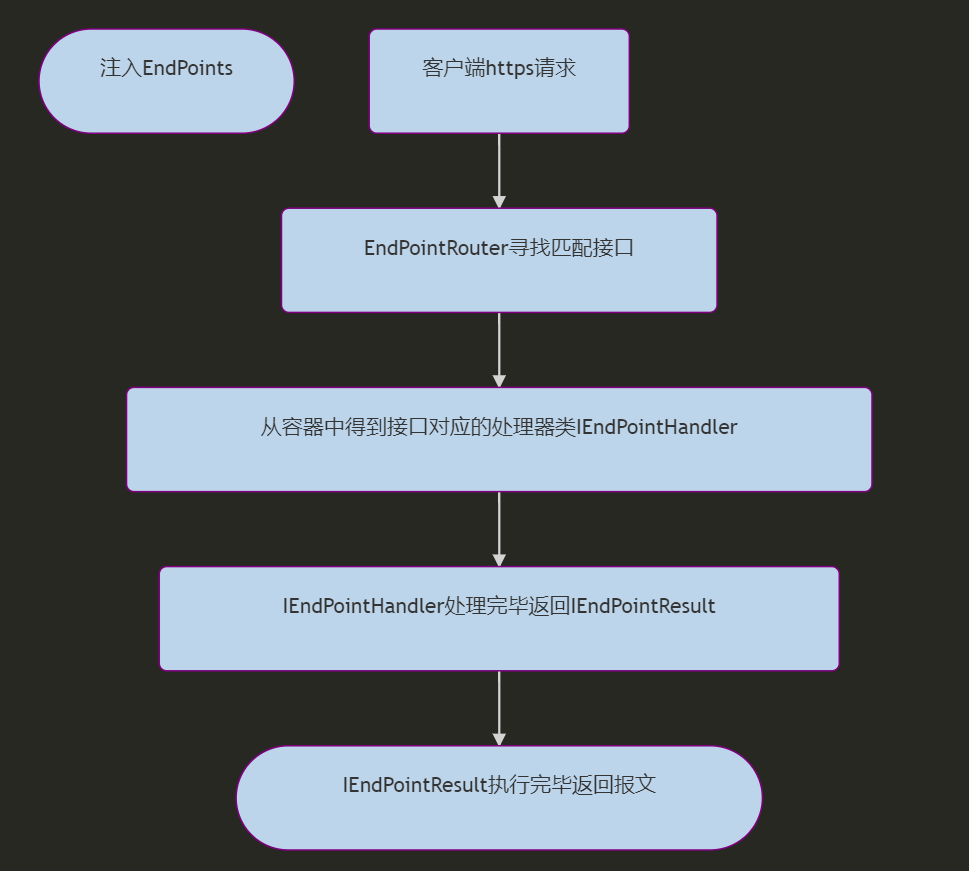
核心中间件IdentityServerMiddleware的代码,逻辑比较清晰
- IEndpointRouter路由类旬斋匹配接口
- 匹配接口处理请求返回结果IEndpointResult
- IEndpointResult执行结果,写入上下文,返回报文
 public async Task Invoke(HttpContext context, IEndpointRouter router, IUserSession session, IEventService events)

{

    // this will check the authentication session and from it emit the check session

    // cookie needed from JS-based signout clients.

    await session.EnsureSessionIdCookieAsync();

    try

    {

        var endpoint = router.Find(context);

        if (endpoint != null)

        {

            _logger.LogInformation("Invoking IdentityServer endpoint: {endpointType} for {url}", endpoint.GetType().FullName, context.Request.Path.ToString());

            var result = await endpoint.ProcessAsync(context);

            if (result != null)

            {

                _logger.LogTrace("Invoking result: {type}", result.GetType().FullName);

                await result.ExecuteAsync(context);

            }

            return;

        }

    }

    catch (Exception ex)

    {

        await events.RaiseAsync(new UnhandledExceptionEvent(ex));

        _logger.LogCritical(ex, "Unhandled exception: {exception}", ex.Message);

        throw;

    }

    await _next(context);

}
看一下路由类的处理逻辑
之前AddDefaultEndpoints注入了所有默认接口,路由类可以通过依赖注入拿到所有接口信息,将请求地址与接口地址对比得到匹配的接口,然后从容器拿到对应的接口处理器。
public EndpointRouter(IEnumerable<Endpoint> endpoints, IdentityServerOptions options, ILogger<EndpointRouter> logger)

{

    _endpoints = endpoints;

    _options = options;

    _logger = logger;

}

public IEndpointHandler Find(HttpContext context)

{

    if (context == null) throw new ArgumentNullException(nameof(context));

    foreach(var endpoint in _endpoints)

    {

        var path = endpoint.Path;

        if (context.Request.Path.Equals(path, StringComparison.OrdinalIgnoreCase))

        {

            var endpointName = endpoint.Name;

            _logger.LogDebug("Request path {path} matched to endpoint type {endpoint}", context.Request.Path, endpointName);

            return GetEndpointHandler(endpoint, context);

        }

    }

    _logger.LogTrace("No endpoint entry found for request path: {path}", context.Request.Path);

    return null;

}

 private IEndpointHandler GetEndpointHandler(Endpoint endpoint, HttpContext context)

{

    if (_options.Endpoints.IsEndpointEnabled(endpoint))

    {

        var handler = context.RequestServices.GetService(endpoint.Handler) as IEndpointHandler;

        if (handler != null)

        {

            _logger.LogDebug("Endpoint enabled: {endpoint}, successfully created handler: {endpointHandler}", endpoint.Name, endpoint.Handler.FullName);

            return handler;

        }

        else

        {

            _logger.LogDebug("Endpoint enabled: {endpoint}, failed to create handler: {endpointHandler}", endpoint.Name, endpoint.Handler.FullName);

        }

    }

    else

    {

        _logger.LogWarning("Endpoint disabled: {endpoint}", endpoint.Name);

    }

    return null;

}
总结
主干流程大致如图
idsv的代码量还是比较大的,有很多的类,但是代码还是要写的挺规范清晰,梳理下来脉络还是很明了的。
IdentityServer4源码解析_1_项目结构的更多相关文章
- identityserver4源码解析_2_元数据接口
目录 identityserver4源码解析_1_项目结构 identityserver4源码解析_2_元数据接口 identityserver4源码解析_3_认证接口 identityserver4 ...
- identityserver4源码解析_3_认证接口
目录 identityserver4源码解析_1_项目结构 identityserver4源码解析_2_元数据接口 identityserver4源码解析_3_认证接口 identityserver4 ...
- IdentityServer4源码解析_4_令牌发放接口
目录 identityserver4源码解析_1_项目结构 identityserver4源码解析_2_元数据接口 identityserver4源码解析_3_认证接口 identityserver4 ...
- IdentityServer4源码解析_5_查询用户信息接口
协议简析 UserInfo接口是OAuth2.0中规定的需要认证访问的接口,可以返回认证用户的声明信息.请求UserInfo接口需要使用通行令牌.响应报文通常是json数据格式,包含了一组claim键 ...
- AspNetCore3.1_Secutiry源码解析_1_目录
文章目录 AspNetCore3.1_Secutiry源码解析_1_目录 AspNetCore3.1_Secutiry源码解析_2_Authentication_核心项目 AspNetCore3.1_ ...
- Springboot源码分析之项目结构
Springboot源码分析之项目结构 摘要: 无论是从IDEA还是其他的SDS开发工具亦或是https://start.spring.io/ 进行解压,我们都会得到同样的一个pom.xml文件 4. ...
- elementUi源码解析(1)--项目结构篇
因为在忙其他事情好久没有更新iview的源码,也是因为后面的一些组件有点复杂在考虑用什么方式把复杂的功能逻辑简单的展示出来,还没想到方法,突然想到element的组件基本也差不多,内部功能的逻辑也差不 ...
- axios 源码解析(中) 代码结构
axios现在最新的版本的是v0.19.0,本节我们来分析一下它的实现源码,首先通过 gitHub地址获取到它的源代码,地址:https://github.com/axios/axios/tree/v ...
- 黄聪:wordpress源码解析-数据库表结构(转)
如果是一个普通的用户,不需要了解wordpress数据库的结构.但是,如果你正在写一个插件,你应该会对wordpress如何处理它的数据和关系感兴趣.如果你已经尝试使用已经存在的wordpress a ...
随机推荐
- Jmeter之正则表达式提取
一.正则表达式提取器: 1.比如需要提取如下响应文本中的 “<title> 孤舟点点 - 博客园找找看</title>” 里面的 “孤舟点点 - 博客园找找看”: 2.设置正则 ...
- 查漏补缺:Vector中去重
对于STL去重,可以使用<algorithm>中提供的unique()函数. unique()函数用于去除相邻元素中的重复元素(所以去重前需要对vector进行排序),只留下一个.返回去重 ...
- 机器学习 —— 数据预处理
对于学习机器学习算法来说,肯定会涉及到数据的处理,因此一开始,对数据的预处理进行学习 对于数据的预处理,大概有如下几步: 步骤1 -- 导入所需库 导入处理数据所需要的python库,有如下两个库是非 ...
- LeetCode~941.有效的山脉数组
941.有效的山脉数组 给定一个整数数组 A,如果它是有效的山脉数组就返回 true,否则返回 false. 让我们回顾一下,如果 A 满足下述条件,那么它是一个山脉数组: A.length > ...
- 理解 Java 内存模型的因果性约束
目录 理解 Java 内存模型的因果性约束 欢迎讨论 规范理解 例子练习 例子1 例子2 总结 理解 Java 内存模型的因果性约束 欢迎讨论 欢迎加入技术交流群186233599讨论交流,也欢迎关注 ...
- [置顶]
利用Python 提醒实验室同学值日(自动发送邮件)
前言: 在实验室里一直存在着一个问题,就是老是有人忘记提醒下一个人值日,然后值日就被迫中断了.毕竟良好的 卫生环境需要大家一起来维护的!没办法只能想出一些小对策了. 解决思路: 首先,我 ...
- centos安装图形界面通常有两种方式
centos安装图形界面通常有两种方式 1.通过系统安装,在配置选择软件界面,选择GNOME桌面模式.
- 从头认识js-js的发展历史
JavaScript简介 JavaScript诞生于1995年,当时,它的主要目的是处理以前有服务端语言(如Perl)负责的一些输入验证操作. JavaScript简史 1995年2月当时就职于Net ...
- ASP.NET CORE 内置的IOC解读及使用
在我接触IOC和DI 概念的时候是在2016年有幸倒腾Java的时候第一次接触,当时对这两个概念很是模糊:后来由于各种原因又回到.net 大本营,又再次接触了IOC和DI,也算终于搞清楚了IOC和DI ...
- Vue2.0组件的继承与扩展
如果有需要源代码,请猛戳源代码 希望文章给大家些许帮助和启发,麻烦大家在GitHub上面点个赞!!!十分感谢 前言 本文将介绍vue2.0中的组件的继承与扩展,主要分享slot.mixins/exte ...