TableLayout跟TableRow 是一组搭配应用的布局,TableLayout置底,TableRow在TableLayout的上方,而Button、TextView等控件就在TableRow之上,别的,TableLayout之上也可以零丁放控件。TableLayout是一个应用错杂的布局,最简单的用法就仅仅是拖沓控件做出个界面,但实际上,会经常在代码里应用TableLayout,例如做出表格的结果。本文首要介绍TableLayout的根蒂根基应用办法。
重要的几个属性如下:
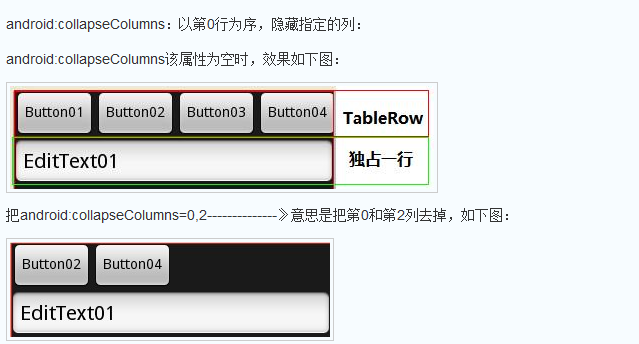
1.android:collapseColumns://隐藏指定的列
①设置 TableLayout 内的 TableRow 中需要隐藏的列的列索引,多个用“,”隔开
②以第0行为序,隐藏指定的列:把android:collapseColumns=0,3 意思是把第0和第3列隐藏
2.android:shrinkColumns://收缩指定的列以适合屏幕、不会挤出屏幕 ① 设置 TableLayout 内的 TableRow 中需要拉伸(该列会拉伸到所有可用空间)的列的列索引,多列个用“,”隔开(多列 每列填充空隙大小一样)
②以第0行为序,自动延伸指定的列填充可用部分: 当LayoutRow里面的控件还没有布满布局时,shrinkColumns不起作用。
③设置了shrinkColumns=1,4,布局完全没有改变,因为LayoutRow里面还剩足够的空间。当LayoutRow布满控件时,设置了shrinkColumns=2,5,则控件自动向垂直方向填充空间

3.android:stretchColumns://尽量把指定的列表填充空白部分
①设置 TableLayout 内的 TableRow 中需要收缩(为了使其他列不会被挤到屏幕 外,此列会自动收缩)的列的列索引,多个用“,”隔开
② 以第0行为序,尽量把指定的列填充空白部分:设置stretchColumns=2,5,第1,4列被尽量填充同时向右填充,直到2,5被压挤到最后边)。

补充:
①表格布局的子对象不能指定 layout_width 属性.宽度永远是 MATCH_PARENT。
②不过子对象可以定义 layout_height 属性;其默认值是WRAP_CONTENT. 如果子对象是 TableRow,其高度永远是 WRAP_CONTENT。
实例:

001 |
<LinearLayout xmlns:android="http://schemas.android.com/apk/res/android" |
002 |
xmlns:tools="http://schemas.android.com/tools" |
003 |
android:layout_width="match_parent" |
004 |
android:layout_height="match_parent" |
005 |
android:orientation="vertical" |
006 |
tools:context=".AndroidTableLayoutActivity" > |
008 |
<!-- 定义第一个表格,指定第2列允许收缩,第3列允许拉伸 --> |
011 |
android:id="@+id/tablelayout01" |
012 |
android:layout_width="match_parent" |
013 |
android:layout_height="wrap_content" |
014 |
android:shrinkColumns="1" |
015 |
android:stretchColumns="2" > |
017 |
<!-- 直接添加按钮,自己占用一行 --> |
020 |
android:id="@+id/btn01" |
021 |
android:layout_width="wrap_content" |
022 |
android:layout_height="wrap_content" |
023 |
android:text="独自一行" > |
029 |
android:id="@+id/btn02" |
030 |
android:layout_width="wrap_content" |
031 |
android:layout_height="wrap_content" |
036 |
android:id="@+id/btn03" |
037 |
android:layout_width="wrap_content" |
038 |
android:layout_height="wrap_content" |
039 |
android:text="允许被收缩允许被收缩允许被收缩允许被收缩" > |
043 |
android:id="@+id/btn04" |
044 |
android:layout_width="wrap_content" |
045 |
android:layout_height="wrap_content" |
046 |
android:text="允许被拉伸允许被拉伸允许被拉伸" > |
050 |
<!-- 定义第2个表格,指定第2列隐藏 --> |
053 |
android:id="@+id/tablelayout02" |
054 |
android:layout_width="match_parent" |
055 |
android:layout_height="wrap_content" |
056 |
android:collapseColumns="1" > |
061 |
android:id="@+id/btn05" |
062 |
android:layout_width="wrap_content" |
063 |
android:layout_height="wrap_content" |
068 |
android:id="@+id/btn06" |
069 |
android:layout_width="wrap_content" |
070 |
android:layout_height="wrap_content" |
071 |
android:text="被隐藏列" > |
075 |
android:id="@+id/btn07" |
076 |
android:layout_width="wrap_content" |
077 |
android:layout_height="wrap_content" |
078 |
android:text="允许被拉伸" > |
082 |
<!-- 定义第3个表格,指定第2列填满空白 --> |
085 |
android:id="@+id/tablelayout03" |
086 |
android:layout_width="match_parent" |
087 |
android:layout_height="wrap_content" |
088 |
android:stretchColumns="1" > |
093 |
android:id="@+id/btn08" |
094 |
android:layout_width="wrap_content" |
095 |
android:layout_height="wrap_content" |
100 |
android:id="@+id/btn09" |
101 |
android:layout_width="wrap_content" |
102 |
android:layout_height="wrap_content" |
103 |
android:text="填满剩余空白" > |
107 |
<!-- 定义第3个表格,指定第2列横跨2列 --> |
110 |
android:id="@+id/tablelayout04" |
111 |
android:layout_width="match_parent" |
112 |
android:layout_height="wrap_content" > |
117 |
android:id="@+id/btn10" |
118 |
android:layout_width="wrap_content" |
119 |
android:layout_height="wrap_content" |
124 |
android:id="@+id/btn11" |
125 |
android:layout_width="wrap_content" |
126 |
android:layout_height="wrap_content" |
127 |
android:layout_column="2" |
128 |
android:text="填满剩余空白" > |
- Android ActionBar详解(三):ActionBar实现切换Tabs标签
实现切换Tabs标签; Activity代码: public class ActionBarTabs extends Activity { @Override protected void onCre ...
- Html5移动端页面自适应布局详解(阿里rem布局)
在移动设备上进行网页的重构或开发,首先得搞明白的就是移动设备上的viewport,通读网上的各种对于viewport的解释之后 大概viewport可以理解为三种 1.layout viewport ...
- (转)android Fragments详解三:实现Fragment的界面
为fragment添加用户界面 fragment一般作为activity的用户界面的一部分,把它自己的layout嵌入到activity的layout中. 一个 要为fragment提供layo ...
- 【转】Android编译系统详解(三)——编译流程详解
原文网址:http://www.cloudchou.com/android/post-276.html 本文原创作者:Cloud Chou. 欢迎转载,请注明出处和本文链接 1.概述 编译Androi ...
- Android Fragment详解(三): 实现Fragment的界面
为fragment添加用户界面: Fragment一般作为activity的用户界面的一部分,把它自己的layout嵌入到activity的layout中. 一个 要为fragment提供layout ...
- Android ActionBar详解(三)--->ActionBar的Home导航功能
FirstActivity如下: package cc.testsimpleactionbar2; import android.os.Bundle; import android.app.Activ ...
- Android Loader详解三:重启与回调
重启装载器 当你使用initLoader()时,如果指定ID的装载器已经存在,则它使用这个装载器.如果不存在呢,它将创建一个新的.但是有时你却是想丢弃旧的然后开始新的数据. 要想丢弃旧数据,你应使用r ...
- Android 布局详解
Android 布局详解 1.重用布局 当一个布局文件被多处使用时,最好<include>标签来重用布局. 例如:workspace_screen.xml的布局文件,在另一个布局文件中被重 ...
- Grid 网格布局详解
Grid网格布局详解: Grid布局与Flex布局有着一定的相似性,Grid布局是将容器划分成行和列,产生单元格,可以看做是二维布局. 基本概念: 采用网格布局的区域,称为"容器" ...
随机推荐
- [leetcode]Populating Next Right Pointers in Each Node @ Python
原题地址:https://oj.leetcode.com/problems/populating-next-right-pointers-in-each-node/ 题意: 1 / \ 2 3 / \ ...
- 转码:gcc在代码中禁止某些warning
http://www.itye.org/archives/3125 gcc 禁止warning 熟悉windows编程的人都知道,禁止编译器输出某个warning,在代码中可以这样 #pragma w ...
- c++ 编译时检测结构体大小的的宏定义写法
一种写法: template <bool> struct CompileAssert { }; #define COMPILE_ASSERT(expr, msg) \ typedef Co ...
- 如何将数据转换libsvm格式文件
原文:http://blog.sina.com.cn/s/blog_5c2f929b0100qse8.html 有三种工具可用1.网上有一个xls文FormatDataLibsvm.xls具有宏命令, ...
- [Javascript]1. Improve you speed! Loop optimaztion
/** Improve you loop code */ var treasureChest = { goldCoins: 10000, magicalItem : "Crown of Sp ...
- [Node.js]32. Level 7: Working with Lists -- Redis
As we saw in the video, redis can do more than just simple key-value pairs. We are going to be using ...
- 遭遇java.lang.NoClassDefFoundError: org/apache/tomcat/PeriodicEventListener
前天还正常的程序,今天忽然无法启动了,MyEclipse的Console提醒我如下错误: 严重: Error deploying web application directory rttsbizja ...
- struts2学习笔记(3)---Action中訪问ServletAPI获取真实类型的Servlet元素
一.源码: struts.xml文件: <?xml version="1.0" encoding="UTF-8" ?> <!DOCTYPE s ...
- STS 自动生成 getter 和 setter
1.Source -- Generate Getters and Setters
- Ubuntu解压缩zip,tar,tar.gz,tar.bz2
ZIP zip可能是目前使用得最多的文档压缩格式.它最大的优点就是在不同的操作系统平台,比如Linux, Windows以及Mac OS,上使用.缺点就是支持的压缩率不是很高,而tar.gz和tar. ...
