
1.Go-copy函数、sort排序、双向链表、list操作和双向循环链表
1.1.copy函数
通过copy函数可以把一个切片内容复制到另一个切片中
(1)把长切片拷贝到短切片中
|
1
2
3
4
5
6
7
8
9
10
11
12
|
package mainimport "fmt"func main() { s1 := []int {1,2} s2 := []int{3,4,5,6} //copy的是角标,不会增加元切片的长度 copy(s1,s2) fmt.Println(s1) //[3 4] fmt.Println(s2) //[3 4 5 6]} |
(2)把短切片拷贝到长切片中
|
1
2
3
4
5
6
7
8
9
10
11
12
|
package mainimport "fmt"func main() { s1 := []int {1,2} s2 := []int{3,4,5,6} //copy的是角标,不会增加元切片的长度 copy(s2,s1) fmt.Println(s1) //[1 2] fmt.Println(s2) //[1 2 5 6]} |
(3)把切片片段拷贝到切片中
|
1
2
3
4
5
6
7
8
9
10
11
12
|
package mainimport "fmt"func main() { s1 := []int {1,2} s2 := []int{3,4,5,6} //copy的是角标,不会增加元切片的长度 copy(s1,s2[1:3]) fmt.Println(s1) //[[4 5] fmt.Println(s2) //[3 4 5 6]} |
1.2.sort排序
|
1
2
3
4
5
6
7
8
9
10
11
12
13
14
15
16
17
|
package mainimport ( "fmt" "sort")func main() { num := []int{1,7,3,5,2} //升序排序 sort.Ints(num) fmt.Println(num) //[1 2 3 5 7] //降序排序 sort.Sort(sort.Reverse(sort.IntSlice(num))) fmt.Println(num) //[7 5 3 2 1]} |
1.3.双向链表
(1)双向链表的结构

双向链表结构中元素在内存中不是紧邻空间,而是每个元素中存放上一个元素和后一个元素的地址
- 第一个元素称为(头)元素,前连接(前置指针域)为nil
- 最后一个元素称为 尾(foot)元素,后连接(后置指针域)尾nil
双向链表的优点
- 在执行新增元素或删除元素时效率高,获取任意一个元素,可以方便的在这个元素前后插入元素
- 充分利用内存空间,实现内存灵活管理
- 可实现正序和逆序遍历
- 头元素和尾元素新增或删除时效率较高
双向链表的缺点
- 链表增加了元素的指针域,空间开销比较大
- 遍历时跳跃性查找内容,大量数据遍历性能低
(2)双向链表容器List
在Go语言标准库的container/list包提供了双向链表List
List结构体定义如下
- root表示根元素
- len表示链表中有多少元素
|
1
2
3
4
5
6
|
// List represents a doubly linked list.// The zero value for List is an empty list ready to use.type List struct { root Element // sentinel list element, only &root, root.prev, and root.next are used len int // current list length excluding (this) sentinel element} |
其中Element结构体定义如下
- next表示下一个元素,使用Next()可以获取到
- prev表示上一个元素,使用Prev()可以获取到
- list表示元素属于哪个链表
- Value表示元素的值,interface()在Go语言中表示任意类型
|
1
2
3
4
5
6
7
8
9
10
11
12
13
14
15
|
// Element is an element of a linked list.type Element struct { // Next and previous pointers in the doubly-linked list of elements. // To simplify the implementation, internally a list l is implemented // as a ring, such that &l.root is both the next element of the last // list element (l.Back()) and the previous element of the first list // element (l.Front()). next, prev *Element // The list to which this element belongs. list *List // The value stored with this element. Value interface{}} |
1.4.操作List
(1)直接使用container/list包下的New()新建一个空的List
添加,遍历,取首尾,取中间元素
|
1
2
3
4
5
6
7
8
9
10
11
12
13
14
15
16
17
18
19
20
21
22
23
24
25
26
27
28
29
30
31
32
33
34
35
36
37
38
39
40
41
42
43
44
45
46
47
48
49
|
package mainimport ( "container/list" "fmt")func main() { //实例化 mylist := list.New() fmt.Println(mylist) //添加 mylist.PushFront("a") //["a"] mylist.PushBack("b") //["a","b"] mylist.PushBack("c") //["a","b","c"] //在最后一个元素的前面添加 mylist.InsertBefore("d",mylist.Back()) //["a","b","d","c"] mylist.InsertAfter("e",mylist.Front()) //["a","e","b","d","c"] //遍历 for e := mylist.Front(); e != nil; e = e.Next(){ fmt.Print(e.Value, " ") //a e b d c } fmt.Println("") //取首尾 fmt.Println(mylist.Front().Value) //a fmt.Println(mylist.Back().Value) //c //取中间的元素,通过不断的Next() n := 3 var curr *list.Element if n > 0 && n <= mylist.Len(){ if n == 1 { curr = mylist.Front() }else if n == mylist.Len(){ curr = mylist.Back() }else { curr = mylist.Front() for i := 1; i < n; i++{ curr = curr.Next() } } }else { fmt.Println("n的数值不对") } fmt.Println(curr.Value) //b} |
(2)移动元素
|
1
2
3
4
5
6
7
8
9
10
11
12
13
14
15
16
17
18
19
20
21
22
23
24
25
26
27
28
29
30
31
32
33
|
package mainimport ( "container/list" "fmt")func main() { //实例化 mylist := list.New() fmt.Println(mylist) //添加 mylist.PushFront("a") //["a"] mylist.PushBack("b") //["a","b"] mylist.PushBack("c") //["a","b","c"] //在最后一个元素的前面添加 mylist.InsertBefore("d",mylist.Back()) //["a","b","d","c"] mylist.InsertAfter("e",mylist.Front()) //["a","e","b","d","c"] //移动,把第一个元素一道最后一个元素的前面 mylist.MoveBefore(mylist.Front(),mylist.Back()) //mylist.MoveAfter(mylist.Back(),mylist.Front()) //把最后一个元素移动到最前面 //mylist.MoveToFront(mylist.Back()) //把第一个元素移动到最后面 //mylist.MoveToBack(mylist.Front()) for e := mylist.Front(); e != nil; e = e.Next(){ fmt.Print(e.Value, " ") //e b d a c }} |
(3)删除
|
1
|
mylist.Remove(mylist.Front()) |
1.5.双向循环列表
(1)循环链表特点是没有节点的指针域为nil,通过任何一个元素都可以找到其它元素
环形链表结构如下
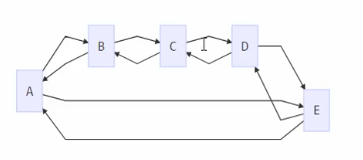
双向循环链表和双向链表区别
- 双向循环链表没有严格意义上的头元素和尾元素
- 没有元素的前连接和后连接为nil
- 一个长度为n的双向循环链表,通过某个元素向某个方向移动,在查找最多n-1次,一定会找到另一个元素
(2)在container/ring包下结构体Ring源码如下
- 官方明确说明了Ring是循环链表的元素,又是环形链表
- 实际使用时Ring遍历就是环形链表第一个元素
|
1
2
3
4
5
6
7
8
9
10
|
// A Ring is an element of a circular list, or ring.// Rings do not have a beginning or end; a pointer to any ring element// serves as reference to the entire ring. Empty rings are represented// as nil Ring pointers. The zero value for a Ring is a one-element// ring with a nil Value.//type Ring struct { next, prev *Ring Value interface{} // for use by client; untouched by this library} |
(3)创建和查看
|
1
2
3
4
5
6
7
8
9
10
11
12
13
14
15
16
17
18
19
20
21
22
23
24
25
26
27
28
|
package mainimport ( "container/ring" "fmt")func main() { //r代表整个循环链表,又代表第一个元素 r := ring.New(5) r.Value = 0 r.Next().Value = 1 r.Next().Next().Value = 2 //r.Next().Next().Next().Value = 3 //r.Next().Next().Next().Next().Value = 4 r.Prev().Value = 4 r.Prev().Prev().Value = 3 //查看元素内容 //循环链表有几个元素,func就执行几次,i当前执行元素的内容 r.Do(func(i interface{}) { fmt.Print(i, " ") //0 1 2 3 4 }) fmt.Println("") //取中间元素,用移动 fmt.Println(r.Move(3).Value) //3} |
(4)增加
|
1
2
3
4
5
6
7
8
9
10
11
12
13
14
15
16
17
18
19
20
21
22
23
24
25
26
27
28
|
package mainimport ( "container/ring" "fmt")func main() { //r代表整个循环链表,又代表第一个元素 r := ring.New(5) r.Value = 0 r.Next().Value = 1 r.Next().Next().Value = 2 //r.Next().Next().Next().Value = 3 //r.Next().Next().Next().Next().Value = 4 r.Prev().Value = 4 r.Prev().Prev().Value = 3 //增加 r1 := ring.New(2) r1.Value = 5 r1.Next().Value = 6 r.Link(r1) r.Do(func(i interface{}) { fmt.Print(i, " ") //0 5 6 1 2 3 4 })} |
(5)删除
|
1
2
3
4
5
6
7
8
9
10
11
12
13
14
15
16
17
18
19
20
21
22
23
24
25
|
package mainimport ( "container/ring" "fmt")func main() { //r代表整个循环链表,又代表第一个元素 r := ring.New(5) r.Value = 0 r.Next().Value = 1 r.Next().Next().Value = 2 //r.Next().Next().Next().Value = 3 //r.Next().Next().Next().Next().Value = 4 r.Prev().Value = 4 r.Prev().Prev().Value = 3 //删除 r.Unlink(1) r.Do(func(i interface{}) { fmt.Print(i, " ") //0 2 3 4 })} |
删除后面两个
|
1
2
3
4
5
6
|
//删除 r.Unlink(2) r.Do(func(i interface{}) { fmt.Print(i, " ") //0 3 4 }) |
r.Next()删除
|
1
2
3
4
5
6
|
//删除 r.Next().Unlink(2) r.Do(func(i interface{}) { fmt.Print(i, " ") //0 1 4 })qu |
超出范围,取5的余数
|
1
2
3
4
5
6
|
//删除 r.Unlink(6) r.Do(func(i interface{}) { fmt.Print(i, " ") //0 2 3 4 }) |
来源地址:https://www.cnblogs.com/derek1184405959/
1.Go-copy函数、sort排序、双向链表、list操作和双向循环链表的更多相关文章
- 1.Go语言copy函数、sort排序、双向链表、list操作和双向循环链表
1.1.copy函数 通过copy函数可以把一个切片内容复制到另一个切片中 (1)把长切片拷贝到短切片中 package main import "fmt" func main() ...
- C++排序函数sort/qsort使用
问题描述: C++排序函数sort/qsort的使用 问题解决: (1)sort函数使用 注: sort函数,参数1为数组首地址,参数2是数组 ...
- C++ 排序函数 sort(),qsort()的使用方法
想起来自己天天排序排序,冒泡啊,二分查找啊,结果在STL中就自带了排序函数sort,qsort,总算把自己解脱了~ 所以自己总结了一下,首先看sort函数见下表: 函数名 功能描写叙述 sort 对给 ...
- linux makefile字符串操作函数 替换subst、模式替换patsubst、去首尾空格strip、查找字符串findstring、过滤filter、反过滤filter-out、排序函数sort、取单词word、取单词串wordlist、个数统计words
1.1 字符操作函数使用 在Makefile中可以使用函数来处理变量,从而让我们的命令或是规则更为的灵活和具有智能.make所支持的函数也不算很多,不过已经足够我们的操作了.函数调用后,函 ...
- FCL源码中数组类型的学习及排序函数Sort函数的分析
Array 是所有数组的基类ArrayList 解决了所有Array 类的缺点 能动态扩容, 但是类型不安全的,而是会有装箱与拆箱的性能开销List<T> 则是解决了ArrayLis ...
- 使用sort函数进行排序
介绍 C++的一个重要组成部分STL(Standard Template Library),即标准模板库,是一些高级数据结构和算法的集合:高级数据结构(容器)主要包括list.set.vector.m ...
- python排序函数sort()与sorted()区别
sort是容器的函数:sort(cmp=None, key=None, reverse=False) sorted是python的内建函数:sorted(iterable, cmp=None, key ...
- STL源代码分析——STL算法sort排序算法
前言 因为在前文的<STL算法剖析>中,源代码剖析许多,不方便学习,也不方便以后复习.这里把这些算法进行归类,对他们单独的源代码剖析进行解说.本文介绍的STL算法中的sort排序算法,SG ...
- 标准模板库(STL)学习指南之sort排序
对于程序员来说,数据结构是必修的一门课.从查找到排序,从链表到二叉树,几乎所有的算法和原理都需要理解,理解不了也要死记硬背下来.幸运的是这些理论都已经比较成熟,算法也基本固定下来,不需要你再去花费心思 ...
随机推荐
- 【JVM学习笔记】双亲委托机制存在的意义
1.可以确保Java核心库的类型安全:所有的Java应用都至少会引用java.lang.Object类,也就是说在运行期,java.lang.Object这个类会被加载到Java虚拟机:如果用户自定义 ...
- Spark内核源码解析
1.spark内核架构常用术语 Application:基于spark程序,包含一个driver program(客户端程序)和多个executeor(线程) Driver Progrom:代表着sp ...
- ES 知识点
一.ES基于_version 进行乐观锁并发控制 post /index/type/id/_update?retry_on_conflict=5&version=6 1.内部版本号 第一次创建 ...
- 03-MySQL多表操作
一.表之间的关系 1.如何找出两张表之间的关系 分析步骤: #.先站在左表的角度去找 是否左表的多条记录可以对应右表的一条记录,如果是,则证明左表的一个字段foreign key 右表一个字段(通常是 ...
- 【VS开发】设备控制台 (DevCon.exe) 命令
设备控制台 (DevCon.exe) 命令 DevCon (DevCon.exe) 是一个命令行工具,可以显示有关运行 Windows 的计算机上设备的详细信息.还可以使用 DevCon 启用.禁用. ...
- sql for xml path 和group_concat
/*sqlserver*/ select Id,AId,(SELECT IMEI+',' FROM Device as s WHERE s.Id=c.Id For XML Path('')) AS I ...
- 统计学习方法 | 第1章 统计学习方法概论 | Scipy中的Leastsq()
Scipy是一个用于数学.科学.工程领域的常用软件包,可以处理插值.积分.优化.图像处理.常微分方程数值解的求解.信号处理等问题.它用于有效计算Numpy矩阵,使Numpy和Scipy协同工作,高效解 ...
- AKKA文档2.2(java)——术语,概念
原文:http://doc.akka.io/docs/akka/2.3.6/general/terminology.html 译者:吴京润 本章我们试图建立一个通用的术语列表,用来定义有关并发和分布式 ...
- SpringSecurity 配置
SpringSecurity+JWT https://www.jianshu.com/p/5b9f1f4de88d https://blog.csdn.net/qq_35494808/article/ ...
- Apache Zookeeper 集群环境搭建
Zookeeper 是 一个分布式.开放源码的分布式应用程序协调服务,是Google Chubby的一个开源实现,大多数的分布式应用都需要Zookeeper的支持,这篇文章先简单的和大家分享如何搭建一 ...