
【转载】 深度学习总结:用pytorch做dropout和Batch Normalization时需要注意的地方,用tensorflow做dropout和BN时需要注意的地方,
原文地址:
https://blog.csdn.net/weixin_40759186/article/details/87547795
---------------------------------------------------------------------------------------------------------------
用pytorch做dropout和BN时需要注意的地方
pytorch做dropout:
就是train的时候使用dropout,训练的时候不使用dropout,
pytorch里面是通过net.eval()固定整个网络参数,包括不会更新一些前向的参数,没有dropout,BN参数固定,理论上对所有的validation set都要使用net.eval()
net.train()表示会纳入梯度的计算。
net_dropped = torch.nn.Sequential(

    torch.nn.Linear(1, N_HIDDEN),

    torch.nn.Dropout(0.5),  # drop 50% of the neuron

    torch.nn.ReLU(),

    torch.nn.Linear(N_HIDDEN, N_HIDDEN),

    torch.nn.Dropout(0.5),  # drop 50% of the neuron

    torch.nn.ReLU(),

    torch.nn.Linear(N_HIDDEN, 1),

)


for t in range(500):

    pred_drop = net_dropped(x)

    loss_drop = loss_func(pred_drop, y)

    optimizer_drop.zero_grad()

    loss_drop.backward()

    optimizer_drop.step()

    if t % 10 == 0:

        # change to eval mode in order to fix drop out effect

        net_dropped.eval()  # parameters for dropout differ from train mode

        test_pred_drop = net_dropped(test_x)

        # change back to train mode

        net_dropped.train()
pytorch做Batch Normalization:
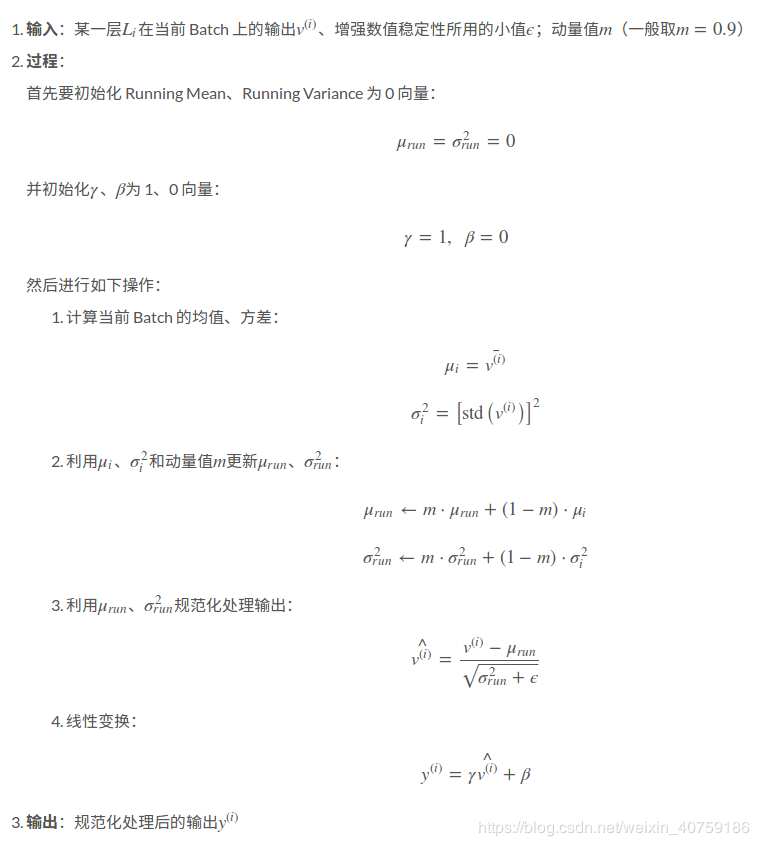
net.eval()固定整个网络参数,固定BN的参数,moving_mean 和moving_var,不懂这个看下图:
            if self.do_bn:

                bn = nn.BatchNorm1d(10, momentum=0.5)

                setattr(self, 'bn%i' % i, bn)   # IMPORTANT set layer to the Module

                self.bns.append(bn)

    for epoch in range(EPOCH):

        print('Epoch: ', epoch)

        for net, l in zip(nets, losses):

            net.eval()              # set eval mode to fix moving_mean and moving_var

            pred, layer_input, pre_act = net(test_x)

            net.train()             # free moving_mean and moving_var

        plot_histogram(*layer_inputs, *pre_acts)
moving_mean 和 moving_var
用tensorflow做dropout和BN时需要注意的地方
dropout和BN都有一个training的参数表明到底是train还是test, 表明test那dropout就是不dropout,BN就是固定住了BN的参数;
tf_is_training = tf.placeholder(tf.bool, None)  # to control dropout when training and testing

# dropout net

d1 = tf.layers.dense(tf_x, N_HIDDEN, tf.nn.relu)

d1 = tf.layers.dropout(d1, rate=0.5, training=tf_is_training)   # drop out 50% of inputs


d2 = tf.layers.dense(d1, N_HIDDEN, tf.nn.relu)

d2 = tf.layers.dropout(d2, rate=0.5, training=tf_is_training)   # drop out 50% of inputs


d_out = tf.layers.dense(d2, 1)

for t in range(500):

    sess.run([o_train, d_train], {tf_x: x, tf_y: y, tf_is_training: True})  # train, set is_training=True

    if t % 10 == 0:

        # plotting

        plt.cla()

        o_loss_, d_loss_, o_out_, d_out_ = sess.run(

            [o_loss, d_loss, o_out, d_out], {tf_x: test_x, tf_y: test_y, tf_is_training: False} # test, set is_training=False

        )
    def add_layer(self, x, out_size, ac=None):

        x = tf.layers.dense(x, out_size, kernel_initializer=self.w_init, bias_initializer=B_INIT)

        self.pre_activation.append(x)

        # the momentum plays important rule. the default 0.99 is too high in this case!

        if self.is_bn: x = tf.layers.batch_normalization(x, momentum=0.4, training=tf_is_train)    # when have BN

        out = x if ac is None else ac(x)

        return out
当BN的training的参数为train时,只是表示BN的参数是可变化的,并不是代表BN会自己更新moving_mean 和moving_var,因为这个操作是前向更新的op,在做train之前必须确保moving_mean 和moving_var更新了,更新moving_mean 和moving_var的操作在tf.GraphKeys.UPDATE_OPS
        # !! IMPORTANT !! the moving_mean and moving_variance need to be updated,

        # pass the update_ops with control_dependencies to the train_op

        update_ops = tf.get_collection(tf.GraphKeys.UPDATE_OPS)

        with tf.control_dependencies(update_ops):

            self.train = tf.train.AdamOptimizer(LR).minimize(self.loss)
【转载】 深度学习总结:用pytorch做dropout和Batch Normalization时需要注意的地方,用tensorflow做dropout和BN时需要注意的地方,的更多相关文章
- 深度学习面试题21:批量归一化(Batch Normalization,BN)
目录 BN的由来 BN的作用 BN的操作阶段 BN的操作流程 BN可以防止梯度消失吗 为什么归一化后还要放缩和平移 BN在GoogLeNet中的应用 参考资料 BN的由来 BN是由Google于201 ...
- Hinton“深度学习之父”和“神经网络先驱”,新论文Capsule将推翻自己积累了30年的学术成果时
Hinton“深度学习之父”和“神经网络先驱”,新论文Capsule将推翻自己积累了30年的学术成果时 在论文中,Capsule被Hinton大神定义为这样一组神经元:其活动向量所表示的是特定实体类型 ...
- 深度学习基础系列(九)| Dropout VS Batch Normalization? 是时候放弃Dropout了
Dropout是过去几年非常流行的正则化技术,可有效防止过拟合的发生.但从深度学习的发展趋势看,Batch Normalizaton(简称BN)正在逐步取代Dropout技术,特别是在卷积层.本文将首 ...
- windows10环境下安装深度学习环境anaconda+pytorch+CUDA+cuDDN
步骤零:安装anaconda.opencv.pytorch(这些不详细说明).复制运行代码,如果没有报错,说明已经可以了.不过大概率不行,我的会报错提示AssertionError: Torch no ...
- 常用深度学习框架(keras,pytorch.cntk,theano)conda 安装--未整理
版本查询 cpu tensorflow conda env list source activate tensorflow python import tensorflow as tf 和 tf.__ ...
- 深度学习之入门Pytorch(1)------基础
目录: Pytorch数据类型:Tensor与Storage 创建张量 tensor与numpy数组之间的转换 索引.连接.切片等 Tensor操作[add,数学运算,转置等] GPU加速 自动求导: ...
- 【深度学习】基于Pytorch的ResNet实现
目录 1. ResNet理论 2. pytorch实现 2.1 基础卷积 2.2 模块 2.3 使用ResNet模块进行迁移学习 1. ResNet理论 论文:https://arxiv.org/pd ...
- 动手学深度学习11- 多层感知机pytorch简洁实现
多层感知机的简洁实现 定义模型 读取数据并训练数据 损失函数 定义优化算法 小结 多层感知机的简洁实现 import torch from torch import nn from torch.nn ...
- 动手学深度学习8-softmax分类pytorch简洁实现
定义和初始化模型 softamx和交叉熵损失函数 定义优化算法 训练模型 import torch from torch import nn from torch.nn import init imp ...
随机推荐
- POJ2393奶酪工厂
Yogurt factory Time Limit: 1000MS Memory Limit: 65536K Total Submissions: 14771 Accepted: 7437 D ...
- kali-rolling安装openvas 9并创建扫描任务教程
一. 前置说明 官方:漏洞扫描中最常用和强大的是某个”N“开头的漏洞扫描器(nessus),但由于许可证限制,kali中并未安装该漏洞扫描器.取而代之安装了nessus收费之后发起的开源版本openv ...
- Windows平台dump文件的产生,调试;工程配置pdb文件怎么生成
http://blog.csdn.net/byxdaz/article/details/25872151
- vertical-align属性测试实验面板 文字 图片对齐
转自:http://www.zhangxinxu.com/study/201005/verticle-align-test-demo.html
- Tomcat压缩传输设置
1.配置位于server.xml文件中的Connector节点下,具体参数如下: 参数 默认值 参数说明 compression off 是否开启压缩传输 compressableMimeType t ...
- mac crontab时间断内随机时间执行定时任务
首先需要了解crontab使用,这里不多,主要是时间断内随机时间: 然而crontab 并没有具体方法实现时间段内随机时间执行,我的办法如下: 这里测试一个例子: 执行一个数据存文件python脚本, ...
- CSS3 的box-shadow进阶之 - 基础知识篇
box-shadow被认为是CSS3最好的特性之一,发挥想象力,搭配其它属性,可以做出很多好看的效果(如下图,将会放在下一篇文章讲解),这篇文章主要讲一下box-shadow的基础知识. ...
- Linux防火墙iptables的策略
iptables策略 iptables -L #查看现有防火墙所有策略 iptables -F #清除现有防火墙策略 只允许特定流量通过,禁用其他流量 1.允许SSH流量(重要) iptables - ...
- maven scope和项目发布需要注意的地方
Maven Scope的使用: http://www.cnblogs.com/wangyonghao/p/5976055.html servlet-api和jsp-api等jar包,一般由servle ...
- (C/C++学习笔记) 二十一. 异常处理
二十一. 异常处理 ● 异常的概念 程序的错误通常包括:语法错误.逻辑错误.运行异常. 语法错误指书写的程序语句不合乎编译器的语法规则,这种错误在编译.连接时由编译器指出. 逻辑错误是指程序能顺利运行 ...