
线程池 execute 和 submit 的区别
代码示例:
public class ThreadPool_Test {

    public static void main(String[] args) throws InterruptedException, ExecutionException {

        ExecutorService pool = Executors.newCachedThreadPool();

        pool.execute(new MyRunner());

        Future<String> future = pool.submit(new MyCaller());

        String ret = future.get();

        System.out.println(ret);

    }

}

class MyCaller implements Callable<String> {

    @Override

    public String call() throws Exception {

        System.out.println("calling");

        return "return_from_call";

    }

}

class MyRunner implements Runnable {

    @Override

    public void run() {

        System.out.println("running");

    }

}
execute 方法执行 runnable 任务,submit 方法执行 callable 任务,callable 任务有返回值,而 runnable 任务是 void 的,无返回值。
// void java.util.concurrent.ThreadPoolExecutor

final void runWorker(Worker w) {

    Thread wt = Thread.currentThread();

    Runnable task = w.firstTask;

    w.firstTask = null;

    w.unlock(); // allow interrupts

    boolean completedAbruptly = true;

    try {

        while (task != null || (task = getTask()) != null) {

            w.lock();

            if ((runStateAtLeast(ctl.get(), STOP) ||

                 (Thread.interrupted() &&

                  runStateAtLeast(ctl.get(), STOP))) &&

                !wt.isInterrupted())

                wt.interrupt();

            try {

                beforeExecute(wt, task);

                Throwable thrown = null;

                try {

                    task.run();

                } catch (RuntimeException x) {

                    thrown = x; throw x;

                } catch (Error x) {

                    thrown = x; throw x;

                } catch (Throwable x) {

                    thrown = x; throw new Error(x);

                } finally {

                    afterExecute(task, thrown);

                }

            } finally {

                task = null;

                w.completedTasks++;

                w.unlock();

            }

        }

        completedAbruptly = false;

    } finally {

        processWorkerExit(w, completedAbruptly);

    }

}
对于 Runnable,task 是 MyRunner,对于 Callable,task 是 FutureTask。
submit 方法的调用栈:
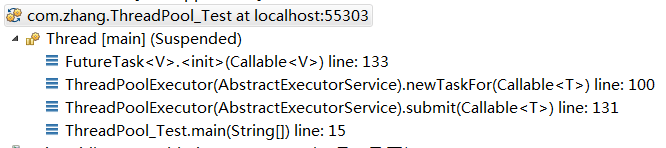
创建 FutureTask 对象,把 Callable 对象包裹起来,在 run 方法中调用 Callable 对象的方法,并设置返回值。
// java.util.concurrent.FutureTask.FutureTask

public FutureTask(Callable<V> callable) {

    if (callable == null)

        throw new NullPointerException();

    this.callable = callable;

    this.state = NEW;       // ensure visibility of callable

}

public void run() {

    if (state != NEW ||

        !UNSAFE.compareAndSwapObject(this, runnerOffset,

                                     null, Thread.currentThread()))

        return;

    try {

        Callable<V> c = callable;

        if (c != null && state == NEW) {

            V result;

            boolean ran;

            try {

                result = c.call();

                ran = true;

            } catch (Throwable ex) {

                result = null;

                ran = false;

                setException(ex);

            }

            if (ran)

                set(result);

        }

    } finally {

        // runner must be non-null until state is settled to

        // prevent concurrent calls to run()

        runner = null;

        // state must be re-read after nulling runner to prevent

        // leaked interrupts

        int s = state;

        if (s >= INTERRUPTING)

            handlePossibleCancellationInterrupt(s);

    }

}
线程池 execute 和 submit 的区别的更多相关文章
- 详解线程池execute和submit用法
在使用线程池时,我们都知道线程池有两种提交任务的方式,那么他们有什么区别呢? 1.execute提交的是Runnable类型的任务,而submit提交的是Callable或者Runnable类型的任务 ...
- 线程池提交任务的两种方式:execute与submit的区别
Java中的线程池在进行任务提交时,有两种方式:execute和submit方法. 一.execute和submit的区别 execute只能提交Runnable类型的任务,无返回值.submit既可 ...
- execute和submit的区别与联系
execute和submit都属于线程池的方法,execute只能提交Runnable类型的任务,而submit既能提交Runnable类型任务也能提交Callable类型任务. execute会直接 ...
- JAVA线程池shutdown和shutdownNow的区别
一.区别介绍 shutDown() 当线程池调用该方法时,线程池的状态则立刻变成SHUTDOWN状态.此时,则不能再往线程池中添加任何任务,否则将会抛出RejectedExecutionExcept ...
- ThreadPoolExecutor中execute和submit的区别
1:入参不同 excute() 传入的是 Runable, submit 传入的是 Callable 或 Runable 1):execute 方法源码 public void execute(Run ...
- ScheduledThreadPoolExecutor线程池scheduleAtFixedRate和scheduleWithFixedDelay的区别
ScheduledFuture<?> result = executor.scheduleAtFixedRate(task,2, 5, TimeUnit.SECONDS); 在延迟2秒之后 ...
- Java 并发编程——Executor框架和线程池原理
Eexecutor作为灵活且强大的异步执行框架,其支持多种不同类型的任务执行策略,提供了一种标准的方法将任务的提交过程和执行过程解耦开发,基于生产者-消费者模式,其提交任务的线程相当于生产者,执行任务 ...
- Java提高班(二)深入理解线程池ThreadPool
本文你将获得以下信息: 线程池源码解读 线程池执行流程分析 带返回值的线程池实现 延迟线程池实现 为了方便读者理解,本文会由浅入深,先从线程池的使用开始再延伸到源码解读和源码分析等高级内容,读者可根据 ...
- 线程池-Executors
合理使用线程池能够带来三个好处 减少创建和销毁线程上所花的时间以及系统资源的开销 提高响应速度.当任务到达时,任务可以不需要等到线程创建就能立即执行 提高线程的客观理性.线程是稀缺资源,如果无限制的创 ...
随机推荐
- JS中什么是发布--订阅模式?
转载文章部分内容: 发布订阅模式介绍 发布---订阅模式又叫观察者模式,它定义了对象间的一种一对多的关系,让多个观察者对象同时监听某一个主题对象,当一个对象发生改变时,所有依赖于它的对象都将得到通知. ...
- WebStorm破解方法
http://www.jianshu.com/p/85266fa16639 http://idea.lanyus.com/ webstorm 入门指南 破解方法 1. 下载的WebStorm http ...
- IO模型——IO多路复用机制
(1)I/O多路复用技术通过把多个I/O的阻塞复用到同一个select.poll或epoll的阻塞上,从而使得系统在单线程的情况下可以同时处理多个客户端请求.与传统的多线程/多进程模型比,I/O多路复 ...
- strip函数
f=open('a.txt',)for l in f.readlines(): print(l.strip()) # 默认清除字符串l的首尾位的\n或空格,如果是l.strip("a&qu ...
- Inception Network
1. 下图为一个Inception 模块,即将输入的图像通过多种过滤器或者池化操作后,全部再给拼起来形成新的图像. 2. Inception 网络就是讲将多个Inception模块连起来而已,如下图的 ...
- MYSQL常用函数(聚合函数(常用于GROUP BY从句的SELECT查询中))
AVG(col)返回指定列的平均值 COUNT(col)返回指定列中非NULL值的个数 MIN(col)返回指定列的最小值 MAX(col)返回指定列的最大值 SUM(col)返回指定列的所有值之和 ...
- ios手机域名https协议注意事项
加载网页版链接框架不能用http 1.下载到本地 2.转换为cdn https
- Django - Python3 常用命令
1.创建Django 项目 执行命令 django-admin.py startproject project_name 2.创建app 执行命令 注意:要先进入项目目录下,cd project_na ...
- 动态规划-子数组乘积小于k的总个数 Subarray Product Less Than K
2018-09-01 23:02:46 问题求解: 问题求解: 最开始的时候,一眼看过去就是一条 dp 嘛,保存每个数字结尾的长度和,最后求和就好,至于长度如何求,本题中需要用滑动窗口来维护. 很好的 ...
- SOCKET 接收图片
using System;using System.Collections.Generic;using System.Text;using System.Net.Sockets;using Syste ...