
Python中的进程池与线程池(包含代码)
Python中的进程池与线程池
引入进程池与线程池
使用ProcessPoolExecutor进程池,使用ThreadPoolExecutor
使用shutdown
使用submit同步调用
使用submit异步调用
异步+回调函数
并发实现套接字通信
引入进程池
在学习线程池之前,我们先看一个例子

 1 # from multiprocessing import Process

 2 # import time

 3 #

 4 # def task(name):

 5 #     print('name',name)

 6 #     time.sleep(1)

 7 # if __name__ == '__main__':

 8 #     start=time.time()

 9 #     p1 = Process(target=task,args=("safly1",))

10 #     p2 = Process(target=task, args=("safly2",))

11 #     p3 = Process(target=task, args=("safly3",))

12 #

13 #     p1.start()

14 #     p2.start()

15 #     p3.start()

16 #

17 #     p1.join()

18 #     p2.join()

19 #     p3.join()

20 #

21 #     print("main")

22 #

23 #     end = time.time()

24 #     print(end- start)
输出如下:

以上的方式是一个个创建进程,这样的耗费时间才1秒多,虽然高效,但是有什么弊端呢?
如果并发很大的话,会给服务器带来很大的压力,所以引入了进程池的概念
使用ProcessPoolExecutor进程池
什么时候用池:
池的功能是限制启动的进程数或线程数,
什么时候应该限制???
当并发的任务数远远超过了计算机的承受能力时,即无法一次性开启过多的进程数或线程数时
就应该用池的概念将开启的进程数或线程数限制在计算机可承受的范围内
Python3.2开始,标准库为我们提供了concurrent.futures模块,它提供了ThreadPoolExecutor和ProcessPoolExecutor两个类,实现了对threading和multiprocessing的进一步抽象,对编写线程池/进程池提供了直接的支持。
通过ProcessPoolExecutor 来做示例。
我们来看一个最简单的进程池
 1 from concurrent.futures import ProcessPoolExecutor

 2 import time

 3 def task(name):

 4     print('name',name)

 5     time.sleep(1)

 6 if __name__ == '__main__':

 7     start=time.time()

 8     p1=ProcessPoolExecutor(2)

 9     for i in range(5):

10         p1.submit(task,i)

11     p1.shutdown(wait=True)

12     print('主')

13     end=time.time()

14     print(end-start)
输出如下:
 1 D:\APPS\Python3.7\python.exe "D:/Python/project one/day20180717/进程池与线程池.py"

 2 name 0

 3 name 1

 4 name 2

 5 name 3

 6 name 4

 7 主

 8 3.118098258972168

 9

10 Process finished with exit code 0
简单解释下:
ProcessPoolExecutor(2)创建一个进程池,容量为2,循环submit出5个进程,然后就在线程池队列里面,执行多个进程,p1.shutdown(wait=True)意思是进程都执行完毕,在执行主进程的内容
使用shutdown
p1.shutdown(wait=True)是进程池内部的进程都执行完毕,才会关闭,然后执行后续代码
如果改成false呢?看如下代码
 1 from concurrent.futures import ProcessPoolExecutor

 2 import time

 3 def task(name):

 4     print('name',name)

 5     time.sleep(1)

 6 if __name__ == '__main__':

 7     start=time.time()

 8     p1=ProcessPoolExecutor(2)

 9     for i in range(5):

10         p1.submit(task,i)

11     p1.shutdown(wait=False)

12     print('主')

13     end=time.time()

14     print(end-start)
输出如下:
 1 D:\APPS\Python3.7\python.exe "D:/Python/project one/day20180717/进程池与线程池.py"

 2 主

 3 0.008975744247436523

 4 name 0

 5 name 1

 6 name 2

 7 name 3

 8 name 4

 9

10 Process finished with exit code 0
使用submit同步调用
同步:提交完任务后就在原地等待,直到任务运行完毕并且拿到返回值后,才运行下一行代码
from concurrent.futures import ProcessPoolExecutor

import time, random, os

def piao(name, n):

    print('%s is piaoing %s' % (name, os.getpid()))

    time.sleep(1)

    return n ** 2

if __name__ == '__main__':

    p = ProcessPoolExecutor(2)

    start = time.time()

    for i in range(5):

        res=p.submit(piao,'safly %s' %i,i).result() #同步调用

        print(res)

    p.shutdown(wait=True)

    print('主', os.getpid())

    stop = time.time()

    print(stop - start)
 1 D:\APPS\Python3.7\python.exe "D:/Python/project one/day20180717/进程池与线程池.py"

 2 safly 0 is piaoing 11448

 3 0

 4 safly 1 is piaoing 11800

 5 1

 6 safly 2 is piaoing 11448

 7 4

 8 safly 3 is piaoing 11800

 9 9

10 safly 4 is piaoing 11448

11 16

12 主 8516

13 5.095325946807861

14

15 Process finished with exit code 0
使用submit异步调用
异步:提交完任务(绑定一个回调函数)后不原地等待,直接运行下一行代码,等到任务运行有返回值自动触发回调的函数的运行
 1 from concurrent.futures import ThreadPoolExecutor

 2 import time

 3 def task(name):

 4     print('name',name)

 5     time.sleep(1)

 6 if __name__ == '__main__':

 7     start=time.time()

 8     p1=ThreadPoolExecutor(2)

 9     for i in range(5):

10         p1.submit(task,i)

11     p1.shutdown(wait=True)

12     print('主')

13     end=time.time()

14     print(end-start)
1 D:\APPS\Python3.7\python.exe "D:/Python/project one/day20180717/进程池与线程池.py"

2 name 0

3 name 1

4 name 2

5 name 3

6 name 4

7 主

8 3.003053903579712
使用回调函数+异步
# from concurrent.futures import ProcessPoolExecutor,ThreadPoolExecutor

# import os

# import time

# import random

#

# def task(n):

#     print('%s run...' %os.getpid())

#     time.sleep(5)

#     return n**2

#

# def parse(future):

#     time.sleep(1)

#     res=future.result()

#     print('%s 处理了 %s' %(os.getpid(),res))

#

# if __name__ == '__main__':

#     pool=ProcessPoolExecutor(4)

#     # pool.submit(task,1)

#     # pool.submit(task,2)

#     # pool.submit(task,3)

#     # pool.submit(task,4)

#

#     start=time.time()

#     for i in range(1,5):

#         future=pool.submit(task,i)

#         future.add_done_callback(parse) # parse会在futrue有返回值时立刻触发,并且将future当作参数传给parse

#     pool.shutdown(wait=True)

#     stop=time.time()

#     print('主',os.getpid(),(stop - start))
 1 from concurrent.futures import ProcessPoolExecutor,ThreadPoolExecutor

 2 from threading import current_thread

 3 import os

 4 import time

 5 import random

 6

 7 def task(n):

 8     print('%s run...' %current_thread().name)

 9     time.sleep(5)

10     return n**2

11

12 def parse(future):

13     time.sleep(1)

14     res=future.result()

15     print('%s 处理了 %s' %(current_thread().name,res))

16

17 if __name__ == '__main__':

18     pool=ThreadPoolExecutor(4)

19     start=time.time()

20     for i in range(1,5):

21         future=pool.submit(task,i)

22         future.add_done_callback(parse) # parse会在futrue有返回值时立刻触发,并且将future当作参数传给parse

23     pool.shutdown(wait=True)

24     stop=time.time()

25     print('主',current_thread().name,(stop - start))
并发实现套接字通信
扩展:
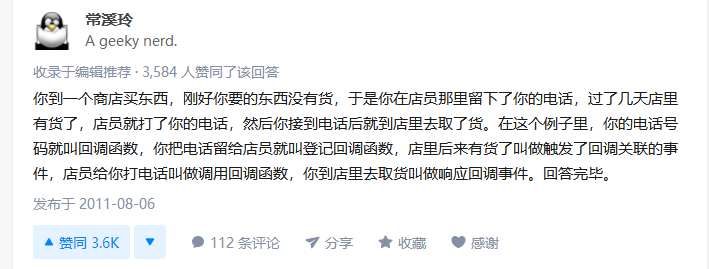
回调函数(callback)是什么?
以下均来自知乎:
Python中的进程池与线程池(包含代码)的更多相关文章
- Python中的进程池与线程池
引入进程池与线程池 使用ProcessPoolExecutor进程池,使用ThreadPoolExecutor 使用shutdown 使用submit同步调用 使用submit异步调用 异步+回调函数 ...
- python中的进程池
1.进程池的概念 python中,进程池内部会维护一个进程序列.当需要时,程序会去进程池中获取一个进程. 如果进程池序列中没有可供使用的进程,那么程序就会等待,直到进程池中有可用进程为止. 2.进程池 ...
- python系列之 - 并发编程(进程池,线程池,协程)
需要注意一下不能无限的开进程,不能无限的开线程最常用的就是开进程池,开线程池.其中回调函数非常重要回调函数其实可以作为一种编程思想,谁好了谁就去掉 只要你用并发,就会有锁的问题,但是你不能一直去自己加 ...
- python并发编程之进程池,线程池,协程
需要注意一下不能无限的开进程,不能无限的开线程最常用的就是开进程池,开线程池.其中回调函数非常重要回调函数其实可以作为一种编程思想,谁好了谁就去掉 只要你用并发,就会有锁的问题,但是你不能一直去自己加 ...
- python并发编程之进程池,线程池concurrent.futures
进程池与线程池 在刚开始学多进程或多线程时,我们迫不及待地基于多进程或多线程实现并发的套接字通信,然而这种实现方式的致命缺陷是:服务的开启的进程数或线程数都会随着并发的客户端数目地增多而增多, 这会对 ...
- Python并发编程之进程池与线程池
一.进程池与线程池 python标准模块concurrent.futures(并发未来) 1.concurrent.futures模块是用来创建并行的任务,提供了更高级别的接口,为了异步执行调用 2. ...
- python 36 进程池、线程池
目录 1. 死锁与递归锁 2. 信号量Semaphor 3. GIL全局解释器锁:(Cpython) 4. IO.计算密集型对比 4.1 计算密集型: 4.2 IO密集型 5. GIL与Lock锁的区 ...
- python并发编程之进程池、线程池、协程
需要注意一下不能无限的开进程,不能无限的开线程最常用的就是开进程池,开线程池.其中回调函数非常重要回调函数其实可以作为一种编程思想,谁好了谁就去掉 只要你用并发,就会有锁的问题,但是你不能一直去自己加 ...
- GIL全局解释器锁、死锁现象、python多线程的用处、进程池与线程池理论
昨日内容回顾 僵尸进程与孤儿进程 # 僵尸进程: 所有的进程在运行结束之后并不会立刻销毁(父进程需要获取该进程的资源) # 孤儿进程: 子进程正常运行 但是产生该子进程的父进程意外死亡 # 守护进程: ...
随机推荐
- 07_jQuery对象初识(五)事件(非常重要)
1. 目前为止学过的绑定事件的方式 1. 在标签里面写 onclick=foo(this); 2. 原生DOM的JS绑定 DOM对象.onclick=function(){...} 3. jQuery ...
- C#控件的闪烁问题解决方法总结
最近对代码作了一些优化,试验后效果还可以,但是发现界面会闪烁,具体是TreeView控件会闪烁,语言为C#,IDE为VS2005.在查阅一些资料,使用了一些基本技术后(如开启双缓冲),发现没什么效果. ...
- 如何在Mac上切换python2和python3以及下载安装包 & 在Mac上如何查找系统自带python2.7的路径
电脑:系统是Mac OS 系统自带python2.7 自己下载安装了python3.6 问题:一开始我想在终端下执行python2的相关代码 例如 python kNN.py (kNN.py这 ...
- koa中同步与异步的写法
koa中间件洋葱圈模型,同步的写法 //node server.js //中间件机制 const Koa = require('koa') const app = new Koa() // app.u ...
- springboot+atomikos+多数据源管理事务(mysql 8.0)
jta:Java Transaction API,即是java中对事务处理的api 即 api即是接口的意思 atomikos:Atomikos TransactionsEssentials 是一个为 ...
- Django项目:CRM(客户关系管理系统)--62--52PerfectCRM实现CRM客户报名流程学生合同审核
# sales_urls.py # ————————47PerfectCRM实现CRM客户报名流程———————— from django.conf.urls import url from bpm. ...
- light oj 1057 状压dp TSP
#include <iostream> #include <cstdlib> #include <cstring> #include <queue> # ...
- sqlserver 如何按年按月创建分区函数
我创建了分区函数如下:create partition function pf_month1(varchar(8))as range left for values ('20120131','2012 ...
- Shell 语法之用户输入
bash shell 提供了一些不同的方法从用户处获取数据,这些方法包括命令行参数.命令行选项和直接读取键盘输入. 命令行参数 bash shell 将在命令行中输入的所有参数赋值给一些特殊变量,称为 ...
- PAT甲级——A1014 Waiting in Line
Suppose a bank has N windows open for service. There is a yellow line in front of the windows which ...