
Linux内核poll/select机制简析
0 I/O多路复用机制
I/O多路复用 (I/O multiplexing),提供了同时监测若干个文件描述符是否可以执行IO操作的能力。 select/poll/epoll 函数都提供了这样的机制,能够同时监控多个描述符,当某个描述符就绪(读或写就绪),则立刻通知相应程序进行读或写操作。本文将从内核源码(v5.2.14)入手,尝试简述 poll/select 机制的实现原理。
1 poll/select函数
介绍内核源码前,先来简单介绍 poll/select 函数的调用方式。
1.1 select函数
#include <poll.h>

int select (int maxfd, fd_set *readfds, fd_set *writefds, fd_set *exceptfds,

            struct timeval *tvptr);
- maxfd :代表要监控的最大文件描述符
fd+1 - writefds :监控可写的文件描述符
fd集合 - readfds :监控可读的文件描述符
fd集合 - exceptfds :监控异常事件的文件描述符
fd集合 - timeout :超时时长
select 将监听的文件描述符分为三组,每一组监听不同的I/O操作。 readfds/writefds/exceptfds 分别表示可写、可读、异常事件的文件描述符集合,这三个参数可以用 NULL 来表示对应的事件不需要监听。对信号集合的操作可以利用如下几个函数完成:
void FD_CLR(int fd, fd_set *set);

int  FD_ISSET(int fd, fd_set *set);

void FD_SET(int fd, fd_set *set);

void FD_ZERO(fd_set *set);
select 的调用会阻塞到有文件描述符可以进行IO操作或被信号打断或者超时才会返回。 timeout 参数用来指定超时时间,含义如下:
- NULL : 表示不设置超时,调用会一直阻塞直到文件描述符上的事件触发
- 0 : 表示不等待,立即返回,用于检测文件描述符状态
- 正整数: 表示指定时间内没有事件触发,则超时返回
值得注意的是, select 调用返回时,每个文件描述符集合均会被过滤,只保留得到事件响应的文件描述符。在下一次调用 select 时,描述符集合均需要重新设置。
1.2 poll函数
#include <poll.h>

int poll (struct pollfd *fds, unsigned int nfds, int timeout);

struct pollfd {

    int fd;             /* file descriptor to check  */

    short events;       /* events of interest on fd  */

    short revents;      /* events that occured on fd */

};
poll 函数与 select 不同,不需要为三种事件分别设置文件描述符集,而是构造了 pollfd 结构的数组,每个数组元素指定一个描述符fd以及对该描述符感兴趣的条件(events)。 poll 调用返回时,每个描述符fd上产生的事件均被保存在 revents 成员内。
和 select 类似, timeout 参数用来指定超时时间(ms)。
2 poll函数机制
poll和select均属于系统调用的方式,先就 poll 函数在Linux中实现的机制进行分析。
poll和select函数在内核源码中的定义均位于 fs/select.c 文件中,poll 函数的原型定义如下:
SYSCALL_DEFINE3(poll, struct pollfd __user *, ufds, unsigned int, nfds, int, timeout_msecs)
首先,会调用 poll_select_set_timeout 函数将超时时间转换为 timespec64 结构变量,注意超时时间将会以当前时间(monotonic clock)为基础,转换为未来的一个超时时间点(绝对时间)。
struct timespec64 end_time, *to = NULL;

if (timeout_msecs >= 0) {

    to = &end_time;

    poll_select_set_timeout(to, timeout_msecs / MSEC_PER_SEC,

                            NSEC_PER_MSEC * (timeout_msecs % MSEC_PER_SEC));

}
2.1 do_sys_poll
static int do_sys_poll(struct pollfd __user *ufds, unsigned int nfds,

                       struct timespec64 *end_time)

{

    struct poll_wqueues table;

    int err = -EFAULT, fdcount, len, size;

    /* 在栈上分配小段空间提高速度,通过`poll_list`链表保存所有的`pollfd` */

    long stack_pps[POLL_STACK_ALLOC/sizeof(long)];

    struct poll_list *const head = (struct poll_list *)stack_pps;

    struct poll_list *walk = head;

    unsigned long todo = nfds;

    . . .

    len = min_t(unsigned int, nfds, N_STACK_PPS);

    for (;;) {

        walk->next = NULL;

        walk->len = len;

        . . .

        /* 1. 将pollfd从用户空间拷贝到内核空间 */

        if (copy_from_user(walk->entries, ufds + nfds-todo, sizeof(struct pollfd) * walk->len))

            goto out_fds;

        todo -= walk->len;

        if (!todo)

            break;

        len = min(todo, POLLFD_PER_PAGE);

        size = sizeof(struct poll_list) + sizeof(struct pollfd) * len;

        walk = walk->next = kmalloc(size, GFP_KERNEL);

        . . .

    }

    poll_initwait(&table);

    /* 2. 调用do_poll完成poll的实际调用处理 */

    fdcount = do_poll(head, &table, end_time);

    poll_freewait(&table);

    /* 3. 将每个fd上产生的事件revents再从内核空间拷贝到用户空间 */

    for (walk = head; walk; walk = walk->next) {

        struct pollfd *fds = walk->entries;

        . . .

        for (j = 0; j < walk->len; j++, ufds++)

            if (__put_user(fds[j].revents, &ufds->revents))

                goto out_fds;

    }

    err = fdcount;

out_fds:

    . . .

    return err;

}
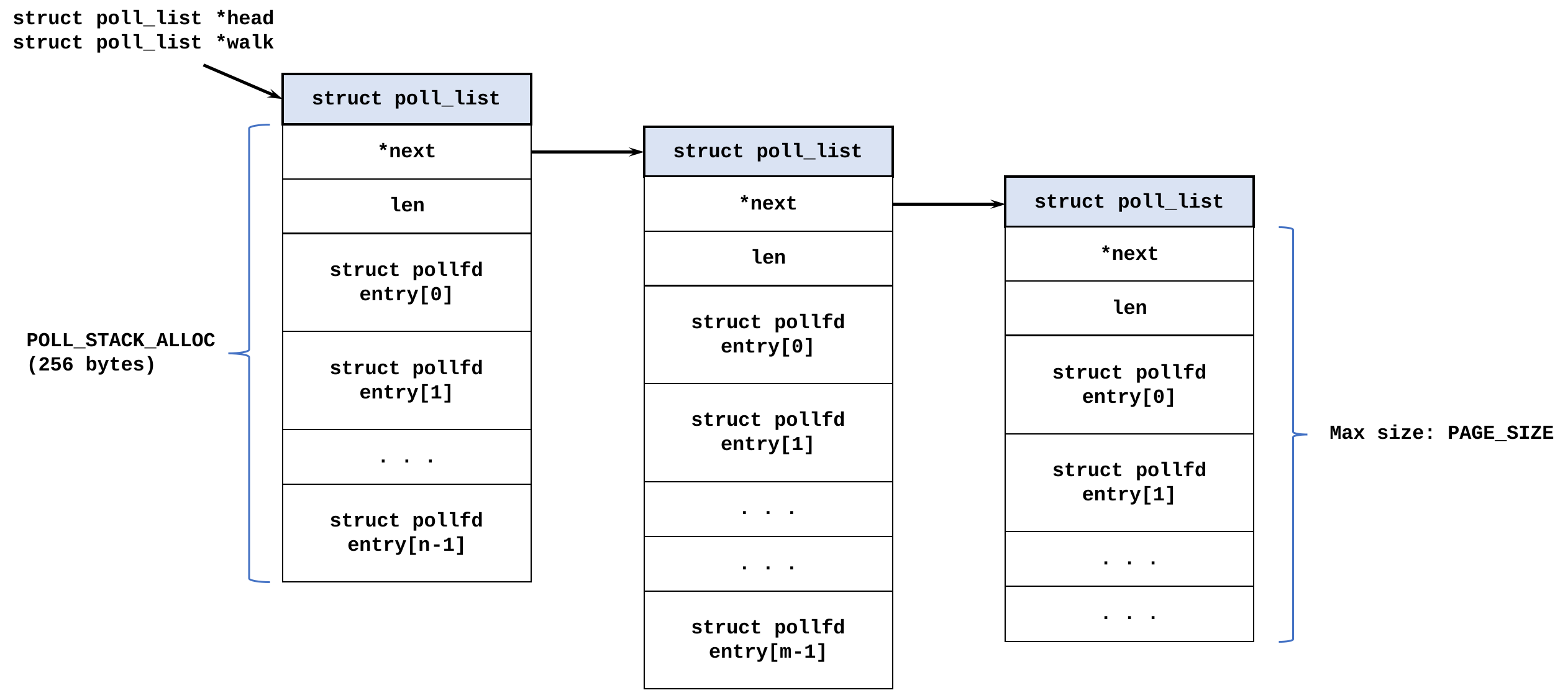
do_sys_poll 函数首先将 pollfd 结构体数组从用户空间拷贝至内核空间,同时用名为 poll_list 的链表存储(一部分存储在栈空间上,一部分存储在堆空间),形如:
 poll_initwait(&table) 对 poll_wqueues 结构体变量 table 进行初始化:
struct poll_wqueues table = {

    poll_table pt = {

        ._qproc = __pollwait;

        ._key   = ~(__poll_t)0;  /* all events enabled */

    };

    struct poll_table_page  *table = NULL;

    struct task_struct      *polling_task = current;

    int                     triggered = 0;

    int                     error = 0;

    int                     inline_index = 0;

    struct poll_table_entry inline_entries[N_INLINE_POLL_ENTRIES];

};
函数指针 table.pt._qproc 被初始化指向 __pollwait 函数,这个和 poll 调用过程中阻塞与唤醒机制相关,后面将介绍。
随后即调用 do_poll 函数完成 poll 操作,最后将每个文件描述符fd产生的事件再拷贝到内核空间。
2.2 do_poll
static int do_poll(struct poll_list *list, struct poll_wqueues *wait,

                   struct timespec64 *end_time)

{

    poll_table* pt = &wait->pt;

    ktime_t expire, *to = NULL;

    int timed_out = 0, count = 0;

    u64 slack = 0;

    __poll_t busy_flag = net_busy_loop_on() ? POLL_BUSY_LOOP : 0;

    unsigned long busy_start = 0;

    /* timeout设置为0时,将pt->_qproc设置为NULL,同时不阻塞,相当于退化为轮询操作 */

    if (end_time && !end_time->tv_sec && !end_time->tv_nsec) {

        pt->_qproc = NULL;

        timed_out = 1;

    }

    /* 超时时间设置并有效的情况下,才设置slack */

    if (end_time && !timed_out)

        slack = select_estimate_accuracy(end_time);

    for (;;) {

        struct poll_list *walk;

        bool can_busy_loop = false;

        /* 对每一项pollfd进行遍历,调用do_pollfd */

        for (walk = list; walk != NULL; walk = walk->next) {

            struct pollfd * pfd, * pfd_end;

            pfd = walk->entries;

            pfd_end = pfd + walk->len;

            for (; pfd != pfd_end; pfd++) {

                /* do_pollfd返回非负值,表示发现事件触发,此时无需再将当前进程加入到相应的等待队列 */

                if (do_pollfd(pfd, pt, &can_busy_loop, busy_flag)) {

                    count++;

                    pt->_qproc = NULL;

                    /* found something, stop busy polling */

                    busy_flag = 0;

                    can_busy_loop = false;

                }

            }

        }

        /* 当前进程已经在上述的遍历中被加入到各个fd对应驱动的等待队列,无需重复加入 */

        pt->_qproc = NULL;

        if (!count) {

            count = wait->error;

            /* 被信号中断,后面将返回 */

            if (signal_pending(current))

                count = -EINTR;

        }

        /* 发现事件触发,或者timed_out == 1 提前退出循环 */

        if (count || timed_out)

            break;

        if (can_busy_loop && !need_resched()) {

            if (!busy_start) {

                busy_start = busy_loop_current_time();

                continue;

            }

            if (!busy_loop_timeout(busy_start))

                continue;

        }

        busy_flag = 0;

        /* 超时时间end_time有效时,将timespec64格式的end_time转换为ktime_t格式 */

        if (end_time && !to) {

            expire = timespec64_to_ktime(*end_time);

            to = &expire;

        }

        /* 进行poll进程的休眠工作,让出CPU

         * 超时时间到达时返回,设置timed_out=1,在下一个轮询后返回上层调用

         */

        if (!poll_schedule_timeout(wait, TASK_INTERRUPTIBLE, to, slack))

            timed_out = 1;

    }

    return count;

}
do_poll 函数首先从头部到尾部遍历链表 poll_list ,对每一项 pollfd 调用 do_pollfd 函数。 do_pollfd 函数主要将当前 poll 调用进程加入到每个 pollfd 对应fd所关联的底层驱动等待队列中,将在下文详细介绍这一点。
do_pollfd 调用后,如果某个fd已经产生事件,那么后续遍历其他fd时,无需再将当前进程加入到对应的等待队列中, poll 调用也将返回而不是睡眠(schedule)。
2.3 do_pollfd
static inline __poll_t do_pollfd(struct pollfd *pollfd, poll_table *pwait,

        bool *can_busy_poll, __poll_t busy_flag)

{

    int fd = pollfd->fd;

    __poll_t mask = 0, filter;

    struct fd f;

    if (fd < 0)

        goto out;

    mask = EPOLLNVAL;

    f = fdget(fd);

    if (!f.file)

        goto out;

    /* userland u16 ->events contains POLL... bitmap */

    filter = demangle_poll(pollfd->events) | EPOLLERR | EPOLLHUP;

    pwait->_key = filter | busy_flag;

    mask = vfs_poll(f.file, pwait);

    if (mask & busy_flag)

        *can_busy_poll = true;

    mask &= filter;     /* Mask out unneeded events. */

    fdput(f);

out:

    /* ... and so does ->revents */

    pollfd->revents = mangle_poll(mask);

    return mask;

}
do_pollfd 主要完成与底层VFS中的驱动程序 f_op->poll 的调用,和对事件的过滤(只过滤出对每个文件描述符感兴趣的事件)。最后会把过滤出的事件放入 revents 中,作为结果返回。
static inline __poll_t vfs_poll(struct file *file, struct poll_table_struct *pt)

{

    if (unlikely(!file->f_op->poll))

        return DEFAULT_POLLMASK;

    return file->f_op->poll(file, pt);

}
vfs_poll 将调用 file->f_op->poll 函数,而这个函数是在设备驱动程序中定义的。这里通过一个模拟的字符驱动globalfifo程序中定义的 xxx_poll 函数来分析调用过程。
globalfifo_poll 主要完成了如下几方面的工作:
- 锁定设备自定义的互斥量
- 调用 poll_wait 将 poll 进程加入到设备自定义的等待队列中,下文将详细介绍 poll_wait
- 判断等待事件条件是否发生
- 对互斥量解锁
static unsigned int globalfifo_poll(struct file *flip,

                                    struct poll_table_struct *poll_table)

{

    struct globalfifo_dev *dev = flip->private_data;

    unsigned int mask = 0;

    mutex_lock(&dev->globalfifo_mutex);

    /* Add poll_table to r_wait/w_wait queue of device driver

     * then, device driver could wake up poll function of upper layer (do_poll)

     */

    poll_wait(flip, &dev->r_wait, poll_table);

    poll_wait(flip, &dev->w_wait, poll_table);

    if (dev->current_len != 0) {

        mask |= POLLIN | POLLRDNORM;

    }

    if (dev->current_len != GLOBALFIFO_SIZE) {

        mask |= POLLOUT | POLLWRNORM;

    }

    mutex_unlock(&dev->globalfifo_mutex);

    return mask;

}
2.4 poll_wait
void poll_wait(struct file * filp, wait_queue_head_t * wait_address, poll_table *p)

{

    if (p && p->_qproc && wait_address)

        p->_qproc(filp, wait_address, p);

}
poll_wait 进而调用到 poll_table p->_qproc ,而后者在2.1节中通过 poll_initwait(&table) 被初始化为 __pollwait 。
static void __pollwait(struct file *filp, wait_queue_head_t *wait_address, poll_table *p)

{

    struct poll_wqueues *pwq = container_of(p, struct poll_wqueues, pt);

    struct poll_table_entry *entry = poll_get_entry(pwq);

    if (!entry)

        return;

    entry->filp = get_file(filp);

    entry->wait_address = wait_address;

    entry->key = p->_key;

    init_waitqueue_func_entry(&entry->wait, pollwake);

    entry->wait.private = pwq;

    add_wait_queue(wait_address, &entry->wait);

}
__pollwait 初始化等待队列项(关联到当前 poll 进程),最后将等待队列项加入到设备驱动中定义的等待队列中。关于等待队列的介绍,可以参考:Linux等待队列(Wait Queue)。
2.5 do_poll continue
static int do_poll(struct poll_list *list, struct poll_wqueues *wait,

                   struct timespec64 *end_time)

{

    . . .

    for (;;) {

        struct poll_list *walk;

        bool can_busy_loop = false;

        for (walk = list; walk != NULL; walk = walk->next) {

            struct pollfd * pfd, * pfd_end;

            pfd = walk->entries;

            pfd_end = pfd + walk->len;

            for (; pfd != pfd_end; pfd++) {

                /* do_pollfd返回非负值,表示发现事件触发,此时无需再将当前进程加入到相应的等待队列 */

                if (do_pollfd(pfd, pt, &can_busy_loop, busy_flag)) {

                    count++;

                    pt->_qproc = NULL;

                    /* found something, stop busy polling */

                    busy_flag = 0;

                    can_busy_loop = false;

                }

            }

        }

        /* 已经通过遍历处理完所有pollfd,无需再次进行等待队列的处理 */

        pt->_qproc = NULL;

        if (!count) {

            count = wait->error;

            /* 被信号中断,将直接返回 */

            if (signal_pending(current))

                count = -EINTR;

        }

        /* 发现事件触发,或者timed_out == 1 提前退出循环 */

        if (count || timed_out)

            break;

        . . .

        busy_flag = 0;

        /* 超时时间end_time有效时,将timespec64格式的end_time转换为ktime_t格式 */

        if (end_time && !to) {

            expire = timespec64_to_ktime(*end_time);

            to = &expire;

        }

        /* 进行poll进程的休眠工作,让出CPU

         * 超时时间到达时返回,设置timed_out=1,在下一个轮询后返回上层调用

         */

        if (!poll_schedule_timeout(wait, TASK_INTERRUPTIBLE, to, slack))

            timed_out = 1;

    }

    return count;

}
前面几节介绍了do_poll会依次遍历每一个pollfd,调用do_pollfd将当前poll进程加入到文件描述符对应驱动的等待队列中,此过程中会判断等待条件是否已产生。如若任意一个fd的事件event符合要求,对于后面的fd不会把当前进程加入到等待队列中(pt->_qproc = NULL)。这一轮将poll进程都放进等待队列后,在下一个loop就不用重复存放。
存在(产生)下一个loop的条件:
- timeout超时条件发生, 在下一个loop会先判断是否有event满足,满足刚好能够作为结果被返回
- 等待队列被唤醒,在下一个loop对每个
fd进行判断,对相应文件描述符更新revents
do_poll 阻塞条件终止返回上层调用 do_sys_poll 后,如2.1节所述,会依次遍历每一项 pollfd ,将最终产生的事件 revents 从内核空间拷贝到用户空间。
至此,poll调用过程基本结束。
3 select函数机制
select 函数和 poll 函数的实现机制大体一致,同样存在用户空间到内核空间的拷贝过程,以及在等待队列上睡眠和唤醒的过程,关于 select 调用的详细过程分析在此不赘述了。与 poll 调用不同的一点是, select 调用对目标文件描述符的数量受到最大文件描述符 max_fds 的限制,在如下 compat_core_sys_select 函数中可以清晰得看到这点。
static int compat_core_sys_select(int n, compat_ulong_t __user *inp,

        compat_ulong_t __user *outp, compat_ulong_t __user *exp, struct timespec64 *end_time)

{

    fd_set_bits fds;

    void *bits;

    int size, max_fds, ret = -EINVAL;

    struct fdtable *fdt;

    long stack_fds[SELECT_STACK_ALLOC/sizeof(long)];

    if (n < 0)

        goto out_nofds;

    /* max_fds can increase, so grab it once to avoid race */

    rcu_read_lock();

    fdt = files_fdtable(current->files);

    max_fds = fdt->max_fds;

    rcu_read_unlock();

    if (n > max_fds)

        n = max_fds;

    . . .

}
static int compat_core_sys_select(int n, compat_ulong_t __user *inp,

        compat_ulong_t __user *outp, compat_ulong_t __user *exp, struct timespec64 *end_time)

{

    fd_set_bits fds;

    void *bits;

    int size, max_fds, ret = -EINVAL;

    struct fdtable *fdt;

    long stack_fds[SELECT_STACK_ALLOC/sizeof(long)];

    if (n < 0)

        goto out_nofds;

    /* max_fds can increase, so grab it once to avoid race */

    rcu_read_lock();

    fdt = files_fdtable(current->files);

    max_fds = fdt->max_fds;

    rcu_read_unlock();

    if (n > max_fds)

        n = max_fds;

    . . .

}
4 总结
前面几节内容,介绍了 poll 和 select 调用的使用方法,并利用源码重点分析了Linux内核 poll 机制的实现原理。
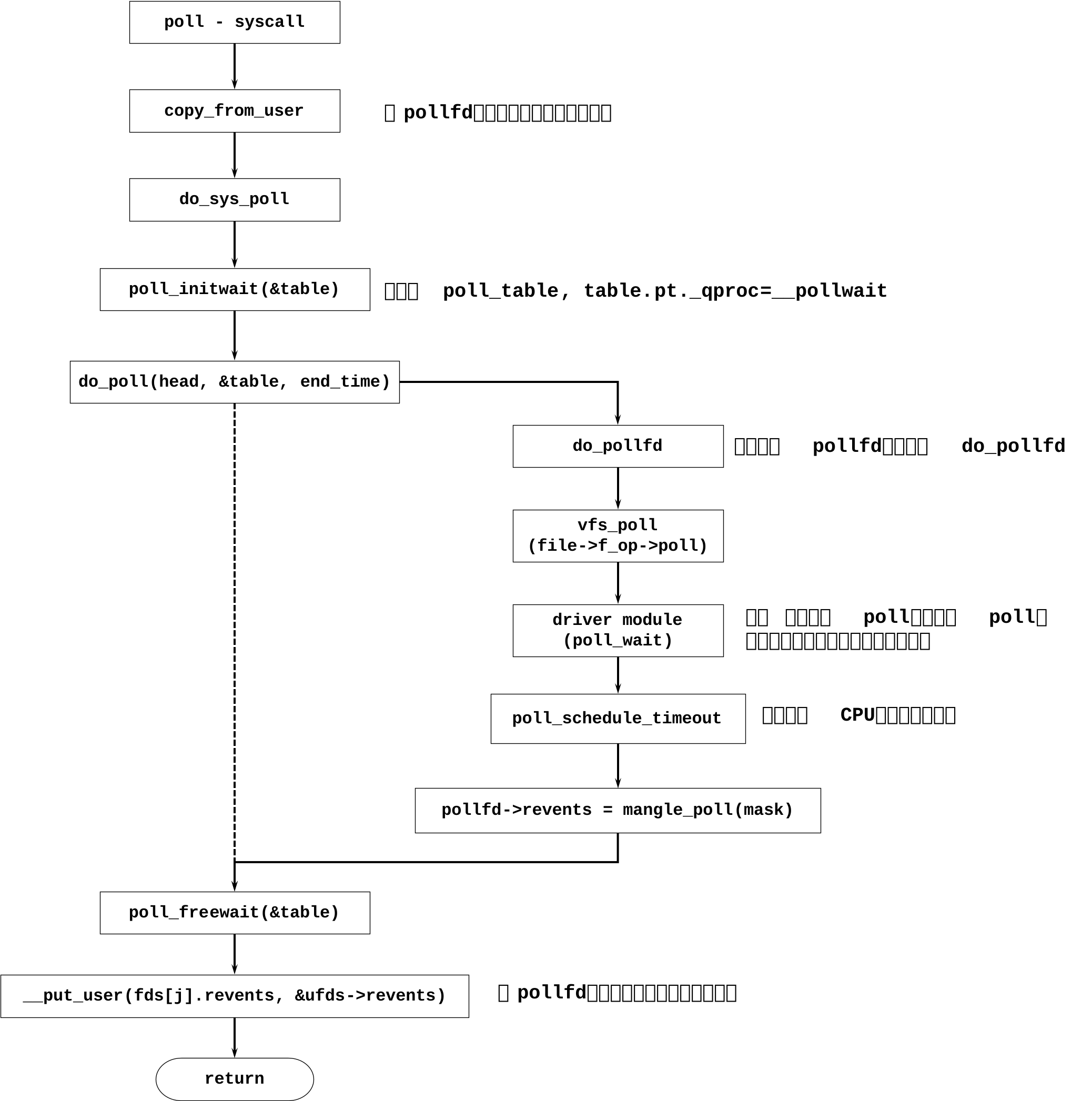
poll 系统调用的整体过程可以概括为下图:
参考资料
[1] select/poll/epoll对比分析:(http://gityuan.com/2015/12/06/linux_epoll/)
[2] 源码解读poll/select内核机制:(http://gityuan.com/2019/01/05/linux-poll-select/)
Linux内核poll/select机制简析的更多相关文章
- Linux VFS机制简析(二)
Linux VFS机制简析(二) 接上一篇Linux VFS机制简析(一),本篇继续介绍有关Address space和address operations.file和file operations. ...
- Linux VFS机制简析(一)
Linux VFS机制简析(一) 本文主要基于Linux内核文档,简单分析Linux VFS机制,以期对编写新的内核文件系统(通常是给分布式文件系统编写内核客户端)的场景有所帮助. 个人渊源 切入正文 ...
- Linux内存管理机制简析
Linux内存管理机制简析 本文对Linux内存管理机制做一个简单的分析,试图让你快速理解Linux一些内存管理的概念并有效的利用一些管理方法. NUMA Linux 2.6开始支持NUMA( Non ...
- Linux驱动之中断处理体系结构简析
S3C2440中的中断处理最终是通过IRQ实现的,在Linux驱动之异常处理体系结构简析已经介绍了IRQ异常的处理过程,最终分析到了一个C函数asm_do_IRQ,接下来继续分析asm_do_IRQ, ...
- Linux网络性能优化方法简析
Linux网络性能优化方法简析 2010-12-20 10:56 赵军 IBMDW 字号:T | T 性能问题永远是永恒的主题之一,而Linux在网络性能方面的优势则显而易见,这篇文章是对于Linux ...
- Linux 目录结构学习与简析 Part2
linux目录结构学习与简析 by:授客 QQ:1033553122 ---------------接Part 1-------------- #1.查看CPU信息 #cat /proc/cpuinf ...
- Linux 目录结构学习与简析 Part1
linux目录结构学习与简析 by:授客 QQ:1033553122 说明: / linux系统目录树的起点 =============== /bin User Bi ...
- Linux内核抢占实现机制分析【转】
Linux内核抢占实现机制分析 转自:http://blog.chinaunix.net/uid-24227137-id-3050754.html [摘要]本文详解了Linux内核抢占实现机制.首先介 ...
- Linux内核OOM killer机制
程序运行了一段时间,有个进程挂掉了,正常情况下进程不会主动挂掉,简单分析后认为可能是运行时某段时间内存占用过大,系统内存不足导致触发了Linux操作系统OOM killer机制,将运行中的进程杀掉了. ...
随机推荐
- Java学习日报10.2
1 package random; 2 import java.util.*; 3 import java.math.*; 4 public class Com { 5 6 public static ...
- 吞食鱼2(FeedingFrenzyTwo) 修改器
吞食鱼2(FeedingFrenzyTwo) 修改器 童年回忆系列.小时候特别喜欢玩这类游戏,软件不大,很慢的网速也不会下载太久,然后对配置要求不高,很破的电脑也可以玩得很开心.不过也有糟心的时候啊, ...
- Hi,这里是我的2020年,请查收!
Part 1. 回顾 还记得新年第一天,我在刚租的房子给自己做了一顿咖喱饭 (不好意思放照片...),然后回顾并展望了一下自己的 2020. 转眼间,2020 就过去了. 总的来说,今年小目标 (比如 ...
- JUC包-原子类(AtomicInteger为例)
目录 JUC包-原子类 为什么需要JUC包中的原子类 原子类原理(AtomicInteger为例) volatile CAS CAS的缺点 ABA问题 什么是ABA问题 ABA问题的解决办法 JUC包 ...
- 2020安徽程序设计省赛 G序列游戏
2020安徽程序设计省赛 G序列游戏 有一个序列w,初始为空.再给出一个长度为m 单调递增的序列a.你需要对序列w 作如下n 次操作: (1)操作0,在序列尾部添加数字0. (2)操作1,在序列尾部添 ...
- 《Spring Boot 实战纪实》之前言
目录 前言 (思维篇)人人都是产品经理 1.需求文档 1.1 需求管理 1.2 如何攥写需求文档 1.3 需求关键点文档 2 原型设计 2.1 缺失的逻辑 2.2 让想法跃然纸上 3 开发设计文档 3 ...
- linux下的文件类型
在Linux中一切设备皆文件,首先来看一下Linux下的文件都有哪些分类,也就是文件类型 文件类型:普通文件(包括shell脚本,文档,音频,视频).目录文件.设备文件(又细分为字符设备文件和块设备文 ...
- /var/lib/zabbix/percona/scripts/get_mysql_stats_wrapper.sh: line 19: mysql: command not found
[root@test ~]# tail -f /tmp/zabbix_agentd.log /var/lib/zabbix/percona/scripts/get_mysql_stats_wrappe ...
- linux命名小技巧(持续更新)
一 向某个文件批量加入内容 1.1 向/etc/wxm文件添加一大段内容可以使用这个命令 [root@registry easyrsa3]# cat <<EOF >varsset ...
- leetcode230. 二叉搜索树中第K小的元素
题目链接: https://leetcode-cn.com/problems/kth-smallest-element-in-a-bst/ 题目: 给定一个二叉搜索树,编写一个函数 kthSmalle ...