
浅探SpringMVC中HandlerExecutionChain之handler、interceptor
讲解HandlerExecutionChain之前,先大致了解下SpringMVC的核心开发步骤:
- 在web.xml中部署DispaterServlet,并配置springmvc.xml等文件;
- 将映射文件请求到处理器HandlerMapping;
- HandlerMapping会把请求映射为HandlerExecutionChain类型的handler对象;
- 将handler对象作为参数传递给HandlerAdapter的实例化对象,调用其handler方法会生成一个ModelAndView对象;
- 通过ViewResolver视图解析器,将上一步骤中生成的ModelAndView解析为View;
- DispatcherServlet根据获取到View,将视图返回给用户。
本文分为两个部分进行讲解,第一部分分析Handler, 第二部分分析Interceptor
(一) Handler
首先可以明确HandlerExecutionChain与HanderMapping关系非常紧密,HandlerExecutionChain只能通过HanderMapping接口中的唯一方法来获得,HanderMapping接口定义如下:
package org.springframework.web.servlet;

import javax.servlet.http.HttpServletRequest;

public interface HandlerMapping {

    String PATH_WITHIN_HANDLER_MAPPING_ATTRIBUTE = HandlerMapping.class.getName() + ".pathWithinHandlerMapping";

    String BEST_MATCHING_PATTERN_ATTRIBUTE = HandlerMapping.class.getName() + ".bestMatchingPattern";

    String INTROSPECT_TYPE_LEVEL_MAPPING = HandlerMapping.class.getName() + ".introspectTypeLevelMapping";

    String URI_TEMPLATE_VARIABLES_ATTRIBUTE = HandlerMapping.class.getName() + ".uriTemplateVariables";

    String MATRIX_VARIABLES_ATTRIBUTE = HandlerMapping.class.getName() + ".matrixVariables";

    String PRODUCIBLE_MEDIA_TYPES_ATTRIBUTE = HandlerMapping.class.getName() + ".producibleMediaTypes";


    //该方法是HandlerMapping接口中的唯一方法,此方法可以利用用户请求request中的信息来生成HandlerExecutionChain对象

    HandlerExecutionChain getHandler(HttpServletRequest request) throws Exception;

}
HandlerMapping架构设计图如下:

可以看到HandlerMapping家族有两个分支,分别是AbstractUrlHandlerMapping和AbstractHandlerMethodMapping,它们又统一继承于AbstractHandlerMapping。
AbstractHandlerMapping是接口HandlerMapping的抽象实现,AbstractHandlerMapping抽象类中实现了部分方法提供给它的子类使用,它还覆了getHandler方法,源码如下:
@Override

public final HandlerExecutionChain getHandler(HttpServletRequest request) throws Exception {

  // AbstractUrlHandlerMapping和AbstractHandlerMethodMapping均对getHandlerInternal(request)进行了覆写

   Object handler = getHandlerInternal(request);//该方法在本类中有定义,是一个protected型的抽象方法,

                                               //根据给定的request查找handler,如果没有找到handler,则返回一个null

  //如果经过上步没有获取到handler实例,则通过本类中setDefaultHandler(Object defaultHandler)设置默认handler,然后使用getDefaultHandler获得。

  if (handler == null) {

    handler = getDefaultHandler();

  }

  if (handler == null) {

    return null;

  }

  // Bean name or resolved handler?

  if (handler instanceof String) {

    String handlerName = (String) handler;

    handler = getApplicationContext().getBean(handlerName);

  }

  return getHandlerExecutionChain(handler, request);

}
上面的getHandlerInternal在AbstractUrlHandlerMapping和AbstractHandlerMethodMapping中均有实现:
AbstractUrlHandlerMapping中的getHandlerInternal方法会根据用户请求信息中的URL查找handler:
 /** Look up a handler for the URL path of the given request.  -- 通过匹配URL,将URL与handler联系起来 */

    @Override

    protected Object getHandlerInternal(HttpServletRequest request) throws Exception {

                     ... //略

    }
AbstractHandlerMethodMapping中的getHandlerInternal方法则会根据用户request信息中提供的Method来查找handler:
/** Look up a handler method for the given request. -- 普遍用于@requestMaping,匹配内容将它的Method作为handler */

    @Override

    protected HandlerMethod getHandlerInternal(HttpServletRequest request) throws Exception {

         ... //略

    }
回到上文中的getHandler方法,它最终返回了一个HandlerExecutionChain,getHandlerExecutionChain(handler, request)方法属于 AbstractHandlerMapping 类的一个受保护类型方法,该方法定义如下:
protected HandlerExecutionChain getHandlerExecutionChain(Object handler, HttpServletRequest request) {

    // 如果已经是HandlerExecutionChain,则直接使用,否则创建新的

    HandlerExecutionChain chain = (handler instanceof HandlerExecutionChain ?

            (HandlerExecutionChain) handler : new HandlerExecutionChain(handler));

    String lookupPath = this.urlPathHelper.getLookupPathForRequest(request);

    for (HandlerInterceptor interceptor : this.adaptedInterceptors) {

        if (interceptor instanceof MappedInterceptor) {

            MappedInterceptor mappedInterceptor = (MappedInterceptor) interceptor;

            if (mappedInterceptor.matches(lookupPath, this.pathMatcher)) {

                //向chain中加入mappedInterceptor类型的拦截器

                chain.addInterceptor(mappedInterceptor.getInterceptor());

            }

        }

        else {

            // 向chain中共加入拦截器

            chain.addInterceptor(interceptor);

        }

    }

    return chain;

}
简而言之就是:当用户请求到到DispaterServlet中后,配置的HandlerMapping会根据用户请求(也就是handler)会将它与所有的interceptors封装为HandlerExecutionChain对象,HandlerExecutionChain的作用在源码注释部分简要解释如下:
Handler execution chain, consisting of handler object and any handler interceptors.
Returned by HandlerMapping's HandlerMapping.getHandler method.
可知通过HandlerMapping实例对象的getHandler方法可以获得一个HandlerExecutionChain对象实例,该实例封装了一个handler处理对象和一些interceptors。HandlerExecutionChain类定义代码不长,其中所有的属性,方法如下:

(二) Interceptor 拦截器
HandlerExecutionChain中介绍到了拦截器,那这个拦截器是何方圣神?下文来简单介绍一下。
首先引入拦截器。
上文中指出了HandlerMapping继承了AbstractHandlerMapping,AbstractHandlerMapping又继承于WebApplicationObjectSupport,进而继承了ApplicationObjectSupport。
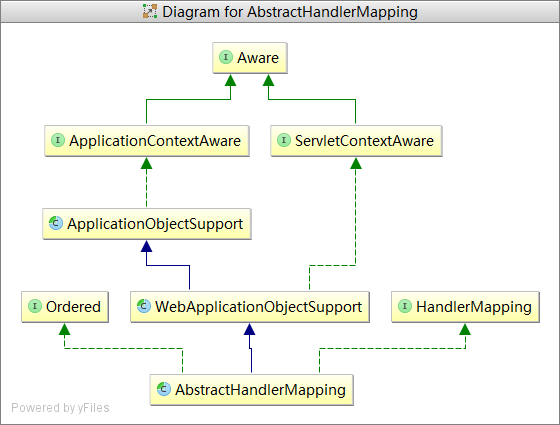
ApplicationObjectSupport实现了ApplicationContextAware接口,在Spring容器中如果该bean类实现了ApplicationContextAware,那么通过容器获取这个bean时,void setApplicationContext(ApplicationContext context)方法将被调用。
@Override

protected void initApplicationContext() throws BeansException {

  extendInterceptors(this.interceptors);

  //探测容器中所有拦截器

  detectMappedInterceptors(this.mappedInterceptors);

  //初始配置这些拦截器

  initInterceptors();

}
其中,initInterceptors()方法如下,主要作用是返回一个HandlerInterceptor对象,然后将这个对象放到 this.adaptedInterceptors 集合中(ps: adaptedInterceptors很重要哟)。
/**

* Initialize the specified interceptors, checking for {@link MappedInterceptor}s and

* adapting {@link HandlerInterceptor}s and {@link WebRequestInterceptor}s if necessary.

* @see #setInterceptors

* @see #adaptInterceptor

*/

protected void initInterceptors() {

	if (!this.interceptors.isEmpty()) {

		for (int i = 0; i < this.interceptors.size(); i++) {

			Object interceptor = this.interceptors.get(i);

			if (interceptor == null) {

				throw new IllegalArgumentException("Entry number " + i + " in interceptors array is null");

			}

			this.adaptedInterceptors.add(adaptInterceptor(interceptor));

		}

	}

}
至此,了解了拦截器来龙,那接下来说一下拦截器的去脉。
拦截器的总接口 HandlerInterceptor 定义如下:
public interface HandlerInterceptor {

  boolean preHandle(HttpServletRequest request, HttpServletResponse response, Object handler) throws Exception;

  void postHandle(HttpServletRequest request, HttpServletResponse response, Object handler, ModelAndView modelAndView) throws Exception;

  void afterCompletion(HttpServletRequest request, HttpServletResponse response, Object handler, Exception ex) throws Exception;

}
在spring-webmvc-4.3.1.RELEASE-sources.jar中,HandlerIntercetor共有13个实现类,如MappedInterceptor、webContentInterceptor、ThemeChangeInterceptor、HandlerIntercetorAdapter等,这里就不一一列出来了。
当客户端发送请求后,DispatcherServlet.doDispatch方法中会处理请求,下面贴出doDispatch(req, res)中与拦截器相关的代码:
protected void doDispatch(HttpServletRequest request, HttpServletResponse response) throws Exception {

    ...(前面代码略)

    try {

        ModelAndView mv = null;

        Exception dispatchException = null;

        try {

            processedRequest = checkMultipart(request);

            multipartRequestParsed = (processedRequest != request);

            // Determine handler for the current request.//获取根据请求获取handler

            mappedHandler = getHandler(processedRequest);

            if (mappedHandler == null || mappedHandler.getHandler() == null) {

                noHandlerFound(processedRequest, response);

                return;

            }

            // Determine handler adapter for the current request.//获取handler适配器

            HandlerAdapter ha = getHandlerAdapter(mappedHandler.getHandler());

            ...(略)

            // 拦截器执行拦截,对客户端请求响应requset进行拦截

            if (!mappedHandler.applyPreHandle(processedRequest, response)) {

                return;

            }

            // 核心逻辑,处理handler,返回ModerAndView对象

            mv = ha.handle(processedRequest, response, mappedHandler.getHandler());

            if (asyncManager.isConcurrentHandlingStarted()) {

                return;

            }

            applyDefaultViewName(processedRequest, mv);

            // 拦截器执行拦截,对客户端响应response进行拦截

            mappedHandler.applyPostHandle(processedRequest, response, mv);

        }

        catch (Exception ex) {

            ...(后面代码略)

        }

    }

}
这里以mappedHandler.applyPreHandle(req, res)为例,简要分析一下doDispatch中的处理请求前拦截逻辑:
    boolean applyPreHandle(HttpServletRequest request, HttpServletResponse response) throws Exception {

        // 获取所有初始化的拦截器

        HandlerInterceptor[] interceptors = getInterceptors();

        // 遍历拦截器

        if (!ObjectUtils.isEmpty(interceptors)) {

            for (int i = 0; i < interceptors.length; i++) {

                // 遍历执行每个拦截器中的preHandle方法(即对某一个handler,要遍历执行所有的拦截器preHandle方法)

                HandlerInterceptor interceptor = interceptors[i];

                if (!interceptor.preHandle(request, response, this.handler)) {

                    // 最终调用interceptor.afterCompletion(req, res, handler, ex)

                    triggerAfterCompletion(request, response, null);

                    return false;

                }

                this.interceptorIndex = i;

            }

        }

        return true;

    }
当然也可以自定义拦截器,只要实现HandlerInterceptor 接口中的preHandle、postHandle、afterCompletion方法就可以啦。
写在最后
其实看源码是最好的,也是最优效果的,本文只希望能在阅读源码的时候提供一点参考作用就够了。
浅探SpringMVC中HandlerExecutionChain之handler、interceptor的更多相关文章
- springmvc中的拦截器interceptor用法
1.配置拦截器 在springMVC.xml配置文件增加: 1 <mvc:interceptors> 2 <!-- 日志拦截器 --> 3 <mvc:intercepto ...
- springMvc中实现拦截器Interceptor以及添加静态资源映射
这个代码写了很久了,多久呢?2018年12-20号写的.... 废话不多说,简化一下,作为笔记. 注: public class springmvcConfig extends WebMvcConfi ...
- SpringMVC 中的Interceptor 拦截器
1.配置拦截器 在springMVC.xml配置文件增加: <mvc:interceptors> <!-- 日志拦截器 --> <mvc:interceptor> ...
- SpringMVC之七:SpringMVC中使用Interceptor拦截器
SpringMVC 中的Interceptor 拦截器也是相当重要和相当有用的,它的主要作用是拦截用户的请求并进行相应的处理.比如通过它来进行权限验证,或者是来判断用户是否登陆,或者是像12306 那 ...
- SpringMVC中使用Interceptor拦截器
SpringMVC 中的Interceptor 拦截器也是相当重要和相当有用的,它的主要作用是拦截用户的请求并进行相应的处理.比如通过它来进行权限验证,或者是来判断用户是否登陆,或者是像12306 那 ...
- SpringMvc中Interceptor拦截器用法
SpringMVC 中的Interceptor 拦截器也是相当重要和相当有用的,它的主要作用是拦截用户的请求并进行相应的处理.比如通过它来进行权限验证,或者是来判断用户是否登陆等. 一. 使用场景 1 ...
- SpringMVC中的Interceptor拦截器及与Filter区别
SpringMVC 中的Interceptor 拦截器也是相当重要和相当有用的,它的主要作用是拦截用户的请求并进行相应的处理.比如通过它来进行权限验证,或者是来判断用户是否登陆,或者是像12306 那 ...
- [转]SpringMVC中使用Interceptor拦截器
SpringMVC 中的Interceptor 拦截器也是相当重要和相当有用的,它的主要作用是拦截用户的请求并进行相应的处理.比如通过它来进行权限验证,或者是来判断用户是否登陆,或者是像12306 那 ...
- SpringMVC中使用Interceptor拦截器顺序
一.简介 SpringMVC 中的Interceptor 拦截器也是相当重要和相当有用的,它的主要作用是拦截用户的请求并进行相应的处理.比如通过它来进行权限验 证,或者是来判断用户是否登陆,或者是像1 ...
随机推荐
- 12.19 redis缓存
---恢复内容开始--- 命中:应用程序从key中获取数据,取到后返回 失效:到设置的失效时间后就失效 更新:应用程序把数据存到数据库中后又放回去 在项目中使用redis方法 结合业务场景,避免滥用 ...
- 关于MSSQL中IS NULL和IS NOT NULL的问题
在SQL语句中我们一般会避免写IS NULL和IS NOT NULL,因为这样优化器不会使用索引. 但经过一系列测试发现这句话并不完全对,因为有时候也会使用索引. 语句: select * from ...
- HTML学习3---排版标记
上节,我们学习了boda常用的属性以及HTML的一些标记,但是图显示的效果却不是那么的好看. 原因就是没有排版好,我们这次使用居中来使这个页面更好看一点,顺便多加入几个别的标记. HTML排版标记 ( ...
- C++ readdir、readdir_r函数
readdir, readdir_r - 读一个目录 readdir函数: struct dirent *readdir(DIR *dirp); The data returned by read ...
- tensorflow中共享变量 tf.get_variable 和命名空间 tf.variable_scope
tensorflow中有很多需要变量共享的场合,比如在多个GPU上训练网络时网络参数和训练数据就需要共享. tf通过 tf.get_variable() 可以建立或者获取一个共享的变量. tf.get ...
- streamsets stream selector 使用
stream selector 就是一个选择器,可以方便的对于不同record 的数据进行区分,并执行不同的处理 pipeline flow stream selector 配置 local fs 配 ...
- swagger api 转graphql npm 包试用
graphql 比较方便的进行api 的查询,操作,swagger 是一个方便的open api 描述标准,当前我们有比较多的 restapi 但是转换为graphql 是有成本的,还好swagger ...
- Mysql5.6 buffer_pool预热功能
通常在mysql重启服务后,需要通过手工执行SQL来预热buffer_pool,在mysql5.6中,有如下参数可以无需人工干预. innodb_buffer_pool_dump_at_shutdow ...
- am335x内核初始化路径
/arch/arm/mach-omap2/board_am335xevm.c中 1.myd_am335x_dev_cfg[]{ evm_nand_init() ... myir_gpio_init() ...
- bzoj3143游走
题目:https://www.lydsy.com/JudgeOnline/problem.php?id=3143 学到了无向图中点被经过的期望次数和边被经过的期望次数. 一个点被经过的期望次数 就是 ...