
APUE 学习笔记(八) 线程同步
1. 进程的所有信息对该进程内的所有线程都是共享的
包括 可执行的程序文本、程序全局内存、堆内存以及文件描述符
#include <unistd.h>

#include <stdio.h>

#include <pthread.h>

void printid(const char* str)

{

    pid_t     pid = getpid();

    pthread_t tid = pthread_self();

    fprintf(stdout, "%s pid:%u,tid:%u\n", str, (unsigned int)pid, (unsigned int)tid);

}

void* thread_func(void* arg)

{

    printid("new thread: ");

    return (void*);

}

int main(int argc, char* argv[])

{

    pthread_t tid;

    int ret = pthread_create(&tid, NULL, thread_func, NULL);

    if (ret != ) {

        fprintf(stderr, "pthread_create error\n");

        return -;

    }

    printid("main thread: ");

    sleep();

    return ;

}
#include <pthread.h>

#include <stdio.h>

#include <unistd.h>

#include <assert.h>

#define NTHREADS 5

void* PrintHello(void* threadId)

{

    int tid = ((int)threadId);

    fprintf(stdout, "Hello world, thread %d\n", tid);

    pthread_exit(NULL);

}

int main(int argc, char* argv[])

{

    pthread_t threads[NTHREADS];

    int rc = ;

    for (int i = ; i < NTHREADS; ++i) {

        fprintf(stdout, "In main: creating thread %d\n", i);

        rc = pthread_create(&threads[i], NULL, PrintHello, (void*)i);

        if (rc != ) {

            fprintf(stderr, "error:return code from pthread_create is %d\n", rc);

            exit(-);

        }

    }

    pthread_exit(NULL);

}
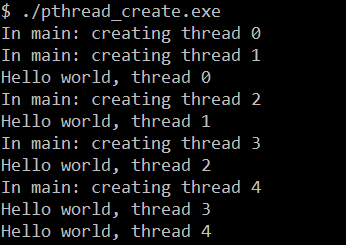
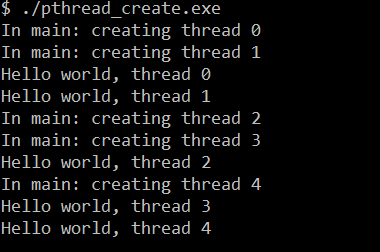
上述代码,我们创建了5个线程,每个线程打印一条包含线程编号的语句
可以预想到:每次运行程序时,结果不尽相同。因为 线程创建时并不能保证哪个线程会先执行,不能在线程调度上做出任何假设
假如我们将上述代码中
rc = pthread_create(&threads[i], NULL, PrintHello, (void*)i);
 void* PrintHello(void* threadId)

 {

     int tid = ((int)threadId);

     fprintf(stdout, "Hello world, thread %d\n", tid);

     pthread_exit(NULL);

 }
改为以下:
rc = pthread_create(&threads[i], NULL, PrintHello, (void*)&i);
void* PrintHello(void* threadId)

{

    int tid = *((int*)threadId);

    fprintf(stdout, "Hello world, thread %d\n", tid);

    pthread_exit(NULL);

}
仅有的差别就是线程执行函数的参数传递不同,执行改过之后的程序:
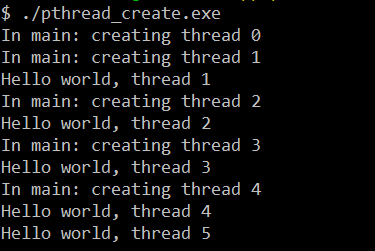
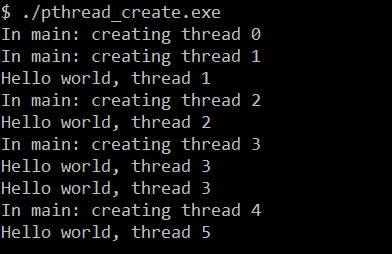
我们可以看到程序执行结果完全不同并且不正确
对于修改前:直接传递 变量i 的值,这是值语义,之后线程操作的只是 变量i 的副本,跟原来的 变量i 没有任何关系,没有竞争出现
对于修改后:传递的是 变量i 的地址(地址),这是引用语义,之后线程操作的是 原变量i,这时多个线程就出现了竞争,
因为这时 变量i 的地址是共享内存,对所有线程可见,其余5个线程通过共享内存在读这个变量i,而主线程通过 i++在写这个变量值
这之间并没有任何同步,所以5个线程读取的值并不正确
#include <stdio.h>

#include <unistd.h>

#include <pthread.h>

#include <stdlib.h>

#include <assert.h>

#include <math.h>

#define NTHREADS 5

void* busywork(void* ptr)

{

    int tid = (int)ptr;

    fprintf(stdout, "Thread %d starting...\n", tid);

    double result = 0.0;

    for (int i = ; i < ; ++i) {

        result = result + sin(i) * tan(i);

    }

    fprintf(stdout, "Thread %d done. Result = %e\n", tid, result);

    pthread_exit((void*)ptr);

}

int main(int argc, char* argv[])

{

    pthread_t thread[NTHREADS];

    pthread_attr_t attr;

    /* Initialize and set thread detached attribute */

    pthread_attr_init(&attr);

    pthread_attr_setdetachstate(&attr, PTHREAD_CREATE_JOINABLE);

    for (int i = ; i < NTHREADS; ++i) {

        fprintf(stdout, "Main: creating thread %d\n", i);

        int rc = pthread_create(&thread[i], &attr, busywork, (void*)i);

        if (rc != ) {

            fprintf(stderr, "error:return code from pthread_create is %d\n", rc);

            exit(-);

        }

    }

    /* Free attribute and wait for the other threads */

    void* status;

    pthread_attr_destroy(&attr);

    for (int i = ; i < NTHREADS; ++i) {

        int rc = pthread_join(thread[i], &status);

        if (rc != ) {

            fprintf(stderr, "error:return code from pthread_join id %d\n", rc);

            exit(-);

        }

        fprintf(stdout, "Main:completed join with thread %d having a status of %d\n", i, (int)status);

    }

    fprintf(stdout, "Main: program completed. Exiting\n");

    pthread_exit(NULL);

}
2.线程可以通过phread_cancel函数来请求取消同一进程中的其它线程
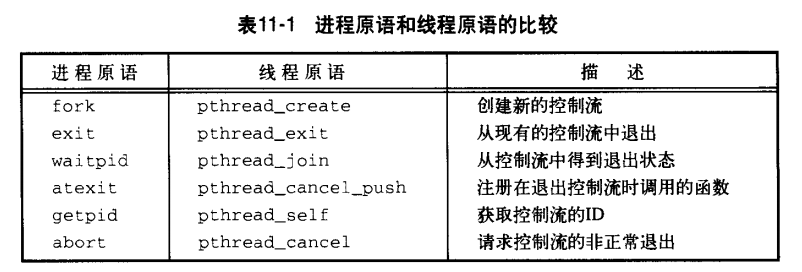
3.进程原语和线程原语的比较
3.线程同步

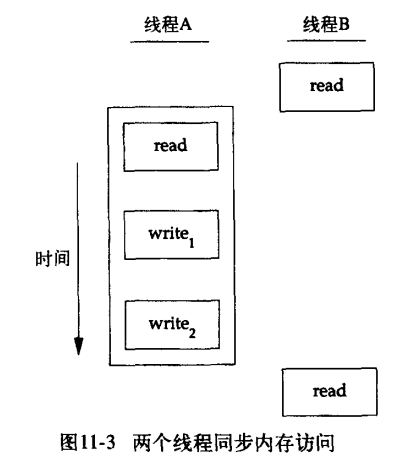
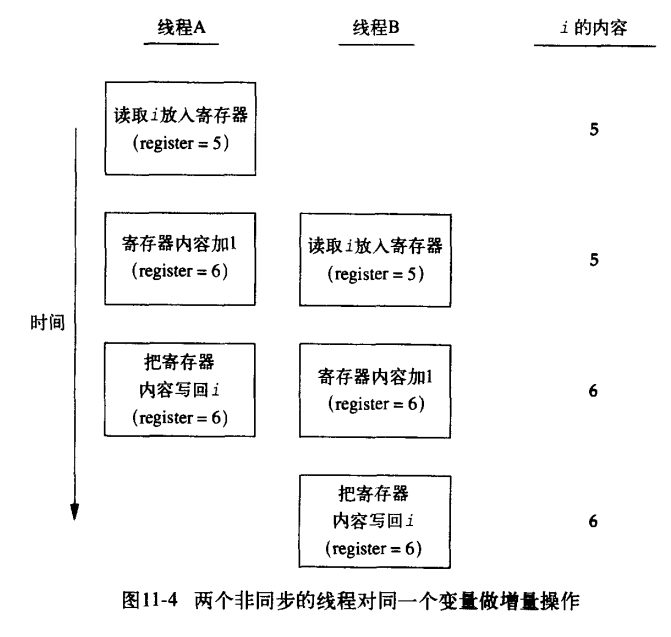
为了解决这个问题,线程必须使用锁,在同一时间只允许一个线程访问该变量
#include <unistd.h>

#include <stdio.h>

#include <stdlib.h>

#include <pthread.h>

struct foo {

    int        f_count;

    pthread_t  f_lock;

    /* more stuff here... */

};

struct foo* foo_alloc(void)

{

    struct foo* fp = malloc(sizeof(struct foo));

    if (fp != NULL) {

        fp->f_count = ;

        int ret = pthread_mutex_init(&fp->f_lock, NULL);

        if (ret != ) {

            free(fp);

            return NULL;

        }

    }

    return fp;

}

/* increase a reference to the object */

void foo_increase(struct foo* fp)

{

    assert(fp != NULL);

    pthread_mutex_lock(&fp->f_lock);

    fp->f_count++;

    pthread_mutex_unlock(&fp->f_lock);

}

/* decrease a reference to the object */

void foo_decrease(struct foo* fp)

{

    assert(fp != NULL);

    pthread_mutex_lock(&fp->f_lock);

    if (--fp->f_count == ) {

        pthread_mutex_unlock(&fp->f_lock);

        pthread_mutex_destroy(&fp->f_lock);

        free(fp);

    } else {

        pthread_mutex_unlock(&fp->f_lock);

    }

}
4.避免死锁
 #include <unistd.h>

 #include <stdio.h>

 #include <stdlib.h>

 #include <assert.h>

 #include <pthread.h>

 #define NHASH 29

 #define HASH(fp)  (((unsigned long)(fp)) % NHASH)

 pthread_mutex_t hashlock = PTHREAD_MUTEX_INITIALIZER;

 struct foo {

     struct foo*      f_next;

     int              f_count;

     pthread_mutex_t  f_lock;

     int              f_id;

     /* more stuff here... */

 };

 struct foo* fh[NHASH];

 struct foo* foo_alloc(void)

 {

     struct foo* fp = malloc(sizeof(struct foo));

     if (fp != NULL) {

         fp->f_count = ;

         int ret = pthread_mutex_init(&fp->f_lock, NULL);

         if (ret != ) {

             free(fp);

             return NULL;

         }

         int idx = HASH(fp);

         pthread_mutex_lock(&hashlock);

         fp->f_next = fh[idx];

         fh[idx] = fp->f_next;

         pthread_mutex_lock(&fp->f_lock);

         pthread_mutex_unlock(&hashlock);

         /*  continue initialization...... */

         pthread_mutex_unlock(&fp->f_lock);

     }

     return fp;

 }

 /* increase a reference to the object */

 void foo_increase(struct foo* fp)

 {

     assert(fp != NULL);

     pthread_mutex_lock(&fp->f_lock);

     fp->f_count++;

     pthread_mutex_unlock(&fp->f_lock);

 }

 /* find an existing object */

 struct foo* foo_find(int id)

 {

     struct foo* fp;

     int idx = HASH(fp);

     pthread_mutex_lock(&hashlock);

     for (fp = fh[idx]; fp != NULL; fp = fp->f_next) {

         if (fp->f_id == id) {

             foo_increase(fp);

             break;

         }

     }

     pthread_mutex_unlock(&hashlock);

     return fp;

 }

 /* decrease a reference to the object */

 void foo_decrease(struct foo* fp)

 {

     assert(fp != NULL);

     struct foo* tfp = NULL;

     int idx = ;

     pthread_mutex_lock(&fp->f_lock);

     if (fp->f_count == ) {

         pthread_mutex_unlock(&fp->f_lock);

         pthread_mutex_lock(&hashlock);

         pthread_mutex_lock(&fp->f_lock);

         /* need to recheck the condition */

         if (fp->f_count != ) {

             fp->f_count--;

             pthread_mutex_unlock(&fp->f_lock);

             pthread_mutex_unlock(&hashlock);

             return;

         }

         /* remove from list */

         idx = HASH(fp);

         tfp = fh[idx];

         if (tfp == fp) {

             fh[idx] = fp->f_next;

         } else {

             while (tfp->f_next != fp) {

                 tfp = tfp->f_next;

             }

             tfp->f_next = fp->f_next;

         }

         pthread_mutex_unlock(&hashlock);

         pthread_mutex_unlock(&fp->f_lock);

         pthread_mutex_destroy(&fp->f_lock);

         free(fp);

     } else {

         fp->f_count--;

         pthread_mutex_unlock(&fp->f_lock);

     }

 }
 #include <unistd.h>

 #include <stdio.h>

 #include <stdlib.h>

 #include <assert.h>

 #include <pthread.h>

 #define NHASH 29

 #define HASH(fp)  (((unsigned long)(fp)) % NHASH)

 struct foo {

     struct foo*       f_next;       /* protected by hashlock */

     int               f_count;      /* protected by hashlock */

     pthread_mutex_t   f_lock;

     int               f_id;

     /* more stuff here */

 };

 struct foo* fh[NHASH];

 pthread_mutex_t hashlock = PTHREAD_MUTEX_INITIALIZER;

 struct foo* foo_alloc(void)

 {

     int idx = ;

     struct foo* fp = malloc(sizeof(struct foo));

     if (fp != NULL) {

         fp->f_count = ;

         int ret = pthread_mutex_init(&fp->f_lock, NULL);

         if (ret != ) {

             free(fp);

             return NULL;

         }

         idx = HASH(fp);

         pthread_mutex_lock(&hashlock);

         fp->f_next = fh[idx];

         fh[idx] = fp->f_next;

         pthread_mutex_lock(&fp->f_count);

         pthread_mutex_unlock(&hashlock);

         /* continue initialization */

     }

     return fp;

 }

 void foo_increase(struct foo* fp)

 {

     assert(fp != NULL);

     pthread_mutex_lock(&hashlock);

     fp->f_count++;

     pthread_mutex_unlock(&hashlock);

 }

 struct foo* foo_find(int id)

 {

     struct foo* fp = NULL;

     int idx = HASH(fp);

     pthread_mutex_lock(&hashlock);

     for (fp = fh[idx]; fp != NULL; fp = fp->f_next) {

         if (fp->f_id == id) {

             fp->f_count++;

             break;

         }

     }

     pthread_mutex_unlock(&hashlock);

     return fp;

 }

 void foo_decrease(struct foo* fp)

 {

     assert(fp != NULL);

     struct foo* tfp = NULL;

     int idx = ;

     pthread_mutex_lock(&hashlock);

     if (--fp->f_count == ) {

         idx = HASH(fp);

         tfp = fh[idx];

         if (tfp == fp) {

             fh[idx] = fp->f_next;

         } else {

             while (tfp->f_next != fp) {

                 tfp = tfp->f_next;

             }

             tfp->f_next = fp->f_next;

         }

         pthread_mutex_unlock(&hashlock);

         pthread_mutex_destroy(&fp->f_lock);

         free(fp);

     } else {

         pthread_mutex_unlock(&hashlock);

     }

 }
5.读写锁
6.条件变量
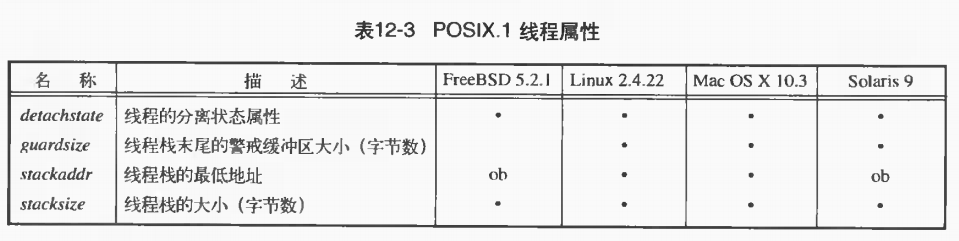
7. 线程属性
#include<pthread.h>

int pthread_attr_init(pthread_attr_t* attr);

int pthread_attr_destroy(pthread_attr_t* attr);
8.互斥量属性
#include <pthread.h>

int pthread_mutexattr_init(pthread_mutexattr_t* attr);

int pthread_mutexattr_destroy(pthread_mutexattr_t* attr);
9.重入、线程安全
APUE 学习笔记(八) 线程同步的更多相关文章
- APUE学习笔记——11 线程同步、互斥锁、自旋锁、条件变量
线程同步 同属于一个进程的不同线程是共享内存的,因而在执行过程中需要考虑数据的一致性. 假设:进程有一变量i=0,线程A执行i++,线程B执行i++,那么最终i的取值是多少呢?似乎一定 ...
- APUE学习笔记6——线程和线程同步
1 概念 线程是程序执行流的最小单元.线程是进程中的一个实体,是被系统独立调度和分派的基本单位,线程自己不拥有系统资源,只拥有一点在运行中必不可少的资源,但它可与同属一个进程的其它线程共享进程所拥有的 ...
- linux学习笔记之线程同步机制
一.基础知识. 1:线程同步机制:互斥量,读写锁,条件变量,自旋锁,屏障. 1,互斥量:每个进程访问被互斥量保护的资源时,都需要先对互斥量进行判断. 1)互斥量重要属性:进程共享属性,健壮属性,类型属 ...
- C#学习笔记之线程 - 同步上下文
同步上下文(Synchronization Contexts) 手动使用锁的一个替代方案是去声明锁.通过派生ContextBoundObject和应用Synchronization属性,你告诉CLR自 ...
- Linux学习笔记21——线程同步的两种方式
一 用信号量同步 1 信号量函数的名字都以sem_开头,线程中使用的基本信号量函数有4个 2 创建信号量 #include<semaphore.h> int sem_init(sem_t ...
- APUE学习笔记——11 线程基础
线程标识 线程由线程号进行标识.线程号仅在线程所属的进程环境中有效.也就是说属于不同进程的两个线程可能线程号一样. 线程标识用结构体pthread_t tid表示.与线程Id相关的函数如下: 比较两个 ...
- 操作系统学习笔记----进程/线程模型----Coursera课程笔记
操作系统学习笔记----进程/线程模型----Coursera课程笔记 进程/线程模型 0. 概述 0.1 进程模型 多道程序设计 进程的概念.进程控制块 进程状态及转换.进程队列 进程控制----进 ...
- 【opencv学习笔记八】创建TrackBar轨迹条
createTrackbar这个函数我们以后会经常用到,它创建一个可以调整数值的轨迹条,并将轨迹条附加到指定的窗口上,使用起来很方便.首先大家要记住,它往往会和一个回调函数配合起来使用.先看下他的函数 ...
- Java IO学习笔记八:Netty入门
作者:Grey 原文地址:Java IO学习笔记八:Netty入门 多路复用多线程方式还是有点麻烦,Netty帮我们做了封装,大大简化了编码的复杂度,接下来熟悉一下netty的基本使用. Netty+ ...
随机推荐
- SQLServer死锁
死锁的四个必要条件:互斥条件(Mutual exclusion):资源不能被共享,只能由一个进程使用.请求与保持条件(Hold and wait):已经得到资源的进程可以再次申请新的资源.非剥夺条件( ...
- IOS版本判断
-(void)getIOSVersion { //#if __IPHONE_OS_VERSION_MAX_ALLOWED >= 50000 //此方法和编译器相关 //quanju.iOS ...
- 【贪心】10.24assassin
题目分析 没有题目分析…… 寄存一下神奇反悔贪心 #include<bits/stdc++.h> ; struct node { int a,b; node(, ):a(x),b(y) { ...
- LNMP的环境搭建
新装的Linux 机器,还没有来得及安装网站环境,这篇文章就是记录一下自己安装LNMP的一般步骤. 之前在Laravel视频中看过这段的讲解,后来也试着安装过,基本的命令不算是熟练掌握,所以还要看看之 ...
- python入门:从安装python开始
python简介: Python (英国发音:/ˈpaɪθən/ 美国发音:/ˈpaɪθɑːn/), 是一种面向对象的解释型计算机程序设计语言,由荷兰人Guido van Rossum于1989年发明 ...
- Vue中引入TradingView制作K线图
**前言: 本文使用的是1.10版本 , 可通过TradingView.version()查看当前版本. 附上开发文档地址:https://zlq4863947.gitbooks.i...** 一.修 ...
- 关于缺失值NaN
在Pandas中处理NaN值 https://blog.csdn.net/Tyro_java/article/details/81396000
- 掌握这些Python代码技巧,编程至少快一半!
被人工智能捧红的 Python 已是一种发展完善且非常多样化的语言,其中肯定有一些你尚未发现的功能.本文或许能够让你学到一些新技巧. Python 是世界上最流行.热门的编程语言之一,原因很多,比 ...
- Django与多个数据库交互
定义数据库 在Django中使用多个数据库的第一步是告诉Django您将要使用的数据库服务器. 数据库可以有您选择的任何别名.但是,别名 default 有着特殊的意义.Django使用别名为 def ...
- nrf52810学习笔记——二
nrf52810为nordic支持蓝牙 5.0性价比最高的一款芯片,不过这个芯片的rom不得不吐槽下,只有192KB,不知道为什么定了个192,而不是大家所熟悉的256KB,估计价格是个原因吧,15. ...