
Eclipse中使用Spring IOC容器的具体方法
1、通过IOC容器创建对象,并为属性赋值
在IOC容器本身对象创建时(xml文件加载时),会将配置文件中配置好的bean先创建出来,按照xml文件中配置的先后顺序创建
    <bean id="user1" class="com.neuedu.springfirst.bean.User" >

         <property name="username" value="张三"></property>

         <property name="password" value="123456"></property>

         <property name="email" value="12345@qq.com"></property>

     </bean>
测试方法:
   @Test

     public void test01() {

         ApplicationContext ioc=new ClassPathXmlApplicationContext("ApplicationContext.xml");

         Object user = ioc.getBean("user1");

         System.out.println(user);

     }
2、根据bean的类型从IOC容器中获取bean的实例★【要求:IOC容器同种类型只存在一个】
   @Test

     public void test02() throws Exception {

        ApplicationContext ioc=new ClassPathXmlApplicationContext("ApplicationContext.xml");

         User user = ioc.getBean(User.class);

         System.out.println(user);

     }
3-4、通过构造器为bean的属性赋值 ,通过index属性指定参数的位置
    <bean id="book1" class="com.neuedu.springfirst.bean.Book">

         <constructor-arg index="0" value="二月"></constructor-arg>

         <constructor-arg index="1" value="张三"></constructor-arg>

     </bean>
测试代码:
1   @Test

     public void test03() throws Exception {

        ApplicationContext ioc=new ClassPathXmlApplicationContext("ApplicationContext.xml");

         Object book = ioc.getBean("book1");

         System.out.println(book);

     }
5、通过类型不同区分重载的构造器
    <bean id="book2" class="com.neuedu.springfirst.bean.Book">

         <constructor-arg type="String" value="二月"></constructor-arg>

         <constructor-arg type="String" value="邹梦洁"></constructor-arg>

     </bean>

     <bean id="book3" class="com.neuedu.springfirst.bean.Book">

         <constructor-arg type="String" value="阿勒股"></constructor-arg>

         <constructor-arg type="Double" value="123"></constructor-arg>

     </bean>
测试代码:
   @Test

     public void test05() throws Exception {

        ApplicationContext ioc=new ClassPathXmlApplicationContext("ApplicationContext.xml");

         Object book = ioc.getBean("book2");

         System.out.println(book);

     }
6、通过p名称空间为bean赋值
     <bean id="book4" class="com.neuedu.springfirst.bean.Book"

         p:bookName="阿克"

         p:author="张三" />
测试代码:
   @Test

     public void test06() throws Exception {

        ApplicationContext ioc=new ClassPathXmlApplicationContext("ApplicationContext.xml");

         Object book = ioc.getBean("book4");

         System.out.println(book);

     }
7、测试使用null值
    <bean id="book00" class="com.neuedu.springfirst.bean.Book">

         <property name="bookName"><null/></property>

     </bean>
测试代码:
   @Test

     public void test07() throws Exception {

        ApplicationContext ioc=new ClassPathXmlApplicationContext("ApplicationContext.xml");

         Object book = ioc.getBean("book00");

         System.out.println(book);

     }
8、引用其他bean
1    <bean id="bookshop" class="com.neuedu.springfirst.bean.BookShop">

         <property name="kind" value="小说"></property>

         <property name="book" ref="book1"></property>

     </bean>
测试代码:
   @Test

     public void test08() throws Exception {

        ApplicationContext ioc=new ClassPathXmlApplicationContext("ApplicationContext.xml");

         Object bookshop = ioc.getBean("bookshop");

         System.out.println(bookshop);

     }
9、引用内部bean
    <bean id="bookshop1" class="com.neuedu.springfirst.bean.BookShop">

         <property name="kind" value="小说"></property>

         <property name="book">

             <bean class="com.neuedu.springfirst.bean.Book">

                 <property name="bookName" value="私发给"></property>

                 <property name="author" value="邹梦洁"></property>

             </bean>

         </property>

     </bean>
测试代码:
   @Test

     public void test09() throws Exception {

        ApplicationContext ioc=new ClassPathXmlApplicationContext("ApplicationContext.xml");

         Object bookshop = ioc.getBean("bookshop1");

         System.out.println(bookshop);

     }
10、使用List类型的集合属性
   <bean id="bookshop2" class="com.neuedu.springfirst.bean.BookShop">

         <property name="kind" value="小说"></property>

         <property name="bookList">

             <list>

                 <ref bean="book1" />

                 <ref bean="book2" />

                 <ref bean="book3" />

             </list>

         </property>

     </bean>
测试代码:
   @Test

     public void test10() throws Exception {

        ApplicationContext ioc=new ClassPathXmlApplicationContext("ApplicationContext.xml");

         BookShop bookshop = (BookShop) ioc.getBean("bookshop2");

         for (Book book : bookshop.getBookList()) {

             System.out.println(book);

         }

     }
11、使用Map类型的集合属性
 1   <bean id="bookshop3" class="com.neuedu.springfirst.bean.BookShop">

         <property name="kind" value="小说"></property>

         <property name="bookMap">

             <map>

                 <entry>

                     <key>

                         <value>book1</value>

                     </key>

                     <ref bean="book1" />

                 </entry>

                 <entry>

                     <key>

                         <value>book2</value>

                     </key>

                     <ref bean="book2" />

                 </entry>

                 <entry>

                     <key>

                         <value>book3</value>

                     </key>

                     <ref bean="book3" />

                 </entry>

             </map>

         </property>

     </bean>
测试代码:
   @Test

     public void test11() throws Exception {

        ApplicationContext ioc=new ClassPathXmlApplicationContext("ApplicationContext.xml");

         BookShop bookshop = (BookShop) ioc.getBean("bookshop3");

         Map<String, Book> bookMap = bookshop.getBookMap();

         Set<String> nameSet=bookMap.keySet();

         for (String name : nameSet) {

             System.out.println(bookshop.getBookMap().get(name));

         }

     }
12、使用prop子元素为Properties类型的属性赋值
   <bean id="bookshop4" class="com.neuedu.springfirst.bean.BookShop">

         <property name="kind" value="历史"></property>

         <property name="prop">

             <props>

                 <prop key="name1">book1</prop>

                 <prop key="name2">book2</prop>

                 <prop key="name3">book3</prop>

             </props>

         </property>

     </bean>
测试代码:
   @Test

     public void test12() throws Exception {

        ApplicationContext ioc=new ClassPathXmlApplicationContext("ApplicationContext.xml");

         BookShop bookshop = (BookShop) ioc.getBean("bookshop4");

         Properties prop=bookshop.getProp();

         System.out.println(prop.getProperty("name1"));

     }
14、给bean的级联属性赋值
   <bean id="book5" class="com.neuedu.springfirst.bean.Book"></bean>

     <bean id="bookshop5" class="com.neuedu.springfirst.bean.BookShop">

         <property name="book" ref="book5"></property>

         <property name="book.bookName" value="熊清华"></property>

         <property name="book.author" value="爱疯了"></property>

         <property name="book.price" value="45"></property>

     </bean>
测试代码:
   @Test

     public void test14() throws Exception {

        ApplicationContext ioc=new ClassPathXmlApplicationContext("ApplicationContext.xml");

         BookShop bookshop = (BookShop) ioc.getBean("bookshop5");

         System.out.println(bookshop.getBook());

     }
15、配置通过静态工厂方法创建的bean[通过静态方法提供实例对象,工厂类本身不需要实例化!
    <bean id="book6" class="com.neuedu.springfirst.bean.StaticFactory" factory-method="getBook">

         <constructor-arg value="book02"/>

     </bean>
测试代码:
   @Test

     public void test15() throws Exception {

        ApplicationContext ioc=new ClassPathXmlApplicationContext("ApplicationContext.xml");

         Object book = ioc.getBean("book6");

         System.out.println(book);

     }
16、配置通过实例工厂方法创建的bean[通过实例方法提供实例对象,工厂类本身需要先创建对象!
    <bean id="instanceFactory" class="com.neuedu.springfirst.bean.InstanceFactory"></bean>

     <bean id="book7" class="com.neuedu.springfirst.bean.Book" factory-bean="instanceFactory" factory-method="getBook">

         <constructor-arg value="book01"/>

     </bean>
测试代码:
   @Test

     public void test16() throws Exception {

        ApplicationContext ioc=new ClassPathXmlApplicationContext("ApplicationContext.xml");

         Object book = ioc.getBean("book7");

         System.out.println(book);

     }
18、通过继承实现bean配置信息的重用
    <bean id="user" class="com.neuedu.springfirst.bean.User">

         <property name="id" value="1"></property>

         <property name="username" value="杨涛"></property>

         <property name="password" value="123456"></property>

         <property name="email" value="12345@qq.com"></property>

     </bean>

     <bean id="user2" class="com.neuedu.springfirst.bean.User" parent="user">

         <property name="password" value="654321"></property>

         <property name="email" value="54321@qq.com"></property>

     </bean>
测试代码:
1   @Test

     public void test18() throws Exception {

        ApplicationContext ioc=new ClassPathXmlApplicationContext("ApplicationContext.xml");

         Object user = ioc.getBean("user2");

         System.out.println(user);

     }
19、通过abstract属性创建一个模板bean
1    <bean id="userTemplate" class="com.neuedu.springfirst.bean.User" abstract="true">

         <property name="id" value="1"></property>

         <property name="username" value="杨涛"></property>

         <property name="password" value="123456"></property>

         <property name="email" value="12345@qq.com"></property>

     </bean>

     <bean id="user3" class="com.neuedu.springfirst.bean.User" parent="userTemplate">

     </bean>
测试代码:
   @Test

     public void test19() throws Exception {

        ApplicationContext ioc=new ClassPathXmlApplicationContext("ApplicationContext.xml");

         //userTemplate为抽象bean,只能被继承,不能被创建

         //Object user = ioc.getBean("userTemplate");

         Object user = ioc.getBean("user3");

         System.out.println(user);

     }
20、bean之间的依赖 depends-on="order"被依赖的对象会先创建
    <bean id="user4" class="com.neuedu.springfirst.bean.User" depends-on="book8"></bean>

     <bean id="book8" class="com.neuedu.springfirst.bean.Book"></bean>
测试代码:
   @Test

     public void test20() throws Exception {

        ApplicationContext ioc=new ClassPathXmlApplicationContext("ApplicationContext.xml");

         //执行test20测试方法前,需先将ApplicationContext.xml文件中之前的代码全部删除

         //由于之前创建的对象会显示创建信息,

     }
21、分别创建单实例和多实例的bean
单实例:
    <bean id="user1" class="com.neuedu.spring.bean.User" scope="singleton">

         <property name="id" value="1"></property>

         <property name="username" value="张三"></property>

         <property name="password" value="123456"></property>

         <property name="email" value="123456@qq.com"></property>

     </bean>
测试代码:
 1   @Test

     public void test21() throws Exception {

        ApplicationContext ioc=new ClassPathXmlApplicationContext("ApplicationContext.xml");

         System.out.println("=========");

         User user1 = ioc.getBean(User.class);

         User user2 = ioc.getBean(User.class);

         System.out.println(user1==user2);

         System.out.println(user1);

         System.out.println(user2);

     }
测试结果:是同一个对象,bean对象的创建默认是在ApplicationContext.xml文件加载时创建

多实例:
    <bean id="user1" class="com.neuedu.spring.bean.User" scope="prototype">

         <property name="id" value="1"></property>

         <property name="username" value="张三"></property>

         <property name="password" value="123456"></property>

         <property name="email" value="123456@qq.com"></property>

     </bean>
测试代码同上:
测试结果:不是一个对象,并且scope属性值为prototype的bean对象,将在获取bean对象的时候创建

注意:
①IOC容器本身对象创建时,会将配置文件中配置好的bean先创建出来
②默认是单实例的,只创建bean的一个对象
③如果设置bean的scope属性为prototype,那么创建bean的对象就是多实例的,在获取的时候创建,每次获取对象都会创建新的
④.从IOC容器中获取对象
①根据bean的id获取
②根据bean的类型获取:要求容器中指定类型的bean是唯一的
22、创建带有生命周期方法的bean
先创建含有生命周期相关的方法的类
 public class LifeObject {

     public LifeObject(){

         System.out.println("LifeObject对象创建了");

     }

     public void initMethod(){

         System.out.println("init方法执行了");

     }

     public void destoryMethod(){

         System.out.println("destory方法执行了");

     }

 }
配置生命周期相关方法
    <bean id="lifeObject" class="com.neuedu.spring.bean.LifeObject" init-method="initMethod" destroy-method="destoryMethod">

     </bean>
测试代码:
   @Test

     public void test22() throws Exception {

        ApplicationContext ioc=new ClassPathXmlApplicationContext("ApplicationContext.xml");

         Object object = ioc.getBean("lifeObject");

         System.out.println(object);

         ConfigurableApplicationContext ioc1=(ConfigurableApplicationContext) ioc;

         ioc1.close();

     }
测试结果:

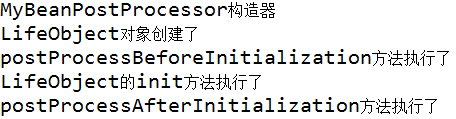
22[补充]:测试bean的后置处理器
bean的后置处理器将对所有在.xml文件加载时创建的bean对象执行处理器中的方法,bean的后置处理器实现了BeanPostProcessor接口,
可重写接口中的postProcessBeforeInitialization方法和postProcessAfterInitialization方法,分别在bean对象初始化之前和之后进行相应的操作
注:若bean对象scope属性值为prototype时,表明该bean为多实例,bean对象在获取对象时才创建,因此后置处理器不起作用
     <bean id="postProcessor" class="com.neuedu.spring.bean.MyBeanPostProcessor"></bean>

2    <bean id="lifeObject" class="com.neuedu.spring.bean.LifeObject" init-method="initMethod" destroy-method="destoryMethod">

     </bean>
测试代码:
   @Test

     public void test22_1() throws Exception {

         //测试方法不需要写任何代码,

         //因为ApplicationContext.xml文件加载时就创建了bean对象

     }
测试结果:
Eclipse中使用Spring IOC容器的具体方法的更多相关文章
- Spring中Bean获取IOC容器服务的方法
Spring 依赖注入可以让所有的Bean对其IOC容器的存在是没有意识的,甚至可以将容器换成其它的.但实际开发中如果某个Bean对象要用到Spring 容器本身的功能资源,需要意识到IOC容器的存在 ...
- JavaEE互联网轻量级框架整合开发(书籍)阅读笔记(6):Spring IOC容器学习(概念、作用、Bean生命周期)
一.IOC控制反转概念 控制反转(IOC)是一种通过描述(在Java中可以是XML或者是注解)并通过第三方去生产或获取特定对象的方式. 主动创建模式,责任在于开发者,而在被动模式下,责任归于Ioc容器 ...
- 02.Spring Ioc 容器 - 创建
基本概念 Spring IoC 容器负责 Bean 创建.以及其生命周期的管理等.想要使用 IoC容器的前提是创建该容器. 创建 Spring IoC 容器大致有两种: 在应用程序中创建. 在 WEB ...
- 当你的Spring IOC 容器(即applicationContext.xml文件)忘记配到web.xml 文件中时
当你的Spring IOC 容器忘记配到web.xml 文件中时,启动服务器就会报错. 部分错误如下: Caused by: org.springframework.beans.factory.NoS ...
- Spring IOC容器在Web容器中是怎样启动的
前言 我们一般都知道怎样使用spring来开发web应用后,但对spring的内部实现机制通常不是很明白.这里从源码角度分析下Spring是怎样启动的.在讲spring启动之前,我们先来看看一个web ...
- spring-framework-中文文档一:IoC容器、介绍Spring IoC容器和bean
5. IoC容器 5.1介绍Spring IoC容器和bean 5.2容器概述 本章介绍Spring Framework实现控制反转(IoC)[1]原理.IoC也被称为依赖注入(DI).它是一个过程, ...
- 自定义模拟一个Spring IOC容器
一.模拟一个IOC容器: 介绍:现在,我们准备使用一个java project来模拟一个spring的IOC容器创建对象的方法,也就是不使用spring的jar自动帮助我们创建对象,而是通过自己手动书 ...
- Spring IoC容器的初始化过程
Spring IoC容器的初始化包括 BeanDefinition的Resource定位.载入和注册 这三个基本的过程.IoC容器的初始化过程不包含Bean依赖注入的实现.Bean依赖的注入一般会发生 ...
- 【Spring】非Spring IOC容器下获取Spring IOC上下文的环境
前言 在Spring Web项目中,有些特殊的时候需要在非Spring IOC容器下获取Spring IOC容器的上下文环境,比如获取某个bean. 版本说明 声明POM文件,指定需引入的JAR. & ...
随机推荐
- [python] itertools库学习
最近做 cyber-dojo上的题,好几道都要用到排列组合.一开始我还老老实实自己写算法.后来一想,不对呀!python有那么多的库,为啥不用呢? 于是搜了下,发现这个:itertools 使用 he ...
- Celery-4.1 用户指南: Calling Tasks(调用任务)
基础 本文档描述 Celery 中任务实例和 Canvas 使用的统一 “Calling API”. API 中定义了一个执行选项的标准集,以及三个方法: - apply_async(args[, k ...
- volatile语义
volatile在Java内存模型(JMM)中,保证共享变量对所有线程可见,但不保证原子性.volatile语义是同步,通过共享变量的方式,完成线程间的通信. 为什么需要volatile Java内存 ...
- java selenium webdriver第一讲 seleniumIDE
Selenium是ThoughtWorks公司,一个名为Jason Huggins的测试为了减少手工测试的工作量,自己实现的一套基于Javascript语言的代码库 使用这套库可以进行页面的交互操作, ...
- AJAX——Json
一.简介: 客户端利用Ajax请求服务器端时,数据在两者之间通常有两种格式:XML格式的数据:Json(JavaScript Object Notation/JavaScript 对象表示法)格式数据 ...
- 【转载】你知道 Linux 内核是如何构建的吗?
内核的根 Makefile 负责构建两个主要的文件:vmlinux (内核镜像可执行文件)和模块文件.内核的 Makefile 从定义如下变量开始: VERSION = PATCHLEVEL = SU ...
- iOS 给Main.storyboard 添加button 事件《转》
XCODE中使用Main.Storyboard拉入控件并实现事件(Swift语言) 如何在XCODE中的Main.Storyboard内拉入控件并实现一个简单的效果呢?本人由于刚接触Swift语言 ...
- DAY9-python并发之多线程理论
一 什么是线程 在传统操作系统中,每个进程有一个地址空间,而且默认就有一个控制线程 线程顾名思义,就是一条流水线工作的过程,一条流水线必须属于一个车间,一个车间的工作过程是一个进程 车间负责把资源整合 ...
- checked多选,取消,反选
<!DOCTYPE html> <html lang="en"> <head> <meta charset="UTF-8&quo ...
- 使用ffmpeg压缩视频
命令: ffmpeg -i 1.avi -b 64k 1-64k.avi ffmpeg下载:http://dl.pconline.com.cn/download/53703.html