
go路由httprouter中的压缩字典树算法图解及c++实现
go路由httprouter中的压缩字典树算法图解及c++实现
@
前言
准备从嵌入式往go后端转,今年准备学习一下gin框架,决定先从这个轻量级的路由请求器着手,本文讲讲它用到的压缩字典树算法。
httprouter简介
HttpRouter是一个Go编写的轻量级的高性能Http请求路由器(也可称为多路选择器multiplexer简称mux)
与Go的net/http包的默认mux不同,该路由器支持路由中的变量与请求方法进行匹配,同时具有很好的伸缩性。
该路由具有高性能的同时,也优化了内存的占用,即是是很长的路径和大量的路径,他都能很好的扩展,采用压缩字典树(基数树)结构实现高效的匹配。
压缩字典树
概念
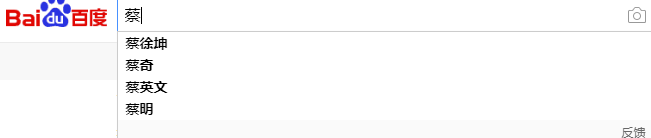
压缩字典树,是trie树的一种,也称单词查找树、前缀树,善于进行字符串的检索、取字符串最长公共前缀、以及排序,常应用在搜索引擎中例如百度输入蔡可能自动弹出能匹配到的单词出来.
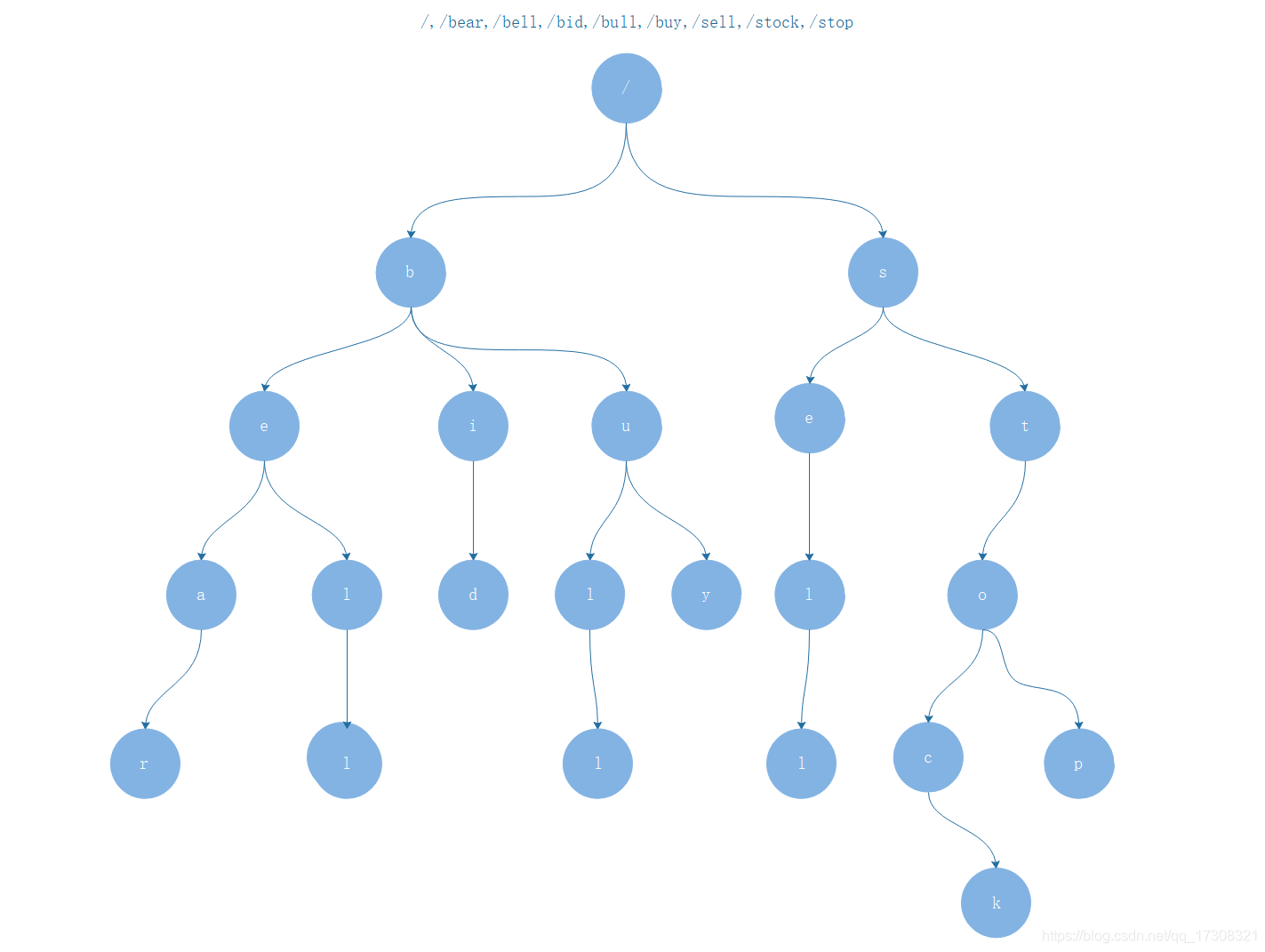
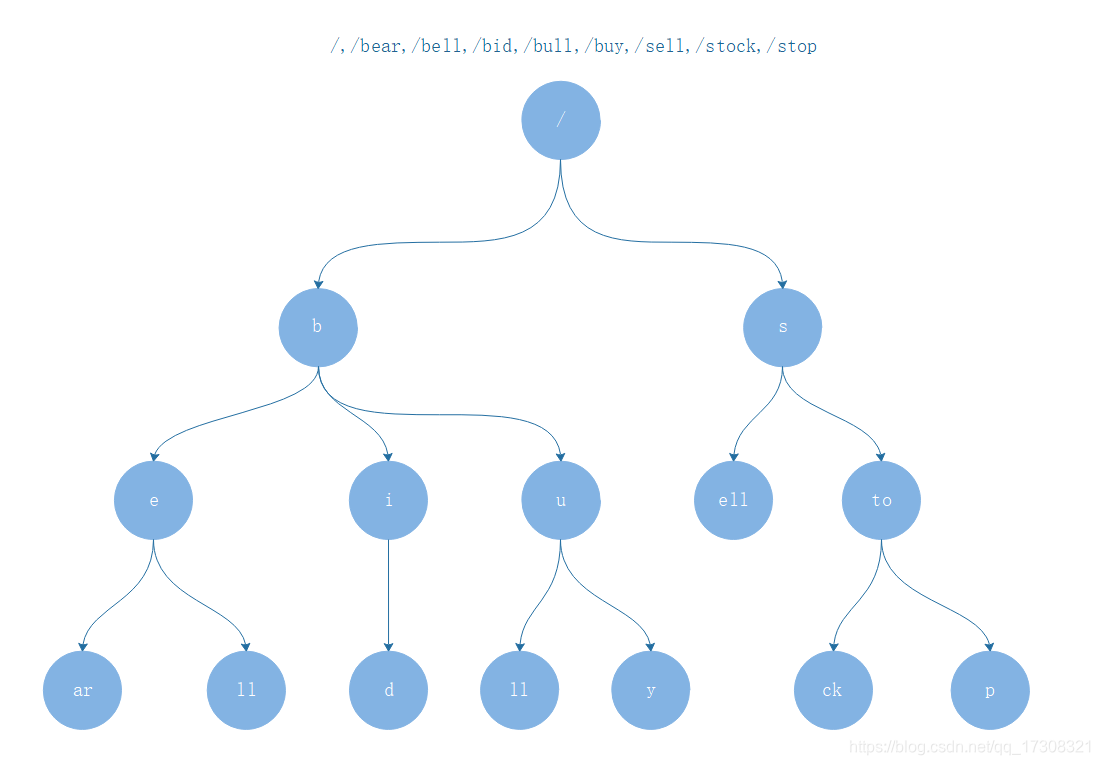
压缩tire和标准trie最大的不同点就节点的数量与插入字符串的个数成正比,而不是与字符串的长度成正比,所以当字符串数量越来越多,越密集且相似度极高的情况下,会退化成标准trie树。
下面分别是/,/bear,/bell,/bid,/bull,/buy,/sell,/stock,/stop 的标准tire 和压缩 tire
插入操作
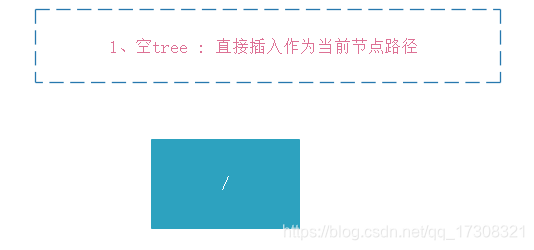
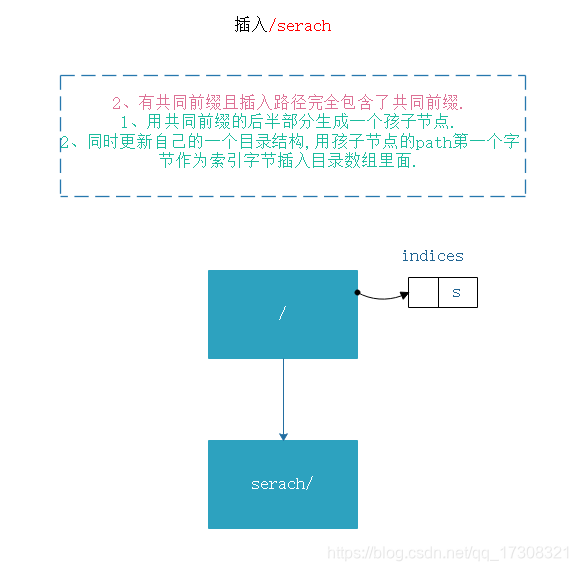
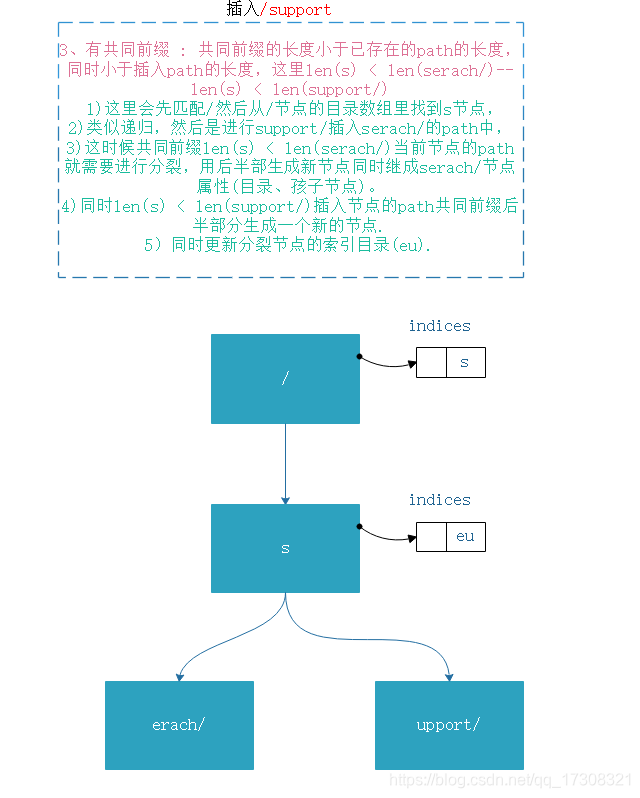
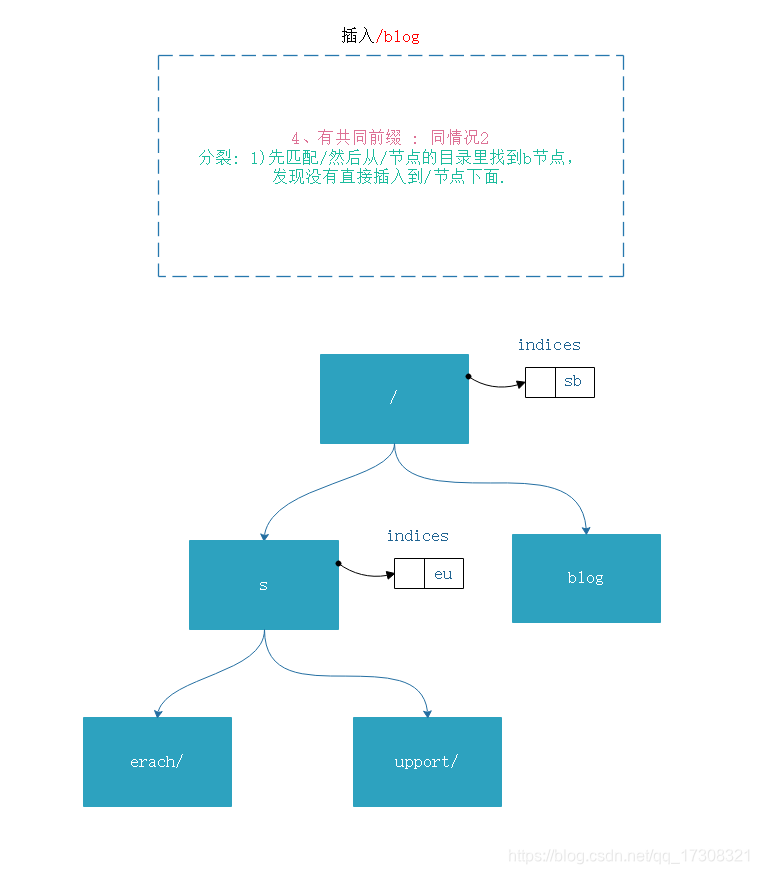
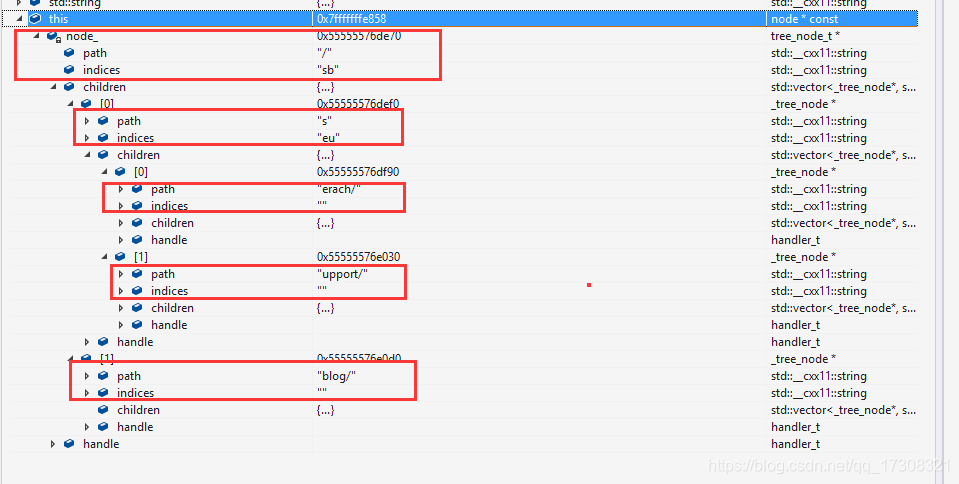
下面图解一串子串插入压缩trie过程,/,/serach,/support,/blog , 在httprouter上截的一段例子,我们只插到/blog
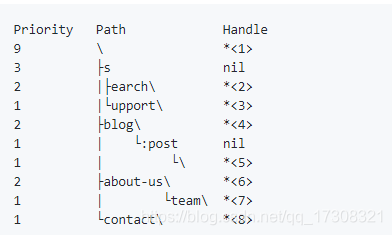
插入/
插入/serach
插入/support
插入/blog
查询操作
查询比较简单,后面看代码也比较快。
1、先找共同前缀。
2、再找目录。
3、循环上面两步,知道当前path相等。
c+++实现
这里注册了4个路径的回调函数,addRoute 即是插入操作,handler即是查询。
// httprouter.hpp

#pragma once

#include <string>

#include <vector>

#include <functional>

#include <memory>

namespace httprouter{

typedef std::function<void(void)> handler_t;

typedef struct _tree_node {

	std::string                                     path;

	std::string                                     indices;

	std::vector<std::shared_ptr<struct _tree_node>> children;

	handler_t                                       handle;

}tree_node_t;

class node

{

public:

    //! ctor

	node();

    //! dtor

    ~node(void);

    //! copy ctor

    node(const node&) = delete;

    //! assignment operator

    node& operator=(const node&) = delete;

	//! addRouter adds a node with the given handle to the path

	//! Not concurrency-safe!

	void addRoute(std::string path, handler_t handle);

    //! get path handler

    handler_t handler(std::string path);

private:

	void insertChild(tree_node_t* node, std::string& path, handler_t handle);

private:

	std::shared_ptr<tree_node_t> node_;

};

}

// httprouter.cpp

#include <algorithm>

#include "httprouter.hpp"

using namespace httprouter;

node::node()

	:node_(new tree_node_t{

	  path:       "",

	  indices:    "",

	  children:   {},

	  handle:     nullptr,

		})

{

}

node::~node(){

}

void node::addRoute(std::string path, handler_t handle) {

	std::string fullPath = path;

	auto node = node_;

	// no-empty tree

	if (node->path.size() > 0 || node->children.size() > 0) {

		while (true) {

			bool have_indices = false;

			//find the longest common prefix.

			std::size_t i = 0;

			auto max = std::min(node->path.size(), path.size());

			for (; i < max && path[i] == node->path[i];) {

				i++;

			}

			// Split edge

			if (i < node->path.size()) {

				auto child = std::shared_ptr<tree_node_t>(new tree_node_t{

				  path :      std::string(node->path.c_str() + i),

				  indices :   node->indices,

				  children :  std::move(node->children),

				  handle :    node->handle,

				});

				node->children = std::vector<std::shared_ptr<tree_node_t>>{ child };

				node->indices = std::string(node->path.c_str() + i, 1);

				node->path = std::string(path.c_str(), i);

				node->handle = nullptr;

			}

			// make new node a child of this node

			if (i < path.size()) {

				path = std::string(path.c_str() + i);

				char ch = path[0];

				// Check if a child with the next path byte exists

				for (std::size_t i = 0; i < node->indices.size(); i++) {

					if (ch == node->indices[i]) {

						//i = node.incrementChildPrio(i);

						node = node->children[i];

						have_indices = true;

						break;

					}

				}

				if (have_indices) {

					continue;

				}

				//otherwise insert it

				if (ch != ':' && ch != '*') {

					node->indices += ch;

					auto child = std::shared_ptr<tree_node_t>(new tree_node_t{

					path :      "",

					indices :   "",

					children :  {},

					handle :    nullptr,

					});

					node->children.push_back(child);

					node = child;

				}

				insertChild(node.get(), path, handle);

				return;

			}

			else if (i == path.size()) {

				if (node->handle) {

					printf("error ! handle already exists.");

                    exit(1);

				}

				node->handle = handle;

			}

			return;

		}

	}

	else { // Empty tree

		insertChild(node.get(), path, handle);

	}

}

void node::insertChild(tree_node_t* node, std::string& path, handler_t handle) {

	node->path = std::string(path.c_str());

	node->handle = handle;

}

handler_t node::handler(std::string path) {

	auto node = node_;

	while (true) {

		if (path.size() > node->path.size()) {

			if (std::string(path.c_str(), node->path.size()) == node->path) {

				path = std::string(path.c_str() + node->path.size());

			}

			char ch = path[0];

			for (std::size_t i = 0; i < node->indices.size(); i++) {

				if (ch == node->indices[i]) {

					node = node->children[i];

					continue;

				}

			}

			// handle wildcard child

			// fix me

		}

		else if (path == node->path) {

			return node->handle;

		}

	}

}

//main.cpp

#include "httprouter.hpp"

#include <iostream>

void hello1() {

	std::cout << "hello1" << std::endl;

}

void hello2() {

  std::cout << "hello2" << std::endl;

}

void hello3() {

  std::cout << "hello3" << std::endl;

}

void hello4() {

  std::cout << "hello4" << std::endl;

}

void hello5() {

  std::cout << "hello5" << std::endl;

}

int main() {

  httprouter::node no;

  no.addRoute("/", hello1);

  no.addRoute("/serach/", hello2);

  no.addRoute("/support/", hello3);

  no.addRoute("/blog/", hello4);

  no.handler("/")();

  no.handler("/serach/")();

  no.handler("/support/")();

  no.handler("/blog/")();

}
结果:

节点信息:
go路由httprouter中的压缩字典树算法图解及c++实现的更多相关文章
- Android 中图片压缩分析(上)
作者: shawnzhao,QQ音乐技术团队一员 一.前言 在 Android 中进行图片压缩是非常常见的开发场景,主要的压缩方法有两种:其一是质量压缩,其二是下采样压缩. 前者是在不改变图片尺寸的情 ...
- Django的视图函数和路由系统中一些没有用过的小点
1.request对象 print("返回用户访问的url,但是不包括域名",request.path_info) print("返回请求的方法,全大写",re ...
- 【Redis源代码剖析】 - Redis内置数据结构之压缩字典zipmap
原创作品,转载请标明:http://blog.csdn.net/Xiejingfa/article/details/51111230 今天为大家带来Redis中zipmap数据结构的分析,该结构定义在 ...
- python中列表和字典常用方法和函数
Python列表函数&方法 Python包含以下函数: 序号 函数 1 cmp(list1, list2)比较两个列表的元素 2 len(list)列表元素个数 3 max(list)返回列表 ...
- 在ASP.NET中实现压缩多个文件为.zip文件,实现批量下载功能 (转载并优化处理篇)
转自:http://blog.csdn.net/yanlele424/article/details/6895986 这段时间一直在做一个网站,其中遇到了一个问题,就是在服务器端压缩多个服务器端的文件 ...
- OC中如何把字典中的数据拼接成url字符串
在使用objective-c语言开发iOS应用中,会向服务器通过URL请求一些数据,因此对URL的拼接肯定少不了.而在iOS中,我们一般是通过将字典中的数据拼接成我们要请求的URL字符串,那这个是怎么 ...
- 使用secureCRT和Telnet将文件压缩导出到Ubuntu中,到Ubuntu中加压缩发现:tar解压包的时候出现错误gzip: stdin: not in gzip format tar: Child returned status 1 tar: Error is not recoverable: exiting now
细节描述: 问题如题所示:查找博客园和CSDN上查找问题,得到问题解决方法大致如下: 1 修改解压缩命令: 由 tar zxvf software_package.tar.gz变为tar xvf so ...
- Linux中常用压缩打包工具
Linux中常用压缩打包工具 压缩打包是常用的功能,在linux中目前常用的压缩工具有gzip,bzip2以及后起之秀xz.本文将介绍如下的工具常见压缩.解压缩工具以及打包工具tar. gzip2 直 ...
- iOS开发中的压缩以及解压
事实上,在iOS开发中,压缩与解压,我都是采用第三方框架SSZipArchive实现的 gitHub地址: https://github.com/ZipArchive/ZipArchive 上面有 ...
随机推荐
- activate-power-mode,让你在Python编码中,感受炫酷的书写特效!
Atom Atom 是github专门为程序员推出的一个跨平台文本编辑器,具有简洁和直观的图形用户界面,并有很多有趣的特点:支持CSS,HTML,JavaScript等网页编程语言.说到这里大家以为我 ...
- 前后台分离的 NET Core 通用权限管理系统
前言 从事软件开发这个行业现在已经有十几年了,项目无论大小权限认证.授权模块总是或多或少有功能需求的,这一块费时费力但是又存在于后台,使用最多的可能是运维人员所以处于出力不讨好的尴尬地位,每次有新的项 ...
- Internet History,Technology,and Security - Dawn of Electronic Computing(Week 1)
一 War Time Computing and Communication 讲到电子计算机,你不得不提起第二次世界大战,虽说二战是人类历史上史无前例的大灾难,不过从某种程度来说,它确实促进了社会的发 ...
- luogu P1650 田忌赛马 |贪心
题目描述 我国历史上有个著名的故事: 那是在2300年以前.齐国的大将军田忌喜欢赛马.他经常和齐王赛马.他和齐王都有三匹马:常规马,上级马,超级马.一共赛三局,每局的胜者可以从负者这里取得200银币. ...
- 压缩感知重构算法之OLS算法python实现
压缩感知重构算法之OMP算法python实现 压缩感知重构算法之CoSaMP算法python实现 压缩感知重构算法之SP算法python实现 压缩感知重构算法之IHT算法python实现 压缩感知重构 ...
- 商品分页查询 ego-prc 实现-easyui
使用 easyui 的 DataGrid 控件实现商品的分页查询,DataGrid 控件提交分页所需要的 page 和rows 参数,后台响应包含总记录数 total 和需要显示的商品对象的集合 ro ...
- 数据库Oracle的安装与卸载
Oracle的安装步骤: 口令管理里面有scott,需要重新设置其口令,scott是测试表,里面有现成的表可以用来做实验. Oracle 自带客户端工具 SQLPlus sys 用户登录命令: sy ...
- 学习Java必看的Java书籍(高清中文最新版附下载链接)
今年下半年,我正式系统地学习Java(之前学习C++).最近把学习Java所用到的书籍整理了一下,分享出来,希望对正在学习或准备学习Java的人有一定的帮助. 关于Java的学习路线,和IDE工具In ...
- Orleans 初接触(二) 测试用例
[返回导航] 在简单了解了Orleans 之后我们可以通过几个例子去加深印象 一.快速入门示例 这个例子也是跟着<Microsoft Orleans 之 入门指南>(https://www ...
- 关于async/await、promise和setTimeout执行顺序
先来一道关于async/await.promise和setTimeout的执行顺序的题目: async function async1() { console.log('async1 start'); ...