
Flink Flow
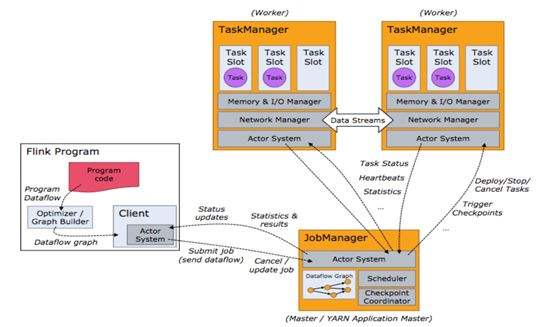

1. Create environment for stream computing
        StreamExecutionEnvironment env = StreamExecutionEnvironment.getExecutionEnvironment();

        env.getConfig().disableSysoutLogging();

        env.getConfig().setRestartStrategy(RestartStrategies.fixedDelayRestart(4, 10000));

        env.enableCheckpointing(5000); // create a checkpoint every 5 seconds

        env.getConfig().setGlobalJobParameters(parameterTool); // make parameters available in the web interface

        env.setStreamTimeCharacteristic(TimeCharacteristic.EventTime);
public static StreamExecutionEnvironment getExecutionEnvironment() {

        if (contextEnvironmentFactory != null) {

            return contextEnvironmentFactory.createExecutionEnvironment();

        }

        // because the streaming project depends on "flink-clients" (and not the other way around)

        // we currently need to intercept the data set environment and create a dependent stream env.

        // this should be fixed once we rework the project dependencies

        ExecutionEnvironment env = ExecutionEnvironment.getExecutionEnvironment();

        if (env instanceof ContextEnvironment) {

            return new StreamContextEnvironment((ContextEnvironment) env);

        } else if (env instanceof OptimizerPlanEnvironment || env instanceof PreviewPlanEnvironment) {

            return new StreamPlanEnvironment(env);

        } else {

            return createLocalEnvironment();

        }

    }
2. Now we need to add the data source for further computing
DataStream<KafkaEvent> input = env

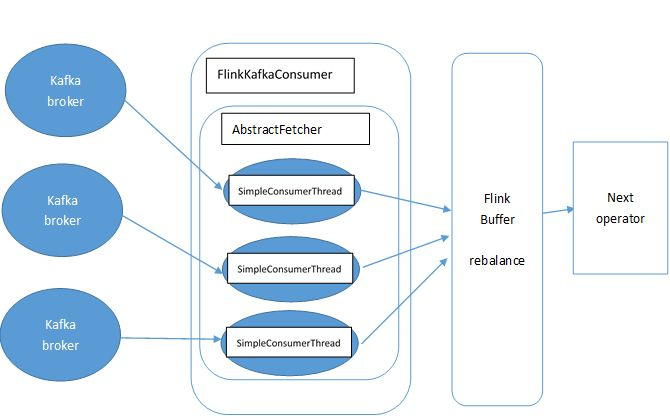
                .addSource( new FlinkKafkaConsumer010<>(

                            parameterTool.getRequired("input-topic"),

                            new KafkaEventSchema(),

                            parameterTool.getProperties()).assignTimestampsAndWatermarks(new CustomWatermarkExtractor()))

                .keyBy("word")

                .map(new RollingAdditionMapper());
public <OUT> DataStreamSource<OUT> addSource(SourceFunction<OUT> function) {

        return addSource(function, "Custom Source");

    }
@SuppressWarnings("unchecked")

    public <OUT> DataStreamSource<OUT> addSource(SourceFunction<OUT> function, String sourceName, TypeInformation<OUT> typeInfo) {

        if (typeInfo == null) {

            if (function instanceof ResultTypeQueryable) {

                typeInfo = ((ResultTypeQueryable<OUT>) function).getProducedType();

            } else {

                try {

                    typeInfo = TypeExtractor.createTypeInfo(

                            SourceFunction.class,

                            function.getClass(), 0, null, null);

                } catch (final InvalidTypesException e) {

                    typeInfo = (TypeInformation<OUT>) new MissingTypeInfo(sourceName, e);

                }

            }

        }

        boolean isParallel = function instanceof ParallelSourceFunction;

        clean(function);

        StreamSource<OUT, ?> sourceOperator;

        if (function instanceof StoppableFunction) {

            sourceOperator = new StoppableStreamSource<>(cast2StoppableSourceFunction(function));

        } else {

            sourceOperator = new StreamSource<>(function);

        }

        return new DataStreamSource<>(this, typeInfo, sourceOperator, isParallel, sourceName);

    }
public <R> SingleOutputStreamOperator<R> map(MapFunction<T, R> mapper) {

        TypeInformation<R> outType = TypeExtractor.getMapReturnTypes(clean(mapper), getType(),

                Utils.getCallLocationName(), true);

        return transform("Map", outType, new StreamMap<>(clean(mapper)));

    }
public <R> SingleOutputStreamOperator<R> transform(String operatorName, TypeInformation<R> outTypeInfo, OneInputStreamOperator<T, R> operator) {

        // read the output type of the input Transform to coax out errors about MissingTypeInfo

        transformation.getOutputType();

        OneInputTransformation<T, R> resultTransform = new OneInputTransformation<>(

                this.transformation,

                operatorName,

                operator,

                outTypeInfo,

                environment.getParallelism());

        @SuppressWarnings({ "unchecked", "rawtypes" })

        SingleOutputStreamOperator<R> returnStream = new SingleOutputStreamOperator(environment, resultTransform);

        getExecutionEnvironment().addOperator(resultTransform);

        return returnStream;

    }
@Internal

    public void addOperator(StreamTransformation<?> transformation) {

        Preconditions.checkNotNull(transformation, "transformation must not be null.");

        this.transformations.add(transformation);

    }
protected final List<StreamTransformation<?>> transformations = new ArrayList<>();
public KeyedStream<T, Tuple> keyBy(String... fields) {

        return keyBy(new Keys.ExpressionKeys<>(fields, getType()));

    }

    private KeyedStream<T, Tuple> keyBy(Keys<T> keys) {

        return new KeyedStream<>(this, clean(KeySelectorUtil.getSelectorForKeys(keys,

                getType(), getExecutionConfig())));

    }
3. The data from data source will be streamed into Flink Distributed Computing Runtime and the computed result will be transfered to data Sink.
input.addSink(          new FlinkKafkaProducer010<>(

                        parameterTool.getRequired("output-topic"),

                        new KafkaEventSchema(),

                        parameterTool.getProperties()));
public DataStreamSink<T> addSink(SinkFunction<T> sinkFunction) {

        // read the output type of the input Transform to coax out errors about MissingTypeInfo

        transformation.getOutputType();

        // configure the type if needed

        if (sinkFunction instanceof InputTypeConfigurable) {

            ((InputTypeConfigurable) sinkFunction).setInputType(getType(), getExecutionConfig());

        }

        StreamSink<T> sinkOperator = new StreamSink<>(clean(sinkFunction));

        DataStreamSink<T> sink = new DataStreamSink<>(this, sinkOperator);

        getExecutionEnvironment().addOperator(sink.getTransformation());

        return sink;

    }
@Internal

    public void addOperator(StreamTransformation<?> transformation) {

        Preconditions.checkNotNull(transformation, "transformation must not be null.");

        this.transformations.add(transformation);

    }
protected final List<StreamTransformation<?>> transformations = new ArrayList<>();
4. The last step is to start executing.
env.execute("Kafka 0.10 Example");
The mapper computing template is defined as blow.
private static class RollingAdditionMapper extends RichMapFunction<KafkaEvent, KafkaEvent> {

        private static final long serialVersionUID = 1180234853172462378L;

        private transient ValueState<Integer> currentTotalCount;

        @Override

        public KafkaEvent map(KafkaEvent event) throws Exception {

            Integer totalCount = currentTotalCount.value();

            if (totalCount == null) {

                totalCount = 0;

            }

            totalCount += event.getFrequency();

            currentTotalCount.update(totalCount);

            return new KafkaEvent(event.getWord(), totalCount, event.getTimestamp());

        }

        @Override

        public void open(Configuration parameters) throws Exception {

            currentTotalCount = getRuntimeContext().getState(new ValueStateDescriptor<>("currentTotalCount", Integer.class));

        }

    }
http://www.debugrun.com/a/LjK8Nni.html
Flink Flow的更多相关文章
- 在 Cloudera Data Flow 上运行你的第一个 Flink 例子
文档编写目的 Cloudera Data Flow(CDF) 作为 Cloudera 一个独立的产品单元,围绕着实时数据采集,实时数据处理和实时数据分析有多个不同的功能模块,如下图所示: 图中 4 个 ...
- Flink Internals
https://cwiki.apache.org/confluence/display/FLINK/Flink+Internals Memory Management (Batch API) In ...
- Peeking into Apache Flink's Engine Room
http://flink.apache.org/news/2015/03/13/peeking-into-Apache-Flinks-Engine-Room.html Join Processin ...
- Flink - Juggling with Bits and Bytes
http://www.36dsj.com/archives/33650 http://flink.apache.org/news/2015/05/11/Juggling-with-Bits-and-B ...
- Flink资料(3)-- Flink一般架构和处理模型
Flink一般架构和处理模型 本文翻译自General Architecture and Process Model ----------------------------------------- ...
- Flink资料(2)-- 数据流容错机制
数据流容错机制 该文档翻译自Data Streaming Fault Tolerance,文档描述flink在流式数据流图上的容错机制. ------------------------------- ...
- Flink架构、原理与部署测试
Apache Flink是一个面向分布式数据流处理和批量数据处理的开源计算平台,它能够基于同一个Flink运行时,提供支持流处理和批处理两种类型应用的功能. 现有的开源计算方案,会把流处理和批处理作为 ...
- [Note] Apache Flink 的数据流编程模型
Apache Flink 的数据流编程模型 抽象层次 Flink 为开发流式应用和批式应用设计了不同的抽象层次 状态化的流 抽象层次的最底层是状态化的流,它通过 ProcessFunction 嵌入到 ...
- Apache Flink 分布式执行
Flink 的分布式执行过程包含两个重要的角色,master 和 worker,参与 Flink 程序执行的有多个进程,包括 Job Manager,Task Manager 以及 Job Clien ...
随机推荐
- 【手记】如果Idx/Sub字幕导不进MKVToolNix,看看是否这个原因
用记事本之类的文本编辑器打开idx文件,看看时间轴部分是不是存在不规范的条目,比如: timestamp: :::, filepos: 注意,上述条目中,filepos:后面缺了一个空格,就这么一处问 ...
- apt 命令大全
#1. 搜索包 sudo apt-cache search package #2.获取包的相关信息,如说明,大小,版本. sudo apt-cache show package #3.了解包的依赖 s ...
- 转-阿里云Kubernetes容器Istio实践之集成日志
http://cloud.it168.com/a2018/0801/3216/000003216642.shtml#articlecomment https://mbd.baidu.com/newsp ...
- 第六次 Scrum Meeting
第六次 Scrum Meeting 写在前面 会议时间 会议时长 会议地点 2019/4/10 22:00 30min 大运村1号楼6F 附Github仓库:WEDO 例会照片 工作情况总结(4.10 ...
- Python的html解析器
转自https://blog.csdn.net/jqh2002_blog/article/details/24842217 其实比较不同的解析器对html的处理能力是有点麻烦的,因为它们处理的步骤并不 ...
- 【云计算】pig基础、运行、编写
会用和用得好是两个概念. 一.pig基础概念 二.pig运行方式 Pig 有两种运行模式: Local 模式和 MapReduce 模式. 本地模式:$pig-x local test.pig Map ...
- RocketMQ 安装
RocketMQ 安装 1.进入目录 cd /usr 2.下载 wget http://mirrors.tuna.tsinghua.edu.cn/apache/rocketmq/4.3.0/rocke ...
- The Add-in 'VMDebugger' failed to load or caused an exception.....的解决办法
异常如图: 解决办法: (把VS的设置导出来,做出相应修改后,再导入,问题就可以解决了) 1. 在Visual Studio中选择 Tools --> Import and Export Set ...
- CentOS 7下使用yum安装MySQL5.7
1.卸载 1.1先停掉mysql进程,没有安装过的可以直接跳过 pkill - mysqld rpm -qa|grep -i mysql 1.2用命令 yum -y remove -.el7.x86_ ...
- sed常用命令
sed也是一个管道命令. sed [-nefr] [动作] -n 加上-n参数后,只有经过sed特殊处理的那些行才会被列出来 -e 直接在命令行模式进行sed的动作编辑 -i 直接修改读取的文件内容 ...