
Hibernate--对象关系
在hibernate中,关联关系映射分为单向关联和双向关联。共有七种关系
hibernate在维护这几种关系的时候,要不通过连接表,要不通过外键的方式。
@Many To One
这是一种最常见的关系,hibernate是通过在many的一方加入one的一个主键作为外键的方式来管理关系的。
此时的多的一方和一的一方,需要各自管理,分别保存,也可以在many-to-one的配置中加入级联属性,则在保存多的一端的时候,会自动保存一的一端
先看配置文件版
package com.fuwh.model;

//one

public class Father {

    private int id;

    private String name;

    public int getId() {

        return id;

    }

    public void setId(int id) {

        this.id = id;

    }

    public String getName() {

        return name;

    }

    public void setName(String name) {

        this.name = name;

    }

}
package com.fuwh.model;

//Many

public class Child {

    private int id;

    private String name;

    //在many的一端中加入one作为一个属性变量

    private Father father;

    public int getId() {

        return id;

    }

    public void setId(int id) {

        this.id = id;

    }

    public String getName() {

        return name;

    }

    public void setName(String name) {

        this.name = name;

    }

    public Father getFather() {

        return father;

    }

    public void setFather(Father father) {

        this.father = father;

    }

}
<?xml version="1.0" encoding="UTF-8"?>

<!DOCTYPE hibernate-mapping PUBLIC "-//Hibernate/Hibernate Mapping DTD 3.0//EN" "http://www.hibernate.org/dtd/hibernate-mapping-3.0.dtd">

<!-- 这是实体类和表的映射关系的配置文件 -->

<hibernate-mapping package="com.fuwh.model">

    <class name="Father" table="t_father">

        <id name="id" column="fatherId">

            <generator class="native"></generator>

        </id>

        <property name="name" column="fatherName"></property>

    </class>

</hibernate-mapping>
<?xml version="1.0" encoding="UTF-8"?>

<!DOCTYPE hibernate-mapping PUBLIC "-//Hibernate/Hibernate Mapping DTD 3.0//EN" "http://www.hibernate.org/dtd/hibernate-mapping-3.0.dtd">
<!-- 这是实体类和表的映射关系的配置文件 -->

<hibernate-mapping package="com.fuwh.model">

    <class name="Child" table="t_child">

        <id name="id" column="childId">

            <generator class="native"></generator>

        </id>

        <property name="name" column="childName"></property>

        <!--

            单向多(child)对一(father)的关系

            会在多(child)的一方生成的表中添加一个外键,指向一(father)的主键

            需要在多(child)的一方配置many-to-one

            name:指定类中的Father对象变量

            column:指定外键名字
       cascade:表示级联操作,包含以下集中取值

        	none(默认),all,persist, merge, delete, save-update, evict, replicate,lock and refresh,delete-orphan ;

        	可以用逗号隔开,表示几个取值,all代表所有的

         -->
        <many-to-one name="father" column="father_Id" cascade="all"></many-to-one>

    </class>

</hibernate-mapping>
<?xml version='1.0' encoding='utf-8'?>

<!DOCTYPE hibernate-configuration PUBLIC

"-//Hibernate/Hibernate Configuration DTD//EN"

"http://hibernate.sourceforge.net/hibernate-configuration-3.0.dtd">

<hibernate-configuration>

    <session-factory>

        <!-- 数据库连接设置 -->

        <property name="hibernate.connection.driver_class">com.mysql.jdbc.Driver</property>

        <property name="hibernate.connection.url">jdbc:mysql://localhost:3306/hibernate</property>

        <property name="hibernate.connection.username">root</property>

        <property name="hibernate.connection.password">mysqladmin</property>

        <!--

             指定方言,表明用的是哪种数据库,也可以不指定,hibernate默认会翻译成正确的数据库脚本

            方言可以在 hibernate-release-xx.xx/project/etc/hibernate.properties 中查找

         -->

        <property name="hibernate.dialect">MySQL5</property>

        <!-- 设定时候更新表结构,不存在或自动创建 -->

        <property name="hibernate.hbm2ddl.auto">update</property>

        <!-- 配置 在后台打印出sql语句 -->

        <property name="hibernate.show_sql">true</property>

        <property name="hibernate.format_sql">true</property>

       <!-- 引入实体类和表的映射文件 -->

        <mapping resource="/com/fuwh/model/Father.hbm.xml"/>

        <mapping resource="/com/fuwh/model/Child.hbm.xml"/>

    </session-factory>

</hibernate-configuration>
package com.fuwh.service;

import org.hibernate.Session;

import org.hibernate.SessionFactory;

import org.hibernate.boot.MetadataSources;

import org.hibernate.boot.registry.StandardServiceRegistry;

import org.hibernate.boot.registry.StandardServiceRegistryBuilder;

import org.junit.After;

import org.junit.Before;

import org.junit.Test;

public class DoTest {

    //标准的sessionFactory取得方式

    private SessionFactory sessionFactory;

    @Before

    public void setUp() throws Exception {

        final StandardServiceRegistry registry=new StandardServiceRegistryBuilder().configure().build();

        try {

            sessionFactory=new MetadataSources(registry).buildMetadata().buildSessionFactory();

        } catch (Exception e) {

            // TODO: handle exception

            StandardServiceRegistryBuilder.destroy(registry);

        }

    }

    @After

    public void tearDown() throws Exception {

        if(sessionFactory != null){

            sessionFactory.close();

        }

    }

    @Test

    public void testAdd() {

        Session session=sessionFactory.openSession();

        session.beginTransaction();

        session.getTransaction().commit();

        session.close();

    }

}
执行空的测试语句,生成的sql文如下
Hibernate:

    create table t_child (

       childId integer not null auto_increment,

        childName varchar(255),

        father_Id integer,

        primary key (childId)

    )

Hibernate:

    create table t_father (

       fatherId integer not null auto_increment,

        fatherName varchar(255),

        primary key (fatherId)

    )

Hibernate:

    alter table t_child

       add constraint FKg4qwua9ltkkkfik7fsvubyou7

       foreign key (father_Id)

       references t_father (fatherId)
操作表中的数据
package com.fuwh.service;

import org.hibernate.Session;

import org.hibernate.SessionFactory;

import org.hibernate.boot.MetadataSources;

import org.hibernate.boot.registry.StandardServiceRegistry;

import org.hibernate.boot.registry.StandardServiceRegistryBuilder;

import org.junit.After;

import org.junit.Before;

import org.junit.Test;

import com.fuwh.model.Child;

import com.fuwh.model.Father;

public class DoTest {

    //标准的sessionFactory取得方式

    private SessionFactory sessionFactory;

    @Before

    public void setUp() throws Exception {

        final StandardServiceRegistry registry=new StandardServiceRegistryBuilder().configure().build();

        try {

            sessionFactory=new MetadataSources(registry).buildMetadata().buildSessionFactory();

        } catch (Exception e) {

            // TODO: handle exception

            e.printStackTrace();

            StandardServiceRegistryBuilder.destroy(registry);

        }

    }

    @After

    public void tearDown() throws Exception {

        if(sessionFactory != null){

            sessionFactory.close();

        }

    }

    @Test

    public void testAdd() {

        Session session=sessionFactory.openSession();

        session.beginTransaction();

        Father father=new Father();

        father.setName("爸爸");

        //因为在多的一断配置了级联属性为all,就表明把操作都交给了多的一端来维护关系,不需要保存father对象

        //在保存child的时候,会自动保存father

        Child child1=new Child();

        child1.setName("儿子1");

        child1.setFather(father);

        Child child2=new Child();

        child2.setName("儿子2");

        child2.setFather(father);

        session.save(child1);

        session.save(child2);
        session.getTransaction().commit();

        session.close();

    }

}
生成的sql文
Hibernate:

    insert

    into

        t_father

        (fatherName)

    values

        (?)

Hibernate:

    insert

    into

        t_child

        (childName, father_Id)

    values

        (?, ?)

Hibernate:

    insert

    into

        t_child

        (childName, father_Id)

    values

        (?, ?)


注解版
package com.fuwh.mto;

import javax.persistence.Column;

import javax.persistence.Entity;

import javax.persistence.GeneratedValue;

import javax.persistence.Id;

import org.hibernate.annotations.GenericGenerator;

@Entity

public class Father {

    @Id

    @GeneratedValue(generator="_native")

    @GenericGenerator(name="_native",strategy="native")

    private int id;

    @Column(name="fatherName")

    private String name;

    public int getId() {

        return id;

    }

    public void setId(int id) {

        this.id = id;

    }

    public String getName() {

        return name;

    }

    public void setName(String name) {

        this.name = name;

    }

}
package com.fuwh.mto;

import javax.persistence.Column;

import javax.persistence.Entity;

import javax.persistence.ForeignKey;

import javax.persistence.GeneratedValue;

import javax.persistence.Id;

import javax.persistence.JoinColumn;

import javax.persistence.ManyToOne;

import org.hibernate.annotations.GenericGenerator;

@Entity

public class Child {

    @Id

    @GeneratedValue(generator="_native")

    @GenericGenerator(name="_native",strategy="native")

    private int id;

    @Column(name="childName")

    private String name;

    /**

     * 定义多对一

     * JoinCloumn中的name指定外键的列名,foreignkey中指定定义的外键的名字

     * 这一列也可以不加,不加就是默认的设置

     */

    @ManyToOne(cascade=CascadeType.ALL)

    @JoinColumn(name="father_id",foreignKey=@ForeignKey(name="FATHER_ID_FK"))

    private Father father;

    public int getId() {

        return id;

    }

    public void setId(int id) {

        this.id = id;

    }

    public String getName() {

        return name;

    }

    public void setName(String name) {

        this.name = name;

    }

    public Father getFather() {

        return father;

    }

    public void setFather(Father father) {

        this.father = father;

    }

}
package com.fuwh.service;

import org.hibernate.Session;

import org.hibernate.SessionFactory;

import org.hibernate.boot.MetadataSources;

import org.hibernate.boot.registry.StandardServiceRegistry;

import org.hibernate.boot.registry.StandardServiceRegistryBuilder;

import org.junit.After;

import org.junit.Before;

import org.junit.Test;

import com.fuwh.mto.Child;

import com.fuwh.mto.Father;

public class DoTest {

    //标准的sessionFactory取得方式

    private SessionFactory sessionFactory;

    @Before

    public void setUp() throws Exception {

        final StandardServiceRegistry registry=new StandardServiceRegistryBuilder().configure().build();

        try {

            sessionFactory=new MetadataSources(registry).buildMetadata().buildSessionFactory();

        } catch (Exception e) {

            // TODO: handle exception

            e.printStackTrace();

            StandardServiceRegistryBuilder.destroy(registry);

        }

    }

    @After

    public void tearDown() throws Exception {

        if(sessionFactory != null){

            sessionFactory.close();

        }

    }

    @Test

    public void testAdd() {

        Session session=sessionFactory.openSession();

        session.beginTransaction();

        Father father=new Father();

        father.setName("爸爸");

        Child child1=new Child();

        child1.setName("儿子一");

        child1.setFather(father);

        Child child2=new Child();

        child2.setName("儿子二");

        child2.setFather(father);

        session.save(child1);

        session.save(child2);

        session.getTransaction().commit();

        session.close();

    }

}
@One To Many单向
@One To Many关系把一个父节点和多个子节点联系起来,如果在子节点没有一个@Many To One和@One To Many相匹配的话,那就是一个单向的@One To Many,否则的话就是一个多向的@One To Many,并且可以在任意一边来维护关系。
package com.fuwh.model;

import java.util.ArrayList;

import java.util.List;

public class Father {

    private int id;

    private String name;

    private List<Child> children=new ArrayList<Child>();

    public List<Child> getChildren() {

        return children;

    }

    public void setChildren(List<Child> children) {

        this.children = children;

    }

    public int getId() {

        return id;

    }

    public void setId(int id) {

        this.id = id;

    }

    public String getName() {

        return name;

    }

    public void setName(String name) {

        this.name = name;

    }

}
package com.fuwh.model;

public class Child {

    private int id;

    private String name;

    public int getId() {

        return id;

    }

    public void setId(int id) {

        this.id = id;

    }

    public String getName() {

        return name;

    }

    public void setName(String name) {

        this.name = name;

    }

}
<?xml version="1.0" encoding="UTF-8"?>

<!DOCTYPE hibernate-mapping PUBLIC "-//Hibernate/Hibernate Mapping DTD 3.0//EN" "http://www.hibernate.org/dtd/hibernate-mapping-3.0.dtd">

<!-- 这是实体类和表的映射关系的配置文件 -->

<hibernate-mapping package="com.fuwh.model">

    <class name="Child" table="t_child">

        <id name="id" column="childId">

            <generator class="native"></generator>

        </id>

        <property name="name" column="childName"></property>

    </class>

</hibernate-mapping>
<?xml version="1.0" encoding="UTF-8"?>

<!DOCTYPE hibernate-mapping PUBLIC "-//Hibernate/Hibernate Mapping DTD 3.0//EN" "http://www.hibernate.org/dtd/hibernate-mapping-3.0.dtd">

<!-- 这是实体类和表的映射关系的配置文件 -->

<hibernate-mapping package="com.fuwh.model">

    <class name="Father" table="t_father">

        <id name="id" column="fatherId">

            <generator class="native"></generator>

        </id>

        <property name="name" column="fatherName"></property>

        <set name="children" cascade="true">

            <key column="father_Id"></key>

            <one-to-many class="com.fuwh.model.Child"/>

        </set>

    </class>

</hibernate-mapping>
package com.fuwh.service;

import org.hibernate.Session;

import org.hibernate.SessionFactory;

import org.hibernate.boot.MetadataSources;

import org.hibernate.boot.registry.StandardServiceRegistry;

import org.hibernate.boot.registry.StandardServiceRegistryBuilder;

import org.junit.After;

import org.junit.Before;

import org.junit.Test;

public class DoTest {

    //标准的sessionFactory取得方式

    private SessionFactory sessionFactory;

    @Before

    public void setUp() throws Exception {

        final StandardServiceRegistry registry=new StandardServiceRegistryBuilder().configure().build();

        try {

            sessionFactory=new MetadataSources(registry).buildMetadata().buildSessionFactory();

        } catch (Exception e) {

            // TODO: handle exception

            e.printStackTrace();

            StandardServiceRegistryBuilder.destroy(registry);

        }

    }

    @After

    public void tearDown() throws Exception {

        if(sessionFactory != null){

            sessionFactory.close();

        }

    }

    @Test

    public void testAdd() {

        Session session=sessionFactory.openSession();

        session.beginTransaction();

        session.getTransaction().commit();

        session.close();

    }

}
生成的sql文
Hibernate:

    create table t_child (

       childId integer not null auto_increment,

        childName varchar(255),
     father_Id integer,
        primary key (childId)

    )

Hibernate:

    create table t_father (

       fatherId integer not null auto_increment,

        fatherName varchar(255),

        primary key (fatherId)

    )

Hibernate:

    alter table t_child

       add constraint FKev9uk6ojrjsv10ba9qoa4yhsy

       foreign key (father_Id)

       references t_father (fatherId)
注解版

package com.fuwh.otm;

import javax.persistence.Column;

import javax.persistence.Entity;

import javax.persistence.GeneratedValue;

import javax.persistence.Id;

import org.hibernate.annotations.GenericGenerator;

@Entity

public class Child {

    @Id

    @GeneratedValue(generator="_native")

    @GenericGenerator(name="_native",strategy="native")

    private int id;

    @Column(name="childName")

    private String name;

    public int getId() {

        return id;

    }

    public void setId(int id) {

        this.id = id;

    }

    public String getName() {

        return name;

    }

    public void setName(String name) {

        this.name = name;

    }

}
package com.fuwh.otm;

import java.util.ArrayList;

import java.util.List;

import javax.persistence.CascadeType;

import javax.persistence.Column;

import javax.persistence.Entity;

import javax.persistence.GeneratedValue;

import javax.persistence.Id;

import javax.persistence.OneToMany;

import org.hibernate.annotations.GenericGenerator;

@Entity

public class Father {

    @Id

    @GeneratedValue(generator="_native")

    @GenericGenerator(name="_native",strategy="native")

    private int id;

    @Column(name="fatherName")

    private String name;

    //orphanRemoval:表示在删除集合中的child的时候,也会删除child表中的相应纪录

    @OneToMany(cascade=CascadeType.ALL,orphanRemoval=true)

    private List<Child> children=new ArrayList<Child>();

    public List<Child> getChildren() {

        return children;

    }

    public void setChildren(List<Child> children) {

        this.children = children;

    }

    public int getId() {

        return id;

    }

    public void setId(int id) {

        this.id = id;

    }

    public String getName() {

        return name;

    }

    public void setName(String name) {

        this.name = name;

    }

}
package com.fuwh.service;

import org.hibernate.Session;

import org.hibernate.SessionFactory;

import org.hibernate.boot.MetadataSources;

import org.hibernate.boot.registry.StandardServiceRegistry;

import org.hibernate.boot.registry.StandardServiceRegistryBuilder;

import org.junit.After;

import org.junit.Before;

import org.junit.Test;

import com.fuwh.otm.Child;

import com.fuwh.otm.Father;

public class DoTest {

    //标准的sessionFactory取得方式

    private SessionFactory sessionFactory;

    @Before

    public void setUp() throws Exception {

        final StandardServiceRegistry registry=new StandardServiceRegistryBuilder().configure().build();

        try {

            sessionFactory=new MetadataSources(registry).buildMetadata().buildSessionFactory();

        } catch (Exception e) {

            // TODO: handle exception

            e.printStackTrace();

            StandardServiceRegistryBuilder.destroy(registry);

        }

    }

    @After

    public void tearDown() throws Exception {

        if(sessionFactory != null){

            sessionFactory.close();

        }

    }

    @Test

    public void testAdd() {

        Session session=sessionFactory.openSession();

        session.beginTransaction();

        Father father1=new Father();

        father1.setName("爸爸1");

        Father father2=new Father();

        father2.setName("爸爸2");

        Child child1=new Child();

        child1.setName("儿子一");

        Child child2=new Child();

        child2.setName("儿子二");

        father1.getChildren().add(child1);

        father1.getChildren().add(child2);

        session.save(father1);

        session.getTransaction().commit();

        session.close();

    }

}
@One To Many双向
package com.fuwh.model;

public class Child {

    private int id;

    private String name;

    private Father father;

    public Father getFather() {

        return father;

    }

    public void setFather(Father father) {

        this.father = father;

    }

    public int getId() {

        return id;

    }

    public void setId(int id) {

        this.id = id;

    }

    public String getName() {

        return name;

    }

    public void setName(String name) {

        this.name = name;

    }

}
package com.fuwh.model;

import java.util.HashSet;

import java.util.Set;

public class Father {

    private int id;

    private String name;

    private Set<Child> children=new HashSet<Child>();

    public Set<Child> getChildren() {

        return children;

    }

    public void setChildren(Set<Child> children) {

        this.children = children;

    }

    public int getId() {

        return id;

    }

    public void setId(int id) {

        this.id = id;

    }

    public String getName() {

        return name;

    }

    public void setName(String name) {

        this.name = name;

    }

}
<?xml version="1.0" encoding="UTF-8"?>

<!DOCTYPE hibernate-mapping PUBLIC "-//Hibernate/Hibernate Mapping DTD 3.0//EN" "http://www.hibernate.org/dtd/hibernate-mapping-3.0.dtd">

<!-- 这是实体类和表的映射关系的配置文件 -->

<hibernate-mapping package="com.fuwh.model">

    <class name="Father" table="t_father">

        <id name="id" column="fatherId">

            <generator class="native"></generator>

        </id>

        <property name="name" column="fatherName"></property>

        <set name="children">

            <key column="father_Id"/>

            <one-to-many class="com.fuwh.model.Child"/>

        </set>

    </class>

</hibernate-mapping>
<?xml version="1.0" encoding="UTF-8"?>

<!DOCTYPE hibernate-mapping PUBLIC "-//Hibernate/Hibernate Mapping DTD 3.0//EN" "http://www.hibernate.org/dtd/hibernate-mapping-3.0.dtd">

<!-- 这是实体类和表的映射关系的配置文件 -->

<hibernate-mapping package="com.fuwh.model">

    <class name="Child" table="t_child">

        <id name="id" column="childId">

            <generator class="native"></generator>

        </id>

        <property name="name" column="childName"></property>

        <many-to-one name="father" column="father_Id" cascade="all"></many-to-one>

    </class>

</hibernate-mapping>
package com.fuwh.service;

import org.hibernate.Session;

import org.hibernate.SessionFactory;

import org.hibernate.boot.MetadataSources;

import org.hibernate.boot.registry.StandardServiceRegistry;

import org.hibernate.boot.registry.StandardServiceRegistryBuilder;

import org.junit.After;

import org.junit.Before;

import org.junit.Test;

import com.fuwh.model.Child;

import com.fuwh.model.Father;

public class DoTest {

    //标准的sessionFactory取得方式

    private SessionFactory sessionFactory;

    @Before

    public void setUp() throws Exception {

        final StandardServiceRegistry registry=new StandardServiceRegistryBuilder().configure().build();

        try {

            sessionFactory=new MetadataSources(registry).buildMetadata().buildSessionFactory();

        } catch (Exception e) {

            // TODO: handle exception

            e.printStackTrace();

            StandardServiceRegistryBuilder.destroy(registry);

        }

    }

    @After

    public void tearDown() throws Exception {

        if(sessionFactory != null){

            sessionFactory.close();

        }

    }

    @Test

    public void testAdd() {

        Session session=sessionFactory.openSession();

        session.beginTransaction();

        Father father=new Father();

        father.setName("爸爸");

        Child child1=new Child();

        child1.setName("儿子1");

        Child child2=new Child();

        child2.setName("儿子2");

        child1.setFather(father);

        child2.setFather(father);

        father.getChildren().add(child1);

        father.getChildren().add(child2);

        session.save(child1);

        session.save(child2);

        session.getTransaction().commit();

        session.close();

    }

}
生成的sql
Hibernate:

    select

        father0_.fatherId as fatherId1_1_0_,

        father0_.fatherName as fatherNa2_1_0_

    from

        t_father father0_

    where

        father0_.fatherId=?

Hibernate:

    select

        child0_.childId as childId1_0_0_,

        child0_.childName as childNam2_0_0_,

        child0_.father_Id as father_I3_0_0_

    from

        t_child child0_

    where

        child0_.childId=?

Hibernate:

    select

        children0_.father_Id as father_I3_0_0_,

        children0_.childId as childId1_0_0_,

        children0_.childId as childId1_0_1_,

        children0_.childName as childNam2_0_1_,

        children0_.father_Id as father_I3_0_1_

    from

        t_child children0_

    where

        children0_.father_Id=?

Hibernate:

    update

        t_child

    set

        childName=?,

        father_Id=?

    where

        childId=?

Hibernate:

    update

        t_child

    set

        father_Id=?

    where

        childId=?
注解版
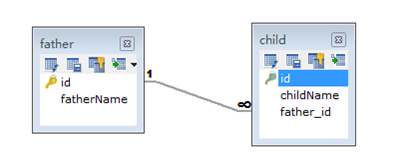
package com.fuwh.otmbi;

import java.util.ArrayList;

import java.util.List;

import javax.persistence.CascadeType;

import javax.persistence.Column;

import javax.persistence.Entity;

import javax.persistence.GeneratedValue;

import javax.persistence.Id;

import javax.persistence.OneToMany;

import org.hibernate.annotations.GenericGenerator;

@Entity

public class Father {

    @Id

    @GeneratedValue(generator="_native")

    @GenericGenerator(name="_native",strategy="native")

    private int id;

    @Column(name="fatherName")

    private String name;

    /**

     * orphanRemoval:表示在删除集合中的child的时候,也会删除child表中的相应纪录

     * mappedBy/inverse:表示由另一方来维护关系

     *

     */

    @OneToMany(mappedBy="father",cascade=CascadeType.ALL,orphanRemoval=true)

    private List<Child> children=new ArrayList<Child>();

    public List<Child> getChildren() {

        return children;

    }

    public void setChildren(List<Child> children) {

        this.children = children;

    }

    public int getId() {

        return id;

    }

    public void setId(int id) {

        this.id = id;

    }

    public String getName() {

        return name;

    }

    public void setName(String name) {

        this.name = name;

    }

}
package com.fuwh.otmbi;

import javax.persistence.Column;

import javax.persistence.Entity;

import javax.persistence.GeneratedValue;

import javax.persistence.Id;

import javax.persistence.ManyToOne;

import org.hibernate.annotations.GenericGenerator;

@Entity

public class Child {

    @Id

    @GeneratedValue(generator="_native")

    @GenericGenerator(name="_native",strategy="native")

    private int id;

    @Column(name="childName")

    private String name;

    @ManyToOne

    private Father father;

    public Father getFather() {

        return father;

    }

    public void setFather(Father father) {

        this.father = father;

    }

    public int getId() {

        return id;

    }

    public void setId(int id) {

        this.id = id;

    }

    public String getName() {

        return name;

    }

    public void setName(String name) {

        this.name = name;

    }

}
package com.fuwh.service;

import org.hibernate.Session;

import org.hibernate.SessionFactory;

import org.hibernate.boot.MetadataSources;

import org.hibernate.boot.registry.StandardServiceRegistry;

import org.hibernate.boot.registry.StandardServiceRegistryBuilder;

import org.junit.After;

import org.junit.Before;

import org.junit.Test;

import com.fuwh.otmbi.Child;

import com.fuwh.otmbi.Father;

public class DoTest {

    //标准的sessionFactory取得方式

    private SessionFactory sessionFactory;

    @Before

    public void setUp() throws Exception {

        final StandardServiceRegistry registry=new StandardServiceRegistryBuilder().configure().build();

        try {

            sessionFactory=new MetadataSources(registry).buildMetadata().buildSessionFactory();

        } catch (Exception e) {

            // TODO: handle exception

            e.printStackTrace();

            StandardServiceRegistryBuilder.destroy(registry);

        }

    }

    @After

    public void tearDown() throws Exception {

        if(sessionFactory != null){

            sessionFactory.close();

        }

    }

    @Test

    public void testAdd() {

        Session session=sessionFactory.openSession();

        session.beginTransaction();

        Father father1=new Father();

        father1.setName("爸爸1");

        Child child1=new Child();

        child1.setName("儿子一");

        child1.setFather(father1);

        Child child2=new Child();

        child2.setName("儿子二");

        child2.setFather(father1);

        father1.getChildren().add(child1);

        father1.getChildren().add(child2);

        session.save(father1);

        session.getTransaction().commit();

        session.close();

    }

}
@One To One单向
单向的关系又可以分为基于主键的关联和基于外键的关联。
基于外键
package com.fuwh.model;

public class Wife {

    private int id;

    private String name;

    public int getId() {

        return id;

    }

    public void setId(int id) {

        this.id = id;

    }

    public String getName() {

        return name;

    }

    public void setName(String name) {

        this.name = name;

    }

}
package com.fuwh.model;

public class Husband {

    private int id;

    private String name;

    private Wife wife;

    public int getId() {

        return id;

    }

    public void setId(int id) {

        this.id = id;

    }

    public String getName() {

        return name;

    }

    public void setName(String name) {

        this.name = name;

    }

    public Wife getWife() {

        return wife;

    }

    public void setWife(Wife wife) {

        this.wife = wife;

    }

}
<?xml version="1.0" encoding="UTF-8"?>

<!DOCTYPE hibernate-mapping PUBLIC "-//Hibernate/Hibernate Mapping DTD 3.0//EN" "http://www.hibernate.org/dtd/hibernate-mapping-3.0.dtd">

<!-- 这是实体类和表的映射关系的配置文件 -->

<hibernate-mapping package="com.fuwh.model">

    <class name="Wife" table="t_wife">

        <id name="id" column="wifeId">

            <generator class="native"></generator>

        </id>

        <property name="name" column="wifeName"></property>

    </class>

</hibernate-mapping>
<?xml version="1.0" encoding="UTF-8"?>

<!DOCTYPE hibernate-mapping PUBLIC "-//Hibernate/Hibernate Mapping DTD 3.0//EN" "http://www.hibernate.org/dtd/hibernate-mapping-3.0.dtd">

<!-- 这是实体类和表的映射关系的配置文件 -->

<hibernate-mapping package="com.fuwh.model">

    <class name="Husband" table="t_husband">

        <id name="id" column="husbandId">

            <!-- 主键生成策略为 外键 指向 wife-->

            <generator class="foreign">

                <param name="property">wife</param>

            </generator>

        </id>

        <property name="name" column="husbandName"></property>

        <one-to-one name="wife" constrained="true"/>

    </class>

</hibernate-mapping>
package com.fuwh.service;

import org.hibernate.Session;

import org.hibernate.SessionFactory;

import org.hibernate.boot.MetadataSources;

import org.hibernate.boot.registry.StandardServiceRegistry;

import org.hibernate.boot.registry.StandardServiceRegistryBuilder;

import org.junit.After;

import org.junit.Before;

import org.junit.Test;

import com.fuwh.model.Child;

import com.fuwh.model.Father;

import com.fuwh.model.Husband;

import com.fuwh.model.Wife;

public class DoTest {

    //标准的sessionFactory取得方式

    private SessionFactory sessionFactory;

    @Before

    public void setUp() throws Exception {

        final StandardServiceRegistry registry=new StandardServiceRegistryBuilder().configure().build();

        try {

            sessionFactory=new MetadataSources(registry).buildMetadata().buildSessionFactory();

        } catch (Exception e) {

            // TODO: handle exception

            e.printStackTrace();

            StandardServiceRegistryBuilder.destroy(registry);

        }

    }

    @After

    public void tearDown() throws Exception {

        if(sessionFactory != null){

            sessionFactory.close();

        }

    }

    @Test

    public void testAdd() {

        Session session=sessionFactory.openSession();

        session.beginTransaction();

        Husband husband=new Husband();

        Wife wife=new Wife();

        wife.setName("老婆");

        husband.setName("老公");

        husband.setWife(wife);

        session.save(wife);

        session.save(husband);

        session.getTransaction().commit();

        session.close();

    }

}
生成的sql文
Hibernate:

    create table t_husband (

       husbandId integer not null,

        husbandName varchar(255),

        primary key (husbandId)

    )

Hibernate:

    create table t_wife (

       wifeId integer not null auto_increment,

        wifeName varchar(255),

        primary key (wifeId)

    )

Hibernate:

    alter table t_husband

       add constraint FK2tae450lphjy8nciwyrxxlfkv

       foreign key (husbandId)

       references t_wife (wifeId)

Hibernate:

    insert

    into

        t_wife

        (wifeName)

    values

        (?)

Hibernate:

    insert

    into

        t_husband

        (husbandName, husbandId)

    values

        (?, ?)
在单向一对一中,hibernate默认是让client-side(上例的Husband)通过外键来管理关系的。
注解版

package com.fuwh.oto;

import javax.persistence.Column;

import javax.persistence.Entity;

import javax.persistence.GeneratedValue;

import javax.persistence.Id;

import org.hibernate.annotations.GenericGenerator;

@Entity

public class Father {

    @Id

    @GeneratedValue(generator="_native")

    @GenericGenerator(name="_native",strategy="native")

    private int id;

    @Column(name="fatherName")

    private String name;

    public int getId() {

        return id;

    }

    public void setId(int id) {

        this.id = id;

    }

    public String getName() {

        return name;

    }

    public void setName(String name) {

        this.name = name;

    }

}
package com.fuwh.oto;

import javax.persistence.CascadeType;

import javax.persistence.Column;

import javax.persistence.Entity;

import javax.persistence.GeneratedValue;

import javax.persistence.Id;

import javax.persistence.JoinColumn;

import javax.persistence.OneToOne;

import org.hibernate.annotations.GenericGenerator;

@Entity

public class Child {

    @Id

    @GeneratedValue(generator="_native")

    @GenericGenerator(name="_native",strategy="native")

    private int id;

    @Column(name="childName")

    private String name;

    @OneToOne(cascade=CascadeType.ALL)

    @JoinColumn(name="father_id")

    private Father father;

    public Father getFather() {

        return father;

    }

    public void setFather(Father father) {

        this.father = father;

    }

    public int getId() {

        return id;

    }

    public void setId(int id) {

        this.id = id;

    }

    public String getName() {

        return name;

    }

    public void setName(String name) {

        this.name = name;

    }

}
package com.fuwh.service;

import org.hibernate.Session;

import org.hibernate.SessionFactory;

import org.hibernate.boot.MetadataSources;

import org.hibernate.boot.registry.StandardServiceRegistry;

import org.hibernate.boot.registry.StandardServiceRegistryBuilder;

import org.junit.After;

import org.junit.Before;

import org.junit.Test;

import com.fuwh.oto.Child;

import com.fuwh.oto.Father;

public class DoTest {

    //标准的sessionFactory取得方式

    private SessionFactory sessionFactory;

    @Before

    public void setUp() throws Exception {

        final StandardServiceRegistry registry=new StandardServiceRegistryBuilder().configure().build();

        try {

            sessionFactory=new MetadataSources(registry).buildMetadata().buildSessionFactory();

        } catch (Exception e) {

            // TODO: handle exception

            e.printStackTrace();

            StandardServiceRegistryBuilder.destroy(registry);

        }

    }

    @After

    public void tearDown() throws Exception {

        if(sessionFactory != null){

            sessionFactory.close();

        }

    }

    @Test

    public void testAdd() {

        Session session=sessionFactory.openSession();

        session.beginTransaction();

        Father father1=new Father();

        father1.setName("爸爸1");

        Child child1=new Child();

        child1.setName("儿子一");

        child1.setFather(father1);

        session.save(child1);

        session.getTransaction().commit();

        session.close();

    }

}
@One-To-One(双向)
package com.fuwh.model;

public class Wife {

    private int id;

    private String name;

    private Husband husband;

    public Husband getHusband() {

        return husband;

    }

    public void setHusband(Husband husband) {

        this.husband = husband;

    }

    public int getId() {

        return id;

    }

    public void setId(int id) {

        this.id = id;

    }

    public String getName() {

        return name;

    }

    public void setName(String name) {

        this.name = name;

    }

}
<?xml version="1.0" encoding="UTF-8"?>

<!DOCTYPE hibernate-mapping PUBLIC "-//Hibernate/Hibernate Mapping DTD 3.0//EN" "http://www.hibernate.org/dtd/hibernate-mapping-3.0.dtd">

<!-- 这是实体类和表的映射关系的配置文件 -->

<hibernate-mapping package="com.fuwh.model">

    <class name="Wife" table="t_wife">

        <id name="id" column="wifeId">

            <generator class="native"></generator>

        </id>

        <property name="name" column="wifeName"></property>

        <one-to-one name="husband"/>

    </class>

</hibernate-mapping>
Hibernate:

    create table t_husband (

       husbandId integer not null,

        husbandName varchar(255),

        primary key (husbandId)

    )

Hibernate:

    create table t_wife (

       wifeId integer not null auto_increment,

        wifeName varchar(255),

        primary key (wifeId)

    )

Hibernate:

    alter table t_husband

       add constraint FK2tae450lphjy8nciwyrxxlfkv

       foreign key (husbandId)

       references t_wife (wifeId)

Hibernate:

    insert

    into

        t_wife

        (wifeName)

    values

        (?)

Hibernate:

    insert

    into

        t_husband

        (husbandName, husbandId)

    values

        (?, ?)
注解版
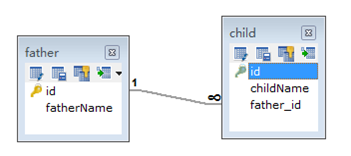
package com.fuwh.otobi;

import javax.persistence.CascadeType;

import javax.persistence.Column;

import javax.persistence.Entity;

import javax.persistence.FetchType;

import javax.persistence.GeneratedValue;

import javax.persistence.Id;

import javax.persistence.OneToOne;

import org.hibernate.annotations.GenericGenerator;

@Entity

public class Father {

    @Id

    @GeneratedValue(generator="_native")

    @GenericGenerator(name="_native",strategy="native")

    private int id;

    @Column(name="fatherName")

    private String name;

    @OneToOne(mappedBy="father",cascade=CascadeType.ALL,fetch=FetchType.LAZY)

    private Child child;

    public Child getChild() {

        return child;

    }

    public void setChild(Child child) {

        this.child = child;

    }

    public int getId() {

        return id;

    }

    public void setId(int id) {

        this.id = id;

    }

    public String getName() {

        return name;

    }

    public void setName(String name) {

        this.name = name;

    }

}
package com.fuwh.otobi;

import javax.persistence.CascadeType;

import javax.persistence.Column;

import javax.persistence.Entity;

import javax.persistence.GeneratedValue;

import javax.persistence.Id;

import javax.persistence.JoinColumn;

import javax.persistence.OneToOne;

import org.hibernate.annotations.GenericGenerator;

@Entity

public class Child {

    @Id

    @GeneratedValue(generator="_native")

    @GenericGenerator(name="_native",strategy="native")

    private int id;

    @Column(name="childName")

    private String name;

    @OneToOne(cascade=CascadeType.ALL)

    @JoinColumn(name="father_id")

    private Father father;

    public Father getFather() {

        return father;

    }

    public void setFather(Father father) {

        this.father = father;

    }

    public int getId() {

        return id;

    }

    public void setId(int id) {

        this.id = id;

    }

    public String getName() {

        return name;

    }

    public void setName(String name) {

        this.name = name;

    }

}
package com.fuwh.service;

import org.hibernate.Session;

import org.hibernate.SessionFactory;

import org.hibernate.boot.MetadataSources;

import org.hibernate.boot.registry.StandardServiceRegistry;

import org.hibernate.boot.registry.StandardServiceRegistryBuilder;

import org.junit.After;

import org.junit.Before;

import org.junit.Test;

import com.fuwh.otobi.Child;

import com.fuwh.otobi.Father;

public class DoTest {

    //标准的sessionFactory取得方式

    private SessionFactory sessionFactory;

    @Before

    public void setUp() throws Exception {

        final StandardServiceRegistry registry=new StandardServiceRegistryBuilder().configure().build();

        try {

            sessionFactory=new MetadataSources(registry).buildMetadata().buildSessionFactory();

        } catch (Exception e) {

            // TODO: handle exception

            e.printStackTrace();

            StandardServiceRegistryBuilder.destroy(registry);

        }

    }

    @After

    public void tearDown() throws Exception {

        if(sessionFactory != null){

            sessionFactory.close();

        }

    }

    @Test

    public void testAdd() {

        Session session=sessionFactory.openSession();

        session.beginTransaction();

        Father father1=new Father();

        father1.setName("爸爸1");

        Child child1=new Child();

        child1.setName("儿子一");

        child1.setFather(father1);

        session.save(child1);

        session.getTransaction().commit();

        session.close();

    }

}
@Many-To-Many(单向)
@Many-To-Many关系需要一个连接表来连接两张表。
package com.fuwh.model;

public class Wife {

    private int id;

    private String name;

    public int getId() {

        return id;

    }

    public void setId(int id) {

        this.id = id;

    }

    public String getName() {

        return name;

    }

    public void setName(String name) {

        this.name = name;

    }

}
package com.fuwh.model;

import java.util.HashSet;

import java.util.Set;

public class Husband {

    private int id;

    private String name;

    private Set<Wife> wives=new HashSet<Wife>();

    public Set<Wife> getWives() {

        return wives;

    }

    public void setWives(Set<Wife> wives) {

        this.wives = wives;

    }

    public int getId() {

        return id;

    }

    public void setId(int id) {

        this.id = id;

    }

    public String getName() {

        return name;

    }

    public void setName(String name) {

        this.name = name;

    }

}
<?xml version="1.0" encoding="UTF-8"?>

<!DOCTYPE hibernate-mapping PUBLIC "-//Hibernate/Hibernate Mapping DTD 3.0//EN" "http://www.hibernate.org/dtd/hibernate-mapping-3.0.dtd">

<!-- 这是实体类和表的映射关系的配置文件 -->

<hibernate-mapping package="com.fuwh.model">

    <class name="Wife" table="t_wife">

        <id name="id" column="wifeId">

            <generator class="native"></generator>

        </id>

        <property name="name" column="wifeName"></property>

    </class>

</hibernate-mapping>
<?xml version="1.0" encoding="UTF-8"?>

<!DOCTYPE hibernate-mapping PUBLIC "-//Hibernate/Hibernate Mapping DTD 3.0//EN" "http://www.hibernate.org/dtd/hibernate-mapping-3.0.dtd">

<!-- 这是实体类和表的映射关系的配置文件 -->

<hibernate-mapping package="com.fuwh.model">

    <class name="Husband" table="t_husband">

        <id name="id" column="husbandId">

            <generator class="native"/>

        </id>

        <property name="name" column="husbandName"></property>

        <set name="wives" cascade="all">

            <!-- key 指定连接表的主键列

                many-to-many:中的列指定连接另一端的列,或对应的类

             -->

            <key column="husband_id"></key>

            <many-to-many column="wife_id" class="com.fuwh.model.Wife"></many-to-many>

        </set>

    </class>

</hibernate-mapping>
package com.fuwh.service;

import org.hibernate.Session;

import org.hibernate.SessionFactory;

import org.hibernate.boot.MetadataSources;

import org.hibernate.boot.registry.StandardServiceRegistry;

import org.hibernate.boot.registry.StandardServiceRegistryBuilder;

import org.junit.After;

import org.junit.Before;

import org.junit.Test;

import com.fuwh.model.Child;

import com.fuwh.model.Father;

import com.fuwh.model.Husband;

import com.fuwh.model.Wife;

public class DoTest {

    //标准的sessionFactory取得方式

    private SessionFactory sessionFactory;

    @Before

    public void setUp() throws Exception {

        final StandardServiceRegistry registry=new StandardServiceRegistryBuilder().configure().build();

        try {

            sessionFactory=new MetadataSources(registry).buildMetadata().buildSessionFactory();

        } catch (Exception e) {

            // TODO: handle exception

            e.printStackTrace();

            StandardServiceRegistryBuilder.destroy(registry);

        }

    }

    @After

    public void tearDown() throws Exception {

        if(sessionFactory != null){

            sessionFactory.close();

        }

    }

    @Test

    public void testAdd() {

        Session session=sessionFactory.openSession();

        session.beginTransaction();

        Husband husband=new Husband();

        husband.setName("老公");

        Wife wife1=new Wife();

        wife1.setName("老婆1");

        Wife wife2=new Wife();

        wife2.setName("老婆2");

        husband.getWives().add(wife1);

        husband.getWives().add(wife2);

//        session.save(wife);

        session.save(husband);

        session.getTransaction().commit();

        session.close();

    }

}
注解
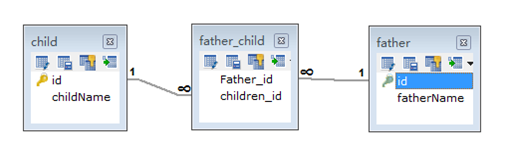
package com.fuwh.model;

import java.util.ArrayList;

import java.util.List;

import javax.persistence.CascadeType;

import javax.persistence.Entity;

import javax.persistence.GeneratedValue;

import javax.persistence.Id;

import javax.persistence.ManyToMany;

import org.hibernate.annotations.GenericGenerator;

@Entity(name="person")

public class Person {

    @Id

    @GeneratedValue(generator="_native")

    @GenericGenerator(name="_native",strategy="native")

    private int id;

    @ManyToMany(cascade=CascadeType.ALL)

    private List<Address> addresses=new ArrayList<Address>();

    public int getId() {

        return id;

    }

    public void setId(int id) {

        this.id = id;

    }

    public List<Address> getAddresses() {

        return addresses;

    }

    public void setAddresses(List<Address> addresses) {

        this.addresses = addresses;

    }

}
package com.fuwh.model;

import javax.persistence.Column;

import javax.persistence.Entity;

import javax.persistence.GeneratedValue;

import javax.persistence.Id;

import org.hibernate.annotations.GenericGenerator;

@Entity(name="address")

public class Address {

    @Id

    @GeneratedValue(generator="_native")

    @GenericGenerator(name="_native",strategy="native")

    private int id;

    @Column(name="street")

    private String street;

    private String number;

    public int getId() {

        return id;

    }

    public void setId(int id) {

        this.id = id;

    }

    public String getStreet() {

        return street;

    }

    public void setStreet(String street) {

        this.street = street;

    }

    public String getNumber() {

        return number;

    }

    public void setNumber(String number) {

        this.number = number;

    }

}
package com.fuwh.service;

import org.hibernate.Session;

import org.hibernate.SessionFactory;

import org.hibernate.boot.MetadataSources;

import org.hibernate.boot.registry.StandardServiceRegistry;

import org.hibernate.boot.registry.StandardServiceRegistryBuilder;

import org.junit.After;

import org.junit.Before;

import org.junit.Test;

import com.fuwh.model.Address;

import com.fuwh.model.Person;

public class DoTest {

    //标准的sessionFactory取得方式

    private SessionFactory sessionFactory;

    @Before

    public void setUp() throws Exception {

        final StandardServiceRegistry registry=new StandardServiceRegistryBuilder().configure().build();

        try {

            sessionFactory=new MetadataSources(registry).buildMetadata().buildSessionFactory();

        } catch (Exception e) {

            // TODO: handle exception

            e.printStackTrace();

            StandardServiceRegistryBuilder.destroy(registry);

        }

    }

    @After

    public void tearDown() throws Exception {

        if(sessionFactory != null){

            sessionFactory.close();

        }

    }

    @Test

    public void testAdd() {

        Session session=sessionFactory.openSession();

        session.beginTransaction();

        Person person=new Person();

        Address address1=new Address();

        address1.setNumber("1001");

        address1.setStreet("java路");

        Address address2=new Address();

        address2.setNumber("1002");

        address2.setStreet("php路");

        person.getAddresses().add(address1);

        person.getAddresses().add(address2);

        session.save(person);

        session.flush();

        //删除的时候会把所有的address的id的记录删除,在插入其他不用删除的

        person.getAddresses().remove(address1);

        session.getTransaction().commit();

        session.close();

    }

}
生成的SQL文
Hibernate:

    create table address (

       id integer not null auto_increment,

        number varchar(255),

        street varchar(255),

        primary key (id)

    )

Hibernate:

    create table person (

       id integer not null auto_increment,

        primary key (id)

    )

Hibernate:

    create table person_address (

       person_id integer not null,

        addresses_id integer not null

    )

Hibernate:

    alter table person_address

       add constraint FKkvjdfs4jhjpxa6y3melormp0w

       foreign key (addresses_id)

       references address (id)

Hibernate:

    alter table person_address

       add constraint FKnndfs0btabect8upo03uwgfxt

       foreign key (person_id)

       references person (id)

Hibernate:

    insert

    into

        person

    values

        ( )

Hibernate:

    insert

    into

        address

        (number, street)

    values

        (?, ?)

Hibernate:

    insert

    into

        address

        (number, street)

    values

        (?, ?)

Hibernate:

    insert

    into

        person_address

        (person_id, addresses_id)

    values

        (?, ?)

Hibernate:

    insert

    into

        person_address

        (person_id, addresses_id)

    values

        (?, ?)

Hibernate:

    delete

    from

        person_address

    where

        person_id=?

Hibernate:

    insert

    into

        person_address

        (person_id, addresses_id)

    values

        (?, ?)
@Many-To-Many(双向)
package com.fuwh.model;

import java.util.HashSet;

import java.util.Set;

public class Wife {

    private int id;

    private String name;

    private Set<Husband> husbands=new HashSet<Husband>();

    public Set<Husband> getHusbands() {

        return husbands;

    }

    public void setHusbands(Set<Husband> husbands) {

        this.husbands = husbands;

    }

    public int getId() {

        return id;

    }

    public void setId(int id) {

        this.id = id;

    }

    public String getName() {

        return name;

    }

    public void setName(String name) {

        this.name = name;

    }

}
<?xml version="1.0" encoding="UTF-8"?>

<!DOCTYPE hibernate-mapping PUBLIC "-//Hibernate/Hibernate Mapping DTD 3.0//EN" "http://www.hibernate.org/dtd/hibernate-mapping-3.0.dtd">

<!-- 这是实体类和表的映射关系的配置文件 -->

<hibernate-mapping package="com.fuwh.model">

    <class name="Wife" table="t_wife">

        <id name="id" column="wifeId">

            <generator class="native"></generator>

        </id>

        <property name="name" column="wifeName"></property>

        <!-- 这里必须参照Husband.hbm.xml文件中的连接表的配置,否则会默认生成两个连接表

            也就是两个单向的多对多

         -->

        <set name="husbands" inverse="true" table="husband_wife">

            <key column="wife_id"></key>

            <many-to-many column="husband_id" class="com.fuwh.model.Husband" ></many-to-many>

        </set>

    </class>

</hibernate-mapping>
package com.fuwh.service;

import org.hibernate.Session;

import org.hibernate.SessionFactory;

import org.hibernate.boot.MetadataSources;

import org.hibernate.boot.registry.StandardServiceRegistry;

import org.hibernate.boot.registry.StandardServiceRegistryBuilder;

import org.junit.After;

import org.junit.Before;

import org.junit.Test;

import com.fuwh.model.Child;

import com.fuwh.model.Father;

import com.fuwh.model.Husband;

import com.fuwh.model.Wife;

public class DoTest {

    //标准的sessionFactory取得方式

    private SessionFactory sessionFactory;

    @Before

    public void setUp() throws Exception {

        final StandardServiceRegistry registry=new StandardServiceRegistryBuilder().configure().build();

        try {

            sessionFactory=new MetadataSources(registry).buildMetadata().buildSessionFactory();

        } catch (Exception e) {

            // TODO: handle exception

            e.printStackTrace();

            StandardServiceRegistryBuilder.destroy(registry);

        }

    }

    @After

    public void tearDown() throws Exception {

        if(sessionFactory != null){

            sessionFactory.close();

        }

    }

    @Test

    public void testAdd() {

        Session session=sessionFactory.openSession();

        session.beginTransaction();

        Husband husband1=new Husband();

        husband1.setName("老公1");

        Husband husband2=new Husband();

        husband2.setName("老公2");

        Wife wife1=new Wife();

        wife1.setName("老婆1");

        Wife wife2=new Wife();

        wife2.setName("老婆2");

        husband1.getWives().add(wife1);

        husband1.getWives().add(wife2);

        wife1.getHusbands().add(husband1);

        wife1.getHusbands().add(husband2);

        session.save(husband1);

        session.save(husband2);

        session.getTransaction().commit();

        session.close();

    }

}
生成的SQL文
Hibernate:

    create table husband_wife (

       husband_id integer not null,

        wife_id integer not null,

        primary key (husband_id, wife_id)

    )

Hibernate:

    create table t_husband (

       husbandId integer not null auto_increment,

        husbandName varchar(255),

        primary key (husbandId)

    )

Hibernate:

    create table t_wife (

       wifeId integer not null auto_increment,

        wifeName varchar(255),

        primary key (wifeId)

    )

Hibernate:

    alter table husband_wife

       add constraint FK56txr9ocpn1k0eyc7ax1a2smw

       foreign key (wife_id)

       references t_wife (wifeId)

Hibernate:

    alter table husband_wife

       add constraint FKsiwjiutn6eoha0iv059pd75fc

       foreign key (husband_id)

       references t_husband (husbandId)

Hibernate:

    insert

    into

        t_husband

        (husbandName)

    values

        (?)

Hibernate:

    insert

    into

        t_wife

        (wifeName)

    values

        (?)

Hibernate:

    insert

    into

        t_husband

        (husbandName)

    values

        (?)

Hibernate:

    insert

    into

        t_wife

        (wifeName)

    values

        (?)

Hibernate:

    insert

    into

        husband_wife

        (husband_id, wife_id)

    values

        (?, ?)

Hibernate:

    insert

    into

        husband_wife

        (husband_id, wife_id)

    values

        (?, ?)
注解
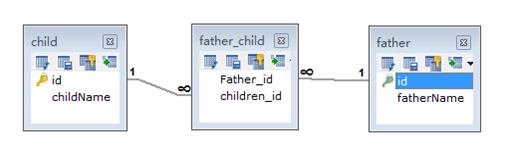
package com.fuwh.mtmbi;

import java.util.ArrayList;

import java.util.List;

import javax.persistence.CascadeType;

import javax.persistence.Entity;

import javax.persistence.GeneratedValue;

import javax.persistence.Id;

import javax.persistence.ManyToMany;

import org.hibernate.annotations.GenericGenerator;

@Entity(name="person")

public class Person {

    @Id

    @GeneratedValue(generator="_native")

    @GenericGenerator(name="_native",strategy="native")

    private int id;

    @ManyToMany(cascade=CascadeType.ALL)

    private List<Address> addresses=new ArrayList<Address>();

    public int getId() {

        return id;

    }

    public void setId(int id) {

        this.id = id;

    }

    public List<Address> getAddresses() {

        return addresses;

    }

    public void setAddresses(List<Address> addresses) {

        this.addresses = addresses;

    }

}
package com.fuwh.mtmbi;

import java.util.ArrayList;

import java.util.List;

import javax.persistence.Column;

import javax.persistence.Entity;

import javax.persistence.GeneratedValue;

import javax.persistence.Id;

import javax.persistence.ManyToMany;

import org.hibernate.annotations.GenericGenerator;

@Entity(name="address")

public class Address {

    @Id

    @GeneratedValue(generator="_native")

    @GenericGenerator(name="_native",strategy="native")

    private int id;

    @Column(name="street")

    private String street;

    private String number;

    @ManyToMany(mappedBy="address")

    private List<Person> owners=new ArrayList<Person>();

    public int getId() {

        return id;

    }

    public void setId(int id) {

        this.id = id;

    }

    public String getStreet() {

        return street;

    }

    public void setStreet(String street) {

        this.street = street;

    }

    public String getNumber() {

        return number;

    }

    public void setNumber(String number) {

        this.number = number;

    }

}
package com.fuwh.service;

import org.hibernate.Session;

import org.hibernate.SessionFactory;

import org.hibernate.boot.MetadataSources;

import org.hibernate.boot.registry.StandardServiceRegistry;

import org.hibernate.boot.registry.StandardServiceRegistryBuilder;

import org.junit.After;

import org.junit.Before;

import org.junit.Test;

import com.fuwh.mtmbi.Person;

import com.fuwh.mtmbi.Address;

public class DoTest {

    //标准的sessionFactory取得方式

    private SessionFactory sessionFactory;

    @Before

    public void setUp() throws Exception {

        final StandardServiceRegistry registry=new StandardServiceRegistryBuilder().configure().build();

        try {

            sessionFactory=new MetadataSources(registry).buildMetadata().buildSessionFactory();

        } catch (Exception e) {

            // TODO: handle exception

            e.printStackTrace();

            StandardServiceRegistryBuilder.destroy(registry);

        }

    }

    @After

    public void tearDown() throws Exception {

        if(sessionFactory != null){

            sessionFactory.close();

        }

    }

    @Test

    public void testAdd() {

        Session session=sessionFactory.openSession();

        session.beginTransaction();

        Person person1=new Person();

        Person person2=new Person();

        Address address1=new Address();

        address1.setNumber("101");

        Address address2=new Address();

        address2.setNumber("102");

        person1.getAddresses().add(address1);

        person1.getAddresses().add(address2);

        person2.getAddresses().add(address1);

        session.save(person1);

        session.save(person2);

        session.getTransaction().commit();

        session.close();

    }

}
生成的SQL文
Hibernate:

    create table address (

       id integer not null auto_increment,

        number varchar(255),

        street varchar(255),

        primary key (id)

    )

Hibernate:

    create table person (

       id integer not null auto_increment,

        primary key (id)

    )

Hibernate:

    create table person_address (

       owners_id integer not null,

        addresses_id integer not null

    )

Hibernate:

    alter table person_address

       add constraint FKkvjdfs4jhjpxa6y3melormp0w

       foreign key (addresses_id)

       references address (id)

Hibernate:

    alter table person_address

       add constraint FKpts56mn8uttsyi3b63b2cihvo

       foreign key (owners_id)

       references person (id)

Hibernate:

    insert

    into

        person

    values

        ( )

Hibernate:

    insert

    into

        address

        (number, street)

    values

        (?, ?)

Hibernate:

    insert

    into

        address

        (number, street)

    values

        (?, ?)

Hibernate:

    insert

    into

        person

    values

        ( )

Hibernate:

    insert

    into

        person_address

        (owners_id, addresses_id)

    values

        (?, ?)

Hibernate:

    insert

    into

        person_address

        (owners_id, addresses_id)

    values

        (?, ?)

Hibernate:

    insert

    into

        person_address

        (owners_id, addresses_id)

    values

        (?, ?)
Hibernate--对象关系的更多相关文章
- hibernate对象关系实现(一)一对多
hibernate是对jdk一个封装工具,实现对象和数据库之间数据映射.使用时涉及到四个问题:a.对象之间的关系在类中的体现:b,对象关系对应的数据库中表之间体现:c.实现a,b在hibernate的 ...
- Hibernate 对象关系映射文件
简介: POJO 类和关系型数据库之间的映射可以用一个 XML 文档来定义 通过 POJO 类的数据库映射文件,Hibernate 可以理解持久化类和数据表之间的对应关系,也可以理解持久化类属性与数据 ...
- hibernate对象关系实现(二)一对一
双向一对一以部门和经理为例: a.部门和经理类中各自由对方的引用:(省略了get/set方法) b.数据库两种方式实现:一种(b.1)是外键映射,并将外键添加唯一约束(至于哪个对象的主键做外键,可随意 ...
- hibernate对象关系映射( 一对一,一对多,多对一,多对多的单向,双向映射 ——)
对象之间的关系: 关系映射之间的关系只的是对象之间的关系,并不指数据库表的关系(外键关系)这儿解决的问题是当对象之间的关系之一时,数据库表该如何映射,编程上如何对待. 一对一(主键关联,和单向的外键关 ...
- hibernate对象关系实现(三)多对多实现
单向n-n:(catogory-item)一个类别对应多个条目,一个条目对应多个类别 a.以类别类中有条目的集合的引用为例: b.数据库中的体现:建立一个新表,以类别和条目的主键关联的外键做新表的联合 ...
- hibernate对象关系实现(四)继承实现
继承实现方式分为三种:subclass; joined-subclass;union-subclass a.类中体现 b.库中体现分为三种: b.1:一种方式:人和学生公用一张表,添加一个辨别字段 ...
- hibernate对象关系映射的配置
一对一主键关联单双向 <?xml version="1.0" encoding="UTF-8"?> <!DOCTYPE hibernate-m ...
- Hibernate -- 对象关系映射基础
- Hibernate(开放源代码的对象关系映射框架)
Hibernate是一个开放源代码的对象关系映射框架,它对JDBC进行了非常轻量级的对象封装,它将POJO与数据库表建立映射关系,是一个全自动的orm框架,hibernate可以自动生成SQL语句,自 ...
- hibernate(四)__由表逆向创建Domain对象和对象关系映射文件
之前我们是手写Domain对象和对象关系映射文件->然后生成数据库中的Table. 现在我们反过来先在数据库中建好Table->然后用工具生成Domain对象和对象关系映射文件. 步骤: ...
随机推荐
- 1013团队Beta冲刺day6
项目进展 李明皇 今天解决的进度 进行前后端联动调试 明天安排 完善程序运行逻辑 林翔 今天解决的进度 服务器端发布消息,删除消息,检索消息,个人发布的action 明天安排 图片功能遇到问题,微信小 ...
- 20162321王彪-实验二-Java面向对象程序设计
实验二Java面向对象程序设计 实验内容一 初步掌握单元测试和TDD 什么是单元测试:单元测试时开发者编写的一小段代码,用于检测被测代码的一个很小的,很明确的功能是否正确.执行单元测试,是为了证明某段 ...
- 201621123057 《Java程序设计》第2周学习总结
一.本周学习总结 基本数据类型 char实质属于整型.boolean类型取值只有true和false两种. 引用数据类型 包装类:自动装箱 与 自动拆箱 数组:一维数组遍历数组用foreach循环:多 ...
- android 自定义ScrollView实现背景图片伸缩(阻尼效果)
android 自定义ScrollView实现强调内容背景图片伸缩(仿多米,qq空间背景的刷新) 看到一篇文章,自己更改了一下bug: 原文地址:http://www.aiuxian.com/arti ...
- OpenShift实战(一):OpenShift高级安装
1.1 服务器基本信息 本次安装采用一个master.5个node.3个etcd,node节点两块硬盘,60G磁盘用于docker storage,xxx改为自己的域名或主机名. 节点 功能 IP 内 ...
- NYOJ 炫舞家st
#include <iostream>#include <cstring>#include <algorithm>using namespace std; cons ...
- System.Reflection名称空间下的程序集类Assembly应用.
利用反射中的程序集类(Assembly--抽象类)动态加载类库(.dll)或者可执行程序(.exe). 优点:①.可以消除if条件的逻辑判断.②.减少内存资源.③.有利于程序扩展. 缺点... 使用静 ...
- C#中委托。
委托(delegate):是一个类型.其实winform中控件的事件也是特殊的委托类型. 如: 自定义委托:自定义委托在winform中的用法. 当要在子线程中更新UI时,必须通过委托来实现. pri ...
- python全栈开发-logging模块(日记专用)
一.概述 很多程序都有记录日志的需求,并且日志中包含的信息即有正常的程序访问日志,还可能有错误.警告等信息输出,python的logging模块提供了标准的日志接口,你可以通过它存储各种格式的日志,l ...
- Python内置函数(6)——round
英文文档: round(number[, ndigits]) Return the floating point value number rounded to ndigits digits afte ...