
内置函数--map,filter,reduce
一、map
class map(object):

    """

    map(func, *iterables) --> map object

    Make an iterator that computes the function using arguments from

    each of the iterables.  Stops when the shortest iterable is exhausted.

    """

    def __getattribute__(self, *args, **kwargs): # real signature unknown

        """ Return getattr(self, name). """

        pass

    def __init__(self, func, *iterables): # real signature unknown; restored from __doc__

        pass

    def __iter__(self, *args, **kwargs): # real signature unknown

        """ Implement iter(self). """

        pass

    @staticmethod # known case of __new__

    def __new__(*args, **kwargs): # real signature unknown

        """ Create and return a new object.  See help(type) for accurate signature. """

        pass

    def __next__(self, *args, **kwargs): # real signature unknown

        """ Implement next(self). """

        pass

    def __reduce__(self, *args, **kwargs): # real signature unknown

        """ Return state information for pickling. """

        pass
map(func, *iterables) --> map object
  Make an iterator that computes the function using arguments from
  each of the iterables.  Stops when the shortest iterable is exhausted.
  """
使用从参数来计算函数的迭代器每个迭代项。在最短的迭代结束时停止。
遍历序列,对序列中每个元素进行操作,最终获取新的序列。
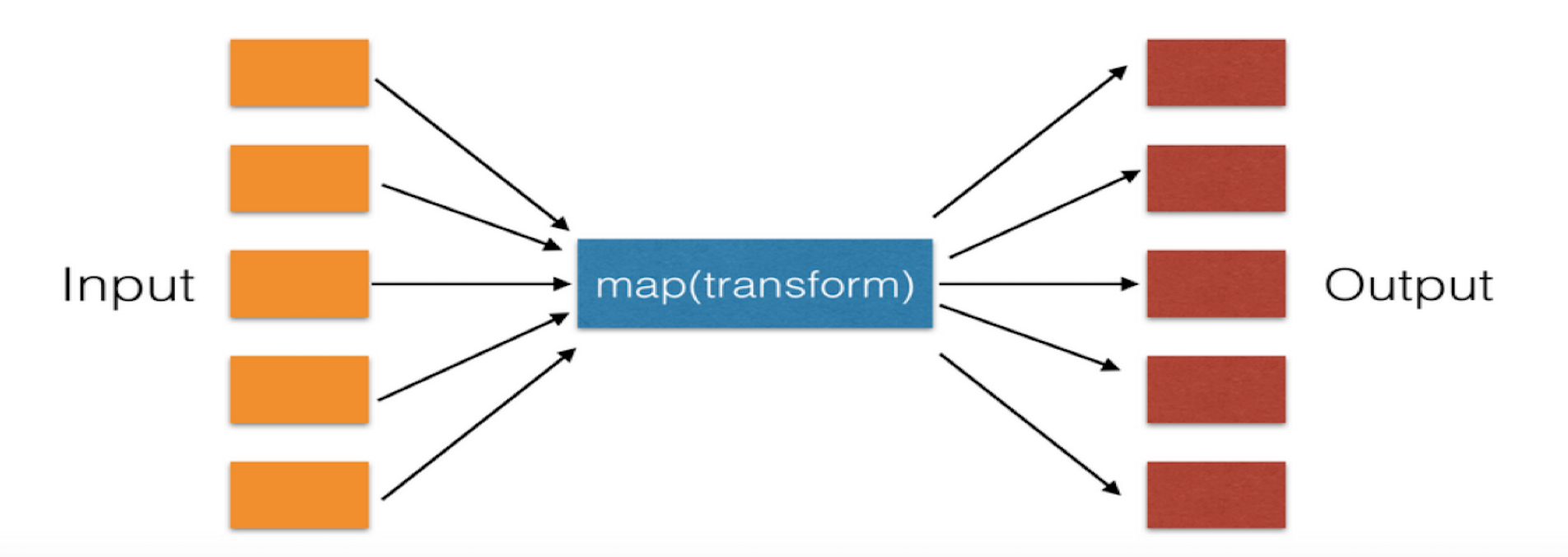
给li = [1,2,3,4]每个元素加100
#!/usr/bin/python3

li = [1,2,3,4]

newList = map(lambda x:x+100, li)

print(newList)

print(list(newList))
执行结果:
<map object at 0x00000000027C4C88>

[101, 102, 103, 104]
参数传入自定义函数:
#!/usr/bin/python3

li = [1,2,3,4]

def myAdd (x):

    return x * 100

newList = map(myAdd, li)

print(newList)

print(list(newList))
执行结果:
<map object at 0x00000000022249B0>

[100, 200, 300, 400]
二、filter
class filter(object):

    """

    filter(function or None, iterable) --> filter object

    Return an iterator yielding those items of iterable for which function(item)

    is true. If function is None, return the items that are true.

    """

    def __getattribute__(self, *args, **kwargs): # real signature unknown

        """ Return getattr(self, name). """

        pass

    def __init__(self, function_or_None, iterable): # real signature unknown; restored from __doc__

        pass

    def __iter__(self, *args, **kwargs): # real signature unknown

        """ Implement iter(self). """

        pass

    @staticmethod # known case of __new__

    def __new__(*args, **kwargs): # real signature unknown

        """ Create and return a new object.  See help(type) for accurate signature. """

        pass

    def __next__(self, *args, **kwargs): # real signature unknown

        """ Implement next(self). """

        pass

    def __reduce__(self, *args, **kwargs): # real signature unknown

        """ Return state information for pickling. """

        pass
filter(function or None, iterable) --> filter object
Return an iterator yielding those items of iterable for which function(item)
is true. If function is None, return the items that are true.
"""
返回一个迭代器,该迭代器可以为该函数(项)进行迭代是真的。如果函数是None,返回true的项。
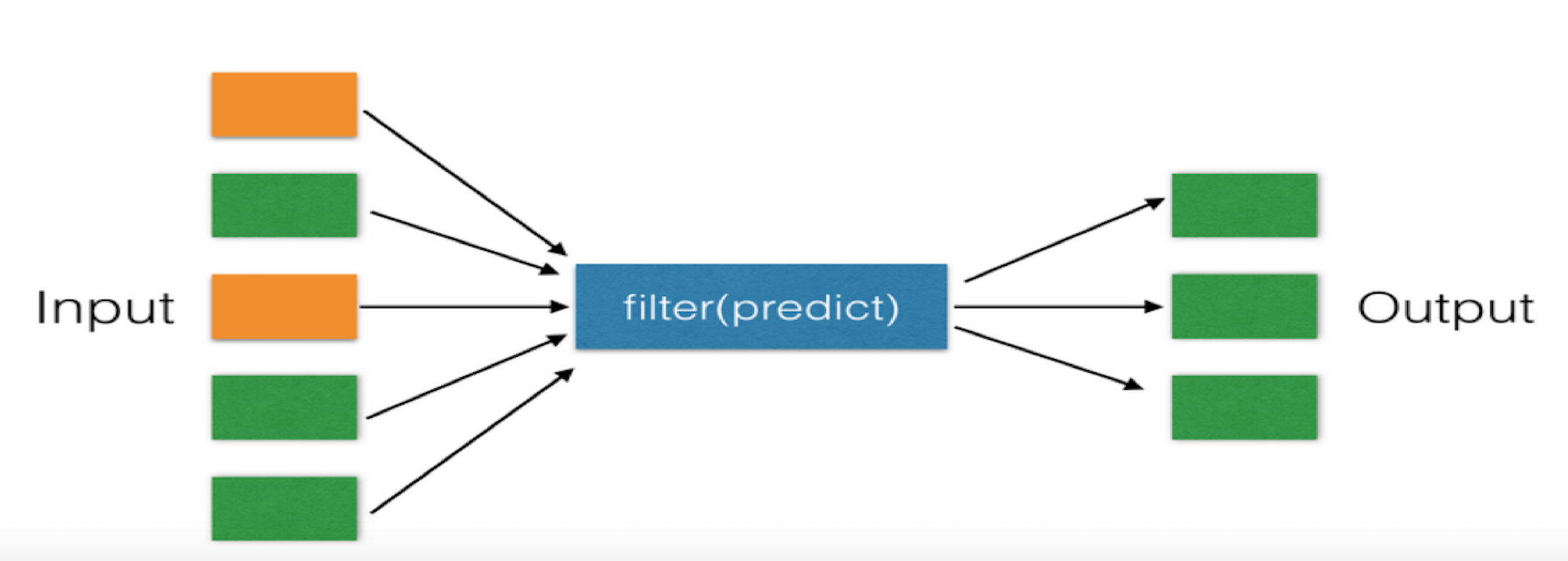
对于序列中的元素进行筛选,最终获取符合条件的序列
#filter第一个参数为空,将获取原来序列
#!/usr/bin/python3

li = [1,2,3,4,5,6,7,8,9,10]

def myAdd (x):

    return x % 2 == 0

newList = filter(myAdd, li)

print(newList)

print(list(newList))

print("---------------")

newList = filter(lambda x: x % 2 , li)

print(newList)

print(list(newList))

print("---------------")

#filter第一个参数为空,将获取原来序列

newList = filter(None, li)

print(newList)

print(list(newList))
执行结果:
<filter object at 0x0000000002824EB8>

[2, 4, 6, 8, 10]

---------------

<filter object at 0x000000000282B320>

[1, 3, 5, 7, 9]

---------------

<filter object at 0x0000000002824EB8>

[1, 2, 3, 4, 5, 6, 7, 8, 9, 10]
内置函数--map,filter,reduce的更多相关文章
- python 内置函数 map filter reduce lambda
map(函数名,可遍历迭代的对象) # 列组元素全加 10 # map(需要做什么的函数,遍历迭代对象)函数 map()遍历序列得到一个列表,列表的序号和个数和原来一样 l = [2,3,4,5,6, ...
- python之内置函数:map ,filter ,reduce总结
map函数: #处理序列中的每个元素,得到的结果是一个'列表',该列表元素个数及位置与原来一样 filter函数: #遍历序列中的每个元素,判断每个元素得到一个布尔值,如果是true,则留下来 peo ...
- [python基础知识]python内置函数map/reduce/filter
python内置函数map/reduce/filter 这三个函数用的顺手了,很cool. filter()函数:filter函数相当于过滤,调用一个bool_func(只返回bool类型数据的方法) ...
- Python内置函数之filter map reduce
Python内置函数之filter map reduce 2013-06-04 Posted by yeho Python内置了一些非常有趣.有用的函数,如:filter.map.reduce,都是对 ...
- python之有用的3个内置函数(filter/map/reduce)
这三个内置函数还是非常有用的,在工作中用的还不少,顺手,下面一一进行介绍 1.filter 语法:filter(function,iterable) 解释:把迭代器通过function函数进行过滤出想 ...
- Python学习(五)函数 —— 内置函数 lambda filter map reduce
Python 内置函数 lambda.filter.map.reduce Python 内置了一些比较特殊且实用的函数,使用这些能使你的代码简洁而易读. 下面对 Python 的 lambda.fil ...
- python内置函数map/reduce/filter
python有几个内置的函数很有意 思:map/filter/reduce,都是对一个集合进行处理,filter很容易理解用于过滤,map用于映射,reduce用于归并. 是python列表方法的三架 ...
- 内置函数_map()、reduce()、filter()
map().reduce().filter() map()内置函数把一个函数func依次映射到序列或迭代器对象的每个元素上,并返回一个可迭代的map对象作为结果,map对象中每个元素是原序列中元素经过 ...
- 内置函数: filter 和 map
内置函数———filter和map filter filter() 函数用于过滤序列,过滤掉不符合条件的元素,返回由符合条件元素组成的新列表.接收两个参数,第一个为函数,第二个为序列,序列的每个元素作 ...
- 高阶函数map(),filter(),reduce()
接受函数作为参数,或者把函数作为结果返回的函数是高阶函数,官方叫做 Higher-order functions. map()和filter()是内置函数.在python3中,reduce()已不再是 ...
随机推荐
- compose 函数实现
总结componse函数实现过程 大致特点 参数均为函数, 返回值也是函数 第一函数接受参数, 其他函数接受的上一个函数的返回值 第一个函数的参数是多元的, 其他函数的一元的 自右向左执行 简单实现 ...
- Spark-SQL连接Hive
第一步:修个Hive的配置文件hive-site.xml 添加如下属性,取消本地元数据服务: <property> <name>hive.metastore.local< ...
- .net 音频转换 .amr 转 .mp3 (七牛转换法)
.amr 用于移动设备的音频,压缩比比较大,多用于人声.通话,效果还行!所以,移动设备多采用amr格式来进行录存!比较常见的例子:通话录音,微信语音以及录音等! 这个鬼,用两个字来形容,就是“蛋疼”: ...
- ES6初探——编译环境搭建
不好意思我又要来写操作文档了,看起来更像wiki的博客(如果你想深入学习,请阅读文末列的参考资料).本文将示例如何把ES6编译成ES5. 首先,你要自行查阅什么是ES6,和ES5.javascript ...
- ImageView控件
ImageView 显示图片 常用属性: src 要显示的图片 foreground 前景图 backgrund 背景图 alpha 透明度 clickable 是否可以点击 onClick ...
- CG Shader常用函数
为了方便自己记忆,将常用的CG函数写于此 转载于 http://www.cppblog.com/lai3d/archive/2008/10/23/64889.html Name Syntax Desc ...
- CF982C Cut 'em all!
思路: 在深搜过程中,贪心地把树划分成若干个连通分支就可以了.划分的条件是某个子树有偶数个节点.注意到在一次划分之后并不需要重新计数,因为一个数加上一个偶数并不影响这个数的奇偶性. 实现: #incl ...
- CF782A Andryusha and Socks
题意: Andryusha is an orderly boy and likes to keep things in their place. Today he faced a problem to ...
- JS学习-事件响应小结-简单的计算器
<!DOCTYPE html> <html> <head> <title> 事件</title> <script type=" ...
- sprintf使用时需要注意的问题