
VDB R&D
VDB Data value visualize: 结论从houdini得知.
API常用文字:
interior:内部
Narrow-band:窄带
background:窄带外
SDF: XY plane Data visualize:
{
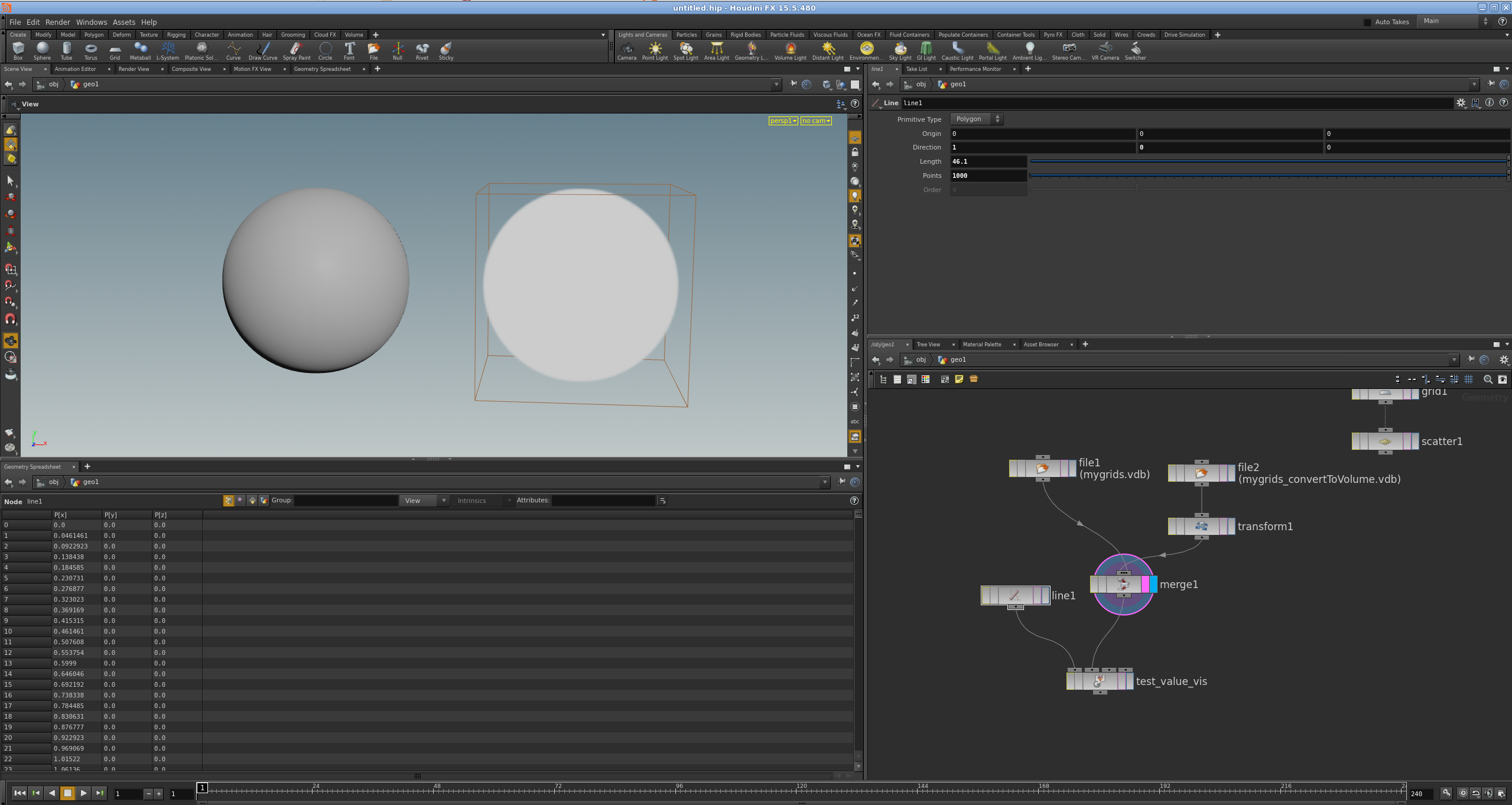
(1)用法:vdb sdf levelset球,采样其体素值到对应的点位置的颜色观察。houdini节点vdb from polygons(参数上Exterior band voxels:3,Interior band voxels:3)没有开启Fill interior
则形成体素值:
interior是-0.3 (这个值是由Interior band voxels:3 得到)
Narrow-band: 从interior到narrow-band方向:-0.3 到 0
background:从narrow-band到background方向:0.3 (Exterior band voxels:3)
(2)用法:
假如要让interior成为一个梯度值,而不是恒定值,houdini做了一个牛逼的按钮,Fill interior.
interior里的体素值立马成为梯度的,大概是从-3.73过渡到narrow-band
}
FOG Volume: XY plane Data visualize:
{
(1) 普通不勾选fill interior:
interior是1
Narrow-band: 从interior到narrow-band方向:1 到 0
background:从narrow-band到background方向:0
(2) 勾选fill interior:
interior到narrow-band方向从1->0.3有个过渡
Narrow-band: 从interior到narrow-band方向:0.3 到 0
background:从narrow-band到background方向:0
}
==================================================================START======================================================
<1> ,make vdb sphere,and convert to volume
#include <openvdb/openvdb.h>

#include <openvdb/tools/LevelSetSphere.h>

using namespace std;

// Populate the given grid with a narrow-band level set representation of a sphere.

// The width of the narrow band is determined by the grid's background value.

// (Example code only; use tools::createSphereSDF() in production.)

template<class GridType>

void

static makeSphere(GridType& grid, float radius, const openvdb::Vec3f& c)

{

    typedef typename GridType::ValueType ValueT;

    // Distance value for the constant region exterior to the narrow band

    const ValueT outside = grid.background();

    // Distance value for the constant region interior to the narrow band

    // (by convention, the signed distance is negative in the interior of

    // a level set)

    const ValueT inside = -outside;

    // Use the background value as the width in voxels of the narrow band.

    // (The narrow band is centered on the surface of the sphere, which

    // has distance 0.)

    int padding = int(openvdb::math::RoundUp(openvdb::math::Abs(outside)));

    // The bounding box of the narrow band is 2*dim voxels on a side.

    int dim = int(radius + padding);

    // Get a voxel accessor.

    typename GridType::Accessor accessor = grid.getAccessor();

    // Compute the signed distance from the surface of the sphere of each

    // voxel within the bounding box and insert the value into the grid

    // if it is smaller in magnitude than the background value.

    openvdb::Coord ijk;

    int &i = ijk[];

    int &j = ijk[];

    int &k = ijk[];

    for (i = c[] - dim; i < c[] + dim; ++i) {

        const float x2 = openvdb::math::Pow2(i - c[]);

        for (j = c[] - dim; j < c[] + dim; ++j) {

            const float x2y2 = openvdb::math::Pow2(j - c[]) + x2;

            for (k = c[] - dim; k < c[] + dim; ++k) {

                // The distance from the sphere surface in voxels

                const float dist = openvdb::math::Sqrt(x2y2

                                                       + openvdb::math::Pow2(k - c[])) - radius;

                // Convert the floating-point distance to the grid's value type.

                ValueT val = ValueT(dist);

                // Only insert distances that are smaller in magnitude than

                // the background value.

                if (val < inside || outside < val) continue;

                // Set the distance for voxel (i,j,k).

                accessor.setValue(ijk, val);

            }

        }

    }

    // Propagate the outside/inside sign information from the narrow band

    // throughout the grid.

    openvdb::tools::signedFloodFill(grid.tree());

}

template <class T>

static void convertToVolume(T &grid)

{

    // Convert the level set sphere to a narrow-band fog volume, in which

// interior voxels have value 1, exterior voxels have value 0, and

// narrow-band voxels have values varying linearly from 0 to 1.

    const float outside = grid->background();

    const float width = 2.0 * outside;

// Visit and update all of the grid's active values, which correspond to

// voxels on the narrow band.

    for (openvdb::FloatGrid::ValueOnIter iter = grid->beginValueOn(); iter; ++iter) {

        float dist = iter.getValue();

        iter.setValue((outside - dist) / width);

    }

// Visit all of the grid's inactive tile and voxel values and update the values

// that correspond to the interior region.

    for (openvdb::FloatGrid::ValueOffIter iter = grid->beginValueOff(); iter; ++iter) {

        if (iter.getValue() < 0.0) {

            iter.setValue(1.0);

            iter.setValueOff();

        } else{

            iter.setValue();

            iter.setValueOff();

        }

    }

}

int main()

{

    openvdb::initialize();

    // Create a shared pointer to a newly-allocated grid of a built-in type:

    // in this case, a FloatGrid, which stores one single-precision floating point

    // value per voxel.  Other built-in grid types include BoolGrid, DoubleGrid,

    // Int32Grid and Vec3SGrid (see openvdb.h for the complete list).

    // The grid comprises a sparse tree representation of voxel data,

    // user-supplied metadata and a voxel space to world space transform,

    // which defaults to the identity transform.

    openvdb::FloatGrid::Ptr grid =

            openvdb::FloatGrid::create(/*background value=*/2.0);

    // Populate the grid with a sparse, narrow-band level set representation

    // of a sphere with radius 50 voxels, located at (1.5, 2, 3) in index space.

    makeSphere(*grid, /*radius=*/50.0, /*center=*/openvdb::Vec3f(1.5, , ));

    // Associate some metadata with the grid.

    grid->insertMeta("radius", openvdb::FloatMetadata(50.0));

    // Associate a scaling transform with the grid that sets the voxel size

    // to 0.5 units in world space.

    grid->setTransform(

            openvdb::math::Transform::createLinearTransform(/*voxel size=*/0.5));

    // Identify the grid as a level set.

    grid->setGridClass(openvdb::GRID_LEVEL_SET);

    //grid->setGridClass(openvdb::GRID_FOG_VOLUME);

    // Name the grid "LevelSetSphere".

    grid->setName("LevelSetSphere");

    // Create a VDB file object.

    openvdb::io::File file("mygrids.vdb");

    // Add the grid pointer to a container.

    openvdb::GridPtrVec grids;

    // Write out the contents of the container.

    grids.push_back(grid);

    file.write(grids);

    file.close();

// ============================================================= convert level set sphere to a fog volume sphere =====================================================

    std::cout << "read a new sdf volume and change it to fog\n";

    openvdb::io::File readFile("mygrids.vdb");

    readFile.open();

    openvdb::GridBase::Ptr readGrid;

    for(openvdb::io::File::NameIterator nameIter = readFile.beginName();nameIter!=readFile.endName();++nameIter)

    {

        if(nameIter.gridName() == "LevelSetSphere")

        {

            readGrid = readFile.readGrid(nameIter.gridName());

        } else

        {

            std::cout << "skip other grid modifile " << nameIter.gridName() <<std::endl;

        }

    }

    openvdb::FloatGrid::Ptr cast_grid = openvdb::gridPtrCast<openvdb::FloatGrid>(readGrid);

    cast_grid->setGridClass(openvdb::GRID_FOG_VOLUME);

    readFile.close();

    convertToVolume(cast_grid);

    openvdb::GridPtrVec WM_grids;

    WM_grids.push_back(cast_grid);

    openvdb::io::File WM_file("mygrids_convertToVolume.vdb");

    WM_file.write(WM_grids);

    WM_file.close();

    return ;

}
<2> vdb from particles
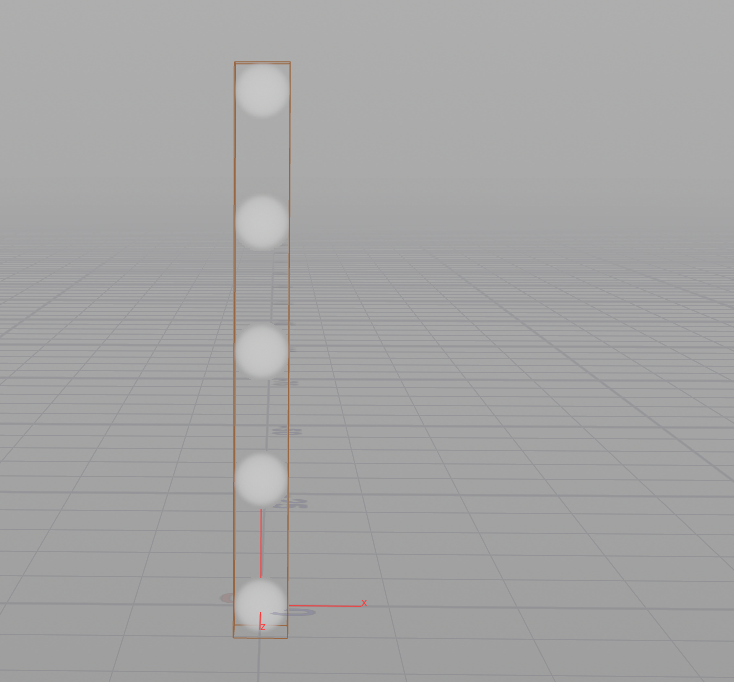
主要观察粒子的density,velocity
#include <openvdb/openvdb.h>
#include <openvdb/tools/ParticlesToLevelSet.h>
#include <iostream>
#include <vector>
struct MyParticle

{

    openvdb::Vec3R p, v;

    openvdb::Real  r;

};

class MyParticleList

{

    // change protected to the public,direct find the mRadiusScale,mVelocityScale

public:

    openvdb::Real           mRadiusScale;

    openvdb::Real           mVelocityScale;

    std::vector<MyParticle> mParticleList;

public:

    std::vector<MyParticle> &get_mPartcileList()

    {

        return mParticleList;

    }

public:

    typedef openvdb::Vec3R  PosType;

    MyParticleList(openvdb::Real rScale=, openvdb::Real vScale=)

            : mRadiusScale(rScale), mVelocityScale(vScale) {}

    void add(const openvdb::Vec3R &p, const openvdb::Real &r,

             const openvdb::Vec3R &v=openvdb::Vec3R(,,))

    {

        MyParticle pa;

        pa.p = p;

        pa.r = r;

        pa.v = v;

        mParticleList.push_back(pa);

    }

    /// @return coordinate bbox in the space of the specified transfrom

    openvdb::CoordBBox getBBox(const openvdb::GridBase& grid) {

        openvdb::CoordBBox bbox;

        openvdb::Coord &min= bbox.min(), &max = bbox.max();

        openvdb::Vec3R pos;

        openvdb::Real rad, invDx = /grid.voxelSize()[];

        for (size_t n=, e=this->size(); n<e; ++n) {

            this->getPosRad(n, pos, rad);

            const openvdb::Vec3d xyz = grid.worldToIndex(pos);

            const openvdb::Real   r  = rad * invDx;

            for (int i=; i<; ++i) {

                min[i] = openvdb::math::Min(min[i], openvdb::math::Floor(xyz[i] - r));

                max[i] = openvdb::math::Max(max[i], openvdb::math::Ceil( xyz[i] + r));

            }

        }

        return bbox;

    }

    //typedef int AttributeType;

    // The methods below are only required for the unit-tests

    openvdb::Vec3R pos(int n)   const {return mParticleList[n].p;}

    openvdb::Vec3R vel(int n)   const {return mVelocityScale*mParticleList[n].v;}

    openvdb::Real radius(int n) const {return mRadiusScale*mParticleList[n].r;}

    //////////////////////////////////////////////////////////////////////////////

    /// The methods below are the only ones required by tools::ParticleToLevelSet

    /// @note We return by value since the radius and velocities are modified

    /// by the scaling factors! Also these methods are all assumed to

    /// be thread-safe.

    /// Return the total number of particles in list.

    ///  Always required!

    size_t size() const { return mParticleList.size(); }

    /// Get the world space position of n'th particle.

    /// Required by ParticledToLevelSet::rasterizeSphere(*this,radius).

    void getPos(size_t n,  openvdb::Vec3R&pos) const { pos = mParticleList[n].p; }

    void getPosRad(size_t n,  openvdb::Vec3R& pos, openvdb::Real& rad) const {

        pos = mParticleList[n].p;

        rad = mRadiusScale*mParticleList[n].r;

    }

    void getPosRadVel(size_t n,  openvdb::Vec3R& pos, openvdb::Real& rad, openvdb::Vec3R& vel) const {

        pos = mParticleList[n].p;

        rad = mRadiusScale*mParticleList[n].r;

        vel = mVelocityScale*mParticleList[n].v;

    }

    // The method below is only required for attribute transfer

    void getAtt(size_t n, openvdb::Index32& att) const { att = openvdb::Index32(n); }

};
Particles IO
Buiding the density,and write it out.
int main()

{

    const float voxelSize = 0.2f, halfWidth = 2.0f;

    openvdb::FloatGrid::Ptr density_grid = openvdb::createLevelSet<openvdb::FloatGrid>(voxelSize, halfWidth);

    MyParticleList pa(,); // this multiply is radius scale , velocity scale

    // This particle radius = 1 < 1.5 i.e. it's below the Nyquist frequency and hence ignored

    pa.add(openvdb::Vec3R( ,  ,  ), , openvdb::Vec3R( , , ));

    pa.add(openvdb::Vec3R( ,  ,  ), , openvdb::Vec3R( , , ));

    pa.add(openvdb::Vec3R( , ,  ), , openvdb::Vec3R( , , ));

    pa.add(openvdb::Vec3R( , ,  ), , openvdb::Vec3R( , , ));

    pa.add(openvdb::Vec3R( , ,  ), , openvdb::Vec3R( , , ));

    openvdb::tools::ParticlesToLevelSet<openvdb::FloatGrid> raster(*density_grid);

    raster.rasterizeTrails(pa, 0.75);//scale offset between two instances

    // always prune to produce a valid narrow-band level set.

    raster.finalize(true);

    density_grid->setGridClass(openvdb::GRID_LEVEL_SET);

    density_grid->setName("density");

    convertToVolume(density_grid);

    // Create a VDB file object.

    openvdb::io::File file("mygrids.vdb");

    // Add the grid pointer to a container.

    openvdb::GridPtrVec grids;

    grids.push_back(density_grid);

    // Write out the contents of the container.

    file.write(grids);

    file.close();

}
particles to volume
一个更好的方法Buiding the density.and write it out
// Note densityGrid allocation memory in this function and transform same as densityGrid

void buildingDensityGrid(openvdb::FloatGrid::Ptr &densityGrid,

                         openvdb::math::Transform::Ptr &transform,MyParticleList &pa,bool isRasterToSphere = true)

{

    float backGround = 0.1f;

    float voxelSize = 0.1;

    transform = openvdb::math::Transform::createLinearTransform(voxelSize);

    densityGrid = openvdb::FloatGrid::create(backGround);

    std::cout << "set density grid class type\n";

    densityGrid->setGridClass(openvdb::GRID_LEVEL_SET);

    densityGrid->setTransform(transform);

    openvdb::tools::ParticlesToLevelSet<openvdb::FloatGrid> raster(*densityGrid);

    if(isRasterToSphere)

    {

        raster.rasterizeSpheres(pa,pa.mRadiusScale);

    } else{

        raster.rasterizeTrails(pa,0.75);

    }

    raster.finalize(true);

    std::cout << "raster to end\n";

}

int main()

{

    MyParticleList pa(,);

    pa.add(openvdb::Vec3R( ,  ,  ), , openvdb::Vec3R( , , ));

    pa.add(openvdb::Vec3R( ,  ,  ), , openvdb::Vec3R( , , ));

    pa.add(openvdb::Vec3R( , ,  ), , openvdb::Vec3R( , , ));

    pa.add(openvdb::Vec3R( , ,  ), , openvdb::Vec3R( , , ));

    pa.add(openvdb::Vec3R( , ,  ), , openvdb::Vec3R( , , ));

    openvdb::FloatGrid::Ptr densityGrid;

    openvdb::math::Transform::Ptr transform;

    buildingDensityGrid(densityGrid,transform,pa);

    densityGrid->setName("density");

    convertToVolume(densityGrid);

    // Create a VDB file object.

    std::cout << "write vdb \n";

    openvdb::io::File file("mygrids.vdb");

    // Add the grid pointer to a container.

    openvdb::GridPtrVec grids;

    grids.push_back(densityGrid);

    // Write out the contents of the container.

    file.write(grids);

    file.close();

}
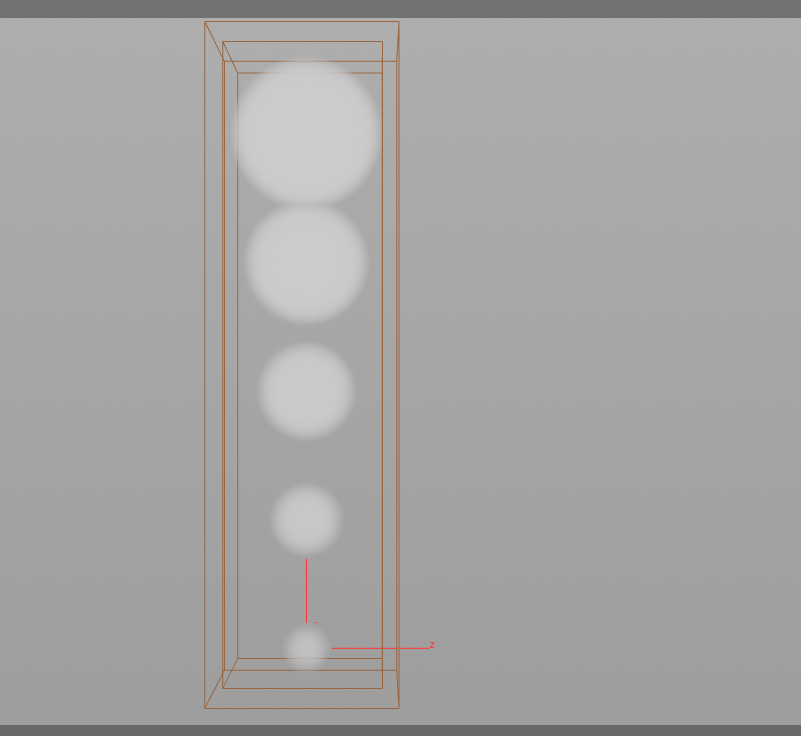
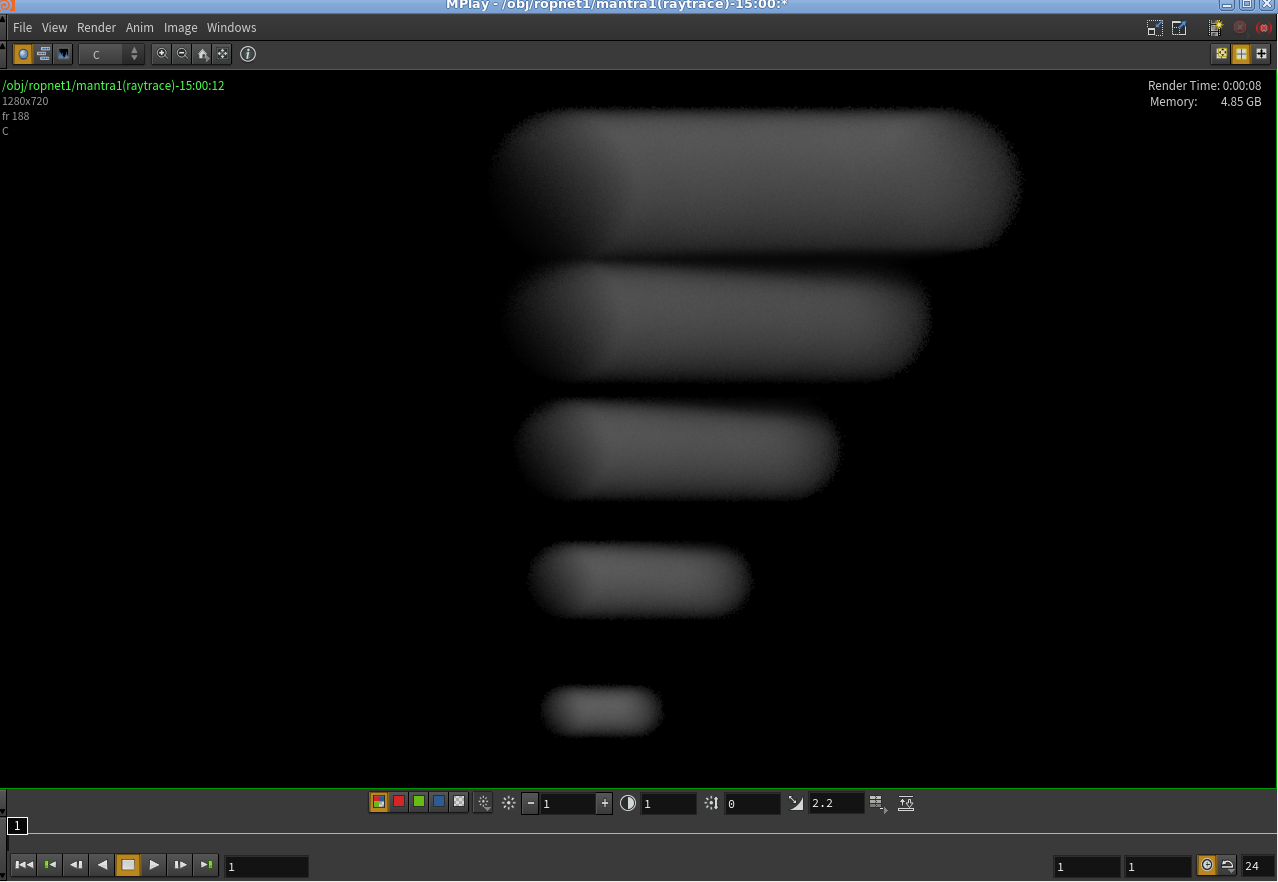
接下来VelocityBuilding,直接写了个包裹库,并且在houdini测试了下openvdb::Vec3sGrid的运动模糊。
GLY_OpenVdbWrapper.h
//

// Created by gearslogy on 4/13/17.

//

#ifndef ARNOLDVDBPOINTS_GLY_OPENVDBWAPPER_H

#define ARNOLDVDBPOINTS_GLY_OPENVDBWAPPER_H

#include <memory>

#include <openvdb/openvdb.h>

#include <openvdb/tools/ParticlesToLevelSet.h>

#include <openvdb/tools/LevelSetUtil.h>

#include <openvdb/tools/TopologyToLevelSet.h>

// DEFINE OUR PARTICLES STRUCT

namespace TopVertex

{

    struct MyParticle

    {

        openvdb::Vec3R p, v;

        openvdb::Real  r; // per particle has own radius

    };

    class MyParticleList

    {

        // change protected to the public,direct find the mRadiusScale,mVelocityScale

    public:

        openvdb::Real           mRadiusScale;

        openvdb::Real           mVelocityScale;

        std::vector<MyParticle> mParticleList;

        typedef openvdb::Vec3R  PosType;

        MyParticleList(openvdb::Real rScale=, openvdb::Real vScale=)

                : mRadiusScale(rScale), mVelocityScale(vScale) {}

        void add(const openvdb::Vec3R &p, const openvdb::Real &r,

                 const openvdb::Vec3R &v=openvdb::Vec3R(,,))

        {

            MyParticle pa;

            pa.p = p;

            pa.r = r;

            pa.v = v;

            mParticleList.push_back(pa);

        }

        /// @return coordinate bbox in the space of the specified transfrom

        openvdb::CoordBBox getBBox(const openvdb::GridBase& grid) {

            openvdb::CoordBBox bbox;

            openvdb::Coord &min= bbox.min(), &max = bbox.max();

            openvdb::Vec3R pos;

            openvdb::Real rad, invDx = /grid.voxelSize()[];

            for (size_t n=, e=this->size(); n<e; ++n) {

                this->getPosRad(n, pos, rad);

                const openvdb::Vec3d xyz = grid.worldToIndex(pos);

                const openvdb::Real   r  = rad * invDx;

                for (int i=; i<; ++i) {

                    min[i] = openvdb::math::Min(min[i], openvdb::math::Floor(xyz[i] - r));

                    max[i] = openvdb::math::Max(max[i], openvdb::math::Ceil( xyz[i] + r));

                }

            }

            return bbox;

        }

        //typedef int AttributeType;

        // The methods below are only required for the unit-tests

        openvdb::Vec3R pos(int n)   const {return mParticleList[n].p;}

        openvdb::Vec3R vel(int n)   const {return mVelocityScale*mParticleList[n].v;}

        openvdb::Real radius(int n) const {return mRadiusScale*mParticleList[n].r;}

        //////////////////////////////////////////////////////////////////////////////

        /// The methods below are the only ones required by tools::ParticleToLevelSet

        /// @note We return by value since the radius and velocities are modified

        /// by the scaling factors! Also these methods are all assumed to

        /// be thread-safe.

        /// Return the total number of particles in list.

        ///  Always required!

        size_t size() const { return mParticleList.size(); }

        /// Get the world space position of n'th particle.

        /// Required by ParticledToLevelSet::rasterizeSphere(*this,radius).

        void getPos(size_t n,  openvdb::Vec3R&pos) const { pos = mParticleList[n].p; }

        void getPosRad(size_t n,  openvdb::Vec3R& pos, openvdb::Real& rad) const {

            pos = mParticleList[n].p;

            rad = mRadiusScale*mParticleList[n].r;

        }

        void getPosRadVel(size_t n,  openvdb::Vec3R& pos, openvdb::Real& rad, openvdb::Vec3R& vel) const {

            pos = mParticleList[n].p;

            rad = mRadiusScale*mParticleList[n].r;

            vel = mVelocityScale*mParticleList[n].v;

        }

        // The method below is only required for attribute transfer

        void getAtt(size_t n, openvdb::Index32& att) const { att = openvdb::Index32(n); }

    };

}

//

namespace TopVertex

{

    class GLY_OpenVdbWrapper

    {

    public:

        // Rater point parm

        struct RasterParms

        {

            float backGround;

            float voxelSize;

            float halfWidth;

        };

        // define some variable type

        using Ptr = std::shared_ptr<GLY_OpenVdbWrapper>;

        using RasterT = openvdb::tools::ParticlesToLevelSet<openvdb::FloatGrid, openvdb::Index32>;

        enum POINT_RASTER_TYPE{RS_Sphere=0x0,RS_trailer=0x1};

        // define a static pointer to our class

        static GLY_OpenVdbWrapper* creator();

        //

        GLY_OpenVdbWrapper();

        ~GLY_OpenVdbWrapper();

        // SAMPLE POINTS API

        void samplePointsSetPoints(const std::vector<openvdb::Vec3R> &posList);

        void samplePointsSetPoints(double *array,int rawSize);

        void samplePointsSetRadius(double *array,int rawSize);

        void samplePointsSetRadius(const std::vector<openvdb::Real> &radiusList);

        void samplePointsSetVelocity(const std::vector<openvdb::Vec3R> &vel);

        void samplePointsSetVelocity(double *array,int rawsize);

        void samplePointsSetRadiusScale(double radius);

        void samplePointsSetVelocityScale(double v);

        void samplePointsAppendPoint(openvdb::Vec3R p,openvdb::Vec3R v,openvdb::Real radius);

        void samplePointsRasterDensityGrid(POINT_RASTER_TYPE type,openvdb::FloatGrid::Ptr &gridPtr,RasterParms &rasterParm);

        void samplePointsRasterVelocityGrid(openvdb::math::Transform::Ptr &density_transform,openvdb::Vec3SGrid::Ptr &velocityGrid);

    private:

        class SamplePoints;

        std::unique_ptr<SamplePoints> mPimplSamplePoints;

    };

}

#endif //ARNOLDVDBPOINTS_GLY_OPENVDBWAPPER_H
GLY_OpenVdbWrapper.cpp
//

// Created by gearslogy on 4/13/17.

//

#include "GLY_OpenVdbWrapper.h"

#include <assert.h>

#include <algorithm>

using namespace TopVertex;

//=======================================SamplePoints details=================================

//

class GLY_OpenVdbWrapper::SamplePoints

{

public:

    SamplePoints():mParticleListPtr(new MyParticleList(,))

    {

    }

    ~SamplePoints()

    {

        std::cout << "Release SamplePoints memory\n";

    }

    void setRadiusScale(double radius)

    {

        mParticleListPtr->mRadiusScale = radius;

    }

    void setVelocityScale(double v)

    {

        mParticleListPtr->mVelocityScale = v;

    }

    void setPoints(const std::vector<openvdb::Vec3R> &posList)

    {

        auto &pa = mParticleListPtr->mParticleList;

        pa.resize(posList.size());

        for(int i=;i<posList.size();i++)

        {

            pa[i].p = posList[i];

        }

    }

    void setPoints(double *array,int rawsize)

    {

        assert(rawsize%==);

        auto &pa = mParticleListPtr->mParticleList;

        pa.resize(rawsize/);

        for(int i=;i<rawsize/;i++)

        {

            double x = array[i];

            double y = array[i+];

            double z = array[i+];

            auto t = openvdb::Vec3R(x,y,z);

            pa[i].p = t;

        }

    }

    void setRadius(const std::vector<openvdb::Real> &radiusList)

    {

        assert(radiusList.size()==mParticleListPtr->mParticleList.size());

        auto &pa = mParticleListPtr->mParticleList;

        for(int i=;i<pa.size();i++)

        {

            pa[i].r = radiusList[i];

        }

    }

    void setRadius(double *array,int pointsNum)

    {

        assert(pointsNum==mParticleListPtr->mParticleList.size());

        auto &pa = mParticleListPtr->mParticleList;

        for(int i=;i<pa.size();i++)

        {

            pa[i].r = array[i];

        }

    }

    void setVelocity(const std::vector<openvdb::Vec3R> &vel)

    {

        assert(vel.size() == mParticleListPtr->mParticleList.size());

        auto &pa = mParticleListPtr->mParticleList;

        for(int i=;i<vel.size();i++)

        {

            pa[i].v = vel[i];

        }

    }

    void setVelocity(double *array,int rawsize)

    {

        assert(rawsize%==);

        auto &pa = mParticleListPtr->mParticleList;

        for(int i=;i<rawsize/;i++)

        {

            double x = array[i];

            double y = array[i+];

            double z = array[i+];

            auto t = openvdb::Vec3R(x,y,z);

            pa[i].v = t;

        }

    }

    void appendPoint(openvdb::Vec3R p,openvdb::Vec3R v,openvdb::Real radius)

    {

        mParticleListPtr->add(p,radius,v);

    }

    void clearPoints(){mParticleListPtr->mParticleList.clear();}

    void rasterDensity(POINT_RASTER_TYPE type,openvdb::FloatGrid::Ptr &gridPtr,RasterParms &rasterParm)

    {

        std::cout << "Start process samplePoints Raster Density\n";

        float backGround = rasterParm.backGround;

        float voxelSize = rasterParm.voxelSize;

        float halfWidth = rasterParm.halfWidth;

        openvdb::math::Transform::Ptr transform = openvdb::math::Transform::createLinearTransform(voxelSize);

        //gridPtr = openvdb::FloatGrid::create(backGround); //this is simple and can work

        gridPtr = openvdb::createLevelSet<openvdb::FloatGrid>(voxelSize, halfWidth);

        gridPtr->setGridClass(openvdb::GRID_LEVEL_SET);

        gridPtr->setTransform(transform);

        openvdb::tools::ParticlesToLevelSet<openvdb::FloatGrid,openvdb::Index> raster(*gridPtr);

        if(type==0x0) // RS_Sphere

        {

            raster.rasterizeSpheres(*mParticleListPtr);

        } else

        {

            raster.rasterizeTrails(*mParticleListPtr,0.75);

        }

        raster.finalize(true);

        openvdb::tools::sdfToFogVolume(*gridPtr);

        gridPtr->setName("density");

        mId=raster.attributeGrid();

    }

    void rasterVelocityGrid(openvdb::math::Transform::Ptr &density_transform,openvdb::Vec3SGrid::Ptr &gridPtr)

    {

        typedef typename openvdb::Int32Grid::TreeType::ValueConverter<openvdb::Vec3s >::Type TreeTypeWarpVec;

        typedef typename openvdb::Grid<TreeTypeWarpVec> GridType;

        typename TreeTypeWarpVec::Ptr tree(

                new TreeTypeWarpVec(mId->tree(), openvdb::Vec3s(,,) , openvdb::TopologyCopy()));

        //typename GridType::Ptr velocity_grid(GridType::create(tree)); //为grid开辟内存*/

        gridPtr = openvdb::Vec3SGrid::create(tree);

        gridPtr->setVectorType(openvdb::VecType());

        // MY Method

        openvdb::Coord ijk;

        openvdb::Vec3SGrid::Accessor vel_accessor = gridPtr->getAccessor();

        for(auto iter = mId->beginValueOn();iter.test();++iter)

        {

            auto d = *iter;

            //std::cout << " D:..." <<d <<std::endl;

            ijk = iter.getCoord();

            openvdb::math::Vec3s vel =  mParticleListPtr->vel(d);

            vel*=;

            vel_accessor.setValue(ijk,vel);

        }

        gridPtr->setName("vel");

        gridPtr->setTransform(density_transform);

    }

private:

    std::unique_ptr<MyParticleList > mParticleListPtr;

    RasterT::AttGridType::Ptr mId; //remeber the id of point in voxel

};

//

//============================================GLY_OpenVdbWrapper==================================================

// GLY_OpenVdbWrapper Details

GLY_OpenVdbWrapper::GLY_OpenVdbWrapper():mPimplSamplePoints(new GLY_OpenVdbWrapper::SamplePoints())

{

}

GLY_OpenVdbWrapper::~GLY_OpenVdbWrapper()

{

    std::cout << "Release Wrapper memory\n";

}

void GLY_OpenVdbWrapper::samplePointsSetPoints(const std::vector<openvdb::Vec3R> &posList)

{

    mPimplSamplePoints->setPoints(posList);

}

void GLY_OpenVdbWrapper::samplePointsSetPoints(double *array,int rawSize)

{

    mPimplSamplePoints->setPoints(array,rawSize);

}

void GLY_OpenVdbWrapper::samplePointsSetRadius(double *array, int rawSize) {

    mPimplSamplePoints->setRadius(array,rawSize);

}

void GLY_OpenVdbWrapper::samplePointsSetRadius(const std::vector<openvdb::Real> &radiusList) {

    mPimplSamplePoints->setRadius(radiusList);

}

void GLY_OpenVdbWrapper::samplePointsSetVelocity(const std::vector<openvdb::Vec3R> &vel) {

    mPimplSamplePoints->setVelocity(vel);

}

void GLY_OpenVdbWrapper::samplePointsSetVelocity(double *array, int rawsize) {

    mPimplSamplePoints->setVelocity(array,rawsize);

}

void GLY_OpenVdbWrapper::samplePointsSetRadiusScale(double radius) {

    mPimplSamplePoints->setRadiusScale(radius);

}

void GLY_OpenVdbWrapper::samplePointsSetVelocityScale(double v) {

    mPimplSamplePoints->setVelocityScale(v);

}

void GLY_OpenVdbWrapper::samplePointsAppendPoint(openvdb::Vec3R p, openvdb::Vec3R v, openvdb::Real radius)

{

    mPimplSamplePoints->appendPoint(p,v,radius);

}

GLY_OpenVdbWrapper* GLY_OpenVdbWrapper::creator() {

    return new GLY_OpenVdbWrapper;

}

void GLY_OpenVdbWrapper::samplePointsRasterDensityGrid(POINT_RASTER_TYPE type, openvdb::FloatGrid::Ptr &gridPtr,

                                                       RasterParms &rasterParm) {

    mPimplSamplePoints->rasterDensity(type,gridPtr,rasterParm);

}

void GLY_OpenVdbWrapper::samplePointsRasterVelocityGrid(openvdb::math::Transform::Ptr &density_transform,

                                                        openvdb::Vec3SGrid::Ptr &velocityGrid)

{

    mPimplSamplePoints->rasterVelocityGrid(density_transform,velocityGrid);

}
main.cpp:
//

// Created by gearslogy on 4/14/17.

//

#include "GLY_OpenVdbWrapper.h"

using namespace std;

using namespace TopVertex;

int main()

{

    GLY_OpenVdbWrapper::Ptr wrapper(GLY_OpenVdbWrapper::creator());

    wrapper->samplePointsAppendPoint(openvdb::Vec3R(,  ,  ), openvdb::Vec3R( , , ) ,);

    wrapper->samplePointsAppendPoint(openvdb::Vec3R(,  ,  ), openvdb::Vec3R( , , ) ,1.5);

    wrapper->samplePointsAppendPoint(openvdb::Vec3R(,  ,  ), openvdb::Vec3R( , , ) ,2.0);

    wrapper->samplePointsAppendPoint(openvdb::Vec3R(,  ,  ), openvdb::Vec3R( , , ) ,2.5);

    wrapper->samplePointsAppendPoint(openvdb::Vec3R(,  ,  ), openvdb::Vec3R( , , ) ,3.0);

    // create grid named "density"

    openvdb::FloatGrid::Ptr  densityGrid;

    GLY_OpenVdbWrapper::RasterParms parms;

    parms.backGround = 0.1;

    parms.voxelSize = 0.1;

    parms.halfWidth = 0.5;

    wrapper->samplePointsRasterDensityGrid(GLY_OpenVdbWrapper::RS_Sphere,densityGrid,parms);

    // Create velocity Grid "velocity"

    openvdb::Vec3SGrid::Ptr velocityGrid;

    auto densityTransform = densityGrid->transformPtr();

    wrapper->samplePointsRasterVelocityGrid(densityTransform,velocityGrid);

    // IO Operator

    openvdb::io::File file("mygrids.vdb");

    openvdb::GridPtrVec grids;

    grids.push_back(densityGrid);

    grids.push_back(velocityGrid);

    file.write(grids);

    file.close();

}
Test plugin for katana:
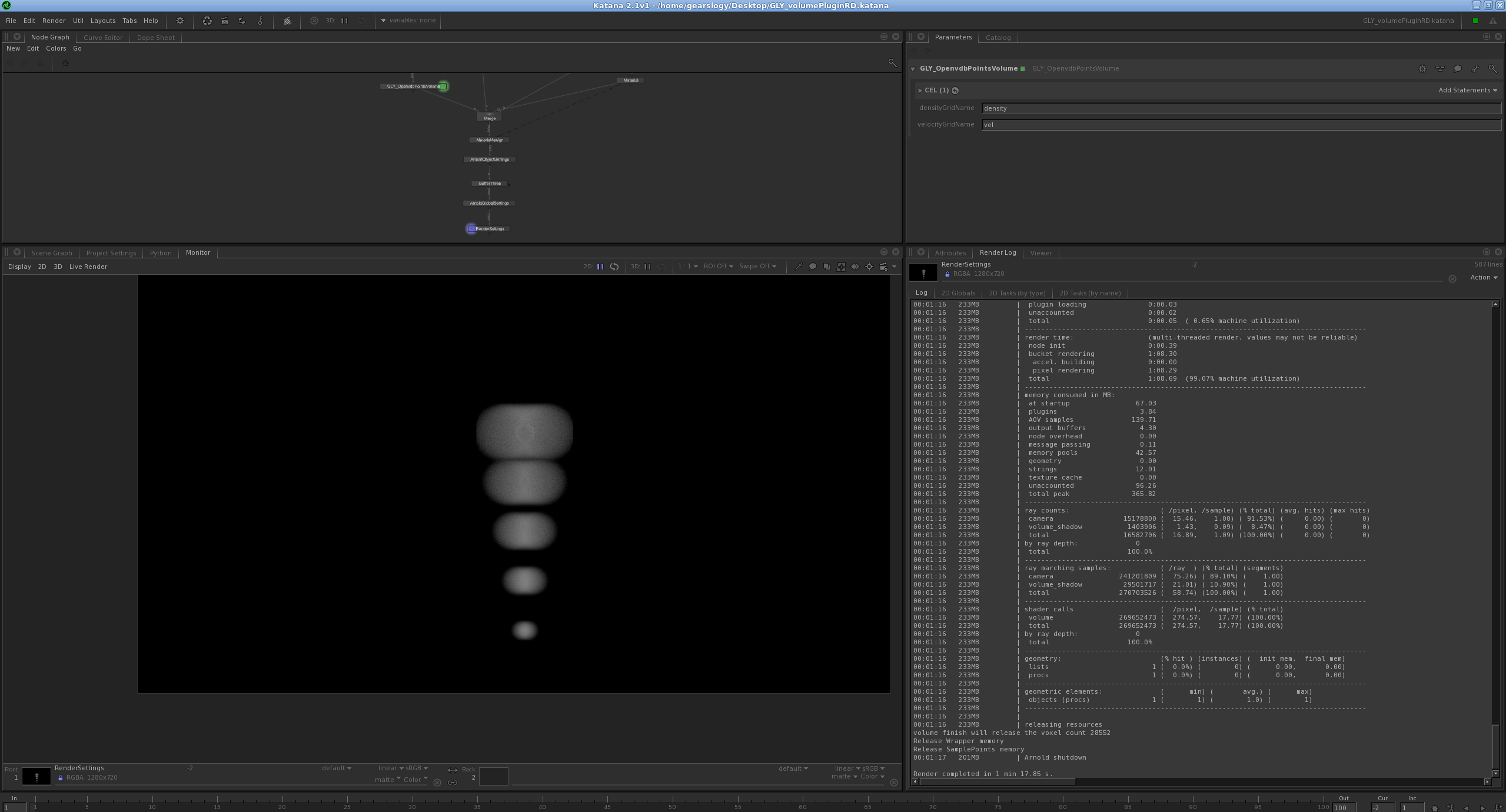
Update katana plugin:
升级了光线求交,直接快的飞起来
Arnold粒子体积渲染(Arnold particles volume rendering):
插件loading模式:AlembicAPI->OpenvdbAPI->ArnoldAPI
然后KatanaAPI再写个插件 读取这个ArnoldAPI写出来的proc,

update volume:
重要的事情不说两遍,static 关键字在一个so上被一个进程,2个instance调用,全局的static object内存地址是他妈一样的,也就是说是共享的地址。会导致你假如创建两个instance,你却希望有两份不一样的全局变量内容,结果,太感人了,确实是错的,是一样的。
如果独立进程,独立instance调用so上的全局变量,ok没问题。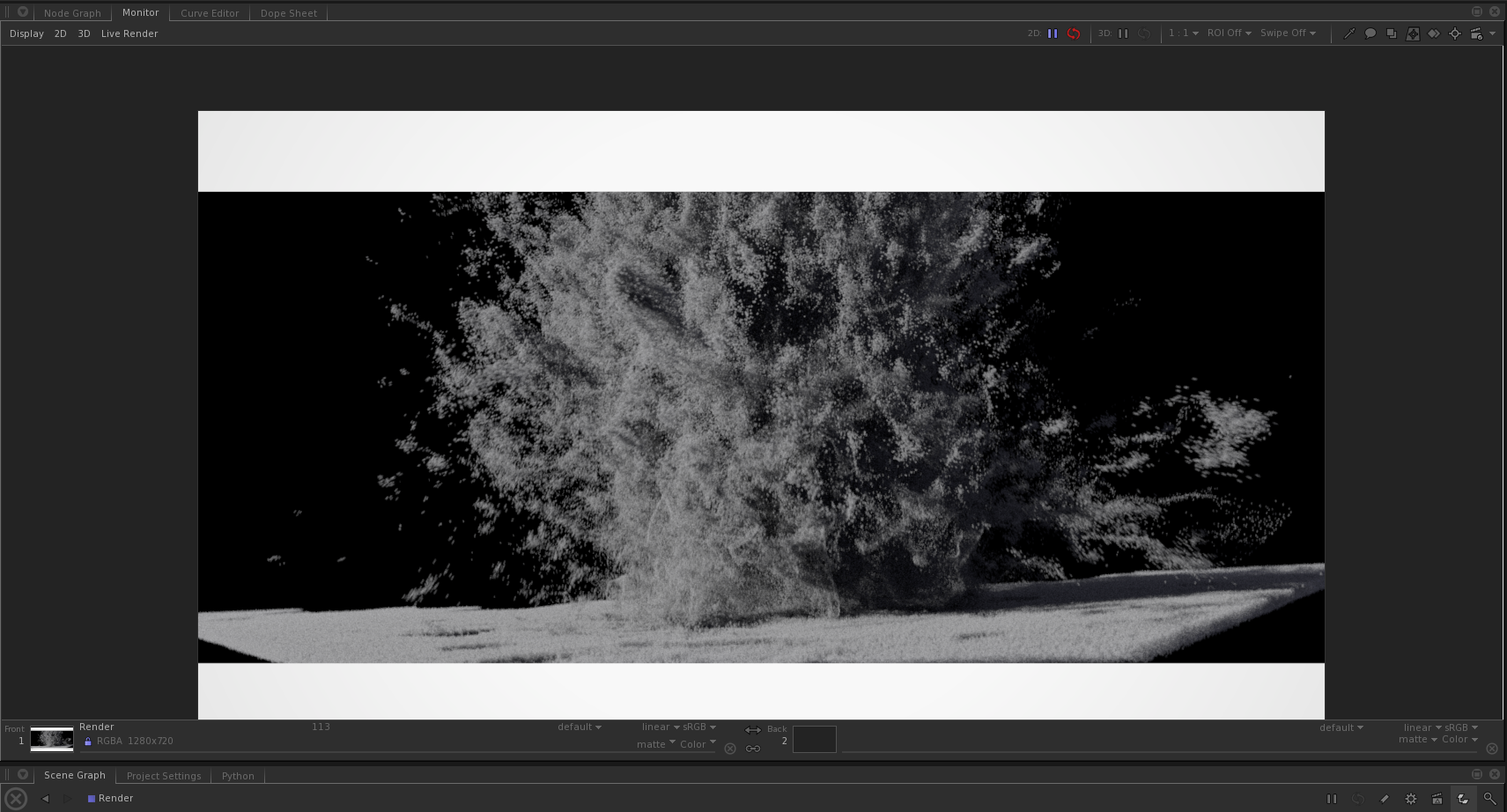
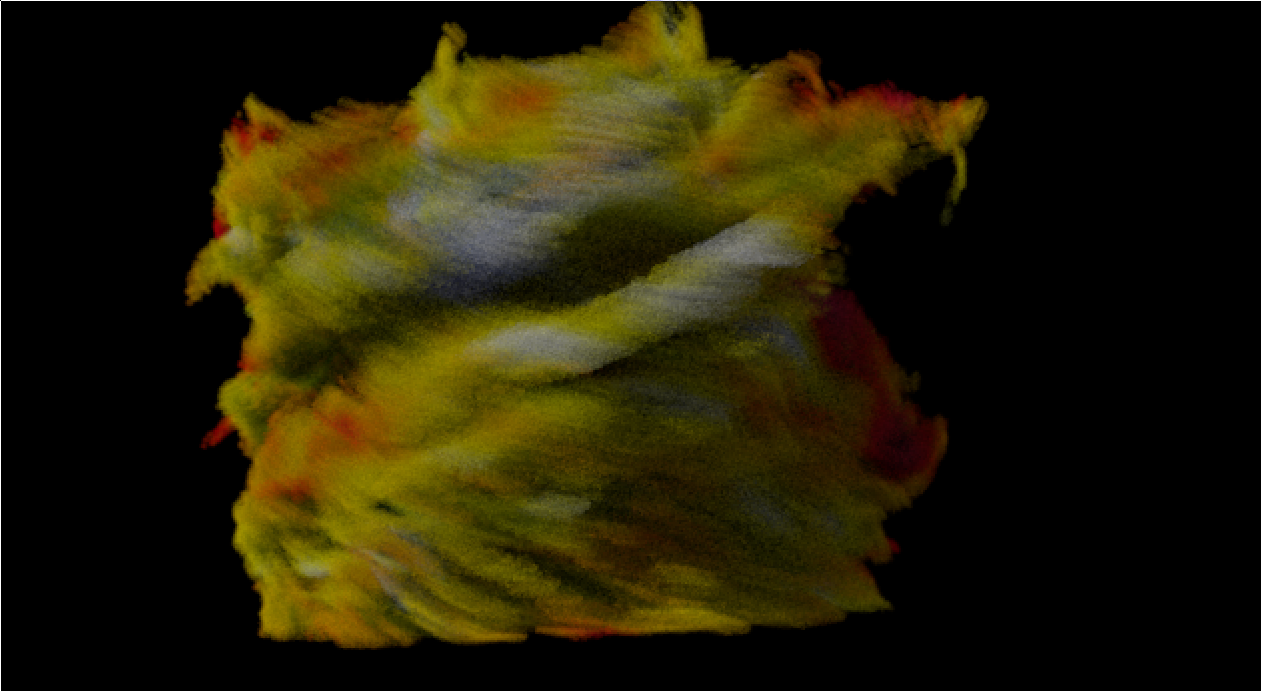
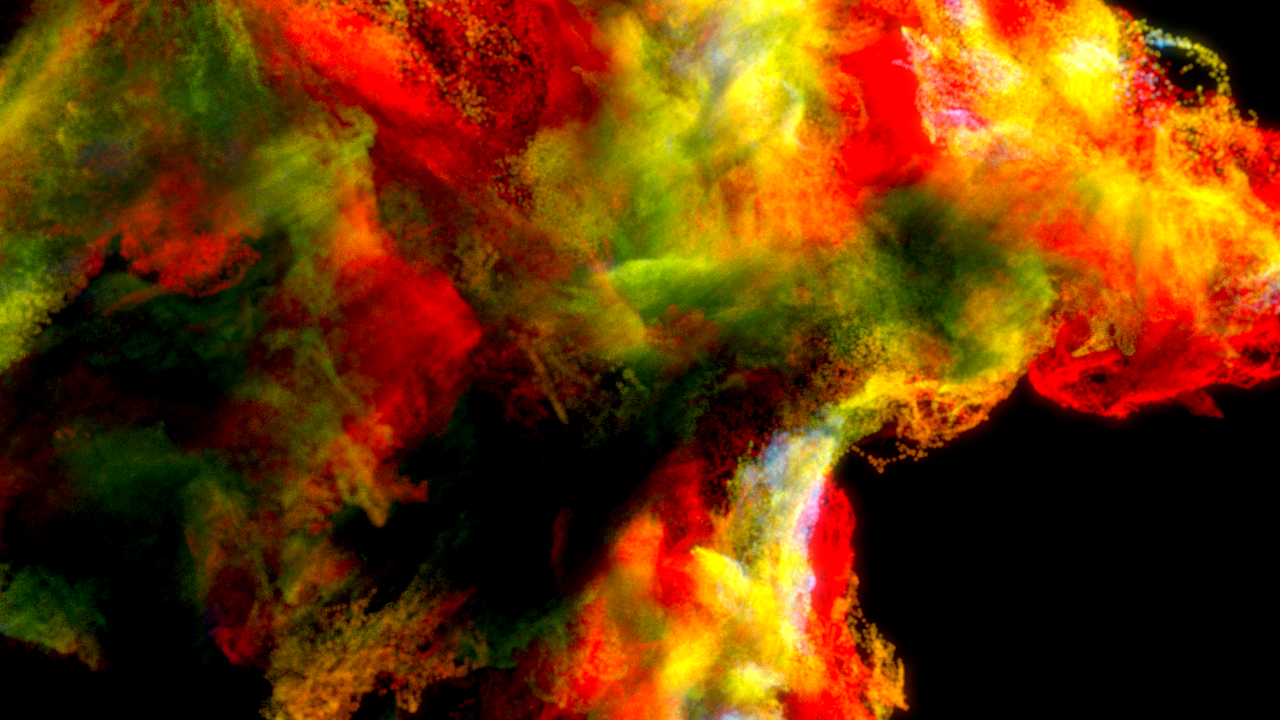
Rendering the cd field:
VDB R&D的更多相关文章
- openstack搭建之-cinder配置(12)
一. base节点配置 mysql -u root -proot CREATE DATABASE cinder; GRANT ALL PRIVILEGES ON cinder.* TO 'cinder ...
- openstack实验环境搭建
Openstack实验文档 一.base节点 1.1配置网络 vim /etc/sysconfig/network-scripts/ifcfg-eth0 1.2关闭防火墙和selinux system ...
- S1_搭建分布式OpenStack集群_10 cinder 存储节点配置
一.安装配置lvm2安装LVM包:# yum install -y lvm2 启动LVM元数据服务,并将其配置为在系统启动时启动:# systemctl enable lvm2-lvmetad.ser ...
- [原]CentOS7安装Rancher2.1并部署kubernetes (二)---部署kubernetes
################## Rancher v2.1.7 + Kubernetes 1.13.4 ################ ##################### ...
- 利用python进行数据分析2_数据采集与操作
txt_filename = './files/python_baidu.txt' # 打开文件 file_obj = open(txt_filename, 'r', encoding='utf-8' ...
- Django项目:CRM(客户关系管理系统)--81--71PerfectCRM实现CRM项目首页
{#portal.html#} {## ————————46PerfectCRM实现登陆后页面才能访问————————#} {#{% extends 'king_admin/table_index.h ...
- 【翻译】Awesome R资源大全中文版来了,全球最火的R工具包一网打尽,超过300+工具,还在等什么?
0.前言 虽然很早就知道R被微软收购,也很早知道R在统计分析处理方面很强大,开始一直没有行动过...直到 直到12月初在微软技术大会,看到我软的工程师演示R的使用,我就震惊了,然后最近在网上到处了解和 ...
- 应用r.js来优化你的前端
r.js是requireJS的优化(Optimizer)工具,可以实现前端文件的压缩与合并,在requireJS异步按需加载的基础上进一步提供前端优化,减小前端文件大小.减少对服务器的文件请求.要使用 ...
- 使用R画地图数据
用R画地图数据 首先,从这里下载中国地图的GIS数据,这是一个压缩包,完全解压后包含三个文件(bou2_4p.dbf.bou2_4p.shp和bou2_4p.shx),将这三个文件解压到同一个目录下. ...
随机推荐
- bzoj4326 树链剖分 + 线段树 // 二分 lca + 树上差分
https://www.lydsy.com/JudgeOnline/problem.php?id=4326 题意:N个点的树上给M条树链,问去掉一条边的权值之后所有树链长度和的最大值最小是多少. 首先 ...
- Java抽象类、接口整理
抽象类 5.1抽象类产生(上标为A) 编写一个类时,会给该类定义一些方法,这些方法是用来描述功能和具体实现的方式,这些方法都有方法体 例如:一个图形类应该有周长的方法,但是不同的图形求周长方法不一样. ...
- str
print('字符串操作') s='abc DEF hij' print('首字母大写') print(s.capitalize()) print('全大写') print(s.upper()) pr ...
- 缓存淘汰策略之LRU
LRU(Least recently used,最近最少使用)算法根据数据的历史访问记录来进行淘汰数据,其核心思想是“如果数据最近被访问过,那么将来被访问的几率也更高”. 1. 新数据插入到链表头部: ...
- Python中的格式化输出
百分号格式化输出 百分号默认右对齐 %s 字符串 (采用str()的显示) %r 字符串 (采用repr()的显示) %c 单个字符 %b 二进制整数 %d 十进制整数 %i 十进制整数 %o 八进制 ...
- Elasticsearch集群节点配置详解
注意:如果是在局域网中运行elasticsearch集群也是很简单的,只要cluster.name设置一致,并且机器在同一网段下,启动的es会自动发现对方,组成集群. 2.elasticsearch- ...
- bzoj千题计划314:bzoj3238: [Ahoi2013]差异(后缀数组+st表+单调栈)
https://www.lydsy.com/JudgeOnline/problem.php?id=3238 跟 bzoj3879 差不多 #include<cstdio> #include ...
- solr简介与安装
solr简介: Solr 是Apache下的一个顶级开源项目,采用Java开发,它是基于Lucene的全文搜索服务器.Solr提供了比Lucene更为丰富的查询语言,同时实现了可配置.可扩展,并对索引 ...
- 从word得到表格数据插入数据库(6位行业代码)
复制表格到excel 点击表格左上角选中全部表格,然后crtl+c,再贴到excel中 可以发现,大类代码,单元格往下走,碰到下一个有值的之前,都是上一个的范围 填充空白单元格 1.选中前四列,然后c ...
- windows修改自定义格式,有的程序写的不严谨的话会造成出错,就需要重置时间格式