
Spring基础20——AOP基础
1、什么是AOP
AOP(Aspect-Oriented Programming)即面向切面编程,是一种新的方法论,是对那个传统OOP面向对象编程的补充。AOP的主要编程对象是切面(aspect),而切面模块化横切关注点,在应用AOP编程时,仍需要定义公共功能但可以明确功能在哪里,以什么方式应用,并且不必修改受影响的类,这样一来横切关注点就模块化到了特殊得对象(切面)里,那么什么是面向切面编程呢?
下面我们通过一个例子来理解:
我们需要实现一个计算器,并且有以下两个需求:
需求1:日志,在程序执行期间追寻正在发生的活动。
需求2:希望计算器只能处理正数的运算。
首先我们来定义一个接口,来描述计算器的功能:
 public interface ArithmeticCalculator {

     /**

      * 加法

      * @param i

      * @param j

      * @return

      */

     int add(int i, int j);

     /**

      * 减法

      * @param i

      * @param j

      * @return

      */

     int sub(int i, int j);

     /**

      * 乘法

      * @param i

      * @param j

      * @return

      */

     int mul(int i, int j);

     /**

      * 除法

      * @param i

      * @param j

      * @return

      */

     int div(int i, int j);

 }
之后我们实现这个接口并对方法进行实现:
 public class ArithmeticCalculatorImpl implements ArithmeticCalculator {

     @Override

     public int add(int i, int j) {

         int result = i + j;

         return result;

     }

     @Override

     public int sub(int i, int j) {

         int result = i - j;

         return result;

     }

     @Override

     public int mul(int i, int j) {

         int result = i * j;

         return result;

     }

     @Override

     public int div(int i, int j) {

         int result = i / j;

         return result;

     }

 }
编写Main测试类对功能进行测试:
 public class Main {

     public static void main(String[] args) {

         ArithmeticCalculator calculator = new ArithmeticCalculatorImpl();

         System.out.println(calculator.add(1,2));

         System.out.println(calculator.sub(2,1));

         System.out.println(calculator.div(4,2));

         System.out.println(calculator.mul(2,4));

     }

 }
我们可以观察到输出结果是正常的。
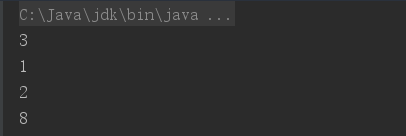
在上面的基础上,修改ArithmeticCalculatorImpl 我们下面来完成上面两个需求:
 public class ArithmeticCalculatorImpl implements ArithmeticCalculator {

     @Override

     public int add(int i, int j) {

         if (i < 0 ||j < 0 ) {

             System.out.println("操作数必须为正数");

             return -1;

         }

         System.out.println("The add method begin [ " + i + ", " + j + " ]" );

         int result = i + j;

         System.out.println("The add method end [ " + result + " ]" );

         return result;

     }

     @Override

     public int sub(int i, int j) {

         if (i < 0 ||j < 0 ) {

             System.out.println("操作数必须为正数");

             return -1;

         }

         System.out.println("The sub method begin [ " + i + ", " + j + " ]" );

         int result = i - j;

         System.out.println("The sub method end [ " + result + " ]" );

         return result;

     }

     @Override

     public int mul(int i, int j) {

         if (i < 0 ||j < 0 ) {

             System.out.println("操作数必须为正数");

             return -1;

         }

         System.out.println("The mul method begin [ " + i + ", " + j + " ]" );

         int result = i * j;

         System.out.println("The mul method end [ " + result + " ]" );

         return result;

     }

     @Override

     public int div(int i, int j) {

         if (i < 0 ||j < 0 ) {

             System.out.println("操作数必须为正数");

             return -1;

         }

         System.out.println("The div method begin [ " + i + ", " + j + " ]" );

         int result = i / j;

         System.out.println("The div method end [ " + result + " ]" );

         return result;

     }

 }
再次运行测试类:
 public class Main {

     public static void main(String[] args) {

         ArithmeticCalculator calculator = new ArithmeticCalculatorImpl();

         System.out.println(calculator.add(-1,2));

         System.out.println(calculator.sub(2,1));

         System.out.println(calculator.div(4,2));

         System.out.println(calculator.mul(2,4));

     }

 }
输出结果:我们看到是实现了之前的需求。
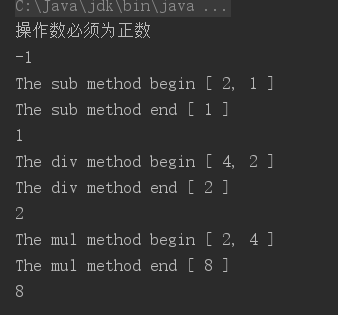
2.使用动态代理对程序进行改进
我们用上面的代码实现了之前的两个需求,但是我们可以观察到,每个方法中都包含大量的重复代码,如果一旦需要修改日志或参数校验的规则,我们每个方法都要去修改,这显然是非常不利于维护的,那么我们可以采用——动态代理的方式来进行改进。代理模式原理:使用一个代理将对象包装起来,然后用该代理对象取代原始对象任何原始对象的调用都要通过代理,代理对象决定是否以及何时将方法调用转到原始对象上。

代理类ArithmeticCalculatorLoggingProxy:
public class ArithmeticCalculatorLoggingProxy {

    private ArithmeticCalculator calculator;

    public ArithmeticCalculatorLoggingProxy(ArithmeticCalculator calculator) {

        this.calculator = calculator;

    }

    public ArithmeticCalculator getCalculatorProxy() {

        InvocationHandler handler = new InvocationHandler() {

            public Object invoke(Object proxy, Method method, Object[] args) {

                System.out.println("The method " + method.getName() + " begin with " + Arrays.asList(args));

                Object result = null;

                try {

                    //前置通知

                    result = method.invoke(calculator, args);

                    //返回通知,可以访问到方法的返回值

                } catch (Exception e) {

                    e.printStackTrace();

                    //异常通知,可以访问到方法出现的异常

                }

                //后置通知,方法可能会出异常,所以访问不到方法的返回值

                System.out.println("The method add " + method.getName() +" with " + result);

                return result;

            }

        };

        return (ArithmeticCalculator) Proxy.newProxyInstance(calculator.getClass().getClassLoader(), calculator.getClass().getInterfaces(), handler);

    }

}
将ArithmeticCalculatorImpl类改到最初的版本,重新运行测试类,我们可以得到同样的结果

3.AOP中的一些概念及AOP的好处
AOP中的一些概念:
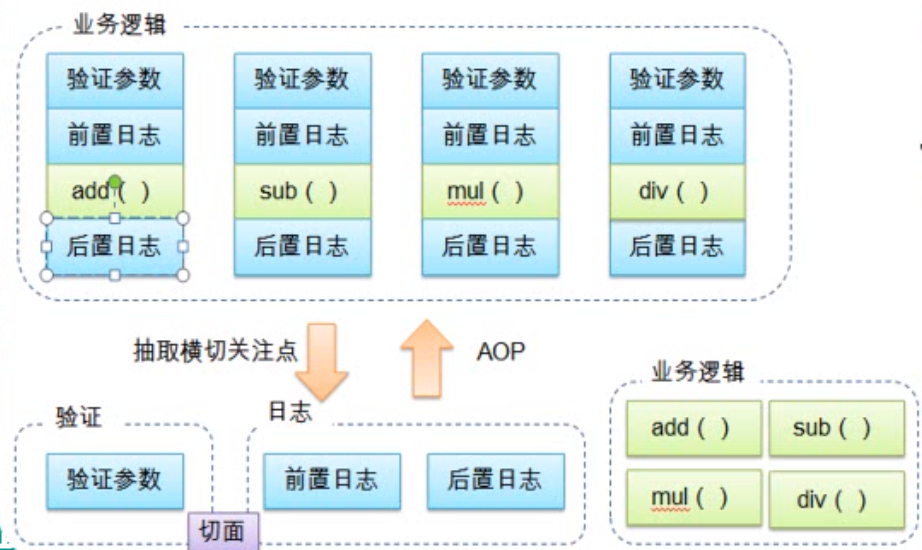
切面(Aspect):横切关注点(跨越应用程序多个模块的功能)被模块化的特殊对象,如上图日志切面和验证切面(在后面还会讲spring aop切面的优先级)。
通知(Advice):切面必须要完成的工作。(切面里的每一个方法,比如前置日志和后置日志)
目标(Target):被通知的对象(被代理对象)
代理(Proxy):向目标对象应用通知之后创建的对象(代理对象)
连接点(JoinPoint):程序执行的某个特定位置:如类某个方法调用前、调用后、方法抛出异常后等。连接点由两个信息确定:方法表示程序执行点;相对点表示的方位。例如ArithmethicCalculator#add()方法执行前的连接点执行点为ArithmethicCalculator#add()方位为该方法执行前位置。
切点(Pointcut):每个类都拥有多个连接点:例如ArithmethicCalculator的所有方法实际上都是连接点,即连接点是程序中客观存在的事物,AOP通过切点定位到特定的连接点。类比:连接点相当于数据库中的记录,切点相当于查询条件。切点和连接点不是一一对应的关系,一个切点匹配多个连接点,切点通过org.springframework.aop.Pointcut接口进行描述,它使用类和方法作为连接点的查询条件。
AOP的好处:
每个事物逻辑位于一个位置,代码不分散,便于维护和升级
业务模块更加简洁只包含核心业务代码。
Spring基础20——AOP基础的更多相关文章
- Spring笔记:AOP基础
Spring笔记:AOP基础 AOP 引入AOP 面向对象的开发过程中,我们对软件开发进行抽象.分割成各个模块或对象.例如,我们对API抽象成三个模块,Controller.Service.Comma ...
- Spring IOC和AOP 基础
1 spring中注入资源是通过描述来实现的,在 spring 中是通过注解或者 XML 描述.spring 中IOC 注入方式有三种 1)构造方法注入 2)setter 注入 3)接口注入 1.1) ...
- 【AOP】Spring AOP基础 + 实践 完整记录
Spring AOP的基础概念 ============================================================= AOP(Aspect-Oriented Pr ...
- [Spring框架]Spring AOP基础入门总结二:Spring基于AspectJ的AOP的开发.
前言: 在上一篇中: [Spring框架]Spring AOP基础入门总结一. 中 我们已经知道了一个Spring AOP程序是如何开发的, 在这里呢我们将基于AspectJ来进行AOP 的总结和学习 ...
- [Spring框架]Spring AOP基础入门总结一.
前言:前面已经有两篇文章讲了Spring IOC/DI 以及 使用xml和注解两种方法开发的案例, 下面就来梳理一下Spring的另一核心AOP. 一, 什么是AOP 在软件业,AOP为Aspect ...
- CgLib动态代理学习【Spring AOP基础之一】
如果不了解JDK中proxy动态代理机制的可以先查看上篇文章的内容:Java动态代理学习[Spring AOP基础之一] 由于Java动态代理Proxy.newProxyInstance()的时候会发 ...
- Spring基础系列--AOP织入逻辑跟踪
原创作品,可以转载,但是请标注出处地址:https://www.cnblogs.com/V1haoge/p/9619910.html 其实在之前的源码解读里面,关于织入的部分并没有说清楚,那些前置.后 ...
- Spring基础系列-AOP源码分析
原创作品,可以转载,但是请标注出处地址:https://www.cnblogs.com/V1haoge/p/9560803.html 一.概述 Spring的两大特性:IOC和AOP. AOP是面向切 ...
- 15Spring AOP基础
为什么需要AOP? 先来看一段代码: package com.cn.spring.aop.helloworld; //加减乘除的接口类 public interface ArithmeticCalcu ...
随机推荐
- python3笔记十:python数据类型-Tuple元组
一:学习内容 元组概念 元组创建.访问.删除 元组操作 元组方法 二:元组概念 1.本质:是一种有序集合 2.特点:与列表非常相似.一旦初始化就不能修改.使用小括号 三:元组创建 1.创建空元组 tu ...
- OpenCV学习笔记(5)——颜色空间转换
学习如歌对图像进行颜色空间转换,从BGR到灰度图,或者从BGR到HSV等 创建一个程序用来从一幅图像中获取某个特定颜色的物体 1.转换颜色空间 OpenCV中有超过150种进行颜色空间转化的方法,但是 ...
- Selenium 2自动化测试实战4(引用模块)
一.模组1.模组也叫类库或模块,引用模块 在python中,通过import….或from….import….的方式引用模块,下面引用time模块 import time print (time.ct ...
- linux计划crontab
linux计划crontab 启动crontab服务 一般启动服务用 /sbin/service crond start 若是根用户的cron服务可以用 sudo service crond sta ...
- 网易云课堂_C++程序设计入门(下)_期末考试_期末考试在线编程题目
期末考试在线编程题目 返回考试 本次考试题目一共两个,在考试期间可以不限制次数地提交 温馨提示: 1.本次考试属于Online Judge题目,提交后由系统即时判分. 2.学生可以在考试截止时间 ...
- python3.5 元组
1.创建元祖 tup1 = ('jenkins','mysql') print(tup1) ssh://root@192.168.0.204:22/usr/bin/python -u /home/pr ...
- java:Mybatis框架2(基于mapper接口的开发,多种查询,复合类型查询,resultMap定义,多表联查,sql片段)
1.mybatis02: mybatis-config.xml: <?xml version="1.0" encoding="UTF-8"?> &l ...
- Golang基础(6):go的net/http用法
http包提供了HTTP客户端和服务端的实现 一:http客户端的几种方法 1. func (c *Client) Get(url string) (resp *Response, err error ...
- Windos下navcat连接虚拟机中的mysql
进入mysql命令行, 使用root用户,密码:youpassword(你的root密码)连接到mysql服务器: # mysql -u root -proot mysql>GRANT ALL ...
- C++复习练习题:1-1000的完数
一个数如果恰好等于它的因子之和,就被成为完数.例如6的因子为1,2,3,而6=1+2+3,所以6是一个完数.编程找出1-1000之间的所有完数 #include<iostream> usi ...