
C# 关于utf-8的研究
前提
如果一不小心把字符转成utf8的格式,但是却产生了乱码。这个时候要么就是寻找其他的转码方式,要么就不想要了,直接过滤吧。
这里说的是直接过滤的办法。
参考链接
https://netvignettes.wordpress.com/2011/07/03/how-to-detect-encoding/
大概的代码解释
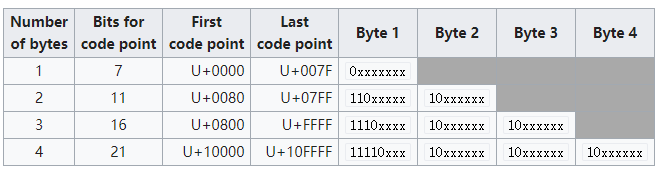
其实主要的思路就是对照这个表(不过貌似它也不是严格对照的),比如下面的代码就是对于bytes的数量
private static bool IsLead4(byte b)

{

    return b >= 0xF0 && b < 0xF8;

}

private static bool IsLead3(byte b)

{

    return b >= 0xE0 && b < 0xF0;

}

private static bool IsLead2(byte b)

{

    return b >= 0xC0 && b < 0xE0;

}

private static bool IsExtendedByte(byte b)

{

    return b > 0x80 && b < 0xC0;

}
接下来就是主要一下特殊字符的边界情况
if (length >= )

{

    var one = bytes[offset];

    var two = bytes[offset + ];

    var three = bytes[offset + ];

    var four = bytes[offset + ];

    if (one == 0x2B &&

        two == 0x2F &&

        three == 0x76 &&

        (four == 0x38 || four == 0x39 || four == 0x2B || four == 0x2F))

    {

        return UTF7;

    }

    else if (one == 0xFE && two == 0xFF && three == 0x00 && four == 0x00)

    {

        return UTF32;

    }

    else if (four == 0xFE && three == 0xFF && two == 0x00 && one == 0x00)

    {

        throw new NotSupportedException("The byte order mark specifies UTF-32 in big endian order, which is not supported by .NET.");

    }

}

else if (length >= )

{

    var one = bytes[offset];

    var two = bytes[offset + ];

    var three = bytes[offset + ];

    if (one == 0xFF && two == 0xFE)

    {

        return Unicode;

    }

    else if (one == 0xFE && two == 0xFF)

    {

        return BigEndianUnicode;

    }

    else if (one == 0xEF && two == 0xBB && three == 0xBF)

    {

        return UTF8;

    }

}

if (length > )

{

    // Look for a leading < sign:

    if (bytes[offset] == 0x3C)

    {

        if (bytes[offset + ] == 0x00)

        {

            return Unicode;

        }

        else

        {

            return UTF8;

        }

    }

    else if (bytes[offset] == 0x00 && bytes[offset + ] == 0x3C)

    {

        return BigEndianUnicode;

    }

}

if (IsUtf8(bytes))

{

    return UTF8;

}
接下来就是测试
static void Main(string[] args)

{

    string ch = "金";

    string Ja = "らなくちゃ";

    string Re = "фыввфывфывфв";

    //byte[] Rom = {209,132,209,34,90,121,5,34,208};

    //byte[] Rom = { 100,200,3,4,5,6,7,8,9,0,0 };

    byte[] Rom = { , , ,,,,,,,,,,,,,};

    //byte[] Rom = {}

    byte[] byteArrayUTF8 = UTF8.GetBytes(Ja);

    //byte[] byteArrayDefault = Encoding.Default.GetBytes(Re);

    string Name = Encoding.UTF8.GetString(Rom,,(int)Rom.Length);

    var y = GetTextEncoding(Rom);

 }
全部代码
using System;

using System.Text;

using static System.Text.Encoding;

namespace ConsoleApp1

{

    class Program

    {

        /// <summary>

        /// Determines whether the bytes in this buffer at the specified offset represent a UTF-8 multi-byte character.

        /// </summary>

        /// <remarks>

        /// It is not guaranteed that these bytes represent a sensical character - only that the binary pattern matches UTF-8 encoding.

        /// </remarks>

        /// <param name="bytes">This buffer.</param>

        /// <param name="offset">The position in the buffer to check.</param>

        /// <param name="length">The number of bytes to check, of 4 if not specified.</param>

        /// <returns>The rank of the UTF</returns>

        public static MultibyteRank GetUtf8MultibyteRank(byte[] bytes, int offset = , int length = )

        {

            if (bytes == null)

            {

                throw new ArgumentNullException("bytes");

            }

            if (offset <  || offset > bytes.Length)

            {

                throw new ArgumentOutOfRangeException("offset", "Offset is out of range.");

            }

            else if (length <  || length > )

            {

                throw new ArgumentOutOfRangeException("length", "Only values 1-4 are valid.");

            }

            else if ((offset + length) > bytes.Length)

            {

                throw new ArgumentOutOfRangeException("offset", "The specified range is outside of the specified buffer.");

            }

            // Possible 4 byte sequence

            if (length >  && IsLead4(bytes[offset]))

            {

                if (IsExtendedByte(bytes[offset + ]) && IsExtendedByte(bytes[offset + ]) && IsExtendedByte(bytes[offset + ]))

                {

                    return MultibyteRank.Four;

                }

            }

            // Possible 3 byte sequence

            else if (length >  && IsLead3(bytes[offset]))

            {

                if (IsExtendedByte(bytes[offset + ]) && IsExtendedByte(bytes[offset + ]))

                {

                    return MultibyteRank.Three;

                }

            }

            // Possible 2 byte sequence

            else if (length >  && IsLead2(bytes[offset]) && IsExtendedByte(bytes[offset + ]))

            {

                return MultibyteRank.Two;

            }

            if (bytes[offset] < 0x80)

            {

                return MultibyteRank.One;

            }

            else

            {

                return MultibyteRank.None;

            }

        }

        private static bool IsLead4(byte b)

        {

            return b >= 0xF0 && b < 0xF8;

        }

        private static bool IsLead3(byte b)

        {

            return b >= 0xE0 && b < 0xF0;

        }

        private static bool IsLead2(byte b)

        {

            return b >= 0xC0 && b < 0xE0;

        }

        private static bool IsExtendedByte(byte b)

        {

            return b > 0x80 && b < 0xC0;

        }

        public enum MultibyteRank

        {

            None = ,

            One = ,

            Two = ,

            Three = ,

            Four =

        }

        public static bool IsUtf8(byte[] bytes, int offset = , int? length = null)

        {

            if (bytes == null)

            {

                throw new ArgumentNullException("bytes");

            }

            length = length ?? (bytes.Length - offset);

            if (offset <  || offset > bytes.Length)

            {

                throw new ArgumentOutOfRangeException("offset", "Offset is out of range.");

            }

            else if (length < )

            {

                throw new ArgumentOutOfRangeException("length");

            }

            else if ((offset + length) > bytes.Length)

            {

                throw new ArgumentOutOfRangeException("offset", "The specified range is outside of the specified buffer.");

            }

            var bytesRemaining = length.Value;

            while (bytesRemaining > )

            {

                var rank = GetUtf8MultibyteRank(bytes, offset, Math.Min(, bytesRemaining));

                if (rank == MultibyteRank.None)

                {

                    return false;

                }

                else

                {

                    var charsRead = (int)rank;

                    offset += charsRead;

                    bytesRemaining -= charsRead;

                }

            }

            return true;

        }

        /// <summary>

        /// Uses various discovery techniques to guess the encoding used for a byte buffer presumably containing text characters.

        /// </summary>

        /// <remarks>

        /// Note that this is only a guess and could be incorrect.  Be prepared to catch exceptions while using the <see cref="Encoding.Decoder"/> returned by

        /// the encoding returned by this method.

        /// </remarks>

        /// <param name="bytes">The buffer containing the bytes to examine.</param>

        /// <param name="offset">The offset into the buffer to begin examination, or 0 if not specified.</param>

        /// <param name="length">The number of bytes to examine.</param>

        /// <returns>An encoding, or <see langword="null"> if one cannot be determined.</returns>

        public static Encoding GetTextEncoding(byte[] bytes, int offset = , int? length = null)

        {

            if (bytes == null)

            {

                throw new ArgumentNullException("bytes");

            }

            length = length ?? bytes.Length;

            if (offset <  || offset > bytes.Length)

            {

                throw new ArgumentOutOfRangeException("offset", "Offset is out of range.");

            }

            if (length <  || length > bytes.Length)

            {

                throw new ArgumentOutOfRangeException("length", "Length is out of range.");

            }

            else if ((offset + length) > bytes.Length)

            {

                throw new ArgumentOutOfRangeException("offset", "The specified range is outside of the specified buffer.");

            }

            // Look for a byte order mark:

            if (length >= )

            {

                var one = bytes[offset];

                var two = bytes[offset + ];

                var three = bytes[offset + ];

                var four = bytes[offset + ];

                if (one == 0x2B &&

                    two == 0x2F &&

                    three == 0x76 &&

                    (four == 0x38 || four == 0x39 || four == 0x2B || four == 0x2F))

                {

                    return UTF7;

                }

                else if (one == 0xFE && two == 0xFF && three == 0x00 && four == 0x00)

                {

                    return UTF32;

                }

                else if (four == 0xFE && three == 0xFF && two == 0x00 && one == 0x00)

                {

                    throw new NotSupportedException("The byte order mark specifies UTF-32 in big endian order, which is not supported by .NET.");

                }

            }

            else if (length >= )

            {

                var one = bytes[offset];

                var two = bytes[offset + ];

                var three = bytes[offset + ];

                if (one == 0xFF && two == 0xFE)

                {

                    return Unicode;

                }

                else if (one == 0xFE && two == 0xFF)

                {

                    return BigEndianUnicode;

                }

                else if (one == 0xEF && two == 0xBB && three == 0xBF)

                {

                    return UTF8;

                }

            }

            if (length > )

            {

                // Look for a leading < sign:

                if (bytes[offset] == 0x3C)

                {

                    if (bytes[offset + ] == 0x00)

                    {

                        return Unicode;

                    }

                    else

                    {

                        return UTF8;

                    }

                }

                else if (bytes[offset] == 0x00 && bytes[offset + ] == 0x3C)

                {

                    return BigEndianUnicode;

                }

            }

            if (IsUtf8(bytes))

            {

                return UTF8;

            }

            else

            {

                // Impossible to tell.

                return null;

            }

        }

        static void Main(string[] args)

        {

            string ch = "金";

            string Ja = "らなくちゃ";

            string Re = "фыввфывфывфв";

            //byte[] Rom = {209,132,209,34,90,121,5,34,208};

            //byte[] Rom = { 100,200,3,4,5,6,7,8,9,0,0 };

            byte[] Rom = { , , ,,,,,,,,,,,,,};

            //byte[] Rom = {}

            byte[] byteArrayUTF8 = UTF8.GetBytes(Ja);

            //byte[] byteArrayDefault = Encoding.Default.GetBytes(Re);

            string Name = Encoding.UTF8.GetString(Rom,,(int)Rom.Length);

            var y = GetTextEncoding(Rom);

         }

    }

}
C# 关于utf-8的研究的更多相关文章
- java io 源码研究记录(一)
Java IO 源码研究: 一.输入流 1 基类 InputStream 简介: 这是Java中所有输入流的基类,它是一个抽象类,下面我们简单来了解一下它的基本方法和抽象方法. 基本方法: publ ...
- 闲来无聊,研究一下Web服务器 的源程序
web服务器是如何工作的 1989年的夏天,蒂姆.博纳斯-李开发了世界上第一个web服务器和web客户机.这个浏览器程序是一个简单的电话号码查询软件.最初的web服务器程序就是一个利用浏览器和web服 ...
- SQLSERVER聚集索引与非聚集索引的再次研究(上)
SQLSERVER聚集索引与非聚集索引的再次研究(上) 上篇主要说聚集索引 下篇的地址:SQLSERVER聚集索引与非聚集索引的再次研究(下) 由于本人还是SQLSERVER菜鸟一枚,加上一些实验的逻 ...
- 深入研究Visual studio 2017 RC新特性
在[Xamarin+Prism开发详解三:Visual studio 2017 RC初体验]中分享了Visual studio 2017RC的大致情况,同时也发现大家对新的Visual Studio很 ...
- 【初码干货】使用阿里云对Web开发中的资源文件进行CDN加速的深入研究和实践
提示:阅读本文需提前了解的相关知识 1.阿里云(https://www.aliyun.com) 2.阿里云CDN(https://www.aliyun.com/product/cdn) 3.阿里云OS ...
- 对一致性Hash算法,Java代码实现的深入研究
一致性Hash算法 关于一致性Hash算法,在我之前的博文中已经有多次提到了,MemCache超详细解读一文中"一致性Hash算法"部分,对于为什么要使用一致性Hash算法.一致性 ...
- SQLSERVER聚集索引与非聚集索引的再次研究(下)
SQLSERVER聚集索引与非聚集索引的再次研究(下) 上篇主要说了聚集索引和简单介绍了一下非聚集索引,相信大家一定对聚集索引和非聚集索引开始有一点了解了. 这篇文章只是作为参考,里面的观点不一定正确 ...
- 开源Word读写组件DocX 的深入研究和问题总结
一. 前言 前两天看到了asxinyu大神的[原创]开源Word读写组件DocX介绍与入门,正好我也有类似的自动生成word文档得需求,于是便仔细的研究了这个DocX. 我也把它融入到我的项目当中并进 ...
- 【移动端兼容问题研究】javascript事件机制详解(涉及移动兼容)
前言 这篇博客有点长,如果你是高手请您读一读,能对其中的一些误点提出来,以免我误人子弟,并且帮助我提高 如果你是javascript菜鸟,建议您好好读一读,真的理解下来会有不一样的收获 在下才疏学浅, ...
- 从Java String实例来理解ANSI、Unicode、BMP、UTF等编码概念
转(http://www.codeceo.com/article/java-string-ansi-unicode-bmp-utf.html#0-tsina-1-10971-397232819ff9a ...
随机推荐
- SpringBoot23 分模块开发
1 开发环境说明 JDK:1.8 MAVEN:3.5 IDEA:2017.2.5 SpringBoot:2.0.3.RELEASE 2 创建SpringBoot项目 2.1 项目信息 2.2 添加项目 ...
- 498B Name That Tune
传送门 题目大意 n首音乐,第i首被听出来的概率为pi,刚开始听第一首,1s后如果听出来了则放第下一首,否则接着听这一首,第i首在连续听了ti s之后一定会被听出来,问Ts后听出来的歌的期望数量. 分 ...
- hdu 4768 Flyer (异或操作的应用)
2013年长春网络赛1010题 继巴斯博弈(30分钟)签到后,有一道必过题(一眼即有思路). 思路老早就有(40分钟):倒是直到3小时后才被A掉.期间各种换代码姿态! 共享思路: unlucky st ...
- sql server行列转化
行列转换: 姓名 课程 分数 张三 语文 74 张三 数学 83 张三 物理 93 李四 语文 74 李四 数学 84 李四 物理 94 想变成(得到如下结果): 姓名 语文 数学 物理 ---- - ...
- 在IE中检查控件是否安装成功
步骤: 1.打开图片上传页面 2.打开IE加载项 3.在加载项中可以看到加载的控件 4.点击详细信息,查看文件名称和文件位置
- 【Head First Java 读书笔记】(一)基本概念
Java的工作方式 你要做的事情就是会编写源代码 Java的程序结构 类存于源文件里面 方法存在类中 语句存于方法中 剖析类 当Java虚拟机启动执行时,它会寻找你在命令列中所指定的类,然后它会锁定像 ...
- 再次迷宫救人——BFS
原创 上次用DFS解了迷宫救人:https://www.cnblogs.com/chiweiming/p/9313164.html 这次用BFS(广度优先搜索),实现广度优先搜索比深度优先搜索复杂,思 ...
- HackTwelve 为背景添加圆角边框
1.概要: ShapeDrawable是一个为UI控件添加特效的好工具.这个技巧适用于那些可以添加背景的控件 2.添加圆角边框其实就是添加的背景那里不是直接添加图片,而是添加一个XML文件即可 ...
- Android getDimension,getDimensionPixelOffset,getDimensionPixelSize
1.例如在onMeasure(int , int)方法中可能要获取自定义属性的值.如: TypedArray a = context.obtainStyledAttributes(attrs, R.s ...
- SQLServer 附加数据库后只读或报错解决方法
百度文库地址 http://wenku.baidu.com/link?url=3EnK52mOtll3svjce0OGUUu7h9EOWkUgty8VChkxRdX7LQlm9Ll6N_78ENngN ...