
吴裕雄--天生自然 R语言开发学习:主成分分析和因子分析(续一)

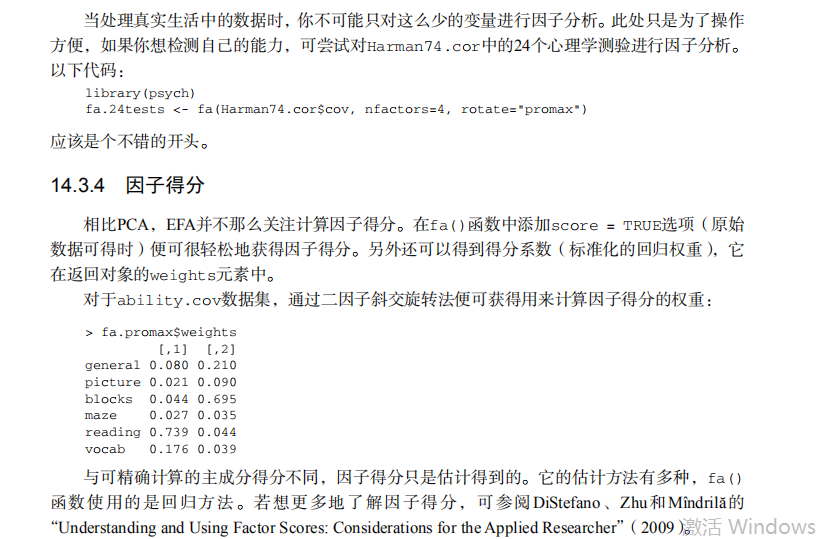
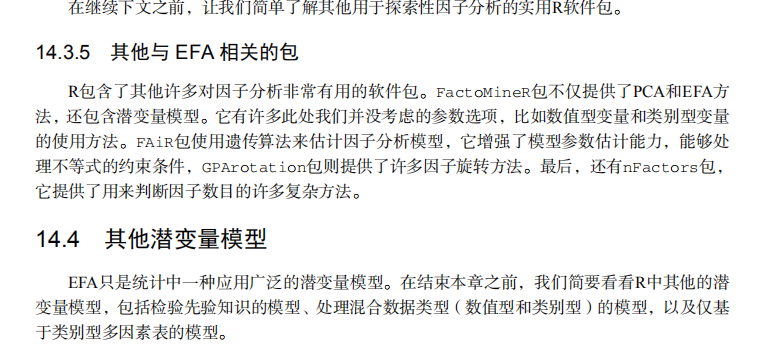
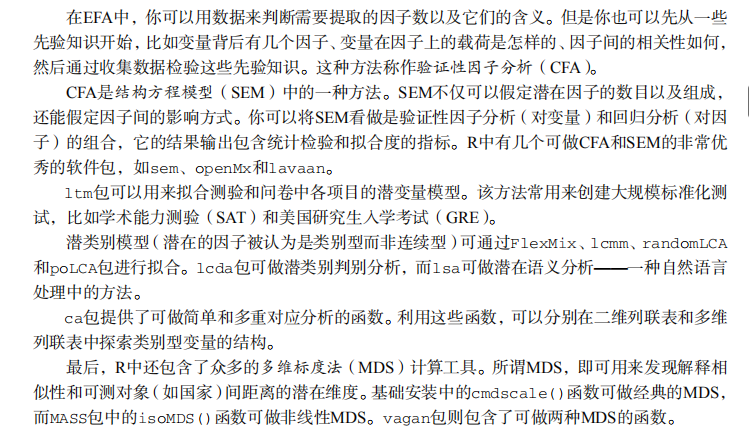
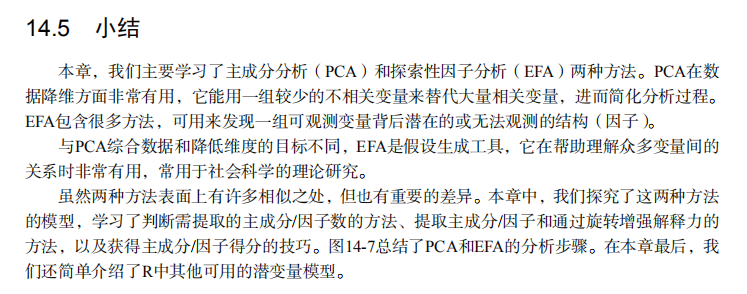
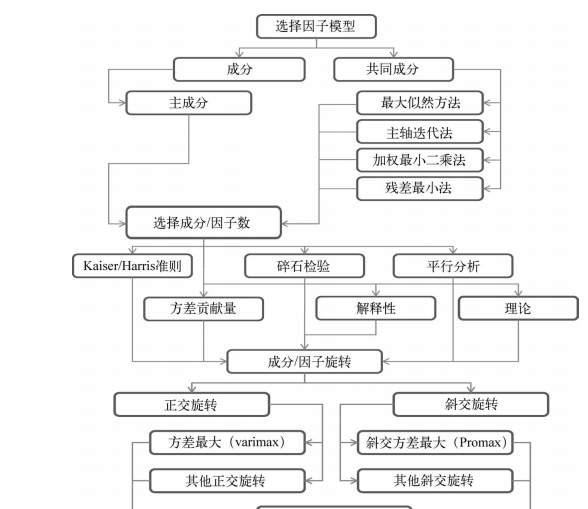
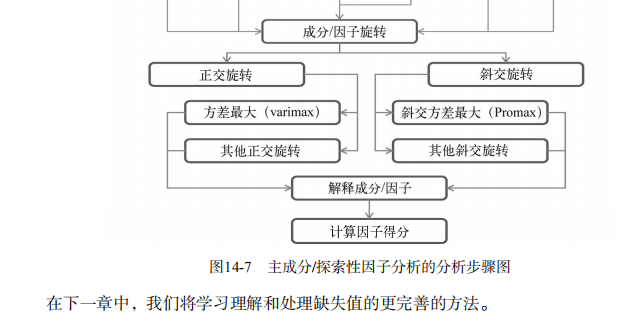
#--------------------------------------------#

# R in Action (2nd ed): Chapter 14           #

# Principal components and factor analysis   #

# requires package psych                     #

# install.packages("psych")                  #

#--------------------------------------------#

par(ask=TRUE)

set.seed(1234) # make results reproducible

# Listing 14.1 - Principal components analysis of US Judge Ratings

library(psych)

pc <- principal(USJudgeRatings[,-1], nfactors=1)

pc

# Principal components analysis Harman23.cor data

library(psych)

fa.parallel(Harman23.cor$cov, n.obs=302, fa="pc", n.iter=100,

            show.legend=FALSE, main="Scree plot with parallel analysis")

# Listing 14.2 - Principal components analysis of body measurements

library(psych)

PC <- principal(Harman23.cor$cov, nfactors=2, rotate="none")

PC

# Listing 14.3 - Principal components analysis with varimax rotation

rc <- principal(Harman23.cor$cov, nfactors=2, rotate="varimax")

rc

# Listing 14.4 - Obtaining componenet scores from raw data

library(psych)

pc <- principal(USJudgeRatings[,-1], nfactors=1, score=TRUE)

head(pc$scores)

cor(USJudgeRatings$CONT, pc$score)

# Listing 14.5 - Obtaining principal component scoring coefficients

library(psych)

rc <- principal(Harman23.cor$cov, nfactors=2, rotate="varimax")

round(unclass(rc$weights), 2)

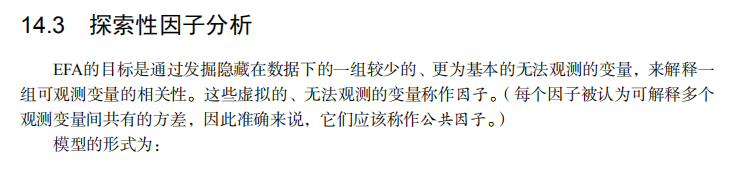
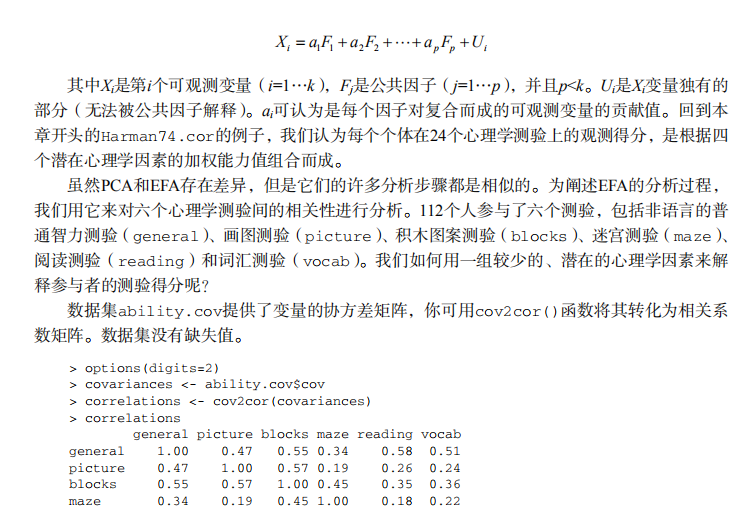
## Exploratory factor analysis of ability.cov data

options(digits=2)

library(psych)

covariances <- ability.cov$cov

# convert covariances to correlations

correlations <- cov2cor(covariances)

correlations

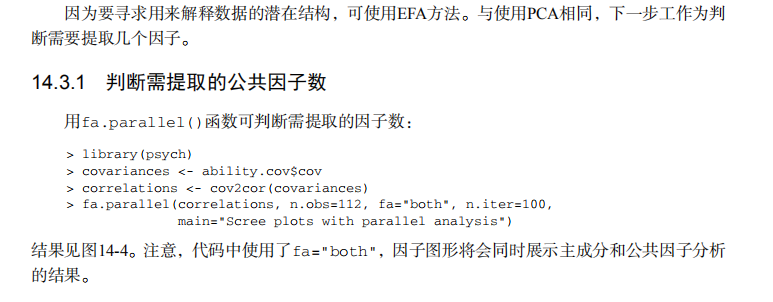
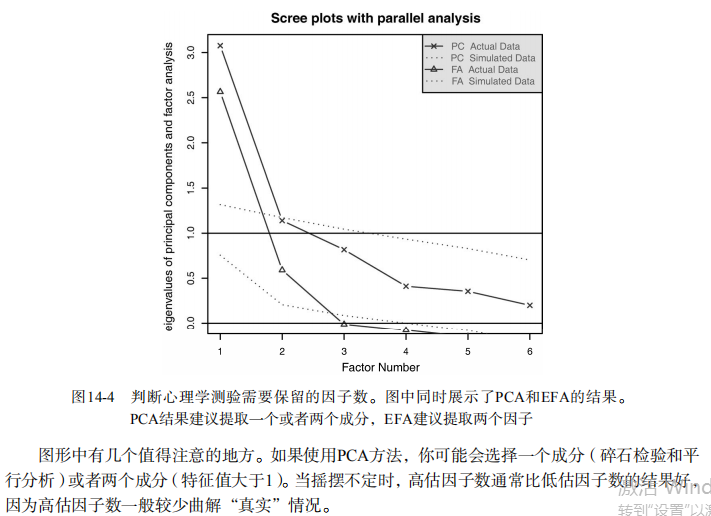
# determine number of factors to extract

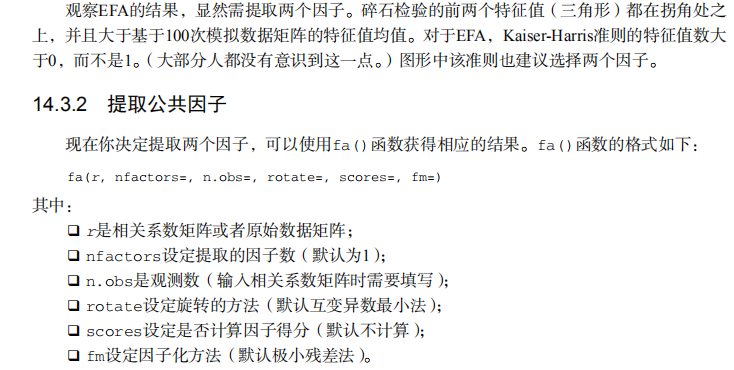
fa.parallel(correlations, n.obs=112, fa="both", n.iter=100,

            main="Scree plots with parallel analysis")

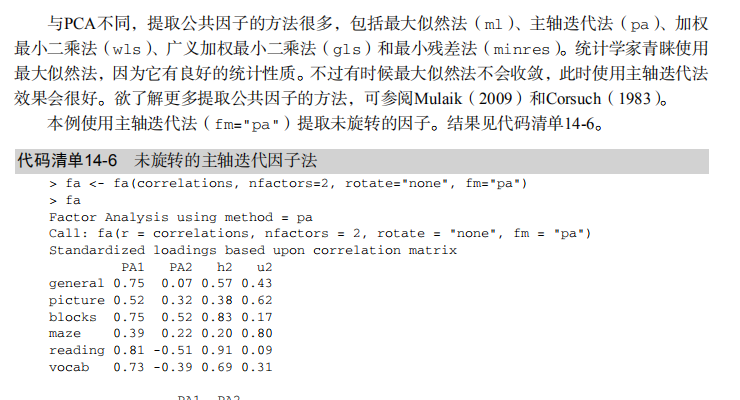
# Listing 14.6 - Principal axis factoring without rotation

fa <- fa(correlations, nfactors=2, rotate="none", fm="pa")

fa

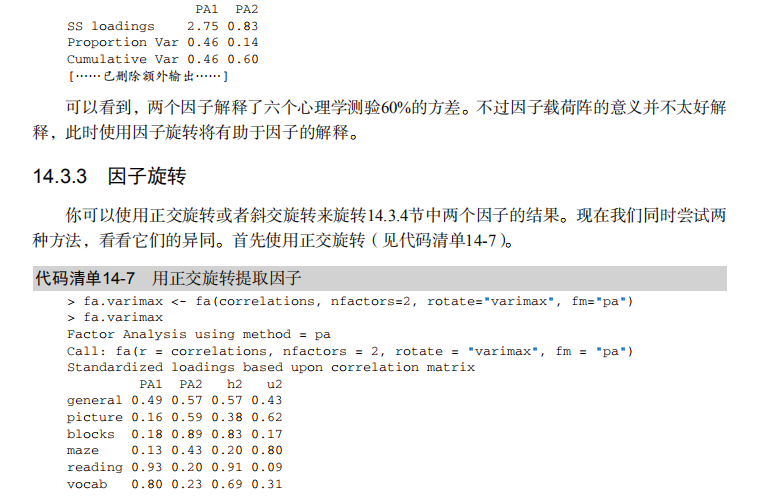
# Listing 14.7 - Factor extraction with orthogonal rotation

fa.varimax <- fa(correlations, nfactors=2, rotate="varimax", fm="pa")

fa.varimax

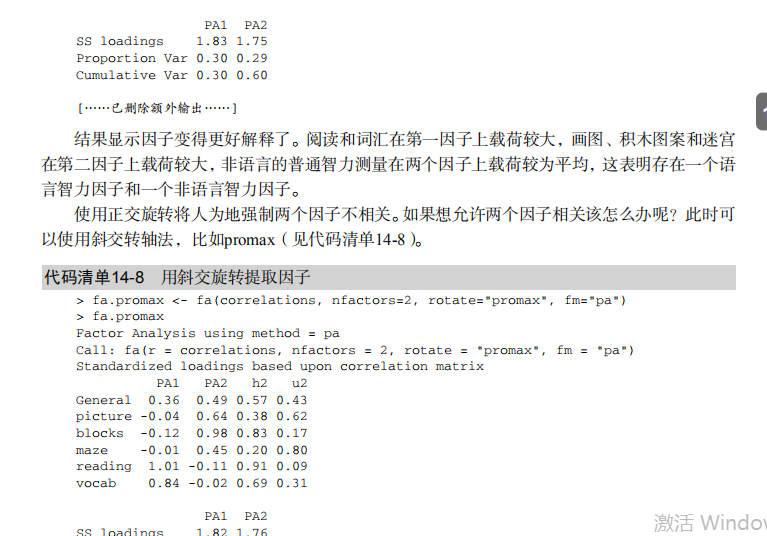
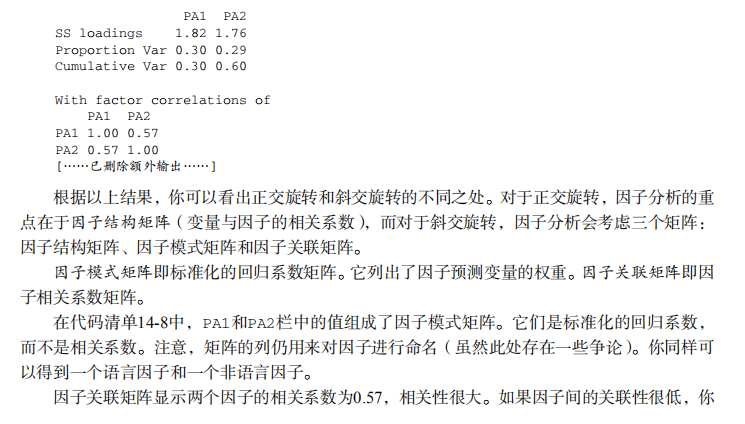
# Listing 14.8 - Factor extraction with oblique rotation

fa.promax <- fa(correlations, nfactors=2, rotate="promax", fm="pa")

fa.promax

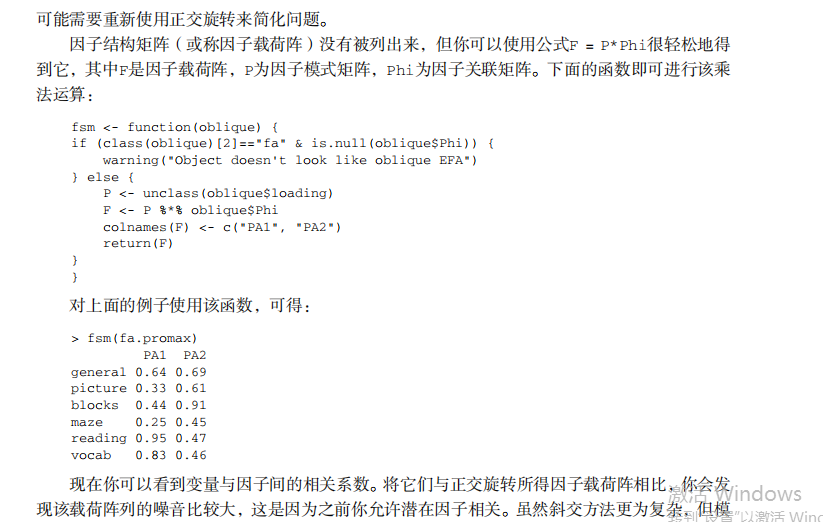
# calculate factor loading matrix

fsm <- function(oblique) {

  if (class(oblique)[2]=="fa" & is.null(oblique$Phi)) {

    warning("Object doesn't look like oblique EFA")

  } else {

    P <- unclass(oblique$loading)

    F <- P %*% oblique$Phi

    colnames(F) <- c("PA1", "PA2")

    return(F)

  }

}

fsm(fa.promax)

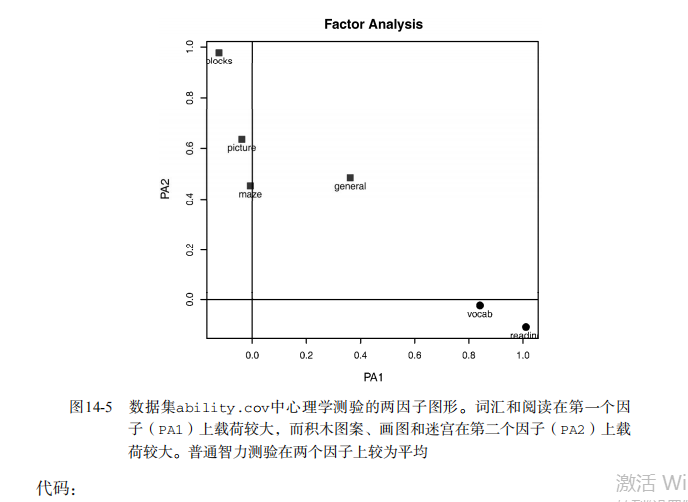
# plot factor solution

factor.plot(fa.promax, labels=rownames(fa.promax$loadings))

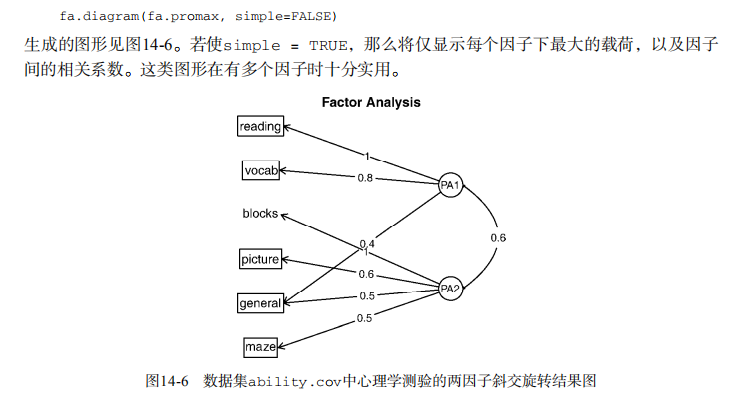
fa.diagram(fa.promax, simple=FALSE)

# factor scores

fa.promax$weights
吴裕雄--天生自然 R语言开发学习:主成分分析和因子分析(续一)的更多相关文章
- 吴裕雄--天生自然 R语言开发学习:聚类分析(续一)
#-------------------------------------------------------# # R in Action (2nd ed): Chapter 16 # # Clu ...
- 吴裕雄--天生自然 R语言开发学习:时间序列(续三)
#-----------------------------------------# # R in Action (2nd ed): Chapter 15 # # Time series # # r ...
- 吴裕雄--天生自然 R语言开发学习:时间序列(续二)
#-----------------------------------------# # R in Action (2nd ed): Chapter 15 # # Time series # # r ...
- 吴裕雄--天生自然 R语言开发学习:时间序列(续一)
#-----------------------------------------# # R in Action (2nd ed): Chapter 15 # # Time series # # r ...
- 吴裕雄--天生自然 R语言开发学习:方差分析(续二)
#-------------------------------------------------------------------# # R in Action (2nd ed): Chapte ...
- 吴裕雄--天生自然 R语言开发学习:方差分析(续一)
#-------------------------------------------------------------------# # R in Action (2nd ed): Chapte ...
- 吴裕雄--天生自然 R语言开发学习:回归(续四)
#------------------------------------------------------------# # R in Action (2nd ed): Chapter 8 # # ...
- 吴裕雄--天生自然 R语言开发学习:回归(续三)
#------------------------------------------------------------# # R in Action (2nd ed): Chapter 8 # # ...
- 吴裕雄--天生自然 R语言开发学习:回归(续二)
#------------------------------------------------------------# # R in Action (2nd ed): Chapter 8 # # ...
- 吴裕雄--天生自然 R语言开发学习:回归(续一)
#------------------------------------------------------------# # R in Action (2nd ed): Chapter 8 # # ...
随机推荐
- Cocoapod-终端
安装循序: Xcode->RVM->Ruby(安装过程中需要安装homebrew)->CocoaPats 参考文章: 安装地址:http://www.cnblogs.com/dagu ...
- Maven--优化依赖
Maven 会自动解析所有项目的直接依赖和传递依赖,并且根据规则正确判断每个依赖的范围,对于一些依赖冲突,也能进行调节,以确保任何一个构件只有唯一的版本在依赖中存在.在这些工作之后,最后得到的那些依赖 ...
- Filezilla Xshell SecureFX Win10等无法拖放文件(本地或线上)解决办法
一.win10系统Filezilla Xshell SecureFX等无法拖放文件到线上服务器解决办法: 1.按窗口键+R,打开“运行”对话框:输入regedit回车 2.在注册表编辑器地址栏输入以下 ...
- Python 学习笔记:根据输入年月获取该月的第一天和最后一天
目的: 给定一个时间,比如:2020.02,要求返回所输入月份的第一天及最后一天,比如:('2020.02.01', '2020.02.29') 参考博客:https://blog.csdn.net/ ...
- iTOP-3399开发板搭建Android编译坏境
基于迅为iTOP-3399开发板2.1 装 安装 d android 源码依赖包登录进 Ubuntu 系统,输入“ctrl+alt+t”,打开超级终端,使用“su root”命令,切换到 root ...
- Java注解基础
0.背景 Java注解--Annotation产生于JDK5.作为code的特殊“标记”,注解可以在编译.类加载.运行时被读取,并执行处理. 开发利用注解在源码中嵌入补充信息,工具(代码分析.开发.部 ...
- ubuntu 更新源 或者 apt-get install 出错404 not found ,Failed to fetch
1.考虑是不是能上网 2.用apt-get update ,然后再试试apt-get install 如果apt-get update 也出现很多 404 not found 或者 failed to ...
- Python2 和 Python3的区别 更新中
py2和py3的区别 1.默认解释器编码 py2: ascii py3: utf-8 2.输入 输出 输入 py2: name = raw_input('请输入你的姓名:') py3: name = ...
- Linux虚拟机添加硬盘
任务:添加1块硬盘,并且分1个区,挂载到/bak 第一.插上硬盘 第二.分区 第三.格式化(定义:文件系统的类型) FAT,FAT32,NTFS,ext1,ext2,ext3,ext4,.... 第 ...
- 使用java获取手机号归属地等信息httpClient实现
java获取手机号归属地 一般想获取手机号归属地等信息个人是无法获取的,但是可以通过调用第三方接口获取,具体百度搜索很多这里例子提供一个淘宝的接口 ,该功能已经发布到网站作为一个在线小工具,拿走不谢: ...