
微信小程序组件化实践
Do Not Repeat Yourself
如何提高代码质量,方法有许多:抽象、模块、组件化,我认为它们的中心点都是——Do Not Repeat Yourself.
小程序组件化
我们先看看小程序自带的组件化能力:
- 模板,通过
<import src="../name.wxml" />引入 ---- success - 样式,通过
@import 'name.wxss'引入 ---- success - js ??? ---- fail
我们看到,微信小程序开发有一个很大的痛点,缺乏组件化能力,特别是在没有使用构建工具或第三方框架的情况下,稍不留神,就会充满大量重复的代码。
小程序提供了自定义组件( V1.6.3 才支持)
举个栗子。
小程序虽然提供了一些常用的组件——toast、loading等,但因需求不同,我们要实现自己的 popup、notify、modal等公共组件。这些自定义组件的共同点是:单个组件模板、事件大致一样,区别是每次使用组件时显示的内容不同。于是,我们在每个页面都能看到相似的代码,emm,已经产生了臭味道。
mixins
通过混入的方式,将组件方法、数据绑定到页面实例上,类似VUE mixins,不过,这里实现要更为简单:
function mixins(page, ...args) {

  let data = args.reduce((res, item) => Object.assign(res, item.data), page.data || {})

  Object.assign(page, ...args)

  page.setData(data)

}
这样,在页面onLoad时,执行mixins(this, Component1, ...)就可以了。
写一个popup
现在开始写一个 popup组件,设计给的样式如下图:
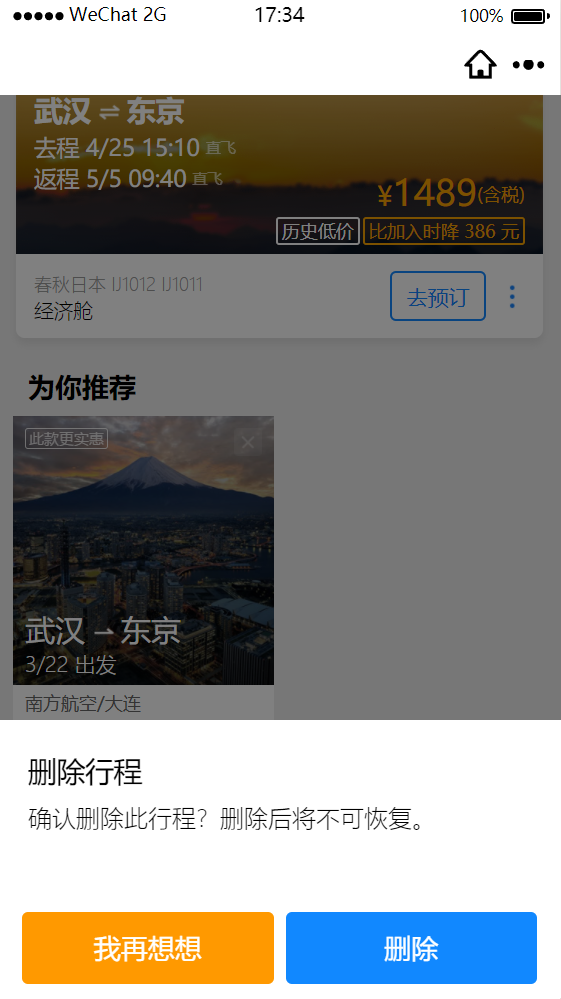
除去布局和样式,应该如何设计数据模型?个人认为需要把握两点:职责分离、易于扩展。
第一步,分析哪些数据是不变的、可变的。
可变数据:标题、内容、按钮文字、按钮个数、点击按钮后续操作、蒙层是否可点
不变数据:点击蒙层、取消按钮隐藏popup,显示/隐藏popup事件
第二步,设计数据模型。
通过第一步的分析,我们可以抛开具体的业务逻辑,设计出popup的数据模型:
let popupModal = {

  title: '',

  content: '',

  confirmButtonName: '确认',

  cancelButtonName: '取消',

  show(),

  hide(),

  onConfirm(),

  onCancel(),

}
使用面向对象可以轻松分离可变、不可变数据,生成所需数据模型:
class GeneratePopupModal {

  constructor(options) {

    this.setParams(options)

  }

  setParams({

    title,

    content,

    confirmButtonName,

    cancelButtonName,

    success,

  } = {}) {

    this.title = title || this.title

    this.content = content || this.content

    this.confirmButtonName = confirmButtonName || this.confirmButtonName

    this.cancelButtonName = cancelButtonName || this.cancelButtonName

    this.success = success

  }

  show() {

    return Promise.resolve(this.__show = true)

  }

  hide() {

    return Promise.resolve(this.__show = false)

  }

  onConfirm() {

    return this.hide()

      .then(() => {

        if(this.success) return this.success({confirm: true})

      })

  }

  onCancel() {

    return this.hide()

      .then(() => {

        if(this.success) return this.success({cancel: true})

      })

  }

}
第三步,生成数据渲染组件。
为了使popup组件保持简单,只对外暴露三个方法:
- $popup(opts) ---- 根据参数生成组件数据并显示 popup
- tapPopupConfirmButton() ---- 点击 popup 确认按钮
- tapPopupCancelButton() ---- 点击 popup 取消按钮
const GeneratePopupModal = require('./generatePopupModal')

const defalut = {

  title: '管家提示',

  content: '抱歉,我们遇到一点问题,请稍后再试',

  confirmButtonName: '确认'

}

let Popup = null

module.exports = {

  $popup(options={}) {

    /**

     * 每次使用新建实例,避免状态共享

     * 通过私有 __show 控制 popup.show,实现组件 popup 的显示和隐藏

     */

    Popup = new GeneratePopupModal(defalut)

    Object.defineProperty(Popup, '__show', {

      configurable: true,

      set: v => {

        Popup.show = v

        this.setData({popupModal: Popup})

      }

    })

    return new Promise((resolve, reject) => {

      Popup.setParams(

        Object.assign({}, {success: resolve, fail: reject}, options)

      )

      Popup.__show = true

    })

  },

  tapPopupConfirmButton() {

    Popup.onConfirm()

  },

  tapPopupCancelButton() {

    Popup.onCancel()

  },

}
第四步,引入、使用组件
在上面mixins部分,介绍了如何引入组件。那么,怎么使用它呢?这里提供一个栗子:
this.$popup({ // 根据传参生成数据、显示 popup

  title: '删除行程',

  content: '确认删除此行程?删除后将不可恢复。',

  confirmButtonName: '删除',

  cancelButtonName: '我再想想',

}).then(({confirm, cancel}) => { // 分别表示点击了确定、取消按钮

  if(confirm) { // 点击删除(确定)按钮后续操作

    return r4251({

      id: item.productid,

      type: item.type

    })

    .then(res => this.__fetchCartList())

    .catch(e => {

      this.$popup() // 显示默认数据的 popup

      console.error('[cart/list.js] #tapDeleteCart r4251 error: ', e)

    })

  }

})
总结
至此,popup组件基本完成了,但这种方式依然存在很大的漏洞:
- mixins 方式混入组件数据/方法,极易造成命名冲突。通过命名空间解决
- 如果组件有 data 对象,那么页面销毁(unLoad)后,页面数据依然常驻内存。通过导出函数对象解决
虽然上面的解决方案并不十分理想难道不是非常别扭?,但好在足够简洁、实用,也基本实现了设计预期。
期待更好的实现思路......
.
微信小程序组件化实践的更多相关文章
- 【腾讯Bugly干货分享】打造“微信小程序”组件化开发框架
本文来自于腾讯Bugly公众号(weixinBugly),未经作者同意,请勿转载,原文地址:http://mp.weixin.qq.com/s/2nQzsuqq7Avgs8wsRizUhw 作者:Gc ...
- 微信小程序组件化开发框架WePY
wepy-CLI 安装 npm install -g wepy-cli wepy init standard my-project https://github.com/Tencent/wepy 特性 ...
- 小程序组件化框架 WePY 在性能调优上做出的探究
作者:龚澄 导语 性能调优是一个亘古不变的话题,无论是在传统H5上还是小程序中.因为实现机制不同,可能导致传统H5中的某些优化方式在小程序上并不适用.因此必须另开辟蹊径找出适合小程序的调估方式. 本文 ...
- 小程序组件化开发框架---wepy 项目创建
wepy是一个优秀的微信小程序组件化框架,突破了小程序的限制,支持了npm包加载以及组件化方案.这里就以我个人的经历讲下怎么创建wepy项目. 1.首先 在桌面(自己选定目录下)新建一个文件夹,注意需 ...
- WePY | 小程序组件化开发框架
资源连接: WePY | 小程序组件化开发框架 WePYAWESOME 微信小程序wepy开发资源汇总 文档 GITHUB weui WebStorm/PhpStorm 配置识别 *.wpy 文件代码 ...
- 微信小程序组件设计规范
微信小程序组件设计规范 组件化开发的思想贯穿着我开发设计过程的始终.在过去很长一段时间里,我都受益于这种思想. 组件可复用 - 减少了重复代码量 组件做为抽离的功能单元 - 方便维护 组件作为temp ...
- 微信小程序组件学习 -- 注册页面
微信小程序组件使用手册地址: 1. 百度搜索"微信公众平台",扫码登录之后,点击帮助文档里面的普通小程序. 2. 接着选择"开发"-->"组件& ...
- 初尝微信小程序开发与实践
这可能是一个java程序员最不务正业的一次分享了. 小程序的火热相信不用我多说了,年初的时候老婆去浦东某达面试,甚至都被问有没有小程序测试经验.俨然小程序成为了互联网公司自PC,WAP,安卓,IOS之 ...
- 微信小程序(组件demo)以及预览方法:(小程序交流群:604788754)
1. 获取微信小程序的 AppID 登录 https://mp.weixin.qq.com ,就可以在网站的"设置"-"开发者设置"中,查看到微信小程序的 Ap ...
随机推荐
- laravel中if
1.控制器 2.模板
- 客户端、服务器端中JSON字符串与对象的转换
客户端: 字符串转为对象:$.parseJSON(json); 对象转为字符串:JSON.stringify(_pasteDataItem) 服务器端(c#): 对象: [DataContract(N ...
- 选择排序(直接排序)java语言实现
class demo { public static void main(String[] args) { int[] arr={1,4,2,6,8,9,0,5,3,2,2,4,4,6,7,8}; f ...
- 2018.09.22 牧场的安排(状压dp)
描述 农民 John 购买了一处肥沃的矩形牧场,分成M*N(1 <= M <= 12; 1 <= N <= 12)个 格子.他想在那里的一些格子中种植美味的玉米.遗憾的是,有些 ...
- 39 What Determines the Kind of Person You Are ?是什么决定了你是哪种内型的人 ?
What Determines the Kind of Person You Are ?是什么决定了你是哪种内型的人 ? ①What determines the kind of person you ...
- 判断PC机大小端
判断PC机大小端 #include<stdio.h> #include<stdlib.h> int main() { short a = 0x0102; char *p = ( ...
- faceswap linux安裝教程
http://www.mamicode.com/info-detail-2602743.html https://blog.csdn.net/sinat_26918145/article/detail ...
- MeshLab编译理解
1.安装QT5.7,VS2013,QT_VA_Addin (涉及3D模型处理,采用64bit编译,且分为两种debug,release方式) 2.下载VCGlib库,放在meshlab的同级目录 (因 ...
- springmvc 开涛 生产者/消费者
媒体类型: text/html, text/plain, text/xml image/gif, image/jpg, image/png application/x-www-form-urlenco ...
- SpringMVC 示例实战教程
一.SpringMVC基础入门,创建一个HelloWorld程序 1.首先,导入SpringMVC需要的jar包. 2.添加Web.xml配置文件中关于SpringMVC的配置 1 2 3 4 5 6 ...