
java框架之SpringMVC(1)-入门&整合MyBatis
前言
SpringMVC简介
SpringMVC 是一个类似于 Struts2 表现层的框架,属于 SpringFramework 的后续产品。
学习SpringMVC的原因
| SpringMVC 与 Struts2 的区别 | |||
|---|---|---|---|
| 对比项目 | SpringMVC | Struts2 | 优势 |
| 国内市场情况 | 有大量用户,一般新项目启动都会选用 SpringMVC。 | 有部分老用户,老项目组,由于习惯了,一直在使用。 | 国内情况,SpringMVC 的使用率已经超过了 Struts2。 |
| 框架入口 | 基于 Servlet。 | 基于 Filter。 | 本质上没有太大优势,只是配置方式不同。 |
| 框架设计思想 | 控制器基于方法级别的拦截,处理器设计为单实例。 | 控制器基于类级别的拦截,处理器设计为多实例。 | 由于设计本身原因,造成了 Struts2 通常只能设计为多实例模式,相比于 SpringMVC 设计为单实例模式,Struts2 会消耗更多内存。 |
| 参数传递 | 参数通过方法入参传递。 | 参数通过类的成员变量传递。 | Struts2 通过成员变量传递参数,导致了参数的线程不安全,有可能引发并发问题。 |
| 与 Spring 整合 | 与 Spring 属于同一家公司开发,可与 Spring 无缝整合。 | 需要整合包。 | SpringMVC 可以与 Spring 更轻松的整合。 |
SpringMVC架构图

使用
入门程序
1、创建 maven web 工程,引入如下依赖:
<?xml version="1.0" encoding="UTF-8"?>

<project xmlns="http://maven.apache.org/POM/4.0.0" xmlns:xsi="http://www.w3.org/2001/XMLSchema-instance"
         xsi:schemaLocation="http://maven.apache.org/POM/4.0.0 http://maven.apache.org/xsd/maven-4.0.0.xsd">
    <modelVersion>4.0.0</modelVersion>

    <groupId>com.zze.springmvc</groupId>
    <artifactId>springmvc_test1</artifactId>
    <version>1.0-SNAPSHOT</version>
    <packaging>war</packaging>

    <dependencies>
        <dependency>
            <groupId>commons-logging</groupId>
            <artifactId>commons-logging</artifactId>
            <version>1.1.1</version>
        </dependency>
        <dependency>
            <groupId>jstl</groupId>
            <artifactId>jstl</artifactId>
            <version>1.2</version>
        </dependency>
        <dependency>
            <groupId>org.springframework</groupId>
            <artifactId>spring-aop</artifactId>
            <version>4.2.4.RELEASE</version>
        </dependency>
        <dependency>
            <groupId>org.springframework</groupId>
            <artifactId>spring-beans</artifactId>
            <version>4.2.4.RELEASE</version>
        </dependency>
        <dependency>
            <groupId>org.springframework</groupId>
            <artifactId>spring-context</artifactId>
            <version>4.2.4.RELEASE</version>
        </dependency>
        <dependency>
            <groupId>org.springframework</groupId>
            <artifactId>spring-core</artifactId>
            <version>4.2.4.RELEASE</version>
        </dependency>
        <dependency>
            <groupId>org.springframework</groupId>
            <artifactId>spring-expression</artifactId>
            <version>4.2.4.RELEASE</version>
        </dependency>
        <dependency>
            <groupId>org.springframework</groupId>
            <artifactId>spring-web</artifactId>
            <version>4.2.4.RELEASE</version>
        </dependency>
        <dependency>
            <groupId>org.springframework</groupId>
            <artifactId>spring-webmvc</artifactId>
            <version>4.2.4.RELEASE</version>
        </dependency>
    </dependencies>
    <build>
        <plugins>
            <!--使用 tomcat7:run-->
            <plugin>
                <groupId>org.apache.tomcat.maven</groupId>
                <artifactId>tomcat7-maven-plugin</artifactId>
                <version>2.2</version>
                <configuration>
                    <port>8080</port>
                    <path>/</path>
                </configuration>
            </plugin>
            <plugin>
                <groupId>org.apache.maven.plugins</groupId>
                <artifactId>maven-compiler-plugin</artifactId>
                <version>3.6.1</version>
                <configuration>
                    <source>1.8</source>
                    <target>1.8</target>
                </configuration>
            </plugin>
        </plugins>
    </build>
</project>
pom.xml
2、创建 SpringMVC 核心配置文件:
<?xml version="1.0" encoding="UTF-8"?>
<beans xmlns="http://www.springframework.org/schema/beans"
       xmlns:xsi="http://www.w3.org/2001/XMLSchema-instance"
       xmlns:mvc="http://www.springframework.org/schema/mvc"
       xmlns:context="http://www.springframework.org/schema/context"
       xsi:schemaLocation="http://www.springframework.org/schema/beans
           http://www.springframework.org/schema/beans/spring-beans.xsd
           http://www.springframework.org/schema/mvc
           http://www.springframework.org/schema/mvc/spring-mvc.xsd
           http://www.springframework.org/schema/context
           http://www.springframework.org/schema/context/spring-context.xsd">
    <!--配置控制器扫描-->
    <context:component-scan base-package="com.zze.springmvc.web.controller"/>

    <mvc:annotation-driven/>
</beans>
springmvc.xml
3、配置 SpringMVC 核心监听 Servlet 并加载核心配置文件:
<!DOCTYPE web-app PUBLIC
        "-//Sun Microsystems, Inc.//DTD Web Application 2.3//EN"
        "http://java.sun.com/dtd/web-app_2_3.dtd" >

<web-app>
    <servlet>
        <servlet-name>springmvc</servlet-name>
        <servlet-class>org.springframework.web.servlet.DispatcherServlet</servlet-class>
        <!--加载 SpringMVC 核心配置文件-->
        <init-param>
            <param-name>contextConfigLocation</param-name>
            <param-value>classpath:springmvc.xml</param-value>
        </init-param>
    </servlet>
    <servlet-mapping>
        <servlet-name>springmvc</servlet-name>
        <!--注意:这里使用 / ,如果使用 /* 会出现找不到视图的问题-->
        <url-pattern>/</url-pattern>
    </servlet-mapping>
</web-app>
WEB-INF/web.xml
4、创建测试用的 pojo:
package com.zze.springmvc.pojo;

import java.util.Date;

public class User {
    private Integer id;
    private String name;
    private Date birthday;
    private String address;

    public User(Integer id, String name, Date birthday, String address) {
        this.id = id;
        this.name = name;
        this.birthday = birthday;
        this.address = address;
    }

    public Integer getId() {
        return id;
    }

    public void setId(Integer id) {
        this.id = id;
    }

    public String getName() {
        return name;
    }

    public void setName(String name) {
        this.name = name;
    }

    public Date getBirthday() {
        return birthday;
    }

    public void setBirthday(Date birthday) {
        this.birthday = birthday;
    }

    public String getAddress() {
        return address;
    }

    public void setAddress(String address) {
        this.address = address;
    }
}
com.zze.springmvc.pojo.User
5、创建视图:
<%@ page contentType="text/html;charset=UTF-8" language="java" isELIgnored="false" %>
<%@ taglib prefix="c" uri="http://java.sun.com/jsp/jstl/core" %>
<%@ taglib uri="http://java.sun.com/jsp/jstl/fmt" prefix="fmt" %>
<html>
<head>
    <title>list</title>
</head>
<body>

<table border="1">
    <thead>
    <tr>
        <th>Id</th>
        <th>Name</th>
        <th>Birthday</th>
        <th>Address</th>
    </tr>
    </thead>
    <tbody>
    <c:forEach items="${list}" var="user">
        <tr>
            <td>${user.id}</td>
            <td>${user.name}</td>
            <td><fmt:formatDate value="${user.birthday}" pattern="yyyy-MM-dd"/></td>
            <td>${user.address}</td>
        </tr>
    </c:forEach>
    </tbody>
</table>
</body>
</html>
WEB-INF/jsp/userlist.jsp
6、创建控制器:
package com.zze.springmvc.web.controller;

import com.zze.springmvc.pojo.User;
import org.springframework.stereotype.Controller;
import org.springframework.web.bind.annotation.RequestMapping;
import org.springframework.web.servlet.ModelAndView;

import java.text.ParseException;
import java.text.SimpleDateFormat;
import java.util.ArrayList;
import java.util.List;

@Controller
public class TestController {
    @RequestMapping("list")
    public ModelAndView list() throws ParseException {
        List<User> userList = new ArrayList<>();
        userList.add(new User(1, "张三", new SimpleDateFormat("yyyy-MM-dd").parse("1997-1-12"), "湖南"));
        userList.add(new User(2, "李四", new SimpleDateFormat("yyyy-MM-dd").parse("1995-5-23"), "湖北"));
        userList.add(new User(3, "王五", new SimpleDateFormat("yyyy-MM-dd").parse("1993-2-23"), "常德"));
        userList.add(new User(4, "赵六", new SimpleDateFormat("yyyy-MM-dd").parse("1998-5-6"), "北京"));

        ModelAndView modelAndView = new ModelAndView();
        modelAndView.addObject("list", userList);
        modelAndView.setViewName("/WEB-INF/jsp/userlist.jsp");
        return modelAndView;
    }
}
com.zze.springmvc.web.controller.TestController
7、测试:
浏览器:
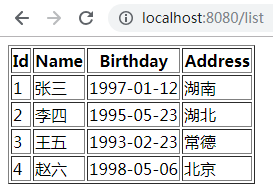
请求 'localhost:8080/list'
配置相关
处理器适配器和映射器
Spring MVC 有许多默认配置,如下:
org.springframework.web.servlet.LocaleResolver=org.springframework.web.servlet.i18n.AcceptHeaderLocaleResolver

org.springframework.web.servlet.ThemeResolver=org.springframework.web.servlet.theme.FixedThemeResolver
# 处理器映射器
org.springframework.web.servlet.HandlerMapping=org.springframework.web.servlet.handler.BeanNameUrlHandlerMapping,\
    org.springframework.web.servlet.mvc.annotation.DefaultAnnotationHandlerMapping
# 处理器适配器
org.springframework.web.servlet.HandlerAdapter=org.springframework.web.servlet.mvc.HttpRequestHandlerAdapter,\
    org.springframework.web.servlet.mvc.SimpleControllerHandlerAdapter,\
    org.springframework.web.servlet.mvc.annotation.AnnotationMethodHandlerAdapter

org.springframework.web.servlet.HandlerExceptionResolver=org.springframework.web.servlet.mvc.annotation.AnnotationMethodHandlerExceptionResolver,\
    org.springframework.web.servlet.mvc.annotation.ResponseStatusExceptionResolver,\
    org.springframework.web.servlet.mvc.support.DefaultHandlerExceptionResolver

org.springframework.web.servlet.RequestToViewNameTranslator=org.springframework.web.servlet.view.DefaultRequestToViewNameTranslator

org.springframework.web.servlet.ViewResolver=org.springframework.web.servlet.view.InternalResourceViewResolver

org.springframework.web.servlet.FlashMapManager=org.springframework.web.servlet.support.SessionFlashMapManager
spring-webmvc-4.2.4.RELEASE.jar!/org/springframework/web/servlet/DispatcherServlet.properties
查看处理器映射器和处理器适配器类可以发现这两个类是已过期的,如下:
/*
* Copyright 2002-2015 the original author or authors.
*
* Licensed under the Apache License, Version 2.0 (the "License");
* you may not use this file except in compliance with the License.
* You may obtain a copy of the License at
*
* http://www.apache.org/licenses/LICENSE-2.0
*
* Unless required by applicable law or agreed to in writing, software
* distributed under the License is distributed on an "AS IS" BASIS,
* WITHOUT WARRANTIES OR CONDITIONS OF ANY KIND, either express or implied.
* See the License for the specific language governing permissions and
* limitations under the License.
*/
package org.springframework.web.servlet.mvc.annotation;
import java.lang.reflect.Method;
import java.util.Arrays;
import java.util.HashMap;
import java.util.LinkedHashSet;
import java.util.Map;
import java.util.Set;
import javax.servlet.http.HttpServletRequest;
import org.springframework.context.ApplicationContext;
import org.springframework.core.annotation.AnnotationUtils;
import org.springframework.stereotype.Controller;
import org.springframework.util.ReflectionUtils;
import org.springframework.util.StringUtils;
import org.springframework.web.HttpRequestMethodNotSupportedException;
import org.springframework.web.bind.ServletRequestBindingException;
import org.springframework.web.bind.UnsatisfiedServletRequestParameterException;
import org.springframework.web.bind.annotation.RequestMapping;
import org.springframework.web.bind.annotation.RequestMethod;
import org.springframework.web.servlet.handler.AbstractDetectingUrlHandlerMapping;
/**
* Implementation of the {@link org.springframework.web.servlet.HandlerMapping}
* interface that maps handlers based on HTTP paths expressed through the
* {@link RequestMapping} annotation at the type or method level.
*
* <p>Registered by default in {@link org.springframework.web.servlet.DispatcherServlet}
* on Java 5+. <b>NOTE:</b> If you define custom HandlerMapping beans in your
* DispatcherServlet context, you need to add a DefaultAnnotationHandlerMapping bean
* explicitly, since custom HandlerMapping beans replace the default mapping strategies.
* Defining a DefaultAnnotationHandlerMapping also allows for registering custom
* interceptors:
*
* <pre class="code">
* <bean class="org.springframework.web.servlet.mvc.annotation.DefaultAnnotationHandlerMapping">
* <property name="interceptors">
* ...
* </property>
* </bean></pre>
*
* Annotated controllers are usually marked with the {@link Controller} stereotype
* at the type level. This is not strictly necessary when {@link RequestMapping} is
* applied at the type level (since such a handler usually implements the
* {@link org.springframework.web.servlet.mvc.Controller} interface). However,
* {@link Controller} is required for detecting {@link RequestMapping} annotations
* at the method level if {@link RequestMapping} is not present at the type level.
*
* <p><b>NOTE:</b> Method-level mappings are only allowed to narrow the mapping
* expressed at the class level (if any). HTTP paths need to uniquely map onto
* specific handler beans, with any given HTTP path only allowed to be mapped
* onto one specific handler bean (not spread across multiple handler beans).
* It is strongly recommended to co-locate related handler methods into the same bean.
*
* <p>The {@link AnnotationMethodHandlerAdapter} is responsible for processing
* annotated handler methods, as mapped by this HandlerMapping. For
* {@link RequestMapping} at the type level, specific HandlerAdapters such as
* {@link org.springframework.web.servlet.mvc.SimpleControllerHandlerAdapter} apply.
*
* @author Juergen Hoeller
* @author Arjen Poutsma
* @since 2.5
* @see RequestMapping
* @see AnnotationMethodHandlerAdapter
* @deprecated as of Spring 3.2, in favor of
* {@link org.springframework.web.servlet.mvc.method.annotation.RequestMappingHandlerMapping RequestMappingHandlerMapping}
*/
@Deprecated
public class DefaultAnnotationHandlerMapping extends AbstractDetectingUrlHandlerMapping {
static final String USE_DEFAULT_SUFFIX_PATTERN = DefaultAnnotationHandlerMapping.class.getName() + ".useDefaultSuffixPattern";
private boolean useDefaultSuffixPattern = true;
private final Map<Class<?>, RequestMapping> cachedMappings = new HashMap<Class<?>, RequestMapping>();
/**
* Set whether to register paths using the default suffix pattern as well:
* i.e. whether "/users" should be registered as "/users.*" and "/users/" too.
* <p>Default is "true". Turn this convention off if you intend to interpret
* your {@code @RequestMapping} paths strictly.
* <p>Note that paths which include a ".xxx" suffix or end with "/" already will not be
* transformed using the default suffix pattern in any case.
*/
public void setUseDefaultSuffixPattern(boolean useDefaultSuffixPattern) {
this.useDefaultSuffixPattern = useDefaultSuffixPattern;
}
/**
* Checks for presence of the {@link org.springframework.web.bind.annotation.RequestMapping}
* annotation on the handler class and on any of its methods.
*/
@Override
protected String[] determineUrlsForHandler(String beanName) {
ApplicationContext context = getApplicationContext();
Class<?> handlerType = context.getType(beanName);
RequestMapping mapping = context.findAnnotationOnBean(beanName, RequestMapping.class);
if (mapping != null) {
// @RequestMapping found at type level
this.cachedMappings.put(handlerType, mapping);
Set<String> urls = new LinkedHashSet<String>();
String[] typeLevelPatterns = mapping.value();
if (typeLevelPatterns.length > 0) {
// @RequestMapping specifies paths at type level
String[] methodLevelPatterns = determineUrlsForHandlerMethods(handlerType, true);
for (String typeLevelPattern : typeLevelPatterns) {
if (!typeLevelPattern.startsWith("/")) {
typeLevelPattern = "/" + typeLevelPattern;
}
boolean hasEmptyMethodLevelMappings = false;
for (String methodLevelPattern : methodLevelPatterns) {
if (methodLevelPattern == null) {
hasEmptyMethodLevelMappings = true;
}
else {
String combinedPattern = getPathMatcher().combine(typeLevelPattern, methodLevelPattern);
addUrlsForPath(urls, combinedPattern);
}
}
if (hasEmptyMethodLevelMappings ||
org.springframework.web.servlet.mvc.Controller.class.isAssignableFrom(handlerType)) {
addUrlsForPath(urls, typeLevelPattern);
}
}
return StringUtils.toStringArray(urls);
}
else {
// actual paths specified by @RequestMapping at method level
return determineUrlsForHandlerMethods(handlerType, false);
}
}
else if (AnnotationUtils.findAnnotation(handlerType, Controller.class) != null) {
// @RequestMapping to be introspected at method level
return determineUrlsForHandlerMethods(handlerType, false);
}
else {
return null;
}
}
/**
* Derive URL mappings from the handler's method-level mappings.
* @param handlerType the handler type to introspect
* @param hasTypeLevelMapping whether the method-level mappings are nested
* within a type-level mapping
* @return the array of mapped URLs
*/
protected String[] determineUrlsForHandlerMethods(Class<?> handlerType, final boolean hasTypeLevelMapping) {
String[] subclassResult = determineUrlsForHandlerMethods(handlerType);
if (subclassResult != null) {
return subclassResult;
}
final Set<String> urls = new LinkedHashSet<String>();
Set<Class<?>> handlerTypes = new LinkedHashSet<Class<?>>();
handlerTypes.add(handlerType);
handlerTypes.addAll(Arrays.asList(handlerType.getInterfaces()));
for (Class<?> currentHandlerType : handlerTypes) {
ReflectionUtils.doWithMethods(currentHandlerType, new ReflectionUtils.MethodCallback() {
@Override
public void doWith(Method method) {
RequestMapping mapping = AnnotationUtils.findAnnotation(method, RequestMapping.class);
if (mapping != null) {
String[] mappedPatterns = mapping.value();
if (mappedPatterns.length > 0) {
for (String mappedPattern : mappedPatterns) {
if (!hasTypeLevelMapping && !mappedPattern.startsWith("/")) {
mappedPattern = "/" + mappedPattern;
}
addUrlsForPath(urls, mappedPattern);
}
}
else if (hasTypeLevelMapping) {
// empty method-level RequestMapping
urls.add(null);
}
}
}
}, ReflectionUtils.USER_DECLARED_METHODS);
}
return StringUtils.toStringArray(urls);
}
/**
* Derive URL mappings from the handler's method-level mappings.
* @param handlerType the handler type to introspect
* @return the array of mapped URLs
*/
protected String[] determineUrlsForHandlerMethods(Class<?> handlerType) {
return null;
}
/**
* Add URLs and/or URL patterns for the given path.
* @param urls the Set of URLs for the current bean
* @param path the currently introspected path
*/
protected void addUrlsForPath(Set<String> urls, String path) {
urls.add(path);
if (this.useDefaultSuffixPattern && path.indexOf('.') == -1 && !path.endsWith("/")) {
urls.add(path + ".*");
urls.add(path + "/");
}
}
/**
* Validate the given annotated handler against the current request.
* @see #validateMapping
*/
@Override
protected void validateHandler(Object handler, HttpServletRequest request) throws Exception {
RequestMapping mapping = this.cachedMappings.get(handler.getClass());
if (mapping == null) {
mapping = AnnotationUtils.findAnnotation(handler.getClass(), RequestMapping.class);
}
if (mapping != null) {
validateMapping(mapping, request);
}
request.setAttribute(USE_DEFAULT_SUFFIX_PATTERN, this.useDefaultSuffixPattern);
}
/**
* Validate the given type-level mapping metadata against the current request,
* checking HTTP request method and parameter conditions.
* @param mapping the mapping metadata to validate
* @param request current HTTP request
* @throws Exception if validation failed
*/
protected void validateMapping(RequestMapping mapping, HttpServletRequest request) throws Exception {
RequestMethod[] mappedMethods = mapping.method();
if (!ServletAnnotationMappingUtils.checkRequestMethod(mappedMethods, request)) {
String[] supportedMethods = new String[mappedMethods.length];
for (int i = 0; i < mappedMethods.length; i++) {
supportedMethods[i] = mappedMethods[i].name();
}
throw new HttpRequestMethodNotSupportedException(request.getMethod(), supportedMethods);
}
String[] mappedParams = mapping.params();
if (!ServletAnnotationMappingUtils.checkParameters(mappedParams, request)) {
throw new UnsatisfiedServletRequestParameterException(mappedParams, request.getParameterMap());
}
String[] mappedHeaders = mapping.headers();
if (!ServletAnnotationMappingUtils.checkHeaders(mappedHeaders, request)) {
throw new ServletRequestBindingException("Header conditions \"" +
StringUtils.arrayToDelimitedString(mappedHeaders, ", ") +
"\" not met for actual request");
}
}
@Override
protected boolean supportsTypeLevelMappings() {
return true;
}
}
org.springframework.web.servlet.mvc.annotation.DefaultAnnotationHandlerMapping:处理器映射器
/*
* Copyright 2002-2015 the original author or authors.
*
* Licensed under the Apache License, Version 2.0 (the "License");
* you may not use this file except in compliance with the License.
* You may obtain a copy of the License at
*
* http://www.apache.org/licenses/LICENSE-2.0
*
* Unless required by applicable law or agreed to in writing, software
* distributed under the License is distributed on an "AS IS" BASIS,
* WITHOUT WARRANTIES OR CONDITIONS OF ANY KIND, either express or implied.
* See the License for the specific language governing permissions and
* limitations under the License.
*/
package org.springframework.web.servlet.mvc.annotation;
import java.io.IOException;
import java.io.InputStream;
import java.io.OutputStream;
import java.io.Reader;
import java.io.Writer;
import java.lang.reflect.Method;
import java.security.Principal;
import java.util.ArrayList;
import java.util.Arrays;
import java.util.Collections;
import java.util.Comparator;
import java.util.HashMap;
import java.util.LinkedHashMap;
import java.util.LinkedHashSet;
import java.util.List;
import java.util.Locale;
import java.util.Map;
import java.util.Set;
import java.util.concurrent.ConcurrentHashMap;
import javax.servlet.ServletException;
import javax.servlet.ServletRequest;
import javax.servlet.ServletResponse;
import javax.servlet.http.Cookie;
import javax.servlet.http.HttpServletRequest;
import javax.servlet.http.HttpServletResponse;
import javax.servlet.http.HttpSession;
import javax.xml.transform.Source;
import org.apache.commons.logging.Log;
import org.apache.commons.logging.LogFactory;
import org.springframework.beans.BeanUtils;
import org.springframework.beans.factory.BeanFactory;
import org.springframework.beans.factory.BeanFactoryAware;
import org.springframework.beans.factory.config.BeanExpressionContext;
import org.springframework.beans.factory.config.BeanExpressionResolver;
import org.springframework.beans.factory.config.ConfigurableBeanFactory;
import org.springframework.core.DefaultParameterNameDiscoverer;
import org.springframework.core.Ordered;
import org.springframework.core.ParameterNameDiscoverer;
import org.springframework.core.annotation.AnnotatedElementUtils;
import org.springframework.core.annotation.AnnotationUtils;
import org.springframework.http.HttpEntity;
import org.springframework.http.HttpHeaders;
import org.springframework.http.HttpInputMessage;
import org.springframework.http.HttpOutputMessage;
import org.springframework.http.HttpStatus;
import org.springframework.http.MediaType;
import org.springframework.http.ResponseEntity;
import org.springframework.http.converter.ByteArrayHttpMessageConverter;
import org.springframework.http.converter.HttpMessageConverter;
import org.springframework.http.converter.StringHttpMessageConverter;
import org.springframework.http.converter.xml.SourceHttpMessageConverter;
import org.springframework.http.server.ServerHttpRequest;
import org.springframework.http.server.ServerHttpResponse;
import org.springframework.http.server.ServletServerHttpRequest;
import org.springframework.http.server.ServletServerHttpResponse;
import org.springframework.ui.ExtendedModelMap;
import org.springframework.ui.Model;
import org.springframework.util.AntPathMatcher;
import org.springframework.util.Assert;
import org.springframework.util.ClassUtils;
import org.springframework.util.ObjectUtils;
import org.springframework.util.PathMatcher;
import org.springframework.util.StringUtils;
import org.springframework.validation.support.BindingAwareModelMap;
import org.springframework.web.HttpMediaTypeNotAcceptableException;
import org.springframework.web.HttpRequestMethodNotSupportedException;
import org.springframework.web.HttpSessionRequiredException;
import org.springframework.web.bind.MissingServletRequestParameterException;
import org.springframework.web.bind.ServletRequestDataBinder;
import org.springframework.web.bind.WebDataBinder;
import org.springframework.web.bind.annotation.InitBinder;
import org.springframework.web.bind.annotation.ModelAttribute;
import org.springframework.web.bind.annotation.RequestMapping;
import org.springframework.web.bind.annotation.RequestMethod;
import org.springframework.web.bind.annotation.RequestParam;
import org.springframework.web.bind.annotation.ResponseBody;
import org.springframework.web.bind.annotation.ResponseStatus;
import org.springframework.web.bind.annotation.SessionAttributes;
import org.springframework.web.bind.annotation.support.HandlerMethodInvoker;
import org.springframework.web.bind.annotation.support.HandlerMethodResolver;
import org.springframework.web.bind.support.DefaultSessionAttributeStore;
import org.springframework.web.bind.support.SessionAttributeStore;
import org.springframework.web.bind.support.WebArgumentResolver;
import org.springframework.web.bind.support.WebBindingInitializer;
import org.springframework.web.context.request.NativeWebRequest;
import org.springframework.web.context.request.RequestScope;
import org.springframework.web.context.request.ServletWebRequest;
import org.springframework.web.multipart.MultipartRequest;
import org.springframework.web.servlet.HandlerAdapter;
import org.springframework.web.servlet.HandlerMapping;
import org.springframework.web.servlet.ModelAndView;
import org.springframework.web.servlet.View;
import org.springframework.web.servlet.mvc.multiaction.InternalPathMethodNameResolver;
import org.springframework.web.servlet.mvc.multiaction.MethodNameResolver;
import org.springframework.web.servlet.mvc.multiaction.NoSuchRequestHandlingMethodException;
import org.springframework.web.servlet.support.RequestContextUtils;
import org.springframework.web.servlet.support.WebContentGenerator;
import org.springframework.web.util.UrlPathHelper;
import org.springframework.web.util.WebUtils;
/**
* Implementation of the {@link org.springframework.web.servlet.HandlerAdapter} interface
* that maps handler methods based on HTTP paths, HTTP methods, and request parameters
* expressed through the {@link RequestMapping} annotation.
*
* <p>Supports request parameter binding through the {@link RequestParam} annotation.
* Also supports the {@link ModelAttribute} annotation for exposing model attribute
* values to the view, as well as {@link InitBinder} for binder initialization methods
* and {@link SessionAttributes} for automatic session management of specific attributes.
*
* <p>This adapter can be customized through various bean properties.
* A common use case is to apply shared binder initialization logic through
* a custom {@link #setWebBindingInitializer WebBindingInitializer}.
*
* @author Juergen Hoeller
* @author Arjen Poutsma
* @author Sam Brannen
* @since 2.5
* @see #setPathMatcher
* @see #setMethodNameResolver
* @see #setWebBindingInitializer
* @see #setSessionAttributeStore
* @deprecated as of Spring 3.2, in favor of
* {@link org.springframework.web.servlet.mvc.method.annotation.RequestMappingHandlerAdapter RequestMappingHandlerAdapter}
*/
@Deprecated
public class AnnotationMethodHandlerAdapter extends WebContentGenerator
implements HandlerAdapter, Ordered, BeanFactoryAware {
/**
* Log category to use when no mapped handler is found for a request.
* @see #pageNotFoundLogger
*/
public static final String PAGE_NOT_FOUND_LOG_CATEGORY = "org.springframework.web.servlet.PageNotFound";
/**
* Additional logger to use when no mapped handler is found for a request.
* @see #PAGE_NOT_FOUND_LOG_CATEGORY
*/
protected static final Log pageNotFoundLogger = LogFactory.getLog(PAGE_NOT_FOUND_LOG_CATEGORY);
private UrlPathHelper urlPathHelper = new UrlPathHelper();
private PathMatcher pathMatcher = new AntPathMatcher();
private MethodNameResolver methodNameResolver = new InternalPathMethodNameResolver();
private WebBindingInitializer webBindingInitializer;
private SessionAttributeStore sessionAttributeStore = new DefaultSessionAttributeStore();
private int cacheSecondsForSessionAttributeHandlers = 0;
private boolean synchronizeOnSession = false;
private ParameterNameDiscoverer parameterNameDiscoverer = new DefaultParameterNameDiscoverer();
private WebArgumentResolver[] customArgumentResolvers;
private ModelAndViewResolver[] customModelAndViewResolvers;
private HttpMessageConverter<?>[] messageConverters;
private int order = Ordered.LOWEST_PRECEDENCE;
private ConfigurableBeanFactory beanFactory;
private BeanExpressionContext expressionContext;
private final Map<Class<?>, ServletHandlerMethodResolver> methodResolverCache =
new ConcurrentHashMap<Class<?>, ServletHandlerMethodResolver>(64);
private final Map<Class<?>, Boolean> sessionAnnotatedClassesCache = new ConcurrentHashMap<Class<?>, Boolean>(64);
public AnnotationMethodHandlerAdapter() {
// no restriction of HTTP methods by default
super(false);
// See SPR-7316
StringHttpMessageConverter stringHttpMessageConverter = new StringHttpMessageConverter();
stringHttpMessageConverter.setWriteAcceptCharset(false);
this.messageConverters = new HttpMessageConverter<?>[] {
new ByteArrayHttpMessageConverter(), stringHttpMessageConverter,
new SourceHttpMessageConverter<Source>(),
new org.springframework.http.converter.xml.XmlAwareFormHttpMessageConverter() };
}
/**
* Set if URL lookup should always use the full path within the current servlet
* context. Else, the path within the current servlet mapping is used if applicable
* (that is, in the case of a ".../*" servlet mapping in web.xml).
* <p>Default is "false".
* @see org.springframework.web.util.UrlPathHelper#setAlwaysUseFullPath
*/
public void setAlwaysUseFullPath(boolean alwaysUseFullPath) {
this.urlPathHelper.setAlwaysUseFullPath(alwaysUseFullPath);
}
/**
* Set if context path and request URI should be URL-decoded. Both are returned
* <i>undecoded</i> by the Servlet API, in contrast to the servlet path.
* <p>Uses either the request encoding or the default encoding according
* to the Servlet spec (ISO-8859-1).
* @see org.springframework.web.util.UrlPathHelper#setUrlDecode
*/
public void setUrlDecode(boolean urlDecode) {
this.urlPathHelper.setUrlDecode(urlDecode);
}
/**
* Set the UrlPathHelper to use for resolution of lookup paths.
* <p>Use this to override the default UrlPathHelper with a custom subclass,
* or to share common UrlPathHelper settings across multiple HandlerMappings and HandlerAdapters.
*/
public void setUrlPathHelper(UrlPathHelper urlPathHelper) {
Assert.notNull(urlPathHelper, "UrlPathHelper must not be null");
this.urlPathHelper = urlPathHelper;
}
/**
* Set the PathMatcher implementation to use for matching URL paths against registered URL patterns.
* <p>Default is {@link org.springframework.util.AntPathMatcher}.
*/
public void setPathMatcher(PathMatcher pathMatcher) {
Assert.notNull(pathMatcher, "PathMatcher must not be null");
this.pathMatcher = pathMatcher;
}
/**
* Set the MethodNameResolver to use for resolving default handler methods
* (carrying an empty {@code @RequestMapping} annotation).
* <p>Will only kick in when the handler method cannot be resolved uniquely
* through the annotation metadata already.
*/
public void setMethodNameResolver(MethodNameResolver methodNameResolver) {
this.methodNameResolver = methodNameResolver;
}
/**
* Specify a WebBindingInitializer which will apply pre-configured
* configuration to every DataBinder that this controller uses.
*/
public void setWebBindingInitializer(WebBindingInitializer webBindingInitializer) {
this.webBindingInitializer = webBindingInitializer;
}
/**
* Specify the strategy to store session attributes with.
* <p>Default is {@link org.springframework.web.bind.support.DefaultSessionAttributeStore},
* storing session attributes in the HttpSession, using the same attribute name as in the model.
*/
public void setSessionAttributeStore(SessionAttributeStore sessionAttributeStore) {
Assert.notNull(sessionAttributeStore, "SessionAttributeStore must not be null");
this.sessionAttributeStore = sessionAttributeStore;
}
/**
* Cache content produced by {@code @SessionAttributes} annotated handlers
* for the given number of seconds. Default is 0, preventing caching completely.
* <p>In contrast to the "cacheSeconds" property which will apply to all general handlers
* (but not to {@code @SessionAttributes} annotated handlers), this setting will
* apply to {@code @SessionAttributes} annotated handlers only.
* @see #setCacheSeconds
* @see org.springframework.web.bind.annotation.SessionAttributes
*/
public void setCacheSecondsForSessionAttributeHandlers(int cacheSecondsForSessionAttributeHandlers) {
this.cacheSecondsForSessionAttributeHandlers = cacheSecondsForSessionAttributeHandlers;
}
/**
* Set if controller execution should be synchronized on the session,
* to serialize parallel invocations from the same client.
* <p>More specifically, the execution of the {@code handleRequestInternal}
* method will get synchronized if this flag is "true". The best available
* session mutex will be used for the synchronization; ideally, this will
* be a mutex exposed by HttpSessionMutexListener.
* <p>The session mutex is guaranteed to be the same object during
* the entire lifetime of the session, available under the key defined
* by the {@code SESSION_MUTEX_ATTRIBUTE} constant. It serves as a
* safe reference to synchronize on for locking on the current session.
* <p>In many cases, the HttpSession reference itself is a safe mutex
* as well, since it will always be the same object reference for the
* same active logical session. However, this is not guaranteed across
* different servlet containers; the only 100% safe way is a session mutex.
* @see org.springframework.web.util.HttpSessionMutexListener
* @see org.springframework.web.util.WebUtils#getSessionMutex(javax.servlet.http.HttpSession)
*/
public void setSynchronizeOnSession(boolean synchronizeOnSession) {
this.synchronizeOnSession = synchronizeOnSession;
}
/**
* Set the ParameterNameDiscoverer to use for resolving method parameter names if needed
* (e.g. for default attribute names).
* <p>Default is a {@link org.springframework.core.DefaultParameterNameDiscoverer}.
*/
public void setParameterNameDiscoverer(ParameterNameDiscoverer parameterNameDiscoverer) {
this.parameterNameDiscoverer = parameterNameDiscoverer;
}
/**
* Set a custom WebArgumentResolvers to use for special method parameter types.
* <p>Such a custom WebArgumentResolver will kick in first, having a chance to resolve
* an argument value before the standard argument handling kicks in.
*/
public void setCustomArgumentResolver(WebArgumentResolver argumentResolver) {
this.customArgumentResolvers = new WebArgumentResolver[] {argumentResolver};
}
/**
* Set one or more custom WebArgumentResolvers to use for special method parameter types.
* <p>Any such custom WebArgumentResolver will kick in first, having a chance to resolve
* an argument value before the standard argument handling kicks in.
*/
public void setCustomArgumentResolvers(WebArgumentResolver... argumentResolvers) {
this.customArgumentResolvers = argumentResolvers;
}
/**
* Set a custom ModelAndViewResolvers to use for special method return types.
* <p>Such a custom ModelAndViewResolver will kick in first, having a chance to resolve
* a return value before the standard ModelAndView handling kicks in.
*/
public void setCustomModelAndViewResolver(ModelAndViewResolver customModelAndViewResolver) {
this.customModelAndViewResolvers = new ModelAndViewResolver[] {customModelAndViewResolver};
}
/**
* Set one or more custom ModelAndViewResolvers to use for special method return types.
* <p>Any such custom ModelAndViewResolver will kick in first, having a chance to resolve
* a return value before the standard ModelAndView handling kicks in.
*/
public void setCustomModelAndViewResolvers(ModelAndViewResolver... customModelAndViewResolvers) {
this.customModelAndViewResolvers = customModelAndViewResolvers;
}
/**
* Set the message body converters to use.
* <p>These converters are used to convert from and to HTTP requests and responses.
*/
public void setMessageConverters(HttpMessageConverter<?>[] messageConverters) {
this.messageConverters = messageConverters;
}
/**
* Return the message body converters that this adapter has been configured with.
*/
public HttpMessageConverter<?>[] getMessageConverters() {
return messageConverters;
}
/**
* Specify the order value for this HandlerAdapter bean.
* <p>Default value is {@code Integer.MAX_VALUE}, meaning that it's non-ordered.
* @see org.springframework.core.Ordered#getOrder()
*/
public void setOrder(int order) {
this.order = order;
}
@Override
public int getOrder() {
return this.order;
}
@Override
public void setBeanFactory(BeanFactory beanFactory) {
if (beanFactory instanceof ConfigurableBeanFactory) {
this.beanFactory = (ConfigurableBeanFactory) beanFactory;
this.expressionContext = new BeanExpressionContext(this.beanFactory, new RequestScope());
}
}
@Override
public boolean supports(Object handler) {
return getMethodResolver(handler).hasHandlerMethods();
}
@Override
public ModelAndView handle(HttpServletRequest request, HttpServletResponse response, Object handler)
throws Exception {
Class<?> clazz = ClassUtils.getUserClass(handler);
Boolean annotatedWithSessionAttributes = this.sessionAnnotatedClassesCache.get(clazz);
if (annotatedWithSessionAttributes == null) {
annotatedWithSessionAttributes = (AnnotationUtils.findAnnotation(clazz, SessionAttributes.class) != null);
this.sessionAnnotatedClassesCache.put(clazz, annotatedWithSessionAttributes);
}
if (annotatedWithSessionAttributes) {
checkAndPrepare(request, response, this.cacheSecondsForSessionAttributeHandlers, true);
}
else {
checkAndPrepare(request, response, true);
}
// Execute invokeHandlerMethod in synchronized block if required.
if (this.synchronizeOnSession) {
HttpSession session = request.getSession(false);
if (session != null) {
Object mutex = WebUtils.getSessionMutex(session);
synchronized (mutex) {
return invokeHandlerMethod(request, response, handler);
}
}
}
return invokeHandlerMethod(request, response, handler);
}
protected ModelAndView invokeHandlerMethod(HttpServletRequest request, HttpServletResponse response, Object handler)
throws Exception {
ServletHandlerMethodResolver methodResolver = getMethodResolver(handler);
Method handlerMethod = methodResolver.resolveHandlerMethod(request);
ServletHandlerMethodInvoker methodInvoker = new ServletHandlerMethodInvoker(methodResolver);
ServletWebRequest webRequest = new ServletWebRequest(request, response);
ExtendedModelMap implicitModel = new BindingAwareModelMap();
Object result = methodInvoker.invokeHandlerMethod(handlerMethod, handler, webRequest, implicitModel);
ModelAndView mav =
methodInvoker.getModelAndView(handlerMethod, handler.getClass(), result, implicitModel, webRequest);
methodInvoker.updateModelAttributes(handler, (mav != null ? mav.getModel() : null), implicitModel, webRequest);
return mav;
}
/**
* This method always returns -1 since an annotated controller can have many methods,
* each requiring separate lastModified calculations. Instead, an
* {@link RequestMapping}-annotated method can calculate the lastModified value, call
* {@link org.springframework.web.context.request.WebRequest#checkNotModified(long)}
* to check it, and return {@code null} if that returns {@code true}.
* @see org.springframework.web.context.request.WebRequest#checkNotModified(long)
*/
@Override
public long getLastModified(HttpServletRequest request, Object handler) {
return -1;
}
/**
* Build a HandlerMethodResolver for the given handler type.
*/
private ServletHandlerMethodResolver getMethodResolver(Object handler) {
Class<?> handlerClass = ClassUtils.getUserClass(handler);
ServletHandlerMethodResolver resolver = this.methodResolverCache.get(handlerClass);
if (resolver == null) {
synchronized (this.methodResolverCache) {
resolver = this.methodResolverCache.get(handlerClass);
if (resolver == null) {
resolver = new ServletHandlerMethodResolver(handlerClass);
this.methodResolverCache.put(handlerClass, resolver);
}
}
}
return resolver;
}
/**
* Template method for creating a new ServletRequestDataBinder instance.
* <p>The default implementation creates a standard ServletRequestDataBinder.
* This can be overridden for custom ServletRequestDataBinder subclasses.
* @param request current HTTP request
* @param target the target object to bind onto (or {@code null}
* if the binder is just used to convert a plain parameter value)
* @param objectName the objectName of the target object
* @return the ServletRequestDataBinder instance to use
* @throws Exception in case of invalid state or arguments
* @see ServletRequestDataBinder#bind(javax.servlet.ServletRequest)
* @see ServletRequestDataBinder#convertIfNecessary(Object, Class, org.springframework.core.MethodParameter)
*/
protected ServletRequestDataBinder createBinder(HttpServletRequest request, Object target, String objectName) throws Exception {
return new ServletRequestDataBinder(target, objectName);
}
/**
* Template method for creating a new HttpInputMessage instance.
* <p>The default implementation creates a standard {@link ServletServerHttpRequest}.
* This can be overridden for custom {@code HttpInputMessage} implementations
* @param servletRequest current HTTP request
* @return the HttpInputMessage instance to use
* @throws Exception in case of errors
*/
protected HttpInputMessage createHttpInputMessage(HttpServletRequest servletRequest) throws Exception {
return new ServletServerHttpRequest(servletRequest);
}
/**
* Template method for creating a new HttpOutputMessage instance.
* <p>The default implementation creates a standard {@link ServletServerHttpResponse}.
* This can be overridden for custom {@code HttpOutputMessage} implementations
* @param servletResponse current HTTP response
* @return the HttpInputMessage instance to use
* @throws Exception in case of errors
*/
protected HttpOutputMessage createHttpOutputMessage(HttpServletResponse servletResponse) throws Exception {
return new ServletServerHttpResponse(servletResponse);
}
/**
* Servlet-specific subclass of {@link HandlerMethodResolver}.
*/
private class ServletHandlerMethodResolver extends HandlerMethodResolver {
private final Map<Method, RequestMappingInfo> mappings = new HashMap<Method, RequestMappingInfo>();
private ServletHandlerMethodResolver(Class<?> handlerType) {
init(handlerType);
}
@Override
protected boolean isHandlerMethod(Method method) {
if (this.mappings.containsKey(method)) {
return true;
}
RequestMapping mapping = AnnotationUtils.findAnnotation(method, RequestMapping.class);
if (mapping != null) {
String[] patterns = mapping.value();
RequestMethod[] methods = new RequestMethod[0];
String[] params = new String[0];
String[] headers = new String[0];
if (!hasTypeLevelMapping() || !Arrays.equals(mapping.method(), getTypeLevelMapping().method())) {
methods = mapping.method();
}
if (!hasTypeLevelMapping() || !Arrays.equals(mapping.params(), getTypeLevelMapping().params())) {
params = mapping.params();
}
if (!hasTypeLevelMapping() || !Arrays.equals(mapping.headers(), getTypeLevelMapping().headers())) {
headers = mapping.headers();
}
RequestMappingInfo mappingInfo = new RequestMappingInfo(patterns, methods, params, headers);
this.mappings.put(method, mappingInfo);
return true;
}
return false;
}
public Method resolveHandlerMethod(HttpServletRequest request) throws ServletException {
String lookupPath = urlPathHelper.getLookupPathForRequest(request);
Comparator<String> pathComparator = pathMatcher.getPatternComparator(lookupPath);
Map<RequestSpecificMappingInfo, Method> targetHandlerMethods = new LinkedHashMap<RequestSpecificMappingInfo, Method>();
Set<String> allowedMethods = new LinkedHashSet<String>(7);
String resolvedMethodName = null;
for (Method handlerMethod : getHandlerMethods()) {
RequestSpecificMappingInfo mappingInfo = new RequestSpecificMappingInfo(this.mappings.get(handlerMethod));
boolean match = false;
if (mappingInfo.hasPatterns()) {
for (String pattern : mappingInfo.getPatterns()) {
if (!hasTypeLevelMapping() && !pattern.startsWith("/")) {
pattern = "/" + pattern;
}
String combinedPattern = getCombinedPattern(pattern, lookupPath, request);
if (combinedPattern != null) {
if (mappingInfo.matches(request)) {
match = true;
mappingInfo.addMatchedPattern(combinedPattern);
}
else {
if (!mappingInfo.matchesRequestMethod(request)) {
allowedMethods.addAll(mappingInfo.methodNames());
}
break;
}
}
}
mappingInfo.sortMatchedPatterns(pathComparator);
}
else if (useTypeLevelMapping(request)) {
String[] typeLevelPatterns = getTypeLevelMapping().value();
for (String typeLevelPattern : typeLevelPatterns) {
if (!typeLevelPattern.startsWith("/")) {
typeLevelPattern = "/" + typeLevelPattern;
}
boolean useSuffixPattern = useSuffixPattern(request);
if (getMatchingPattern(typeLevelPattern, lookupPath, useSuffixPattern) != null) {
if (mappingInfo.matches(request)) {
match = true;
mappingInfo.addMatchedPattern(typeLevelPattern);
}
else {
if (!mappingInfo.matchesRequestMethod(request)) {
allowedMethods.addAll(mappingInfo.methodNames());
}
break;
}
}
}
mappingInfo.sortMatchedPatterns(pathComparator);
}
else {
// No paths specified: parameter match sufficient.
match = mappingInfo.matches(request);
if (match && mappingInfo.getMethodCount() == 0 && mappingInfo.getParamCount() == 0 &&
resolvedMethodName != null && !resolvedMethodName.equals(handlerMethod.getName())) {
match = false;
}
else {
if (!mappingInfo.matchesRequestMethod(request)) {
allowedMethods.addAll(mappingInfo.methodNames());
}
}
}
if (match) {
Method oldMappedMethod = targetHandlerMethods.put(mappingInfo, handlerMethod);
if (oldMappedMethod != null && oldMappedMethod != handlerMethod) {
if (methodNameResolver != null && !mappingInfo.hasPatterns()) {
if (!oldMappedMethod.getName().equals(handlerMethod.getName())) {
if (resolvedMethodName == null) {
resolvedMethodName = methodNameResolver.getHandlerMethodName(request);
}
if (!resolvedMethodName.equals(oldMappedMethod.getName())) {
oldMappedMethod = null;
}
if (!resolvedMethodName.equals(handlerMethod.getName())) {
if (oldMappedMethod != null) {
targetHandlerMethods.put(mappingInfo, oldMappedMethod);
oldMappedMethod = null;
}
else {
targetHandlerMethods.remove(mappingInfo);
}
}
}
}
if (oldMappedMethod != null) {
throw new IllegalStateException(
"Ambiguous handler methods mapped for HTTP path '" + lookupPath + "': {" +
oldMappedMethod + ", " + handlerMethod +
"}. If you intend to handle the same path in multiple methods, then factor " +
"them out into a dedicated handler class with that path mapped at the type level!");
}
}
}
}
if (!targetHandlerMethods.isEmpty()) {
List<RequestSpecificMappingInfo> matches = new ArrayList<RequestSpecificMappingInfo>(targetHandlerMethods.keySet());
RequestSpecificMappingInfoComparator requestMappingInfoComparator =
new RequestSpecificMappingInfoComparator(pathComparator, request);
Collections.sort(matches, requestMappingInfoComparator);
RequestSpecificMappingInfo bestMappingMatch = matches.get(0);
String bestMatchedPath = bestMappingMatch.bestMatchedPattern();
if (bestMatchedPath != null) {
extractHandlerMethodUriTemplates(bestMatchedPath, lookupPath, request);
}
return targetHandlerMethods.get(bestMappingMatch);
}
else {
if (!allowedMethods.isEmpty()) {
throw new HttpRequestMethodNotSupportedException(request.getMethod(), StringUtils.toStringArray(allowedMethods));
}
throw new NoSuchRequestHandlingMethodException(lookupPath, request.getMethod(), request.getParameterMap());
}
}
private boolean useTypeLevelMapping(HttpServletRequest request) {
if (!hasTypeLevelMapping() || ObjectUtils.isEmpty(getTypeLevelMapping().value())) {
return false;
}
Object value = request.getAttribute(HandlerMapping.INTROSPECT_TYPE_LEVEL_MAPPING);
return (value != null) ? (Boolean) value : Boolean.TRUE;
}
private boolean useSuffixPattern(HttpServletRequest request) {
Object value = request.getAttribute(DefaultAnnotationHandlerMapping.USE_DEFAULT_SUFFIX_PATTERN);
return (value != null) ? (Boolean) value : Boolean.TRUE;
}
/**
* Determines the combined pattern for the given methodLevelPattern and path.
* <p>Uses the following algorithm:
* <ol>
* <li>If there is a type-level mapping with path information, it is {@linkplain
* PathMatcher#combine(String, String) combined} with the method-level pattern.</li>
* <li>If there is a {@linkplain HandlerMapping#BEST_MATCHING_PATTERN_ATTRIBUTE best matching pattern}
* in the request, it is combined with the method-level pattern.</li>
* <li>Otherwise, the method-level pattern is returned.</li>
* </ol>
*/
private String getCombinedPattern(String methodLevelPattern, String lookupPath, HttpServletRequest request) {
boolean useSuffixPattern = useSuffixPattern(request);
if (useTypeLevelMapping(request)) {
String[] typeLevelPatterns = getTypeLevelMapping().value();
for (String typeLevelPattern : typeLevelPatterns) {
if (!typeLevelPattern.startsWith("/")) {
typeLevelPattern = "/" + typeLevelPattern;
}
String combinedPattern = pathMatcher.combine(typeLevelPattern, methodLevelPattern);
String matchingPattern = getMatchingPattern(combinedPattern, lookupPath, useSuffixPattern);
if (matchingPattern != null) {
return matchingPattern;
}
}
return null;
}
String bestMatchingPattern = (String) request.getAttribute(HandlerMapping.BEST_MATCHING_PATTERN_ATTRIBUTE);
if (StringUtils.hasText(bestMatchingPattern) && bestMatchingPattern.endsWith("*")) {
String combinedPattern = pathMatcher.combine(bestMatchingPattern, methodLevelPattern);
String matchingPattern = getMatchingPattern(combinedPattern, lookupPath, useSuffixPattern);
if (matchingPattern != null && !matchingPattern.equals(bestMatchingPattern)) {
return matchingPattern;
}
}
return getMatchingPattern(methodLevelPattern, lookupPath, useSuffixPattern);
}
private String getMatchingPattern(String pattern, String lookupPath, boolean useSuffixPattern) {
if (pattern.equals(lookupPath)) {
return pattern;
}
boolean hasSuffix = pattern.indexOf('.') != -1;
if (useSuffixPattern && !hasSuffix) {
String patternWithSuffix = pattern + ".*";
if (pathMatcher.match(patternWithSuffix, lookupPath)) {
return patternWithSuffix;
}
}
if (pathMatcher.match(pattern, lookupPath)) {
return pattern;
}
boolean endsWithSlash = pattern.endsWith("/");
if (useSuffixPattern && !endsWithSlash) {
String patternWithSlash = pattern + "/";
if (pathMatcher.match(patternWithSlash, lookupPath)) {
return patternWithSlash;
}
}
return null;
}
@SuppressWarnings("unchecked")
private void extractHandlerMethodUriTemplates(String mappedPattern, String lookupPath, HttpServletRequest request) {
Map<String, String> variables =
(Map<String, String>) request.getAttribute(HandlerMapping.URI_TEMPLATE_VARIABLES_ATTRIBUTE);
int patternVariableCount = StringUtils.countOccurrencesOf(mappedPattern, "{");
if ((variables == null || patternVariableCount != variables.size()) && pathMatcher.match(mappedPattern, lookupPath)) {
variables = pathMatcher.extractUriTemplateVariables(mappedPattern, lookupPath);
Map<String, String> decodedVariables = urlPathHelper.decodePathVariables(request, variables);
request.setAttribute(HandlerMapping.URI_TEMPLATE_VARIABLES_ATTRIBUTE, decodedVariables);
}
}
}
/**
* Servlet-specific subclass of {@link HandlerMethodInvoker}.
*/
private class ServletHandlerMethodInvoker extends HandlerMethodInvoker {
private boolean responseArgumentUsed = false;
private ServletHandlerMethodInvoker(HandlerMethodResolver resolver) {
super(resolver, webBindingInitializer, sessionAttributeStore, parameterNameDiscoverer,
customArgumentResolvers, messageConverters);
}
@Override
protected void raiseMissingParameterException(String paramName, Class<?> paramType) throws Exception {
throw new MissingServletRequestParameterException(paramName, paramType.getSimpleName());
}
@Override
protected void raiseSessionRequiredException(String message) throws Exception {
throw new HttpSessionRequiredException(message);
}
@Override
protected WebDataBinder createBinder(NativeWebRequest webRequest, Object target, String objectName)
throws Exception {
return AnnotationMethodHandlerAdapter.this.createBinder(
webRequest.getNativeRequest(HttpServletRequest.class), target, objectName);
}
@Override
protected void doBind(WebDataBinder binder, NativeWebRequest webRequest) throws Exception {
ServletRequestDataBinder servletBinder = (ServletRequestDataBinder) binder;
servletBinder.bind(webRequest.getNativeRequest(ServletRequest.class));
}
@Override
protected HttpInputMessage createHttpInputMessage(NativeWebRequest webRequest) throws Exception {
HttpServletRequest servletRequest = webRequest.getNativeRequest(HttpServletRequest.class);
return AnnotationMethodHandlerAdapter.this.createHttpInputMessage(servletRequest);
}
@Override
protected HttpOutputMessage createHttpOutputMessage(NativeWebRequest webRequest) throws Exception {
HttpServletResponse servletResponse = (HttpServletResponse) webRequest.getNativeResponse();
return AnnotationMethodHandlerAdapter.this.createHttpOutputMessage(servletResponse);
}
@Override
protected Object resolveDefaultValue(String value) {
if (beanFactory == null) {
return value;
}
String placeholdersResolved = beanFactory.resolveEmbeddedValue(value);
BeanExpressionResolver exprResolver = beanFactory.getBeanExpressionResolver();
if (exprResolver == null) {
return value;
}
return exprResolver.evaluate(placeholdersResolved, expressionContext);
}
@Override
protected Object resolveCookieValue(String cookieName, Class<?> paramType, NativeWebRequest webRequest)
throws Exception {
HttpServletRequest servletRequest = webRequest.getNativeRequest(HttpServletRequest.class);
Cookie cookieValue = WebUtils.getCookie(servletRequest, cookieName);
if (Cookie.class.isAssignableFrom(paramType)) {
return cookieValue;
}
else if (cookieValue != null) {
return urlPathHelper.decodeRequestString(servletRequest, cookieValue.getValue());
}
else {
return null;
}
}
@Override
@SuppressWarnings({"unchecked"})
protected String resolvePathVariable(String pathVarName, Class<?> paramType, NativeWebRequest webRequest)
throws Exception {
HttpServletRequest servletRequest = webRequest.getNativeRequest(HttpServletRequest.class);
Map<String, String> uriTemplateVariables =
(Map<String, String>) servletRequest.getAttribute(HandlerMapping.URI_TEMPLATE_VARIABLES_ATTRIBUTE);
if (uriTemplateVariables == null || !uriTemplateVariables.containsKey(pathVarName)) {
throw new IllegalStateException(
"Could not find @PathVariable [" + pathVarName + "] in @RequestMapping");
}
return uriTemplateVariables.get(pathVarName);
}
@Override
protected Object resolveStandardArgument(Class<?> parameterType, NativeWebRequest webRequest) throws Exception {
HttpServletRequest request = webRequest.getNativeRequest(HttpServletRequest.class);
HttpServletResponse response = webRequest.getNativeResponse(HttpServletResponse.class);
if (ServletRequest.class.isAssignableFrom(parameterType) ||
MultipartRequest.class.isAssignableFrom(parameterType)) {
Object nativeRequest = webRequest.getNativeRequest(parameterType);
if (nativeRequest == null) {
throw new IllegalStateException(
"Current request is not of type [" + parameterType.getName() + "]: " + request);
}
return nativeRequest;
}
else if (ServletResponse.class.isAssignableFrom(parameterType)) {
this.responseArgumentUsed = true;
Object nativeResponse = webRequest.getNativeResponse(parameterType);
if (nativeResponse == null) {
throw new IllegalStateException(
"Current response is not of type [" + parameterType.getName() + "]: " + response);
}
return nativeResponse;
}
else if (HttpSession.class.isAssignableFrom(parameterType)) {
return request.getSession();
}
else if (Principal.class.isAssignableFrom(parameterType)) {
return request.getUserPrincipal();
}
else if (Locale.class == parameterType) {
return RequestContextUtils.getLocale(request);
}
else if (InputStream.class.isAssignableFrom(parameterType)) {
return request.getInputStream();
}
else if (Reader.class.isAssignableFrom(parameterType)) {
return request.getReader();
}
else if (OutputStream.class.isAssignableFrom(parameterType)) {
this.responseArgumentUsed = true;
return response.getOutputStream();
}
else if (Writer.class.isAssignableFrom(parameterType)) {
this.responseArgumentUsed = true;
return response.getWriter();
}
return super.resolveStandardArgument(parameterType, webRequest);
}
@SuppressWarnings("unchecked")
public ModelAndView getModelAndView(Method handlerMethod, Class<?> handlerType, Object returnValue,
ExtendedModelMap implicitModel, ServletWebRequest webRequest) throws Exception {
ResponseStatus responseStatus = AnnotatedElementUtils.findMergedAnnotation(handlerMethod, ResponseStatus.class);
if (responseStatus != null) {
HttpStatus statusCode = responseStatus.code();
String reason = responseStatus.reason();
if (!StringUtils.hasText(reason)) {
webRequest.getResponse().setStatus(statusCode.value());
}
else {
webRequest.getResponse().sendError(statusCode.value(), reason);
}
// to be picked up by the RedirectView
webRequest.getRequest().setAttribute(View.RESPONSE_STATUS_ATTRIBUTE, statusCode);
this.responseArgumentUsed = true;
}
// Invoke custom resolvers if present...
if (customModelAndViewResolvers != null) {
for (ModelAndViewResolver mavResolver : customModelAndViewResolvers) {
ModelAndView mav = mavResolver.resolveModelAndView(
handlerMethod, handlerType, returnValue, implicitModel, webRequest);
if (mav != ModelAndViewResolver.UNRESOLVED) {
return mav;
}
}
}
if (returnValue instanceof HttpEntity) {
handleHttpEntityResponse((HttpEntity<?>) returnValue, webRequest);
return null;
}
else if (AnnotationUtils.findAnnotation(handlerMethod, ResponseBody.class) != null) {
handleResponseBody(returnValue, webRequest);
return null;
}
else if (returnValue instanceof ModelAndView) {
ModelAndView mav = (ModelAndView) returnValue;
mav.getModelMap().mergeAttributes(implicitModel);
return mav;
}
else if (returnValue instanceof Model) {
return new ModelAndView().addAllObjects(implicitModel).addAllObjects(((Model) returnValue).asMap());
}
else if (returnValue instanceof View) {
return new ModelAndView((View) returnValue).addAllObjects(implicitModel);
}
else if (AnnotationUtils.findAnnotation(handlerMethod, ModelAttribute.class) != null) {
addReturnValueAsModelAttribute(handlerMethod, handlerType, returnValue, implicitModel);
return new ModelAndView().addAllObjects(implicitModel);
}
else if (returnValue instanceof Map) {
return new ModelAndView().addAllObjects(implicitModel).addAllObjects((Map<String, ?>) returnValue);
}
else if (returnValue instanceof String) {
return new ModelAndView((String) returnValue).addAllObjects(implicitModel);
}
else if (returnValue == null) {
// Either returned null or was 'void' return.
if (this.responseArgumentUsed || webRequest.isNotModified()) {
return null;
}
else {
// Assuming view name translation...
return new ModelAndView().addAllObjects(implicitModel);
}
}
else if (!BeanUtils.isSimpleProperty(returnValue.getClass())) {
// Assume a single model attribute...
addReturnValueAsModelAttribute(handlerMethod, handlerType, returnValue, implicitModel);
return new ModelAndView().addAllObjects(implicitModel);
}
else {
throw new IllegalArgumentException("Invalid handler method return value: " + returnValue);
}
}
private void handleResponseBody(Object returnValue, ServletWebRequest webRequest) throws Exception {
if (returnValue == null) {
return;
}
HttpInputMessage inputMessage = createHttpInputMessage(webRequest);
HttpOutputMessage outputMessage = createHttpOutputMessage(webRequest);
writeWithMessageConverters(returnValue, inputMessage, outputMessage);
}
private void handleHttpEntityResponse(HttpEntity<?> responseEntity, ServletWebRequest webRequest) throws Exception {
if (responseEntity == null) {
return;
}
HttpInputMessage inputMessage = createHttpInputMessage(webRequest);
HttpOutputMessage outputMessage = createHttpOutputMessage(webRequest);
if (responseEntity instanceof ResponseEntity && outputMessage instanceof ServerHttpResponse) {
((ServerHttpResponse) outputMessage).setStatusCode(((ResponseEntity<?>) responseEntity).getStatusCode());
}
HttpHeaders entityHeaders = responseEntity.getHeaders();
if (!entityHeaders.isEmpty()) {
outputMessage.getHeaders().putAll(entityHeaders);
}
Object body = responseEntity.getBody();
if (body != null) {
writeWithMessageConverters(body, inputMessage, outputMessage);
}
else {
// flush headers
outputMessage.getBody();
}
}
@SuppressWarnings({ "unchecked", "rawtypes" })
private void writeWithMessageConverters(Object returnValue,
HttpInputMessage inputMessage, HttpOutputMessage outputMessage)
throws IOException, HttpMediaTypeNotAcceptableException {
List<MediaType> acceptedMediaTypes = inputMessage.getHeaders().getAccept();
if (acceptedMediaTypes.isEmpty()) {
acceptedMediaTypes = Collections.singletonList(MediaType.ALL);
}
MediaType.sortByQualityValue(acceptedMediaTypes);
Class<?> returnValueType = returnValue.getClass();
List<MediaType> allSupportedMediaTypes = new ArrayList<MediaType>();
if (getMessageConverters() != null) {
for (MediaType acceptedMediaType : acceptedMediaTypes) {
for (HttpMessageConverter messageConverter : getMessageConverters()) {
if (messageConverter.canWrite(returnValueType, acceptedMediaType)) {
messageConverter.write(returnValue, acceptedMediaType, outputMessage);
if (logger.isDebugEnabled()) {
MediaType contentType = outputMessage.getHeaders().getContentType();
if (contentType == null) {
contentType = acceptedMediaType;
}
logger.debug("Written [" + returnValue + "] as \"" + contentType +
"\" using [" + messageConverter + "]");
}
this.responseArgumentUsed = true;
return;
}
}
}
for (HttpMessageConverter messageConverter : messageConverters) {
allSupportedMediaTypes.addAll(messageConverter.getSupportedMediaTypes());
}
}
throw new HttpMediaTypeNotAcceptableException(allSupportedMediaTypes);
}
}
/**
* Holder for request mapping metadata.
*/
static class RequestMappingInfo {
private final String[] patterns;
private final RequestMethod[] methods;
private final String[] params;
private final String[] headers;
RequestMappingInfo(String[] patterns, RequestMethod[] methods, String[] params, String[] headers) {
this.patterns = (patterns != null ? patterns : new String[0]);
this.methods = (methods != null ? methods : new RequestMethod[0]);
this.params = (params != null ? params : new String[0]);
this.headers = (headers != null ? headers : new String[0]);
}
public boolean hasPatterns() {
return (this.patterns.length > 0);
}
public String[] getPatterns() {
return this.patterns;
}
public int getMethodCount() {
return this.methods.length;
}
public int getParamCount() {
return this.params.length;
}
public int getHeaderCount() {
return this.headers.length;
}
public boolean matches(HttpServletRequest request) {
return matchesRequestMethod(request) && matchesParameters(request) && matchesHeaders(request);
}
public boolean matchesHeaders(HttpServletRequest request) {
return ServletAnnotationMappingUtils.checkHeaders(this.headers, request);
}
public boolean matchesParameters(HttpServletRequest request) {
return ServletAnnotationMappingUtils.checkParameters(this.params, request);
}
public boolean matchesRequestMethod(HttpServletRequest request) {
return ServletAnnotationMappingUtils.checkRequestMethod(this.methods, request);
}
public Set<String> methodNames() {
Set<String> methodNames = new LinkedHashSet<String>(this.methods.length);
for (RequestMethod method : this.methods) {
methodNames.add(method.name());
}
return methodNames;
}
@Override
public boolean equals(Object obj) {
RequestMappingInfo other = (RequestMappingInfo) obj;
return (Arrays.equals(this.patterns, other.patterns) && Arrays.equals(this.methods, other.methods) &&
Arrays.equals(this.params, other.params) && Arrays.equals(this.headers, other.headers));
}
@Override
public int hashCode() {
return (Arrays.hashCode(this.patterns) * 23 + Arrays.hashCode(this.methods) * 29 +
Arrays.hashCode(this.params) * 31 + Arrays.hashCode(this.headers));
}
@Override
public String toString() {
StringBuilder builder = new StringBuilder();
builder.append(Arrays.asList(this.patterns));
if (this.methods.length > 0) {
builder.append(',');
builder.append(Arrays.asList(this.methods));
}
if (this.headers.length > 0) {
builder.append(',');
builder.append(Arrays.asList(this.headers));
}
if (this.params.length > 0) {
builder.append(',');
builder.append(Arrays.asList(this.params));
}
return builder.toString();
}
}
/**
* Subclass of {@link RequestMappingInfo} that holds request-specific data.
*/
static class RequestSpecificMappingInfo extends RequestMappingInfo {
private final List<String> matchedPatterns = new ArrayList<String>();
RequestSpecificMappingInfo(String[] patterns, RequestMethod[] methods, String[] params, String[] headers) {
super(patterns, methods, params, headers);
}
RequestSpecificMappingInfo(RequestMappingInfo other) {
super(other.patterns, other.methods, other.params, other.headers);
}
public void addMatchedPattern(String matchedPattern) {
matchedPatterns.add(matchedPattern);
}
public void sortMatchedPatterns(Comparator<String> pathComparator) {
Collections.sort(matchedPatterns, pathComparator);
}
public String bestMatchedPattern() {
return (!this.matchedPatterns.isEmpty() ? this.matchedPatterns.get(0) : null);
}
}
/**
* Comparator capable of sorting {@link RequestSpecificMappingInfo}s (RHIs) so that
* sorting a list with this comparator will result in:
* <ul>
* <li>RHIs with {@linkplain AnnotationMethodHandlerAdapter.RequestSpecificMappingInfo#matchedPatterns better matched paths}
* take precedence over those with a weaker match (as expressed by the {@linkplain PathMatcher#getPatternComparator(String)
* path pattern comparator}.) Typically, this means that patterns without wild cards and uri templates
* will be ordered before those without.</li>
* <li>RHIs with one single {@linkplain RequestMappingInfo#methods request method} will be
* ordered before those without a method, or with more than one method.</li>
* <li>RHIs with more {@linkplain RequestMappingInfo#params request parameters} will be ordered
* before those with less parameters</li>
* </ol>
*/
static class RequestSpecificMappingInfoComparator implements Comparator<RequestSpecificMappingInfo> {
private final Comparator<String> pathComparator;
private final ServerHttpRequest request;
RequestSpecificMappingInfoComparator(Comparator<String> pathComparator, HttpServletRequest request) {
this.pathComparator = pathComparator;
this.request = new ServletServerHttpRequest(request);
}
@Override
public int compare(RequestSpecificMappingInfo info1, RequestSpecificMappingInfo info2) {
int pathComparison = pathComparator.compare(info1.bestMatchedPattern(), info2.bestMatchedPattern());
if (pathComparison != 0) {
return pathComparison;
}
int info1ParamCount = info1.getParamCount();
int info2ParamCount = info2.getParamCount();
if (info1ParamCount != info2ParamCount) {
return info2ParamCount - info1ParamCount;
}
int info1HeaderCount = info1.getHeaderCount();
int info2HeaderCount = info2.getHeaderCount();
if (info1HeaderCount != info2HeaderCount) {
return info2HeaderCount - info1HeaderCount;
}
int acceptComparison = compareAcceptHeaders(info1, info2);
if (acceptComparison != 0) {
return acceptComparison;
}
int info1MethodCount = info1.getMethodCount();
int info2MethodCount = info2.getMethodCount();
if (info1MethodCount == 0 && info2MethodCount > 0) {
return 1;
}
else if (info2MethodCount == 0 && info1MethodCount > 0) {
return -1;
}
else if (info1MethodCount == 1 & info2MethodCount > 1) {
return -1;
}
else if (info2MethodCount == 1 & info1MethodCount > 1) {
return 1;
}
return 0;
}
private int compareAcceptHeaders(RequestMappingInfo info1, RequestMappingInfo info2) {
List<MediaType> requestAccepts = request.getHeaders().getAccept();
MediaType.sortByQualityValue(requestAccepts);
List<MediaType> info1Accepts = getAcceptHeaderValue(info1);
List<MediaType> info2Accepts = getAcceptHeaderValue(info2);
for (MediaType requestAccept : requestAccepts) {
int pos1 = indexOfIncluded(info1Accepts, requestAccept);
int pos2 = indexOfIncluded(info2Accepts, requestAccept);
if (pos1 != pos2) {
return pos2 - pos1;
}
}
return 0;
}
private int indexOfIncluded(List<MediaType> infoAccepts, MediaType requestAccept) {
for (int i = 0; i < infoAccepts.size(); i++) {
MediaType info1Accept = infoAccepts.get(i);
if (requestAccept.includes(info1Accept)) {
return i;
}
}
return -1;
}
private List<MediaType> getAcceptHeaderValue(RequestMappingInfo info) {
for (String header : info.headers) {
int separator = header.indexOf('=');
if (separator != -1) {
String key = header.substring(0, separator);
String value = header.substring(separator + 1);
if ("Accept".equalsIgnoreCase(key)) {
return MediaType.parseMediaTypes(value);
}
}
}
return Collections.emptyList();
}
}
}
org.springframework.web.servlet.mvc.annotation.AnnotationMethodHandlerAdapter:处理器适配器
从注释中可以看到让我们使用新的处理器映射器和处理器适配器类,而我们只需要将这两个类的实例交给 Spring 管理,Spring MVC 就会默认使用上这两个类,配置如下:
<?xml version="1.0" encoding="UTF-8"?>
<beans xmlns="http://www.springframework.org/schema/beans"
       xmlns:xsi="http://www.w3.org/2001/XMLSchema-instance"
       xmlns:mvc="http://www.springframework.org/schema/mvc"
       xmlns:context="http://www.springframework.org/schema/context"
       xsi:schemaLocation="http://www.springframework.org/schema/beans
           http://www.springframework.org/schema/beans/spring-beans.xsd
           http://www.springframework.org/schema/mvc
           http://www.springframework.org/schema/mvc/spring-mvc.xsd
           http://www.springframework.org/schema/context
           http://www.springframework.org/schema/context/spring-context.xsd">
    <!--配置控制器扫描-->
    <context:component-scan base-package="com.zze.springmvc.web.controller"/>
    <!--配置处理器映射器-->
    <bean class="org.springframework.web.servlet.mvc.method.annotation.RequestMappingHandlerMapping"/>
    <!--配置处理器适配器-->
    <bean class="org.springframework.web.servlet.mvc.method.annotation.RequestMappingHandlerAdapter"/>
</beans>
springmvc.xml
而这样配置显然不够简洁,Spring MVC 还为我们提供了一个更简洁的配置方式,如下:
<?xml version="1.0" encoding="UTF-8"?>
<beans xmlns="http://www.springframework.org/schema/beans"
       xmlns:xsi="http://www.w3.org/2001/XMLSchema-instance"
       xmlns:mvc="http://www.springframework.org/schema/mvc"
       xmlns:context="http://www.springframework.org/schema/context"
       xsi:schemaLocation="http://www.springframework.org/schema/beans
           http://www.springframework.org/schema/beans/spring-beans.xsd
           http://www.springframework.org/schema/mvc
           http://www.springframework.org/schema/mvc/spring-mvc.xsd
           http://www.springframework.org/schema/context
           http://www.springframework.org/schema/context/spring-context.xsd">
    <!--配置控制器扫描-->
    <context:component-scan base-package="com.zze.springmvc.web.controller"/>
    <!--配置注解驱动,相当于同时使用最新处理器映射器和处理器适配器-->
    <mvc:annotation-driven/>
</beans>
springmvc.xml
从 spring3.1 版本开始,废除了 DefaultAnnotationHandlerMapping 的使用,推荐使用 RequestMappingHandlerMapping 完成注解式处理器映射。
从 spring3.1 版本开始,废除了 AnnotationMethodHandlerAdapter 的使用,推荐使用 RequestMappingHandlerAdapter 完成注解式处理器适配。
映射器与适配器必需配套使用,如果映射器使用了推荐的 RequestMappingHandlerMapping,适配器也必需使用推荐的 RequestMappingHandlerAdapter。
视图解析器
在 Spring 核心配置文件中配置上如下视图解析器:
<!--视图解析器-->
<bean class="org.springframework.web.servlet.view.InternalResourceViewResolver">
    <property name="prefix" value="/WEB-INF/jsp/"/>
    <property name="suffix" value=".jsp"/>
</bean>
此时 Controller 返回的 viewName 如果是 'userlist',那么它实际上会转发到 '/WEB-INF/jsp/userlist.jsp'。
默认支持的入参
package com.zze.springmvc.web.controller;

import org.springframework.stereotype.Controller;
import org.springframework.ui.Model;
import org.springframework.ui.ModelMap;
import org.springframework.web.bind.annotation.RequestMapping;

import javax.servlet.http.HttpServletRequest;
import javax.servlet.http.HttpServletResponse;

@Controller
public class TestController {
    @RequestMapping("test")
    public String test(Model model, ModelMap modelMap, HttpServletRequest request, HttpServletResponse response){
//        ModelAndView modelAndView = new ModelAndView();
//        此时的入参 model 及 modelMap,就对应于 modelAndView 中的 model 部分,而 String 返回值,就相当于 modelAndView 中的 view 部分
//          modelAndView.addObject() 对应 model.addAttribute()、 modelMap.addAttribute()
//          modelAndView.setViewName("list") 对应 return "list"
//        默认还支持直接传入 HttpServletRequest、HttpServletResponse 实例,这样就可以直接访问到原生 Servlet 相关 API
        return null;
    }
}
参数绑定
package com.zze.springmvc.web.controller;

import com.zze.springmvc.pojo.User;
import org.springframework.stereotype.Controller;
import org.springframework.web.bind.annotation.RequestMapping;

@Controller
public class TestController {
    /**
     * 简单参数绑定
     *  请求参数名必须和请求方法入参名一致
     */
    @RequestMapping("test")
    public void test(Integer id,String name) {
        System.out.println(name);
        System.out.println(id);
        /*
        zhangsan
        123
         */
    }
}

例:简单参数绑定
package com.zze.springmvc.web.controller;

import com.zze.springmvc.pojo.User;
import org.springframework.stereotype.Controller;
import org.springframework.web.bind.annotation.RequestMapping;

@Controller
public class TestController {
    /**
     * pojo 参数绑定
     *  请求参数名必须和 pojo 属性名一致
     */
    @RequestMapping("test")
    public void test(User user) {
        System.out.println(user.getName());
        System.out.println(user.getId());
        /*
        zhangsan
        123
         */
    }
}
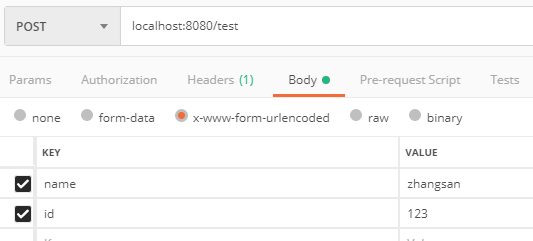
例:pojo 参数绑定
package com.zze.springmvc.web.controller;

import com.zze.springmvc.pojo.QueryVo;
import org.springframework.stereotype.Controller;
import org.springframework.web.bind.annotation.RequestMapping;

@Controller
public class TestController {
    /**
     * 包装 pojo 参数绑定
     */
    @RequestMapping("test")
    public void test(QueryVo queryVo) {
        System.out.println(queryVo.getUser().getName());
        System.out.println(queryVo.getUser().getId());
        /*
        zhangsan
        123
         */
    }
}
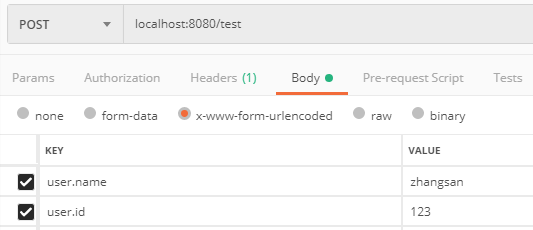
例:包装 pojo 参数绑定
与MyBatis整合
1、创建 maven web 项目,引入如下依赖:
<?xml version="1.0" encoding="UTF-8"?>

<project xmlns="http://maven.apache.org/POM/4.0.0" xmlns:xsi="http://www.w3.org/2001/XMLSchema-instance"
         xsi:schemaLocation="http://maven.apache.org/POM/4.0.0 http://maven.apache.org/xsd/maven-4.0.0.xsd">
    <modelVersion>4.0.0</modelVersion>

    <groupId>com.zze.springmvc</groupId>
    <artifactId>springmvc_mybatis</artifactId>
    <version>1.0-SNAPSHOT</version>
    <packaging>war</packaging>
    <dependencies>
        <dependency>
            <groupId>aopalliance</groupId>
            <artifactId>aopalliance</artifactId>
            <version>1.0</version>
        </dependency>
        <dependency>
            <groupId>asm</groupId>
            <artifactId>asm</artifactId>
            <version>3.3.1</version>
        </dependency>
        <dependency>
            <groupId>org.aspectj</groupId>
            <artifactId>aspectjweaver</artifactId>
            <version>1.6.11</version>
        </dependency>
        <dependency>
            <groupId>cglib</groupId>
            <artifactId>cglib</artifactId>
            <version>2.2.2</version>
        </dependency>
        <dependency>
            <groupId>com.alibaba</groupId>
            <artifactId>druid</artifactId>
            <version>1.0.18</version>
        </dependency>
        <dependency>
            <groupId>commons-logging</groupId>
            <artifactId>commons-logging</artifactId>
            <version>1.1.1</version>
        </dependency>
        <dependency>
            <groupId>commons-pool</groupId>
            <artifactId>commons-pool</artifactId>
            <version>1.3</version>
        </dependency>
        <dependency>
            <groupId>javassist</groupId>
            <artifactId>javassist</artifactId>
            <version>3.11.0.GA</version>
        </dependency>
        <dependency>
            <groupId>jstl</groupId>
            <artifactId>jstl</artifactId>
            <version>1.2</version>
        </dependency>
        <dependency>
            <groupId>junit</groupId>
            <artifactId>junit</artifactId>
            <version>4.12</version>
        </dependency>
        <dependency>
            <groupId>log4j</groupId>
            <artifactId>log4j</artifactId>
            <version>1.2.17</version>
        </dependency>
        <dependency>
            <groupId>org.apache.logging.log4j</groupId>
            <artifactId>log4j-api</artifactId>
            <version>2.0-rc1</version>
        </dependency>
        <dependency>
            <groupId>org.apache.logging.log4j</groupId>
            <artifactId>log4j-core</artifactId>
            <version>2.0-rc1</version>
        </dependency>
        <dependency>
            <groupId>org.mybatis</groupId>
            <artifactId>mybatis</artifactId>
            <version>3.2.7</version>
        </dependency>
        <dependency>
            <groupId>org.mybatis</groupId>
            <artifactId>mybatis-spring</artifactId>
            <version>1.2.2</version>
        </dependency>
        <dependency>
            <groupId>mysql</groupId>
            <artifactId>mysql-connector-java</artifactId>
            <version>5.1.46</version>
        </dependency>
        <dependency>
            <groupId>org.slf4j</groupId>
            <artifactId>slf4j-api</artifactId>
            <version>1.7.5</version>
        </dependency>
        <dependency>
            <groupId>org.slf4j</groupId>
            <artifactId>slf4j-log4j12</artifactId>
            <version>1.7.5</version>
        </dependency>
        <dependency>
            <groupId>org.springframework</groupId>
            <artifactId>spring-aop</artifactId>
            <version>4.2.4.RELEASE</version>
        </dependency>
        <dependency>
            <groupId>org.springframework</groupId>
            <artifactId>spring-aspects</artifactId>
            <version>4.2.4.RELEASE</version>
        </dependency>
        <dependency>
            <groupId>org.springframework</groupId>
            <artifactId>spring-beans</artifactId>
            <version>4.2.4.RELEASE</version>
        </dependency>
        <dependency>
            <groupId>org.springframework</groupId>
            <artifactId>spring-context</artifactId>
            <version>4.2.4.RELEASE</version>
        </dependency>
        <dependency>
            <groupId>org.springframework</groupId>
            <artifactId>spring-context-support</artifactId>
            <version>4.2.4.RELEASE</version>
        </dependency>
        <dependency>
            <groupId>org.springframework</groupId>
            <artifactId>spring-core</artifactId>
            <version>4.2.4.RELEASE</version>
        </dependency>
        <dependency>
            <groupId>org.springframework</groupId>
            <artifactId>spring-expression</artifactId>
            <version>4.2.4.RELEASE</version>
        </dependency>
        <dependency>
            <groupId>org.springframework</groupId>
            <artifactId>spring-jdbc</artifactId>
            <version>4.2.4.RELEASE</version>
        </dependency>
        <dependency>
            <groupId>org.springframework</groupId>
            <artifactId>spring-jms</artifactId>
            <version>4.2.4.RELEASE</version>
        </dependency>
        <dependency>
            <groupId>org.springframework</groupId>
            <artifactId>spring-messaging</artifactId>
            <version>4.2.4.RELEASE</version>
        </dependency>
        <dependency>
            <groupId>org.springframework</groupId>
            <artifactId>spring-tx</artifactId>
            <version>4.2.4.RELEASE</version>
        </dependency>
        <dependency>
            <groupId>org.springframework</groupId>
            <artifactId>spring-web</artifactId>
            <version>4.2.4.RELEASE</version>
        </dependency>
        <dependency>
            <groupId>org.springframework</groupId>
            <artifactId>spring-webmvc</artifactId>
            <version>4.2.4.RELEASE</version>
        </dependency>
    </dependencies>

    <build>
        <plugins>
            <!--使用 tomcat7:run-->
            <plugin>
                <groupId>org.apache.tomcat.maven</groupId>
                <artifactId>tomcat7-maven-plugin</artifactId>
                <version>2.2</version>
                <configuration>
                    <port>8080</port>
                    <path>/</path>
                </configuration>
            </plugin>
        </plugins>
    </build>
</project>
pom.xml
2、使用逆向工程生成 MyBatis 相关类及映射文件。
package com.zze.springmvc.pojo;

import java.util.Date;

public class User {
    private Integer id;

    private String name;

    private Date birthday;

    private String address;

    public Integer getId() {
        return id;
    }

    public void setId(Integer id) {
        this.id = id;
    }

    public String getName() {
        return name;
    }

    public void setName(String name) {
        this.name = name == null ? null : name.trim();
    }

    public Date getBirthday() {
        return birthday;
    }

    public void setBirthday(Date birthday) {
        this.birthday = birthday;
    }

    public String getAddress() {
        return address;
    }

    public void setAddress(String address) {
        this.address = address == null ? null : address.trim();
    }
}
com.zze.springmvc.pojo.User
package com.zze.springmvc.pojo;

import java.util.ArrayList;
import java.util.Date;
import java.util.Iterator;
import java.util.List;

public class UserExample {
    protected String orderByClause;

    protected boolean distinct;

    protected List<Criteria> oredCriteria;

    public UserExample() {
        oredCriteria = new ArrayList<Criteria>();
    }

    public void setOrderByClause(String orderByClause) {
        this.orderByClause = orderByClause;
    }

    public String getOrderByClause() {
        return orderByClause;
    }

    public void setDistinct(boolean distinct) {
        this.distinct = distinct;
    }

    public boolean isDistinct() {
        return distinct;
    }

    public List<Criteria> getOredCriteria() {
        return oredCriteria;
    }

    public void or(Criteria criteria) {
        oredCriteria.add(criteria);
    }

    public Criteria or() {
        Criteria criteria = createCriteriaInternal();
        oredCriteria.add(criteria);
        return criteria;
    }

    public Criteria createCriteria() {
        Criteria criteria = createCriteriaInternal();
        if (oredCriteria.size() == 0) {
            oredCriteria.add(criteria);
        }
        return criteria;
    }

    protected Criteria createCriteriaInternal() {
        Criteria criteria = new Criteria();
        return criteria;
    }

    public void clear() {
        oredCriteria.clear();
        orderByClause = null;
        distinct = false;
    }

    protected abstract static class GeneratedCriteria {
        protected List<Criterion> criteria;

        protected GeneratedCriteria() {
            super();
            criteria = new ArrayList<Criterion>();
        }

        public boolean isValid() {
            return criteria.size() > 0;
        }

        public List<Criterion> getAllCriteria() {
            return criteria;
        }

        public List<Criterion> getCriteria() {
            return criteria;
        }

        protected void addCriterion(String condition) {
            if (condition == null) {
                throw new RuntimeException("Value for condition cannot be null");
            }
            criteria.add(new Criterion(condition));
        }

        protected void addCriterion(String condition, Object value, String property) {
            if (value == null) {
                throw new RuntimeException("Value for " + property + " cannot be null");
            }
            criteria.add(new Criterion(condition, value));
        }

        protected void addCriterion(String condition, Object value1, Object value2, String property) {
            if (value1 == null || value2 == null) {
                throw new RuntimeException("Between values for " + property + " cannot be null");
            }
            criteria.add(new Criterion(condition, value1, value2));
        }

        protected void addCriterionForJDBCDate(String condition, Date value, String property) {
            if (value == null) {
                throw new RuntimeException("Value for " + property + " cannot be null");
            }
            addCriterion(condition, new java.sql.Date(value.getTime()), property);
        }

        protected void addCriterionForJDBCDate(String condition, List<Date> values, String property) {
            if (values == null || values.size() == 0) {
                throw new RuntimeException("Value list for " + property + " cannot be null or empty");
            }
            List<java.sql.Date> dateList = new ArrayList<java.sql.Date>();
            Iterator<Date> iter = values.iterator();
            while (iter.hasNext()) {
                dateList.add(new java.sql.Date(iter.next().getTime()));
            }
            addCriterion(condition, dateList, property);
        }

        protected void addCriterionForJDBCDate(String condition, Date value1, Date value2, String property) {
            if (value1 == null || value2 == null) {
                throw new RuntimeException("Between values for " + property + " cannot be null");
            }
            addCriterion(condition, new java.sql.Date(value1.getTime()), new java.sql.Date(value2.getTime()), property);
        }

        public Criteria andIdIsNull() {
            addCriterion("id is null");
            return (Criteria) this;
        }

        public Criteria andIdIsNotNull() {
            addCriterion("id is not null");
            return (Criteria) this;
        }

        public Criteria andIdEqualTo(Integer value) {
            addCriterion("id =", value, "id");
            return (Criteria) this;
        }

        public Criteria andIdNotEqualTo(Integer value) {
            addCriterion("id <>", value, "id");
            return (Criteria) this;
        }

        public Criteria andIdGreaterThan(Integer value) {
            addCriterion("id >", value, "id");
            return (Criteria) this;
        }

        public Criteria andIdGreaterThanOrEqualTo(Integer value) {
            addCriterion("id >=", value, "id");
            return (Criteria) this;
        }

        public Criteria andIdLessThan(Integer value) {
            addCriterion("id <", value, "id");
            return (Criteria) this;
        }

        public Criteria andIdLessThanOrEqualTo(Integer value) {
            addCriterion("id <=", value, "id");
            return (Criteria) this;
        }

        public Criteria andIdIn(List<Integer> values) {
            addCriterion("id in", values, "id");
            return (Criteria) this;
        }

        public Criteria andIdNotIn(List<Integer> values) {
            addCriterion("id not in", values, "id");
            return (Criteria) this;
        }

        public Criteria andIdBetween(Integer value1, Integer value2) {
            addCriterion("id between", value1, value2, "id");
            return (Criteria) this;
        }

        public Criteria andIdNotBetween(Integer value1, Integer value2) {
            addCriterion("id not between", value1, value2, "id");
            return (Criteria) this;
        }

        public Criteria andNameIsNull() {
            addCriterion("name is null");
            return (Criteria) this;
        }

        public Criteria andNameIsNotNull() {
            addCriterion("name is not null");
            return (Criteria) this;
        }

        public Criteria andNameEqualTo(String value) {
            addCriterion("name =", value, "name");
            return (Criteria) this;
        }

        public Criteria andNameNotEqualTo(String value) {
            addCriterion("name <>", value, "name");
            return (Criteria) this;
        }

        public Criteria andNameGreaterThan(String value) {
            addCriterion("name >", value, "name");
            return (Criteria) this;
        }

        public Criteria andNameGreaterThanOrEqualTo(String value) {
            addCriterion("name >=", value, "name");
            return (Criteria) this;
        }

        public Criteria andNameLessThan(String value) {
            addCriterion("name <", value, "name");
            return (Criteria) this;
        }

        public Criteria andNameLessThanOrEqualTo(String value) {
            addCriterion("name <=", value, "name");
            return (Criteria) this;
        }

        public Criteria andNameLike(String value) {
            addCriterion("name like", value, "name");
            return (Criteria) this;
        }

        public Criteria andNameNotLike(String value) {
            addCriterion("name not like", value, "name");
            return (Criteria) this;
        }

        public Criteria andNameIn(List<String> values) {
            addCriterion("name in", values, "name");
            return (Criteria) this;
        }

        public Criteria andNameNotIn(List<String> values) {
            addCriterion("name not in", values, "name");
            return (Criteria) this;
        }

        public Criteria andNameBetween(String value1, String value2) {
            addCriterion("name between", value1, value2, "name");
            return (Criteria) this;
        }

        public Criteria andNameNotBetween(String value1, String value2) {
            addCriterion("name not between", value1, value2, "name");
            return (Criteria) this;
        }

        public Criteria andBirthdayIsNull() {
            addCriterion("birthday is null");
            return (Criteria) this;
        }

        public Criteria andBirthdayIsNotNull() {
            addCriterion("birthday is not null");
            return (Criteria) this;
        }

        public Criteria andBirthdayEqualTo(Date value) {
            addCriterionForJDBCDate("birthday =", value, "birthday");
            return (Criteria) this;
        }

        public Criteria andBirthdayNotEqualTo(Date value) {
            addCriterionForJDBCDate("birthday <>", value, "birthday");
            return (Criteria) this;
        }

        public Criteria andBirthdayGreaterThan(Date value) {
            addCriterionForJDBCDate("birthday >", value, "birthday");
            return (Criteria) this;
        }

        public Criteria andBirthdayGreaterThanOrEqualTo(Date value) {
            addCriterionForJDBCDate("birthday >=", value, "birthday");
            return (Criteria) this;
        }

        public Criteria andBirthdayLessThan(Date value) {
            addCriterionForJDBCDate("birthday <", value, "birthday");
            return (Criteria) this;
        }

        public Criteria andBirthdayLessThanOrEqualTo(Date value) {
            addCriterionForJDBCDate("birthday <=", value, "birthday");
            return (Criteria) this;
        }

        public Criteria andBirthdayIn(List<Date> values) {
            addCriterionForJDBCDate("birthday in", values, "birthday");
            return (Criteria) this;
        }

        public Criteria andBirthdayNotIn(List<Date> values) {
            addCriterionForJDBCDate("birthday not in", values, "birthday");
            return (Criteria) this;
        }

        public Criteria andBirthdayBetween(Date value1, Date value2) {
            addCriterionForJDBCDate("birthday between", value1, value2, "birthday");
            return (Criteria) this;
        }

        public Criteria andBirthdayNotBetween(Date value1, Date value2) {
            addCriterionForJDBCDate("birthday not between", value1, value2, "birthday");
            return (Criteria) this;
        }

        public Criteria andAddressIsNull() {
            addCriterion("address is null");
            return (Criteria) this;
        }

        public Criteria andAddressIsNotNull() {
            addCriterion("address is not null");
            return (Criteria) this;
        }

        public Criteria andAddressEqualTo(String value) {
            addCriterion("address =", value, "address");
            return (Criteria) this;
        }

        public Criteria andAddressNotEqualTo(String value) {
            addCriterion("address <>", value, "address");
            return (Criteria) this;
        }

        public Criteria andAddressGreaterThan(String value) {
            addCriterion("address >", value, "address");
            return (Criteria) this;
        }

        public Criteria andAddressGreaterThanOrEqualTo(String value) {
            addCriterion("address >=", value, "address");
            return (Criteria) this;
        }

        public Criteria andAddressLessThan(String value) {
            addCriterion("address <", value, "address");
            return (Criteria) this;
        }

        public Criteria andAddressLessThanOrEqualTo(String value) {
            addCriterion("address <=", value, "address");
            return (Criteria) this;
        }

        public Criteria andAddressLike(String value) {
            addCriterion("address like", value, "address");
            return (Criteria) this;
        }

        public Criteria andAddressNotLike(String value) {
            addCriterion("address not like", value, "address");
            return (Criteria) this;
        }

        public Criteria andAddressIn(List<String> values) {
            addCriterion("address in", values, "address");
            return (Criteria) this;
        }

        public Criteria andAddressNotIn(List<String> values) {
            addCriterion("address not in", values, "address");
            return (Criteria) this;
        }

        public Criteria andAddressBetween(String value1, String value2) {
            addCriterion("address between", value1, value2, "address");
            return (Criteria) this;
        }

        public Criteria andAddressNotBetween(String value1, String value2) {
            addCriterion("address not between", value1, value2, "address");
            return (Criteria) this;
        }
    }

    public static class Criteria extends GeneratedCriteria {

        protected Criteria() {
            super();
        }
    }

    public static class Criterion {
        private String condition;

        private Object value;

        private Object secondValue;

        private boolean noValue;

        private boolean singleValue;

        private boolean betweenValue;

        private boolean listValue;

        private String typeHandler;

        public String getCondition() {
            return condition;
        }

        public Object getValue() {
            return value;
        }

        public Object getSecondValue() {
            return secondValue;
        }

        public boolean isNoValue() {
            return noValue;
        }

        public boolean isSingleValue() {
            return singleValue;
        }

        public boolean isBetweenValue() {
            return betweenValue;
        }

        public boolean isListValue() {
            return listValue;
        }

        public String getTypeHandler() {
            return typeHandler;
        }

        protected Criterion(String condition) {
            super();
            this.condition = condition;
            this.typeHandler = null;
            this.noValue = true;
        }

        protected Criterion(String condition, Object value, String typeHandler) {
            super();
            this.condition = condition;
            this.value = value;
            this.typeHandler = typeHandler;
            if (value instanceof List<?>) {
                this.listValue = true;
            } else {
                this.singleValue = true;
            }
        }

        protected Criterion(String condition, Object value) {
            this(condition, value, null);
        }

        protected Criterion(String condition, Object value, Object secondValue, String typeHandler) {
            super();
            this.condition = condition;
            this.value = value;
            this.secondValue = secondValue;
            this.typeHandler = typeHandler;
            this.betweenValue = true;
        }

        protected Criterion(String condition, Object value, Object secondValue) {
            this(condition, value, secondValue, null);
        }
    }
}
com.zze.springmvc.pojo.UserExample
package com.zze.springmvc.mapper;

import com.zze.springmvc.pojo.User;
import com.zze.springmvc.pojo.UserExample;
import java.util.List;
import org.apache.ibatis.annotations.Param;

public interface UserMapper {
    long countByExample(UserExample example);

    int deleteByExample(UserExample example);

    int deleteByPrimaryKey(Integer id);

    int insert(User record);

    int insertSelective(User record);

    List<User> selectByExample(UserExample example);

    User selectByPrimaryKey(Integer id);

    int updateByExampleSelective(@Param("record") User record, @Param("example") UserExample example);

    int updateByExample(@Param("record") User record, @Param("example") UserExample example);

    int updateByPrimaryKeySelective(User record);

    int updateByPrimaryKey(User record);
}
com.zze.springmvc.mapper.UserMapper
<?xml version="1.0" encoding="UTF-8"?>
<!DOCTYPE mapper PUBLIC "-//mybatis.org//DTD Mapper 3.0//EN" "http://mybatis.org/dtd/mybatis-3-mapper.dtd">
<mapper namespace="com.zze.springmvc.mapper.UserMapper">
  <resultMap id="BaseResultMap" type="com.zze.springmvc.pojo.User">
    <id column="id" jdbcType="INTEGER" property="id" />
    <result column="name" jdbcType="VARCHAR" property="name" />
    <result column="birthday" jdbcType="DATE" property="birthday" />
    <result column="address" jdbcType="VARCHAR" property="address" />
  </resultMap>
  <sql id="Example_Where_Clause">
    <where>
      <foreach collection="oredCriteria" item="criteria" separator="or">
        <if test="criteria.valid">
          <trim prefix="(" prefixOverrides="and" suffix=")">
            <foreach collection="criteria.criteria" item="criterion">
              <choose>
                <when test="criterion.noValue">
                  and ${criterion.condition}
                </when>
                <when test="criterion.singleValue">
                  and ${criterion.condition} #{criterion.value}
                </when>
                <when test="criterion.betweenValue">
                  and ${criterion.condition} #{criterion.value} and #{criterion.secondValue}
                </when>
                <when test="criterion.listValue">
                  and ${criterion.condition}
                  <foreach close=")" collection="criterion.value" item="listItem" open="(" separator=",">
                    #{listItem}
                  </foreach>
                </when>
              </choose>
            </foreach>
          </trim>
        </if>
      </foreach>
    </where>
  </sql>
  <sql id="Update_By_Example_Where_Clause">
    <where>
      <foreach collection="example.oredCriteria" item="criteria" separator="or">
        <if test="criteria.valid">
          <trim prefix="(" prefixOverrides="and" suffix=")">
            <foreach collection="criteria.criteria" item="criterion">
              <choose>
                <when test="criterion.noValue">
                  and ${criterion.condition}
                </when>
                <when test="criterion.singleValue">
                  and ${criterion.condition} #{criterion.value}
                </when>
                <when test="criterion.betweenValue">
                  and ${criterion.condition} #{criterion.value} and #{criterion.secondValue}
                </when>
                <when test="criterion.listValue">
                  and ${criterion.condition}
                  <foreach close=")" collection="criterion.value" item="listItem" open="(" separator=",">
                    #{listItem}
                  </foreach>
                </when>
              </choose>
            </foreach>
          </trim>
        </if>
      </foreach>
    </where>
  </sql>
  <sql id="Base_Column_List">
    id, name, birthday, address
  </sql>
  <select id="selectByExample" parameterType="com.zze.springmvc.pojo.UserExample" resultMap="BaseResultMap">
    select
    <if test="distinct">
      distinct
    </if>
    <include refid="Base_Column_List" />
    from user
    <if test="_parameter != null">
      <include refid="Example_Where_Clause" />
    </if>
    <if test="orderByClause != null">
      order by ${orderByClause}
    </if>
  </select>
  <select id="selectByPrimaryKey" parameterType="java.lang.Integer" resultMap="BaseResultMap">
    select
    <include refid="Base_Column_List" />
    from user
    where id = #{id,jdbcType=INTEGER}
  </select>
  <delete id="deleteByPrimaryKey" parameterType="java.lang.Integer">
    delete from user
    where id = #{id,jdbcType=INTEGER}
  </delete>
  <delete id="deleteByExample" parameterType="com.zze.springmvc.pojo.UserExample">
    delete from user
    <if test="_parameter != null">
      <include refid="Example_Where_Clause" />
    </if>
  </delete>
  <insert id="insert" parameterType="com.zze.springmvc.pojo.User">
    insert into user (id, name, birthday,
      address)
    values (#{id,jdbcType=INTEGER}, #{name,jdbcType=VARCHAR}, #{birthday,jdbcType=DATE},
      #{address,jdbcType=VARCHAR})
  </insert>
  <insert id="insertSelective" parameterType="com.zze.springmvc.pojo.User">
    insert into user
    <trim prefix="(" suffix=")" suffixOverrides=",">
      <if test="id != null">
        id,
      </if>
      <if test="name != null">
        name,
      </if>
      <if test="birthday != null">
        birthday,
      </if>
      <if test="address != null">
        address,
      </if>
    </trim>
    <trim prefix="values (" suffix=")" suffixOverrides=",">
      <if test="id != null">
        #{id,jdbcType=INTEGER},
      </if>
      <if test="name != null">
        #{name,jdbcType=VARCHAR},
      </if>
      <if test="birthday != null">
        #{birthday,jdbcType=DATE},
      </if>
      <if test="address != null">
        #{address,jdbcType=VARCHAR},
      </if>
    </trim>
  </insert>
  <select id="countByExample" parameterType="com.zze.springmvc.pojo.UserExample" resultType="java.lang.Long">
    select count(*) from user
    <if test="_parameter != null">
      <include refid="Example_Where_Clause" />
    </if>
  </select>
  <update id="updateByExampleSelective" parameterType="map">
    update user
    <set>
      <if test="record.id != null">
        id = #{record.id,jdbcType=INTEGER},
      </if>
      <if test="record.name != null">
        name = #{record.name,jdbcType=VARCHAR},
      </if>
      <if test="record.birthday != null">
        birthday = #{record.birthday,jdbcType=DATE},
      </if>
      <if test="record.address != null">
        address = #{record.address,jdbcType=VARCHAR},
      </if>
    </set>
    <if test="_parameter != null">
      <include refid="Update_By_Example_Where_Clause" />
    </if>
  </update>
  <update id="updateByExample" parameterType="map">
    update user
    set id = #{record.id,jdbcType=INTEGER},
      name = #{record.name,jdbcType=VARCHAR},
      birthday = #{record.birthday,jdbcType=DATE},
      address = #{record.address,jdbcType=VARCHAR}
    <if test="_parameter != null">
      <include refid="Update_By_Example_Where_Clause" />
    </if>
  </update>
  <update id="updateByPrimaryKeySelective" parameterType="com.zze.springmvc.pojo.User">
    update user
    <set>
      <if test="name != null">
        name = #{name,jdbcType=VARCHAR},
      </if>
      <if test="birthday != null">
        birthday = #{birthday,jdbcType=DATE},
      </if>
      <if test="address != null">
        address = #{address,jdbcType=VARCHAR},
      </if>
    </set>
    where id = #{id,jdbcType=INTEGER}
  </update>
  <update id="updateByPrimaryKey" parameterType="com.zze.springmvc.pojo.User">
    update user
    set name = #{name,jdbcType=VARCHAR},
      birthday = #{birthday,jdbcType=DATE},
      address = #{address,jdbcType=VARCHAR}
    where id = #{id,jdbcType=INTEGER}
  </update>
</mapper>
com/zze/springmvc/mapper/UserMapper.xml
3、引入 MyBatis 核心配置文件,包含文件头的空文件即可:
<?xml version="1.0" encoding="UTF-8" ?>
<!DOCTYPE configuration
        PUBLIC "-//mybatis.org//DTD Config 3.0//EN"
        "http://mybatis.org/dtd/mybatis-3-config.dtd">
<configuration>

</configuration>
config/SqlMapConfig.xml
4、引入 jdbc 属性文件:
jdbc.url=jdbc:mysql://192.168.208.192:3306/test?characterEncoding=utf-8
jdbc.driver=com.mysql.jdbc.Driver
jdbc.username=root
jdbc.password=root
config/jdbc.properties
5、dao 层,在 Spring 中配置数据库连接及事务:
<?xml version="1.0" encoding="UTF-8"?>
<beans xmlns="http://www.springframework.org/schema/beans"
       xmlns:xsi="http://www.w3.org/2001/XMLSchema-instance"
       xmlns:context="http://www.springframework.org/schema/context"
       xsi:schemaLocation="http://www.springframework.org/schema/beans
    http://www.springframework.org/schema/beans/spring-beans.xsd
    http://www.springframework.org/schema/context
    http://www.springframework.org/schema/context/spring-context.xsd">
    <!--读取属性文件-->
    <context:property-placeholder location="classpath:config/jdbc.properties"/>
    <!--连接池-->
    <bean id="dataSource" class="com.alibaba.druid.pool.DruidDataSource" init-method="init" destroy-method="close">
        <!-- 基本属性 url、user、password -->
        <property name="driverClassName" value="${jdbc.driver}"/>
        <property name="url" value="${jdbc.url}"/>
        <property name="username" value="${jdbc.username}"/>
        <property name="password" value="${jdbc.password}"/>
        <!-- 配置初始化大小、最小、最大 -->
        <property name="maxActive" value="20"/>
        <property name="initialSize" value="1"/>
        <property name="minIdle" value="1"/>
        <!-- 配置获取连接等待超时的时间 -->
        <property name="maxWait" value="60000"/>
        <!-- 配置间隔多久才进行一次检测,检测需要关闭的空闲连接,单位是毫秒 -->
        <property name="timeBetweenEvictionRunsMillis" value="60000"/>
        <!-- 配置一个连接在池中最小生存的时间,单位是毫秒 -->
        <property name="minEvictableIdleTimeMillis" value="300000"/>
    </bean>

    <!--配置 SqlSessionFactory-->
    <bean id="sqlSessionFactory" class="org.mybatis.spring.SqlSessionFactoryBean">
        <!--配置数据源-->
        <property name="dataSource" ref="dataSource"/>
        <!--配置核心配置文件路径-->
        <property name="configLocation" value="classpath:config/SqlMapConfig.xml"/>
        <!--配置别名扫描包-->
        <property name="typeAliasesPackage" value="com.zze.springmvc.pojo"/>
    </bean>

    <!--动态代理配置方式二:配置 mapper 包扫描-->
    <bean class="org.mybatis.spring.mapper.MapperScannerConfigurer">
        <property name="basePackage" value="com.zze.springmvc.mapper"/>
    </bean>
</beans>
config/spring/applicationContext-dao.xml
<beans xmlns="http://www.springframework.org/schema/beans"
       xmlns:xsi="http://www.w3.org/2001/XMLSchema-instance"
       xmlns:aop="http://www.springframework.org/schema/aop"
       xmlns:tx="http://www.springframework.org/schema/tx"
       xsi:schemaLocation="http://www.springframework.org/schema/beans http://www.springframework.org/schema/beans/spring-beans.xsd

        http://www.springframework.org/schema/tx http://www.springframework.org/schema/tx/spring-tx.xsd
        http://www.springframework.org/schema/aop http://www.springframework.org/schema/aop/spring-aop.xsd">
    <!--配置事务管理器-->
    <bean name="transactionManager" class="org.springframework.jdbc.datasource.DataSourceTransactionManager">
        <property name="dataSource" ref="dataSource"/>
    </bean>

    <!--配置事务的通知/增强-->
    <tx:advice id="txAdvice" transaction-manager="transactionManager">
        <tx:attributes>
            <!--事务管理规则-->
            <tx:method name="save*" propagation="REQUIRED"/>
            <tx:method name="add*" propagation="REQUIRED"/>
            <tx:method name="update*" propagation="REQUIRED"/>
            <tx:method name="modify*" propagation="REQUIRED"/>
            <tx:method name="delete*" propagation="REQUIRED"/>
            <tx:method name="remove*" propagation="REQUIRED"/>
            <tx:method name="find*" read-only="true"/>
            <tx:method name="get*" read-only="true"/>
            <tx:method name="select*" read-only="true"/>
            <!--
            name : 匹配方法名
            read-only : 为 true 时表示只做只读操作
            propagation : 事务的传播行为
            timeout : 事务过期时间,为 -1 时不会过期
            isolation : 事务的隔离级别
            -->
            <tx:method name="*" propagation="REQUIRED" isolation="DEFAULT" timeout="-1"/>
        </tx:attributes>
    </tx:advice>

    <!--AOP 配置-->
    <aop:config>
        <aop:pointcut id="pc_service" expression="execution(* com.zze.springmvc.service.*.*(..))"/>
        <aop:advisor advice-ref="txAdvice" pointcut-ref="pc_service"/>
    </aop:config>
</beans>
config/spring/applicationContext-trans.xml
6、service 层,在 Spring 中配置包扫描:
<?xml version="1.0" encoding="UTF-8"?>
<beans xmlns="http://www.springframework.org/schema/beans"
       xmlns:xsi="http://www.w3.org/2001/XMLSchema-instance"
       xmlns:context="http://www.springframework.org/schema/context"
       xsi:schemaLocation="http://www.springframework.org/schema/beans
        http://www.springframework.org/schema/beans/spring-beans.xsd
        http://www.springframework.org/schema/context
        http://www.springframework.org/schema/context/spring-context.xsd">
    <!--配置控制器扫描-->
    <context:component-scan base-package="com.zze.springmvc.service"/>
</beans>
config/spring/applicationContext-service.xml
7、web 层,SpringMVC 的核心配置文件:
<?xml version="1.0" encoding="UTF-8"?>
<beans xmlns="http://www.springframework.org/schema/beans"
       xmlns:xsi="http://www.w3.org/2001/XMLSchema-instance"
       xmlns:mvc="http://www.springframework.org/schema/mvc"
       xmlns:context="http://www.springframework.org/schema/context"
       xsi:schemaLocation="http://www.springframework.org/schema/beans
           http://www.springframework.org/schema/beans/spring-beans.xsd
           http://www.springframework.org/schema/mvc
           http://www.springframework.org/schema/mvc/spring-mvc.xsd
           http://www.springframework.org/schema/context
           http://www.springframework.org/schema/context/spring-context.xsd">
    <!--配置控制器扫描-->
    <context:component-scan base-package="com.zze.springmvc.web.controller"/>
    <!--注解驱动-->
    <mvc:annotation-driven/>
    <!--视图解析器-->
    <bean class="org.springframework.web.servlet.view.InternalResourceViewResolver">
        <property name="prefix" value="/WEB-INF/jsp/"/>
        <property name="suffix" value=".jsp"/>
    </bean>
</beans>
config/spring/springmvc.xml
8、引入 log4j 属性文件:
log4j.rootLogger = debug,stdout

### 输出信息到控制抬 ###
log4j.appender.stdout = org.apache.log4j.ConsoleAppender
log4j.appender.stdout.Target = System.out
log4j.appender.stdout.layout = org.apache.log4j.PatternLayout
log4j.appender.stdout.layout.ConversionPattern = [%-5p] %d{yyyy-MM-dd HH:mm:ss,SSS} method:%l%n%m%n

### 输出DEBUG 级别以上的日志到=E://logs/error.log ###
log4j.appender.D = org.apache.log4j.DailyRollingFileAppender
log4j.appender.D.File = E://logs/log.log
log4j.appender.D.Append = true
log4j.appender.D.Threshold = DEBUG
log4j.appender.D.layout = org.apache.log4j.PatternLayout
log4j.appender.D.layout.ConversionPattern = %-d{yyyy-MM-dd HH:mm:ss}  [ %t:%r ] - [ %p ]  %m%n

### 输出ERROR 级别以上的日志到=E://logs/error.log ###
log4j.appender.E = org.apache.log4j.DailyRollingFileAppender
log4j.appender.E.File =E://logs/error.log
log4j.appender.E.Append = true
log4j.appender.E.Threshold = ERROR
log4j.appender.E.layout = org.apache.log4j.PatternLayout
log4j.appender.E.layout.ConversionPattern = %-d{yyyy-MM-dd HH:mm:ss}  [ %t:%r ] - [ %p ]  %m%n
log4j.properties
9、配置 Spring 核心监听器及加载 SpringMVC 核心配置文件:
<!DOCTYPE web-app PUBLIC
        "-//Sun Microsystems, Inc.//DTD Web Application 2.3//EN"
        "http://java.sun.com/dtd/web-app_2_3.dtd" >

<web-app>
    <context-param>
        <param-name>contextConfigLocation</param-name>
        <param-value>classpath:config/spring/applicationContext-*.xml</param-value>
    </context-param>
    <listener>
        <listener-class>org.springframework.web.context.ContextLoaderListener</listener-class>
    </listener>

    <servlet>
        <servlet-name>springmvc</servlet-name>
        <servlet-class>org.springframework.web.servlet.DispatcherServlet</servlet-class>
        <!--加载 SpringMVC 核心配置文件-->
        <init-param>
            <param-name>contextConfigLocation</param-name>
            <param-value>classpath:config/spring/springmvc.xml</param-value>
        </init-param>
    </servlet>
    <servlet-mapping>
        <servlet-name>springmvc</servlet-name>
        <!--注意:这里使用 / ,如果使用 /* 会出现找不到视图的问题-->
        <url-pattern>/</url-pattern>
    </servlet-mapping>
</web-app>
WEB-INF/web.xml
9、编写 service 层测试代码:
package com.zze.springmvc.service;

import com.zze.springmvc.pojo.User;

import java.util.List;

public interface UserService {

    List<User> getAll();
}
com.zze.springmvc.service.UserService
package com.zze.springmvc.service.impl;

import com.zze.springmvc.mapper.UserMapper;
import com.zze.springmvc.pojo.User;
import com.zze.springmvc.service.UserService;
import org.springframework.beans.factory.annotation.Autowired;
import org.springframework.stereotype.Service;

import java.util.List;
@Service
public class UserServiceImpl implements UserService {
    @Autowired
    private UserMapper userMapper;

    public List<User> getAll() {
        return userMapper.selectByExample(null);
    }
}
com.zze.springmvc.service.impl.UserServiceImpl
10、编写 web 层测试代码:
package com.zze.springmvc.web.controller;

import com.zze.springmvc.pojo.User;
import com.zze.springmvc.service.UserService;
import org.springframework.beans.factory.annotation.Autowired;
import org.springframework.stereotype.Controller;
import org.springframework.ui.Model;
import org.springframework.web.bind.annotation.RequestMapping;

import java.text.ParseException;
import java.util.List;

@Controller
@RequestMapping("user")
public class UserController {
    @Autowired
    private UserService userService;
    @RequestMapping("list")
    public String list(Model model) throws ParseException {
        List<User> all = userService.getAll();
        model.addAttribute("list", all);
        return "userlist";
    }
}
com.zze.springmvc.web.controller.UserController
<%@ page contentType="text/html;charset=UTF-8" language="java" isELIgnored="false" %>
<%@ taglib prefix="c" uri="http://java.sun.com/jsp/jstl/core" %>
<%@ taglib uri="http://java.sun.com/jsp/jstl/fmt" prefix="fmt" %>
<html>
<head>
    <title>list</title>
</head>
<body>

<table border="1">
    <thead>
    <tr>
        <th>Id</th>
        <th>Name</th>
        <th>Birthday</th>
        <th>Address</th>
    </tr>
    </thead>
    <tbody>
    <c:forEach items="${list}" var="user">
        <tr>
            <td>${user.id}</td>
            <td>${user.name}</td>
            <td><fmt:formatDate value="${user.birthday}" pattern="yyyy-MM-dd"/></td>
            <td>${user.address}</td>
        </tr>
    </c:forEach>
    </tbody>
</table>
</body>
</html>
WEB-INF/jsp/userlist.jsp
11、启动项目,测试:
浏览器:
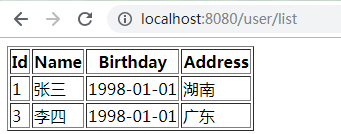
访问 'http://localhost:8080/user/list'
java框架之SpringMVC(1)-入门&整合MyBatis的更多相关文章
- 【java框架】SpringBoot(7) -- SpringBoot整合MyBatis
1.整合MyBatis操作 前面一篇提到了SpringBoot整合基础的数据源JDBC.Druid操作,实际项目中更常用的还是MyBatis框架,而SpringBoot整合MyBatis进行CRUD也 ...
- Java开发学习(十四)----Spring整合Mybatis及Junit
一.Spring整合Mybatis思路分析 1.1 环境准备 步骤1:准备数据库表 Mybatis是来操作数据库表,所以先创建一个数据库及表 create database spring_db cha ...
- JAVA 框架 / SSM / SSM SPRING+SPING MVC + MYBATIS 三大框架整合详细步骤
http://how2j.cn/k/ssm/ssm-tutorial/1137.html
- 【Java框架型项目从入门到装逼】第七节 - 学生管理系统项目搭建
本次的教程是打算用Spring,SpringMVC以及传统的jdbc技术来制作一个简单的增删改查项目,对用户信息进行增删改查,就这么简单. 1.新建项目 首先,打开eclipse,新建一个web项目. ...
- java框架之springmvc
一.HelloWorld程序 (1)导包:四个spring 核心包(core.beans.context.expression).一个aop包.两个 web 包和一个logging 包: (2)配置 ...
- java框架之Quartz-任务调度&整合Spring
准备 介绍 定时任务,无论是互联网公司还是传统的软件行业都是必不可少的.Quartz,它是好多优秀的定时任务开源框架的基础,使用它,我们可以使用最简单基础的配置来轻松的使用定时任务. Quartz 是 ...
- java框架之Spring(1)-入门
介绍 概述 Spring 是一个开放源代码的设计层面框架,它解决的是业务逻辑层和其他各层的松耦合问题,因此它将面向接口的编程思想贯穿整个系统应用.Spring 是于 2003 年兴起的一个轻量级的 J ...
- java框架之Spring(4)-Spring整合Hibernate和Struts2
准备 导包 Struts2 导入 Struts2 zip 包解压目录下 'apps/struts-blank.war' 中所有 jar 包,如下: asm-3.3.jar asm-commons-3. ...
- java框架之SpringBoot(1)-入门
简介 Spring Boot 用来简化 Spring 应用开发,约定大于配置,去繁从简,just run 就能创建一个独立的.产品级别的应用. 背景: J2EE 笨重的开发.繁多的配置.低下的开发效率 ...
随机推荐
- SQL递归方式实现省市区县级别查询
数据库脚本 CREATE TABLE [dbo].[Std_Area]( [Id] [int] NOT NULL, [Name] [nvarchar](50) NULL, [ParentId] [in ...
- 范型方法 & 范型参数 & 范型返回值
Java范型类 public class FanXingClassTest { public static void main(String args[]){ Test<Integer> ...
- js学习(六)- js对象创建
//---------------------js文件--------------------- var namespace02=new Object(); namespace02.Person=fu ...
- linux下怎样批量更改文件后缀名
今天又有同学问linux下怎样批量更改文件后缀名,这个问题被别人问到三次了,所以这里给出几个解决方法 一.rename解决 1. Ubuntu系统下 rename 's//.c//.h/' ./* ...
- Centos7 yum安装tomcat
以下操作是在线安装apache-tomcat 需要联网下载包. liux系统环境 [root@localhost ~]# cat /etc/redhat-release CentOS Linux re ...
- dedecms调用子栏目及文章列表
使用DEDECMS程序建网站时,有些栏目下面有子栏目,我们需要在网站前台调用出子栏目以及子栏目下的文章列表. dedecms调用子栏目及文章列表可以使用以下的代码进行调用: <div class ...
- makefile 常用函数
Linux下编译c/c++源码需要编写makefile文件,文章参看 http://blog.sina.com.cn/s/blog_4c4d6e74010009jr.html 一函数的调用语法 二字符 ...
- npm WARN install Refusing to install vue-router as a dependency of itself
今天在使用npm安装插件的时候提示如下错误: npm WARN install Refusing to install vue-router as a dependency of itself npm ...
- Qt编写自定义控件5-柱状温度计
前言 柱状温度计控件,可能是很多人练手控件之一,基本上都是垂直方向展示,底部一个水银柱,中间刻度尺,刻度尺可以在左侧右侧或者两侧都有,自适应分辨率改动,有时候为了美观效果,可能还会整个定时器来实现动画 ...
- 解决vscode更新后Ext Js插件无法使用问题
解决方案来至于https://www.sencha.com/forum/showthread.php?471410-Bug-in-VS-Code-Plugin-since-VS-Code-Update ...