
Java_JDK_HashMap
(二)HashMap
需要注意的无非几点:
- 是什么结构,如何存储的?
- 如何加入元素?既然是hashMap,那么是如何计算hashcode的呢?遇到冲突又是如何解决的呢?
- 如何删除元素?
- 当容量不够时是如何扩容的?
1. 总体的存储结构为一个Node类型的数组:transient Node<K,V>[] table;
其中,Node节点结构为:
   static class Node<K,V> implements Map.Entry<K,V> {

        final int hash;

        final K key;

        V value;

        Node<K,V> next;

        Node(int hash, K key, V value, Node<K,V> next) {

            this.hash = hash;

            this.key = key;

            this.value = value;

            this.next = next;

        }

}
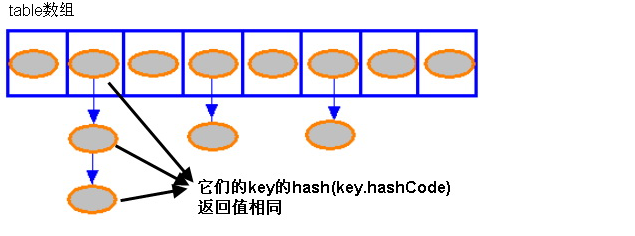
可以看到,Node节点中有next指针,说明数组内部是一个指针,指向下一个元素。
故整个HashMap的存储结构如下图所示:
2.put()方法:
 public V put(K key, V value) {

            return putVal(hash(key), key, value, false, true); //将具体的实现封装在下面的函数中

        }

     /**

         * Implements Map.put and related methods

         *

         * @param hash hash for key

         * @param key the key

         * @param value the value to put

         * @param onlyIfAbsent if true, don't change existing value

         * @param evict if false, the table is in creation mode.

         * @return previous value, or null if none

         */

        final V putVal(int hash, K key, V value, boolean onlyIfAbsent,

                       boolean evict) {

            Node<K,V>[] tab; Node<K,V> p; int n, i;

            if ((tab = table) == null || (n = tab.length) == 0) //如果是空表

                n = (tab = resize()).length;

            if ((p = tab[i = (n - 1) & hash]) == null) //如果(n - 1) & hash处还没有元素(不会产生冲突),则直接放入即可

                tab[i] = newNode(hash, key, value, null);

            else { //否则,产生了冲突,且p记录了应该放入的位置

                Node<K,V> e; K k;

                if (p.hash == hash &&

                    ((k = p.key) == key || (key != null && key.equals(k)))) //如果确实产生了冲突

                    e = p; //用e记录冲突位置

                else if (p instanceof TreeNode) //p是TreeNode ? 不是太理解,先放这里吧。。

                    e = ((TreeNode<K,V>)p).putTreeVal(this, tab, hash, key, value);

                else {

                    for (int binCount = 0; ; ++binCount) {

                        if ((e = p.next) == null) { //如果就放了一个元素,即链表位置为空

                            p.next = newNode(hash, key, value, null);

                            if (binCount >= TREEIFY_THRESHOLD - 1) // -1 for 1st

                                treeifyBin(tab, hash);

                            break;

                        }

                        if (e.hash == hash &&

                            ((k = e.key) == key || (key != null && key.equals(k))))

                            break;

                        p = e;

                    }

                }

                if (e != null) { // existing mapping for key

                    V oldValue = e.value;

                    if (!onlyIfAbsent || oldValue == null)

                        e.value = value; //是否可以直接替换

                    afterNodeAccess(e);

                    return oldValue;

                }

            }

            ++modCount; //修改次数加一

            if (++size > threshold)

                resize(); //超出了限定容量,则扩容

            afterNodeInsertion(evict);

            return null;

        }
可以看到,其中有很多细节处没有吃透,先有个大概的认识,与后面的分析融汇贯通。
3. resize()函数:扩容
下面我们来分析一下这个长长的扩容函数:
    /**

     * Initializes or doubles table size.  If null, allocates in 初始化或者对原来容量扩大两倍

     * accord with initial capacity target held in field threshold.

     * Otherwise, because we are using power-of-two expansion, the

     * elements from each bin must either stay at same index, or move

     * with a power of two offset in the new table.

     *

     * @return the table

     */

    final Node<K,V>[] resize() {

        Node<K,V>[] oldTab = table;

        int oldCap = (oldTab == null) ? 0 : oldTab.length;

        int oldThr = threshold;

        int newCap, newThr = 0;

        if (oldCap > 0) { //原来HashMap不空

            if (oldCap >= MAXIMUM_CAPACITY) { //如果原来map的容量就很大,则直接设置到Integer的最大值

                threshold = Integer.MAX_VALUE;

                return oldTab;

            }

            else if ((newCap = oldCap << 1) < MAXIMUM_CAPACITY &&

                     oldCap >= DEFAULT_INITIAL_CAPACITY)  //如果扩大一倍的新容量仍小于最大容量 && 原始容量大于默认值(16)

                newThr = oldThr << 1; // double threshold,则让容量扩大一倍

        }

        else if (oldThr > 0) // initial capacity was placed in threshold

            newCap = oldThr;

        else {

            // zero initial threshold signifies using defaults,若oldCap = 0 && oldThr = 0,则用默认值对map初始化

            newCap = DEFAULT_INITIAL_CAPACITY;

            newThr = (int)(DEFAULT_LOAD_FACTOR * DEFAULT_INITIAL_CAPACITY);

        }

        if (newThr == 0) {//如果上面的初始化没有成功

            float ft = (float)newCap * loadFactor; //loadfactor为负载因子,初始为0.75

            newThr = (newCap < MAXIMUM_CAPACITY && ft < (float)MAXIMUM_CAPACITY ?

                      (int)ft : Integer.MAX_VALUE); //初始化为0.75倍

        }

        threshold = newThr;

        @SuppressWarnings({"rawtypes","unchecked"})

            Node<K,V>[] newTab = (Node<K,V>[])new Node[newCap];

        table = newTab;

        if (oldTab != null) {

            for (int j = 0; j < oldCap; ++j) {

                Node<K,V> e;

                if ((e = oldTab[j]) != null) {

                    oldTab[j] = null; //置为null,方便GC进行回收

                    if (e.next == null) //如果j处只有这一个元素(链表长度为1)

                        newTab[e.hash & (newCap - 1)] = e;//将e放入新的位置,为何这样计算呢?

                    else if (e instanceof TreeNode)

                        ((TreeNode<K,V>)e).split(this, newTab, j, oldCap);

                    else { // preserve order 如果j处是一个链表,则按照原来的次序进行拷贝

                        Node<K,V> loHead = null, loTail = null;

                        Node<K,V> hiHead = null, hiTail = null;

                        Node<K,V> next;

                        do {

                            next = e.next;

                            if ((e.hash & oldCap) == 0) {

                                if (loTail == null)

                                    loHead = e;

                                else

                                    loTail.next = e;

                                loTail = e;

                            }

                            else {

                                if (hiTail == null)

                                    hiHead = e;

                                else

                                    hiTail.next = e;

                                hiTail = e;

                            }

                        } while ((e = next) != null);

                        if (loTail != null) {

                            loTail.next = null;

                            newTab[j] = loHead;

                        }

                        if (hiTail != null) {

                            hiTail.next = null;

                            newTab[j + oldCap] = hiHead;

                        }

                    }

                }

            }

        }

        return newTab;

    }
4. delete函数
/**

 * Implements Map.remove and related methods

 *

 * @param hash hash for key

 * @param key the key

 * @param value the value to match if matchValue, else ignored

 * @param matchValue if true only remove if value is equal

 * @param movable if false do not move other nodes while removing

 * @return the node, or null if none

 */

final Node<K,V> removeNode(int hash, Object key, Object value,

                           boolean matchValue, boolean movable) {

    Node<K,V>[] tab; Node<K,V> p; int n, index;

    if ((tab = table) != null && (n = tab.length) > 0 &&

        (p = tab[index = (n - 1) & hash]) != null) { //如果map不为空

        Node<K,V> node = null, e; K k; V v;

        //首先寻找要删除的元素,用node记录

        if (p.hash == hash &&

            ((k = p.key) == key || (key != null && key.equals(k))))

            node = p; //p/node 就是要删除的元素

        else if ((e = p.next) != null) {

            if (p instanceof TreeNode)

                node = ((TreeNode<K,V>)p).getTreeNode(hash, key);

            else { //该位置有很多元素,则找到要删除的那一个

                do {

                    if (e.hash == hash &&

                        ((k = e.key) == key ||

                         (key != null && key.equals(k)))) {

                        node = e;

                        break;

                    }

                    p = e;

                } while ((e = e.next) != null);

            }

        }

        //找到用node记录的要删除的元素之后,进行删除操作

        if (node != null && (!matchValue || (v = node.value) == value ||

                             (value != null && value.equals(v)))) {

            if (node instanceof TreeNode)

                ((TreeNode<K,V>)node).removeTreeNode(this, tab, movable);

            else if (node == p) //如果p是要删除的节点,直接指向下一个元素或指向null

                tab[index] = node.next;

            else //如果要删除的node在p的一个链表中,则让next指针指向node.next即可

                p.next = node.next;

            ++modCount; //修改次数+1

            --size; //size - 1

            afterNodeRemoval(node);

            return node;

        }

    }

    return null;

}
5. hashCode
使用了Object类中的hashCode方法,每个对象都会有自己的hashCode, 同时,jdk有自己的根据key值计算hash的方法:
   /**

     * Computes key.hashCode() and spreads (XORs) higher bits of hash

     * to lower.  Because the table uses power-of-two masking, sets of

     * hashes that vary only in bits above the current mask will

     * always collide. (Among known examples are sets of Float keys

     * holding consecutive whole numbers in small tables.)  So we

     * apply a transform that spreads the impact of higher bits

     * downward. There is a tradeoff between speed, utility, and

     * quality of bit-spreading. Because many common sets of hashes

     * are already reasonably distributed (so don't benefit from

     * spreading), and because we use trees to handle large sets of

     * collisions in bins, we just XOR some shifted bits in the

     * cheapest possible way to reduce systematic lossage, as well as

     * to incorporate impact of the highest bits that would otherwise

     * never be used in index calculations because of table bounds.

     */

    static final int hash(Object key) {

        int h;

        return (key == null) ? 0 : (h = key.hashCode()) ^ (h >>> 16);

    }
Java_JDK_HashMap的更多相关文章
随机推荐
- HTML5 Web app开发工具Kendo UI Web中Grid网格控件的使用
Kendo UI Web中的Grid控件不仅可以显示数据,并对数据提供了丰富的支持,包括分页.排序.分组.选择等,同时还有着大量的配置选项.使用Kendo DataSource组件,可以绑定到本地的J ...
- android 学习随笔二十(多媒体编程 )
1.图片处理 加载大图片 图片大小的计算 图片大小 = 图片的总像素 * 每个像素占用的大小 * 单色图:每个像素占用1/8个字节* 16色图:每个像素占用1/2个字节* 256色图:每个像素占用1个 ...
- 分页实体类:PageBean
package com.eaju.soms.entity.custom; import java.util.List; @SuppressWarnings("rawtypes")p ...
- ch1:python3 查看版本号、安装目录和工作空间目录
查看python版本: 每次打开python顶端会显示版本号 在程序中判断版本号可以通过import sys sys.version 在dos下可以通过python -V查看 安装目录:C:\Pyt ...
- Sqoop安装及操作
一.集群环境: Hostname IP Hadoop版本 Hadoop 功能 系统 node1 192.168.1.151 0.20.0 namenode hive+sqoop rhel5.4X86 ...
- ThinkPHP跳转与重定向的区别在哪里
跳转: 浏览器认为 : 当前 URL 请求成功 , 重新请求新的 URL . 浏览器会记录当前的 URL 和新的 URL 在请求历史记录中. 回退, 是可以回退到 , 当前的 URL 上的 . ( 无 ...
- PHP获取不了React Native Fecth参数的解决办法代码是怎样?
fetch('https://mywebsite.com/endpoint/', { method: 'POST',headers: {'Accept': 'application/json','Co ...
- HTML5 拖拽复制功能的实现方法
Internet Explorer 9FirefoxOpera 12ChromeSafari 5 v1.0代码部分 <!DOCTYPE html><html><head& ...
- 【PHP设计模式 03_JianDanGongChang.php】 简单工厂
<?php /** * [简单工厂] * 之前 02.php 面向接口开发,客户端还是知道了服务器端的所有类. * 现在想让客户端只知道一个类,就用工厂. */ header("Con ...
- Codeforces 743D:Chloe and pleasant prizes(树形DP)
http://codeforces.com/problemset/problem/743/D 题意:求最大两个的不相交子树的点权和,如果没有两个不相交子树,那么输出Impossible. 思路:之前好 ...