
Spring @ResponseStatus
@ResponseStatus这个注解确实是个令我头疼的注解.
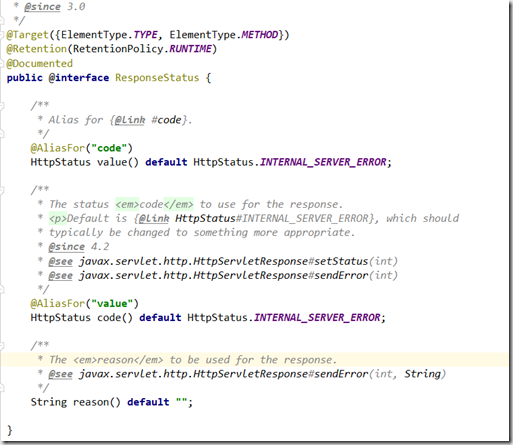
先记录下@ResponseStatus注解的定义. 记录几个得到的信息:@ResponseStatus声明在方法、类上, Spring3.0开始才有的, 三个属性其中 HttpStatus类型的 value 和 code是一个含义, 默认值就是 服务器 500错误的 HttpStatus.
用法一.标注在@RequestMapping方法上.
@Controller

@RequestMapping("/simple")

public class SimpleController {

    @RequestMapping("/demo2")

    @ResponseBody

    @ResponseStatus(code = HttpStatus.OK)

    public String demo2(){

        return "hello world";

    }

}
上面说了 code 和 value一个意思,这里我就用code了,相对而言比较喜欢code单词. 这里作用就是改变服务器响应的状态码 ,比如一个本是200的请求可以通过@ResponseStatus 改成404/500等等.
常见的几个状态码 HttpStatus.OK 就是 200 , HttpStatus.INTERNAL_SERVER_ERROR 就是 500 等等 ,具体的查看 HttpStatus枚举 有详细说明.
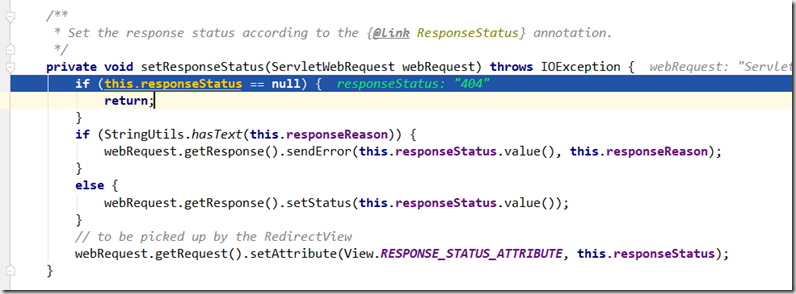
实现原理呢,注解底层还是通过设置 response.setStatus来实现.
在@RequestMapping方法执行完成,Spring解析返回值之前,进行了responseStatus设置.
代码片段位于:org.springframework.web.servlet.mvc.method.annotation.ServletInvocableHandlerMethod#setResponseStatus
this对象指当前的ServletInvocableHandlerMethod,看到 @ResponseStatus的reason不为空,就调用response.sendError ; reason为空,就调用setStatus方法仅仅设置响应状态码.
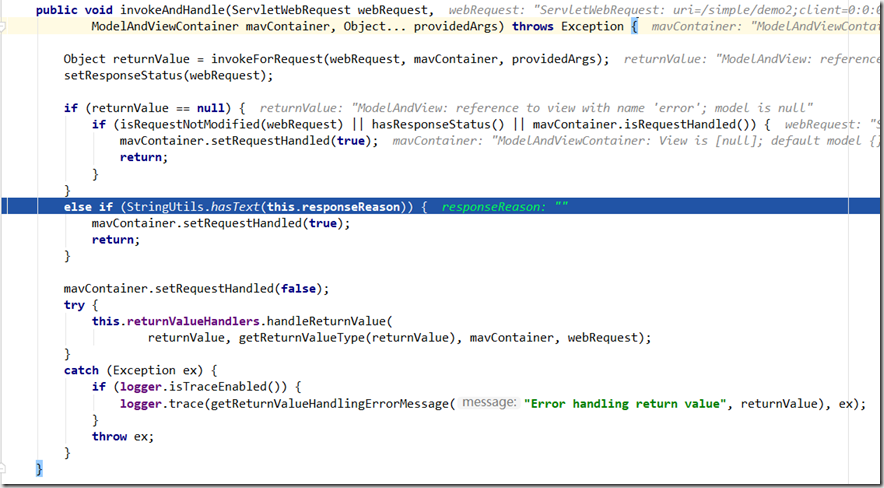
记录下在哪里调用了这个responseStatus方法?
代码片段位于:org.springframework.web.servlet.mvc.method.annotation.ServletInvocableHandlerMethod#invokeAndHandle
发现如果ServletInvocableHandlerMethod的responseReason有值,也就是@ResponseStatus有reason属性,@RequestMapping方法返回值都不处理了,直接返回;
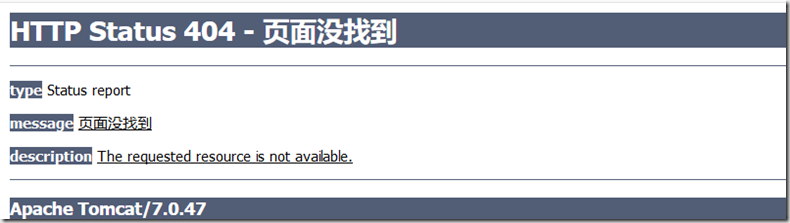
也就是说只要有@ResponseStatus的 reason属性标注在 处理器Controller类或者方法上,比如响应状态码code设置为 404,reason设置为页面没找到 ,那 tomcat 展示界面是这样大概,展示信息就是我们写的reason属性.
@ResponseStatus(code=A,reason=B)标注在 @RequestMapping方法上,作用效果与 response.sendError(A,B)是一样的.
所以,@ResponseStatus我建议啊, 这种方式下使用千万不要加 reason, 就把@ResponseStatus 当做一个用来改变响应状态码的方式!
用法二.标注在@ControllerAdvice中.
@ControllerAdvice

@ResponseStatus

public class MyControllerAdvice {

    @ExceptionHandler({ArithmeticException.class})

    public ModelAndView fix(Exception e){

        Map map=new HashMap();

        map.put("ex",e.getMessage());

        return new ModelAndView("error",map);

    }

}
@ControllerAdvice标注初衷我想就是程序运行过程中发生异常,对异常如何处理? 而@ResponseStatus标注在@ControllerAdvice类或者该类下的@ExceptionHandler上,区别大概就是,
原来比如请求程序抛出异常,异常被捕获,走@ExceptionHandler,正常走完状态码是200.
@ControllerAdvice或者 @ExceptionHandler标注了@ReponseStatus,那走完状态码就是500.
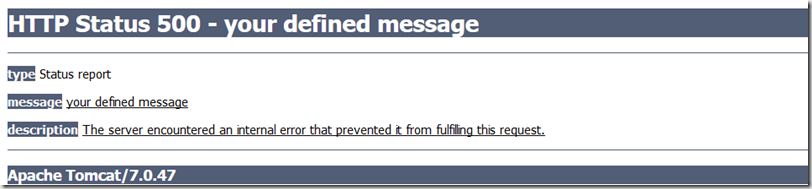
如果你再给@ResponseStatus添加了reason属性,不管捕获异常方法咋返回,都是服务器的错误码捕获界面,比如上面我的例子,给@ResponseStatus添加reason=”your defined message”.
不管怎么说,下面界面比一大堆异常堆栈信息看起来更简洁,但我还是不推荐使用诶,原因啊,界面不友好.
用法三.自定义类型的异常添加注解@ResponseStatus
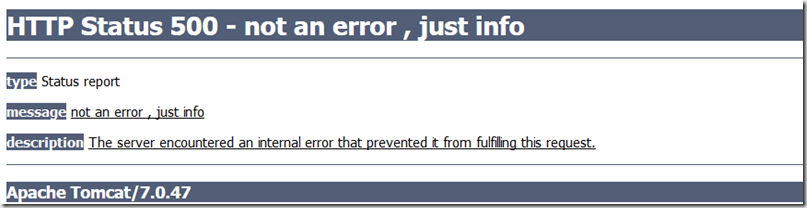
@ResponseStatus(code = HttpStatus.INTERNAL_SERVER_ERROR,reason = "not  an error , just info")

public class MyException extends RuntimeException {

    public MyException() {

    }

    public MyException(String message) {

        super(message);

    }

}
这样子,在SpringMvc中如果有某个 @RequestMapping方法抛出该异常, 只要开启<mvc:annotation-driven/>,异常自动展示的界面都是如下的:
SpringMvc异常捕获方法如下.
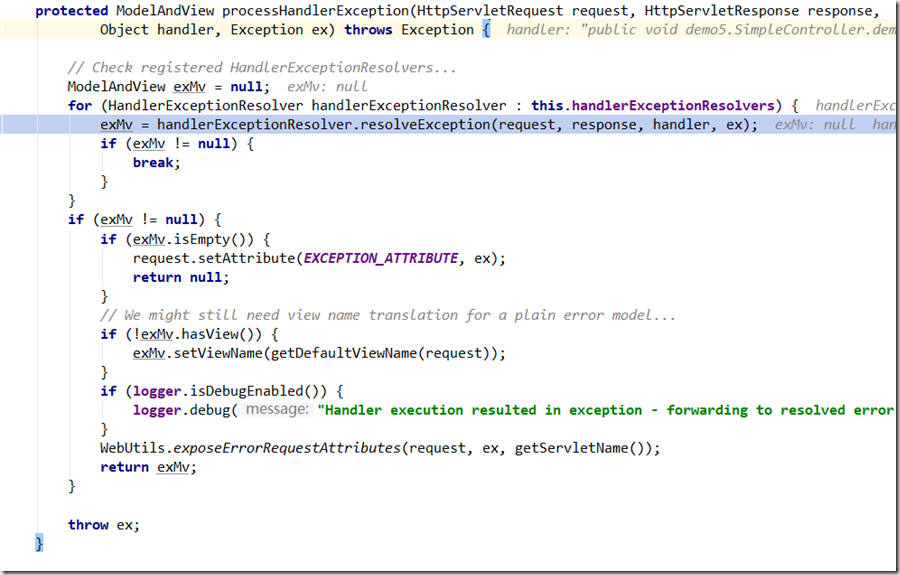
代码片段位于:org.springframework.web.servlet.DispatcherServlet#processHandlerException
<mvc:annotation-driven/>注册了三个HandlerExceptionResolver:ExceptionHandlerExceptionResolver用来处理@ExceptionHandler,而ResponseStatusExceptionResolver是用来处理抛出的异常上标注了@ResponseStatus的解析器.
ResponseStatusExceptionResolver解析异常方式:
代码片段位于:org.springframework.web.servlet.mvc.annotation.ResponseStatusExceptionResolver#doResolveException
ex就是@RequestMapping方法抛出自定义的异常,使用工具类解析自定义异常上的@ResponseStatus注解,找到注解就调用resolveResponseStatus进行响应的处理。
protected ModelAndView doResolveException(HttpServletRequest request, HttpServletResponse response,

			Object handler, Exception ex) {

		ResponseStatus responseStatus = AnnotatedElementUtils.findMergedAnnotation(ex.getClass(), ResponseStatus.class);

		if (responseStatus != null) {

			try {

				return resolveResponseStatus(responseStatus, request, response, handler, ex);

			}

			catch (Exception resolveEx) {

				logger.warn("Handling of @ResponseStatus resulted in Exception", resolveEx);

			}

		}

		else if (ex.getCause() instanceof Exception) {

			ex = (Exception) ex.getCause();

			return doResolveException(request, response, handler, ex);

		}

		return null;

	}
ResponseStatusExceptionResolver如何根据异常上的@ResponseStatus处理响应?
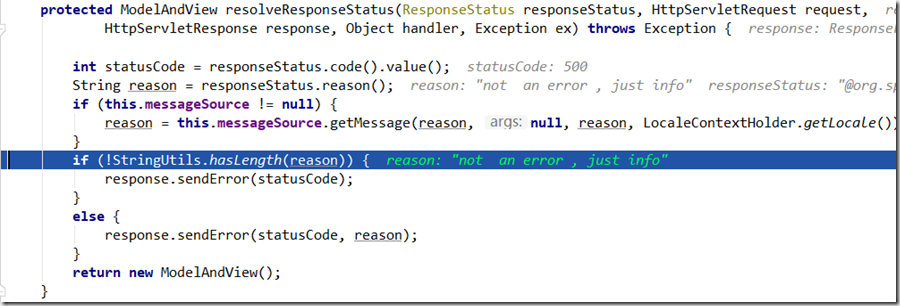
代码片段位于:org.springframework.web.servlet.mvc.annotation.ResponseStatusExceptionResolver#resolveResponseStatus
获取了@ReponseStatus的 code reason属性,reason不为空就 response.sendError(statusCode, reason) ,并且返回一个空的ModelAndView,这里的ModelAndView已经没有意义了,SendError方法简单来说就是会跳转到web.xml中配置的 错误状态码 对应的页面, 没有配置就是默认的服务器的那种错误界面,且只展示 前面的reason信息,即响应类型为text/html .
总结:
不管哪种方式,@ReponseStatus最后都是通过response.setStatus或response.sendError来处理.
如果只是为了返回状态码,建议只使用 @ResponseStatus(code=xxxx)这样来设置响应状态码;
如果抛出异常呢,不建议@ControllerAdvice里面的 @ResponseStatus和 自定义异常上的 @ResponseStatus一起使用, 按照我的阅读理解,两个一起使用肯定是一个生效,而且是 @ControllerAdvice中的@ResponseStatus生效.
场景分析:假设抛出异常不是我们自定义的异常,我们想改变响应的状态码,通过@ExceptionHandler来处理异常,并在@ExceptionHandler方法上也可以设置@ResponseStatus来达到效果;
假如抛出自定义的异常,自己没有定义异常处理界面,那在异常上标注@ResponseStatus就可以走 服务器默认的界面展示,或者通过web.xml 配置error-code \ error-page来自定义界面处理异常;
Spring @ResponseStatus的更多相关文章
- SPRING IN ACTION 第4版笔记-第七章Advanced Spring MVC-005- 异常处理@ResponseStatus、@ExceptionHandler、@ControllerAdvice
No matter what happens, good or bad, the outcome of a servlet request is a servlet response. If an e ...
- spring mvc @ResponseStatus 注解 注释返回中文乱码的问题
前言 前文中讲到,使用@ResponseStatus注解,可以修饰一个异常类,在发生异常的时候返回指定的错误码和消息,在返回的 reason中包含中文的时候,就会出现中文乱码的问题 现象 reason ...
- Spring 4 异常处理
异常与HTTP状态码的映射(@ResponseStatus) Spring默认会将自身抛出的异常自动映射到合适的状态码,如下是一些示例: 举个例子,当后端抛出如下异常(TypeMismatchExce ...
- spring mvc统一异常处理(@ControllerAdvice + @ExceptionHandler)
spring 封装了非常强大的异常处理机制.本文选取@ControllerAdvice + @ExceptionHandler 这种零配置(全注解),作为异常处理解决方案! @ControllerAd ...
- Spring中文文档
前一段时间翻译了Jetty的一部分文档,感觉对阅读英文没有大的提高(*^-^*),毕竟Jetty的受众面还是比较小的,而且翻译过程中发现Jetty的文档写的不是很好,所以呢翻译的兴趣慢慢就不大了,只能 ...
- spring mvc异常统一处理(ControllerAdvice注解)
首先我的项目是一个为移动端提供的json数据的,当后台报错时如果为移动端返回一个错误页面显得非常不友好,于是通过ControllerAdvice注解返回json数据. 首先创建一个异常处理类: pac ...
- 详细解说Java Spring的JavaConfig注解 【抄】
抄自: http://www.techweb.com.cn/network/system/2016-01-05/2252188.shtml @RestController spring4为了更方便的支 ...
- spring注解记录
集中记录spring常见注解 供今后查阅 @ControllerAdvice: ControllerAdvice的定义为: @Target(ElementType.TYPE) @Retention(R ...
- 【WEB】初探Spring MVC框架
Spring MVC框架算是当下比较流行的Java开源框架.但实话实说,做了几年WEB项目,完全没有SpringMVC实战经验,乃至在某些交流场合下被同行严重鄙视“奥特曼”了.“心塞”的同时,只好默默 ...
随机推荐
- 普通用户开放 sudo 权限
大家都知道 linux 每个目录都是有权限的,所以如果要想在此目录下读写,则要有这个目录的权限,或者就是有 sudo 权限,那怎么给普通用户赋予 sudo 权限呢,下面我们来看一下: 1.先用 roo ...
- JS中访问对象的两种方式区别
可以使用下面两种方式访问对象的属性和方法 1.对象名.属性名 对象名.方法名() 2.对象名["属性名"] 对象名["方法名"]() var obj = { n ...
- SRM480
250pt: 题意:给定n个网站,以及n个网站的关键词,还有一个危险词库.如果一个网站的关键词中>=th的危险词,那么这个网站便是危险的.同时,他的所有关键词加入危险词库.问,有多少个危险网站. ...
- WPF Bitmap转成Imagesource的性能优化
之前有个需求是在WPF中生成二维码,用的是QRCoder. QRCoder生成的是Bitmap,在wpf中需要转换成ImageSource才能显示. 之前的转换方式是: IntPtr hBitmap ...
- 5. ASP.NET MVC 中的Areas【区域】是什么
[PS返回上一篇:-->4.ASP.NET MVC 5.0 视图之模型绑定] 从ASP.NET MVC 2.0开始,微软就提供了一个新特性:Areas[区域].Areas仅仅是用来将大型程序拆分 ...
- appium精简教程
环境配置 package appium; import io.appium.java_client.android.*; import java.io.File; import java.io.IOE ...
- 【CS】笔试常见题目
网络 IP地址分类 常见网络协议 HTTP状态码 算法 排序问题总结 git git和svn的区别 git常用命令 git暂存区,工作区等 一.网络 1. IP地址分类: IP网络使用32位地址,以点 ...
- Tree with Small Distances(cf1029E)(树形动规)
You are given an undirected tree consisting of \(n\) vertices. An undirected tree is a connected und ...
- springboot常用注解
@SpringBootApplication:包含了@ComponentScan.@Configuration和@EnableAutoConfiguration注解.其中@ComponentScan让 ...
- Redis---基础数据结构
1.String(字符串) 1.1 概述 字符串 string 是 Redis 最简单的数据结构.Redis 所有的数据结构都是以唯一的 key 字符串作为名称,然后通过这个唯一 key 值来获取相应 ...