
mybatis四大接口之 Executor
【参考文章】:Mybatis-Executor解析
1. Executor的继承结构
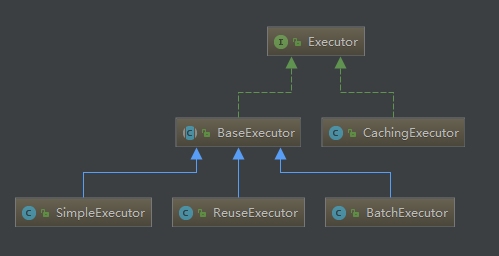
2. Executor(顶层接口)
定义了执行器的一些基本操作;
public interface Executor {

  ResultHandler NO_RESULT_HANDLER = null;

  // 更新

  int update(MappedStatement ms, Object parameter) throws SQLException;

  // 查询,先查缓存,再查数据库

  <E> List<E> query(MappedStatement ms, Object parameter, RowBounds rowBounds, ResultHandler resultHandler, CacheKey cacheKey, BoundSql boundSql) throws SQLException;

  // 查询

  <E> List<E> query(MappedStatement ms, Object parameter, RowBounds rowBounds, ResultHandler resultHandler) throws SQLException;

  <E> Cursor<E> queryCursor(MappedStatement ms, Object parameter, RowBounds rowBounds) throws SQLException;

  List<BatchResult> flushStatements() throws SQLException;

  // 事务提交

  void commit(boolean required) throws SQLException;

  // 事务回滚

  void rollback(boolean required) throws SQLException;

  // 创建缓存的键对象

  CacheKey createCacheKey(MappedStatement ms, Object parameterObject, RowBounds rowBounds, BoundSql boundSql);

  // 缓存中是否有这个查询的结果

  boolean isCached(MappedStatement ms, CacheKey key);

  // 清空缓存

  void clearLocalCache();

  void deferLoad(MappedStatement ms, MetaObject resultObject, String property, CacheKey key, Class<?> targetType);

  Transaction getTransaction();

  void close(boolean forceRollback);

  boolean isClosed();

  void setExecutorWrapper(Executor executor);

}
3. BaseExecutor
BaseExecutor是一个抽象类,采用模板方法的设计模式。
它实现了Executor接口,实现了执行器的基本功能。
具体使用哪一个Executor则是可以在 mybatis 的 config.xml 中进行配置的。默认为SimpleExecutor;
配置如下:
<settings>

    <!--SIMPLE、REUSE、BATCH-->

    <setting name="defaultExecutorType" value="SIMPLE"/>

</settings>
3.1 构造方法
子类的构造方法会调用 BaseExecutor 的构造方法。
默认都支持一级缓存;
public abstract class BaseExecutor implements Executor {

  protected BaseExecutor(Configuration configuration, Transaction transaction) {

    this.transaction = transaction;

    this.deferredLoads = new ConcurrentLinkedQueue<DeferredLoad>();

    // 一级缓存

    this.localCache = new PerpetualCache("LocalCache");

    this.localOutputParameterCache = new PerpetualCache("LocalOutputParameterCache");

    this.closed = false;

    this.configuration = configuration;

    this.wrapper = this;

  }
}
3.2 update
insert,update,delete操作都会调用此方法;
调用此方法时会清空一级缓存;
   @Override

  public int update(MappedStatement ms, Object parameter) throws SQLException {

    ErrorContext.instance().resource(ms.getResource()).activity("executing an update").object(ms.getId());

    if (closed) {

      throw new ExecutorException("Executor was closed.");

    }

    // 数据变更操作会清空一级缓存

    clearLocalCache();

    return doUpdate(ms, parameter);

  }
3.3 query
查询操作会先在缓存中查询,缓存命中失败后再去数据中查询
  @Override

  public <E> List<E> query(MappedStatement ms, Object parameter, RowBounds rowBounds, ResultHandler resultHandler) throws SQLException {

    BoundSql boundSql = ms.getBoundSql(parameter);

    // 创建一级缓存的键对象

    CacheKey key = createCacheKey(ms, parameter, rowBounds, boundSql);

            // 调用下面的 query 方法

    return query(ms, parameter, rowBounds, resultHandler, key, boundSql);

 }

  @SuppressWarnings("unchecked")

  @Override

  public <E> List<E> query(MappedStatement ms, Object parameter, RowBounds rowBounds, ResultHandler resultHandler, CacheKey key, BoundSql boundSql) throws SQLException {

    ErrorContext.instance().resource(ms.getResource()).activity("executing a query").object(ms.getId());

    if (closed) {

      throw new ExecutorException("Executor was closed.");

    }

    if (queryStack == 0 && ms.isFlushCacheRequired()) {

      clearLocalCache();

    }

    List<E> list;

    try {

      queryStack++;

      // 先在缓存中查询,缓存命中失败再去数据库查询

      list = resultHandler == null ? (List<E>) localCache.getObject(key) : null;

      if (list != null) {

        handleLocallyCachedOutputParameters(ms, key, parameter, boundSql);

      } else {

        list = queryFromDatabase(ms, parameter, rowBounds, resultHandler, key, boundSql);

      }

    } finally {

      queryStack--;

    }

    if (queryStack == 0) {

      for (DeferredLoad deferredLoad : deferredLoads) {

        deferredLoad.load();

      }

      // issue #601

      deferredLoads.clear();

      if (configuration.getLocalCacheScope() == LocalCacheScope.STATEMENT) {

        // issue #482

        clearLocalCache();

      }

    }

    return list;

  }
3.4 createCacheKey
一级缓存通过 HashMap 实现,它的键对象根据SQL的ID,参数,SQL本身,分页参数以及JDBC的参数信息构成。
  @Override

  // 创建CacheKey对象

  public CacheKey createCacheKey(MappedStatement ms, Object parameterObject, RowBounds rowBounds, BoundSql boundSql) {

    if (closed) {

      throw new ExecutorException("Executor was closed.");

    }

    CacheKey cacheKey = new CacheKey();

    // MappedStatement的id

    cacheKey.update(ms.getId());

    // 分页参数的offset

    cacheKey.update(rowBounds.getOffset());

    // 分页参数的limit

    cacheKey.update(rowBounds.getLimit());

    // SQL语句本身

    cacheKey.update(boundSql.getSql());

    // 传递给jdbc的参数

    List<ParameterMapping> parameterMappings = boundSql.getParameterMappings();

    TypeHandlerRegistry typeHandlerRegistry = ms.getConfiguration().getTypeHandlerRegistry();

    // mimic DefaultParameterHandler logic

    for (ParameterMapping parameterMapping : parameterMappings) {

      if (parameterMapping.getMode() != ParameterMode.OUT) {

        Object value;

        String propertyName = parameterMapping.getProperty();

        if (boundSql.hasAdditionalParameter(propertyName)) {

          value = boundSql.getAdditionalParameter(propertyName);

        } else if (parameterObject == null) {

          value = null;

        } else if (typeHandlerRegistry.hasTypeHandler(parameterObject.getClass())) {

          value = parameterObject;

        } else {

          MetaObject metaObject = configuration.newMetaObject(parameterObject);

          value = metaObject.getValue(propertyName);

        }

        cacheKey.update(value);

      }

    }

    if (configuration.getEnvironment() != null) {

      // issue #176

      cacheKey.update(configuration.getEnvironment().getId());

    }

    return cacheKey;

  }
3.5定义的抽象方法
  // 定义的四个抽象方法,在去掉 do 前缀的相应方法中被调用

  protected abstract int doUpdate(MappedStatement ms, Object parameter)

      throws SQLException;

  protected abstract List<BatchResult> doFlushStatements(boolean isRollback)

      throws SQLException;

  protected abstract <E> List<E> doQuery(MappedStatement ms, Object parameter, RowBounds rowBounds, ResultHandler resultHandler, BoundSql boundSql)

      throws SQLException;

  protected abstract <E> Cursor<E> doQueryCursor(MappedStatement ms, Object parameter, RowBounds rowBounds, BoundSql boundSql)

      throws SQLException;
4. SimpleExecutor
最简单的执行器,根据对应的sql直接执行即可,不会做一些额外的操作;
拼接完SQL之后,直接交给 StatementHandler 去执行。
/**

 *    Copyright 2009-2016 the original author or authors.

 *

 *    Licensed under the Apache License, Version 2.0 (the "License");

 *    you may not use this file except in compliance with the License.

 *    You may obtain a copy of the License at

 *

 *       http://www.apache.org/licenses/LICENSE-2.0

 *

 *    Unless required by applicable law or agreed to in writing, software

 *    distributed under the License is distributed on an "AS IS" BASIS,

 *    WITHOUT WARRANTIES OR CONDITIONS OF ANY KIND, either express or implied.

 *    See the License for the specific language governing permissions and

 *    limitations under the License.

 */

package org.apache.ibatis.executor;

import org.apache.ibatis.cursor.Cursor;

import org.apache.ibatis.executor.statement.StatementHandler;

import org.apache.ibatis.logging.Log;

import org.apache.ibatis.mapping.BoundSql;

import org.apache.ibatis.mapping.MappedStatement;

import org.apache.ibatis.session.Configuration;

import org.apache.ibatis.session.ResultHandler;

import org.apache.ibatis.session.RowBounds;

import org.apache.ibatis.transaction.Transaction;

import java.sql.Connection;

import java.sql.SQLException;

import java.sql.Statement;

import java.util.Collections;

import java.util.List;

/**

 * @author Clinton Begin

 */

public class SimpleExecutor extends BaseExecutor {

  public SimpleExecutor(Configuration configuration, Transaction transaction) {

    super(configuration, transaction);

  }

  @Override

  public int doUpdate(MappedStatement ms, Object parameter) throws SQLException {

    Statement stmt = null;

    try {

      Configuration configuration = ms.getConfiguration();

      StatementHandler handler = configuration.newStatementHandler(this, ms, parameter, RowBounds.DEFAULT, null, null);

      stmt = prepareStatement(handler, ms.getStatementLog());

      return handler.update(stmt);

    } finally {

      closeStatement(stmt);

    }

  }

  @Override

  public <E> List<E> doQuery(MappedStatement ms, Object parameter, RowBounds rowBounds, ResultHandler resultHandler, BoundSql boundSql) throws SQLException {

    Statement stmt = null;

    try {

      Configuration configuration = ms.getConfiguration();

      StatementHandler handler = configuration.newStatementHandler(wrapper, ms, parameter, rowBounds, resultHandler, boundSql);

      stmt = prepareStatement(handler, ms.getStatementLog());

      return handler.<E>query(stmt, resultHandler);

    } finally {

      closeStatement(stmt);

    }

  }

  @Override

  protected <E> Cursor<E> doQueryCursor(MappedStatement ms, Object parameter, RowBounds rowBounds, BoundSql boundSql) throws SQLException {

    Configuration configuration = ms.getConfiguration();

    StatementHandler handler = configuration.newStatementHandler(wrapper, ms, parameter, rowBounds, null, boundSql);

    Statement stmt = prepareStatement(handler, ms.getStatementLog());

    return handler.<E>queryCursor(stmt);

  }

  @Override

  public List<BatchResult> doFlushStatements(boolean isRollback) throws SQLException {

    return Collections.emptyList();

  }

  private Statement prepareStatement(StatementHandler handler, Log statementLog) throws SQLException {

    Statement stmt;

    Connection connection = getConnection(statementLog);

    stmt = handler.prepare(connection, transaction.getTimeout());

    handler.parameterize(stmt);

    return stmt;

  }

}
5. BatchExecutor
通过批量操作来优化性能。通常需要注意的是批量更新操作,由于内部有缓存的实现,使用完成后记得调用flushStatements来清除缓存。
public class BatchExecutor extends BaseExecutor {

  public static final int BATCH_UPDATE_RETURN_VALUE = Integer.MIN_VALUE + 1002;

  private final List<Statement> statementList = new ArrayList<Statement>();

  private final List<BatchResult> batchResultList = new ArrayList<BatchResult>();

  // 上一次的SQL语句

  private String currentSql;

  // 上一次的MappedStatement 对象

  private MappedStatement currentStatement;

  // 因为调用父类的构造方法,所以 BatchExecutor 自己的私有属性 currentSql和currentStatement 开始都为null

  public BatchExecutor(Configuration configuration, Transaction transaction) {

    super(configuration, transaction);

  }

  @Override

  public int doUpdate(MappedStatement ms, Object parameterObject) throws SQLException {

    final Configuration configuration = ms.getConfiguration();

    final StatementHandler handler = configuration.newStatementHandler(this, ms, parameterObject, RowBounds.DEFAULT, null, null);

    final BoundSql boundSql = handler.getBoundSql();

    final String sql = boundSql.getSql();

    final Statement stmt;

    // 第一次肯定是false,进入else分支,currentSql和currentStatement被初始化,后面进入false分支则进行更新

    if (sql.equals(currentSql) && ms.equals(currentStatement)) {

        // 取上一次的 Statement 对象

      int last = statementList.size() - 1;

      stmt = statementList.get(last);

      applyTransactionTimeout(stmt);

     handler.parameterize(stmt);//fix Issues 322

      BatchResult batchResult = batchResultList.get(last);

      batchResult.addParameterObject(parameterObject);

    } else {

      Connection connection = getConnection(ms.getStatementLog());

      stmt = handler.prepare(connection, transaction.getTimeout());

      handler.parameterize(stmt);    //fix Issues 322

      // currentSql和currentStatement 更新为此次的对象

      currentSql = sql;

      currentStatement = ms;

      statementList.add(stmt);

      batchResultList.add(new BatchResult(ms, sql, parameterObject));

    }

  // handler.parameterize(stmt);

    handler.batch(stmt);

    return BATCH_UPDATE_RETURN_VALUE;

  }

}
6. ReuseExecutor
flushStatements来清除Map。public class ReuseExecutor extends BaseExecutor {
private final Map<String, Statement> statementMap = new HashMap<String, Statement>();
// 调用父类构造器
public ReuseExecutor(Configuration configuration, Transaction transaction) {
super(configuration, transaction);
}
private Statement prepareStatement(StatementHandler handler, Log statementLog) throws SQLException {
Statement stmt;
BoundSql boundSql = handler.getBoundSql();
String sql = boundSql.getSql();
if (hasStatementFor(sql)) {
// 如果缓存了该SQL,则返回其Statement对象
stmt = getStatement(sql);
applyTransactionTimeout(stmt);
} else {
// 如果没有缓存该SQL,则创建SQL的Statement,并加入缓存
Connection connection = getConnection(statementLog);
stmt = handler.prepare(connection, transaction.getTimeout());
putStatement(sql, stmt);
}
handler.parameterize(stmt);
return stmt;
}
// 是否缓存了这个 sql
private boolean hasStatementFor(String sql) {
try {
return statementMap.keySet().contains(sql) && !statementMap.get(sql).getConnection().isClosed();
} catch (SQLException e) {
return false;
}
}
// 返回指定sql的 Statement
private Statement getStatement(String s) {
return statementMap.get(s);
}
// 添加SQL和Statement
private void putStatement(String sql, Statement stmt) {
statementMap.put(sql, stmt);
}
}
7. CachingExecutor
启用于二级缓存时的执行器;
public class CachingExecutor implements Executor {

    // 持有的 Executor,最终的操作都由该对象实现

    private final Executor delegate;

    private final TransactionalCacheManager tcm = new TransactionalCacheManager();

    public CachingExecutor(Executor delegate) {

        this.delegate = delegate;

        delegate.setExecutorWrapper(this);

    }

    public int update(MappedStatement ms, Object parameterObject) throws SQLException {

        this.flushCacheIfRequired(ms);

        return this.delegate.update(ms, parameterObject);

    }

    public <E> List<E> query(MappedStatement ms, Object parameterObject, RowBounds rowBounds, ResultHandler resultHandler, CacheKey key, BoundSql boundSql) throws SQLException {

        Cache cache = ms.getCache();

        if (cache != null) {

            this.flushCacheIfRequired(ms);

            if (ms.isUseCache() && resultHandler == null) {

                this.ensureNoOutParams(ms, boundSql);

                List<E> list = (List)this.tcm.getObject(cache, key);

                if (list == null) {

                    list = this.delegate.query(ms, parameterObject, rowBounds, resultHandler, key, boundSql);

                    this.tcm.putObject(cache, key, list);

                }

                return list;

            }

        }

        return this.delegate.query(ms, parameterObject, rowBounds, resultHandler, key, boundSql);

    }

        // 是否清空二级缓存

        private void flushCacheIfRequired(MappedStatement ms) {

        Cache cache = ms.getCache();

        if (cache != null && ms.isFlushCacheRequired()) {

            this.tcm.clear(cache);

        }

    }

}
mybatis四大接口之 Executor的更多相关文章
- mybatis四大接口之 StatementHandler
1. 继承结构 StatementHandler:顶层接口 BaseStatementHandler : 实现顶层接口的抽象类,实现了部分接口,并定义了一个抽象方法 SimpleStatementHa ...
- mybatis四大接口之 ResultSetHandler
1. 继承结构 2. ResultSetHandler public interface ResultSetHandler { // 将Statement执行后产生的结果集(可能有多个结果集)映射为结 ...
- mybatis四大接口之 ParameterHandler
1. 继承结构 只有一个默认的实现类 2. ParameterHandler 获取参数对象: 设置参数对象: public interface ParameterHandler { Object g ...
- MyBatis 源码分析——SqlSession接口和Executor类
mybatis框架在操作数据的时候,离不开SqlSession接口实例类的作用.可以说SqlSession接口实例是开发过程中打交道最多的一个类.即是DefaultSqlSession类.如果笔者记得 ...
- MyBatis学习笔记(二) Executor
一.概述 当我们打开一个SqlSession的时候,我们就完成了操作数据库的第一步,那MyBatis是如何执行Sql的呢?其实MyBatis的增删改查都是通过Executor执行的,Executor和 ...
- SqlSession接口和Executor
mybatis框架在操作数据的时候,离不开SqlSession接口实例类的作用.可以说SqlSession接口实例是开发过程中打交道最多的一个类.即是DefaultSqlSession类.如果笔者记得 ...
- Java集合框架之四大接口、常用实现类
Java集合框架 <Java集合框架的四大接口> Collection:存储无序的.不唯一的数据:其下有List和Set两大接口. List:存储有序的.不唯一的数据: Set:存储无序的 ...
- Mybatis中接口和对应的mapper文件命名为什么需要一样?
背景: 自己对于Mybatis现阶段只处于会用的阶段,有些问题,自己还是想深入的了解一下.就拿Mybatis的接口文件和mapper文件命名需要一致来开始. 解决: 当我们将接口和mapper文件放在 ...
- Mybatis Mapper接口是如何找到实现类的-源码分析
KeyWords: Mybatis 原理,源码,Mybatis Mapper 接口实现类,代理模式,动态代理,Java动态代理,Proxy.newProxyInstance,Mapper 映射,Map ...
随机推荐
- Django框架之序列化和上传文件
一.Django的序列化(对于ajax请求) Django中的序列化主要应用在将数据库中检索的数据返回给客户端用户,特别的Ajax请求一般返回的为Json格式. 1)django序列化的使用方法 . ...
- C# 单例模式的五种写法
1.简单实现 C# 1 2 3 4 5 6 7 8 9 10 11 12 13 14 15 16 17 18 19 20 21 22 23 24 public sealed c ...
- [转]order by 与索引
ORDER BY 通常会有两种实现方法,一个是利用有序索引自动实现,也就是说利用有序索引的有序性就不再另做排序操作了.另一个是把结果选好之后再排序. 用有序索引这种,当然是最快的,不过有一些限制条件, ...
- nullptr(c++11)
1.概念 用字面值常量nullptr来初始化或赋值来得到空指针 2.c++11之前使用NULL或0 1)NULL是一个宏定义(预处理变量),定义在cstdlib中,其值就是0:对于预处理变量,预处理器 ...
- Edifact 95B报文解读
PART 1 INTRODUCTION D100_D.95B PART 2 UNIFORM RULES OF CONDUCT FOR INTERCHANGE PART2_D.ZIP(1) OF TRA ...
- 怎样导入现有的NiosII工程
查找路径
- git windows下载安装 (git命令)
Set up git At the heart of GitHub is an open source version control system (VCS) called Git. Git is ...
- Maven之java application _HelloWord
maven 是一个项目构建的一个工具; 一.环境的配置; 1.下载maven 解压放在一个路径下为了好找我们就将该文件放在 D:\javaNew\apache-maven-3.3.9 2.配置本地仓 ...
- 20155326 实验三 敏捷开发与XP实践
20155326 实验三 敏捷开发与XP实践 实验内容 XP基础 XP核心实践 相关工具 实验要求 1.没有Linux基础的同学建议先学习<Linux基础入门(新版)><Vim编辑器 ...
- utf8.php
<?php /** * */ class Utf8 { function __construct() { global $CFG; if( preg_match('/./u', '') === ...