
mybatis关于ORM的使用以及设计(三)[参数对象转换为SQL语言]
上节分析了Mapper对象的创建。
在ORM的定义中可以理解为Object->SQLMapper抽象层(这一层并不负责具体的SQL执行。这一层可以理解为SQL代理层)
本节分析以下内容:
①SqlSession在具体执行SQL时,如果通过namespace+sqlid定位到具体的MappedStatement(sql的对象化表现形式)
②参数(Object) 如何填充到具体的SQL
③SQL是如何执行的
- 获取StateMentMapper.前面讲到初始化时,会缓存MappedStatement,MappedStatement被保存在StrictMap中.
StrictMap是Mybatis实现HashMap子类。Key重复放入的时候会报错。
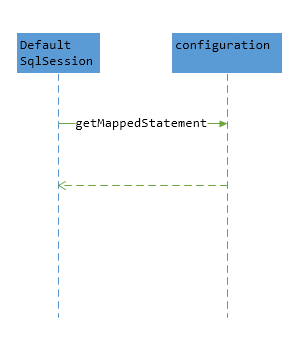
- 参数(Object) 如何填充到具体的SQL(Param-SQL的Orm转换)
1、通过Executor执行SQL
  @Override

  public <E> List<E> selectList(String statement, Object parameter, RowBounds rowBounds) {

    try {

      MappedStatement ms = configuration.getMappedStatement(statement);

      return executor.query(ms, wrapCollection(parameter), rowBounds, Executor.NO_RESULT_HANDLER);

    } catch (Exception e) {

      throw ExceptionFactory.wrapException("Error querying database.  Cause: " + e, e);

    } finally {

      ErrorContext.instance().reset();

    }

  }
2、Executor是如何获取的?
SqlSessionFactory工厂中代码如下:
从Configuration中获得Excecutor,默认的执行器类型为configuration.getDefaultExecutorType()在configuration类中定义为
protected ExecutorType defaultExecutorType = ExecutorType.SIMPLE;
private SqlSession openSessionFromDataSource(ExecutorType execType, TransactionIsolationLevel level, boolean autoCommit) {

    Transaction tx = null;

    try {

      final Environment environment = configuration.getEnvironment();

      final TransactionFactory transactionFactory = getTransactionFactoryFromEnvironment(environment);

      tx = transactionFactory.newTransaction(environment.getDataSource(), level, autoCommit);

      final Executor executor = configuration.newExecutor(tx, execType);

      return new DefaultSqlSession(configuration, executor, autoCommit);

    } catch (Exception e) {

      closeTransaction(tx); // may have fetched a connection so lets call close()

      throw ExceptionFactory.wrapException("Error opening session.  Cause: " + e, e);

    } finally {

      ErrorContext.instance().reset();

    }

  }
ExecutorType.SIMPLE会创建何种执行器?
来看Configuraiton的获得执行器的方法
默认的执行器为:SimpleExecutor,而cacheEnabled默认值为true.所以实际是CachingExecutor,使用了装饰器模式。
public Executor newExecutor(Transaction transaction, ExecutorType executorType) {

    executorType = executorType == null ? defaultExecutorType : executorType;

    executorType = executorType == null ? ExecutorType.SIMPLE : executorType;

    Executor executor;

    if (ExecutorType.BATCH == executorType) {

      executor = new BatchExecutor(this, transaction);

    } else if (ExecutorType.REUSE == executorType) {

      executor = new ReuseExecutor(this, transaction);

    } else {

      executor = new SimpleExecutor(this, transaction);

    }

    if (cacheEnabled) {

      executor = new CachingExecutor(executor);

    }

    executor = (Executor) interceptorChain.pluginAll(executor);

    return executor;

  }
- Excecutor是如何将参数成功映射到具体SQL的参数?
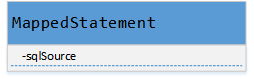
先看下MappedStatement中的类成员构成。sqlSource是具体获取待执行SQL的对象。
- sqlSource接口定义:
BoundSql getBoundSql(Object parameterObject)的方法,改方调用实际的SqlSource的实现类,来获取真正执行的SQL
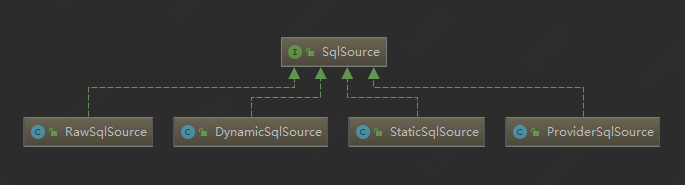
先说说几个处理类的区别:
DynamicSqlSource:sql中包含<where><if><choose>等条件是,会被定义为.通过具体的Node处理对象,拼接SQL。
看一段代码,我们关注rootSqlNode变量,以及getBoundSql()方法的执行。
public class DynamicSqlSource implements SqlSource {

  private final Configuration configuration;

  private final SqlNode rootSqlNode;

  public DynamicSqlSource(Configuration configuration, SqlNode rootSqlNode) {

    this.configuration = configuration;

    this.rootSqlNode = rootSqlNode;

  }

  @Override

  public BoundSql getBoundSql(Object parameterObject) {

    DynamicContext context = new DynamicContext(configuration, parameterObject);

    rootSqlNode.apply(context);

    SqlSourceBuilder sqlSourceParser = new SqlSourceBuilder(configuration);

    Class<?> parameterType = parameterObject == null ? Object.class : parameterObject.getClass();

    SqlSource sqlSource = sqlSourceParser.parse(context.getSql(), parameterType, context.getBindings());

    BoundSql boundSql = sqlSource.getBoundSql(parameterObject);

    for (Map.Entry<String, Object> entry : context.getBindings().entrySet()) {

      boundSql.setAdditionalParameter(entry.getKey(), entry.getValue());

    }

    return boundSql;

  }
解析过程描述:
①rootSqlNode为从XML解析的具体SQL节点,每一行作为一个node。对于<if><choose>等。每一个节点是一个node
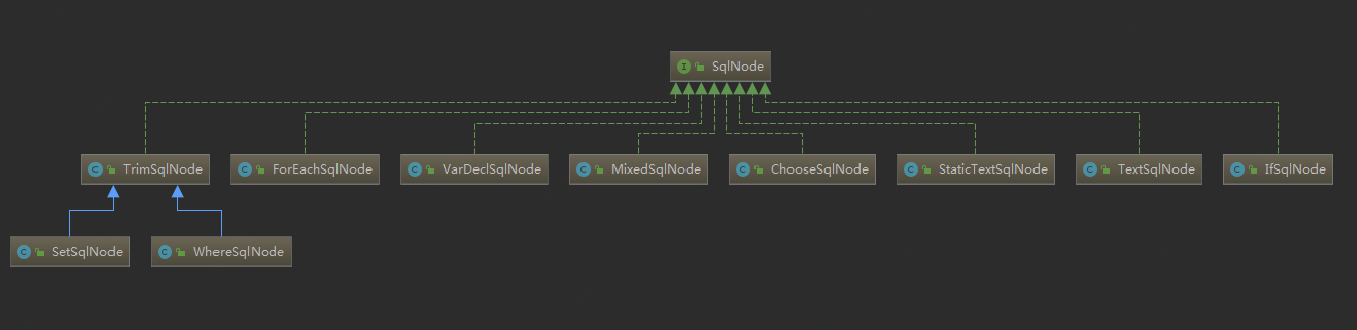
②<if></if>的判断是在具体的node中执行的。SQLNode有以下几种类型。

看一段IfSqlNode的代码:apply方法中的evaluateBoolean方法,将对<if>语句进行判断,返回结果。如果结果为真,则把条件添加到contents
/**

 * @author Clinton Begin

 */

public class IfSqlNode implements SqlNode {

  private final ExpressionEvaluator evaluator;

  private final String test;

  private final SqlNode contents;

  public IfSqlNode(SqlNode contents, String test) {

    this.test = test;

    this.contents = contents;

    this.evaluator = new ExpressionEvaluator();

  }

  @Override

  public boolean apply(DynamicContext context) {

    if (evaluator.evaluateBoolean(test, context.getBindings())) {

      contents.apply(context);

      return true;

    }

    return false;

  }

}
mybatis中定义的SQL节点如下。
RawSqlSource:对于不包含<if>等条件判断,替换#{}变为? 在创建RawSqlSource对象时执行这项操作
DynamicSqlSource: 对sql中包含${}参数的会转换为该对象
- SqlSource的转换是在初始化加载时完成。那真正的参数是何时转换为SQL?
SimpleExecutor中,创建PrepareStateMent的过程。
  public <E> List<E> doQuery(MappedStatement ms, Object parameter, RowBounds rowBounds, ResultHandler resultHandler, BoundSql boundSql) throws SQLException {

    Statement stmt = null;

    try {

      Configuration configuration = ms.getConfiguration();

      StatementHandler handler = configuration.newStatementHandler(wrapper, ms, parameter, rowBounds, resultHandler, boundSql);

      stmt = prepareStatement(handler, ms.getStatementLog());

      return handler.<E>query(stmt, resultHandler);

    } finally {

      closeStatement(stmt);

    }

  }
  private Statement prepareStatement(StatementHandler handler, Log statementLog) throws SQLException {

    Statement stmt;

    Connection connection = getConnection(statementLog);
   //创建、初始化PreparedStatement

    stmt = handler.prepare(connection, transaction.getTimeout());
  //设置参数

    handler.parameterize(stmt);

    return stmt;

  }
离我们想知道的真相越来越近了,来看具体的参数化过程
StateMentHandler.parameterize
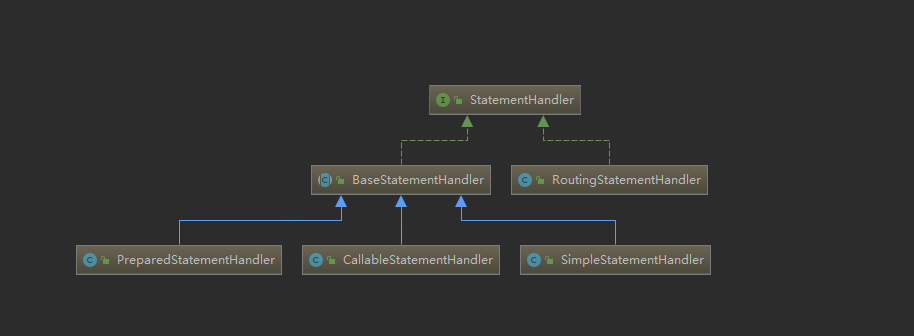
RoutingStatementHandler用来做路由器:根据实际的StatementType做路由
我们来看PreparedStatementHadler
    public void parameterize(Statement statement) throws SQLException {

        this.parameterHandler.setParameters((PreparedStatement)statement);

    }
public void setParameters(PreparedStatement ps) {
  ErrorContext.instance().activity("setting parameters").object(this.mappedStatement.getParameterMap().getId());
  //获得所有的参数
List<ParameterMapping> parameterMappings = this.boundSql.getParameterMappings();
  if (parameterMappings != null) {
    for(int i = 0; i < parameterMappings.size(); ++i) {
      ParameterMapping parameterMapping = (ParameterMapping)parameterMappings.get(i);
      if (parameterMapping.getMode() != ParameterMode.OUT) {
        String propertyName = parameterMapping.getProperty();

                    Object value;

                    if (this.boundSql.hasAdditionalParameter(propertyName)) {

                        value = this.boundSql.getAdditionalParameter(propertyName);

                    } else if (this.parameterObject == null) {

                        value = null;
            //如果有typeHandler则用TypeHandler处理参数
            //一些基础类型是有typeHandler的

                    } else if (this.typeHandlerRegistry.hasTypeHandler(this.parameterObject.getClass())) {

                        value = this.parameterObject;

                    } else {
            //如果没有typeHandler,通过反射,获得Bean参数中的值

                        MetaObject metaObject = this.configuration.newMetaObject(this.parameterObject);

                        value = metaObject.getValue(propertyName);

                    }

            //根据参数的JDBCtype找到TypeHandler,设置到PrePareStatement中

                    TypeHandler typeHandler = parameterMapping.getTypeHandler();

                    JdbcType jdbcType = parameterMapping.getJdbcType();

                    if (value == null && jdbcType == null) {

                        jdbcType = this.configuration.getJdbcTypeForNull();

                    }

                    try {

                        typeHandler.setParameter(ps, i + 1, value, jdbcType);

                    } catch (TypeException var10) {

                        throw new TypeException("Could not set parameters for mapping: " + parameterMapping + ". Cause: " + var10, var10);

                    } catch (SQLException var11) {

                        throw new TypeException("Could not set parameters for mapping: " + parameterMapping + ". Cause: " + var11, var11);

                    }

                }

            }

        }

    }
TypeHandler的继承关系如下:
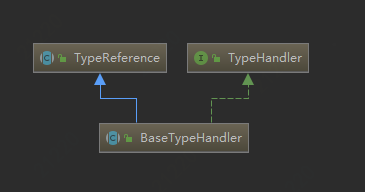
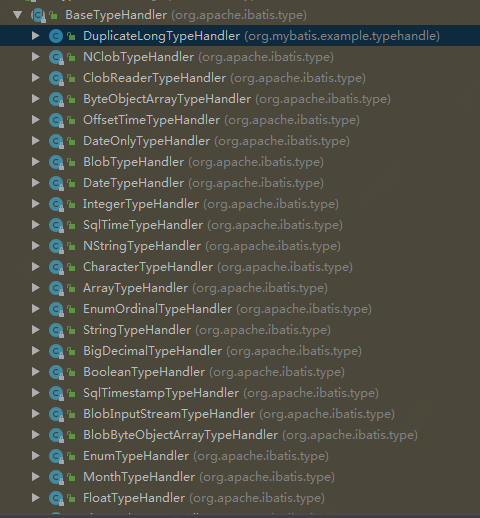
我们查看其中的BigDecimalTypeHandler的源码
public class BigDecimalTypeHandler extends BaseTypeHandler<BigDecimal> {

  @Override

  public void setNonNullParameter(PreparedStatement ps, int i, BigDecimal parameter, JdbcType jdbcType)

      throws SQLException {

    ps.setBigDecimal(i, parameter);

  }

  @Override

  public BigDecimal getNullableResult(ResultSet rs, String columnName)

      throws SQLException {

    return rs.getBigDecimal(columnName);

  }

  @Override

  public BigDecimal getNullableResult(ResultSet rs, int columnIndex)

      throws SQLException {

    return rs.getBigDecimal(columnIndex);

  }

  @Override

  public BigDecimal getNullableResult(CallableStatement cs, int columnIndex)

      throws SQLException {

    return cs.getBigDecimal(columnIndex);

  }

}
会调用JDBCAPI中的相应方法获得正确的值
mybatis关于ORM的使用以及设计(三)[参数对象转换为SQL语言]的更多相关文章
- mybatis关于ORM的使用以及设计(二)[DaoInterface 转换 Mapper代理对象]
第一节中,分析了Mybatis的ORM框架的初始化,这篇来分析SQL执行过程中,对象->SQL是如何转换的 其中包含两种映射思想 ①DAO接口->Mapper实例 ②执行DAO的方法时,参 ...
- mybatis关于ORM的使用以及设计(一)[ORM的初始化]
ORM WIKI中的解释.画重点 Object-relational mapping (ORM, O/RM, and O/R mapping tool) in computer science is ...
- c# 轻量级 ORM 框架 之 DBHelper 实现 (三)
周末了比较清闲,把自己的orm框架整理了下,开源了. 已经做出来的东西通常感觉有些简单,一些新手或许听到"框架"一类的词觉得有些"高深",简单来说orm就是把a ...
- [simple-orm-mybaits]基于Mybatis的ORM封装介绍
目录 前言 ORM框架现状 Mybatis优缺点 simple-orm-mybatis设计思路介绍 simple-orm-mybatis使用说明 simple-orm-mybatis实际使用 推荐最佳 ...
- ORM表之间高级设计
ORM表之间高级设计 一.表的继承 # db_test1 # 一.基表 # Model类的内部配置Meta类要设置abstract=True, # 这样的Model类就是用来作为基表 # 多表:Boo ...
- JdbcTemplate 、Mybatis、ORM 、Druid 、HikariCP 、Hibernate是什么?它们有什么关系?
JdbcTemplate .Mybatis.ORM .Druid .HikariCP .Hibernate是什么?它们有什么关系? 学完Spring和SpringMVC之后,就急于求成的开始学习起Sp ...
- JavaScript框架设计(三) push兼容性和选择器上下文
JavaScript框架设计(三) push兼容性和选择器上下文 博主很久没有更博了. 在上一篇 JavaScript框架设计(二) 中实现了最基本的选择器,getId,getTag和getClass ...
- MyBatis学习(三)、动态SQL语句
三.动态SQL语句 有些时候,sql语句where条件中,需要一些安全判断,例如按某一条件查询时如果传入的参数是空,此时查询出的结果很可能是空的,也许我们需要参数为空时,是查出全部的信息.使用Orac ...
- 游戏UI框架设计(三) : 窗体的层级管理
游戏UI框架设计(三) ---窗体的层级管理 UI框架中UI窗体的"层级管理",最核心的问题是如何进行窗体的显示管理.窗体(预设)的显示我们前面定义了三种类型: 普通.隐藏其他.反 ...
随机推荐
- expdp用户10迁移到新环境11之正式实施
expdp迁移源端数据库:cu 源端IP: 源端schema: xxx目标数据库:ora 目标IP:xxx操作流程:31日凌晨应用停,随后使用数据泵迁移,两套库迁移,迁移一套,迁移完毕应用确 ...
- autofac使用总结
转摘自:http://niuyi.github.io/blog/2012/04/06/autofac-by-unit-test/ 注册部分: AutoFac是.net平台下的IOC容器产品,它可以管理 ...
- paddlepaddle
1. 训练过程中cost出现nan 可能是因为有脏数据,寻找脏数据的方法就是,设置batch_size=1, paddle.reader.shuffle 中buf_size=1 一条一条的进行训练,看 ...
- docker ,docker与虚拟机的区别
什么是Docker: 1.Docker 是一个开源项目,诞生于 2013 年初,最初是 dotCloud 公司内部的一个业余项目.它基于 Google 公司推出的 Go 语言实现. 项目后来加入了 L ...
- 零基础学习python(2)
再讲新知识之前,先将一些之前没提的东西再介绍一下: (1) 命令行模式 在Windows开始菜单选择“命令提示符”(或者是在搜索栏中输入“cmd”),就进入到命令行模式,它的提示符类似C:\>: ...
- 复习下CSS-零碎要点
一,CSS选择器 1. h1 > strong {color:red;}表示的是只有h1下子元素才是红色,“孙子”就不行. 2. h1 + p {margin-top:50px;} 选择 ...
- Javascript 4.3 事件处理函数
鼠标指针悬停在某个元素上时触发一个动作:onmouseover事件处理函数 鼠标指针离开某个元素时触发一个动作:onmouseout事件处理函数 点击某个链接时触发一个动作:onclick事件处理函数 ...
- APIPA
自动专用IP地址(Automatic Private IP Address,APIPA)是当客户端无法从DHCP服务器中获得IP地址时自动配置的地址.IPv4地址前缀169.254/16已经被IANA ...
- C++ 中用cin方式获取输入的几种常用方式
一.前言 在C++程序的编写过程中,可能会经常用到cin方式用来捕获输入设备的输入信息.细分的话,主要的方式有:cin>>.cin.get.cin.getline.在借助键盘等字符输入设备 ...
- python基础——2、python应用(随机、异常)——(YZ)
本次的内容为python的应用,关于随机.异常的应用,均多应用列表. 习题一 1.初始化一个数据集,包括5-10位同学的成绩数据(数据类型不限),数据格式如下: 学号 姓名 Java C语言 Pyth ...