
Spring 缓存注解这样用,太香了!
作者最近在开发公司项目时使用到 Redis 缓存,并在翻看前人代码时,看到了一种关于 @Cacheable 注解的自定义缓存有效期的解决方案,感觉比较实用,因此作者自己拓展完善了一番后分享给各位。
Spring 缓存常规配置
Spring Cache 框架给我们提供了 @Cacheable 注解用于缓存方法返回内容。但是 @Cacheable 注解不能定义缓存有效期。这样的话在一些需要自定义缓存有效期的场景就不太实用。
按照 Spring Cache 框架给我们提供的 RedisCacheManager 实现,只能在全局设置缓存有效期。这里给大家看一个常规的 CacheConfig 缓存配置类,代码如下,
@EnableCaching

@Configuration

public class CacheConfig extends CachingConfigurerSupport {

    ...

    private RedisSerializer<String> keySerializer() {

        return new StringRedisSerializer();

    }

    private RedisSerializer<Object> valueSerializer() {

        return new GenericFastJsonRedisSerializer();

    }

    public static final String CACHE_PREFIX = "crowd:";

    @Bean

    public CacheManager cacheManager(RedisConnectionFactory redisConnectionFactory) {

        // 配置序列化(解决乱码的问题)

        RedisCacheConfiguration config = RedisCacheConfiguration.defaultCacheConfig()

                //设置key为String

                .serializeKeysWith(RedisSerializationContext.SerializationPair.fromSerializer(keySerializer()))

                //设置value为自动转Json的Object

                .serializeValuesWith(RedisSerializationContext.SerializationPair.fromSerializer(valueSerializer()))

                .computePrefixWith(name -> CACHE_PREFIX + name  + ":")

                .entryTtl(Duration.ofSeconds(600));

        RedisCacheWriter redisCacheWriter = RedisCacheWriter.nonLockingRedisCacheWriter(Objects.requireNonNull(redisConnectionFactory));

        return new RedisCacheManager(redisCacheWriter, config);

    }

}
这里面简单对 RedisCacheConfiguration 缓存配置做一下说明:
serializeKeysWith():设置 Redis 的 key 的序列化规则。erializeValuesWith():设置 Redis 的 value 的序列化规则。computePrefixWith():计算 Redis 的 key 前缀。entryTtl():全局设置@Cacheable注解缓存的有效期。
那么使用如上配置生成的 Redis 缓存 key 名称是什么样得嘞?这里用开源项目 crowd-admin 的 ConfigServiceImpl 类下 getValueByKey(String key) 方法举例,
@Cacheable(value = "configCache", key = "#root.methodName + '_' + #root.args[0]")

@Override

public String getValueByKey(String key) {

    QueryWrapper<Config> wrapper = new QueryWrapper<>();

    wrapper.eq("configKey", key);

    Config config = getOne(wrapper);

    if (config == null) {

        return null;

    }

    return config.getConfigValue();

}
执行此方法后,Redis 中缓存 key 名称如下,
crowd:configCache:getValueByKey_sys.name
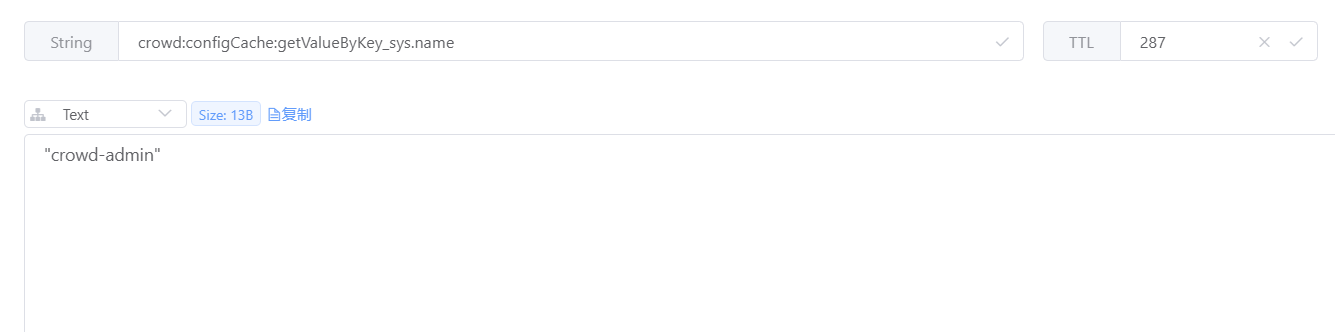
ttl 过期时间是 287,跟我们全局设置的 300 秒基本是一致的。此时假如我们想把 getValueByKey 方法的缓存有效期单独设置为 600 秒,那我们该如何操作嘞?
@Cacheable 注解默认是没有提供有关缓存有效期设置的。想要单独修改 getValueByKey 方法的缓存有效期只能修改全局的缓存有效期。那么有没有别的方法能够为 getValueByKey 方法单独设置缓存有效期嘞?当然是有的,大家请往下看。
自定义 MyRedisCacheManager 缓存
其实我们可以通过自定义 MyRedisCacheManager 类继承 Spring Cache 提供的 RedisCacheManager 类后,重写 createRedisCache(String name, RedisCacheConfiguration cacheConfig) 方法来完成自定义缓存有效期的功能,代码如下,
public class MyRedisCacheManager extends RedisCacheManager {

    public MyRedisCacheManager(RedisCacheWriter cacheWriter, RedisCacheConfiguration defaultCacheConfiguration) {

        super(cacheWriter, defaultCacheConfiguration);

    }

    @Override

    protected RedisCache createRedisCache(String name, RedisCacheConfiguration cacheConfig) {

        String[] array = StringUtils.split(name, "#");

        name = array[0];

         // 解析 @Cacheable 注解的 value 属性用以单独设置有效期

        if (array.length > 1) {

            long ttl = Long.parseLong(array[1]);

            cacheConfig = cacheConfig.entryTtl(Duration.ofSeconds(ttl));

        }

        return super.createRedisCache(name, cacheConfig);

    }

}
MyRedisCacheManager 类逻辑如下,
- 继承
Spring Cache提供的RedisCacheManager类。 - 重写
createRedisCache(String name, RedisCacheConfiguration cacheConfig)方法。 - 解析 name 参数,根据
#字符串进行分割,获取缓存 key 名称以及缓存有效期。 - 重新设置缓存 key 名称以及缓存有效期。
- 调用父类的
createRedisCache(name, cacheConfig)方法来完成缓存写入。
接着我们修改下 CacheConfig 类的 cacheManager 方法用以使用 MyRedisCacheManager 类。代码如下,
@Bean

public CacheManager cacheManager(RedisConnectionFactory redisConnectionFactory) {

    return new MyRedisCacheManager(RedisCacheWriter.nonLockingRedisCacheWriter(redisConnectionFactory), defaultCacheConfig());

}

private RedisCacheConfiguration defaultCacheConfig() {

    return RedisCacheConfiguration.defaultCacheConfig()

            .serializeKeysWith(RedisSerializationContext.SerializationPair.fromSerializer(keySerializer()))

            .serializeValuesWith(RedisSerializationContext.SerializationPair.fromSerializer(valueSerializer()))

            .computePrefixWith(name -> CACHE_PREFIX + name  + ":")

            .entryTtl(Duration.ofSeconds(600));

}
最后在使用 @Cacheable 注解时,在原有 value 属性的 configCache 值后添加 #600,单独标识缓存有效期。代码如下,
@Cacheable(value = "configCache#600", key = "#root.methodName + '_' + #root.args[0]")

@Override

public String getValueByKey(String key) {

   ...

}
看下 getValueByKey 方法生成的 Redis 缓存 key 有效期是多久。如下,
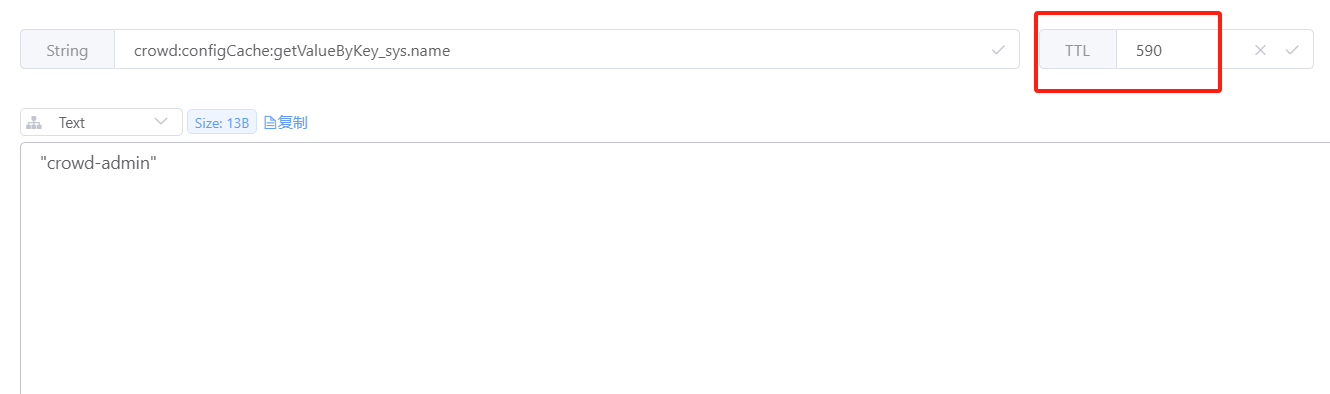
OK,看到是 590 秒有效期后,我们就大功告成了。到这里我们就完成了对 @Cacheable 注解的自定义缓存有效期功能开发。
关注公众号【waynblog】每周分享技术干货、开源项目、实战经验、国外优质文章翻译等,您的关注将是我的更新动力!
Spring 缓存注解这样用,太香了!的更多相关文章
- Spring 缓存注解解析过程
Spring 缓存注解解析过程 通过 SpringCacheAnnotationParser 的 parseCacheAnnotations 方法解析指定方法或类上的缓存注解, @Cacheable ...
- Spring缓存注解@Cache使用
参考资料 http://www.ibm.com/developerworks/cn/opensource/os-cn-spring-cache/ http://swiftlet.net/archive ...
- Spring缓存注解@Cacheable、@CacheEvict、@CachePut使用(转)
原文地址:https://www.cnblogs.com/fashflying/p/6908028.html 从3.1开始,Spring引入了对Cache的支持.其使用方法和原理都类似于Spring对 ...
- Spring 缓存注解之@Cacheable,@CacheEvit
Spring引入了Cache的支持,其使用方法类似于Spring对事务的支持.Spring Cache是作用于方法上的,其核心思想是,当我们调用一个缓存方法时,把该方法参数和返回结果作为一个键值对存放 ...
- 【Spring】22、Spring缓存注解@Cache使用
缓存注解有以下三个: @Cacheable @CacheEvict @CachePut @Cacheable(value=”accountCache”),这个注释的意思是,当调用这个 ...
- Spring缓存注解@Cacheable、@CacheEvict、@CachePut使用
从3.1开始,Spring引入了对Cache的支持.其使用方法和原理都类似于Spring对事务管理的支持.Spring Cache是作用在方法上的,其核心思想是这样的:当我们在调用一个缓存方法时会把该 ...
- Spring缓存注解
从3.1开始,Spring引入了对Cache的支持.其使用方法和原理都类似于Spring对事务管理的支持.Spring Cache是作用在方法上的,其核心思想是这样的:当我们在调用一个缓存方法时会把该 ...
- Spring – 缓存注解
Spring缓存抽象概述 Spring框架自身并没有实现缓存解决方案,但是从3.1开始定义了org.springframework.cache.Cache和org.springframework.ca ...
- Spring缓存注解@CachePut , @CacheEvict,@CacheConfig使用
Cacheable CachePut CacheEvict CacheConfig 开启缓存注解 @Cacheable @Cacheable是用来声明方法是可缓存的.将结果存储到缓存中以便后续使用相同 ...
- 详解Spring缓存注解@Cacheable,@CachePut , @CacheEvict使用
https://blog.csdn.net/u012240455/article/details/80844361 注释介绍 @Cacheable @Cacheable 的作用 主要针对方法配置,能够 ...
随机推荐
- 虚拟化学习:vps和云计算的区别
1 vps 可以由虚拟机实现,但并不是虚拟机; 虚拟机是云计算的核心,但虚拟机也不等于云主机. 2 vps是面向单台服务器的虚拟化技术,服务器挂了,其上的vps也跟着挂了. 3 云计算是面向服务器集群 ...
- 2021-7-7 VUE动态样式
Vue的动态样式实例1 <!DOCTYPE html> <html> <head> <meta charset="utf-8"> & ...
- python-多继承构造函数声明问题
背景 有场景分别定义两组逻辑,随后有统一入口做基类属性的整合 其中两组逻辑的积累构造函数定义入参不同 设计类继承图如: 实际的使用方式抽象为[使用] 小节 实际开发过程中遇到问题 先说结论 pytho ...
- go语言实用工具编写要这样学
写作目的 本篇章写作有以下目的: 介绍go语言的基础知识,这里你会发现go语言学习成本较低,与python语言相似. 介绍go语言的常用标准库,这里你会发现go语言的标准库已经非常强大,python语 ...
- 质量管理 | QC、QA、QM,去QA化与降本增效
现在国内职业的质量管理都是从 CMMI 和 ISO 质量体系演化过来的,但是能做真正的质量管理的公司很少.质量管理的 QC 偏测试,对最终的产品负责:QA 偏过程,从过程把控质量:QM 偏体系,类似于 ...
- 《Kali渗透基础》10. 提权、后渗透
@ 目录 1:提权 2:Admin 提权为 System 2.1:at 2.2:sc 2.3:SysInternal Suite 2.4:进程注入提权 3:抓包嗅探 4:键盘记录 5:本地缓存密码 5 ...
- (2023.7.24)软件加密与解密-2-1-程序分析方法[XDbg].md
body { font-size: 15px; color: rgba(51, 51, 51, 1); background: rgba(255, 255, 255, 1); font-family: ...
- 获取API接口返回的商品详情数据后该如何使用
获取API接口返回的商品详情数据后,我们可以使用以下方式将其处理和利用: 数据展示:我们可以将API接口返回的商品详情数据以列表.表格.图形等形式展示给用户,以便他们更好地了解商品的基本信息.特征.评 ...
- SqlServer表添加字段
IF NOT EXISTS (SELECT * FROM syscolumns WHERE id=object_id('表名') AND name='字段名') ALTER TABLE 表名 ADD ...
- Leetcode刷题笔记——二分法
二分法是搜索算法中极其典型的方法,其要求输入序列有序并可随机访问.算法思想为 输入:有序数组nums,目的数值target 要求输出:如果target存在在数组中,则输出其index,否则输出-1 将 ...