
ML Lecture 0-1: Introduction of Machine Learning
本博客是针对李宏毅教授在Youtube上上传的课程视频《ML Lecture 0-1: Introduction of Machine Learning》的学习笔记。在Github上也po了这个系列学习笔记(MachineLearningCourseNote),觉得写的不错的小伙伴欢迎来给项目点个赞哦~~
Lecture 0-1: Introduction of Machine Learning
What we expect to learn from this course?
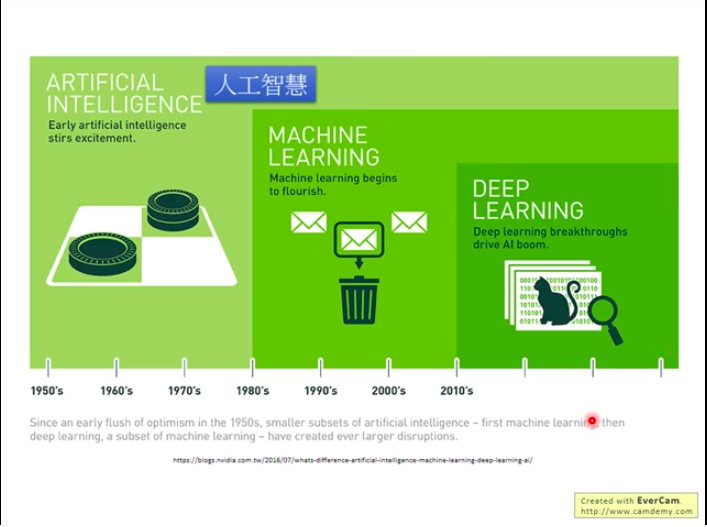
Artificial Intelligence (AI) aims to make machines as smart as human beings. But for long, people don’t know how to do this.
Until 1980s, machine learning (ML) comes into beings. Just like its name, machine learning aims to make machine learn to learn.
Q1: what is the relationship between AI and ML?
A: ML is a potential way to achieve AI.
Q2: what is the relationship between ML and deep learning (DL)?
A: DL is one of methods of ML.
- Extension: Creature’s Instinct: Beaver Build Dam
Beavers are born with the instinct to move stones to build dams as long as they hear the sounds of water flows.
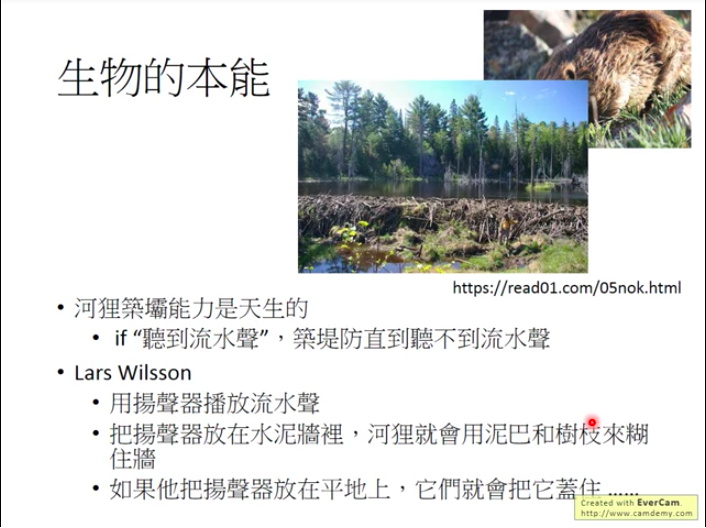
This can be summarized to a rule for beaver: When hear the sounds of water flows, build dam!
Compare it with Human Being’s Instinct

- AI is just some “if”s ?

No, it’s not what we are chasing in the course!
What is Machine Learning ?
- Do Speech Recognition
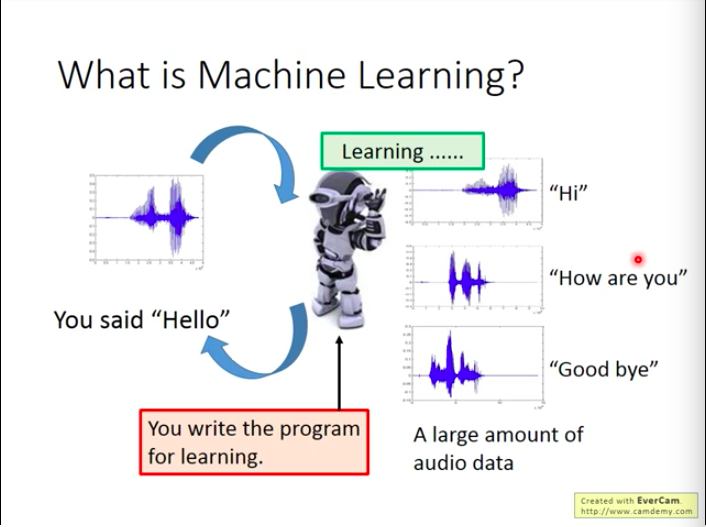
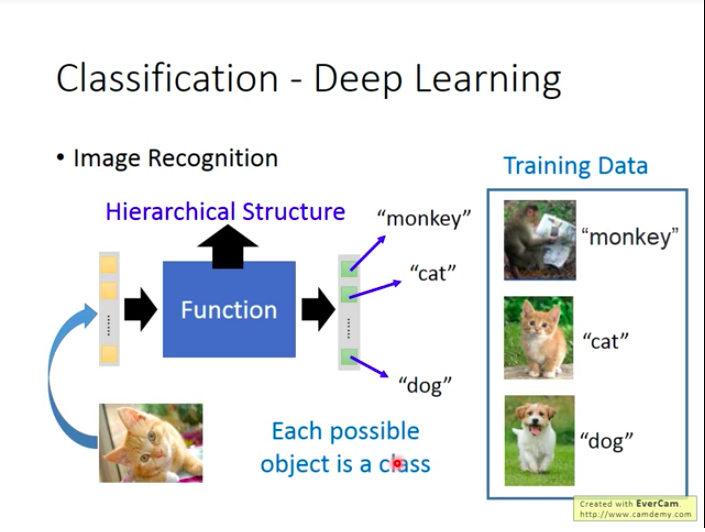
- Do Image Recognition

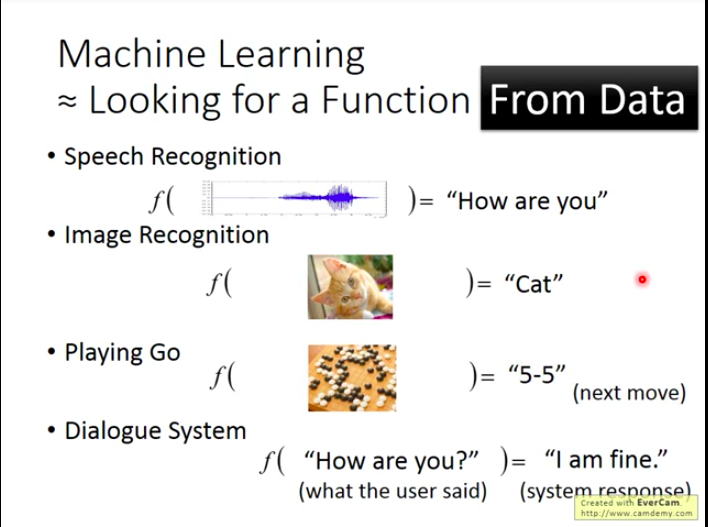
ML mostly equal to Looking for a Function
True function to do perfect speech recognition is too complex, there are efforts starting from 1960s trying to write enough rules to include all mappings from voice to word, however it’s still not finished yet! So we need machine to help us find out the function From Data.
To simplify, we let machines try to find the true function using training data we give them. After that, machines would give response to new input data we give to them based on rules that they have learned from training.
How to find this function: Framework
Example: Image Recognition
First, we have a set of function. (This set is called Model)
Then, we have training data, they consist of some input & output pairs, respectively used as function input and function output. (This method also known as Supervised Learning)
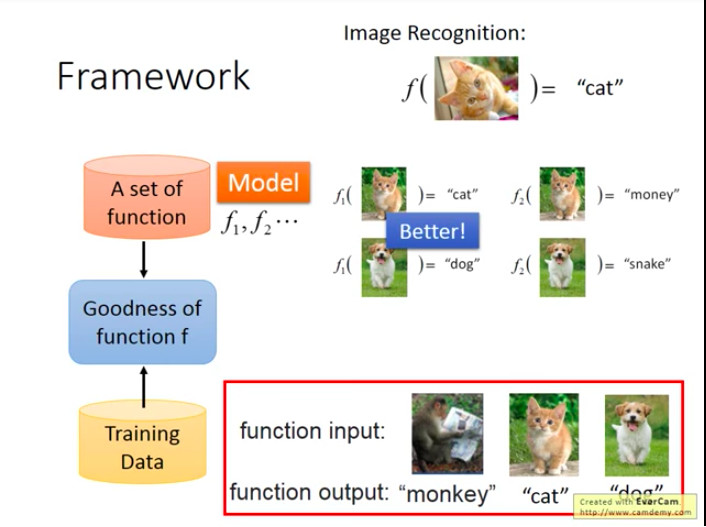
- How to find the true function from the set?
We need a good algorithm to find the best function (f∗" role="presentation" style="position: relative;">f∗f∗function that has greatest goodness).
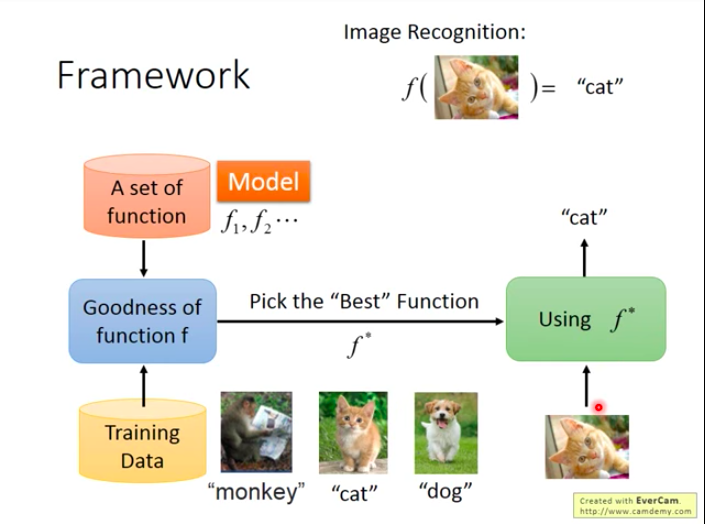
After we find the best function f∗" role="presentation" style="position: relative;">f∗f∗, how can we make sure that a machine can recognize the cat in a picture that it has never seen before? Well, that is exactly one of the most important problem in ML, that is: can machine draw inferences?
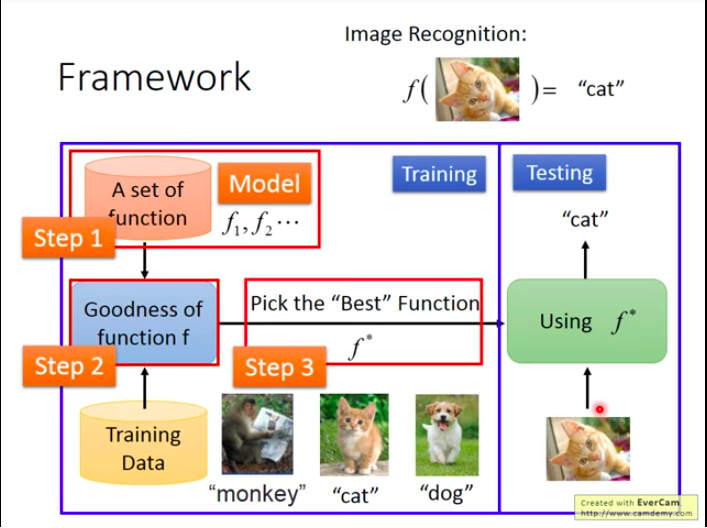
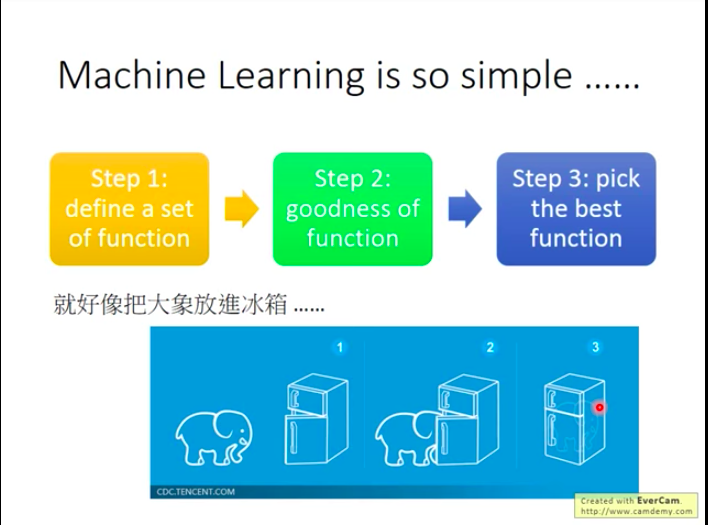
- Three Steps to do ML
1.Determine a function set;
2.Enable machines to measure how good a function is;
3.Give machines an algorithm that can help pick the “best” function.
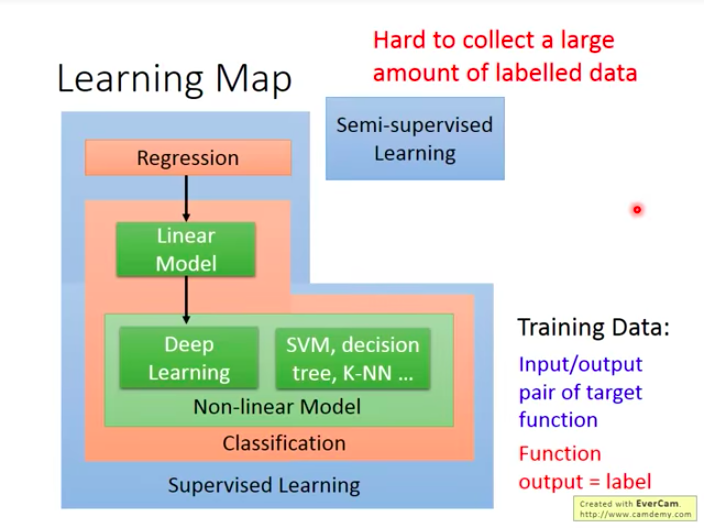
Learning Map
- What ML technics you can learn from this course ?
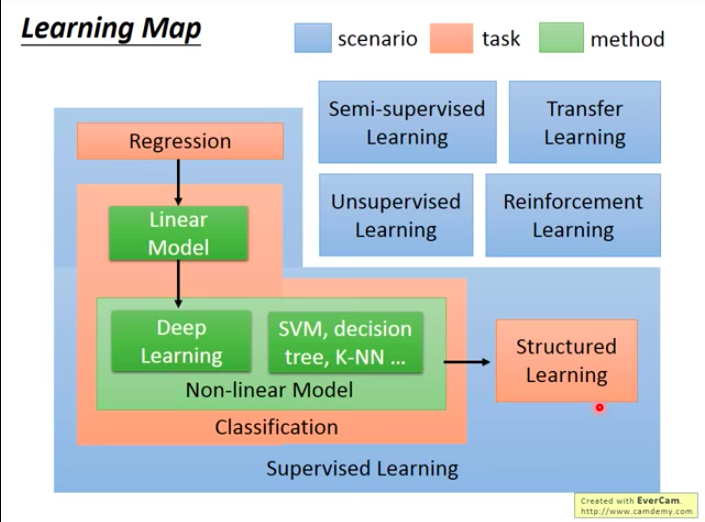
Next, we give a simple introduction to conceptions included in the map.
Regression
Definition: The output of function that machine is trying to learn is a scalar.
Example: Predicting PM2.5

Classification
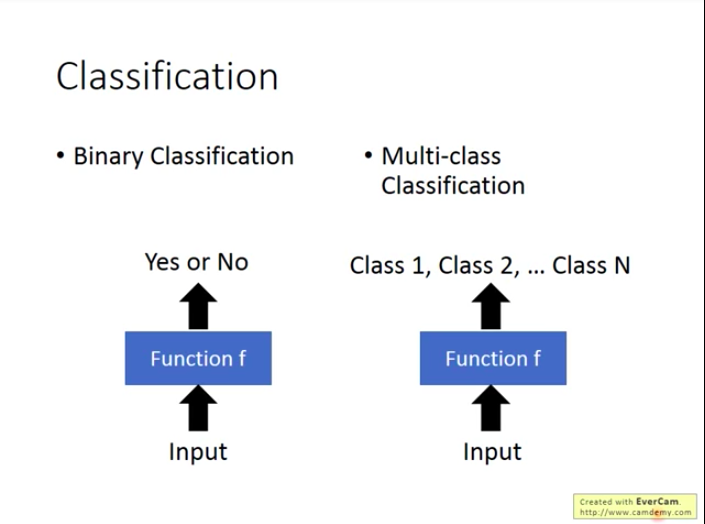
Two types:
- Binary Classification: output Yes or No
- Multi-class Classification: output i (i∈" role="presentation" style="position: relative;">∈∈{1,2,3,..,N})
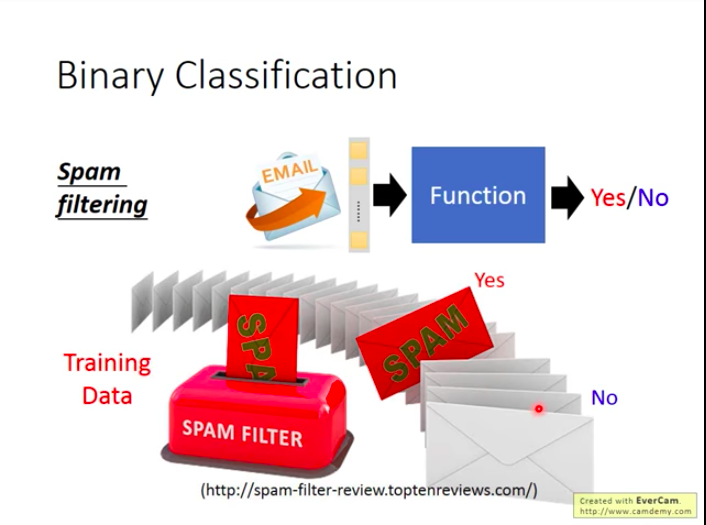
Example for binary classification: Gmail filter Spams
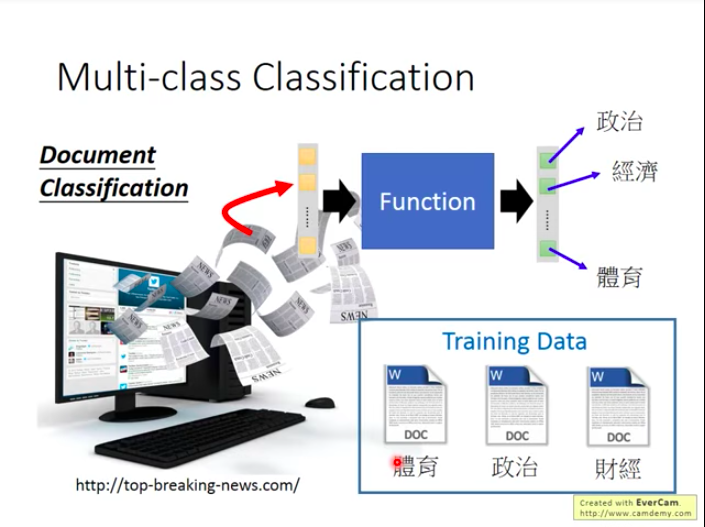
Example for multi-class classification: Document Classification
Model
Different model = Different set of functions -> Different Performance of machine
Linear Model
Non-linear Model
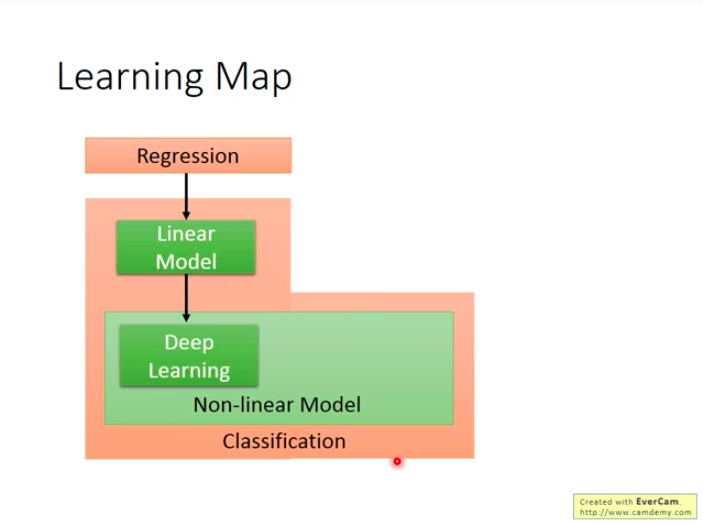
Deep Learning is one of Non-linear models. When doing deep learning, it usually means that the goal function is very very complex, and therefore it can also complete complex tasks such as image recognition, playing GO!
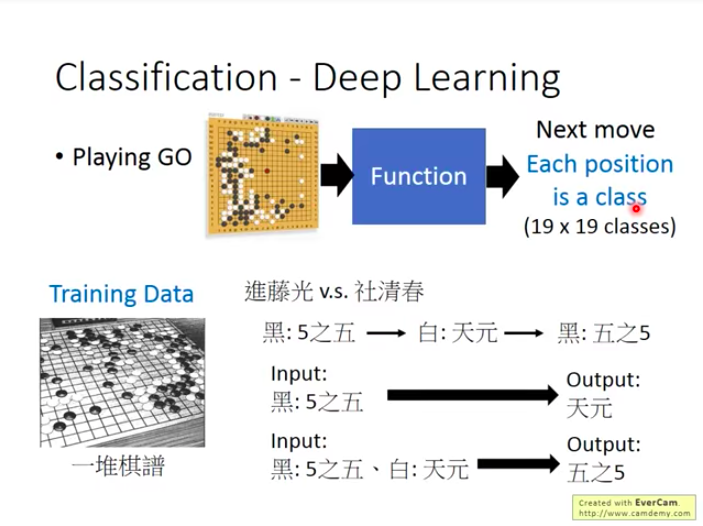
All technics mentioned above belong to field of Supervised Learning, it usually comes with great quantities of training data. These training data are some input/output pairs of target function, and normally the output need to be manually labelled, so the function output is also called label.
Then, how to collect a large amount of labelled data?
A: Semi-supervised Learning.
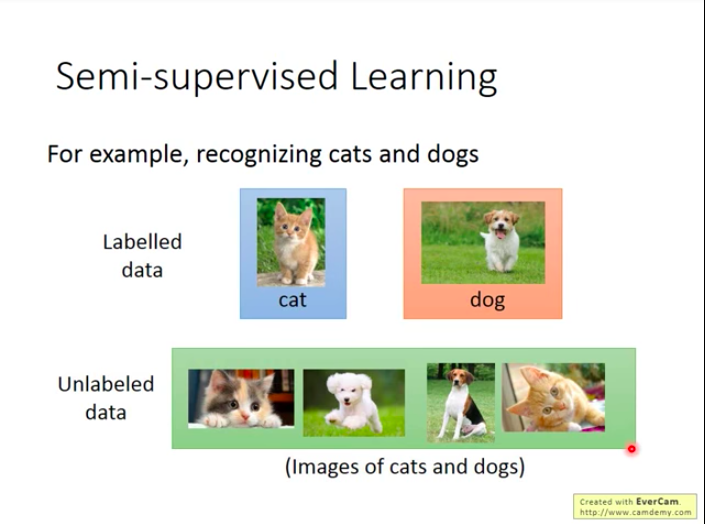
Semi-supervised Learning
Unlabelled data can also help machine learning!
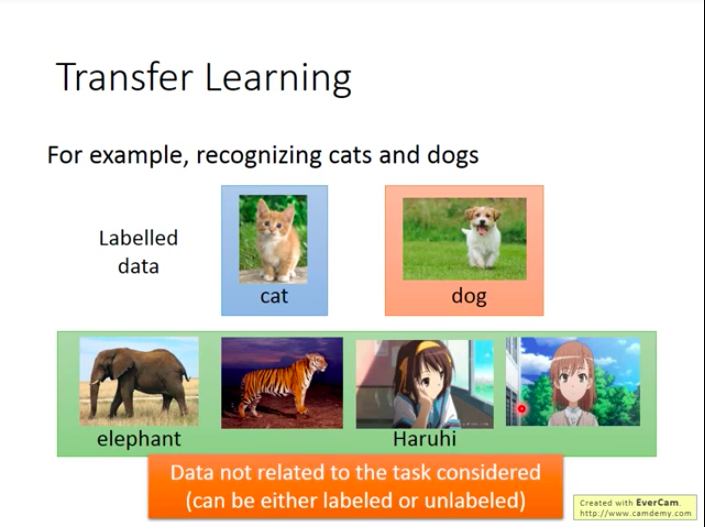
Another way to save data: Transfer Learning
(labelled/unlabelled) Data that are not directly linked with goal problem may be helpful to the goal problem.
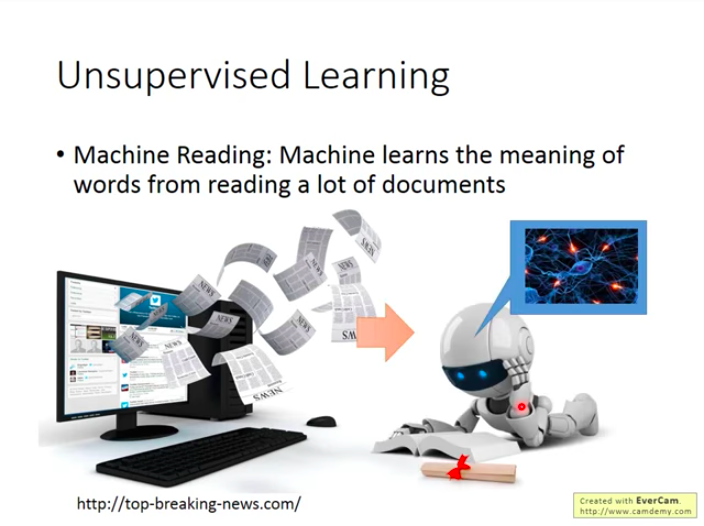
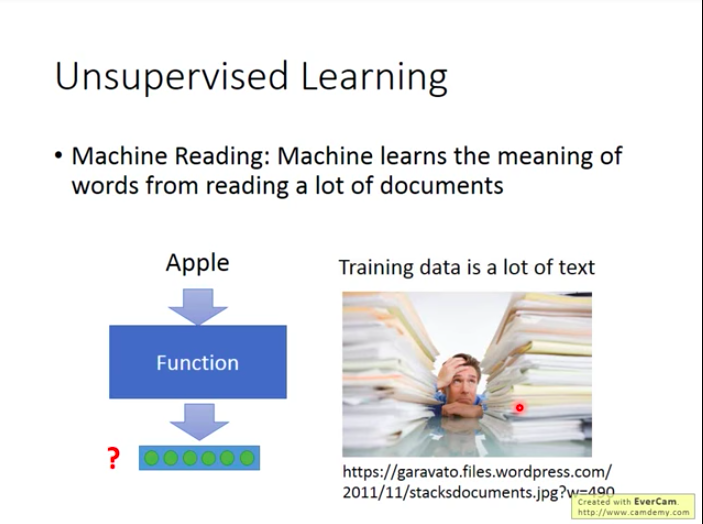
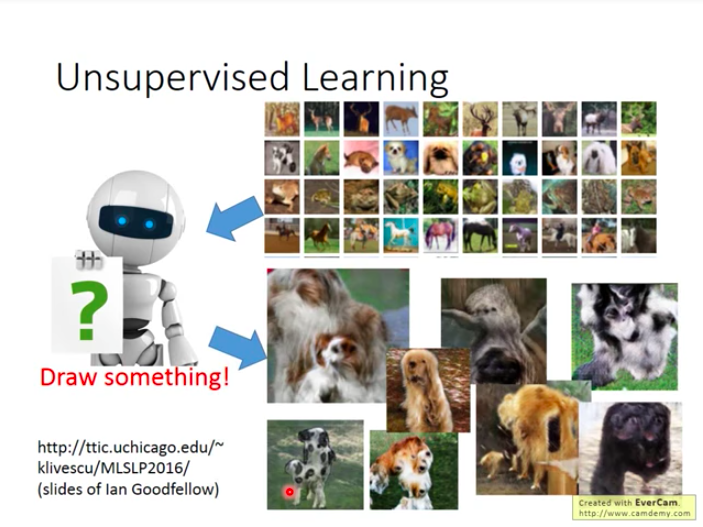
What can machine learn without label: Unsupervised Learning
- Machine creates new animals after seeing some animal images

Structured Learning: Output Result with Structure
In speech recognition: input - a voice clip, output - corresponding sentence.
In translation: input - Chinese sentence, output - English sentence.
In object detection: input - images, output - boundary of object.
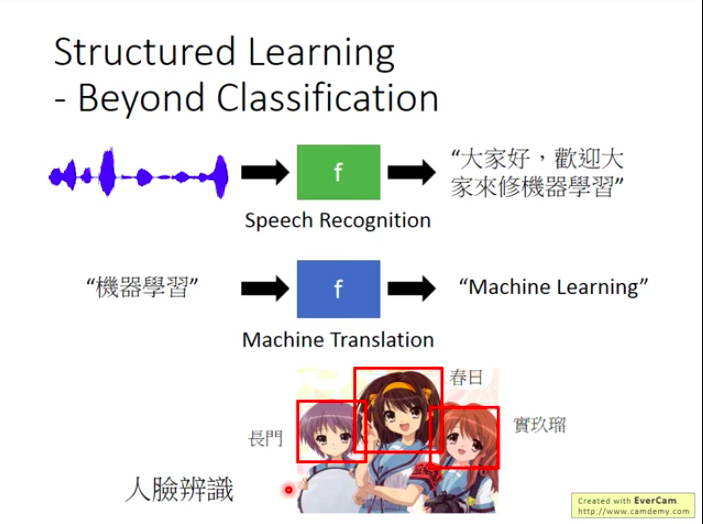
Usually, many people heard of regression and classification, but seldom heard of Structured Learning, even textbooks may ignore it.
However, structured learning is a very important part of ML field!

Reinforcement Learning

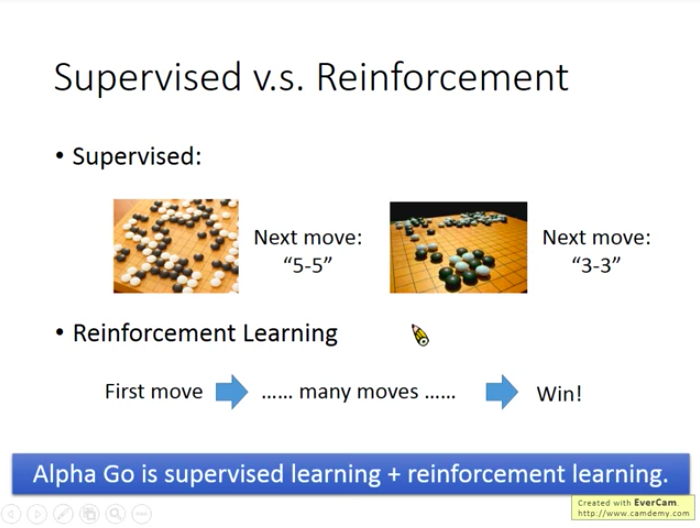
- Supervised v.s. Reinforcement
Supervised: Have a supervisor to teach machine; (Learning from teacher)
Reinforcement: Let machine to explore and teach itself. (Learning from critics)
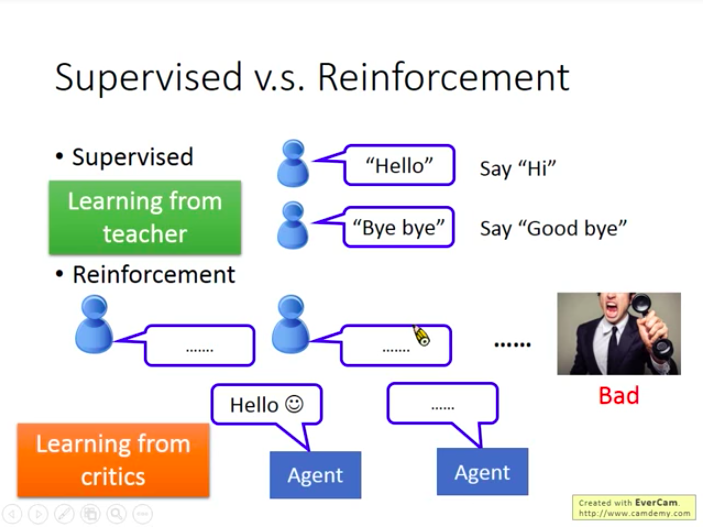
So Reinforcement Learning is closer to how human beings learn.
Example: Plying GO
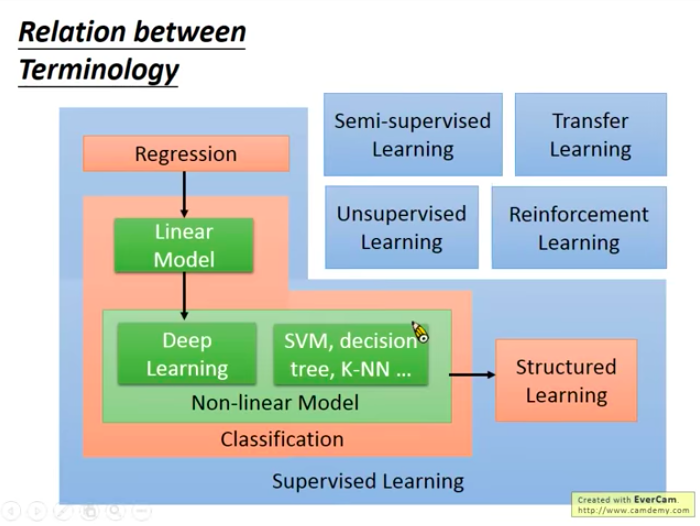
Relation between Terminomogy
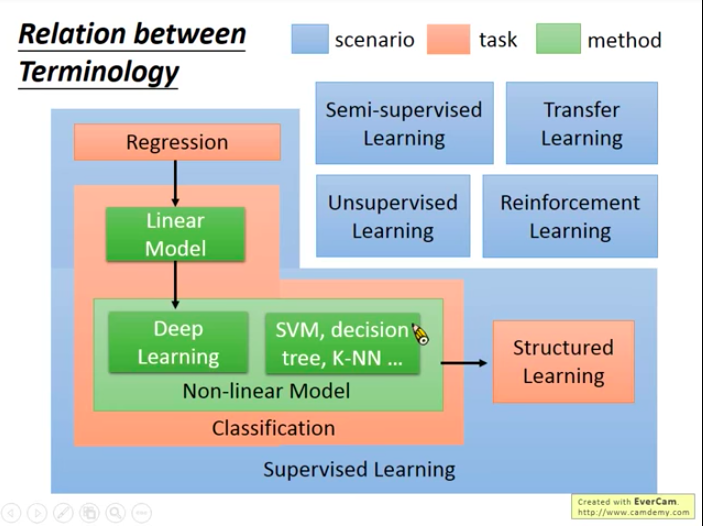
Data you have determines what scenario your problem is in, the type of your problem defines its task, and we can use different models (methods) to solve same problems.
ML Lecture 0-1: Introduction of Machine Learning的更多相关文章
- 【原】Coursera—Andrew Ng机器学习—课程笔记 Lecture 10—Advice for applying machine learning 机器学习应用建议
Lecture 10—Advice for applying machine learning 10.1 如何调试一个机器学习算法? 有多种方案: 1.获得更多训练数据:2.尝试更少特征:3.尝试更多 ...
- 【Machine Learning is Fun!】1.The world’s easiest introduction to Machine Learning
Bigger update: The content of this article is now available as a full-length video course that walks ...
- Introduction to Machine Learning
Chapter 1 Introduction 1.1 What Is Machine Learning? To solve a problem on a computer, we need an al ...
- Introduction of Machine Learning
李宏毅主页 台湾大学语音处理实验室 人工智慧.机器学习与深度学习间有什么区别? 人工智能——目标 机器学习——手段 深度学习——机器学习的一种方法 人类设定好的天生本能 Machine Learnin ...
- 李宏毅老师机器学习课程笔记_ML Lecture 0-1: Introduction of Machine Learning
引言: 最近开始学习"机器学习",早就听说祖国宝岛的李宏毅老师的大名,一直没有时间看他的系列课程.今天听了一课,感觉非常棒,通俗易懂,而又能够抓住重点,中间还能加上一些很有趣的例子 ...
- Introduction To Machine Learning Self-Evaluation Test
Preface Section 1 - Mathematical background Multivariate calculus take derivatives and integrals; de ...
- Machine Learning Algorithms Study Notes(1)--Introduction
Machine Learning Algorithms Study Notes 高雪松 @雪松Cedro Microsoft MVP 目 录 1 Introduction 1 1.1 ...
- 【机器学习Machine Learning】资料大全
昨天总结了深度学习的资料,今天把机器学习的资料也总结一下(友情提示:有些网站需要"科学上网"^_^) 推荐几本好书: 1.Pattern Recognition and Machi ...
- 机器学习(Machine Learning)&深度学习(Deep Learning)资料【转】
转自:机器学习(Machine Learning)&深度学习(Deep Learning)资料 <Brief History of Machine Learning> 介绍:这是一 ...
随机推荐
- 由uploadfive看servlet
一.uploadfive的使用 上传工具是程序设计中最常用的功能,其中,uploadfive插件使用比较多,此处该插件进行文件的上传操作.该插件是基于HTML5的,因此PC端和移动端都可以使用. 使用 ...
- Angular总结
angular关键核心点进行总结 1 2 angular中有很多知识点需要学习,学习成本是很大的,我通过平常开发中把一些 很重要知识点总结下来,不管是以后拿来用,或者跳槽面试需要,我都感觉是很有帮助的 ...
- linux安装部署ftp图片服务器
1.安装http反向代理服务器.安装ftp文件传输组件vsftpd 详细安装及配置参见 https://blog.csdn.net/zhouym/article/details/100145964 2 ...
- go语言指南之映射练习
练习:映射 实现 WordCount.它应当返回一个映射,其中包含字符串 s 中每个“单词”的个数.函数 wc.Test 会对此函数执行一系列测试用例,并输出成功还是失败. 你会发现 strings. ...
- 基于google earth engine的中等分辨率全国水质反演
我写博客的工作不像论文,假大空,我们直接上干货,之所以取一个这么大的名字,当然是我们能做到的... 不多说,我们对全国水体进行水质参数反演,不用MODIS,太粗,我们直接用哨兵,这样就可以直接做到大型 ...
- 那是我夕阳下的奔跑,电商网站PC端详情页图片放大效果实现
在详情页浏览时商品大图还是不能完全看清楚商品的细节,该特效实现鼠标悬停在商品大图上时,在商品大图右侧出现放大镜效果并根据鼠标的位置来改变右侧大图的显示内容,放大镜中的内容和鼠标悬停位置的内容相同.该特 ...
- php表单提交后再后退 内容则默认清空的解决方法
转载原文地址: http://www.jquerycn.cn/a_14422 在session_start()之后,字符输出之前加上header("Cache-control: privat ...
- JDBC概述及编程步骤详解
目录 一.JDBC概述 二.JDBC编程步骤(以MySQL为例) 1.导入jar包 2.加载数据库驱动 3.通过DriverManager获得Connection对象 3.定义SQL语句 4.利用Co ...
- SSL/TLS 协议运行机制概述(一)
SSL/TLS 协议运行机制概述(一) SSL/TLS 发展史 1994年,NetScape 设计了SSL协议(Secure Sockets Layer) 1.0,未正式发布 1995年,NetSca ...
- 前后端分离基于Oauth2的SSO单点登录怎样做?
一.说明 单点登录顾名思义就是在多个应用系统中,只需要登录一次,就可以访问其他相互信任的应用系统,免除多次登录的烦恼:本文主要介绍跨域间的 前后端分离 项目怎样实现单点登录,并且与 非前后端分离 的差 ...