
曹工说Spring Boot源码(4)-- 我是怎么自定义ApplicationContext,从json文件读取bean definition的?
写在前面的话
相关背景及资源:
曹工说Spring Boot源码系列开讲了(1)-- Bean Definition到底是什么,附spring思维导图分享
工程结构图:

大体思路
总体来说,bean definition是什么,我们前面几讲,说了个大概了;目前,我们将聚焦于怎么获取bean definition。
我们这次做个实验,就是将bean definition(一共两个bean,有依赖关系,依赖是手动指定的)定义在json文件内,然后自定义一个applicationcontext,从该文件内读取bean definiton,最后我们测试下是否能work。
注意哈,这里的依赖,依然和前面讲的一样,都是手动指定依赖,类似@Autowired这种,还会放到后面才会讲,开车也要先学手动档嘛,是伐?
建议大家直接拖源码下来看:
定义json文件
json文件内,要表达bean definition,按照我们前面说的,基本就包括几个必要的就行了,比如beanClassName。但我这里还是展示一个完整的,但我也是用fastjson先在之前的工程里生成了一个json,之后再拷贝到了json文件里:
// 这里获取到的bean definition的实际类型是 GenericBeanDefiniton,所以序列化出来的的json,就是一个

// GenericBeanDefiniton集合的json

List<BeanDefinition> beanDefinitionList = factory.getBeanDefinitionList()

JSON.toJSONString(beanDefinitionList)
json文件内容如下:
[

  {

    "abstract": false,

    "autowireCandidate": true,

    "autowireMode": 0,

    "beanClass": "org.springframework.simple.TestService",

    "beanClassName": "org.springframework.simple.TestService",

    "constructorArgumentValues": {

      "argumentCount": 0,

      "empty": true,

      "genericArgumentValues": [],

      "indexedArgumentValues": {}

    },

    "dependencyCheck": 0,

    "enforceDestroyMethod": true,

    "enforceInitMethod": true,

    "lazyInit": false,

    "lenientConstructorResolution": true,

    "methodOverrides": {

      "empty": true,

      "overrides": []

    },

    "nonPublicAccessAllowed": true,

    "primary": false,

    "propertyValues": {

      "converted": false,

      "empty": true,

      "propertyValueList": [],

      "propertyValues": []

    },

    "prototype": false,

    "qualifiers": [],

    "resolvedAutowireMode": 0,

    "role": 0,

    "scope": "",

    "singleton": true,

    "synthetic": false

  },

  {

    "abstract": false,

    "autowireCandidate": true,

    "autowireMode": 0,

    "beanClass": "org.springframework.simple.byconstructor.TestControllerByConstructor",

    "beanClassName": "org.springframework.simple.byconstructor.TestControllerByConstructor",

    "constructorArgumentValues": {

      "argumentCount": 2,

      "empty": false,

      "genericArgumentValues": [],

      "indexedArgumentValues": {

        0: {

          "converted": false,

          "value": {

            "beanName": "testService",

            "toParent": false

          }

        },

        1: {

          "converted": false,

          "value": "wire by constructor"

        }

      }

    },

    "dependencyCheck": 0,

    "enforceDestroyMethod": true,

    "enforceInitMethod": true,

    "lazyInit": false,

    "lenientConstructorResolution": true,

    "methodOverrides": {

      "empty": true,

      "overrides": []

    },

    "nonPublicAccessAllowed": true,

    "primary": false,

    "propertyValues": {

      "converted": false,

      "empty": true,

      "propertyValueList": [],

      "propertyValues": []

    },

    "prototype": false,

    "qualifiers": [],

    "resolvedAutowireMode": 0,

    "role": 0,

    "scope": "",

    "singleton": true,

    "synthetic": false

  }

]
大家可能看得有点懵,其实换成xml,就是类似下面这样的:
	<bean name="testService" class="org.springframework.simple.TestService" />

	<bean id="testController" class="org.springframework.simple.TestController">

		<constructor-arg ref="testService"/>

	</bean>
扩展 applicationContext
package org.springframework.beans.extend.json.applicationcontext;

import org.springframework.beans.BeansException;

import org.springframework.beans.extend.json.JsonBeanDefinitionReader;

import org.springframework.beans.factory.support.DefaultListableBeanFactory;

import org.springframework.beans.factory.xml.ResourceEntityResolver;

import org.springframework.beans.factory.xml.XmlBeanDefinitionReader;

import org.springframework.context.ApplicationContext;

import org.springframework.context.support.AbstractRefreshableConfigApplicationContext;

import java.io.IOException;

public class ClassPathJsonApplicationContext extends AbstractRefreshableConfigApplicationContext {

    @Override

    protected void loadBeanDefinitions(DefaultListableBeanFactory beanFactory) throws BeansException, IOException {

        //其实主要内容和xmlapplicationcontext是一样的,主要就是下面这行不一样,new了一个json reader

        JsonBeanDefinitionReader beanDefinitionReader = new JsonBeanDefinitionReader(beanFactory);

        beanDefinitionReader.setEnvironment(this.getEnvironment());

        beanDefinitionReader.setResourceLoader(this);

		// 这里通过json bean definiton reader去读取bean definition

        loadBeanDefinitions(beanDefinitionReader);

    }

	/**

	 *通过json bean definiton reader去读取bean definition

	 **/

    protected void loadBeanDefinitions(JsonBeanDefinitionReader reader) throws BeansException, IOException {

        // 这里获取json文件的path,这个location是在new ClassPathJsonApplicationContext时传进来的

        String[] configResources = getConfigLocations();

        if (configResources != null) {

            reader.loadBeanDefinitions(configResources);

        }

    }

    public ClassPathJsonApplicationContext(String configLocation) throws BeansException {

        this(new String[] {configLocation}, true, null);

    }

	/**

	 * 这里一模一样,不需要任何变化

	 **/

    public ClassPathJsonApplicationContext(String[] configLocations, boolean refresh, ApplicationContext parent)

            throws BeansException {

        super(parent);

        setConfigLocations(configLocations);

        if (refresh) {

            refresh();

        }

    }

}
扩展jsonBeanDefinitionReader
package org.springframework.beans.extend.json;

import com.alibaba.fastjson.JSON;

import com.alibaba.fastjson.JSONObject;

import lombok.extern.slf4j.Slf4j;

import org.springframework.beans.factory.BeanDefinitionStoreException;

import org.springframework.beans.factory.config.ConstructorArgumentValues;

import org.springframework.beans.factory.config.RuntimeBeanReference;

import org.springframework.beans.factory.support.AbstractBeanDefinitionReader;

import org.springframework.beans.factory.support.BeanDefinitionRegistry;

import org.springframework.beans.factory.support.BeanNameGenerator;

import org.springframework.beans.factory.support.GenericBeanDefinition;

import org.springframework.context.annotation.AnnotationBeanNameGenerator;

import org.springframework.core.NamedThreadLocal;

import org.springframework.core.io.ClassPathResource;

import org.springframework.core.io.Resource;

import org.springframework.core.io.support.EncodedResource;

import org.springframework.core.io.support.PathMatchingResourcePatternResolver;

import org.springframework.util.CollectionUtils;

import org.springframework.util.StreamUtils;

import org.xml.sax.InputSource;

import java.io.IOException;

import java.io.InputStream;

import java.nio.charset.Charset;

import java.util.*;

/**

 * 类似

 * {@link org.springframework.beans.factory.xml.XmlBeanDefinitionReader}

 * 只是本类是去json文件里读取bean definition

 *

 */

@Slf4j

public class JsonBeanDefinitionReader extends AbstractBeanDefinitionReader {

    private final ThreadLocal<Set<EncodedResource>> resourcesCurrentlyBeingLoaded =

            new NamedThreadLocal<Set<EncodedResource>>("json bean definition resources currently being loaded");

    public JsonBeanDefinitionReader(BeanDefinitionRegistry registry) {

        super(registry);

    }

    @Override

    public int loadBeanDefinitions(Resource resource) throws BeanDefinitionStoreException {

        // 以下照抄xmlbeanDefintionReader开始

        Set<EncodedResource> currentResources = this.resourcesCurrentlyBeingLoaded.get();

        if (currentResources == null) {

            currentResources = new HashSet<EncodedResource>(4);

            this.resourcesCurrentlyBeingLoaded.set(currentResources);

        }

        EncodedResource encodedResource = new EncodedResource(resource);

        if (!currentResources.add(encodedResource)) {

            throw new BeanDefinitionStoreException(

                    "Detected cyclic loading of " + encodedResource + " - check your import definitions!");

        }

        //照抄xmlbeanDefintionReader结束

        //这里的encodedResource.getResource()就是我们的json文件,这里通过spring core里面的一个工具类读取为InputStream

        String json = null;

        try (InputStream inputStream = encodedResource.getResource().getInputStream()) {

            json = StreamUtils.copyToString(inputStream, Charset.forName("UTF-8"));

        } catch (IOException e) {

            log.error("{}",e);

            return 0;

        } finally {

            currentResources.remove(encodedResource);

            if (currentResources.isEmpty()) {

                this.resourcesCurrentlyBeingLoaded.remove();

            }

        }

        //熟悉的fastjson,熟悉的味道

        List<GenericBeanDefinition> list = JSON.parseArray(json, GenericBeanDefinition.class);

        if (CollectionUtils.isEmpty(list)) {

            return 0;

        }

        /**

         * 1:因为GenericBeanDefinition,只有setBeanClassName,所以bean反序列化时,只序列化了这个字		* 段;实际我们知道,beanClass很重要,所以我们只能自己处理一下了

         * 2:第二个问题,我们在下面解释

         **/

        for (GenericBeanDefinition genericBeanDefinition : list) {

            /**

             * 1、处理beanClass

             */

            Class<?> clazz = null;

            try {

                clazz = Thread.currentThread().getContextClassLoader().loadClass(genericBeanDefinition.getBeanClassName());

            } catch (ClassNotFoundException e) {

                log.error("bean class cant be load for beandefinition: {}",genericBeanDefinition);

                throw new RuntimeException();

            }

            genericBeanDefinition.setBeanClass(clazz);

            /**

             * 2、处理constructor问题,因为Object value = valueHolder.getValue();

             * 是Object类型,但这个实际是一个可变类型,当构造器参数为String类型时,这个Object就是	              * String类型的,当构造器参数类型为其他bean的引用时,这个object就是RuntimeBeanReference              * 的,

             * 因为fastjson把我的object转成jsonobject类型了,所以这里要手动搞成RuntimeBeanReference

             */

            ConstructorArgumentValues constructorArgumentValues = genericBeanDefinition.getConstructorArgumentValues();

            if (constructorArgumentValues.isEmpty()) {

                continue;

            }

            Map<Integer, ConstructorArgumentValues.ValueHolder> map = constructorArgumentValues.getIndexedArgumentValues();

            if (CollectionUtils.isEmpty(map)) {

                continue;

            }

            for (ConstructorArgumentValues.ValueHolder valueHolder : map.values()) {

                Object value = valueHolder.getValue();

                if (value instanceof JSONObject) {

                    JSONObject jsonObject = (JSONObject) value;

                    RuntimeBeanReference runtimeBeanReference = jsonObject.toJavaObject(RuntimeBeanReference.class);

                    valueHolder.setValue(runtimeBeanReference);

                }

            }

        }

        //这里new一个BeanNameGenerator,这是自带的

        setBeanNameGenerator(new AnnotationBeanNameGenerator());

        BeanNameGenerator beanNameGenerator = getBeanNameGenerator();

        // 获取BeanDefinitionRegistry,bean factory默认实现了BeanDefinitionRegistry

        BeanDefinitionRegistry registry = getRegistry();

        //注册bean definition到BeanDefinitionRegistry里面去

        for (GenericBeanDefinition genericBeanDefinition : list) {

            String beanName = beanNameGenerator.generateBeanName(genericBeanDefinition, registry);

            registry.registerBeanDefinition(beanName,genericBeanDefinition);

        }

        return list.size();

    }

}
收工了,测试一下
public class BootStrap {

    public static void main(String[] args) {

        // new一个我们的自定义json上下文

        ClassPathJsonApplicationContext context = new ClassPathJsonApplicationContext("beanDefinition.json");

        // getBean试一下

        TestControllerByConstructor bean = context.getBean(TestControllerByConstructor.class);

        System.out.println(bean);

    }

}
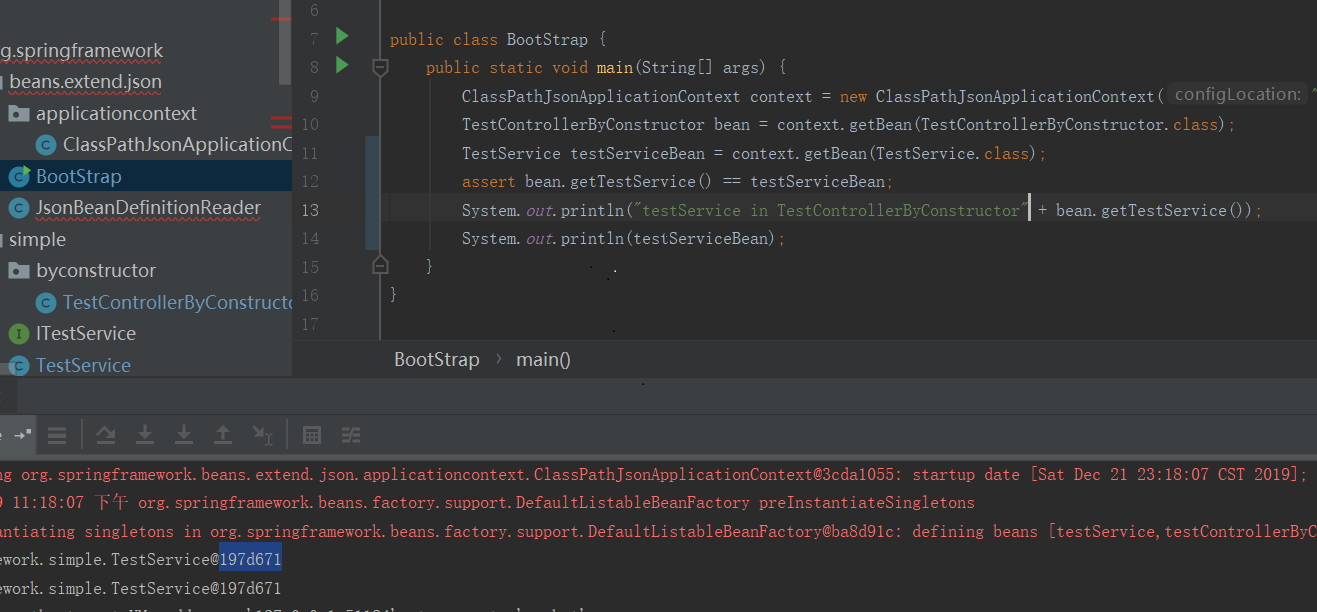
可以看到,已经注入进去了。没有什么问题。
总结
今天比较晚,写得也比较急,有问题的话,请大家务必指出,谢谢大家
源码地址:
曹工说Spring Boot源码(4)-- 我是怎么自定义ApplicationContext,从json文件读取bean definition的?的更多相关文章
- 曹工说Spring Boot源码系列开讲了(1)-- Bean Definition到底是什么,附spring思维导图分享
写在前面的话&&About me 网上写spring的文章多如牛毛,为什么还要写呢,因为,很简单,那是人家写的:网上都鼓励你不要造轮子,为什么你还要造呢,因为,那不是你造的. 我不是要 ...
- 曹工说Spring Boot源码(2)-- Bean Definition到底是什么,咱们对着接口,逐个方法讲解
写在前面的话 相关背景及资源: 曹工说Spring Boot源码系列开讲了(1)-- Bean Definition到底是什么,附spring思维导图分享 工程代码地址 思维导图地址 工程结构图: 正 ...
- 曹工说Spring Boot源码(3)-- 手动注册Bean Definition不比游戏好玩吗,我们来试一下
写在前面的话 相关背景及资源: 曹工说Spring Boot源码系列开讲了(1)-- Bean Definition到底是什么,附spring思维导图分享 工程代码地址 思维导图地址 工程结构图: 大 ...
- 曹工说Spring Boot源码(5)-- 怎么从properties文件读取bean
写在前面的话 相关背景及资源: 曹工说Spring Boot源码(1)-- Bean Definition到底是什么,附spring思维导图分享 曹工说Spring Boot源码(2)-- Bean ...
- 曹工说Spring Boot源码(6)-- Spring怎么从xml文件里解析bean的
写在前面的话 相关背景及资源: 曹工说Spring Boot源码(1)-- Bean Definition到底是什么,附spring思维导图分享 曹工说Spring Boot源码(2)-- Bean ...
- 曹工说Spring Boot源码(7)-- Spring解析xml文件,到底从中得到了什么(上)
写在前面的话 相关背景及资源: 曹工说Spring Boot源码(1)-- Bean Definition到底是什么,附spring思维导图分享 曹工说Spring Boot源码(2)-- Bean ...
- 曹工说Spring Boot源码(8)-- Spring解析xml文件,到底从中得到了什么(util命名空间)
写在前面的话 相关背景及资源: 曹工说Spring Boot源码(1)-- Bean Definition到底是什么,附spring思维导图分享 曹工说Spring Boot源码(2)-- Bean ...
- 曹工说Spring Boot源码(9)-- Spring解析xml文件,到底从中得到了什么(context命名空间上)
写在前面的话 相关背景及资源: 曹工说Spring Boot源码(1)-- Bean Definition到底是什么,附spring思维导图分享 曹工说Spring Boot源码(2)-- Bean ...
- # 曹工说Spring Boot源码(10)-- Spring解析xml文件,到底从中得到了什么(context:annotation-config 解析)
写在前面的话 相关背景及资源: 曹工说Spring Boot源码(1)-- Bean Definition到底是什么,附spring思维导图分享 曹工说Spring Boot源码(2)-- Bean ...
随机推荐
- code migrate
1. 从Git上clone 仓库到本地. git clone --mirror http://gittest:gittest@192.168.1.x/x.git 2. push 到codecommit ...
- HotSpot虚拟机对象的创建过程
1.文中讨论的对象限于普通Java对象,不包括数组和class对象. 2.内存的分配方式由Java堆是否规整来决定,而Java堆是否规整取决于垃圾收集器是否有压缩整理的功能. 3.还需要考虑:对象的创 ...
- Springboot操作Elasticsearch
常见的日志系统是基于logstach+elasticsearch+kibna框架搭建的,但是有时候kibana的查询无法满足我们的要求,因此有时需要代码去操作es,本文后续都以es代替elastics ...
- day 37 CSS
参考博客:https://www.cnblogs.com/majj/p/9021419.html 1.CSS的三种链接样式: 行内链接(优先级最高) 内接样式 外接样式 <html lang=& ...
- 当linux突然修改任何设置都没办法联网时的绝对有效解决办法
以下操作为重新启动虚拟网卡的相关配置,初始化并重启虚拟网卡,对目前的配置不会有任何影响 打开终端,依次输入以下内容:– sudo service network-manager stop– sudo ...
- .net压缩文件
首先nuget安装DotNetZip 代码很少
- PHP自动发红包代码示例
<?php header('Content-type:text'); define("TOKEN", "weixin"); $wechatObj = ne ...
- 用.NET解索尼相机ARW格式照片
用.NET解索尼相机ARW格式照片 目前常用的照片格式是.jpg,它只能提供8bit的色彩深度,而目前主流的相机都能提供高达12bit-14bit的色彩深度,动态范围和后期处理能力也大大增加,这也是为 ...
- RAC环境查询JOB正在运行的信息
需求: 客户环境12.2.0.1,三节点RAC需要,将一个正在运行的Job session kill掉, 但是通过DBA_JOBS_RUNNING发现,无法发现其它实例运行的JOB,因此需要登陆多台实 ...
- Github Fork 缎带.html
<!DOCTYPE html> <html> <head> <meta charset="UTF-8"> <title&g ...