
SpringMVC源码解析-HTTP请求处理和分发
1.HandlerMapping的配置和设计
在初始化完成时,所有的handlerMapping都已经被加载,handlerMapping存储着HTTP请求对应的映射数据,每一个handlerMapping持有从URL请求到Controller的映射。

这里以SimpleUrlHandlerMapping为例来分析它的设计与实现。在SimpleUrlHandlerMapping中,定义了一个map来维持映射关系,即URL请求和控制器对应关系,
是SpringMVC应用可以根据HTTP请求确定对一个对应的Controller,具体来说,这些映射关系是通过接口类HandlerMapping来封装,在HandlerMapping接口中定义了一个getHandler方法,
通过这个方法,可以获得与HTTP请求对应的HandlerExecutionChain,在这个HandlerExecutionChain中,封装具体的Controller对象。
SimpleUrlHandlerMapping中的urlMap:
public class SimpleUrlHandlerMapping extends AbstractUrlHandlerMapping {

       //url和controller映射的map

	private final Map<String, Object> urlMap = new HashMap<String, Object>();
HandlerMapping中的getHandler
public interface HandlerMapping {

        //省略。。。

	HandlerExecutionChain getHandler(HttpServletRequest request) throws Exception;

}
接下来,看一下HandlerExecutionChain的实现。
public class HandlerExecutionChain {

	private static final Log logger = LogFactory.getLog(HandlerExecutionChain.class);

	private final Object handler;//处理对象,也就是controller对象

	private HandlerInterceptor[] interceptors;//拦截器

	private List<HandlerInterceptor> interceptorList;//拦截器

	private int interceptorIndex = -1;

	/**

	 * Create a new HandlerExecutionChain.

	 * @param handler the handler object to execute

	 */

	public HandlerExecutionChain(Object handler) {

		this(handler, (HandlerInterceptor[]) null);

	}

	/**

	 * Create a new HandlerExecutionChain.

	 * @param handler the handler object to execute

	 * @param interceptors the array of interceptors to apply

	 * (in the given order) before the handler itself executes

	 *///初始化

	public HandlerExecutionChain(Object handler, HandlerInterceptor... interceptors) {

		if (handler instanceof HandlerExecutionChain) {

			HandlerExecutionChain originalChain = (HandlerExecutionChain) handler;

			this.handler = originalChain.getHandler();

			this.interceptorList = new ArrayList<HandlerInterceptor>();

			CollectionUtils.mergeArrayIntoCollection(originalChain.getInterceptors(), this.interceptorList);

			CollectionUtils.mergeArrayIntoCollection(interceptors, this.interceptorList);

		}

		else {

			this.handler = handler;

			this.interceptors = interceptors;

		}

	}

	/**

	 * Return the handler object to execute.

	 * @return the handler object

	 *///获取handler,本质就是controller对象

	public Object getHandler() {

		return this.handler;

	}

    //添加拦截器

	public void addInterceptor(HandlerInterceptor interceptor) {

		initInterceptorList().add(interceptor);

	}

       //添加多个拦截器

	public void addInterceptors(HandlerInterceptor... interceptors) {

		if (!ObjectUtils.isEmpty(interceptors)) {

			initInterceptorList().addAll(Arrays.asList(interceptors));

		}

	}

	private List<HandlerInterceptor> initInterceptorList() {

		if (this.interceptorList == null) {

			this.interceptorList = new ArrayList<HandlerInterceptor>();

			if (this.interceptors != null) {

				// An interceptor array specified through the constructor

				this.interceptorList.addAll(Arrays.asList(this.interceptors));

			}

		}

		this.interceptors = null;

		return this.interceptorList;

	}

	/**

	 * Return the array of interceptors to apply (in the given order).

	 * @return the array of HandlerInterceptors instances (may be {@code null})

	 */

	public HandlerInterceptor[] getInterceptors() {

		if (this.interceptors == null && this.interceptorList != null) {

			this.interceptors = this.interceptorList.toArray(new HandlerInterceptor[this.interceptorList.size()]);

		}

		return this.interceptors;

	}

	/**

	 * Apply preHandle methods of registered interceptors.

	 * @return {@code true} if the execution chain should proceed with the

	 * next interceptor or the handler itself. Else, DispatcherServlet assumes

	 * that this interceptor has already dealt with the response itself.

	 *///执行之前调用拦截器

	boolean applyPreHandle(HttpServletRequest request, HttpServletResponse response) throws Exception {

		HandlerInterceptor[] interceptors = getInterceptors();

		if (!ObjectUtils.isEmpty(interceptors)) {

			for (int i = 0; i < interceptors.length; i++) {

				HandlerInterceptor interceptor = interceptors[i];

				if (!interceptor.preHandle(request, response, this.handler)) {

					triggerAfterCompletion(request, response, null);

					return false;

				}

				this.interceptorIndex = i;

			}

		}

		return true;

	}

	/**

	 * Apply postHandle methods of registered interceptors.

	 *///执行之后调用拦截器

	void applyPostHandle(HttpServletRequest request, HttpServletResponse response, ModelAndView mv) throws Exception {

		HandlerInterceptor[] interceptors = getInterceptors();

		if (!ObjectUtils.isEmpty(interceptors)) {

			for (int i = interceptors.length - 1; i >= 0; i--) {

				HandlerInterceptor interceptor = interceptors[i];

				interceptor.postHandle(request, response, this.handler, mv);

			}

		}

	}

	/**

	 * Trigger afterCompletion callbacks on the mapped HandlerInterceptors.

	 * Will just invoke afterCompletion for all interceptors whose preHandle invocation

	 * has successfully completed and returned true.

	 *///调用拦截器的afterCompletion方法

	void triggerAfterCompletion(HttpServletRequest request, HttpServletResponse response, Exception ex)

			throws Exception {

		HandlerInterceptor[] interceptors = getInterceptors();

		if (!ObjectUtils.isEmpty(interceptors)) {

			for (int i = this.interceptorIndex; i >= 0; i--) {

				HandlerInterceptor interceptor = interceptors[i];

				try {

					interceptor.afterCompletion(request, response, this.handler, ex);

				}

				catch (Throwable ex2) {

					logger.error("HandlerInterceptor.afterCompletion threw exception", ex2);

				}

			}

		}

	}

	/**

	 * Apply afterConcurrentHandlerStarted callback on mapped AsyncHandlerInterceptors.

	 */

	void applyAfterConcurrentHandlingStarted(HttpServletRequest request, HttpServletResponse response) {

		HandlerInterceptor[] interceptors = getInterceptors();

		if (!ObjectUtils.isEmpty(interceptors)) {

			for (int i = interceptors.length - 1; i >= 0; i--) {

				if (interceptors[i] instanceof AsyncHandlerInterceptor) {

					try {

						AsyncHandlerInterceptor asyncInterceptor = (AsyncHandlerInterceptor) interceptors[i];

						asyncInterceptor.afterConcurrentHandlingStarted(request, response, this.handler);

					}

					catch (Throwable ex) {

						logger.error("Interceptor [" + interceptors[i] + "] failed in afterConcurrentHandlingStarted", ex);

					}

				}

			}

		}

	}

	/**

	 * Delegates to the handler's {@code toString()}.

	 */

	@Override

	public String toString() {

		if (this.handler == null) {

			return "HandlerExecutionChain with no handler";

		}

		StringBuilder sb = new StringBuilder();

		sb.append("HandlerExecutionChain with handler [").append(this.handler).append("]");

		if (!CollectionUtils.isEmpty(this.interceptorList)) {

			sb.append(" and ").append(this.interceptorList.size()).append(" interceptor");

			if (this.interceptorList.size() > 1) {

				sb.append("s");

			}

		}

		return sb.toString();

	}

}
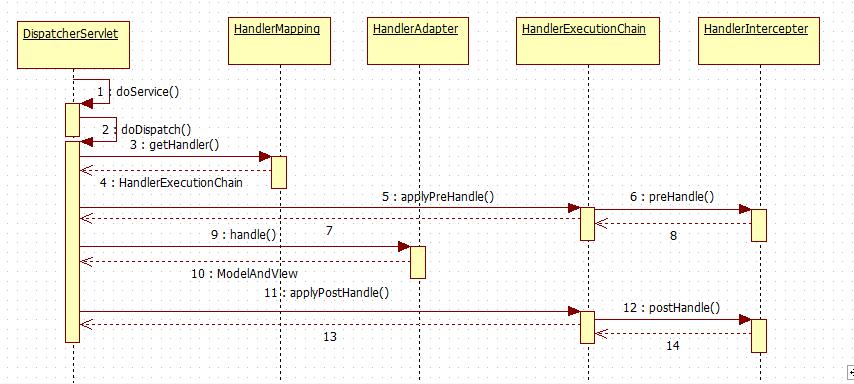
下面是拦截器的执行图

对应的applyPreHandle和applyPostHandle方法代码如下:
/**

	 * Apply preHandle methods of registered interceptors.

	 * @return {@code true} if the execution chain should proceed with the

	 * next interceptor or the handler itself. Else, DispatcherServlet assumes

	 * that this interceptor has already dealt with the response itself.

	 */

	boolean applyPreHandle(HttpServletRequest request, HttpServletResponse response) throws Exception {

		HandlerInterceptor[] interceptors = getInterceptors();

		if (!ObjectUtils.isEmpty(interceptors)) {

			for (int i = 0; i < interceptors.length; i++) {

				HandlerInterceptor interceptor = interceptors[i];

				if (!interceptor.preHandle(request, response, this.handler)) {

					triggerAfterCompletion(request, response, null);

					return false;

				}

				this.interceptorIndex = i;

			}

		}

		return true;

	}

	/**

	 * Apply postHandle methods of registered interceptors.

	 */

	void applyPostHandle(HttpServletRequest request, HttpServletResponse response, ModelAndView mv) throws Exception {

		HandlerInterceptor[] interceptors = getInterceptors();

		if (!ObjectUtils.isEmpty(interceptors)) {

			for (int i = interceptors.length - 1; i >= 0; i--) {

				HandlerInterceptor interceptor = interceptors[i];

				interceptor.postHandle(request, response, this.handler, mv);

			}

		}

	}
回到SimpleUrlHandlerMapping中,有一个initApplicationContext方法
/**

	 * Calls the {@link #registerHandlers} method in addition to the

	 * superclass's initialization.

	 */

	@Override

	public void initApplicationContext() throws BeansException {

		super.initApplicationContext();

		registerHandlers(this.urlMap);

	}
继续看看registerHandlers方法,注册Handler
protected void registerHandlers(Map<String, Object> urlMap) throws BeansException {

		if (urlMap.isEmpty()) {

			logger.warn("Neither 'urlMap' nor 'mappings' set on SimpleUrlHandlerMapping");

		}

		else {

			for (Map.Entry<String, Object> entry : urlMap.entrySet()) {

				String url = entry.getKey();

				Object handler = entry.getValue();

				// Prepend with slash if not already present.

				if (!url.startsWith("/")) {//不是以"/"开头的,加上"/"

					url = "/" + url;

				}

				// Remove whitespace from handler bean name.

				if (handler instanceof String) {

					handler = ((String) handler).trim();

				}

				registerHandler(url, handler);

			}

		}

	}
AbstractUrlHandlerMapping对handler的注册
/**

	 * Register the specified handler for the given URL path.

	 * @param urlPath the URL the bean should be mapped to

	 * @param handler the handler instance or handler bean name String

	 * (a bean name will automatically be resolved into the corresponding handler bean)

	 * @throws BeansException if the handler couldn't be registered

	 * @throws IllegalStateException if there is a conflicting handler registered

	 */

	protected void registerHandler(String urlPath, Object handler) throws BeansException, IllegalStateException {

		Assert.notNull(urlPath, "URL path must not be null");

		Assert.notNull(handler, "Handler object must not be null");

		Object resolvedHandler = handler;

		// Eagerly resolve handler if referencing singleton via name.

		if (!this.lazyInitHandlers && handler instanceof String) {

			String handlerName = (String) handler;

			if (getApplicationContext().isSingleton(handlerName)) {

				resolvedHandler = getApplicationContext().getBean(handlerName);//直接从spring容器中获取handler

			}

		}

		Object mappedHandler = this.handlerMap.get(urlPath);//从map中获取handler

		if (mappedHandler != null) {

			if (mappedHandler != resolvedHandler) {

				throw new IllegalStateException(

						"Cannot map " + getHandlerDescription(handler) + " to URL path [" + urlPath +

						"]: There is already " + getHandlerDescription(mappedHandler) + " mapped.");

			}

		}

		else {

			if (urlPath.equals("/")) {

				if (logger.isInfoEnabled()) {

					logger.info("Root mapping to " + getHandlerDescription(handler));

				}

				setRootHandler(resolvedHandler);//url是"/",将其设置为根handler

			}

			else if (urlPath.equals("/*")) {

				if (logger.isInfoEnabled()) {

					logger.info("Default mapping to " + getHandlerDescription(handler));

				}

				setDefaultHandler(resolvedHandler);//默认handler

			}

			else {

				this.handlerMap.put(urlPath, resolvedHandler);//注册handler,url为key,controller为value的map

				if (logger.isInfoEnabled()) {

					logger.info("Mapped URL path [" + urlPath + "] onto " + getHandlerDescription(handler));

				}

			}

		}

	}
有了上面的配置好了Url和Controller的映射关系,为SpringMVC响应HTTP请求准备好了基础的映射数据,至此SpringMVC就可以等待HTTP的请求的到来。
2.使用HandlerMapping完成请求的映射处理
当请求来时,首先AbstractHandlerMapping的getHandler被调用,方法参数是request
@Override

	public final HandlerExecutionChain getHandler(HttpServletRequest request) throws Exception {

		Object handler = getHandlerInternal(request);

		if (handler == null) {//为空走默认的handler

			handler = getDefaultHandler();

		}

		if (handler == null) {

			return null;

		}

		// Bean name or resolved handler?

		if (handler instanceof String) {

			String handlerName = (String) handler;//从spring容器中获取

			handler = getApplicationContext().getBean(handlerName);

		}

		return getHandlerExecutionChain(handler, request);//把handler封装到HandlerExecutionChain中并加上拦截器

	}
封装HandlerExecutionChain
protected HandlerExecutionChain getHandlerExecutionChain(Object handler, HttpServletRequest request) {

		HandlerExecutionChain chain = (handler instanceof HandlerExecutionChain ?

				(HandlerExecutionChain) handler : new HandlerExecutionChain(handler));

		chain.addInterceptors(getAdaptedInterceptors());

		String lookupPath = this.urlPathHelper.getLookupPathForRequest(request);

		for (MappedInterceptor mappedInterceptor : this.mappedInterceptors) {

			if (mappedInterceptor.matches(lookupPath, this.pathMatcher)) {

				chain.addInterceptor(mappedInterceptor.getInterceptor());

			}

		}

		return chain;

	}
上面的getHnadler会调用getHandlerInternal
protected Object getHandlerInternal(HttpServletRequest request) throws Exception {

		String lookupPath = getUrlPathHelper().getLookupPathForRequest(request);

		Object handler = lookupHandler(lookupPath, request);

		if (handler == null) {

			// We need to care for the default handler directly, since we need to

			// expose the PATH_WITHIN_HANDLER_MAPPING_ATTRIBUTE for it as well.

			Object rawHandler = null;

			if ("/".equals(lookupPath)) {

				rawHandler = getRootHandler();

			}

			if (rawHandler == null) {

				rawHandler = getDefaultHandler();

			}

			if (rawHandler != null) {

				// Bean name or resolved handler?

				if (rawHandler instanceof String) {

					String handlerName = (String) rawHandler;

					rawHandler = getApplicationContext().getBean(handlerName);

				}

				validateHandler(rawHandler, request);

				handler = buildPathExposingHandler(rawHandler, lookupPath, lookupPath, null);

			}

		}

		if (handler != null && logger.isDebugEnabled()) {

			logger.debug("Mapping [" + lookupPath + "] to " + handler);

		}

		else if (handler == null && logger.isTraceEnabled()) {

			logger.trace("No handler mapping found for [" + lookupPath + "]");

		}

		return handler;

	}
这里调用的是lookupHandler方法,在来看一下这个方法。
protected Object lookupHandler(String urlPath, HttpServletRequest request) throws Exception {

		// Direct match?

		Object handler = this.handlerMap.get(urlPath);

		if (handler != null) {

			// Bean name or resolved handler?

			if (handler instanceof String) {

				String handlerName = (String) handler;

				handler = getApplicationContext().getBean(handlerName);

			}

			validateHandler(handler, request);

			return buildPathExposingHandler(handler, urlPath, urlPath, null);

		}

		// Pattern match?

		List<String> matchingPatterns = new ArrayList<String>();

		for (String registeredPattern : this.handlerMap.keySet()) {

			if (getPathMatcher().match(registeredPattern, urlPath)) {

				matchingPatterns.add(registeredPattern);

			}

		}

		String bestPatternMatch = null;

		Comparator<String> patternComparator = getPathMatcher().getPatternComparator(urlPath);

		if (!matchingPatterns.isEmpty()) {

			Collections.sort(matchingPatterns, patternComparator);

			if (logger.isDebugEnabled()) {

				logger.debug("Matching patterns for request [" + urlPath + "] are " + matchingPatterns);

			}

			bestPatternMatch = matchingPatterns.get(0);

		}

		if (bestPatternMatch != null) {

			handler = this.handlerMap.get(bestPatternMatch);

			// Bean name or resolved handler?

			if (handler instanceof String) {

				String handlerName = (String) handler;

				handler = getApplicationContext().getBean(handlerName);

			}

			validateHandler(handler, request);

			String pathWithinMapping = getPathMatcher().extractPathWithinPattern(bestPatternMatch, urlPath);

			// There might be multiple 'best patterns', let's make sure we have the correct URI template variables

			// for all of them

			Map<String, String> uriTemplateVariables = new LinkedHashMap<String, String>();

			for (String matchingPattern : matchingPatterns) {

				if (patternComparator.compare(bestPatternMatch, matchingPattern) == 0) {

					Map<String, String> vars = getPathMatcher().extractUriTemplateVariables(matchingPattern, urlPath);

					Map<String, String> decodedVars = getUrlPathHelper().decodePathVariables(request, vars);

					uriTemplateVariables.putAll(decodedVars);

				}

			}

			if (logger.isDebugEnabled()) {

				logger.debug("URI Template variables for request [" + urlPath + "] are " + uriTemplateVariables);

			}

			return buildPathExposingHandler(handler, bestPatternMatch, pathWithinMapping, uriTemplateVariables);

		}

		// No handler found...

		return null;

	}
经过一系列的对HTTP请求进行解析和匹配handler的过程,得到了与请求对应的处理器。在返回handler中,已经完成了对HandlerExecutionChain进行封装工作,为HTTP请求响应做准备。
3.SpringMVC对HTTP请求的分发处理
回到DispatcherServlet中,对HTTP的请求是在doService中,DispatcherServlet是HttpServlet的子类,和其他Servlet一样,通过doService来响应HTTP请求。doService直接调用的是doDispatch方法
主要看一下这个方法。
protected void doDispatch(HttpServletRequest request, HttpServletResponse response) throws Exception {

		HttpServletRequest processedRequest = request;

		HandlerExecutionChain mappedHandler = null;

		boolean multipartRequestParsed = false;

		WebAsyncManager asyncManager = WebAsyncUtils.getAsyncManager(request);

		try {

			ModelAndView mv = null;

			Exception dispatchException = null;

			try {

				processedRequest = checkMultipart(request);

				multipartRequestParsed = (processedRequest != request);

				// Determine handler for the current request.

				mappedHandler = getHandler(processedRequest);//获取handler

				if (mappedHandler == null || mappedHandler.getHandler() == null) {

					noHandlerFound(processedRequest, response);

					return;

				}

				// Determine handler adapter for the current request.//获取adapter

				HandlerAdapter ha = getHandlerAdapter(mappedHandler.getHandler());

				// Process last-modified header, if supported by the handler.

				String method = request.getMethod();

				boolean isGet = "GET".equals(method);

				if (isGet || "HEAD".equals(method)) {

					long lastModified = ha.getLastModified(request, mappedHandler.getHandler());

					if (logger.isDebugEnabled()) {

						logger.debug("Last-Modified value for [" + getRequestUri(request) + "] is: " + lastModified);

					}

					if (new ServletWebRequest(request, response).checkNotModified(lastModified) && isGet) {

						return;

					}

				}

				if (!mappedHandler.applyPreHandle(processedRequest, response)) {

					return;

				}

				// Actually invoke the handler.handler处理的结果封装到mv中

				mv = ha.handle(processedRequest, response, mappedHandler.getHandler());

				if (asyncManager.isConcurrentHandlingStarted()) {

					return;

				}

				applyDefaultViewName(request, mv);

				mappedHandler.applyPostHandle(processedRequest, response, mv);

			}

			catch (Exception ex) {

				dispatchException = ex;

			}

			processDispatchResult(processedRequest, response, mappedHandler, mv, dispatchException);

		}

		catch (Exception ex) {

			triggerAfterCompletion(processedRequest, response, mappedHandler, ex);

		}

		catch (Error err) {

			triggerAfterCompletionWithError(processedRequest, response, mappedHandler, err);

		}

		finally {

			if (asyncManager.isConcurrentHandlingStarted()) {

				// Instead of postHandle and afterCompletion

				if (mappedHandler != null) {

					mappedHandler.applyAfterConcurrentHandlingStarted(processedRequest, response);

				}

			}

			else {

				// Clean up any resources used by a multipart request.

				if (multipartRequestParsed) {

					cleanupMultipart(processedRequest);

				}

			}

		}

	}
看一下getHandlerAdapter方法
protected HandlerAdapter getHandlerAdapter(Object handler) throws ServletException {

		for (HandlerAdapter ha : this.handlerAdapters) {

			if (logger.isTraceEnabled()) {

				logger.trace("Testing handler adapter [" + ha + "]");

			}

			if (ha.supports(handler)) {//判断是否支持

				return ha;

			}

		}

		throw new ServletException("No adapter for handler [" + handler +

				"]: The DispatcherServlet configuration needs to include a HandlerAdapter that supports this handler");

	}
继续看一下supports方法的实现,以SimpleControlerHandlerAdapter类为例
public class SimpleControllerHandlerAdapter implements HandlerAdapter {

	@Override

	public boolean supports(Object handler) {

		return (handler instanceof Controller);

	}

	@Override

	public ModelAndView handle(HttpServletRequest request, HttpServletResponse response, Object handler)

			throws Exception {

		return ((Controller) handler).handleRequest(request, response);

	}

	@Override

	public long getLastModified(HttpServletRequest request, Object handler) {

		if (handler instanceof LastModified) {

			return ((LastModified) handler).getLastModified(request);

		}

		return -1L;

	}

}
经过上面一系列的操作,得到handler对象,handler调用handleRequest方法,返回ModelAndView对象,最后通过render方法进行渲染。
问题:handlerMapping是在什么时候初始化的?
在DispatcherServlet调用init->initStrategies方法中,进行初始化。
protected void initStrategies(ApplicationContext context) {

		initMultipartResolver(context);

		initLocaleResolver(context);

		initThemeResolver(context);

               //初始化handlerMapping

		initHandlerMappings(context);

		initHandlerAdapters(context);

		initHandlerExceptionResolvers(context);

		initRequestToViewNameTranslator(context);

		initViewResolvers(context);

		initFlashMapManager(context);

	}
最后一个请求的流程图。
SpringMVC源码解析-HTTP请求处理和分发的更多相关文章
- SpringMVC源码解析- HandlerAdapter - ModelFactory(转)
ModelFactory主要是两个职责: 1. 初始化model 2. 处理器执行后将modle中相应参数设置到SessionAttributes中 我们来看看具体的处理逻辑(直接充当分析目录): 1 ...
- springMVC源码解析--ViewResolver视图解析器执行(三)
之前两篇博客springMVC源码分析--ViewResolver视图解析器(一)和springMVC源码解析--ViewResolverComposite视图解析器集合(二)中我们已经简单介绍了一些 ...
- Netty 4源码解析:请求处理
Netty 4源码解析:请求处理 通过之前<Netty 4源码解析:服务端启动>的分析,我们知道在最前端"扛压力"的是NioEventLoop.run()方法.我们指定 ...
- SpringMVC源码解析- HandlerAdapter - ModelFactory
ModelFactory主要是两个职责: 1. 初始化model 2. 处理器执行后将modle中相应参数设置到SessionAttributes中 我们来看看具体的处理逻辑(直接充当分析目录): 1 ...
- 深入了解SpringMVC源码解析
Spring MVC源码解析 Spring MVC的使用原理其实是通过配置一个Servlet来接管所有的请求,所有的请求由这个Servlet来进行分发处理. 我们可以从web.xml里面看出这一点 & ...
- springmvc源码分析系列-请求处理流程
接上一篇-springmvc源码分析开头片 上一节主要说了一下springmvc与struts2的作为MVC中的C(controller)控制层的一些区别及两者在作为控制层方面的一些优缺点.今天就结合 ...
- springMVC源码解析--ViewResolverComposite视图解析器集合(二)
上一篇博客springMVC源码分析--ViewResolver视图解析器(一)中我们介绍了一些springMVC提供的很多视图解析器ViewResolver,在开发的一套springMVC系统中是可 ...
- springMVC源码解析--HandlerMethodArgumentResolverComposite参数解析器集合(二)
上一篇博客springMVC源码分析--HandlerMethodArgumentResolver参数解析器(一)中我们已经介绍了参数解析相关的东西,并且也提到了HandlerMethodArgume ...
- springmvc源码解析MvcNamespaceHandler之<mvc:view-resolvers>
说在前面 本次主要介绍springmvc配置解析. springmvc配置解析 本次介绍MvcNamespaceHandler. 进入到这个方法org.springframework.web.serv ...
随机推荐
- HDU - 6440(费马小定理)
链接:HDU - 6440 题意:重新定义加法和乘法,使得 (m+n)^p = m^p + n^p 成立,p是素数.,且satisfied that there exists an integer q ...
- ajax 个人理解 学习笔记
W:Ajax Q:异步网络请求.无刷新请求数据. W:ajax的实现流程如下: Q: 创建XHR对象 调用open()方法,创建请求 调用send()方法,发送请求 捕获请求状态,判断请求结果 获取数 ...
- spark提交任务的两种的方法
在学习Spark过程中,资料中介绍的提交Spark Job的方式主要有两种(我所知道的): 第一种: 通过命令行的方式提交Job,使用spark 自带的spark-submit工具提交,官网和大多数参 ...
- 性能度量之Confusion Matrix
例子:一个Binary Classifier 假设我们要预测图片中的数字是否为数字5.如下面代码. X_train为训练集,每一个instance为一张28*28像素的图片,共784个features ...
- 并查集(Union/Find)模板及详解
概念: 并查集是一种非常精巧而实用的数据结构,它主要用于处理一些不相交集合的合并问题.一些常见的用途有求连通子图.求最小生成树的Kruskal 算法和求最近公共祖先等. 操作: 并查集的基本操作有两个 ...
- Python练习——循环2
1.求1~100之间能被7整除,但不能同时被5整除的所有整数 . for i in range(1,101): if i%7 == 0 and i%5 !=0: print(i) 2.输出“水仙花数” ...
- 评价cnblogs的用户体验
用户体验: 1.是否提供良好的体验给用户(同时提供价值)? cnbolgs为广大的用户提供了一个学习工作交流的平台,方便大家对各种问题提出自己的看法,并且可以实现不同用户的即时评论,互动交流. ...
- PAT L1-039 古风排版
https://pintia.cn/problem-sets/994805046380707840/problems/994805091888906240 中国的古人写文字,是从右向左竖向排版的.本题 ...
- matlab如何将数组中的NAN值去除
比如我们一组数据,里面有不少的NaN值,如何将其删除掉呢?可以通过find函数来搞定. 我们可以通过importdata('data.txt')将数据文件data.txt导入数组A中. ...
- 关于new delete的说明
1. 删除空指针不会有问题,因为C++的标准规定在delete时首先会判断指针是否为空,为空就不再处理,所以也就不会有问题. 2. delete一个非空指针之后,并不会将该指针自动置为空.此时如果重复 ...