
Spring源码解析(三)BeanDefinition的载入、解析和注册
通过上一篇源码的分析已经完成了BeanDefinition资源文件的定位,本篇继续分析BeanDefinition资源文件的载入和解析。
AbstractBeanDefinitionReader的loadBeanDefinitions(String location,Set<Resouce> actualResouces)方法完成定位,紧接着调用loadBeanDefinitions()方法:
public int loadBeanDefinitions(Resource... resources) throws BeanDefinitionStoreException {

        Assert.notNull(resources, "Resource array must not be null");

        int counter = 0;

        for (Resource resource : resources) {

            counter += loadBeanDefinitions(resource);

        }

        return counter;

    }
循环逐个解析资源文件,具体操作是由AbstractBeanDefinitionReader的子类完成的。
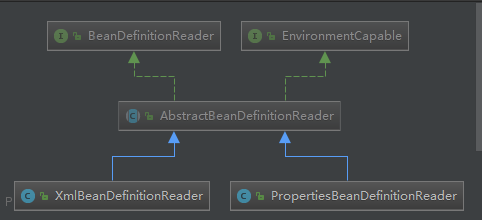
我们通过xml文件定义的bean,所以调用的是XmlBeanDefinitionReader的loadBeanDefinitions方法:
 /**

      * Load bean definitions from the specified XML file.

      * @param encodedResource the resource descriptor for the XML file,

      * allowing to specify an encoding to use for parsing the file

      * @return the number of bean definitions found

      * @throws BeanDefinitionStoreException in case of loading or parsing errors

      */

     public int loadBeanDefinitions(EncodedResource encodedResource) throws BeanDefinitionStoreException {

         Assert.notNull(encodedResource, "EncodedResource must not be null");

         if (logger.isInfoEnabled()) {

             logger.info("Loading XML bean definitions from " + encodedResource.getResource());

         }

         Set<EncodedResource> currentResources = this.resourcesCurrentlyBeingLoaded.get();

         if (currentResources == null) {

             currentResources = new HashSet<EncodedResource>(4);

             this.resourcesCurrentlyBeingLoaded.set(currentResources);

         }

         if (!currentResources.add(encodedResource)) {

             throw new BeanDefinitionStoreException(

                     "Detected cyclic loading of " + encodedResource + " - check your import definitions!");

         }

         try {

             //根据Resource获取输入流

             InputStream inputStream = encodedResource.getResource().getInputStream();

             try {

                 InputSource inputSource = new InputSource(inputStream);

                 if (encodedResource.getEncoding() != null) {

                     inputSource.setEncoding(encodedResource.getEncoding());

                 }

                 //Spring凡是do开头的方法都是具体干活的

                 return doLoadBeanDefinitions(inputSource, encodedResource.getResource());

             }

             finally {

                 inputStream.close();

             }

         }

         catch (IOException ex) {

             throw new BeanDefinitionStoreException(

                     "IOException parsing XML document from " + encodedResource.getResource(), ex);

         }

         finally {

             currentResources.remove(encodedResource);

             if (currentResources.isEmpty()) {

                 this.resourcesCurrentlyBeingLoaded.remove();

             }

         }

     }
该方法通过入参encodedResource.getResource()获取到inputStream,最后调用了doLoadBeanDefinitions()方法。
 /**

      * Actually load bean definitions from the specified XML file.

      * @param inputSource the SAX InputSource to read from

      * @param resource the resource descriptor for the XML file

      * @return the number of bean definitions found

      * @throws BeanDefinitionStoreException in case of loading or parsing errors

      */

     protected int doLoadBeanDefinitions(InputSource inputSource, Resource resource)

             throws BeanDefinitionStoreException {

         try {

             int validationMode = getValidationModeForResource(resource);

             //取得xml文件的Document对象

             Document doc = this.documentLoader.loadDocument(

                     inputSource, getEntityResolver(), this.errorHandler, validationMode, isNamespaceAware());

             return registerBeanDefinitions(doc, resource);

         }

        ......//省略     }
获取XML文件校验方式
首先,调用getValidationModeForResource方法
 /**

      * Gets the validation mode for the specified {@link Resource}. If no explicit

      * validation mode has been configured then the validation mode is

      * {@link #detectValidationMode detected}.

      * <p>Override this method if you would like full control over the validation

      * mode, even when something other than {@link #VALIDATION_AUTO} was set.

      */

     protected int getValidationModeForResource(Resource resource) {

         int validationModeToUse = getValidationMode();

         if (validationModeToUse != VALIDATION_AUTO) {

             return validationModeToUse;

         }

         int detectedMode = detectValidationMode(resource);

         if (detectedMode != VALIDATION_AUTO) {

             return detectedMode;

         }

         // Hmm, we didn't get a clear indication... Let's assume XSD,

         // since apparently no DTD declaration has been found up until

         // detection stopped (before finding the document's root tag).

         return VALIDATION_XSD;

     }
然周调用了detectValidationMode方法:
 protected int detectValidationMode(Resource resource) {

         if (resource.isOpen()) {

             throw new BeanDefinitionStoreException(

                     "Passed-in Resource [" + resource + "] contains an open stream: " +

                     "cannot determine validation mode automatically. Either pass in a Resource " +

                     "that is able to create fresh streams, or explicitly specify the validationMode " +

                     "on your XmlBeanDefinitionReader instance.");

         }

         InputStream inputStream;

         try {

             inputStream = resource.getInputStream();

         }

         catch (IOException ex) {

             throw new BeanDefinitionStoreException(

                     "Unable to determine validation mode for [" + resource + "]: cannot open InputStream. " +

                     "Did you attempt to load directly from a SAX InputSource without specifying the " +

                     "validationMode on your XmlBeanDefinitionReader instance?", ex);

         }

         try {

             return this.validationModeDetector.detectValidationMode(inputStream);

         }

         catch (IOException ex) {

             throw new BeanDefinitionStoreException("Unable to determine validation mode for [" +

                     resource + "]: an error occurred whilst reading from the InputStream.", ex);

         }

     }
最终,调用了XmlValidationModeDetector的detectValidationMode方法:
public int detectValidationMode(InputStream inputStream) throws IOException {

        // Peek into the file to look for DOCTYPE.

        BufferedReader reader = new BufferedReader(new InputStreamReader(inputStream));

        try {

            boolean isDtdValidated = false;

            String content;

            while ((content = reader.readLine()) != null) {

                content = consumeCommentTokens(content);

                if (this.inComment || !StringUtils.hasText(content)) {

                    continue;

                }

                if (hasDoctype(content)) {

                    isDtdValidated = true;

                    break;

                }

                if (hasOpeningTag(content)) {

                    // End of meaningful data...

                    break;

                }

            }

            return (isDtdValidated ? VALIDATION_DTD : VALIDATION_XSD);

        }

        catch (CharConversionException ex) {

            // Choked on some character encoding...

            // Leave the decision up to the caller.

            return VALIDATION_AUTO;

        }

        finally {

            reader.close();

        }

    }
如果xml文档中包含了“DOCTYPE”关键字,就是DTD方式校验,否则就是XSD方式校验。以下是DTD方式的xml配置文件:
<?xml version="1.0" encoding="UTF-8"?>

<!DOCTYPE beans PUBLIC "-//SPRING//DTD BEAN 2.0//EN" "http://www.springframework.org/dtd/spring-beans-2.0.dtd">
获取Document
取得了xml文件的验证方式以后就可以加载XML文件了,加载的工作委托给了DefaultDocumentLoader:
/**

     * Load the {@link Document} at the supplied {@link InputSource} using the standard JAXP-configured

     * XML parser.

     */

    public Document loadDocument(InputSource inputSource, EntityResolver entityResolver,

            ErrorHandler errorHandler, int validationMode, boolean namespaceAware) throws Exception {

        DocumentBuilderFactory factory = createDocumentBuilderFactory(validationMode, namespaceAware);

        if (logger.isDebugEnabled()) {

            logger.debug("Using JAXP provider [" + factory.getClass().getName() + "]");

        }

        DocumentBuilder builder = createDocumentBuilder(factory, entityResolver, errorHandler);

        return builder.parse(inputSource);

    }
loadDocument方法涉及到一个参数EntityResolver,这个参数保存了xsd文件本次存放的路径,在spring各个包下的resources/META-INF/spring.schemas中定义了本地xsd文件存放的路径。
解析、注册BeanDefinition
获得Document以后调用XmlBeanDefinitionReader的registerBeanDefinitions(Document doc,Resouce resouce)方法:
public int registerBeanDefinitions(Document doc, Resource resource) throws BeanDefinitionStoreException {

        BeanDefinitionDocumentReader documentReader = createBeanDefinitionDocumentReader();

        documentReader.setEnvironment(getEnvironment());

        //获取BeanDefinition的registry对象,DefaultListableBeanFactory,初始化XmlBeanDefinitionReader时进行的设置

        int countBefore = getRegistry().getBeanDefinitionCount();

        documentReader.registerBeanDefinitions(doc, createReaderContext(resource));

        return getRegistry().getBeanDefinitionCount() - countBefore;

    }
在这个方法里创建了BeanDefinitionDocumentReader,解析、注册BeanDefinition的工作又委托给了它。
/**

     * This implementation parses bean definitions according to the "spring-beans" XSD

     * (or DTD, historically).

     * <p>Opens a DOM Document; then initializes the default settings

     * specified at the {@code <beans/>} level; then parses the contained bean definitions.

     */

    public void registerBeanDefinitions(Document doc, XmlReaderContext readerContext) {

        //BeanDefinition读取过程中传递的上下文,封装相关的的配置和状态

        this.readerContext = readerContext;

        logger.debug("Loading bean definitions");

        Element root = doc.getDocumentElement();

        doRegisterBeanDefinitions(root);

    }
第二个入参XmlReaderContext可以关注下:
/**

 * Extension of {@link org.springframework.beans.factory.parsing.ReaderContext},

 * specific to use with an {@link XmlBeanDefinitionReader}. Provides access to the

 * {@link NamespaceHandlerResolver} configured in the {@link XmlBeanDefinitionReader}.

 *

 * @author Rob Harrop

 * @author Juergen Hoeller

 * @since 2.0

 */

public class XmlReaderContext extends ReaderContext {

    private final XmlBeanDefinitionReader reader;//注册BeanDefinition用实际上就是DefaultListableBeanFacotry

    private final NamespaceHandlerResolver namespaceHandlerResolver;//根据xml文件命名空间,查找对应的Handler去解析属性(除了固定的属性的自定义属性)
  //////////省略......................
我们看一下NamespaceHandlerResolver的默认实现DefaultNamespaceHandlerResolver:
public class DefaultNamespaceHandlerResolver implements NamespaceHandlerResolver {

    /**

     * The location to look for the mapping files. Can be present in multiple JAR files.

     */

    public static final String DEFAULT_HANDLER_MAPPINGS_LOCATION = "META-INF/spring.handlers";

    /** Logger available to subclasses */

    protected final Log logger = LogFactory.getLog(getClass());

    /** ClassLoader to use for NamespaceHandler classes */

    private final ClassLoader classLoader;

    /** Resource location to search for */

    private final String handlerMappingsLocation;

    /** Stores the mappings from namespace URI to NamespaceHandler class name / instance */

    private volatile Map<String, Object> handlerMappings;

  //省略........................

  /**

     * Load the specified NamespaceHandler mappings lazily.

     */

    private Map<String, Object> getHandlerMappings() {

        if (this.handlerMappings == null) {

            synchronized (this) {

                if (this.handlerMappings == null) {

                    try {

                        Properties mappings =

                                PropertiesLoaderUtils.loadAllProperties(this.handlerMappingsLocation, this.classLoader);

                        if (logger.isDebugEnabled()) {

                            logger.debug("Loaded NamespaceHandler mappings: " + mappings);

                        }

                        Map<String, Object> handlerMappings = new ConcurrentHashMap<String, Object>(mappings.size());

                        CollectionUtils.mergePropertiesIntoMap(mappings, handlerMappings);

                        this.handlerMappings = handlerMappings;

                    }

                    catch (IOException ex) {

                        throw new IllegalStateException(

                                "Unable to load NamespaceHandler mappings from location [" + this.handlerMappingsLocation + "]", ex);

                    }

                }

            }

        }

        return this.handlerMappings;

    }
getHandlerMappings()方法会加载classpath下所有的"META-INF/spring.handlers"文件,并存放在handlerMappings(Map)中,在后续的解析xml自定义属性时会根据命名空间在handlerMappings中查找NamespaceHandler去解析
自定义的属性。
http\://www.springframework.org/schema/c=org.springframework.beans.factory.xml.SimpleConstructorNamespaceHandler

http\://www.springframework.org/schema/p=org.springframework.beans.factory.xml.SimplePropertyNamespaceHandler

http\://www.springframework.org/schema/util=org.springframework.beans.factory.xml.UtilNamespaceHandler
这是spring-beans中的spring。handlers文件。这些自定义的NamespaceHandler都必须实现NamespaceHandler接口或继承NamespaceHandlerSupport,比如自定义的标签Dubbo:
http\://code.alibabatech.com/schema/dubbo=com.alibaba.dubbo.config.spring.schema.DubboNamespaceHandler
* DubboNamespaceHandler

*

* @export

*/

public class DubboNamespaceHandler extends NamespaceHandlerSupport {

static {

Version.checkDuplicate(DubboNamespaceHandler.class);

}

public void init() {

registerBeanDefinitionParser("application", new DubboBeanDefinitionParser(ApplicationConfig.class, true));

registerBeanDefinitionParser("module", new DubboBeanDefinitionParser(ModuleConfig.class, true));

registerBeanDefinitionParser("registry", new DubboBeanDefinitionParser(RegistryConfig.class, true));

registerBeanDefinitionParser("monitor", new DubboBeanDefinitionParser(MonitorConfig.class, true));

registerBeanDefinitionParser("provider", new DubboBeanDefinitionParser(ProviderConfig.class, true));

registerBeanDefinitionParser("consumer", new DubboBeanDefinitionParser(ConsumerConfig.class, true));

registerBeanDefinitionParser("protocol", new DubboBeanDefinitionParser(ProtocolConfig.class, true));

registerBeanDefinitionParser("service", new DubboBeanDefinitionParser(ServiceBean.class, true));

registerBeanDefinitionParser("reference", new DubboBeanDefinitionParser(ReferenceBean.class, false));

registerBeanDefinitionParser("annotation", new AnnotationBeanDefinitionParser());

}

}
DubboBeanDefinitionParser是用来解析自定义属性的,它需要实现BeanDefinitionParser接口:
public class DubboBeanDefinitionParser implements BeanDefinitionParser {
public interface BeanDefinitionParser {

   /**
    * Parse the specified {@link Element} and register the resulting
    * {@link BeanDefinition BeanDefinition(s)} with the
    * {@link org.springframework.beans.factory.xml.ParserContext#getRegistry() BeanDefinitionRegistry}
    * embedded in the supplied {@link ParserContext}.
    * <p>Implementations must return the primary {@link BeanDefinition} that results
    * from the parse if they will ever be used in a nested fashion (for example as
    * an inner tag in a {@code <property/>} tag). Implementations may return
    * {@code null} if they will <strong>not</strong> be used in a nested fashion.
    * @param element the element that is to be parsed into one or more {@link BeanDefinition BeanDefinitions}
    * @param parserContext the object encapsulating the current state of the parsing process;
    * provides access to a {@link org.springframework.beans.factory.support.BeanDefinitionRegistry}
    * @return the primary {@link BeanDefinition}
    */
   BeanDefinition parse(Element element, ParserContext parserContext);

}
继续看解析过程:
/**

     * Register each bean definition within the given root {@code <beans/>} element.

     */

    protected void doRegisterBeanDefinitions(Element root) {

        //beans标签的profile属性

        String profileSpec = root.getAttribute(PROFILE_ATTRIBUTE);

        if (StringUtils.hasText(profileSpec)) {

            String[] specifiedProfiles = StringUtils.tokenizeToStringArray(

                    profileSpec, BeanDefinitionParserDelegate.MULTI_VALUE_ATTRIBUTE_DELIMITERS);

            if (!getEnvironment().acceptsProfiles(specifiedProfiles)) {

                return;

            }

        }

        // Any nested <beans> elements will cause recursion in this method. In

        // order to propagate and preserve <beans> default-* attributes correctly,

        // keep track of the current (parent) delegate, which may be null. Create

        // the new (child) delegate with a reference to the parent for fallback purposes,

        // then ultimately reset this.delegate back to its original (parent) reference.

        // this behavior emulates a stack of delegates without actually necessitating one.

        BeanDefinitionParserDelegate parent = this.delegate;

        this.delegate = createDelegate(this.readerContext, root, parent);

        preProcessXml(root);

        parseBeanDefinitions(root, this.delegate);

        postProcessXml(root);

        this.delegate = parent;

    }
1.方法开始判断<beans>是否包含profile属性,如果存在校验环境变量是进行了设置。profile的作用类似maven的profile,可以做到开发、测试、生产环境的切换。
<?xml version="1.0" encoding="UTF-8"?>

<beans xmlns="http://www.springframework.org/schema/beans"

       xmlns:xsi="http://www.w3.org/2001/XMLSchema-instance"

       xmlns:dubbo="http://code.alibabatech.com/schema/dubbo"

       xsi:schemaLocation="http://www.springframework.org/schema/beans

           http://www.springframework.org/schema/beans/spring-beans-3.2.xsd

           http://code.alibabatech.com/schema/dubbo

           http://code.alibabatech.com/schema/dubbo/dubbo.xsd">

    <bean id="userService" class="org.springframework.example.service.impl.UserServiceImpl" lazy-init="true"></bean>

    <beans profile="dev">

        <bean id="testService" class="org.springframework.example.service.impl.TestServiceImpl" scope="prototype"

              lazy-init="true">

            <property name="userService" ref="userService"></property>

        </bean>

    </beans>

    <beans profile="test">

    </beans>
这样就实现了通过profile标记不同的环境,接下来就可以通过设置spring.profiles.default和spring.profiles.active这两个属性来激活和使用对应的配置文件。default为默认,如果没有通过active来指定,那么就默认使用default定义的环境。
这两个属性可以通过多种方法来设置:
- 在web.xml中作为web应用的上下文参数context-param;
- 在web.xml中作为DispatcherServlet的初始化参数;
- 作为JNDI条目;
- 作为环境变量;
- 作为JVM的系统属性;
- 在集成测试类上,使用@ActiveProfiles注解配置。
前两者都可以在web.xml文件中设置:
<?xml version="1.0" encoding="UTF-8"?>

<web-app version="3.0" xmlns="http://java.sun.com/xml/ns/javaee"

    xmlns:xsi="http://www.w3.org/2001/XMLSchema-instance"

    xsi:schemaLocation="http://java.sun.com/xml/ns/javaee

    http://java.sun.com/xml/ns/javaee/web-app_3_0.xsd">

    <display-name>Archetype Created Web Application</display-name>

    <context-param>

        <param-name>contextConfigLocation</param-name>

        <param-value>

            classpath*:/applicationContext*.xml

        </param-value>

    </context-param>

    <!-- 在上下文context-param中设置profile.default的默认值 -->

    <context-param>

        <param-name>spring.profiles.default</param-name>

        <param-value>development</param-value>

    </context-param>

    <!-- 在上下文context-param中设置profile.active的默认值 -->

    <!-- 设置active后default失效,web启动时会加载对应的环境信息 -->

    <context-param>

        <param-name>spring.profiles.active</param-name>

        <param-value>dev</param-value>

    </context-param>

    <servlet>

        <servlet-name>appServlet</servlet-name>

        <servlet-class>org.springframework.web.servlet.DispatcherServlet</servlet-class>

        <!-- 在DispatcherServlet参数中设置profile的默认值,active同理 -->

        <init-param>

            <param-name>spring.profiles.default</param-name>

            <param-value>dev</param-value>

        </init-param>

        <load-on-startup>1</load-on-startup>

    </servlet>

    <servlet-mapping>

        <servlet-name>appServlet</servlet-name>

        <url-pattern>/</url-pattern>

    </servlet-mapping>

</web-app>
激活指定的环境,也可以通过JVM参数来设置,可以在tomcat的启动脚本中加入以下JVM参数来激活:
-Dspring.profiles.active="dev"
在程序中,也可以通过 @Profile("...") 对某些资源进行注解,这样只有当选择对应的环境时,才会产生对应的bean,如:
@Bean

@Profile("dev")

    public DataSource jndiDataSource(){

        JndiObjectFactoryBean jofb=new JndiObjectFactoryBean();

        jofb.setJndiName("jndi/iDS");

        jofb.setResourceRef(true);

        jofb.setProxyInterface(xxx.class);

        return (DataSource) jofb.getObject();

    }

}
2.创建BeanDefinitionParserDelegate,xml具体的解析工作都是由它完成。
// Any nested <beans> elements will cause recursion in this method. In

        // order to propagate and preserve <beans> default-* attributes correctly,

        // keep track of the current (parent) delegate, which may be null. Create

        // the new (child) delegate with a reference to the parent for fallback purposes,

        // then ultimately reset this.delegate back to its original (parent) reference.

        // this behavior emulates a stack of delegates without actually necessitating one.

        BeanDefinitionParserDelegate parent = this.delegate;

        this.delegate = createDelegate(this.readerContext, root, parent);
因为<beans>里是可以嵌套<beans>的,所以递归调用这个方法时root是不一样的,需要重新生成BeanDefinitionParserDelegate 。
3.委托BeanDefinitionParserDelegate解析xml节点
/**

     * Parse the elements at the root level in the document:

     * "import", "alias", "bean".

     * @param root the DOM root element of the document

     */

    protected void parseBeanDefinitions(Element root, BeanDefinitionParserDelegate delegate) {

        if (delegate.isDefaultNamespace(root)) {

            NodeList nl = root.getChildNodes();

            for (int i = 0; i < nl.getLength(); i++) {

                Node node = nl.item(i);

                if (node instanceof Element) {

                    Element ele = (Element) node;

                    if (delegate.isDefaultNamespace(ele)) {

                        //解析固定的元素,beans、import、alias、bean等

                        parseDefaultElement(ele, delegate);

                    }

                    else {

                        //解析自定义元素

                        delegate.parseCustomElement(ele);

                    }

                }

            }

        }

        else {

            delegate.parseCustomElement(root);

        }

    }
4.解析spring默认的标签
private void parseDefaultElement(Element ele, BeanDefinitionParserDelegate delegate) {

        //解析import

        if (delegate.nodeNameEquals(ele, IMPORT_ELEMENT)) {

            importBeanDefinitionResource(ele);

        }

        //解析alias

        else if (delegate.nodeNameEquals(ele, ALIAS_ELEMENT)) {

            processAliasRegistration(ele);

        }

        //解析bean

        else if (delegate.nodeNameEquals(ele, BEAN_ELEMENT)) {

            processBeanDefinition(ele, delegate);

        }

        //解析beans,递归调用doRegisterBeanDefinitions

        else if (delegate.nodeNameEquals(ele, NESTED_BEANS_ELEMENT)) {

            // recurse

            doRegisterBeanDefinitions(ele);

        }

    }
bean标签是最长用到的,看一下它是如何解析的:
/**

     * Process the given bean element, parsing the bean definition

     * and registering it with the registry.

     */

    protected void processBeanDefinition(Element ele, BeanDefinitionParserDelegate delegate) {

        //解析bean节点,返回BeanDefinitionHolder

        BeanDefinitionHolder bdHolder = delegate.parseBeanDefinitionElement(ele);

        if (bdHolder != null) {

            bdHolder = delegate.decorateBeanDefinitionIfRequired(ele, bdHolder);

            try {

                // Register the final decorated instance.

                //将BeanDefinition注册到DefaultListableBeanFacotry

                BeanDefinitionReaderUtils.registerBeanDefinition(bdHolder, getReaderContext().getRegistry());

            }

            catch (BeanDefinitionStoreException ex) {

                getReaderContext().error("Failed to register bean definition with name '" +

                        bdHolder.getBeanName() + "'", ele, ex);

            }

            // Send registration event.

            getReaderContext().fireComponentRegistered(new BeanComponentDefinition(bdHolder));

        }

    }
具体解析工作是有BeanDefinitionParserDelegate 完成
/**

     * Parses the supplied {@code <bean>} element. May return {@code null}

     * if there were errors during parse. Errors are reported to the

     * {@link org.springframework.beans.factory.parsing.ProblemReporter}.

     */

    public BeanDefinitionHolder parseBeanDefinitionElement(Element ele, BeanDefinition containingBean) {

        //获取id属性

        String id = ele.getAttribute(ID_ATTRIBUTE);

        //获取name属性,多个可以,或;分隔

        String nameAttr = ele.getAttribute(NAME_ATTRIBUTE);

        /*name属性是别名,id属性才是beanName*/

        List<String> aliases = new ArrayList<String>();

        if (StringUtils.hasLength(nameAttr)) {

            String[] nameArr = StringUtils.tokenizeToStringArray(nameAttr, MULTI_VALUE_ATTRIBUTE_DELIMITERS);

            aliases.addAll(Arrays.asList(nameArr));

        }

        String beanName = id;

        if (!StringUtils.hasText(beanName) && !aliases.isEmpty()) {

            beanName = aliases.remove(0);

            if (logger.isDebugEnabled()) {

                logger.debug("No XML 'id' specified - using '" + beanName +

                        "' as bean name and " + aliases + " as aliases");

            }

        }

        //校验beanName和别名不能和其他<bean>的重复

        if (containingBean == null) {

            checkNameUniqueness(beanName, aliases, ele);

        }

        //解析<bean>

        AbstractBeanDefinition beanDefinition = parseBeanDefinitionElement(ele, beanName, containingBean);

        if (beanDefinition != null) {

            //如果没有设置id和name属性,默认取包名.类名#count,

            //如果是子类,没设置class,默认parent$child#count

            if (!StringUtils.hasText(beanName)) {

                try {

                    if (containingBean != null) {

                        beanName = BeanDefinitionReaderUtils.generateBeanName(

                                beanDefinition, this.readerContext.getRegistry(), true);

                    }

                    else {

                        beanName = this.readerContext.generateBeanName(beanDefinition);

                        // Register an alias for the plain bean class name, if still possible,

                        // if the generator returned the class name plus a suffix.

                        // This is expected for Spring 1.2/2.0 backwards compatibility.

                        String beanClassName = beanDefinition.getBeanClassName();

                        if (beanClassName != null &&

                                beanName.startsWith(beanClassName) && beanName.length() > beanClassName.length() &&

                                !this.readerContext.getRegistry().isBeanNameInUse(beanClassName)) {

                            //没有设置id和name,别名就是包名.类名

                            aliases.add(beanClassName);

                        }

                    }

                    if (logger.isDebugEnabled()) {

                        logger.debug("Neither XML 'id' nor 'name' specified - " +

                                "using generated bean name [" + beanName + "]");

                    }

                }

                catch (Exception ex) {

                    error(ex.getMessage(), ele);

                    return null;

                }

            }

            String[] aliasesArray = StringUtils.toStringArray(aliases);

            return new BeanDefinitionHolder(beanDefinition, beanName, aliasesArray);

        }

        return null;

    }
具体解析内容:
    public AbstractBeanDefinition parseBeanDefinitionElement(

            Element ele, String beanName, BeanDefinition containingBean) {

        this.parseState.push(new BeanEntry(beanName));

        String className = null;

        if (ele.hasAttribute(CLASS_ATTRIBUTE)) {

            className = ele.getAttribute(CLASS_ATTRIBUTE).trim();

        }

        try {

            String parent = null;

            if (ele.hasAttribute(PARENT_ATTRIBUTE)) {

                parent = ele.getAttribute(PARENT_ATTRIBUTE);

            }

            AbstractBeanDefinition bd = createBeanDefinition(className, parent);

            //解析bean标签的属性

            parseBeanDefinitionAttributes(ele, beanName, containingBean, bd);

            bd.setDescription(DomUtils.getChildElementValueByTagName(ele, DESCRIPTION_ELEMENT));

            //bean标签的子元素meta

            parseMetaElements(ele, bd);

            //lookup-method

            parseLookupOverrideSubElements(ele, bd.getMethodOverrides());

            //replaced-method,运行时进行方法替换

            parseReplacedMethodSubElements(ele, bd.getMethodOverrides());

            parseConstructorArgElements(ele, bd);


            parsePropertyElements(ele, bd);//bean的子标签property

            parseQualifierElements(ele, bd);

            bd.setResource(this.readerContext.getResource());

            bd.setSource(extractSource(ele));

            return bd;

        }

        catch (ClassNotFoundException ex) {

            error("Bean class [" + className + "] not found", ele, ex);

        }

        catch (NoClassDefFoundError err) {

            error("Class that bean class [" + className + "] depends on not found", ele, err);

        }

        catch (Throwable ex) {

            error("Unexpected failure during bean definition parsing", ele, ex);

        }

        finally {

            this.parseState.pop();

        }

        return null;

    }
解析bean标签:
/**

     * Apply the attributes of the given bean element to the given bean * definition.

     * @param ele bean declaration element

     * @param beanName bean name

     * @param containingBean containing bean definition

     * @return a bean definition initialized according to the bean element attributes

     */

    public AbstractBeanDefinition parseBeanDefinitionAttributes(Element ele, String beanName,

            BeanDefinition containingBean, AbstractBeanDefinition bd) {

        /**

         * scope:bean的作用域,

         *         --singleton:单例

         *         --prototype:多实例

         * scope=“singleton”,singleton=true只能二选一

         */

        if (ele.hasAttribute(SCOPE_ATTRIBUTE)) {

            // Spring 2.x "scope" attribute

            bd.setScope(ele.getAttribute(SCOPE_ATTRIBUTE));

            if (ele.hasAttribute(SINGLETON_ATTRIBUTE)) {

                error("Specify either 'scope' or 'singleton', not both", ele);

            }

        }

        /**

         * singleton:是否单例

         *         --true

         *         --false

         */

        else if (ele.hasAttribute(SINGLETON_ATTRIBUTE)) {

            // Spring 1.x "singleton" attribute

            bd.setScope(TRUE_VALUE.equals(ele.getAttribute(SINGLETON_ATTRIBUTE)) ?

                    BeanDefinition.SCOPE_SINGLETON : BeanDefinition.SCOPE_PROTOTYPE);

        }

        else if (containingBean != null) {

            // Take default from containing bean in case of an inner bean definition.

            bd.setScope(containingBean.getScope());

        }

        /**

         *     abstract:

         *         --true:spring不会初始化该bean

         *         --false:如果是抽象类设置为false,会抛异常

         */

        if (ele.hasAttribute(ABSTRACT_ATTRIBUTE)) {

            bd.setAbstract(TRUE_VALUE.equals(ele.getAttribute(ABSTRACT_ATTRIBUTE)));

        }

        /**

         * lazy-init:延迟加载

         *         --default:取beans标签default-lazy-init属性,如果没有默认false

         *         --true

         *         --false

         */

        String lazyInit = ele.getAttribute(LAZY_INIT_ATTRIBUTE);

        if (DEFAULT_VALUE.equals(lazyInit)) {

            lazyInit = this.defaults.getLazyInit();

        }

        bd.setLazyInit(TRUE_VALUE.equals(lazyInit));

        /**

         * autowire:自动装配

         *         --default:如果bean上指定了default,它会去beans标签去找default-autowire属性,beans不设置默认no

         *         --no:spring不帮忙去匹配,但是bean的property属性必须定义ref

         *         --byName:根据名字匹配(id和name),实际是根据属性的set方法的名称匹配,例如属性是service,但是set方法是setUserService,这个时候匹配是名称为userService的bean

         *         --byType:根据类型匹配,如果找到多个相同类型的bean会抛异常

         *         --constructor:根据构造器参数名匹配

         */

        String autowire = ele.getAttribute(AUTOWIRE_ATTRIBUTE);

        bd.setAutowireMode(getAutowireMode(autowire));

        /**

         * dependency-check:依赖检查,3.x版本已经废弃

         *         --simple:对基本类型、字符串和数组进行依赖检查

         *         --object:对依赖的对象进行检查

         *         --all:对全部属性进行检查

         *         --none:不进行依赖检查

         */

        String dependencyCheck = ele.getAttribute(DEPENDENCY_CHECK_ATTRIBUTE);

        bd.setDependencyCheck(getDependencyCheck(dependencyCheck));

        if (ele.hasAttribute(DEPENDS_ON_ATTRIBUTE)) {

            String dependsOn = ele.getAttribute(DEPENDS_ON_ATTRIBUTE);

            bd.setDependsOn(StringUtils.tokenizeToStringArray(dependsOn, MULTI_VALUE_ATTRIBUTE_DELIMITERS));

        }

        /**

         * autowire-candidate:自动装配候选人

         *         true: 默认

         *         false:容器在为其他bean装配属性时将不考虑该bean

         */

        String autowireCandidate = ele.getAttribute(AUTOWIRE_CANDIDATE_ATTRIBUTE);

        if ("".equals(autowireCandidate) || DEFAULT_VALUE.equals(autowireCandidate)) {

            String candidatePattern = this.defaults.getAutowireCandidates();

            if (candidatePattern != null) {

                String[] patterns = StringUtils.commaDelimitedListToStringArray(candidatePattern);

                bd.setAutowireCandidate(PatternMatchUtils.simpleMatch(patterns, beanName));

            }

        }

        else {

            bd.setAutowireCandidate(TRUE_VALUE.equals(autowireCandidate));

        }

        /**

         * primary:优先选择状态,一个接口多个实现,按类型自动装填时会报错,设置该属性为true,可以优先装填,不会报错

         *         true、false

         */

        if (ele.hasAttribute(PRIMARY_ATTRIBUTE)) {

            bd.setPrimary(TRUE_VALUE.equals(ele.getAttribute(PRIMARY_ATTRIBUTE)));

        }

        /**

         * init-method:初始化bean的时候调用

         */

        if (ele.hasAttribute(INIT_METHOD_ATTRIBUTE)) {

            String initMethodName = ele.getAttribute(INIT_METHOD_ATTRIBUTE);

            if (!"".equals(initMethodName)) {

                bd.setInitMethodName(initMethodName);

            }

        }

        else {

            if (this.defaults.getInitMethod() != null) {

                bd.setInitMethodName(this.defaults.getInitMethod());

                bd.setEnforceInitMethod(false);

            }

        }

        /**

         * destroy-method:销毁bean之前调用

         */

        if (ele.hasAttribute(DESTROY_METHOD_ATTRIBUTE)) {

            String destroyMethodName = ele.getAttribute(DESTROY_METHOD_ATTRIBUTE);

            if (!"".equals(destroyMethodName)) {

                bd.setDestroyMethodName(destroyMethodName);

            }

        }

        else {

            if (this.defaults.getDestroyMethod() != null) {

                bd.setDestroyMethodName(this.defaults.getDestroyMethod());

                bd.setEnforceDestroyMethod(false);

            }

        }

        /**

         * factory-method:创建bena的工厂方法

         */

        if (ele.hasAttribute(FACTORY_METHOD_ATTRIBUTE)) {

            bd.setFactoryMethodName(ele.getAttribute(FACTORY_METHOD_ATTRIBUTE));

        }

        /**

         * factory-bean:创建bean的工厂bean

         */

        if (ele.hasAttribute(FACTORY_BEAN_ATTRIBUTE)) {

            bd.setFactoryBeanName(ele.getAttribute(FACTORY_BEAN_ATTRIBUTE));

        }

        return bd;

    }
解析bean的子标签property:
/**

     * Parse a property element.

     */

    public void parsePropertyElement(Element ele, BeanDefinition bd) {

        String propertyName = ele.getAttribute(NAME_ATTRIBUTE);

        //校验property name属性不能为空

        if (!StringUtils.hasLength(propertyName)) {

            error("Tag 'property' must have a 'name' attribute", ele);

            return;

        }

        this.parseState.push(new PropertyEntry(propertyName));

        try {

            if (bd.getPropertyValues().contains(propertyName)) {

                error("Multiple 'property' definitions for property '" + propertyName + "'", ele);

                return;

            }

            Object val = parsePropertyValue(ele, bd, propertyName);

            PropertyValue pv = new PropertyValue(propertyName, val);

            parseMetaElements(ele, pv);

            pv.setSource(extractSource(ele));

            bd.getPropertyValues().addPropertyValue(pv);

        }

        finally {

            this.parseState.pop();

        }

    }
解析property 的value值:
/**

     * Parse a value, ref or collection sub-element of a property or

     * constructor-arg element.

     * @param ele subelement of property element; we don't know which yet

     * @param defaultValueType the default type (class name) for any

     * {@code <value>} tag that might be created

     */

    public Object parsePropertySubElement(Element ele, BeanDefinition bd, String defaultValueType) {

        if (!isDefaultNamespace(ele)) {

            return parseNestedCustomElement(ele, bd);

        }

        else if (nodeNameEquals(ele, BEAN_ELEMENT)) {

            BeanDefinitionHolder nestedBd = parseBeanDefinitionElement(ele, bd);

            if (nestedBd != null) {

                nestedBd = decorateBeanDefinitionIfRequired(ele, nestedBd, bd);

            }

            return nestedBd;

        }

        else if (nodeNameEquals(ele, REF_ELEMENT)) {

            // A generic reference to any name of any bean.

            String refName = ele.getAttribute(BEAN_REF_ATTRIBUTE);

            boolean toParent = false;

            if (!StringUtils.hasLength(refName)) {

                // A reference to the id of another bean in the same XML file.

                refName = ele.getAttribute(LOCAL_REF_ATTRIBUTE);

                if (!StringUtils.hasLength(refName)) {

                    // A reference to the id of another bean in a parent context.

                    refName = ele.getAttribute(PARENT_REF_ATTRIBUTE);

                    toParent = true;

                    if (!StringUtils.hasLength(refName)) {

                        error("'bean', 'local' or 'parent' is required for <ref> element", ele);

                        return null;

                    }

                }

            }

            if (!StringUtils.hasText(refName)) {

                error("<ref> element contains empty target attribute", ele);

                return null;

            }

            RuntimeBeanReference ref = new RuntimeBeanReference(refName, toParent);

            ref.setSource(extractSource(ele));

            return ref;

        }

        else if (nodeNameEquals(ele, IDREF_ELEMENT)) {

            return parseIdRefElement(ele);

        }

        else if (nodeNameEquals(ele, VALUE_ELEMENT)) {

            return parseValueElement(ele, defaultValueType);

        }

        else if (nodeNameEquals(ele, NULL_ELEMENT)) {

            // It's a distinguished null value. Let's wrap it in a TypedStringValue

            // object in order to preserve the source location.

            TypedStringValue nullHolder = new TypedStringValue(null);

            nullHolder.setSource(extractSource(ele));

            return nullHolder;

        }

        else if (nodeNameEquals(ele, ARRAY_ELEMENT)) {

            return parseArrayElement(ele, bd);

        }

        else if (nodeNameEquals(ele, LIST_ELEMENT)) {

            return parseListElement(ele, bd);

        }

        else if (nodeNameEquals(ele, SET_ELEMENT)) {

            return parseSetElement(ele, bd);

        }

        else if (nodeNameEquals(ele, MAP_ELEMENT)) {

            return parseMapElement(ele, bd);

        }

        else if (nodeNameEquals(ele, PROPS_ELEMENT)) {

            return parsePropsElement(ele);

        }

        else {

            error("Unknown property sub-element: [" + ele.getNodeName() + "]", ele);

            return null;

        }

    }
在这个方法中会解析各种的property属性,包括直接ref引用,List,Map,Set等等,我们就找个List的解析看一下,其他集合类似:
/**

     * Parse a list element.

     */

    public List parseListElement(Element collectionEle, BeanDefinition bd) {

        String defaultElementType = collectionEle.getAttribute(VALUE_TYPE_ATTRIBUTE);

        NodeList nl = collectionEle.getChildNodes();

        //继承ArrayList,实现Mergeable接口,用来做集合value值合并

        ManagedList<Object> target = new ManagedList<Object>(nl.getLength());

        target.setSource(extractSource(collectionEle));

        target.setElementTypeName(defaultElementType);

        //是否可以合并,merge=true,会将父类相同List属性的值与子类的List值合并

        target.setMergeEnabled(parseMergeAttribute(collectionEle));

        parseCollectionElements(nl, target, bd, defaultElementType);

        return target;

    }

protected void parseCollectionElements(

            NodeList elementNodes, Collection<Object> target, BeanDefinition bd, String defaultElementType) {

        for (int i = 0; i < elementNodes.getLength(); i++) {

            Node node = elementNodes.item(i);

            if (node instanceof Element && !nodeNameEquals(node, DESCRIPTION_ELEMENT)) {
         //递归解析

                target.add(parsePropertySubElement((Element) node, bd, defaultElementType));

            }

        }

    }
解析后的BeanDefinition被封装为BeanDefinitionHolder返回。接下来就是就是BeanDefinition的注册。
我们返回DefaultBeanDefinitionDocumentReader:
    /**

     * Process the given bean element, parsing the bean definition

     * and registering it with the registry.

     */

    protected void processBeanDefinition(Element ele, BeanDefinitionParserDelegate delegate) {

        //解析bean节点,返回BeanDefinitionHolder

        BeanDefinitionHolder bdHolder = delegate.parseBeanDefinitionElement(ele);

        if (bdHolder != null) {

            bdHolder = delegate.decorateBeanDefinitionIfRequired(ele, bdHolder);

            try {

                // Register the final decorated instance.

                //将BeanDefinition注册到DefaultListableBeanFacotry

                BeanDefinitionReaderUtils.registerBeanDefinition(bdHolder, getReaderContext().getRegistry());

            }

            catch (BeanDefinitionStoreException ex) {

                getReaderContext().error("Failed to register bean definition with name '" +

                        bdHolder.getBeanName() + "'", ele, ex);

            }

            // Send registration event.

            getReaderContext().fireComponentRegistered(new BeanComponentDefinition(bdHolder));

        }

    }
调用BeanDefinitionReaderUtils.registerBeanDefinition方法进行BeanDefinition的注册,其中入参registry其实就是BeanFactory:DefaultListableBeanFacotry,它本身实现了BeanDefinitionRegistry接口.
/**

     * Register the given bean definition with the given bean factory.

     * @param definitionHolder the bean definition including name and aliases

     * @param registry the bean factory to register with

     * @throws BeanDefinitionStoreException if registration failed

     */

    public static void registerBeanDefinition(

            BeanDefinitionHolder definitionHolder, BeanDefinitionRegistry registry)

            throws BeanDefinitionStoreException {

        // Register bean definition under primary name.

        String beanName = definitionHolder.getBeanName();

        registry.registerBeanDefinition(beanName, definitionHolder.getBeanDefinition());

        // Register aliases for bean name, if any.

        String[] aliases = definitionHolder.getAliases();

        if (aliases != null) {

            for (String aliase : aliases) {

                registry.registerAlias(beanName, aliase);

            }

        }

    }
DefaultListableBeanFactory具体注册方法:
public void registerBeanDefinition(String beanName, BeanDefinition beanDefinition)

            throws BeanDefinitionStoreException {

        Assert.hasText(beanName, "Bean name must not be empty");

        Assert.notNull(beanDefinition, "BeanDefinition must not be null");

        if (beanDefinition instanceof AbstractBeanDefinition) {

            try {

                ((AbstractBeanDefinition) beanDefinition).validate();

            }

            catch (BeanDefinitionValidationException ex) {

                throw new BeanDefinitionStoreException(beanDefinition.getResourceDescription(), beanName,

                        "Validation of bean definition failed", ex);

            }

        }

        BeanDefinition oldBeanDefinition;

        synchronized (this.beanDefinitionMap) {

            oldBeanDefinition = this.beanDefinitionMap.get(beanName);

            if (oldBeanDefinition != null) {

                if (!this.allowBeanDefinitionOverriding) {

                    throw new BeanDefinitionStoreException(beanDefinition.getResourceDescription(), beanName,

                            "Cannot register bean definition [" + beanDefinition + "] for bean '" + beanName +

                            "': There is already [" + oldBeanDefinition + "] bound.");

                }

                else {

                    if (this.logger.isInfoEnabled()) {

                        this.logger.info("Overriding bean definition for bean '" + beanName +

                                "': replacing [" + oldBeanDefinition + "] with [" + beanDefinition + "]");

                    }

                }

            }

            else {

                this.beanDefinitionNames.add(beanName);

                this.frozenBeanDefinitionNames = null;

            }

            this.beanDefinitionMap.put(beanName, beanDefinition);

        }

        if (oldBeanDefinition != null || containsSingleton(beanName)) {

            resetBeanDefinition(beanName);

        }

    }
到这,BeanDefinition的加载、解析和注册过程就完成了。
总结:
1.AbstractApplicationContext 的refresh()定义容器初始化的整个流程,它是个模板方法具体实现都有子类去完成。
2.由AbstractApplicationContext的子类AbstractRefreshableApplicationContext来完成容器的刷新工作,由它来创建了新的容器,DefaultListableBeanFactory。
3.BeanDefinition资源不同(XML、注解等),需要由不同的子类去继承AbstractRefreshableApplicationContext进行资源的定位,例如AbstractXmlApplicationContext。
4.AbstractXmlApplicationContext自己本身不会去定位解析BeanDefinition,它创建了BeanDefinitionReader,委托的它来完成定位、加载工作。
5.BeanDefinitionReader完成定位、加载工作。也就是先获取Resource,通过Resource获取InputStream,根据InputStream获取Document。然后创建了BeanDefinitionDocumentReader。
6.BeanDefinitionDocumentReader最后完成xml的解析工作获得BeanDefinitionHolder。
7.最后BeanDefinitionDocumentReader委托DefaultListableBeanFactory完成注册。
Spring源码解析(三)BeanDefinition的载入、解析和注册的更多相关文章
- Spring源码情操陶冶-自定义节点的解析
本文承接前文Spring源码情操陶冶-DefaultBeanDefinitionDocumentReader#parseBeanDefinitions,特开辟出一块新地来啃啃这块有意思的骨头 自定义节 ...
- Spring源码情操陶冶-ComponentScanBeanDefinitionParser文件扫描解析器
承接前文Spring源码情操陶冶-自定义节点的解析,本文讲述spring通过context:component-scan节点干了什么事 ComponentScanBeanDefinitionParse ...
- Spring源码情操陶冶-AnnotationConfigBeanDefinitionParser注解配置解析器
本文承接前文Spring源码情操陶冶-自定义节点的解析,分析spring中的context:annotation-config节点如何被解析 源码概览 对BeanDefinitionParser接口的 ...
- Spring源码情操陶冶-PropertyPlaceholderBeanDefinitionParser注解配置解析器
本文针对spring配置的context:property-placeholder作下简单的分析,承接前文Spring源码情操陶冶-自定义节点的解析 spring配置文件应用 <context: ...
- spring源码学习(三)--spring循环引用源码学习
在spring中,是支持单实例bean的循环引用(循环依赖)的,循环依赖,简单而言,就是A类中注入了B类,B类中注入了A类,首先贴出我的代码示例 @Component public class Add ...
- spring源码学习之默认标签的解析(一)
继续spring源码的学习之路,现在越来越觉得这个真的很枯燥的,而且我觉得要是自己来看源码,真的看不下去,不是没有耐心,而是真的没有头绪,我觉得结合着书来看,还是很有必要的,最起码大致的流程是能够捋清 ...
- 【spring源码系列】之【xml解析】
1. 读源码的方法 java程序员都知道读源码的重要性,尤其是spring的源码,代码设计不仅优雅,而且功能越来越强大,几乎可以与很多开源框架整合,让应用更易于专注业务领域开发.但是能把spring的 ...
- Spring源码情操陶冶-AOP之ConfigBeanDefinitionParser解析器
aop-Aspect Oriented Programming,面向切面编程.根据百度百科的解释,其通过预编译方式和运行期动态代理实现程序功能的一种技术.主要目的是为了程序间的解耦,常用于日志记录.事 ...
- Spring源码系列(三)--spring-aop的基础组件、架构和使用
简介 前面已经讲完 spring-bean( 详见Spring ),这篇博客开始攻克 Spring 的另一个重要模块--spring-aop. spring-aop 可以实现动态代理(底层是使用 JD ...
- spring源码干货分享-对象创建详细解析(set注入和初始化)
记录并分享一下本人学习spring源码的过程,有什么问题或者补充会持续更新.欢迎大家指正! 环境: spring5.X + idea 建议:学习过程中要开着源码一步一步过 Spring根据BeanDe ...
随机推荐
- Dll 使用 PChar 参数的小例子 - 回复 "linximf" 的问题
本例效果图: Dll 文件: library Lib; uses SysUtils, Classes; {$R *.res} procedure Test(p: PChar); const T ...
- spring如何引用properties文件里的配置
1.PropertyPlaceholderConfigurer类它是把属性中的定义的变量(var)替代,spring的配置文件中使用${var}的占位符 <beans><bean ...
- ChemOffice Professional 16.0新增了哪些功能
ChemOffice Professional 16.0是为终极化学和生物组件设计,可满足化学家和生物学家的需求.ChemOffice Professional帮助科学家有效地检索数据库,包括SciF ...
- linux Redhat 6环境上通过源码包安装DRBD 8
环境描述: 操作系统版本:Red Hat Enterprise Linux Server release 6.6 (Santiago) 系统内核版本:2.6.32-504.el6.x86_64 DRB ...
- swift - UIStepper的用法
在网上查看学习资料的时候,看到有这个控件,所以就自己写了下,感觉在某些特定的地方用的还是挺方便的! 不过,个人感觉,局限性太大! 1.初始化(创建个label是为了让大家看到具体的数值) let st ...
- Linux tmux 工具
基础术语: sessions :会话,一个用户登录到主机,那么就建立了一个 session,如下图1,详细参考:https://my.oschina.net/u/158589/blog/360862t ...
- hex()
hex() 用于将十进制数字转换成十六进制 In [1]: hex(10) Out[1]: '0xa' In [2]: hex(11) Out[2]: '0xb'
- Effective C++ —— 杂项讨论(九)
条款53 : 不要轻忽编译器的警告 请记住: 1. 严肃对待编译器发出的警告信息.努力在你的编译器的最高(最严苛)警告级别下争取“无任何警告”的荣誉. 2. 不要过度倚赖编译器的报警能力,因为不同的编 ...
- 如何使用vue的axios结合PHP去上传文件
我们在做表单提交的时候,往往会碰到一些表单提交的需求,那vue的axios与上传文件碰撞后不会出现什么不一样的火花吗,听我一一道来: 首先,我们需要对写一个vue的axios的表单提交,由于本人用的是 ...
- Spring事务核心接口